Category: Regulators

  • No plans to regulate TV content through CBFC: MIB

    No plans to regulate TV content through CBFC: MIB

    NEW DELHI: Even as debates rage on regarding film and television content with the government admitting complaints regarding vulgar advertisements on TV are received regularly and addressed, Ministry of Information and Broadcasting (MIB) has said there’s no move yet to regulate TV content via an existing body.

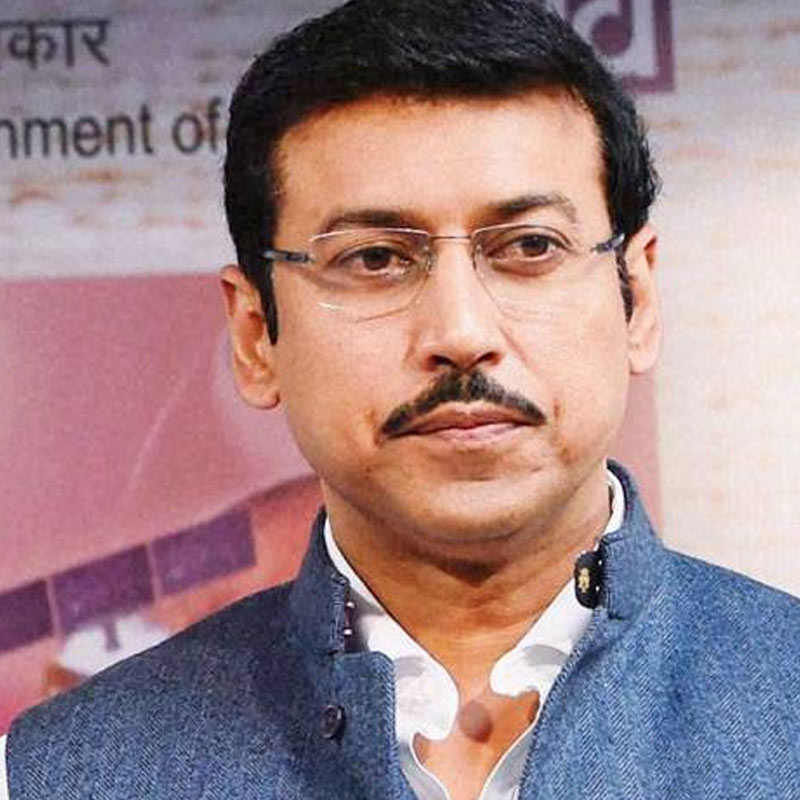
    Dwelling on the Central Board of Film Certification (CBFC), its recent run-ins with films producers on alleged censorships and a proposed restructuring of the certification body, Minister of State for MIB Rajyavardhan Rathore has said government doesn’t propose to regulate TV content via CBFC.

    Rathore made these observations regarding CBFC and TV content regulation in Parliament last week

    Holding forth on CBFC, the minister admitted that a restructuring report by the Shyam Benegal Committee was “under examination”,  but added the government had not received any formal complaint/representation from the Indian film industry regarding the functioning of CBFC.

    Rathore told Lok Sabha (Lower House of Parliament) late last week that differences in opinion relating to certification of individual films do exist between the producers and the Board. Such cases are dealt with in accordance with the provisions of the Cinematograph Act 1952, he added.

    The existing system under the Cinematograph Act, 1952 provides the requisite checks and balances as far as certification of films is concerned. Periodical reviews by expert committees are undertaken. Sufficient provisions for addressing grievances of film producers with regard to film certification exist in present regulations, the junior MIB minister informed fellow parliamentarians.

    A review committee under noted film-maker Shyam Benegal was constituted by MIB some time back. The committee has given its report suggesting some radical changes in the CBFC’s functioning and role.

    Complaints regarding vulgarity in TV ads

    A total of 49 complaints – four in 2016 – for vulgarity in advertisements on television channels were reported to MIB since 2013.

    In most cases, advisories were issued to TV channels concerned, but there were a few cases where the channels had to run apology scrolls or were forced to shut down for a fixed period.

    There were also two instances of advisories to all channels in these years.

    According to figures available with MIB, there were 26 complaints in 2013, nine in 2014, eleven in 2015 and four so far this year.

    Only Manoranjan TV, FTV, and NTV have figured thrice in these years for broadcast of vulgarity in advertisements.

    Under existing regulatory framework, all programmes and advertisements telecast on TV channels and transmitted/retransmitted through cable TV networks and DTH platforms are required to adhere to the Programme and Advertising Codes prescribed under the Cable TV Networks (Regulation) Act, 1995.

    Action is taken suo-motu as well as when violations are brought to the notice of the ministry.

    These codes contain a whole range of parameters to regulate programmes and advertisements, including provisions to address content of obscenity, vulgarity and violence in TV programmes and advertisements.

    Information from the Electronic Media Monitoring Centre (EMMC) and other sources like an Inter-Ministerial Committee (IMC) are collated on prima facie violation of the Programme and Advertising Codes for the MIB to pursue the matter.

    Government said directions to the States have been issued to set up district-level and State-level monitoring committees to monitor content telecast on cable TV channels. These are recommendatory bodies, which function to aid and assist MIB.
     

  • TRAI extends time for views on opening up DTT to private players

    TRAI extends time for views on opening up DTT to private players

    NEW DELHI: With sharing of Prasar Bharati infrastructure remaining a ticklish issue, the Telecom Regulatory Authority has decided to give more time to stakeholdes to respond to its consultation paper on the issue of Digital Terrestrial Transmission (DTT), which has until now remained a monopoly of the public broadcaster Doordarshan.

    Sakeholders can now respond with comments by 5 August and counter-comments on12 August, and Trai has said no further time would be given.

    The paper issued on 24 June 2016 was aimed at examining opening up DTT to private players in an effort to reach the largest audiences in the country.

    indiantelevision.com had earlier reported that the government was in the final stages of this exercise. Later, the website quoted Prasar Bharati Chief Executive Officer Jawhar Sircar has saying that the pubcaster had itself cleared this more than a year earlier, even while pointing out that this would necessitate use of the Prasar Bharati infrastructure.

    DD, which presently has exclusive domain over terrestrial broadcasting, ranks amongst the world’s largest terrestrial television networks. It has a network of 1412 analog transmitters that provide TV services through two national channels namely, DD National and DD News. In addition to this, the network also broadcast several regional TV channels over the terrestrial network in a time sharing mode to meet the local and regional needs of people in different parts of the country. All TV channels provided by DD are free-to-air.

    DTT for broadcasting TV programme services was first introduced in the UK in 1998 by deploying the first generation DVB-T standard developed by the European Digital Video Broadcasting (DVB) group. Since then, Trai says many new standards have evolved and at this juncture implementation of the second generation standards are underway. The DTT broadcasting spectrum has been harmonized with earlier analog spectrum allocation and therefore DTT makes use of similar analog channel allocations. Latest DTT technologies provide a number of advantages over analog terrestrial broadcasting technology, of which some include better quality TV reception – with enhanced picture and sound performance; eEfficient use of frequency – one DTT transmitter can broadcast multiple TV channels; frequency reuse possible – a single frequency network (SFN) can be implemented to cover a large geographical area; efficient reception of TV channels in portable environment such as on moving vehicles; TV channels can also be received on mobile phones and handheld devices; and the 7 or 8 MHz TV frequency band can accommodate 10-12 Standard Definition (SD) TV channels or it can be employed as a data pipe to deliver different type of services including radio services.

    The DTT platform is flexible and content format agnostic – newer formats of TV channels such as HD TV, 3D TV, UHD TV, data and radio services etc. can thus be delivered with reduced transmission power requirements. Digitization also allows for government bodies to reclaim spectrum and repurpose it.

    With standardized DTT transmission and clear advantages in terms of effective frequency utilization as well as enhanced TV quality, many countries the world over have laid down clear roadmaps to switch-off analog terrestrial TV transmission with a transition to DTT. In India, though work for changeover from Analog terrestrial transmission to digital terrestrial transmission by DD has already commenced, a clear roadmap is however unavailable.

  • TRAI extends time for views on opening up DTT to private players

    TRAI extends time for views on opening up DTT to private players

    NEW DELHI: With sharing of Prasar Bharati infrastructure remaining a ticklish issue, the Telecom Regulatory Authority has decided to give more time to stakeholdes to respond to its consultation paper on the issue of Digital Terrestrial Transmission (DTT), which has until now remained a monopoly of the public broadcaster Doordarshan.

    Sakeholders can now respond with comments by 5 August and counter-comments on12 August, and Trai has said no further time would be given.

    The paper issued on 24 June 2016 was aimed at examining opening up DTT to private players in an effort to reach the largest audiences in the country.

    indiantelevision.com had earlier reported that the government was in the final stages of this exercise. Later, the website quoted Prasar Bharati Chief Executive Officer Jawhar Sircar has saying that the pubcaster had itself cleared this more than a year earlier, even while pointing out that this would necessitate use of the Prasar Bharati infrastructure.

    DD, which presently has exclusive domain over terrestrial broadcasting, ranks amongst the world’s largest terrestrial television networks. It has a network of 1412 analog transmitters that provide TV services through two national channels namely, DD National and DD News. In addition to this, the network also broadcast several regional TV channels over the terrestrial network in a time sharing mode to meet the local and regional needs of people in different parts of the country. All TV channels provided by DD are free-to-air.

    DTT for broadcasting TV programme services was first introduced in the UK in 1998 by deploying the first generation DVB-T standard developed by the European Digital Video Broadcasting (DVB) group. Since then, Trai says many new standards have evolved and at this juncture implementation of the second generation standards are underway. The DTT broadcasting spectrum has been harmonized with earlier analog spectrum allocation and therefore DTT makes use of similar analog channel allocations. Latest DTT technologies provide a number of advantages over analog terrestrial broadcasting technology, of which some include better quality TV reception – with enhanced picture and sound performance; eEfficient use of frequency – one DTT transmitter can broadcast multiple TV channels; frequency reuse possible – a single frequency network (SFN) can be implemented to cover a large geographical area; efficient reception of TV channels in portable environment such as on moving vehicles; TV channels can also be received on mobile phones and handheld devices; and the 7 or 8 MHz TV frequency band can accommodate 10-12 Standard Definition (SD) TV channels or it can be employed as a data pipe to deliver different type of services including radio services.

    The DTT platform is flexible and content format agnostic – newer formats of TV channels such as HD TV, 3D TV, UHD TV, data and radio services etc. can thus be delivered with reduced transmission power requirements. Digitization also allows for government bodies to reclaim spectrum and repurpose it.

    With standardized DTT transmission and clear advantages in terms of effective frequency utilization as well as enhanced TV quality, many countries the world over have laid down clear roadmaps to switch-off analog terrestrial TV transmission with a transition to DTT. In India, though work for changeover from Analog terrestrial transmission to digital terrestrial transmission by DD has already commenced, a clear roadmap is however unavailable.

  • Govt earns over Rs 2,400 crore as licence fee from DTH players in 3 years: Rathore

    Govt earns over Rs 2,400 crore as licence fee from DTH players in 3 years: Rathore

    NEW DELHI: A sum of Rs 2400.45 crore has been earned by the government from licence fee from the six private direct-to-home players in the last three years.

    Lok Sabha was told in a written reply by Minister of State for Ministry of Information and Broadcasting (MIB) that while “there is no restriction on the total number of DTH licenses, no new application has been received in the Ministry for grant of DTH license.”

    He said that a sum of Rs Rs.836.52 crores was earned in 2014-15, while the revenue from licence for 2015-16 was Rs.816.15 crores and for 2016-17 was Rs.747.78 crores.

    The Ministry has granted license to six private companies: Dish TV India Limited; Tata Sky Limited; Sun Direct TV Pvt. Limited; Reliance BIG TV Limited; Bharti Telemedia Limited and Videocon d2h Limited

    In addition, pubcaster Doordarshan provides a free-to-air DTH services in the country from its platform Freedish, which only requires a one-time investment in purchasing the dish and linked set-top-box.

    DTH licenses, under the DTH guidelines, are granted to those companies which fulfill the eligibility criteria, terms and conditions and are subject to security clearance and technical clearances by the appropriate authorities of the government. The details are available on the website of this Ministry at www.mib.gov.in.

    In a related development, broadcast carriage regulator TRAI has set in motion a consultation process to explore whether the private DTH operators and other distribution platforms can share infrastructure so as to optimise their usage and reduce overall cost.

    The TRAI proposal has elicited mixed response from DTH operators till now, while Hong Kong-based Asian pay TV industry organisation CASBAA has opposed any government or regulator mandated sharing on the ground that consumers will not benefit ultimately, apart from other reasons.

  • Govt earns over Rs 2,400 crore as licence fee from DTH players in 3 years: Rathore

    Govt earns over Rs 2,400 crore as licence fee from DTH players in 3 years: Rathore

    NEW DELHI: A sum of Rs 2400.45 crore has been earned by the government from licence fee from the six private direct-to-home players in the last three years.

    Lok Sabha was told in a written reply by Minister of State for Ministry of Information and Broadcasting (MIB) that while “there is no restriction on the total number of DTH licenses, no new application has been received in the Ministry for grant of DTH license.”

    He said that a sum of Rs Rs.836.52 crores was earned in 2014-15, while the revenue from licence for 2015-16 was Rs.816.15 crores and for 2016-17 was Rs.747.78 crores.

    The Ministry has granted license to six private companies: Dish TV India Limited; Tata Sky Limited; Sun Direct TV Pvt. Limited; Reliance BIG TV Limited; Bharti Telemedia Limited and Videocon d2h Limited

    In addition, pubcaster Doordarshan provides a free-to-air DTH services in the country from its platform Freedish, which only requires a one-time investment in purchasing the dish and linked set-top-box.

    DTH licenses, under the DTH guidelines, are granted to those companies which fulfill the eligibility criteria, terms and conditions and are subject to security clearance and technical clearances by the appropriate authorities of the government. The details are available on the website of this Ministry at www.mib.gov.in.

    In a related development, broadcast carriage regulator TRAI has set in motion a consultation process to explore whether the private DTH operators and other distribution platforms can share infrastructure so as to optimise their usage and reduce overall cost.

    The TRAI proposal has elicited mixed response from DTH operators till now, while Hong Kong-based Asian pay TV industry organisation CASBAA has opposed any government or regulator mandated sharing on the ground that consumers will not benefit ultimately, apart from other reasons.

  • I&B Sector brings in over $1.25 billion  FDI between October 2014 and May 2016

    I&B Sector brings in over $1.25 billion FDI between October 2014 and May 2016

    NEW DELHI: India earned foreign exchange amounting to $9565.33 million from computer software and hardware, electronics and Information & Broadcasting (including print media) sectors between October 2014 and May 2016.

    Of this, the information and broadcasting sector (I&B( alone yielded $1253.76 million FDI equity inflows, according to a report on the Make in India presented by Commerce and Industry Minister Nirmala Sitharaman in Parliament.

    The total FDI inflows for these years was $61,585.42 million, the Minister said in an analysis of 58 industries.

    The I&B Sector brought in FDI amounting to $205.22 million between October 2014 and March 2015, $1,009.34 million between April 2015 and March 2016, and $39.2 million for the two months of April and May this year.

    The Minister said the `Make in India’ initiative was launched in September 2014 with the aim of promoting India as an important investment destination and a global hub for manufacturing, design, and innovation. Thereafter, during the period October 2014 to May 2016, the FDI equity inflow has increased by 46 per cent, from $42.31 billion to $61.58 billion in comparison to previous 20 months (February, 2013 to September, 2014). FDI inflow has also increased by 37 per cent from $62.39 billion to $85.75 billion.

    India has been ranked third in the list of top prospective host economies for 2016-18 in the World Investment Report (WIR) 2016 of UNCTAD.

    To further boost the entire investment environment and to bring in foreign investments in the country, the government is taking various measures like opening up FDI in many sectors; carrying out FDI related reforms and liberalization and improving ease of doing business in the country. Steps are being taken for development of support infrastructure to facilitate setting up of industries such as transport infrastructure, utility infrastructure etc. The Department of Industrial Policy and Promotion has advised ministries and state governments to simplify and rationalize the regulatory environment through business process re-engineering and use of information technology.

  • I&B Sector brings in over $1.25 billion  FDI between October 2014 and May 2016

    I&B Sector brings in over $1.25 billion FDI between October 2014 and May 2016

    NEW DELHI: India earned foreign exchange amounting to $9565.33 million from computer software and hardware, electronics and Information & Broadcasting (including print media) sectors between October 2014 and May 2016.

    Of this, the information and broadcasting sector (I&B( alone yielded $1253.76 million FDI equity inflows, according to a report on the Make in India presented by Commerce and Industry Minister Nirmala Sitharaman in Parliament.

    The total FDI inflows for these years was $61,585.42 million, the Minister said in an analysis of 58 industries.

    The I&B Sector brought in FDI amounting to $205.22 million between October 2014 and March 2015, $1,009.34 million between April 2015 and March 2016, and $39.2 million for the two months of April and May this year.

    The Minister said the `Make in India’ initiative was launched in September 2014 with the aim of promoting India as an important investment destination and a global hub for manufacturing, design, and innovation. Thereafter, during the period October 2014 to May 2016, the FDI equity inflow has increased by 46 per cent, from $42.31 billion to $61.58 billion in comparison to previous 20 months (February, 2013 to September, 2014). FDI inflow has also increased by 37 per cent from $62.39 billion to $85.75 billion.

    India has been ranked third in the list of top prospective host economies for 2016-18 in the World Investment Report (WIR) 2016 of UNCTAD.

    To further boost the entire investment environment and to bring in foreign investments in the country, the government is taking various measures like opening up FDI in many sectors; carrying out FDI related reforms and liberalization and improving ease of doing business in the country. Steps are being taken for development of support infrastructure to facilitate setting up of industries such as transport infrastructure, utility infrastructure etc. The Department of Industrial Policy and Promotion has advised ministries and state governments to simplify and rationalize the regulatory environment through business process re-engineering and use of information technology.

  • Radio FM Phase III applicants can get 49 per cent FDI after FIPB clearance

    Radio FM Phase III applicants can get 49 per cent FDI after FIPB clearance

    NEW DELHI: Applicants in Phase III of FM Radio will be able to attract foreign direct investment, but the total direct and indirect investment including portfolio and FDI into the company will not exceed 49 per cent at the time of application and currency of licence.

    In an announcement today, the Government said the company would be required the status of such foreign holding and it will have to certify that it is within 49 per cent on a yearly basis.

    It was also clarified that any investment will have to be with the approval of the Foreign Investments Promotion Board.

    The calculation of the direct or indirect foreign investments will be as per extant policy of the government.

    This has been done today by an amendent in the Policy Guidelines for Phase III announced on 24 November last year.

    While announcing a relaxation on FDI in the electronic media on 20 June 2016, the Government had not referred to radio.

    For more information click here:

  • Radio FM Phase III applicants can get 49 per cent FDI after FIPB clearance

    Radio FM Phase III applicants can get 49 per cent FDI after FIPB clearance

    NEW DELHI: Applicants in Phase III of FM Radio will be able to attract foreign direct investment, but the total direct and indirect investment including portfolio and FDI into the company will not exceed 49 per cent at the time of application and currency of licence.

    In an announcement today, the Government said the company would be required the status of such foreign holding and it will have to certify that it is within 49 per cent on a yearly basis.

    It was also clarified that any investment will have to be with the approval of the Foreign Investments Promotion Board.

    The calculation of the direct or indirect foreign investments will be as per extant policy of the government.

    This has been done today by an amendent in the Policy Guidelines for Phase III announced on 24 November last year.

    While announcing a relaxation on FDI in the electronic media on 20 June 2016, the Government had not referred to radio.

    For more information click here:

  • TRAI gives more time on responses to Paper on internet telephony which can affect mobile TV, IPTV

    TRAI gives more time on responses to Paper on internet telephony which can affect mobile TV, IPTV

    NEW DELHI: The Telecom Regulatory Authority of India today decided to give more time to stakeholders to respond to its consultation paper on internet telephony (VoIP).

    The paper had noted that unified IP based backbone and the benefits associated with the converged telecom access scenario has enabled service providers to launch more and more converged services such as Internet Telephony, IPTV, Mobile TV etc.

    TRAI has now asked stakeholders to respond by 22 August 2016 (which is exactly two months after the paper was issued on 22 June 2016) and give countercomments by 5 September 2016.

    The paper has sought to know the format of voice over internet telephony (VoIP) in India.

    The authority has pointed out that use of Internet Protocol (IP)-based networks, including the Internet, continues to grow around the world due to the multitude of applications it supports and particularly due to Voice Over IP (VoIP). IP-based networks are capable of providing real-time services such as voice and video telephony as well as non real-time services such as email and are driven by faster Internet connections, widespread take-up in broadband and the emergence of new technologies.

    The terms “IP Telephony”, “VoIP”, Internet Telephony and other variants often generates confusion as there are many different definitions used by various organizations. Some use them interchangeably while others give them distinct definitions. Further confusion is caused by using the terms to refer to both the IP-based technologies and the services that are enabled by these technologies.

    Convergence is primarily driven by increasing processing power, high capacity memory storage devices, reduced price, lesser power requirement and miniaturization of the devices. High-speed data transfer is now possible which is necessary for delivering innovative and advanced multimedia applications.

    Recent trends indicate that Telecom operators are adopting converged platforms to deliver multimedia rich applications containing voice, video and data.

    The separation of service provisioning and its management from the underlying network infrastructure in packet based networks is further increasing the acceptability of IP based Networks. It is now possible to separate provision of service contents, configuration and modification of service attributes regardless of the network catering such service. There has been enough evidence to suggest that in future IP networks will play much important role and may ultimately encourage migration of conventional networks towards Next Generation Networks or an All IP Network.

    The regulator wants to know what should the additional entry fee, Performance Bank Guarantee (PBG) and Financial Bank Guarantee (FBG) for Internet Service providers be if they are also allowed to provide unrestricted Internet Telephony.

    It says the point of Interconnection for Circuit switched Network for various types of calls is well defined, and should the same be continued for Internet Telephony calls or there is need to change Point of Interconnection for Internet Telephony calls.

    Trai has asked whether accessing of telecom services of the TSP by the subscriber through public Internet (internet access of any other TSP) can be construed as extension of fixed line or mobile services of the TSP.

    It wants to know whether the present ceiling of transit charge needs to be reviewed or it can be continued at the same level.

    The regulation has asked what the termination charge should be when call is terminating into Internet telephony network and whether an Internet telephony subscriber be able to initiate or receive calls from outside the SDCA, or service area, or the country through the public Internet thus providing limited or full mobility to such subscriber.

    Should the last mile for an Internet telephony subscriber be the public Internet irrespective of where the subscriber is currently located as long as the PSTN leg abides by all the interconnection rules and regulations concerning NLDO and ILDO, asks Trai.

    It wants to understand the framework if Number portability is allowed for Internet Telephony numbers.

    In case it is not possible to provide Emergency services through Internet Telephony, will it be enough to inform limitation of Internet Telephony calls in advance to the consumers, asks Trai.
    Since the 1960’s when digital voice communication first emerged, the Public Switched Telephone Network (PSTN) has been supported worldwide as the primary means of voice communication. The PSTN is a connection-oriented, circuit-switched network in which a dedicated channel (or circuit) is established for the duration of a communication. Originally transmitting only analog signals, the PSTN ultimately switched to digital communication, which offered solutions to the attenuation, noise and interference problems inherent in the analog system. The modern PSTN uses Pulse Code Modulation (PCM) to convert all analog signals into digital transmissions at the originating network and reverses the processes in the receiving network.