Category: Regulators

  • 17.8 million STBs deployed in Phase IV areas: MIB

    17.8 million STBs deployed in Phase IV areas: MIB

    MUMBAI: The ministry of information and broadcasting says that close to 17.8 million set top boxes have been seeded in Phase IV areas. The figure was 138 million set top boxes during the fifteenth task force meeting held in end May this year.

    Speaking at the sixteenth task force meeting which was held on 26 July, the joint secretary R. Jaya stated that most of this is coming courtesy voluntarily digitization.

    She also urged representatives of the MSOs to finalise their procurement plans of STBs, and cautioned that “they should not let some disinterested players in phase IV areas delay digitization in phase IV areas on the grounds of non-availability of STB as it was done in phase III.”

    She added that except for some DTH operators the public awareness campaign for DAS Phase IV digitization has not come up to scratch. She urged the industry to develop its own creative and its own spots to spread the message of cable TV digitization in the phase IV regions.

    This is of course apart from the spots that have been developed by the ministry and which were playing out on the public broadcaster Doordarshan’s channels.

  • Provisions to deal with errant broadcasting sectors considered adequate: Rathore

    Provisions to deal with errant broadcasting sectors considered adequate: Rathore

    NEW DELHI: The Government considers the existing provisions under various policy guidelines of Ministry of Information and Broadcasting are considered adequate as far as the electronic media goes.

    The permission of 73 TV channels has been cancelled till date for violating the provisions of Uplinking Guidelines, the Rajya Sabha has been told.

    Minister of State for Information and Broadcasting Rajyavardhan Rathore said 24 FM Channels of 6 Private Broadcasters have been revoked for violation of provisions of the Grant of Permission Agreement (GoPA) signed by them with Government under the FM Radio Phase-II regime.

    All the registered agencies mentioned above under print, audio and visual media are required to abide by the rules and regulations prescribed under various policy guidelines of Ministry of Information and Broadcasting.

    He said the country at present has 892 permitted Private Satellite TV channels registered in the country, as on 30 June.

    A total of 42 Private FM Radio Broadcasters have been granted permission to establish, operate and maintain private FM Radio Stations in the country.

    More than a decade after the scheme was launched, only 196 Community Radio Stations are operational in the country.

    The Press in India 2014-15 published by the Office of Registrar of Newspapers for India (RNI), shows as many as 1,05,443 publications, having different periodicities are registered with RNI, as on 31 March 2015.

  • Provisions to deal with errant broadcasting sectors considered adequate: Rathore

    Provisions to deal with errant broadcasting sectors considered adequate: Rathore

    NEW DELHI: The Government considers the existing provisions under various policy guidelines of Ministry of Information and Broadcasting are considered adequate as far as the electronic media goes.

    The permission of 73 TV channels has been cancelled till date for violating the provisions of Uplinking Guidelines, the Rajya Sabha has been told.

    Minister of State for Information and Broadcasting Rajyavardhan Rathore said 24 FM Channels of 6 Private Broadcasters have been revoked for violation of provisions of the Grant of Permission Agreement (GoPA) signed by them with Government under the FM Radio Phase-II regime.

    All the registered agencies mentioned above under print, audio and visual media are required to abide by the rules and regulations prescribed under various policy guidelines of Ministry of Information and Broadcasting.

    He said the country at present has 892 permitted Private Satellite TV channels registered in the country, as on 30 June.

    A total of 42 Private FM Radio Broadcasters have been granted permission to establish, operate and maintain private FM Radio Stations in the country.

    More than a decade after the scheme was launched, only 196 Community Radio Stations are operational in the country.

    The Press in India 2014-15 published by the Office of Registrar of Newspapers for India (RNI), shows as many as 1,05,443 publications, having different periodicities are registered with RNI, as on 31 March 2015.

  • Steps underway for upgradation of FTII: Rathore

    Steps underway for upgradation of FTII: Rathore

    NEW DELHI: A sum of Rs eighty crore has been set aside for the upgradation plans of the Film and Television of India in the Twelfth Plan..

    The performance of the Institute is periodically assessed through meetings of the Society and Governing Council, Audit and Annual Report submitted by the Institute, and audit by the Comptroller and Auditor General.

    There is a regular mechanism of periodic audit including audit by C&AG, meetings of the Society and Governing Council of the Institute which include representatives from the Government and domain experts.

    Minister of State for Information and Broadcasting Rajyavardhan Rathore told Parliament that the programmes being undertaken for upgradation are:

    i. Up-gradation of existing infrastructure of FTII and creation of additional infrastructure to meet the growing needs of the Institute. This includes construction of new main theatre, class room theatres, student hostels etc.

    ii. Replacement of obsolete equipment and procurement of modern equipment to keep pace with the technological changes in film and television industry including HD technology.

    Meanwhile, the syllabus of FTII had been modified recently to provide for semester system, modular structure, choice based credit system, continuous evaluation etc. that would provide more flexibility to the students in the process of learning and corresponding monitoring of outcomes thereof.

  • Steps underway for upgradation of FTII: Rathore

    Steps underway for upgradation of FTII: Rathore

    NEW DELHI: A sum of Rs eighty crore has been set aside for the upgradation plans of the Film and Television of India in the Twelfth Plan..

    The performance of the Institute is periodically assessed through meetings of the Society and Governing Council, Audit and Annual Report submitted by the Institute, and audit by the Comptroller and Auditor General.

    There is a regular mechanism of periodic audit including audit by C&AG, meetings of the Society and Governing Council of the Institute which include representatives from the Government and domain experts.

    Minister of State for Information and Broadcasting Rajyavardhan Rathore told Parliament that the programmes being undertaken for upgradation are:

    i. Up-gradation of existing infrastructure of FTII and creation of additional infrastructure to meet the growing needs of the Institute. This includes construction of new main theatre, class room theatres, student hostels etc.

    ii. Replacement of obsolete equipment and procurement of modern equipment to keep pace with the technological changes in film and television industry including HD technology.

    Meanwhile, the syllabus of FTII had been modified recently to provide for semester system, modular structure, choice based credit system, continuous evaluation etc. that would provide more flexibility to the students in the process of learning and corresponding monitoring of outcomes thereof.

  • TRAI begins exercise on common mobile banking for all sectors

    TRAI begins exercise on common mobile banking for all sectors

    NEW DELHI: With consumers gradually getting attuned to it and the growth of Mobile Apps and OTT requiring mobile banking, the Telecom Regulatory Authority of India has started an exercise to find the best way of making or receiving payments through the mobile.

    As a first step, it has issued a Consultation paper on regulatory framework for the use of USSD for mobile financial services. Stakeholders have been sent a set of ten questions and have to respond by 31 August with counter-comments by 14 September 2016.

    Keeping in view the success achieved by many countries in delivering financial servicesthrough mobile telephone, the Government of India, in November, 2009, constituted an Inter-Ministerial Group (IMG) to submit a report and recommendations on the framework fordelivery of basic financial services using mobile phones. The framework proposed in the IMGreport has been accepted as the basis for delivery of basic financial services using mobile technology by a Committee of Secretaries under the chairmanship of the Cabinet Secretary in April 2010. The IMG framework envisages opening of mobile linked ‘no- frills’accounts, which would be operated using mobile phones. These accounts would be held bybanks and the money would be stored in the banks and not in the users’ mobile phones; thecustomer would be able to perform five basic transactions cash deposit, cash withdrawal,balance enquiry, transfer of money from one mobile-linked account to another, and transferof money to a mobile-linked account from a regular bank account. The IMG framework alsoenvisaged compensation to the key players after taking into account the actual costs incurred bythem. In the IMG framework, TRAI was expected to provide the required regulatory framework governing the quality of service, provisioning and pricing of mobile services for delivery of basicfinancial services.

    Mobile financial services can be delivered using any of the following communication modes:
    (i) Interactive Voice Response (IVR)
    (ii) Short Messaging Service (SMS)
    (iii) Wireless Access Protocol (WAP)
    (iv) Stand-alone Mobile Application Clients (Mobile Apps)
    (v) Unstructured Supplementary Service Data (USSD)
    (vi) Using SIM tool Kit (STK)

    With about 22.5 crore Jan-dhan accounts in the country, more than 100 crore Aadhar cardissued to the citizens and more than 100 crore mobile connections in the country (of whichabout 45 crore are in rural areas), it was expected that the USSD-based mobile banking servicewould gain popularity amongst the unbanked/ under-banked population (the target masses of financial inclusion) with passage of time and would soon achieve a critical mass. However, evenafter two years since August 2014, when it became available to all GSM subscribers in thecountry, the progress of USSD-based mobile banking is below expectations. In May 2016,only about 37 lakh mobile banking transaction attempts (over USSD channel) reached NPCI’splatform (*99#). Clearly, something is amiss. The situation demands a comprehensive review toensure that the service which has successfully deliver.
  • TRAI begins exercise on common mobile banking for all sectors

    TRAI begins exercise on common mobile banking for all sectors

    NEW DELHI: With consumers gradually getting attuned to it and the growth of Mobile Apps and OTT requiring mobile banking, the Telecom Regulatory Authority of India has started an exercise to find the best way of making or receiving payments through the mobile.

    As a first step, it has issued a Consultation paper on regulatory framework for the use of USSD for mobile financial services. Stakeholders have been sent a set of ten questions and have to respond by 31 August with counter-comments by 14 September 2016.

    Keeping in view the success achieved by many countries in delivering financial servicesthrough mobile telephone, the Government of India, in November, 2009, constituted an Inter-Ministerial Group (IMG) to submit a report and recommendations on the framework fordelivery of basic financial services using mobile phones. The framework proposed in the IMGreport has been accepted as the basis for delivery of basic financial services using mobile technology by a Committee of Secretaries under the chairmanship of the Cabinet Secretary in April 2010. The IMG framework envisages opening of mobile linked ‘no- frills’accounts, which would be operated using mobile phones. These accounts would be held bybanks and the money would be stored in the banks and not in the users’ mobile phones; thecustomer would be able to perform five basic transactions cash deposit, cash withdrawal,balance enquiry, transfer of money from one mobile-linked account to another, and transferof money to a mobile-linked account from a regular bank account. The IMG framework alsoenvisaged compensation to the key players after taking into account the actual costs incurred bythem. In the IMG framework, TRAI was expected to provide the required regulatory framework governing the quality of service, provisioning and pricing of mobile services for delivery of basicfinancial services.

    Mobile financial services can be delivered using any of the following communication modes:
    (i) Interactive Voice Response (IVR)
    (ii) Short Messaging Service (SMS)
    (iii) Wireless Access Protocol (WAP)
    (iv) Stand-alone Mobile Application Clients (Mobile Apps)
    (v) Unstructured Supplementary Service Data (USSD)
    (vi) Using SIM tool Kit (STK)

    With about 22.5 crore Jan-dhan accounts in the country, more than 100 crore Aadhar cardissued to the citizens and more than 100 crore mobile connections in the country (of whichabout 45 crore are in rural areas), it was expected that the USSD-based mobile banking servicewould gain popularity amongst the unbanked/ under-banked population (the target masses of financial inclusion) with passage of time and would soon achieve a critical mass. However, evenafter two years since August 2014, when it became available to all GSM subscribers in thecountry, the progress of USSD-based mobile banking is below expectations. In May 2016,only about 37 lakh mobile banking transaction attempts (over USSD channel) reached NPCI’splatform (*99#). Clearly, something is amiss. The situation demands a comprehensive review toensure that the service which has successfully deliver.
  • Finance Ministry mulling over giving infrastructure status to broadcasting: Naidu

    Finance Ministry mulling over giving infrastructure status to broadcasting: Naidu

    NEW DELHI: The Finance Ministry is expected to shortly take a decision on giving the status of infrastructure to the broadcasting industry.

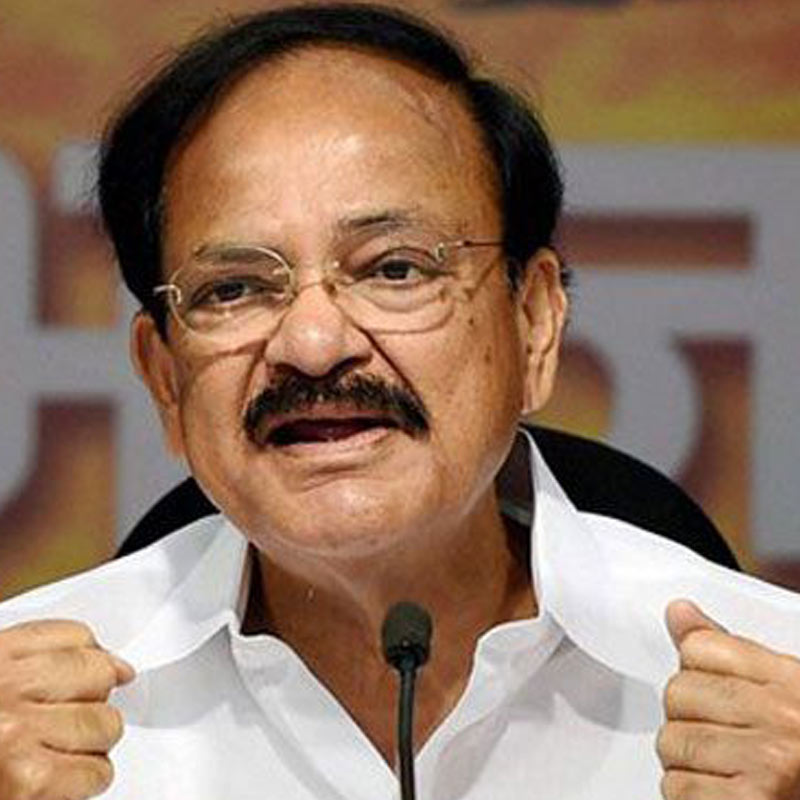
    Information and Broadcasting Minister M Venkaiaih Naidu told the Rajya Sabha that his Ministry had already forwarded its point of view to the Finance Ministry after examining the issue.

    He said that the Indian Broadcasting Foundation (IBF) made this demand earlier this year.

    The demand was in the Pre-Budget Memorandum for Union Budget 2016-17 requesting for grant of Infrastructure status to Broadcasting Industry.

    The Department of Economic Affairs which is the Finance Ministry is considering the matter for an appropriate decision, Naidu said.

  • Finance Ministry mulling over giving infrastructure status to broadcasting: Naidu

    Finance Ministry mulling over giving infrastructure status to broadcasting: Naidu

    NEW DELHI: The Finance Ministry is expected to shortly take a decision on giving the status of infrastructure to the broadcasting industry.

    Information and Broadcasting Minister M Venkaiaih Naidu told the Rajya Sabha that his Ministry had already forwarded its point of view to the Finance Ministry after examining the issue.

    He said that the Indian Broadcasting Foundation (IBF) made this demand earlier this year.

    The demand was in the Pre-Budget Memorandum for Union Budget 2016-17 requesting for grant of Infrastructure status to Broadcasting Industry.

    The Department of Economic Affairs which is the Finance Ministry is considering the matter for an appropriate decision, Naidu said.

  • Around Rs 35 crore spent by Prasar Bharati in left extremist affected areas

    Around Rs 35 crore spent by Prasar Bharati in left extremist affected areas

    NEW DELHI: Both All India Radio and Doordarshan have spent around Rs 35 crore in setting up transmitters and programming in left wing extremist (LWE) areas.

    Programmes are aired on the theme of dissuading the youth from getting involved in anti-social activities and persuading those, who have misguidedly taken to arms, to come back and join the mainstream, Parliament was told recently.

    These are telecasting Developmental programmes on Education, Youth Welfare, Women Empowerment, welfare schemes for the area, Forest Act and Rights of Tribals including coverage of local festivals and tribal folk music in their local languages and dialects.

    The thrust is largely on the developmental schemes/activities of the Government of India and the State Governments. These programmes also dwell on the need of maintaining law and order in the concerned areas so that people’s progress could be achieved faster.

    As far as AIR is concerned, six new FM High Power Transmitters have been planned in LWE affected areas at a total cost of Rs.28.06 Crores at Kakinada East Godavari/Andhra Pradesh; Muzaffarpur in Bihar; Amibikapur Sarguja in Chhattisgarh; Dhanbad in Jharkhand; Bhawanipatna in Kalahandi (Odisha), and Suryapet in Nalgonda (Telangana).

    In addition to this, existing old/outlived transmitters at AIR stations functional in LWE affected areas are also planned for replacement by High Power Transmitters.
    As far as Doordarshan is concerned, a part of digitalization scheme approved under the 12th Plan Projects of setting up digital HPTs at a cost of Rs. 6.62 crore each have been implemented at Muzaffarpur (Bihar); Jagdalpur (Chhattisgarh); and Jamshedpur (Jharkhand).

    It was also emphasized by the sources that all the areas uncovered by terrestrial transmitters are covered with multichannel TV coverage through Doordarshan’s free to air DTH service Freedish.