Category: Regulators

  • Communication is critical tool to ensure last mile connectivity: Naidu

    Communication is critical tool to ensure last mile connectivity: Naidu

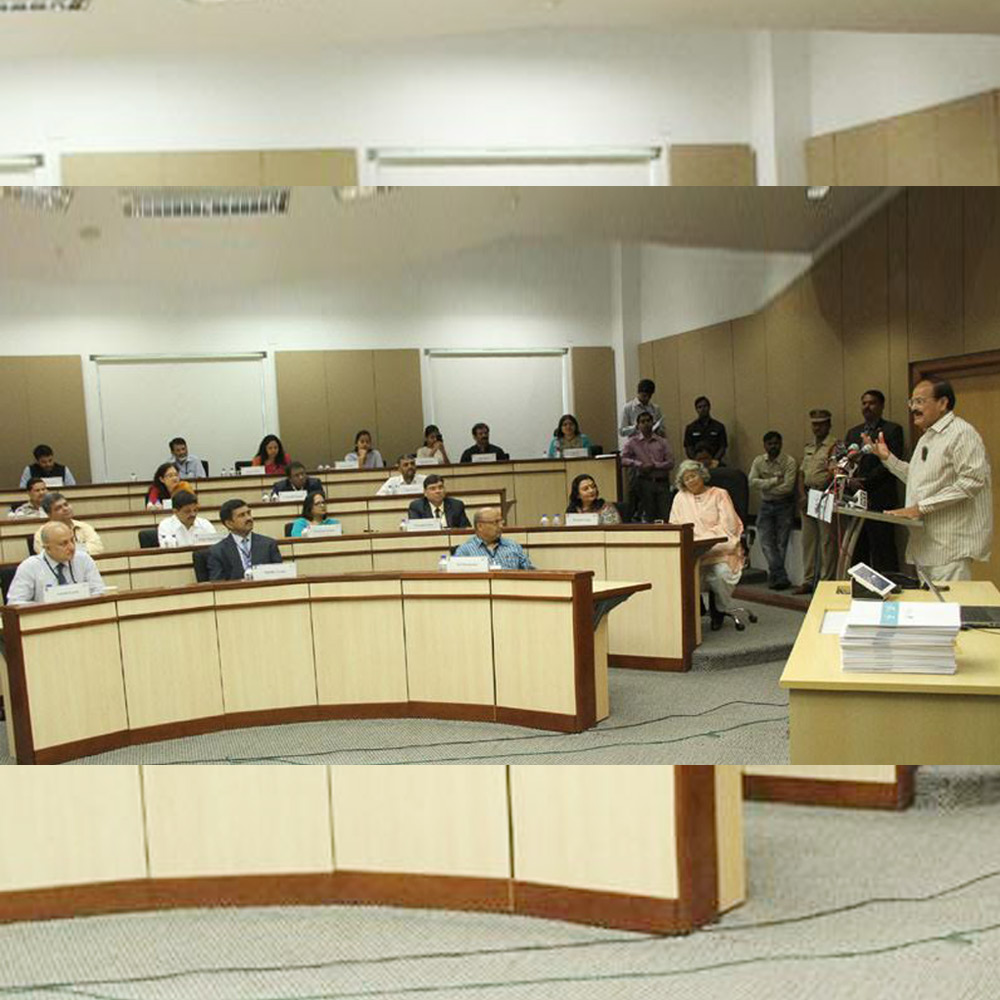
    NEW DELHI: Information and Broadcasting Minister M Venkaiah Naidu said today that the Government had placed communication as a critical cog in the wheel of change and it had been woven into a policy matrix which aims at maximum governance, minimum government.

    Speaking at the valedictory function of Mid Career Training Programme for Senior Indian Information Service officers (IIS) at Indian School of Business, in Hyderabad today, Naidu said,“Today, we live in an age of instant communication, the images and tools of the media landscape influence our thought process on a continuous basis. The need to constantly re-invent our understanding and perception through an institutionalised skill upgradation program which includes a re-examination of our approach towards the communication process”, he stated.

    Naidu said that the government in the past two years had embarked on a programme of communication innovation – adopting methods, seeking spaces to ensure last mile connectivity to the people. “Our approach has attempted to weave different platforms, varied contents through a focussed 360 degree approach. While we have succeeded in adopting a new communication philosophy which incorporates the Citizens concerns, there are areas which still reflect chinks in the armour of government communication”, he said.

    He said the ministry had taken up the initiative of providing Information Service Officers skill upgradation through an institutionalised training policy. The objective is to plug the gaps in the Government’s communication approach in areas of content design, social marketing, branding, impact assessment and weaving technologies in the digital age. To bring about a change always creates a dissonance in the government process. He said that the two weeks training program is aimed to offer a fresh perspective, clarity on the nuances of communication management and gave tools and ideas to keep pace with the digital communication world to the IIS officers. He informed the officers that they would be going to the University of Berkeley for a further one week program training programme on the contemporary changes in the communication discourse.

    Naidu said recent advances in technology and communication space have completely overhauled the way the Government interacts with the citizens. This change being led by Social Media has ushered in a new era of Governance. it is absolutely necessary for constant upgradation of skills of officers in light of development of new technologies, he added.

    He said that in the last two years the present government has taken a lot of Citizen centric initiatives but communicating the benefits remains a challenge. Social and behaviour change communication is a critical factor in the success of Swachh Bharat Abhiyan which is a major flagship scheme of the government. “I am hopeful that the Media Strategy and Planning in the changing scenario of social advertising, a course module taught at ISB during the training of the officers, would benefit in defining the communication roadmap for the government social sector schemes and to ensure last mile reach”, he said.

    As the digital media continues to influence the communication and media landscape, social and digital media planning has to be an integral part of the government’s communication strategy. “I am sure the exposure to the officers about the best practises in digital media planning around various organisations across the world would have provided the required skillset and tools to address the challenges in the public domain”, he said.

    He added that the old mediums of communication have not become irrelevant. Radio still holds its relevance considering the mass outreach it has. Even the Government’s Mann ki baat Programme has become an excellent communication platform where the Prime Minister of our country not only directly communicates his views on diverse topics/ issues but also takes feedback from people through ‘myGov’ platform and Phone in services. In the current scenario, training in specific domains is incomplete without case studies and practical exposure. Case studies have proven to be an excellent way of practicing and applying new concepts. As such, they’re very useful tools in learning and implementation.

    The different phase wise training for the IIS Officers have been designed keeping in mind the broad objective of the Government’s Communications needs as well as changing communication and technology paradigm.
  • TDSAT directs ZEEL not to disconnect signals to MSO until next hearing

    TDSAT directs ZEEL not to disconnect signals to MSO until next hearing

    NEW DEHI: The Telecom Disputes Settlement and Appellate Tribunal has directed Zee Entertainment Enterprise Ltd not to disconnect the signals to Bhaskar Cable Network till next date in view of controversy over amounts due.

    However listing the matter for 29 August 2016, member B B Srivastava clarified that this does not preclude both sides to meet and resolve their disputes including concluding
    a fresh interconnect agreement

    The Tribunal also said the petitioner will continue to make payment pursuant to the agreement which expired on 31 March 2016.

    The notice for disconnection was because of non-payment and non-cooperation for audit, according to ZEEL counsel Upender Thakur.

    At the outset, Bhaskar counsel Navin Chawla drew attention of the Tribunal to the communication from the audit entity “Protivity” in the form of email dated 22 December last whereby it mentions about a “facilitating support” on behalf of the petitioner as well as furnishing all the papers for facilitating audit.

    With regards to outstanding, Chawla claimed that update payment as on 31 July 2016 amounting to Rs 10,35,000 including taxes have been made; besides outstanding amount of Rs 3,15,133 including taxes. This was contested by Thakur and he stuck to the grounds that the outstanding as on date is Rs 24,30,473.

    The matter was adjourned for a short while to enable Thakur to file reply clarifying these two issues. The reply must be filed within one week’s time and a copy shall be provided to the petitioner for filing rejoinder, if any, within one week thereafter.

  • TDSAT directs ZEEL not to disconnect signals to MSO until next hearing

    TDSAT directs ZEEL not to disconnect signals to MSO until next hearing

    NEW DEHI: The Telecom Disputes Settlement and Appellate Tribunal has directed Zee Entertainment Enterprise Ltd not to disconnect the signals to Bhaskar Cable Network till next date in view of controversy over amounts due.

    However listing the matter for 29 August 2016, member B B Srivastava clarified that this does not preclude both sides to meet and resolve their disputes including concluding
    a fresh interconnect agreement

    The Tribunal also said the petitioner will continue to make payment pursuant to the agreement which expired on 31 March 2016.

    The notice for disconnection was because of non-payment and non-cooperation for audit, according to ZEEL counsel Upender Thakur.

    At the outset, Bhaskar counsel Navin Chawla drew attention of the Tribunal to the communication from the audit entity “Protivity” in the form of email dated 22 December last whereby it mentions about a “facilitating support” on behalf of the petitioner as well as furnishing all the papers for facilitating audit.

    With regards to outstanding, Chawla claimed that update payment as on 31 July 2016 amounting to Rs 10,35,000 including taxes have been made; besides outstanding amount of Rs 3,15,133 including taxes. This was contested by Thakur and he stuck to the grounds that the outstanding as on date is Rs 24,30,473.

    The matter was adjourned for a short while to enable Thakur to file reply clarifying these two issues. The reply must be filed within one week’s time and a copy shall be provided to the petitioner for filing rejoinder, if any, within one week thereafter.

  • TDSAT directs Good News rep to come with two drafts totalling Rs 73.75 lakh on next date

    TDSAT directs Good News rep to come with two drafts totalling Rs 73.75 lakh on next date

    NEW DELHI: A representative of Good News India Pvt Ltd has been asked by the Telecom Disputes Settlement and Appellate Tribunal to be present before the Tribunal on 17 August 2016 in two different cases with bank drafts totaling Rs 73.75 lakh.

    Member B B Srivastava was informed by Good News counsel Ms Radhika Gupta that onaccount of grave personal difficulty,Mr Ashwini Thakur was not in a position to travel toDelhi on 8 August 2016 to be present before the Tribunal.

    However, the Tribunal noticed that no bank draft for the amount of Rs. Rs.58,75,000 in the case against Taj Television and Media Pro, and Rs 15 lakh in the case of MediaNetwork & Distribution India Ltd, had been produced before the Tribunal.

    The matter was therefore adjourned in both cases with clear instructions on bank drafts, failingwh1ch the Tribunal would pass appropriate orders.

  • TDSAT directs Good News rep to come with two drafts totalling Rs 73.75 lakh on next date

    TDSAT directs Good News rep to come with two drafts totalling Rs 73.75 lakh on next date

    NEW DELHI: A representative of Good News India Pvt Ltd has been asked by the Telecom Disputes Settlement and Appellate Tribunal to be present before the Tribunal on 17 August 2016 in two different cases with bank drafts totaling Rs 73.75 lakh.

    Member B B Srivastava was informed by Good News counsel Ms Radhika Gupta that onaccount of grave personal difficulty,Mr Ashwini Thakur was not in a position to travel toDelhi on 8 August 2016 to be present before the Tribunal.

    However, the Tribunal noticed that no bank draft for the amount of Rs. Rs.58,75,000 in the case against Taj Television and Media Pro, and Rs 15 lakh in the case of MediaNetwork & Distribution India Ltd, had been produced before the Tribunal.

    The matter was therefore adjourned in both cases with clear instructions on bank drafts, failingwh1ch the Tribunal would pass appropriate orders.

  • FIPB refuses to consider Turmeric Vision proposal for contravention of foreign equity of 80%

    FIPB refuses to consider Turmeric Vision proposal for contravention of foreign equity of 80%

    NEW DELHI: Even as it refused to consider a proposal by M/s Turmeric Vision Private Limited on the ground that this does not come within its domain, the Foreign Investments Promotion Board has deferred a proposal by M/s Quintillion Business Media Private Limited seeking approval for the issuance of equity shares to BLOOMBERG L.P.

    With regard to the Quintillion proposal, the Finance Ministry said “the investee company is proposed to be engaged inter alia in the uplinking and broadcasting of a business news television channel and operating the related digital content platform in India”.

    Turmeric Vision Private Limited had sought Post facto approval for contravention of the foreign equity of 80% as approved vide approval letter of even no. FC II 60(10)/91(2010) of 14 June 2010.

    FIPB also deferred a proposal by M/s Tikona Digital Networks Pvt Ltd for approval for the issuance of CCDs thereby increasing foreign equity to 76.73%; and a proposal by Netmagic Solutions Private Limited for increase in the shareholding of NTT Communications Corporation, Japan, in the company from 81.63% to 100%.

    The Board rejected a proposal by M/s Sistema ShyamTeleServices Limited seeking approval for the exit of the resident shareholders and transfer of their holdings to the existing foreign shareholders i.e. M/s Sistema Joint Stock Financial Corporation, Russia and Federal Agency for the State Property Management (Rosimushchestvo), thereby increasing the foreign shareholding in the company from 73.95% to 100% and consequently increasing the foreign shareholding in its downstream company i.e. Shyam Internet Services Limited to 100%.

  • FIPB refuses to consider Turmeric Vision proposal for contravention of foreign equity of 80%

    FIPB refuses to consider Turmeric Vision proposal for contravention of foreign equity of 80%

    NEW DELHI: Even as it refused to consider a proposal by M/s Turmeric Vision Private Limited on the ground that this does not come within its domain, the Foreign Investments Promotion Board has deferred a proposal by M/s Quintillion Business Media Private Limited seeking approval for the issuance of equity shares to BLOOMBERG L.P.

    With regard to the Quintillion proposal, the Finance Ministry said “the investee company is proposed to be engaged inter alia in the uplinking and broadcasting of a business news television channel and operating the related digital content platform in India”.

    Turmeric Vision Private Limited had sought Post facto approval for contravention of the foreign equity of 80% as approved vide approval letter of even no. FC II 60(10)/91(2010) of 14 June 2010.

    FIPB also deferred a proposal by M/s Tikona Digital Networks Pvt Ltd for approval for the issuance of CCDs thereby increasing foreign equity to 76.73%; and a proposal by Netmagic Solutions Private Limited for increase in the shareholding of NTT Communications Corporation, Japan, in the company from 81.63% to 100%.

    The Board rejected a proposal by M/s Sistema ShyamTeleServices Limited seeking approval for the exit of the resident shareholders and transfer of their holdings to the existing foreign shareholders i.e. M/s Sistema Joint Stock Financial Corporation, Russia and Federal Agency for the State Property Management (Rosimushchestvo), thereby increasing the foreign shareholding in the company from 73.95% to 100% and consequently increasing the foreign shareholding in its downstream company i.e. Shyam Internet Services Limited to 100%.

  • TRAI-COAI spar on interconnect charges consultation paper

    TRAI-COAI spar on interconnect charges consultation paper

    MUMBAI: Telco watchdog  the Telecom Regulatory Authority of India (TRAI) has garbaged allegations by the Cellular Operators Associaiton of India (COAI) that its latest consultation paper on call connect charges was “unfair” on incumbent operators and favouring newer entrants. TRAI chairman RS Sharma told PTI that the allegations against the regulator are “baseless.”

    TRAI maintained that it will continue to work according to its mandate. “Trai will continue to work in the areas in which it is mandated to work…We will continue to perform functions assigned in the Trai Act, with regard to consumer protection, Quality of Service, encouraging competition, fair play and growth of industry,” Sharma said.

    COAI had questioned the regulator’s urgency in initiating the process of  reviewing interconnect charges – paid by one operator to another for connecting calls, which the association claimed “favours new entrants.” TRAI  said it had undertaken this review in the backdrop of 4G and internet telephony changing the way consumers communicate.
    Currently, termination charges for a mobile to mobile local and national long distance call is pegged at 14 paise per minute while the termination charges for international incoming call to wireless and wired line stands at 53 paise per minute.

    Trai had sought fresh views on whether this should be continued or whether a new way of computing could be considered which is Bill and Keep (BAK) – to maximize consumer welfare, adoption of more efficient technologies and growth of the telecom sector. Under the BAK method, each telco bills its own subscribers for outgoing traffic that it sends to the  other interconnecting network and keeps the revenue received from its subscribers.

    COAI has finger pointed at the regulator’s suggestion, saying it essentially favours new operators as they would  not have to pass any payments to existing older operators, while the latter would end up incurring costs. “This is a misguided effort from the TRAI that will help new entrants at the cost of the incumbent. We are extremely disturbed by this, this further tilts the level playing field,” COAI director general Rajan Matthews had stated yesterday.

    This is not the first time that India’s private sector telecom operators have tried to put pressure on the regulator.
    Even in the case of net neutrality and zero-rating plans of telecom operators, the telcos had termed certain orders of TRAI without any basis that did not give the telcos a level playing field against new technologies (OTT services like WhatsApp, Skype, etc) and their backers.

    Matthews told PTI that his association   had sought a meeting with the telecom minister and secretary “so that the matter can be debated in a transparent manner.”

    The Mukesh Ambani-led Reliance Industries Ltd, which has a pan-India licence for providing telecom services by a subsidiary company under Reliance Jio brand name, is slated to launch its services formally later this year. Reliance Jio is also slated to offer its consumers hi-speed 4G broadband services on low-priced Lyf handsets at  monthly subscription rates, telecoms observer opine, that are likely to start a blood-bath in the telecoms sector.

    RIL also controls the Network18 media group, founded by Raghav Bahl, which owns several TV channels and online and digital properties.

    In recent times, incumbent telecoms operators have been severely criticised within and outside the government for the low quality of services and rampant call-drops that TRAI had tried to rectify by proposing fines to benefit consumers.

    This move and other such regulatory initiatives too were criticised by telecos and various telecom industry bodies like COAI and Broadband India Forum.

    Interestingly, Reliance Jio  is also a member of COAI, though, according to media reports, its position on the present round of TRAI bashing by telcos is not known and unclear.

    ALSO READ:

    BIF bats for OTT regulations & level-playing field for all in Net Neutrality debate

  • TRAI-COAI spar on interconnect charges consultation paper

    TRAI-COAI spar on interconnect charges consultation paper

    MUMBAI: Telco watchdog  the Telecom Regulatory Authority of India (TRAI) has garbaged allegations by the Cellular Operators Associaiton of India (COAI) that its latest consultation paper on call connect charges was “unfair” on incumbent operators and favouring newer entrants. TRAI chairman RS Sharma told PTI that the allegations against the regulator are “baseless.”

    TRAI maintained that it will continue to work according to its mandate. “Trai will continue to work in the areas in which it is mandated to work…We will continue to perform functions assigned in the Trai Act, with regard to consumer protection, Quality of Service, encouraging competition, fair play and growth of industry,” Sharma said.

    COAI had questioned the regulator’s urgency in initiating the process of  reviewing interconnect charges – paid by one operator to another for connecting calls, which the association claimed “favours new entrants.” TRAI  said it had undertaken this review in the backdrop of 4G and internet telephony changing the way consumers communicate.
    Currently, termination charges for a mobile to mobile local and national long distance call is pegged at 14 paise per minute while the termination charges for international incoming call to wireless and wired line stands at 53 paise per minute.

    Trai had sought fresh views on whether this should be continued or whether a new way of computing could be considered which is Bill and Keep (BAK) – to maximize consumer welfare, adoption of more efficient technologies and growth of the telecom sector. Under the BAK method, each telco bills its own subscribers for outgoing traffic that it sends to the  other interconnecting network and keeps the revenue received from its subscribers.

    COAI has finger pointed at the regulator’s suggestion, saying it essentially favours new operators as they would  not have to pass any payments to existing older operators, while the latter would end up incurring costs. “This is a misguided effort from the TRAI that will help new entrants at the cost of the incumbent. We are extremely disturbed by this, this further tilts the level playing field,” COAI director general Rajan Matthews had stated yesterday.

    This is not the first time that India’s private sector telecom operators have tried to put pressure on the regulator.
    Even in the case of net neutrality and zero-rating plans of telecom operators, the telcos had termed certain orders of TRAI without any basis that did not give the telcos a level playing field against new technologies (OTT services like WhatsApp, Skype, etc) and their backers.

    Matthews told PTI that his association   had sought a meeting with the telecom minister and secretary “so that the matter can be debated in a transparent manner.”

    The Mukesh Ambani-led Reliance Industries Ltd, which has a pan-India licence for providing telecom services by a subsidiary company under Reliance Jio brand name, is slated to launch its services formally later this year. Reliance Jio is also slated to offer its consumers hi-speed 4G broadband services on low-priced Lyf handsets at  monthly subscription rates, telecoms observer opine, that are likely to start a blood-bath in the telecoms sector.

    RIL also controls the Network18 media group, founded by Raghav Bahl, which owns several TV channels and online and digital properties.

    In recent times, incumbent telecoms operators have been severely criticised within and outside the government for the low quality of services and rampant call-drops that TRAI had tried to rectify by proposing fines to benefit consumers.

    This move and other such regulatory initiatives too were criticised by telecos and various telecom industry bodies like COAI and Broadband India Forum.

    Interestingly, Reliance Jio  is also a member of COAI, though, according to media reports, its position on the present round of TRAI bashing by telcos is not known and unclear.

    ALSO READ:

    BIF bats for OTT regulations & level-playing field for all in Net Neutrality debate

  • India has just reached 886 TV channels against the target of 1500 channels by end of 12th Plan

    India has just reached 886 TV channels against the target of 1500 channels by end of 12th Plan

    NEW DELHI: With the government having given valid permission to a total of 886 private television channels including 399 news channels, it appears highly unlikely that the country will achieve the target of 1500 channels by March next year as assumed by the State Finance Commission while drafting its proposals for the 12th Plan (2012-17).

    Interestingly, the Information and Broadcasting Ministry had given permission to 1035 channels but later cancelled permission to 149, thus adding twentythree more refused permission after 31 March this year.

    Thus the number of general entertainment channels is 487 as on 31 July 2016.

    Twenty-two channels including seven news channels have been permitted to uplink from India but not downlink within the country, thus leadiong to an increase of two general entertainment channels since 31 March 2016.

    A total of 768 channels including 391 GECs are allowed to uplink and downlink in the country thus showing a reduction of one newx channel in the past four months.

    A total of 96 including 81 GECs are uplinked from overseas but allowed to downlink into TV homes in the country, and there had been no change in this number for the past four months.

    Interestingly, seven channels have lost their licences after 20 July 2016, when a list posted on the Ministry’s website in response to a Paliament question after the controversy over Peace TV and other illegal channels showed a total of 893 permitted channels.

    After 30 April 2016, the lone news channel cleared is ATE TV of Airtravel Enterprises India
    Limited;

    The Non-News channels cleared are B4U Plus and B4U HITZ of B4U Television Network I
    Pvt. Ltd; MAAS TV of Gokann International Media Pvt. Ltd; Nambikkai Television in Tamil and Goodnews TV of Goodnews Channel Pvt. Ltd; and MK Tunes amd MK Six of Madurai Krishan Network Pvt. Ltd.

    The Information and Broadcasting Ministry site (mib.nic.in) also contains the full details of the owners of these channels, the languages in which they will beam, and the date on which the clearance came.

    However, there are no details of the 149 channels denied permission.