Category: Regulators

  • All Phase III DAS cases to be heard by Delhi High Court early next month

    All Phase III DAS cases to be heard by Delhi High Court early next month

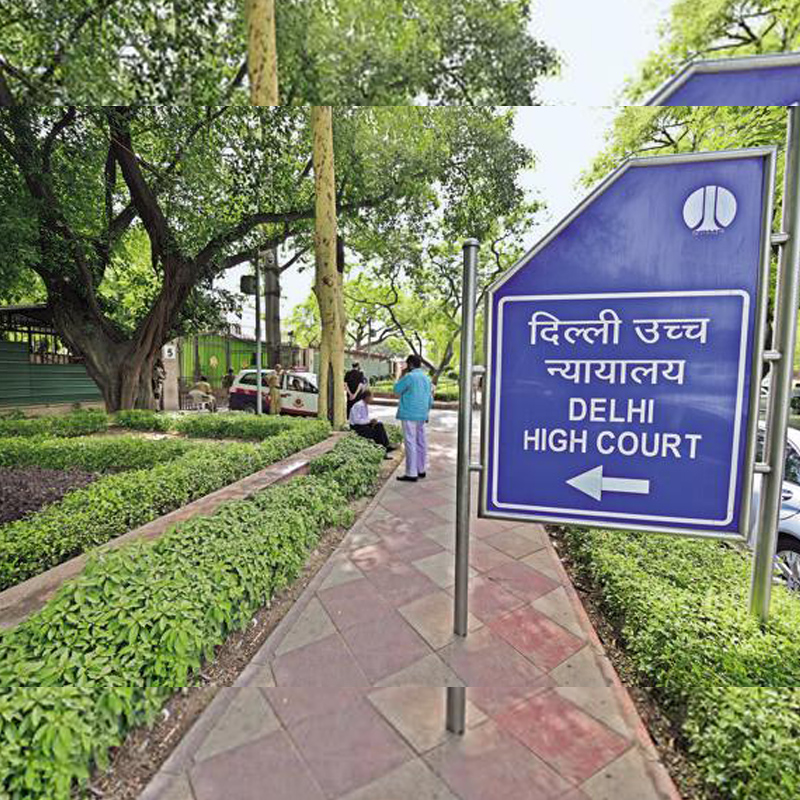
    NEW DELHI: The Babus in the Information and Broadcasting Ministry would certainly breathe a sigh of relief with Dellhi High Court having fixed the hearing of the large volume of cases relating to the third phase of digital addressable system pending in different High Courts for early next month.

    Although the last Task Force Meeting of 26 July had been informed that the cases would be heard from 13 September 2016, Indian Broadcasting Foundation sources told indiantelevision.com that these have been pre-poned to 7 and 8 September 2016. Notices have already been issued to the Ministry as well as the petitioners in various cases.

    While a bulk of the cases will be heard on the first day by Justice Sanjeev Sachdeva, two cases which had been heard by Division Benches in the High Courts – Digiana Systems and Om Network – will be heard on 8 September by a division bench of the High Court comprising Chief Justice G Rohini and Justice Sangeeta Dhingra. .

    The single-bench cases include those by AP MSOs Welfare Federation, Federation of Telangana MSO, Bhima Riddhi Digital Services, Multi System Operator Welfare Association, Rohtak Cable Operators Association, Sai Big Star Welfare Association, Shyam Baba Cable Network, Bharat Digital Cable Network, Nashik Zilla Cable Operators Association and Yogesh Cable Networks.

    This follows acceptance of a petition by the Information and Broadcasting Ministry to the Supreme Court asking it to transfer all linked cases to one High Court to ensure faster justice.

    The Task Force meeting had been informed that a total of 62 cases had been filed in different Courts and 29 cases had been transferred by various courts to Delhi by July-end. There were no such cases in twenty states, the Task Force was told. Of the 62 cases, 12 had been disposed off by respective courts and 3 cases had been withdrawn by the petitioners.

    While the Andhra Pradesh and Telengana High Court had given orders extending the deadline of 31 December 2015 for Phase III, the Bombay High Court had referred to the Kusum Ingots judgment which had said that if similar situation prevails in all states, then the stay can be pan-India. This was because the plea taken in all High Courts was shortage of set top boxes.

    But for the first time, the Ministry had admitted that the Law Ministry had observed that the order passed by the Andhra Pradesh High Court staying Phase III “appears to have all lndia applicability”. For that reason, the I and B Ministry had in fact asked its counsel not to oppose the stay or extension orders in the High Courts.

    indiantelevision.com had reported in January this year that the MIB had told the Punjab and Haryana high court that it had ‘decided not to press the requirement of having a STB as for now till the decision of the cases which are pending before various other high courts’

    However, the Ministry later approached the apex court with a plea for transfer of all similar cases to one High Court and the apex court had asked Delhi to handle these cases and directed notices to be sent to all other High Courts to forward the files to Delhi.

    The I and B Ministry will attempt to get a vacation of stay or extension of deadline in the various courts. The Ministry may also attempt to get orders directing all broadcasters, multi-system operators and local cable operators to transmit or receive signals only on signing of inter-connect agreements as stipulated by the Telecom Regulatory Authority of India.

    Meanwhile, Secretary Ajay Mittal in the last Task Force meeting reiterated that it was firm on Phase IV of digital addressable systems for cable television to commence on 31 December this year.

    He cautioned that MSOs and LCOs should desist from transmitting or re-transmitting un-authorized TV channels which are not permitted by the Ministry. He informed that the Ministry has written to all the district collectors/magistrates in this regard to take action under the law against those who are violating the law.
  • Indo-Bangladesh radio channel Akashvani Maitree launched by President Mukherjee

    Indo-Bangladesh radio channel Akashvani Maitree launched by President Mukherjee

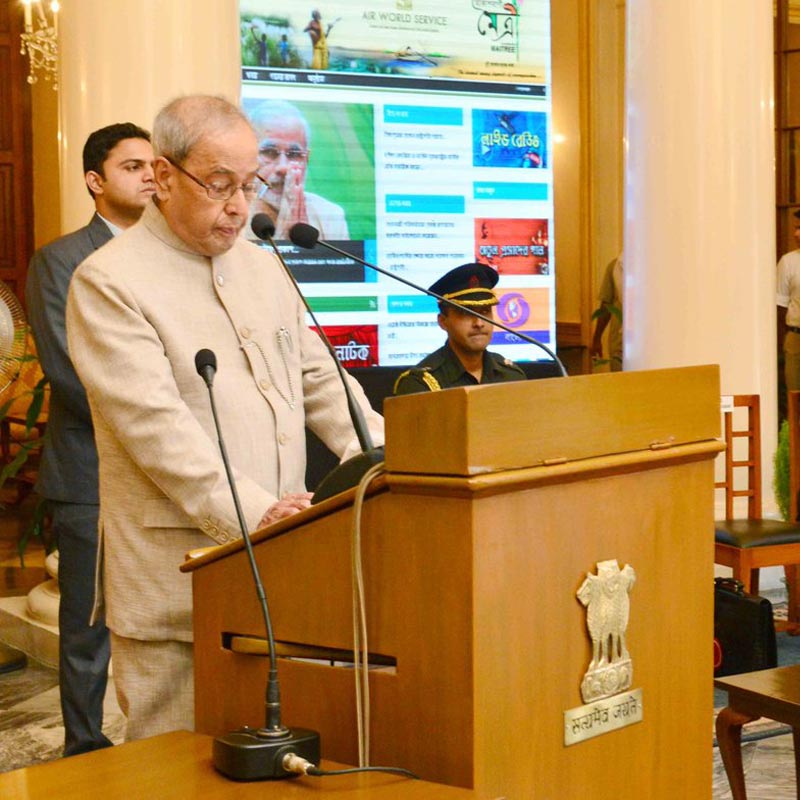
    NEW DELHI: President Pranab Mukherjee today said blending of software content from both India and Bangladesh in the fields of art, culture, literature, music, and sports will help promote and preserve the composite Bengali cultural heritage which is the proud inheritance of all Bengali speaking people.

    Launching Akashvani Maitree channel in Kolkata, he said this will make the channel a unique one and establish it in the hearts of millions of radio loving people both in India and Bangladesh as well as outside.

    Test trials had begun several months earlier and it was to have been launched in June but waited till the President could go.

    The President said India and Bangladesh are not just neighbours but are bound by an umbilical connection of ethnicity and kinship. India always attaches highest importance to bilateral relations with Bangladesh because of our shared history, heritage, culture, language, physical proximity and also the role which the two nations can play together for the development and prosperity of the entire subcontinent and beyond.

    The bedrock on which the edifice of this unique relationship stands is the unwavering faith of both the countries in democratic values, principles of liberalism, egalitarianism, secularism and respect for each other’s sovereignty and integrity.

    With the launch of Akashvani Maitree, he said a new chapter is being added in the annals of India-Bangladesh relations. He said that Akashvani Maitree and its multimedia website is a unique venture and initiative of All India Radio not only for the Bengali listeners in West Bengal, Bangladesh and the adjoining areas but the entire Bengali speaking Diaspora living in different parts of the globe.

    The station is a terrestrial channel beamed from Chinsurah from a state-of-the-art DRM high power transmitter which is capable of reaching out to listeners in both West Bengal and the whole of Bangladesh.

    AIR External Services Director Amlan Jyoti Mazumdar had earlier told Indiantelevision.com that the most unique aspect was that the new channel would also beam programmes that are either co-proiductions or produced by producers from Bangladesh. It could also be streamed online on airworldservice.org.

  • Indo-Bangladesh radio channel Akashvani Maitree launched by President Mukherjee

    Indo-Bangladesh radio channel Akashvani Maitree launched by President Mukherjee

    NEW DELHI: President Pranab Mukherjee today said blending of software content from both India and Bangladesh in the fields of art, culture, literature, music, and sports will help promote and preserve the composite Bengali cultural heritage which is the proud inheritance of all Bengali speaking people.

    Launching Akashvani Maitree channel in Kolkata, he said this will make the channel a unique one and establish it in the hearts of millions of radio loving people both in India and Bangladesh as well as outside.

    Test trials had begun several months earlier and it was to have been launched in June but waited till the President could go.

    The President said India and Bangladesh are not just neighbours but are bound by an umbilical connection of ethnicity and kinship. India always attaches highest importance to bilateral relations with Bangladesh because of our shared history, heritage, culture, language, physical proximity and also the role which the two nations can play together for the development and prosperity of the entire subcontinent and beyond.

    The bedrock on which the edifice of this unique relationship stands is the unwavering faith of both the countries in democratic values, principles of liberalism, egalitarianism, secularism and respect for each other’s sovereignty and integrity.

    With the launch of Akashvani Maitree, he said a new chapter is being added in the annals of India-Bangladesh relations. He said that Akashvani Maitree and its multimedia website is a unique venture and initiative of All India Radio not only for the Bengali listeners in West Bengal, Bangladesh and the adjoining areas but the entire Bengali speaking Diaspora living in different parts of the globe.

    The station is a terrestrial channel beamed from Chinsurah from a state-of-the-art DRM high power transmitter which is capable of reaching out to listeners in both West Bengal and the whole of Bangladesh.

    AIR External Services Director Amlan Jyoti Mazumdar had earlier told Indiantelevision.com that the most unique aspect was that the new channel would also beam programmes that are either co-proiductions or produced by producers from Bangladesh. It could also be streamed online on airworldservice.org.

  • Do not mix news with views and avoid speculation: Naidu

    Do not mix news with views and avoid speculation: Naidu

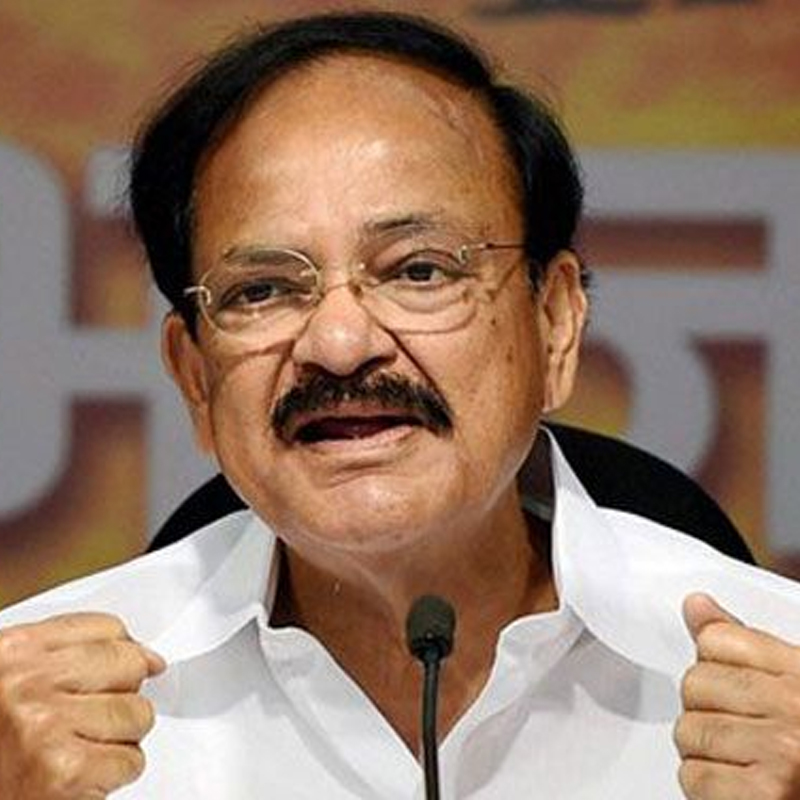
    NEW DELHI: Information & Broadcasting Minister M Venkaiah Naidu today handed out some sanskari (rooted in culture) advise to officials of All India Radio and Doordarshan while reminding them of a pubcaster’s responsibilities in dishing out information devoid of sensationalism.

    Stressing on the need for upholding credibility in dissemination of information by public broadcasters, the Minister said, “Public service broadcasters have a great responsibility on their shoulders to ensure credibility in the era of competition.”

    Naidu was speaking at a review meeting during a visit to the All India Radio (AIR) and Doordarshan (DD) centres in Hyderabad on Monday.
    Naidu infused confidence in the officials of different media units of Ministry of Information and Broadcasting (MIB) while interacting with them to understand their problems.

    He said the information empowerment of the people is quintessential in the age of information revolution, and information is “great ammunition in the hands of the people in fighting corruption, poverty and inequalities from the society for the overall development of India”.

    The Minister added that the public discourse should be guided by development rather than disruptive tactics and politics.
    Public broadcasters must excel in factual information while communicating to the mass audience. He advised those in the public broadcaster Prasar Bharati, parent of DD and AIR, not to jump to conclusions but confirm the news before putting it on air.

    “A public broadcaster, while disseminating information must abstain from obscenity, vulgarity and violence”, he said, adding that people in the media while producing programmes, plays, cultural programmes, must keep in mind India’s great heritage, culture, traditions and customs in mind.

    He advised people in media to maintain high standards in informing the masses, keeping in mind the philosophy and guidelines established by the founding fathers in various spheres of public life. “Let us not mix news with views and create a bad practice,” Naidu exhorted Prasar Bharati officials.

    He advocated that media should work together in bringing social harmony and discourage politicisation of social issues and not play into the hands of terrorists and to avoid in “turning them into heroes”.
    He wanted the media to be biased towards rural people, agriculturists, down trodden sections, women and disabled people in giving more coverage to highlight their grievances.

  • Do not mix news with views and avoid speculation: Naidu

    Do not mix news with views and avoid speculation: Naidu

    NEW DELHI: Information & Broadcasting Minister M Venkaiah Naidu today handed out some sanskari (rooted in culture) advise to officials of All India Radio and Doordarshan while reminding them of a pubcaster’s responsibilities in dishing out information devoid of sensationalism.

    Stressing on the need for upholding credibility in dissemination of information by public broadcasters, the Minister said, “Public service broadcasters have a great responsibility on their shoulders to ensure credibility in the era of competition.”

    Naidu was speaking at a review meeting during a visit to the All India Radio (AIR) and Doordarshan (DD) centres in Hyderabad on Monday.
    Naidu infused confidence in the officials of different media units of Ministry of Information and Broadcasting (MIB) while interacting with them to understand their problems.

    He said the information empowerment of the people is quintessential in the age of information revolution, and information is “great ammunition in the hands of the people in fighting corruption, poverty and inequalities from the society for the overall development of India”.

    The Minister added that the public discourse should be guided by development rather than disruptive tactics and politics.
    Public broadcasters must excel in factual information while communicating to the mass audience. He advised those in the public broadcaster Prasar Bharati, parent of DD and AIR, not to jump to conclusions but confirm the news before putting it on air.

    “A public broadcaster, while disseminating information must abstain from obscenity, vulgarity and violence”, he said, adding that people in the media while producing programmes, plays, cultural programmes, must keep in mind India’s great heritage, culture, traditions and customs in mind.

    He advised people in media to maintain high standards in informing the masses, keeping in mind the philosophy and guidelines established by the founding fathers in various spheres of public life. “Let us not mix news with views and create a bad practice,” Naidu exhorted Prasar Bharati officials.

    He advocated that media should work together in bringing social harmony and discourage politicisation of social issues and not play into the hands of terrorists and to avoid in “turning them into heroes”.
    He wanted the media to be biased towards rural people, agriculturists, down trodden sections, women and disabled people in giving more coverage to highlight their grievances.

  • TRAI gives 2nd extension to Internet telephony consultation

    TRAI gives 2nd extension to Internet telephony consultation

    NEW DELHI: The Telecom Regulatory Authority of India (TRAI), in a rare break with its own tradition, has given a second extension for stakeholders to respond to its consultation paper on Internet telephony, which discusses converged services like IPTV, mobile TV, etc.

    One extension had been given an extension for responses to come by today but has now said that responses can come by 5 September and counter-comments by 13 September 2016 with a noting that no further extensions would be allowed.

    Noting that unified IP based backbone and the benefits associated with the converged telecom access scenario has enabled service providers to launch more and more converged services such as Internet telephony, IPTV, mobile TV, etc., TRAI has on 22 June 2016 sought to know the format of voice over internet telephony (VoIP) in India.

    In the consultation paper, TRAI has also pointed out that use of Internet Protocol (IP)-based networks, including the Internet, continues to grow around the world due to the multitude of applications it supports and particularly due to VoIP. IP-based networks are capable of providing real-time services such as voice and video telephony as well as non real-time services such as email and are driven by faster Internet connections, widespread take-up in broadband and the emergence of new technologies.

    The terms “IP telephony”, “VoIP”, Internet telephony and other variants often generates confusion as there are many different definitions used by various organizations. Some use them interchangeably, while others give them distinct definitions. Further confusion is caused by using the terms to refer to both the IP-based technologies and the services that are enabled by these technologies.

    Convergence is primarily driven by increasing processing power, high capacity memory storage devices, reduced price, lesser power requirement and miniaturization of the devices. High-speed data transfer is now possible which is necessary for delivering innovative and advanced multimedia applications.

    Recent trends indicate that telecom operators are adopting converged platforms to deliver multimedia rich applications containing voice, video and data.

    The separation of service provisioning and its management from the underlying network infrastructure in packet based networks is further increasing the acceptability of IP based networks. It is now possible to separate provision of service contents, configuration and modification of service attributes regardless of the network catering such service. There has been enough evidence to suggest that in future IP networks will play much important role and may ultimately encourage migration of conventional networks towards Next Generation Networks or an All-IP Network.

  • TRAI gives 2nd extension to Internet telephony consultation

    TRAI gives 2nd extension to Internet telephony consultation

    NEW DELHI: The Telecom Regulatory Authority of India (TRAI), in a rare break with its own tradition, has given a second extension for stakeholders to respond to its consultation paper on Internet telephony, which discusses converged services like IPTV, mobile TV, etc.

    One extension had been given an extension for responses to come by today but has now said that responses can come by 5 September and counter-comments by 13 September 2016 with a noting that no further extensions would be allowed.

    Noting that unified IP based backbone and the benefits associated with the converged telecom access scenario has enabled service providers to launch more and more converged services such as Internet telephony, IPTV, mobile TV, etc., TRAI has on 22 June 2016 sought to know the format of voice over internet telephony (VoIP) in India.

    In the consultation paper, TRAI has also pointed out that use of Internet Protocol (IP)-based networks, including the Internet, continues to grow around the world due to the multitude of applications it supports and particularly due to VoIP. IP-based networks are capable of providing real-time services such as voice and video telephony as well as non real-time services such as email and are driven by faster Internet connections, widespread take-up in broadband and the emergence of new technologies.

    The terms “IP telephony”, “VoIP”, Internet telephony and other variants often generates confusion as there are many different definitions used by various organizations. Some use them interchangeably, while others give them distinct definitions. Further confusion is caused by using the terms to refer to both the IP-based technologies and the services that are enabled by these technologies.

    Convergence is primarily driven by increasing processing power, high capacity memory storage devices, reduced price, lesser power requirement and miniaturization of the devices. High-speed data transfer is now possible which is necessary for delivering innovative and advanced multimedia applications.

    Recent trends indicate that telecom operators are adopting converged platforms to deliver multimedia rich applications containing voice, video and data.

    The separation of service provisioning and its management from the underlying network infrastructure in packet based networks is further increasing the acceptability of IP based networks. It is now possible to separate provision of service contents, configuration and modification of service attributes regardless of the network catering such service. There has been enough evidence to suggest that in future IP networks will play much important role and may ultimately encourage migration of conventional networks towards Next Generation Networks or an All-IP Network.

  • European trust in media: radio outshines social networks, TV falls steeply

    European trust in media: radio outshines social networks, TV falls steeply

    NEW DELHI: This one will make radio fans go ga-ga with delight.

    Radio still remains the number one trusted source of news for European citizens even as the overall perception of the trustworthiness of the media has decreased over the last five years.

    The European Broadcasting Union (EBU) also found that social media, increasingly the primary source of news, is the least trusted, and even a distrusted medium in Europe.

    The annual Eurobarometer survey showed that although trust has decreased for radio as well, it remains by far the most trusted source of information. Most countries show a positive attitude towards radio and it came out as the primary trusted source in 20 countries, with an average of 55% positive response. Particularly high scores came from Sweden (74%), Finland (66%) and Denmark (57%).

    Television, the second most trusted medium, is still the number one source in 11 countries but trust in television has decreased much more rapidly over the last year than the other media – with 10 points as opposed to radio, which only fell by three points, and the written press, the internet, and social media which decreased by only one point.

    In only one out of 33 countries surveyed, Albania, the number of people who trusted social media as a source of news outweighed those who tended not to. In all other countries people “tend not to trust” social networks, with those in Sweden, Luxembourg, and Britain having the least trust in social networks as a source of information.

    The internet also scored particularly low, as in the majority of countries, people “tend not to trust” it. Only 12 countries had positive results, most of which are in Southeast Europe.

    The written press is not perceived to be much more trustworthy than the internet.

    Only 13 countries showed positive results, mostly in Nordic and Benelux regions where people have more trust in the press. In 14 countries it is regarded as the least trusted medium.

    Roberto Suárez Candel, head of Media Intelligence Service at EBU, told The Guardian that the results did not come as a surprise: “People maintain a strong relationship with radio and TV, which are still their primary sources of information and entertainment.”

    “It is also not surprising that in countries with a high level of funding for public service TV and radio there tends to be more trust in the media in general – they produce good quality content and provide valuable information for society,” he told The Guardian.

  • European trust in media: radio outshines social networks, TV falls steeply

    European trust in media: radio outshines social networks, TV falls steeply

    NEW DELHI: This one will make radio fans go ga-ga with delight.

    Radio still remains the number one trusted source of news for European citizens even as the overall perception of the trustworthiness of the media has decreased over the last five years.

    The European Broadcasting Union (EBU) also found that social media, increasingly the primary source of news, is the least trusted, and even a distrusted medium in Europe.

    The annual Eurobarometer survey showed that although trust has decreased for radio as well, it remains by far the most trusted source of information. Most countries show a positive attitude towards radio and it came out as the primary trusted source in 20 countries, with an average of 55% positive response. Particularly high scores came from Sweden (74%), Finland (66%) and Denmark (57%).

    Television, the second most trusted medium, is still the number one source in 11 countries but trust in television has decreased much more rapidly over the last year than the other media – with 10 points as opposed to radio, which only fell by three points, and the written press, the internet, and social media which decreased by only one point.

    In only one out of 33 countries surveyed, Albania, the number of people who trusted social media as a source of news outweighed those who tended not to. In all other countries people “tend not to trust” social networks, with those in Sweden, Luxembourg, and Britain having the least trust in social networks as a source of information.

    The internet also scored particularly low, as in the majority of countries, people “tend not to trust” it. Only 12 countries had positive results, most of which are in Southeast Europe.

    The written press is not perceived to be much more trustworthy than the internet.

    Only 13 countries showed positive results, mostly in Nordic and Benelux regions where people have more trust in the press. In 14 countries it is regarded as the least trusted medium.

    Roberto Suárez Candel, head of Media Intelligence Service at EBU, told The Guardian that the results did not come as a surprise: “People maintain a strong relationship with radio and TV, which are still their primary sources of information and entertainment.”

    “It is also not surprising that in countries with a high level of funding for public service TV and radio there tends to be more trust in the media in general – they produce good quality content and provide valuable information for society,” he told The Guardian.

  • TDSAT directs Sun will continue signals to CK Cable but asks MSO to pay Rs 19.25 lakh

    TDSAT directs Sun will continue signals to CK Cable but asks MSO to pay Rs 19.25 lakh

    NEW DELHI: Even as it said that the protection granted regarding the supply of signals shall continue, the Telecom Disputes Settlement and Appellate Tribunal directed CK Cable Network Pvt Ltd to make an on account payment of Rs 19,25,000 to Sun Distribution Services Pvt. Ltd within a period of three weeks from the date of order.

    Member B B Srivastava said that in addition the MSO will continue to pay the monthly subscription fee at the rate of Rs 3 lakh per month against invoices raised by Sun Distribution on the basis of agreement for the month of August 2016 and onwards till the final disposal of the matter.

    Listing the matter for 28 September 2016, the Tribunal in its order of 12 August 2016 said these payments would be without prejudice to the rights and contention of either parties; and shall be subject to final decision of the Tribunal.

    The Tribunal also directed that the MSO would provide a list of operators who were with him till September 2015 as well as the list of operators who have left his network till date along with the dates when they left. Similarly, the reduction in the number of subscribers with regard to each operator shall also be indicated. This shall be furnished By CK Cable to Sun Distribution within three weeks from the date of order.

    On receipt of the list, Sun Distribution will immediately communicate the date and time for joint survey to the petitioner and the same would be concluded not later than three weeks from the date of receipt of the list.

    During arguments, Sun Distribution counsel Abhishek Malhotra claimed that the MSO owed Rs 38,47,855.21 but this was contested by CK Cable counsel V Deenadayalan who has that the amount payable was only Rs 5,44,390.68.

    The miscellaneous application had been filed by Sun Distribution on the ground that it had followed the earlier order of the Tribunal and continued to supply signals, the MSO had defaulted.

    Deenadayalan drew the attention of the Tribunal to the order dated 1 June 2016 whereby it was clearly directed that since the respondent had not agreed to the reduction in the number of connections shown in the tabular chart handed over by the petitioner and there was a need for joint survey, the two sides will carry out a joint survey on a date and time indicated by the respondent to the petitioner. It was also clarified that the responsibility to initiate and conclude the joint survey will rest solely with Sun Distribution.