Category: Regulators

  • Leveraging culture for greater understanding among BRICS nations

    Leveraging culture for greater understanding among BRICS nations

    NEW DELHI: The BRICS (Brazil, Russia, India, China and South Africa) should leverage the culture, filming techniques and the market of the member nations to increase greater understanding and foster people-to-people exchange.

    This was the common view of BRICS delegates at a press meet just before the BRICS Film Festival in the capital.

    Those present at the press conference included Mr Hugo Lorenzetti Neto (Brazil), Mr Kirill Razligov (Russia), Mr C. Senthil Rajan (India who is Director of Film Festivals), Mr Zhou Jiandong and Ms Monica Newton (South Africa).

    The discussions focused on the similarities and differences in the cinema of the five BRICS countries, while focussing on the exchange of cultural diversities and techniques used by the cinema of these nations.

    ‘Building Responsive, Inclusive & Collective Solutions’ (BRICS) is the aim of the merger of the five coutries, aimed at enhancing bilateral and friendly relations. In the BRICS Summit 2015 held in Russia, Prime Minister Narendra Modi introduced the BRICS Film Festival, an addition to the yearly summits that would connect masses through the exchange of culture and art.

    ”Films made in a country connect to at least one of the other nations. The movies for the festival have been specially selected to showcase culture, art and history of the countries they are made in.” said Neto.

    Razligov said: “Discussions made at the BRICS Film Festival will help us better understand the complexities and art of film making by the member nations. We all need to work in cooperation and create films together to bring people closer.”

    Speaking on the occasion, Rajan said, “The BRICS Film Festival will begin a new journey to witness the growth of the rich cinema of the five countries. This step will be leveraged as a bridge to take cinema making to a new level through the exchange of techniques, art and ideas. Furthermore, the festival will serve as an opportunity for the people to interact and learn the culture of the participating nations.”

    Highlighting the role of cinema in creating friendly relations, Jiandong said, “Indian films from the period of 1970 to 1980 were quite famous in China and today we have movies like Xuan Zang, where the actors of China and India have worked together to create a masterpiece. Cinema plays a key role in creating harmonious relations as the films speak universal language to the world.”

    “The BRICS Film Festival is the first of its kind, which will bring the masses together. This festival is an amazing canvas to exchange the art work of the five countries that has never been done before. For a young country like South Africa, the sphere of innovation and development in cinema is large, where we are learning from the member nations.” added Ms. Newton.

    The cultural diversity of the nations will also be portrayed through the Craft Fair organized at the festival, where the member countries will set up their stalls with souvenirs and products for sale. At this five-day bioscope of culture, art, films and food, one can explore exclusive cuisines from all the BRICS nations at the Food Court, arranged in the festival venue.

    Starting tomorrow, the film festival will have special meets with the cast and crew from the five nations, movie screenings and Film Panchayats, panel discussions with renowned personalities on the topics ranging from Cinema and Nation building, Women in BRICS Cinema, BRICS coproduction , Opportunities and Challenges, etc.

    Twenty films – four each from Brazil, Russia, India, China and South Africa – are to feature in the first government level BRICS Film Festival toi be held in here early next month.
    Malayalam movie Veeram will be the opening film for the festival being held from 2 to 6 September at Siri Fort Auditorium.

    They jury is headed by eminent Kannada filmmaker T S Nagabharana. Other members are producer and curator Francis Vogner do Reis from Brazil; Kirill Razlogov of Russia who has served as a special adviser for 11 years on film history and international affairs to the President of Goskino of the USS; Hou Keming of China who is a professor of the direction department of Beijing Film Academy and chairperson of the China Children’s Film Association and the president of China International Children’s Film Festival; and Ms. Xoliswa Sithole of South Africa who is founder and director, of Nayanaya Pictures and the founding member of Filmmakers against Racism.
  • Media told to exercise self-regulation and ensure balance

    Media told to exercise self-regulation and ensure balance

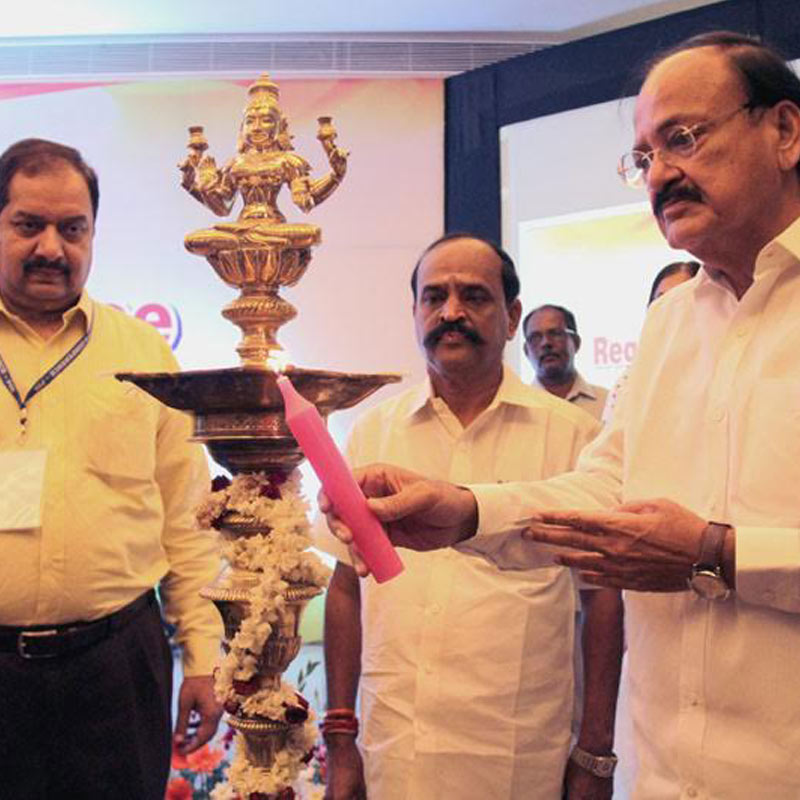
    NEW DELHI: Information & Broadcasting Minister M Venkaiah Naidu has stressed on the need for self-regulation and reasonable restrictions in the context of rapid expansion of different forms of media in the country and the attendant competition in reporting on various events to maintain public order and ensure integrity and sovereignty of the country.

    Inaugurating a two day ‘Regional Editors Conference’ at Chennai today, Naidu said that there is a need to ensure balance between freedom of expression and the genuine need for reasonable restrictions to ensure that that there is no ‘divisive communication’ given the social, cultural and economic diversity in the country. About 100 media persons from the southern states and Lakshdweep are attending the conference.

    Self-regulation by media could be useful in this regard, he said. The growing compulsion of ‘instant communication’ should not lead media away from truthful reporting, the Minister stressed.

    He urged the media to effectively play out its role as a partner in the progress of the nation by empowering the citizens with required information that would give them a voice. Naidu noted that success of developmental programmes of central and state governments depend on mass mobilization of people in which the media has an important role to play. “Hence, the Government led by Prime Minister Narendra Modi has placed communication as a critical component in the Governance of the Nation”, he added.

    Noting that media in the country has been by and large progressive, Naidu reminded it of its first responsibility being towards the nation and the society. He noted that despite the emergence of new forms of media, print media has been reporting steady growth which is being driven by the growth of regional media. Naidu noted that regional media is uniquely placed in connecting the governments and the people given their focus on regional and local issues and their proximity to the people.

    He expressed concern over politicization of public discourse on issues that have a bearing on social cohesion and national unity and integrity. He said that “Human rights are meant for human being and not for terrorists. One should not identify those imprisoned by their caste or religion. Illegal detention is not correct. One can seek fast track adjudication but not on the basis of caste or religion. Media should guard itself while reporting on such demands and events”.

    Tamil Nadu Information & Publicity Minister Kadambur Raju referred to the developmental initiatives of the State Government, the efforts being made to create an enabling environment for effective functioning of the media and the positive role being played by the media.

    The two day Regional Editors conference organized by the Press Information Bureau is aimed at sharing with the senior journalists of the southern States and Union Territories, the perspectives of and performance under new initiatives of the Government of India in sectors pertaining to Urban Development, Information Technology, Coastal security, Commerce and Industry and Shipping and Highways Development.

  • Media told to exercise self-regulation and ensure balance

    Media told to exercise self-regulation and ensure balance

    NEW DELHI: Information & Broadcasting Minister M Venkaiah Naidu has stressed on the need for self-regulation and reasonable restrictions in the context of rapid expansion of different forms of media in the country and the attendant competition in reporting on various events to maintain public order and ensure integrity and sovereignty of the country.

    Inaugurating a two day ‘Regional Editors Conference’ at Chennai today, Naidu said that there is a need to ensure balance between freedom of expression and the genuine need for reasonable restrictions to ensure that that there is no ‘divisive communication’ given the social, cultural and economic diversity in the country. About 100 media persons from the southern states and Lakshdweep are attending the conference.

    Self-regulation by media could be useful in this regard, he said. The growing compulsion of ‘instant communication’ should not lead media away from truthful reporting, the Minister stressed.

    He urged the media to effectively play out its role as a partner in the progress of the nation by empowering the citizens with required information that would give them a voice. Naidu noted that success of developmental programmes of central and state governments depend on mass mobilization of people in which the media has an important role to play. “Hence, the Government led by Prime Minister Narendra Modi has placed communication as a critical component in the Governance of the Nation”, he added.

    Noting that media in the country has been by and large progressive, Naidu reminded it of its first responsibility being towards the nation and the society. He noted that despite the emergence of new forms of media, print media has been reporting steady growth which is being driven by the growth of regional media. Naidu noted that regional media is uniquely placed in connecting the governments and the people given their focus on regional and local issues and their proximity to the people.

    He expressed concern over politicization of public discourse on issues that have a bearing on social cohesion and national unity and integrity. He said that “Human rights are meant for human being and not for terrorists. One should not identify those imprisoned by their caste or religion. Illegal detention is not correct. One can seek fast track adjudication but not on the basis of caste or religion. Media should guard itself while reporting on such demands and events”.

    Tamil Nadu Information & Publicity Minister Kadambur Raju referred to the developmental initiatives of the State Government, the efforts being made to create an enabling environment for effective functioning of the media and the positive role being played by the media.

    The two day Regional Editors conference organized by the Press Information Bureau is aimed at sharing with the senior journalists of the southern States and Union Territories, the perspectives of and performance under new initiatives of the Government of India in sectors pertaining to Urban Development, Information Technology, Coastal security, Commerce and Industry and Shipping and Highways Development.

  • Minister hints Consumer Protection Bill passage next Parliament session

    Minister hints Consumer Protection Bill passage next Parliament session

    NEW DELHI. The Consumer Protection Bill 2015, seeking to amend the archaic Consumer Protection Act and make provisions for penalising misleading advertisements and celeb endorsers, could be enacted into a law in the next session of Parliament, which is likely to reconvene later this month.

    Consumer Affairs Minister Ram Vilas Paswan indicated this while inaugurating the sixth edition of Massmerize 2016, FICCI’s annual flagship Retail, FMCG & E-Commerce Convention.

    Paswan said it was important for the industry to win the trust of the consumers and weed out companies indulging in misleading advertisements that often played with the health of the consumers. The onus, he said, was on industry to deliberate on this issue with seriousness and identify factors that are inimical to industry’s growth.

    Consumer Affairs Ministry sources, in the meanwhile, told  indiantelevision.com that the recommendations of the Parliamentary Standing Committee concerned were still under consideration and the Bill may be further amended if these recommendations are accepted.

    The three decades old Consumer Protection Act was seen as an inefficient piece of legislation, out of step with new market dynamics, multi-layered delivery chains, innovative and, often, misleading advertising and marketing machinery as earlier reported by indiantelevision.com.

    FICCI FMCG Committee Chairman and COO, ITC, Sanjiv Puri, gave the FMCG industry perspective, indicating that the FMCG sector which today stands at close to Rs 230,000 crore is expected to climb to Rs 600,000 crore by the end of the decade.

    Puri said that the food processing sector was today taxed at over 25% across the whole value chain and called for a much more moderate rate of tax in the GST regime. The losses in terms of revenue to the government will be compensated for by a widened tax base.  

    Tata Sons GEC member Harish Bhat said the march of digitalization was changing the consumer profile in the country as by 2020 close to 220 million consumers will be online shoppers, a six-fold increase from now. He added that the key consumer trends indicated that health and wellness were a major requirement of the consumers and digital connectivity was driving this demand. He suggested that industry and government come together to find innovative solutions to satisfy consumer demand.

    ALSO READ

    Misleading ads: Govt moots proposal to penalise celeb endorsers


  • Minister hints Consumer Protection Bill passage next Parliament session

    Minister hints Consumer Protection Bill passage next Parliament session

    NEW DELHI. The Consumer Protection Bill 2015, seeking to amend the archaic Consumer Protection Act and make provisions for penalising misleading advertisements and celeb endorsers, could be enacted into a law in the next session of Parliament, which is likely to reconvene later this month.

    Consumer Affairs Minister Ram Vilas Paswan indicated this while inaugurating the sixth edition of Massmerize 2016, FICCI’s annual flagship Retail, FMCG & E-Commerce Convention.

    Paswan said it was important for the industry to win the trust of the consumers and weed out companies indulging in misleading advertisements that often played with the health of the consumers. The onus, he said, was on industry to deliberate on this issue with seriousness and identify factors that are inimical to industry’s growth.

    Consumer Affairs Ministry sources, in the meanwhile, told  indiantelevision.com that the recommendations of the Parliamentary Standing Committee concerned were still under consideration and the Bill may be further amended if these recommendations are accepted.

    The three decades old Consumer Protection Act was seen as an inefficient piece of legislation, out of step with new market dynamics, multi-layered delivery chains, innovative and, often, misleading advertising and marketing machinery as earlier reported by indiantelevision.com.

    FICCI FMCG Committee Chairman and COO, ITC, Sanjiv Puri, gave the FMCG industry perspective, indicating that the FMCG sector which today stands at close to Rs 230,000 crore is expected to climb to Rs 600,000 crore by the end of the decade.

    Puri said that the food processing sector was today taxed at over 25% across the whole value chain and called for a much more moderate rate of tax in the GST regime. The losses in terms of revenue to the government will be compensated for by a widened tax base.  

    Tata Sons GEC member Harish Bhat said the march of digitalization was changing the consumer profile in the country as by 2020 close to 220 million consumers will be online shoppers, a six-fold increase from now. He added that the key consumer trends indicated that health and wellness were a major requirement of the consumers and digital connectivity was driving this demand. He suggested that industry and government come together to find innovative solutions to satisfy consumer demand.

    ALSO READ

    Misleading ads: Govt moots proposal to penalise celeb endorsers


  • TDSAT forbids VXL Digital to receive signals from any MSO after dispute with Indiacast

    TDSAT forbids VXL Digital to receive signals from any MSO after dispute with Indiacast

    NEW DELHI: VXL Digital Pvt Ltd has been directed by the Telecom Disputes Settlement and Appellate Tribunal not receive any signals from any multi-system operator, following a petition relating to pending arrears by broadcaster lndiacast Distribution Pvt Ltd.

    Member B B Srivastava however said this did not preclude VXL Digital from giving clarifications for seeking for a modification or cancellation of this restraint order.

    Admitting the petition, the Tribunal listed it for further hearing on 6 October 2016 giving time to VXL Digital to reply and Indiacast to file rejoinder.

    Broadcaster lndiacast Distribution said the total arrears amounted to Rs 45.63 lakh.

    The broadcaster’s counsel Navin Chawla said VXL Digital had on 9 June 2016 given an undertaking to clear all the arrears in five equal installments by 30 November 2016 but nothing had been paid so far.

    Furthermore, VXL Digital had on 10 August 2016 informed Indiacast about its decision to wind up its cable business because of “financial distress caused by unreasonable subscription charges payable for distributing pay channels.”

    However, he saud Indiacast had learnt that VXL Digital had started receiving signals from India Cable Network Co Ltd and presented a video to prove this.

  • TDSAT forbids VXL Digital to receive signals from any MSO after dispute with Indiacast

    TDSAT forbids VXL Digital to receive signals from any MSO after dispute with Indiacast

    NEW DELHI: VXL Digital Pvt Ltd has been directed by the Telecom Disputes Settlement and Appellate Tribunal not receive any signals from any multi-system operator, following a petition relating to pending arrears by broadcaster lndiacast Distribution Pvt Ltd.

    Member B B Srivastava however said this did not preclude VXL Digital from giving clarifications for seeking for a modification or cancellation of this restraint order.

    Admitting the petition, the Tribunal listed it for further hearing on 6 October 2016 giving time to VXL Digital to reply and Indiacast to file rejoinder.

    Broadcaster lndiacast Distribution said the total arrears amounted to Rs 45.63 lakh.

    The broadcaster’s counsel Navin Chawla said VXL Digital had on 9 June 2016 given an undertaking to clear all the arrears in five equal installments by 30 November 2016 but nothing had been paid so far.

    Furthermore, VXL Digital had on 10 August 2016 informed Indiacast about its decision to wind up its cable business because of “financial distress caused by unreasonable subscription charges payable for distributing pay channels.”

    However, he saud Indiacast had learnt that VXL Digital had started receiving signals from India Cable Network Co Ltd and presented a video to prove this.

  • DAS Phase IV: IBF asked to up campaign in addition to MIB ads

    DAS Phase IV: IBF asked to up campaign in addition to MIB ads

    NEW DELHI: Digitisation of Indian TV homes, thought to be the panacea for many ills afflicting the broadcasting and cable eco-system, may have slowed down in recent times, but the government is earnest in adhering to deadlines and has sought active involvement of industry bodies like the IBF and other stakeholders in pushing digitisation in laggard States through aggressive consumer education.

    At a meeting of the Task Force on Digital Addressable System (DAS) here yesterday, Ministry of Information and Broadcasting (MIB) conveyed to all concerned that deadlines and goals posts would not be moved, even while it requested the Indian broadcasting Foundation (IBF) to be more pro-active in educating consumers and stakeholders about digitisation.

    Reports submitted by the various States on the progress with regard to the implementation of DAS in Phase IV showed that Rajasthan, Bihar and Jharkhand were the three most backward states as far as digitisation go.

    The DAS Task Force meeting, held under the chairmanship of new MIB Additional Secretary Jayashree Mukherjee, was told by representative from Uttar Pradesh that cable operators in some districts had complained that digital signals were not available. MIB sought details so that the issue could be examined and resolved.

    Representatives of most other States present at the meeting reported satisfactory progress and claimed they were on track.

    The meeting, which was also addressed by MIB Advisor (DAS) Yogendra Pal and Joint Secretary (Broadcasting) Sanjay Murthy, was apprised by representatives of broadcasters that they had stepped up publicity to create awareness about DAS in the Phase IV areas.

    Phase IV areas, needing approximately 75 million set-top boxes (STBs) as per industry estimates, mostly comprise rural India’s smaller hamlets and towns where selling the idea of digitisation and getting a STB at home itself is considered a challenging task by LCOs, MSOs and other stakeholders.

    Keeping this in mind, IBF was asked by the MIB to shoot off more publicity campaigns in addition to those given by the Ministry so that outreach initiatives could be stepped up further to reach the targeted segments.
    Joint-secretary Murthy apprised those present at the meeting that court cases related to DAS were coming up for hearing before the Delhi High Court early September 2016 and expressed the hope that the court would give a positive decision on the matter quickly.

    Meanwhile, advisor Pal asked MSOs to ensure that inter-connect agreements are signed with the broadcasters as MIB and the Telecom Regulatory Authority of India (TRAI) had reiterated. The Telecom Disputes Settlement and Appellate Tribunal (TDSAT) too had held that no signals could be supplied until proper inter-connect agreements were in place.

    The MSOs were asked to approach TRAI if they were facing any difficulty in arriving at agreements with broadcasters and LCOs.
    Mukherjee and Pal reiterated that there was no question of putting off the deadline of 31 December 2015 for Phase III as far as the government was concerned.

    The government reiterated that digitization of cable TV systems in the entire country would be — and should be — completed by 31 December 2016.

  • DAS Phase IV: IBF asked to up campaign in addition to MIB ads

    DAS Phase IV: IBF asked to up campaign in addition to MIB ads

    NEW DELHI: Digitisation of Indian TV homes, thought to be the panacea for many ills afflicting the broadcasting and cable eco-system, may have slowed down in recent times, but the government is earnest in adhering to deadlines and has sought active involvement of industry bodies like the IBF and other stakeholders in pushing digitisation in laggard States through aggressive consumer education.

    At a meeting of the Task Force on Digital Addressable System (DAS) here yesterday, Ministry of Information and Broadcasting (MIB) conveyed to all concerned that deadlines and goals posts would not be moved, even while it requested the Indian broadcasting Foundation (IBF) to be more pro-active in educating consumers and stakeholders about digitisation.

    Reports submitted by the various States on the progress with regard to the implementation of DAS in Phase IV showed that Rajasthan, Bihar and Jharkhand were the three most backward states as far as digitisation go.

    The DAS Task Force meeting, held under the chairmanship of new MIB Additional Secretary Jayashree Mukherjee, was told by representative from Uttar Pradesh that cable operators in some districts had complained that digital signals were not available. MIB sought details so that the issue could be examined and resolved.

    Representatives of most other States present at the meeting reported satisfactory progress and claimed they were on track.

    The meeting, which was also addressed by MIB Advisor (DAS) Yogendra Pal and Joint Secretary (Broadcasting) Sanjay Murthy, was apprised by representatives of broadcasters that they had stepped up publicity to create awareness about DAS in the Phase IV areas.

    Phase IV areas, needing approximately 75 million set-top boxes (STBs) as per industry estimates, mostly comprise rural India’s smaller hamlets and towns where selling the idea of digitisation and getting a STB at home itself is considered a challenging task by LCOs, MSOs and other stakeholders.

    Keeping this in mind, IBF was asked by the MIB to shoot off more publicity campaigns in addition to those given by the Ministry so that outreach initiatives could be stepped up further to reach the targeted segments.
    Joint-secretary Murthy apprised those present at the meeting that court cases related to DAS were coming up for hearing before the Delhi High Court early September 2016 and expressed the hope that the court would give a positive decision on the matter quickly.

    Meanwhile, advisor Pal asked MSOs to ensure that inter-connect agreements are signed with the broadcasters as MIB and the Telecom Regulatory Authority of India (TRAI) had reiterated. The Telecom Disputes Settlement and Appellate Tribunal (TDSAT) too had held that no signals could be supplied until proper inter-connect agreements were in place.

    The MSOs were asked to approach TRAI if they were facing any difficulty in arriving at agreements with broadcasters and LCOs.
    Mukherjee and Pal reiterated that there was no question of putting off the deadline of 31 December 2015 for Phase III as far as the government was concerned.

    The government reiterated that digitization of cable TV systems in the entire country would be — and should be — completed by 31 December 2016.

  • K. Sanjay Murthy new MIB jt secy broadcasting

    K. Sanjay Murthy new MIB jt secy broadcasting

    NEW DELHI: There’s change at the top at India’s ministry of information & broadcasting (MIB) in Shastri Bhawan. Joint secretary (films) K. Sanjay Murthy – who was holding additional charge of the broadcasting section along with another joint secretary Mihir Kumar Singh – was officially given complete charge of broadcasting on 29 August. He has taken over the work that was being handled by R. Jaya.

    As joint secretary films and he had made his mark with the initiatives he had taken which had benefited the Indian film community.

    Additionally, director (films) Anshu Sinha has been promoted as joint secretary (films). Earlier reports were that she would be replacing R. Jaya in the broadcasting section.

    Finally, Jayashree Mukherjee – from the Maharashtra IAS cadre – who was appointed as additional secretary mid-July has moved into her Shastri Bhawan office 20 days ago. A mild spoken lady, she replaced special secretary JS Mathur who was promoted as secretary Panchayati Raj.

    Both Mukherjee and Murthy have been given charge during challenging times. The countdown for the fourth phase of DAS has begun with the sunset date being 31 December 2016. Additionally, even phase III is stuck in the analogue mode courtesy a flurry of cases which have been filed in various courts.