Category: Regulators

  • Govt favours net neutrality; data is the new oil: RS Prasad

    Govt favours net neutrality; data is the new oil: RS Prasad

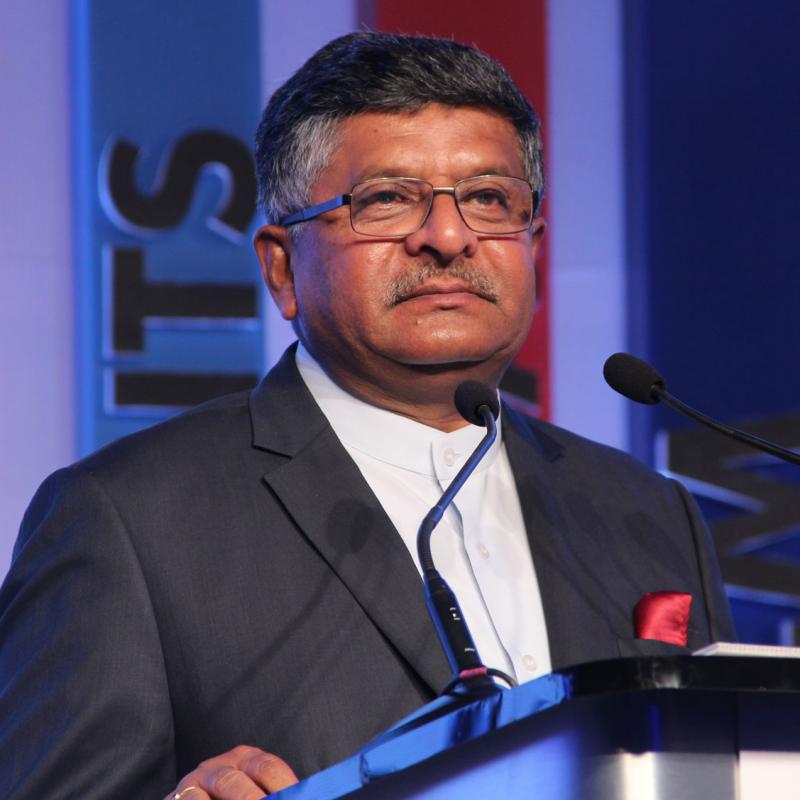
    NEW DELHI: The much-debated net neutrality issue got some additional boost from the Indian minister of electronics & information technology and law & justice Ravi Shankar Prasad when he said that the government favours non-discriminatory access to the Internet.

    “We are strong advocates of non-discriminatory access to Internet and democratization of Internet governance,” Prasad said yesterday while dwelling on the issue of net neutrality and digital dividends to average citizens.

    However, he didn’t elaborate on the net neutrality (and OTT) issue, which is being studied by the Telecom Regulatory Authority of India (TRAI) in totality for possible guidelines and regulations. TRAI has already undertaken a lengthy consultation process with various stakeholders and its final recommendations are awaited.

    Pointing out that India is home to 270 million smart-phones, a number that’s likely to swell to 500 million in few years time, Prasad said that India doesn’t want to miss out on the digital revolution having missed the industrial revolution.

    Making a case for more efficient bandwidth availability at affordable rates to an average Indian, Prasad said, “Data is the new oil… (and) digital India is ideology neutral, politics neutral and only pro-India.”

    Prasad, who was delivering the inaugural address at the Observer Research Foundation (ORF)-organised “CyFy 2016: Digital Asia & Scripting the New Governance Order” here yesterday evening, asserted if a digital profile of India is drawn it would look something like this: 1.03 billion mobile phones, 1.05 million digital identity (Aadhaar cards) and  400 million internet users, apart from a digital army of young people who have fanned out in rural areas running Common Services Centres at more than 200,000 places.

    Enumerating the various digital initiatives undertaken under the Digital India plan, something that is very dear to Prime Minister Modi, the senior minister opined that the government had undertaken some “path-breaking” programmes.

    “Digital India is for the under-privileged… (and) digital inclusion will come about with digital connect,” the Minister said, adding the government was creating a digital infrastructure for Indians so that citizens could reap digital dividends aplenty.

    Pointing out that a digital India would provide more effective governance and remove socialistic-era licence regime, Prasad said in a few years time India would become a $ 1 trillion digital economy.     

    But the cyber space also brings along many dangers. Emphasising on the importance of precaution, Prasad said, “Governments of all countries have to come together to safeguard their citizens from the threats of cyber crimes.”

    ORF, which annually organises a conference on cyber-related issues, including security and entertainment, is an independent self-sustaining think-tank. Having started in the early 1990s, it has been backed by the now Mukesh Ambani-controlled Reliance Industries.

    The full address of the minister could be viewed here:

    https://www.facebook.com/RaviShankarPrasadOfficial/videos/10154464395568329/
     

  • MIB, TRAI to examine DAS Phase III interconnect issues

    MIB, TRAI to examine DAS Phase III interconnect issues

    NEW DELHI: Multi-system operators and local cable operators were yesterday assured by senior officials of the Ministry of Information and Broadcasting (MIB) and the Telecom Regulatory Authority of India  (TRAI) that contentious issues relating to interconnect agreements of Phase III of digitisation would be resolved.

    In a meeting held under the chairmanship of MIB additional secretary Jayashree Mukherjee, the MSOs and LCOs presented problems being faced by them.

    Primarily, the issues arise in the areas switching from analogue to digital addressable system and where the MSOs and LCOs have to sign fresh interconnect agreements with broadcasters.

    In the last meeting of the DAS Task Force on 31 August 2016, it was stated that the broadcasters should request the MSOs with whom they have interconnect agreements but who have not applied for MSO registration whether they were interested to work as an MSO in DAS-notified area failing which they would not be able to act as an MSO after the cut-off date.

    MIB was told that there are around 6,000 MSOs operating in the country, but only about 1,300 had applied for the MSO registration.

    The Indian Broadcasting Foundation (IBF) representative was requested to ensure that similar action is taken by all members of the organisation and also that a list of member-boradcasters with their e-mail addresses is sent so that MIB  could also write to them.

    ALSO READ:

    What really happened at the 16th DAS Task Force meeting

    TRAI may moot MRP for bouquet TV channels; no price cap on unbundled premium products

  • MIB, TRAI to examine DAS Phase III interconnect issues

    MIB, TRAI to examine DAS Phase III interconnect issues

    NEW DELHI: Multi-system operators and local cable operators were yesterday assured by senior officials of the Ministry of Information and Broadcasting (MIB) and the Telecom Regulatory Authority of India  (TRAI) that contentious issues relating to interconnect agreements of Phase III of digitisation would be resolved.

    In a meeting held under the chairmanship of MIB additional secretary Jayashree Mukherjee, the MSOs and LCOs presented problems being faced by them.

    Primarily, the issues arise in the areas switching from analogue to digital addressable system and where the MSOs and LCOs have to sign fresh interconnect agreements with broadcasters.

    In the last meeting of the DAS Task Force on 31 August 2016, it was stated that the broadcasters should request the MSOs with whom they have interconnect agreements but who have not applied for MSO registration whether they were interested to work as an MSO in DAS-notified area failing which they would not be able to act as an MSO after the cut-off date.

    MIB was told that there are around 6,000 MSOs operating in the country, but only about 1,300 had applied for the MSO registration.

    The Indian Broadcasting Foundation (IBF) representative was requested to ensure that similar action is taken by all members of the organisation and also that a list of member-boradcasters with their e-mail addresses is sent so that MIB  could also write to them.

    ALSO READ:

    What really happened at the 16th DAS Task Force meeting

    TRAI may moot MRP for bouquet TV channels; no price cap on unbundled premium products

  • TRAI may moot MRP for bouquet TV channels; no price cap on unbundled premium products

    TRAI may moot MRP for bouquet TV channels; no price cap on unbundled premium products

    MUMBAI: Broadcast carriage regulator Telecom Regulatory Authority of India (TRAI) has lined up a slew of draft guidelines relating to tariff, quality of service and interconnections, including proposing maximum retail price (MRP) for channels being bundled in genre-wise bouquets, freeing unbundled premium channels of  price caps and reining in the last mile cable operator (LCO) from breaching revenue-gravy trail.

    The draft recommendations, outcome of several consultation papers issued by TRAI over the last 12 months, could be discussed in a meeting that the regulator likely to have on Wednesday with stakeholders. Representatives of organisations like All-India Digital Cable Federation (AIDCF), Indian Broadcasting Foundation (IBF) and Ministry of Information and Broadcasting (MIB) are likely to be part of the meeting.

    Other topics for discussion at this meeting may revolve aroundanalogue tariffs to be levied in phase III and phase IV areas until sunset dates.

    Sources in TRAI indicated the regulator is in favour of introducing MRP for TV channels that broadcasters offer in a bouquet to MSOs so the prices could be conveyed to a consumer in a transparent manner for him to make an empowered choice.

    Though broadcasting companies do submit annually a-la-carte rates of their respective channels to TRAI, the regulator is of the opinion that a consumer doesn’t ultimately get to choose the channel of his choice transparently.

    How will the MRP be fixed? TRAI feels that the broadcasters should convey the price themselves as they were the best judge of their products and the same would be conveyed to the consumer. Or, the regulator could moot a formula for fixing the MRP.

    Fully aware that such measures could be termed restrictive and intrusive by industry players, TRAI is likely to dangle sops and suggest that broadcasters were free to price a premium channel at any level, but such channels cannot be part of any bouquet or bundling.

    The draft proposals, being fine-tuned by TRAI officials, are likely to be put out in public domain over the next 7-10 days. As these guidelines pertain to carriage services, the regulator can notify them itself. The likely date from which they would come into effect is April 2017. Unless, of course, somebody moves the court challenging the guidelines.

    Apart from these, TRAI is also toying with the idea of introducing an app with the help of which a consumer can get a TV channel from his distribution platform operator (DPO) after furnishing details like area of residence and area service provider’s name. The details will be get forwarded to the DPO concerned for further action.

    TRAI feels that with over 90 per cent of the areas in Phase 1, II and III already receiving digitised TV services, there would be no dearth of opportunities even if the sunset date of December 2016 for Phase IV or complete digitisation gets pushed by few months into 2017.

    In its consultation paper, issued in January 2016, TRAI had stated broadcast industry in India had been driven largely by satellite TV distribution business and unorganized growth of cable TV. During the early days, broadcasters were directly dealing with the cable operators who aggregated and carried broadcast TV services to end users. The distribution model was, according to the regulator, heavily skewed towards advertisement-driven revenues due to difficulties in maintaining transparency in the flow of subscription revenues across the analog value chain, which have become more transparent with the rollout of digital services or digitisation pushed by MIB andTRAI.

    Though TRAI had mandated a-la-carte availability of broadcast TV channels across the value chain, including subscribers, the a-la-carte tariff is presently structured in such a manner that makes it devoid of value proposition vis-à-vis bundled offerings,TRAI highlighted in its January paper (available at http://www.trai.gov.in/WriteReadData/ConsultationPaper/Document/CP_Tariff_issues_29_Jan_2016_final.pdf ), adding consumer was the “ultimate sufferer” ending up receiving hundreds of TV channels many of which remain confined to his STB and never viewed.

    ALSO READ: TRAI releases consultation paper on tariff issues for TV services

    ALSO READ: TRAI allows more time for reactions on QoS methodology under DAS

  • TRAI may moot MRP for bouquet TV channels; no price cap on unbundled premium products

    TRAI may moot MRP for bouquet TV channels; no price cap on unbundled premium products

    MUMBAI: Broadcast carriage regulator Telecom Regulatory Authority of India (TRAI) has lined up a slew of draft guidelines relating to tariff, quality of service and interconnections, including proposing maximum retail price (MRP) for channels being bundled in genre-wise bouquets, freeing unbundled premium channels of  price caps and reining in the last mile cable operator (LCO) from breaching revenue-gravy trail.

    The draft recommendations, outcome of several consultation papers issued by TRAI over the last 12 months, could be discussed in a meeting that the regulator likely to have on Wednesday with stakeholders. Representatives of organisations like All-India Digital Cable Federation (AIDCF), Indian Broadcasting Foundation (IBF) and Ministry of Information and Broadcasting (MIB) are likely to be part of the meeting.

    Other topics for discussion at this meeting may revolve aroundanalogue tariffs to be levied in phase III and phase IV areas until sunset dates.

    Sources in TRAI indicated the regulator is in favour of introducing MRP for TV channels that broadcasters offer in a bouquet to MSOs so the prices could be conveyed to a consumer in a transparent manner for him to make an empowered choice.

    Though broadcasting companies do submit annually a-la-carte rates of their respective channels to TRAI, the regulator is of the opinion that a consumer doesn’t ultimately get to choose the channel of his choice transparently.

    How will the MRP be fixed? TRAI feels that the broadcasters should convey the price themselves as they were the best judge of their products and the same would be conveyed to the consumer. Or, the regulator could moot a formula for fixing the MRP.

    Fully aware that such measures could be termed restrictive and intrusive by industry players, TRAI is likely to dangle sops and suggest that broadcasters were free to price a premium channel at any level, but such channels cannot be part of any bouquet or bundling.

    The draft proposals, being fine-tuned by TRAI officials, are likely to be put out in public domain over the next 7-10 days. As these guidelines pertain to carriage services, the regulator can notify them itself. The likely date from which they would come into effect is April 2017. Unless, of course, somebody moves the court challenging the guidelines.

    Apart from these, TRAI is also toying with the idea of introducing an app with the help of which a consumer can get a TV channel from his distribution platform operator (DPO) after furnishing details like area of residence and area service provider’s name. The details will be get forwarded to the DPO concerned for further action.

    TRAI feels that with over 90 per cent of the areas in Phase 1, II and III already receiving digitised TV services, there would be no dearth of opportunities even if the sunset date of December 2016 for Phase IV or complete digitisation gets pushed by few months into 2017.

    In its consultation paper, issued in January 2016, TRAI had stated broadcast industry in India had been driven largely by satellite TV distribution business and unorganized growth of cable TV. During the early days, broadcasters were directly dealing with the cable operators who aggregated and carried broadcast TV services to end users. The distribution model was, according to the regulator, heavily skewed towards advertisement-driven revenues due to difficulties in maintaining transparency in the flow of subscription revenues across the analog value chain, which have become more transparent with the rollout of digital services or digitisation pushed by MIB andTRAI.

    Though TRAI had mandated a-la-carte availability of broadcast TV channels across the value chain, including subscribers, the a-la-carte tariff is presently structured in such a manner that makes it devoid of value proposition vis-à-vis bundled offerings,TRAI highlighted in its January paper (available at http://www.trai.gov.in/WriteReadData/ConsultationPaper/Document/CP_Tariff_issues_29_Jan_2016_final.pdf ), adding consumer was the “ultimate sufferer” ending up receiving hundreds of TV channels many of which remain confined to his STB and never viewed.

    ALSO READ: TRAI releases consultation paper on tariff issues for TV services

    ALSO READ: TRAI allows more time for reactions on QoS methodology under DAS

  • TRAI to play peacemaker on telecoms interconnect issues

    NEW DELHI: Telecom Regulatory Authority of India (TRAI) chairman R S Sharma yesterday said it will facilitate a meeting of telecoms companies soon with an aim to resolve the raging debate regarding interconnection issues between operators.

    Addressing an inter-active meeting of the FICCI-ICT and Digital Economy Committee here on Tuesday, Sharma said that issues can be resolved through an across-the-table discussion with the CEOs of telecom companies.

    It is learnt that the meeting was held in the backdrop of recent changes in different telecom plans after Reliance Jio unveiled a slew of disruptive marketing initiatives. The new entrant has also been claiming its subscribers were experiencing massive call-drops as incumbents were not providing adequate points of interconnect.

    As to why the industry finds itself in this position, and whether it was due to lack of proper regulation and certain licensing issues, the chief regulator refused to comment. However, he added regulations do not leave scope for ambiguity.

    Sharma spoke on a range of issues, including the 20 consultation papers released in the last 18 months, and that were in various stages of study. These, according to Sharma, were necessary for removing ambiguity in the telecoms sector, and allowing stakeholders to function in harmony.

    TRAI felt the need for consultation papers in order to bring about a comprehensive regulatory framework that will plug gaps in the system and facilitate the industry to grow seamlessly.

    Sharma told the members that, with the advent of technology such as cloud computing and internet of things (IOT), ICT was transforming every sector and telecoms players should leverage the opportunities. Earlier, technology was on the periphery, but, in the last decade, with disruptive technologies coming in, it had become a central tool, Sharma said, adding that ICT also brough with it efficiency and cost-effectiveness.

    Speaking on competition issues in general in the telecoms sector, Sharma said TRAI promoted healthy competition while safeguarding interest of the consumers as it was “paramount”.

    India, he said, already had a world-class telecom network, and with new technologies coming in, services too should become world class. India should strive for next-generation network by employing new technologies such as Loons, Solar Planes and White Spaces, he said emphasising that there was a need to harmonize issues of business interest with disruptive technologies.

    To achieve this, it was necessary to put down licensing rules, norms and quality aspects through regulation, Sharma asserted.

    Responding to queries raised by industry regarding restrictions on experimentation, innovations and use of new technologies, Sharma said TRAI was in favour of new technologies with appropriate permissions. However, he added that these technologies should be interoperable without being in silos.

  • TRAI to play peacemaker on telecoms interconnect issues

    NEW DELHI: Telecom Regulatory Authority of India (TRAI) chairman R S Sharma yesterday said it will facilitate a meeting of telecoms companies soon with an aim to resolve the raging debate regarding interconnection issues between operators.

    Addressing an inter-active meeting of the FICCI-ICT and Digital Economy Committee here on Tuesday, Sharma said that issues can be resolved through an across-the-table discussion with the CEOs of telecom companies.

    It is learnt that the meeting was held in the backdrop of recent changes in different telecom plans after Reliance Jio unveiled a slew of disruptive marketing initiatives. The new entrant has also been claiming its subscribers were experiencing massive call-drops as incumbents were not providing adequate points of interconnect.

    As to why the industry finds itself in this position, and whether it was due to lack of proper regulation and certain licensing issues, the chief regulator refused to comment. However, he added regulations do not leave scope for ambiguity.

    Sharma spoke on a range of issues, including the 20 consultation papers released in the last 18 months, and that were in various stages of study. These, according to Sharma, were necessary for removing ambiguity in the telecoms sector, and allowing stakeholders to function in harmony.

    TRAI felt the need for consultation papers in order to bring about a comprehensive regulatory framework that will plug gaps in the system and facilitate the industry to grow seamlessly.

    Sharma told the members that, with the advent of technology such as cloud computing and internet of things (IOT), ICT was transforming every sector and telecoms players should leverage the opportunities. Earlier, technology was on the periphery, but, in the last decade, with disruptive technologies coming in, it had become a central tool, Sharma said, adding that ICT also brough with it efficiency and cost-effectiveness.

    Speaking on competition issues in general in the telecoms sector, Sharma said TRAI promoted healthy competition while safeguarding interest of the consumers as it was “paramount”.

    India, he said, already had a world-class telecom network, and with new technologies coming in, services too should become world class. India should strive for next-generation network by employing new technologies such as Loons, Solar Planes and White Spaces, he said emphasising that there was a need to harmonize issues of business interest with disruptive technologies.

    To achieve this, it was necessary to put down licensing rules, norms and quality aspects through regulation, Sharma asserted.

    Responding to queries raised by industry regarding restrictions on experimentation, innovations and use of new technologies, Sharma said TRAI was in favour of new technologies with appropriate permissions. However, he added that these technologies should be interoperable without being in silos.

  • TDSAT rules in favour of broadcaster against MSO

    TDSAT rules in favour of broadcaster against MSO

    NEW DELHI: The Telecom Disputes Settlement and Appellate Tribunal has reiterated that failure to collect fees from subscribers is not sufficient ground for any multi-system operator or distributor for non-payment of earlier dues or monthly subscription to a broadcaster.

    Member B B Srivastava agreed with an earlier TDSAT order on 6 October 2014 quoted by Taj TV counsel Upender Thakur which is the respondent in the petition filed by Manthan Broadband Service Pvt Ltd.

    The Tribunal in Petition No. 144(C) of 2014 (Sun Distribution Services Pvt. Ltd. vs Digicable Network (lndia) Pvt Ltd.) had observed:

    “To my mind, the failure to collect from the ground is not a sufficient justification for not making payment to the broadcaster its earlier dues and the current monthly license fees in time.”

    After hearing counsel for both sides, TDSAT extended by 10 days the time given to Manthan to clear its dues to Taj TV ‘by way of one time indulgence.’

    Also read:   VXL and linked LCOs barred from receiving signals from any other MSO

    Also read:   TDSAT forbids VXL Digital to receive signals from any MSO after dispute with Indiacast

  • TDSAT rules in favour of broadcaster against MSO

    TDSAT rules in favour of broadcaster against MSO

    NEW DELHI: The Telecom Disputes Settlement and Appellate Tribunal has reiterated that failure to collect fees from subscribers is not sufficient ground for any multi-system operator or distributor for non-payment of earlier dues or monthly subscription to a broadcaster.

    Member B B Srivastava agreed with an earlier TDSAT order on 6 October 2014 quoted by Taj TV counsel Upender Thakur which is the respondent in the petition filed by Manthan Broadband Service Pvt Ltd.

    The Tribunal in Petition No. 144(C) of 2014 (Sun Distribution Services Pvt. Ltd. vs Digicable Network (lndia) Pvt Ltd.) had observed:

    “To my mind, the failure to collect from the ground is not a sufficient justification for not making payment to the broadcaster its earlier dues and the current monthly license fees in time.”

    After hearing counsel for both sides, TDSAT extended by 10 days the time given to Manthan to clear its dues to Taj TV ‘by way of one time indulgence.’

    Also read:   VXL and linked LCOs barred from receiving signals from any other MSO

    Also read:   TDSAT forbids VXL Digital to receive signals from any MSO after dispute with Indiacast

  • VXL and linked LCOs barred from receiving signals from any other MSO

    VXL and linked LCOs barred from receiving signals from any other MSO

    NEW DELHI: VXL Digital has been restrained by the Telecom Disputes Settlement and Appellate Tribunal from receiving signals from Indian Cable Net Company Ltd or any other MSO.

    In a petition filed by VXL against Star India, TDSAT member B B Srivastava also restrained ICNCL and other MSOs from supplying signals to the petitioner and shareholder LCOs.

    TDSAT said the alleged arrangement of migration to another MSO by continuation of the use for facility of CAS and SMS on the previous MSO “appears prima-facie unusual and not in consonance with interconnect regulations”.

    However, TDSAT, in its order of 14 September 2016, said VXL will be at liberty to move an application for vacation and I or modification of the restraint order.

    Star India counsel Saurabh Srivastava submitted that, through an affidavit, it had been clearly admitted by VXL that nine local cable operators who are shareholders in VXL are receiving signals from ICNCL, and VXL had agreed to extend the facility of CAS and SMS for ensuring uninterrupted services to the consumers.

    It was also mentioned that their shareholder LCOs would be transferring shares of VXL to ICNCL to overcome any roadblock. This arrangement had been agreed to by the petitioner company in the letter of 28 July 2016.

    Also read:  TDSAT forbids VXL Digital to receive signals from any MSO after dispute with Indiacast