Category: Regulators

  • Prasar Bharati CEO Jawhar Sircar officially seeks early retirement

    Prasar Bharati CEO Jawhar Sircar officially seeks early retirement

    MUMBAI: Prasar Bharati CEO Jawhar Sircar has been known to not pull any punches. Last month, he had expressed his desire to resign from his post to the media as he was not getting anywhere with the organisaton and neither was Prasar Bharati. Now, he has written to the ministry of information & broadcasting secretary (MIB) Ajay Mittal stating that he would like to resign prematurely from 4 November, says a PTI report.

    He has also written to I&B minister Venkaiah Naidu, expressing his desire to resign from his position post-Diwali – that is after 30 October. The report goes on to state that he would like to relocate to Kolkata.

    Sircar was yanked out of his position as secretary, culture, and installed as the Prasar Bharati CEO by an eminent panel led by the then Indian vice-president and a Supreme Court judge during the UPA government’s tenure in 2012. He serves as the vice-president of the Asia Pacific Broadcasting Union, which is a club of broadcasters from 67 countries. He has also had two short stints MIB secretary during his career.

  • TRAI tariff order withdrawal: Star India joins ZEEL in appeal

    TRAI tariff order withdrawal: Star India joins ZEEL in appeal

    NEW DELHI: Star India Pvt Ltd has been impleaded as a party in two appeals challenging the withdrawal by the Telecom Regulatory Authority of India of two inflation-linked Tariff Amendment Orders issued by it in 2014 and set aside by the Telecom Disputes Settlement and Appellate Tribunal.

    Observing that the adjudication in the matter will affect the whole sector especially broadcasters and distributors, Tribunal Member B B Srivastava said in his order of 28 September 2016 gave Star one week to file its affidavit and asked TRAI to reply within ten days of that.

    The Tribunal listed for 9 November 2016 the further hearing of the two appeals filed by Zee Entertainment Enterprise Ltd against the withdrawal of the TRAI tariff orders of 9 May this year.

    Earlier, Star counsel Gopal Jain said the Secvtion 8A of the Civil Procedure Code was clear that any party or parties that may be affected by a court decision could be impleaded and heard.

    However, TRAI counsel Kirtiman Singh said that Section 14A (3) of the TRAI Act provides a period of thirty days for filing an appeal. But he noted that a proviso says that the Tribunal can take note if there is sufficient reason for this.

    Observing that there is healthy growth in the industry with rise in revenues outstripping the increasing inflation over the years, TRAI had decided that two inflation-linked Tariff Amendment Orders issued by it in 2014 and set aside by the Tribunal are not required at present.

    Earlier, the Supreme Court had on an appeal from the Indian Broadcasting Foundation and another party also upheld the TDSAT order setting aside the amendments in two tariff orders which had sought to put an inflation-linked hike of 27.5 per cent on addressable and non-addressable systems.

    Holding the Telecommunication (Broadcasting & Cable) Services (Second) Tariff (Eleventh Amendment) Order 2014 of March 2014 and ‘The Telecommunication (Broadcasting & Cable) Services (Second) Tariff (Thirteenth Amendment) Order 2014 of December that year were ‘untenable’, the Tribunal had said it thought TRAI “will be well advised to have a fresh look at the various tariff orders in a holistic manner and come out with a comprehensive tariff order in supersession of all the earlier tariff orders.”

    In its directives withdrawing the orders, TRAI said: “During analysisof relevant data and the impact of various factors on the issue ofinflation linked hikes in tariff ceilings at the wholesale levels”, it had observed that the “annual revenues that actually accrued to the broadcasters had surpassed the estimated revenues that should have accrued to them after taking into account the year-on-year inflation as calculated using the GDP deflator. The compounded annual growth rate of the revenues accruing year-on-year to the broadcasters has also witnessed a positive growth. More importantly, this growth has kept well ahead of the estimate revenues compensated for the year-on-year change in the inflation using the GDP deflator.”

    The tariff hike had been challenged by Home Cable Network and the Centre for Transforming India, with Lucknow 9 Cable Network, Good Media News India Pvt Ltd, Sikkim Digital Network and Cable Combine Communication Siliguri as intervenors. Later, Indian Broadcasting Federation (IBF) supported the order as intervener while the other interveners who were Direct to Home (DTH) operators, Multi System Operators (MSOs), Association of Cable Operators/Cable Operators opposed the order on the same grounds as the Appellants.

  • TRAI tariff order withdrawal: Star India joins ZEEL in appeal

    TRAI tariff order withdrawal: Star India joins ZEEL in appeal

    NEW DELHI: Star India Pvt Ltd has been impleaded as a party in two appeals challenging the withdrawal by the Telecom Regulatory Authority of India of two inflation-linked Tariff Amendment Orders issued by it in 2014 and set aside by the Telecom Disputes Settlement and Appellate Tribunal.

    Observing that the adjudication in the matter will affect the whole sector especially broadcasters and distributors, Tribunal Member B B Srivastava said in his order of 28 September 2016 gave Star one week to file its affidavit and asked TRAI to reply within ten days of that.

    The Tribunal listed for 9 November 2016 the further hearing of the two appeals filed by Zee Entertainment Enterprise Ltd against the withdrawal of the TRAI tariff orders of 9 May this year.

    Earlier, Star counsel Gopal Jain said the Secvtion 8A of the Civil Procedure Code was clear that any party or parties that may be affected by a court decision could be impleaded and heard.

    However, TRAI counsel Kirtiman Singh said that Section 14A (3) of the TRAI Act provides a period of thirty days for filing an appeal. But he noted that a proviso says that the Tribunal can take note if there is sufficient reason for this.

    Observing that there is healthy growth in the industry with rise in revenues outstripping the increasing inflation over the years, TRAI had decided that two inflation-linked Tariff Amendment Orders issued by it in 2014 and set aside by the Tribunal are not required at present.

    Earlier, the Supreme Court had on an appeal from the Indian Broadcasting Foundation and another party also upheld the TDSAT order setting aside the amendments in two tariff orders which had sought to put an inflation-linked hike of 27.5 per cent on addressable and non-addressable systems.

    Holding the Telecommunication (Broadcasting & Cable) Services (Second) Tariff (Eleventh Amendment) Order 2014 of March 2014 and ‘The Telecommunication (Broadcasting & Cable) Services (Second) Tariff (Thirteenth Amendment) Order 2014 of December that year were ‘untenable’, the Tribunal had said it thought TRAI “will be well advised to have a fresh look at the various tariff orders in a holistic manner and come out with a comprehensive tariff order in supersession of all the earlier tariff orders.”

    In its directives withdrawing the orders, TRAI said: “During analysisof relevant data and the impact of various factors on the issue ofinflation linked hikes in tariff ceilings at the wholesale levels”, it had observed that the “annual revenues that actually accrued to the broadcasters had surpassed the estimated revenues that should have accrued to them after taking into account the year-on-year inflation as calculated using the GDP deflator. The compounded annual growth rate of the revenues accruing year-on-year to the broadcasters has also witnessed a positive growth. More importantly, this growth has kept well ahead of the estimate revenues compensated for the year-on-year change in the inflation using the GDP deflator.”

    The tariff hike had been challenged by Home Cable Network and the Centre for Transforming India, with Lucknow 9 Cable Network, Good Media News India Pvt Ltd, Sikkim Digital Network and Cable Combine Communication Siliguri as intervenors. Later, Indian Broadcasting Federation (IBF) supported the order as intervener while the other interveners who were Direct to Home (DTH) operators, Multi System Operators (MSOs), Association of Cable Operators/Cable Operators opposed the order on the same grounds as the Appellants.

  • IDOS 2016: TRAI tariff framework coming next fortnight

    IDOS 2016: TRAI tariff framework coming next fortnight

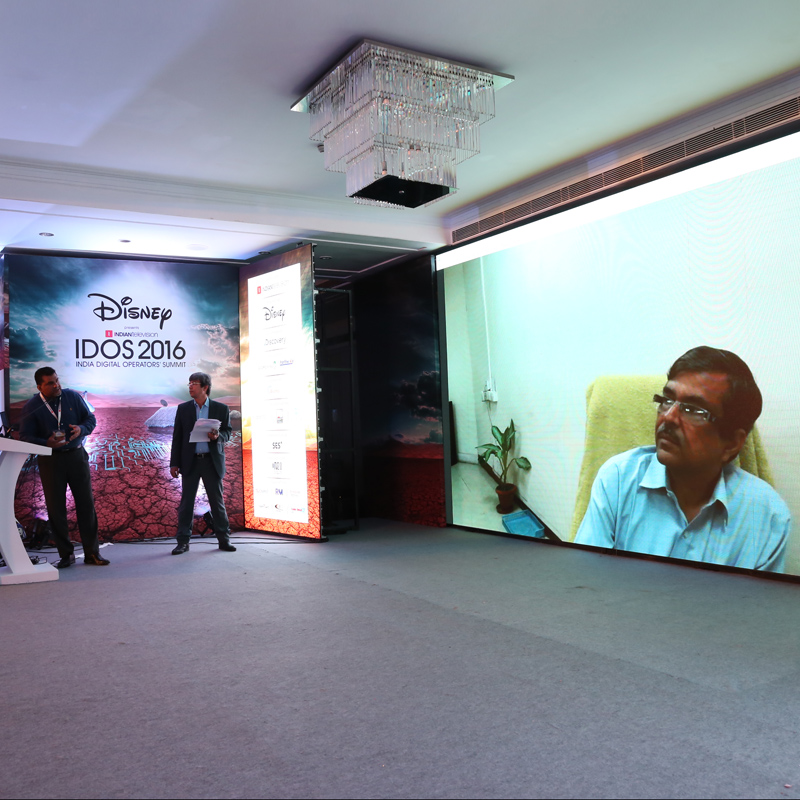
    GOA: The draft tariff framework of the Telecom Regulatory Authority of India (TRAI) is set to be released in a fortnight. This was declared by TRAI principal advisor (telecom services) Sunil Kumar Gupta in a Skype video conference with indiantelevision.com’s founder, CEO and editor-in-chief Anil Wanvari at IDOS 2016 here on Friday evening.

    “We have taken the views of all the stakeholders while drawing up the framework. It is based on the following four major planks — non-discriminatory pricing, transparency, consumer protection and overall growth of the industry,” he said.

    Gupta was clear that the sunset date for Phase IV was unshiftable. “Both MIB and we are very committed to this,” he said. “31 December 2016 is the sunset date for DAS Phase IV.”

    He cautioned that no one should take shelter around the fear that someone may try and scuttle phase IV by approaching the court. “There are enough set top boxes in the country today,” he said. “There is no shortage. Hence there can be no delay.”

    He reiterated that progress on digitisation and DAS has been good. “Revenues from the ground are going up in phase I and phase II,” he said. “According to MIB, 93 per cent of phase III has been digitised and in phase IV, there has been some good seeding too.”

    Gupta also warned that unless interconnection agreements are signed between MSOs and LCOs, the parties would not get any recourse from TDSAT as that is the direction that has been given. “It is important that the agreements are signed,” he said. “We have gone around the country and spoken to LCOs around the country. Often times they have been apprehensive about some of the agreements. But when we have explained to them, many of them have not read them properly, and hence the apprehension. When they have been explained and read it, they have gone ahead and done the shining.”

    He also expected a decisive verdict from the Delhi High Court in the first week of October around the Phase III litigation. Gupta urged the cable community to focus and keep the consumer aware of what was happening through their own networks and encourage him/her about DAS. “It is in the industry’s own interest,” he stated.

    On being asked whether TRAI would intervene and hasten the process on the infrastructure consultation paper, Gupta said there are some people who want to share infrastructure and some who don’t. On being prodded if the regulator would intervene if those who don’t want it to go through outweigh the ones who want it to, Gupta said, the consultation process would follow its due course. “Infrastructure sharing is between two private players, they can go ahead and do it. I don’t see why we need to intervene and mandate infrastructure sharing.”

    He also insisted that the entire industry – including the cable operators – need to tweak business models and the cable ops need to look at broadband seriously. “There is a lot of upside to broadband,” he said. “ARPUs are good over there, they can offer value to the consumer. Change is upon the industry and it needs to embrace this change and drive themselves forward. No telco can offer the kind of services, cable TV can offer, say 40 GB at a price of Rs 700-800 a month. The entire cable TV sector holds a lot of potential. Now the industry needs to realise it.”

  • IDOS 2016: TRAI tariff framework coming next fortnight

    IDOS 2016: TRAI tariff framework coming next fortnight

    GOA: The draft tariff framework of the Telecom Regulatory Authority of India (TRAI) is set to be released in a fortnight. This was declared by TRAI principal advisor (telecom services) Sunil Kumar Gupta in a Skype video conference with indiantelevision.com’s founder, CEO and editor-in-chief Anil Wanvari at IDOS 2016 here on Friday evening.

    “We have taken the views of all the stakeholders while drawing up the framework. It is based on the following four major planks — non-discriminatory pricing, transparency, consumer protection and overall growth of the industry,” he said.

    Gupta was clear that the sunset date for Phase IV was unshiftable. “Both MIB and we are very committed to this,” he said. “31 December 2016 is the sunset date for DAS Phase IV.”

    He cautioned that no one should take shelter around the fear that someone may try and scuttle phase IV by approaching the court. “There are enough set top boxes in the country today,” he said. “There is no shortage. Hence there can be no delay.”

    He reiterated that progress on digitisation and DAS has been good. “Revenues from the ground are going up in phase I and phase II,” he said. “According to MIB, 93 per cent of phase III has been digitised and in phase IV, there has been some good seeding too.”

    Gupta also warned that unless interconnection agreements are signed between MSOs and LCOs, the parties would not get any recourse from TDSAT as that is the direction that has been given. “It is important that the agreements are signed,” he said. “We have gone around the country and spoken to LCOs around the country. Often times they have been apprehensive about some of the agreements. But when we have explained to them, many of them have not read them properly, and hence the apprehension. When they have been explained and read it, they have gone ahead and done the shining.”

    He also expected a decisive verdict from the Delhi High Court in the first week of October around the Phase III litigation. Gupta urged the cable community to focus and keep the consumer aware of what was happening through their own networks and encourage him/her about DAS. “It is in the industry’s own interest,” he stated.

    On being asked whether TRAI would intervene and hasten the process on the infrastructure consultation paper, Gupta said there are some people who want to share infrastructure and some who don’t. On being prodded if the regulator would intervene if those who don’t want it to go through outweigh the ones who want it to, Gupta said, the consultation process would follow its due course. “Infrastructure sharing is between two private players, they can go ahead and do it. I don’t see why we need to intervene and mandate infrastructure sharing.”

    He also insisted that the entire industry – including the cable operators – need to tweak business models and the cable ops need to look at broadband seriously. “There is a lot of upside to broadband,” he said. “ARPUs are good over there, they can offer value to the consumer. Change is upon the industry and it needs to embrace this change and drive themselves forward. No telco can offer the kind of services, cable TV can offer, say 40 GB at a price of Rs 700-800 a month. The entire cable TV sector holds a lot of potential. Now the industry needs to realise it.”

  • Mavis to restore Jaya signals to Asianet in October: TDSAT

    Mavis to restore Jaya signals to Asianet in October: TDSAT

    NEW DELHI: Mavis Satcom Ltd has been directed by the Telecom Disputes Settlement and Appellate Tribunal to restore the connection to Asianet Satellite Communication Ltd from 1 October 2016.

    Before that, Mavis and Asianet will sign the interconnect agreement, member B B Srivastava said in his directive of 19 September 2016.

    Listing the matter for 18 October, the Tribunal however made clear that this would be without prejudice to the rights and contentions of either party.

    The Tribunal was informed by the Mavis that the Jaya TV signals are now being supplied only on HD format and according ot Mavis’ communication to the Telecom Regulatory Authority of India, the rate is Rs 40 per subscriber per month. With regard to other three channels – Jaya Plus, JMOVIE and JAYAMAX – the rates of Mavis as per existing published RIO are Rs 1.68, Rs 2 .52 and Rs 2.52 respectively per subscriber per month.

    Mavis counsel Meet Malhotra submitted that their RIO is under updation and would be published on their website soon.

  • Mavis to restore Jaya signals to Asianet in October: TDSAT

    Mavis to restore Jaya signals to Asianet in October: TDSAT

    NEW DELHI: Mavis Satcom Ltd has been directed by the Telecom Disputes Settlement and Appellate Tribunal to restore the connection to Asianet Satellite Communication Ltd from 1 October 2016.

    Before that, Mavis and Asianet will sign the interconnect agreement, member B B Srivastava said in his directive of 19 September 2016.

    Listing the matter for 18 October, the Tribunal however made clear that this would be without prejudice to the rights and contentions of either party.

    The Tribunal was informed by the Mavis that the Jaya TV signals are now being supplied only on HD format and according ot Mavis’ communication to the Telecom Regulatory Authority of India, the rate is Rs 40 per subscriber per month. With regard to other three channels – Jaya Plus, JMOVIE and JAYAMAX – the rates of Mavis as per existing published RIO are Rs 1.68, Rs 2 .52 and Rs 2.52 respectively per subscriber per month.

    Mavis counsel Meet Malhotra submitted that their RIO is under updation and would be published on their website soon.

  • Cap on TV ads, challenge to stay ‘action against channels’ hearing put off

    Cap on TV ads, challenge to stay ‘action against channels’ hearing put off

    NEW DELHI: The Delhi High Court today adjourned the hearing of the ad cap on television channels again, this time to 12 January 2017, with no resolution in sight to the imbroglio.

    Chief Justice G Rohini and Justice Sangeeta Dhingra told the counsel present when the matter came up that it would be heard at the next date. No reason was attributed by the Court for the adjournment.

    On 1 August 2016, the matter was put off to today by the chief justice and Justice Jayant Nath as they did not have time to hear the matter in view of part-heard cases. 

    In the hearing on 29 March 2016, a plea was made on behalf of the Information and Broadcasting Ministry that a proposal was being contemplated to amend the relevant provision relating to limiting ads to 12 minutes an hour.

    (Thus, the hearing will come up almost two years after then I and B Minister Arun Jaitley had said at a public function that he did not see the need for any kind caps on the media.)

    When the case comes up next, the court is also expected to take up an application by the intervenor — Home Cable Network Pvt Ltd — seeking vacation of the order staying action against violating television channels.

    On 13 May 2016, the court had agreed to take up vacation of stay at the next hearing. The court had, on 11 February 2016, agreed to take up the application by Discovery Communications to intervene in the matter. 

    Earlier, on 27 November 2015, the court presided over by the chief justice had said the matter had been pending for sometime and, therefore, it would hear and conclude the case in the next hearing. 

    On that day, MIB had informed the court that it was in talks with the News Broadcasters Association (NBA) and other stakeholders on the issue of the advertising cap. This was the first time that the ministry had put in an appearance in the petition filed by the NBA against the Telecom Regulatory Authority of India (TRAI) and others.

    The case, filed by NBA and others against TRAI and the Union Government, has so far been adjourned from time to time on the plea that the government and the broadcasters are in talks on this issue.

    The court has already directed that the order that TRAI would not take any action against any channel pending the petition would continue. In an earlier hearing, the court had, at the regulator’s instance, directed that all channels keep a record of the advertisements run by them.

    The NBA had challenged the ad cap rule, contending that TRAI does not have jurisdiction to regulate commercial airtime on television channels. Apart from the NBA, the petitions have been filed by Sarthak Entertainment, Pioneer Channel Factory, E24 Glamorus, Sun TV Network, TV Vision, B4U Broadband, 9X Media, Kalaignar, Celebrities Management, Eanadu Television and Raj Television.

    Meanwhile, a separate petition filed in the High Court by Vikki Choudhry and Home Cable Network Pvt Ltd., which too will be heard on the next date, seeks to charge MIB with dereliction of duties to take action against offending pay TV broadcasters for violating the terms and conditions of the licenses/permission for Uplinking and Downlinking.

    The Court had in June asked the Ministry to file its reply in four weeks. Notice was issued only to the Ministry, although the petition also listed several other broadcasting companies as respondents. 

    ALSO READ:  Ad cap & linked case put off to Sept; court to hear plea against stay order

  • Cap on TV ads, challenge to stay ‘action against channels’ hearing put off

    Cap on TV ads, challenge to stay ‘action against channels’ hearing put off

    NEW DELHI: The Delhi High Court today adjourned the hearing of the ad cap on television channels again, this time to 12 January 2017, with no resolution in sight to the imbroglio.

    Chief Justice G Rohini and Justice Sangeeta Dhingra told the counsel present when the matter came up that it would be heard at the next date. No reason was attributed by the Court for the adjournment.

    On 1 August 2016, the matter was put off to today by the chief justice and Justice Jayant Nath as they did not have time to hear the matter in view of part-heard cases. 

    In the hearing on 29 March 2016, a plea was made on behalf of the Information and Broadcasting Ministry that a proposal was being contemplated to amend the relevant provision relating to limiting ads to 12 minutes an hour.

    (Thus, the hearing will come up almost two years after then I and B Minister Arun Jaitley had said at a public function that he did not see the need for any kind caps on the media.)

    When the case comes up next, the court is also expected to take up an application by the intervenor — Home Cable Network Pvt Ltd — seeking vacation of the order staying action against violating television channels.

    On 13 May 2016, the court had agreed to take up vacation of stay at the next hearing. The court had, on 11 February 2016, agreed to take up the application by Discovery Communications to intervene in the matter. 

    Earlier, on 27 November 2015, the court presided over by the chief justice had said the matter had been pending for sometime and, therefore, it would hear and conclude the case in the next hearing. 

    On that day, MIB had informed the court that it was in talks with the News Broadcasters Association (NBA) and other stakeholders on the issue of the advertising cap. This was the first time that the ministry had put in an appearance in the petition filed by the NBA against the Telecom Regulatory Authority of India (TRAI) and others.

    The case, filed by NBA and others against TRAI and the Union Government, has so far been adjourned from time to time on the plea that the government and the broadcasters are in talks on this issue.

    The court has already directed that the order that TRAI would not take any action against any channel pending the petition would continue. In an earlier hearing, the court had, at the regulator’s instance, directed that all channels keep a record of the advertisements run by them.

    The NBA had challenged the ad cap rule, contending that TRAI does not have jurisdiction to regulate commercial airtime on television channels. Apart from the NBA, the petitions have been filed by Sarthak Entertainment, Pioneer Channel Factory, E24 Glamorus, Sun TV Network, TV Vision, B4U Broadband, 9X Media, Kalaignar, Celebrities Management, Eanadu Television and Raj Television.

    Meanwhile, a separate petition filed in the High Court by Vikki Choudhry and Home Cable Network Pvt Ltd., which too will be heard on the next date, seeks to charge MIB with dereliction of duties to take action against offending pay TV broadcasters for violating the terms and conditions of the licenses/permission for Uplinking and Downlinking.

    The Court had in June asked the Ministry to file its reply in four weeks. Notice was issued only to the Ministry, although the petition also listed several other broadcasting companies as respondents. 

    ALSO READ:  Ad cap & linked case put off to Sept; court to hear plea against stay order
  • Govt favours net neutrality; data is the new oil: RS Prasad

    Govt favours net neutrality; data is the new oil: RS Prasad

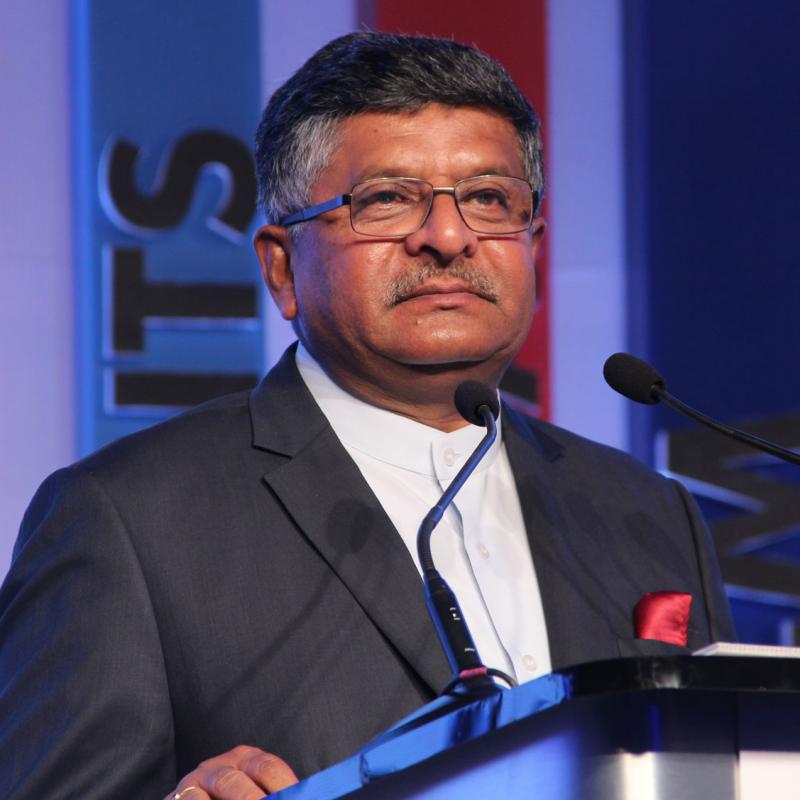
    NEW DELHI: The much-debated net neutrality issue got some additional boost from the Indian minister of electronics & information technology and law & justice Ravi Shankar Prasad when he said that the government favours non-discriminatory access to the Internet.

    “We are strong advocates of non-discriminatory access to Internet and democratization of Internet governance,” Prasad said yesterday while dwelling on the issue of net neutrality and digital dividends to average citizens.

    However, he didn’t elaborate on the net neutrality (and OTT) issue, which is being studied by the Telecom Regulatory Authority of India (TRAI) in totality for possible guidelines and regulations. TRAI has already undertaken a lengthy consultation process with various stakeholders and its final recommendations are awaited.

    Pointing out that India is home to 270 million smart-phones, a number that’s likely to swell to 500 million in few years time, Prasad said that India doesn’t want to miss out on the digital revolution having missed the industrial revolution.

    Making a case for more efficient bandwidth availability at affordable rates to an average Indian, Prasad said, “Data is the new oil… (and) digital India is ideology neutral, politics neutral and only pro-India.”

    Prasad, who was delivering the inaugural address at the Observer Research Foundation (ORF)-organised “CyFy 2016: Digital Asia & Scripting the New Governance Order” here yesterday evening, asserted if a digital profile of India is drawn it would look something like this: 1.03 billion mobile phones, 1.05 million digital identity (Aadhaar cards) and  400 million internet users, apart from a digital army of young people who have fanned out in rural areas running Common Services Centres at more than 200,000 places.

    Enumerating the various digital initiatives undertaken under the Digital India plan, something that is very dear to Prime Minister Modi, the senior minister opined that the government had undertaken some “path-breaking” programmes.

    “Digital India is for the under-privileged… (and) digital inclusion will come about with digital connect,” the Minister said, adding the government was creating a digital infrastructure for Indians so that citizens could reap digital dividends aplenty.

    Pointing out that a digital India would provide more effective governance and remove socialistic-era licence regime, Prasad said in a few years time India would become a $ 1 trillion digital economy.     

    But the cyber space also brings along many dangers. Emphasising on the importance of precaution, Prasad said, “Governments of all countries have to come together to safeguard their citizens from the threats of cyber crimes.”

    ORF, which annually organises a conference on cyber-related issues, including security and entertainment, is an independent self-sustaining think-tank. Having started in the early 1990s, it has been backed by the now Mukesh Ambani-controlled Reliance Industries.

    The full address of the minister could be viewed here:

    https://www.facebook.com/RaviShankarPrasadOfficial/videos/10154464395568329/