Category: Regulators

  • TRAI tariff & quality of services regulations

    TRAI tariff & quality of services regulations

    NEW DELHI: The maximum retail price of a general entertainment television channel under the digital addressable system cannot exceed Rs 12 and that of a sports channel cannot go above Rs 19, according to the draft of the DAS tariff order issued by the Telecom Regulatory Authority of India.

    The maximum prices of other genres are: movies – Rs 10, infotainment – Rs nine, kids – Rs seven, news and current affairs – Rs five, and devotional – Rs three.

    Even as the TRAI permitted broadcasters to offer bouquets if they wish to, it has said that the total price of the bouquet will not exceed 85 per cent of the total individual price of each of the channels in such a bouquet.

    Furthermore, as consumers are often unsure of the fact that free to air channels are not be charged, the Authority has decided that bouquets of pay channels and FTA channels have to be separate — there can be no bundling of pay and FTA channels both, at the broadcaster as well as at the distributor of television channels level, as it will help to reduce forced bundling of packages with FTA channels in view of fixed fee/CPS deals being executed by the broadcasters. The Tariff order states that broadcasters will have to qualify a channel as a pay TV or a free channel.

    All stakeholders have been asked to respond to the tariff order draft by 24 October, after which TRAI will form its final opinion and issue the Telecommunication (Broadcasting and Cable Services) (Eighth) (Addressable Systems) Tariff Order 2016.

    The maximum retail price of a pay channel transmitted in SD format in a given genre shall not exceed the rate specified for such genre.  

    The maximum retail price of a pay channel transmitted in HD format shall not be more than three times the maximum retail price of corresponding channel transmitted in SD format, But if the corresponding SD channel of a HD channel is not available, the maximum retail price of such HD channel shall not exceed three times the rate specified for corresponding genre.

    The ceiling on maximum retail price shall apply to all the existing pay channels as well as to new pay channels that are launched or converted from free to air channel to pay channel after the commencement of this tariff order.

    In the new framework, the number of genres has been reduced to 7 from existing 11. Some of the existing genres have been grouped together to form a new genre, while some genres have been retained.

    In case a genre has been retained as it is, the maximum retail price of a channel to the customer in that genre will be 1.20 times the existing price cap for that genre for addressable systems. In case, multiple genres have been clubbed to form a new genre, maximum retail price of a channel in that genre to the customer will be 1.20 times the existing price cap of that genre which has the highest price cap for addressable systems.

    Meanwhile, TRAI also issued a draft of the Standards of Quality of Service and Consumer Protection (Digital Addressable Systems) Regulations, 2016 and wanted stakeholders to react to these by 25 October 2016.

    The broadcaster will have to ensure that the maximum retail price of such bouquet of pay channels in a relevant geographical area shall be uniform for all distribution platforms in that area; that it should not contain any free to air channel or HD or SD variants of the same channels or any premium channels.

    The Q of S Regulations have addressed almost every aspect of the cable TV ecosystem going forward fixing the responsibility of the broadcaster, the cable TV platform, the distributor and consumer. It covers everything from subscriber management systems to disconnection and reconnection of services to a la carte pricing to package pricing to the tariffs that can be charged by cable TV operators, MSOs, and broadcasters to billing to creating consumer awareness about DAS. 

    Referring to the discussions it held with stakeholders, TRAI says the Authority had prescribed a genre-ceiling subject to inflation linked hikes. All the channels have to prescribe channel rate in accordance with the applicable genre-ceilings in non-addressable and addressable systems.

    Some broadcasters had submitted that they agree with genre-wise pricing, maximum and minimum defined for channel pricing with regular revision of caps from time to time.

    Broadcasters have also submitted that the price cap should be based on channel popularity, number of channels in a particular genre and actual viewership based on distributor of television channels disclosures. They have further opined that a maximum of 33% discount on wholesale price across all genres must be allowed with the frequency to revisit genre ceilings be 1 to 2 years.

    A majority of the distributors of television channels have submitted that the price caps may be determined by TRAI using the existing commercial agreements data filed with TRAI.

    According to them, one such method to arrive the genre-wise price caps can be a simple average of current RIO rates of channels in a genre. Most of the distributors of television channels have further submitted that there exists and inverse relation between price of a channel and popularity-viewership. As a-la-carte rates increase, penetration of the channel decreases thereby decreasing ad-revenue. They are of the opinion that a maximum of 40-50% discounts should be allowed on the RIO rates for fair and non-discriminatory pricing of channels to all the distributors of television channels. They further suggested that the frequency to revisit genre ceilings may be 1- 5 years.

    The existing framework for genre ceiling is working well. Therefore in order to have continuity, the Authority is of the view that existing genre ceiling should continue. However, in the new framework, broadcasters will provide distribution fee of 20% on the MRP to distributors of television channels. Accordingly, the Authority has proposed a new genre-ceiling for MRP to customers with adequate scope to cater for additional business margins at 20% of the existing genre ceilings for addressable systems. It is expected that the prices will be regulated by the market forces based on the demand of channels or TRP.

    Also Read:  TRAI releases draft tariff & consumer DAS regulations
  • TRAI releases draft tariff & consumer DAS regulations
    TRAI releases draft tariff & consumer DAS regulations
    MUMBAI: The draft cable TV tariff and quality of services (consumer protection) orders have been talked about for a long time. But the wait is over now as the Telecom Regulatory Authority of India (TRAI) released two of them a short while ago on its website. Called the Consultation on the draft Standards of Quality of Service and Consumer Protection (Digital addressable systems) Regulations, 2016 and the Consultation on the draft Telecommunication (Broadcasting and Cable Services) (Eighth) (Addressable Systems) Tariff Order, 2016 both seek to keep the consumer at the centre of cable TV ecosystem.

    The Tariff order states that broadcasters will have to qualify a channel as a pay TV or a free channel. They will have to offer pay channels on an a la carte basis and they can also offer them on a bouquet basis provided the maximum retail price of such bouquet of pay channels shall not be less than eighty five percent of the sum of maximum retail prices of the a-la-carte pay channels forming part of the bouquet. Additionally, the
    broadcaster will have to ensure that the maximum retail price of such bouquet of pay channels in a relevant geographical area shall be uniform for all distribution platforms in that area; that it should not contain any free to air channel or HD or SD variants of the same channels or any premium channels.

    The quality of service regulations have addressed almost every aspect of the cable TV ecosystem going forward fixing the responsibility of the broadcaster, the cable TV platform, the distributor and consumer. It covers everything from subscriber management systems to disconnection and reconnection of services to a la carte pricing to package pricing to the tariffs that can be charged by both cable TV operators, MSOs, and broadcasters to billing to creating consumer awareness about DAS.

    The digitalization of cable TV has been in a bit of a limbo specially in Phase III areas as it has been a High Court order to mandate the switch off of analogue signals. With this draft regulations, coming in, the industry should have some idea about the direction the cable TV ecosystem is headed, once implemented.

    For further details keep logged in.

  • TRAI releases draft tariff & consumer DAS regulations
    TRAI releases draft tariff & consumer DAS regulations

    MUMBAI: The draft cable TV tariff and quality of services (consumer protection) orders have been talked about for a long time. But the wait is over now as the Telecom Regulatory Authority of India (TRAI) released two of them a short while ago on its website. Called the Consultation on the draft Standards of Quality of Service and Consumer Protection (Digital addressable systems) Regulations, 2016 and the Consultation on the draft Telecommunication (Broadcasting and Cable Services) (Eighth) (Addressable Systems) Tariff Order, 2016 both seek to keep the consumer at the centre of cable TV ecosystem.

    The Tariff order states that broadcasters will have to qualify a channel as a pay TV or a free channel. They will have to offer pay channels on an a la carte basis and they can also offer them on a bouquet basis provided the maximum retail price of such bouquet of pay channels shall not be less than eighty five percent of the sum of maximum retail prices of the a-la-carte pay channels forming part of the bouquet. Additionally, the
    broadcaster will have to ensure that the maximum retail price of such bouquet of pay channels in a relevant geographical area shall be uniform for all distribution platforms in that area; that it should not contain any free to air channel or HD or SD variants of the same channels or any premium channels.

    The quality of service regulations have addressed almost every aspect of the cable TV ecosystem going forward fixing the responsibility of the broadcaster, the cable TV platform, the distributor and consumer. It covers everything from subscriber management systems to disconnection and reconnection of services to a la carte pricing to package pricing to the tariffs that can be charged by both cable TV operators, MSOs, and broadcasters to billing to creating consumer awareness about DAS.

    The digitalization of cable TV has been in a bit of a limbo specially in Phase III areas as it has been a High Court order to mandate the switch off of analogue signals. With this draft regulations, coming in, the industry should have some idea about the direction the cable TV ecosystem is headed, once implemented.

    For further details keep logged in.

  • Govt adapting new communication strategies, says I & B minister

    Govt adapting new communication strategies, says I & B minister

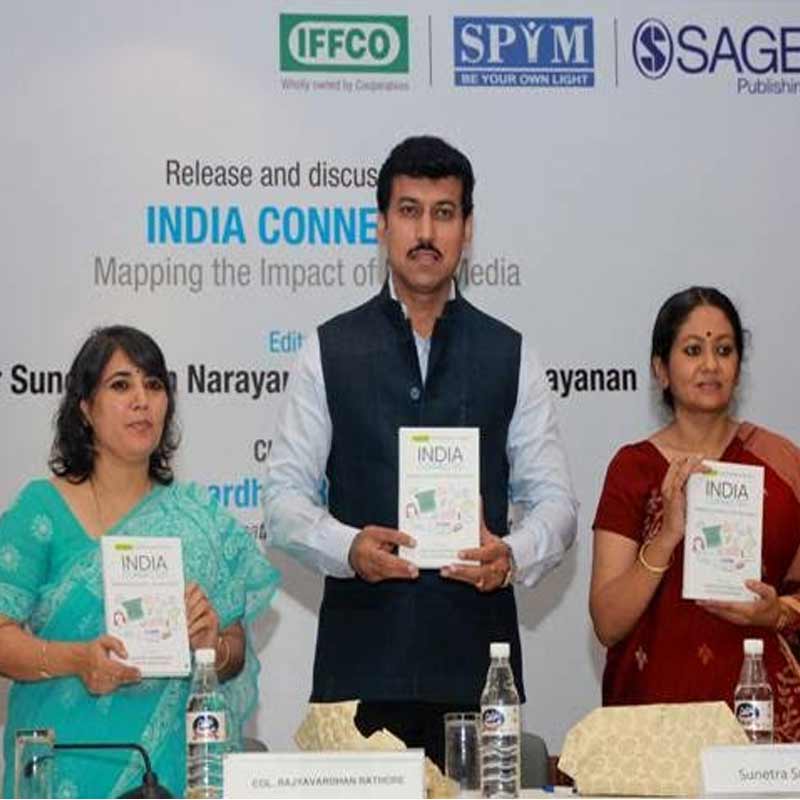
    NEW DELHI: Minister of state for information and broadcasting Rajyavardhan Rathore today said that the Government has been redefining and adapting the content and information dissemination strategy in accordance with the changing paradigm in communication space, especially in the social media.

    Rathore said, due to technology change, information generation pattern and information consumption has changed today. The minister said this after releasing the book “India Connected: Mapping the Impact of New Media” here today. The book has been jointly authored by Dr Shalini Narayanan and Dr. Sunetra Sen Narayanan.

    Elaborating, the minister said news broadcasters today were following social media trends for designing debates and discussions on their channels.

    Rathore said the Government has been conducting seminars and workshops to train officers in social media with the latest tools and techniques to effectively communicate with citizens.

    The book outlines the impact of social media while comparing it with the traditional media. The book flags challenges and opportunities that social media offers in the Indian setting.

  • Govt adapting new communication strategies, says I & B minister

    Govt adapting new communication strategies, says I & B minister

    NEW DELHI: Minister of state for information and broadcasting Rajyavardhan Rathore today said that the Government has been redefining and adapting the content and information dissemination strategy in accordance with the changing paradigm in communication space, especially in the social media.

    Rathore said, due to technology change, information generation pattern and information consumption has changed today. The minister said this after releasing the book “India Connected: Mapping the Impact of New Media” here today. The book has been jointly authored by Dr Shalini Narayanan and Dr. Sunetra Sen Narayanan.

    Elaborating, the minister said news broadcasters today were following social media trends for designing debates and discussions on their channels.

    Rathore said the Government has been conducting seminars and workshops to train officers in social media with the latest tools and techniques to effectively communicate with citizens.

    The book outlines the impact of social media while comparing it with the traditional media. The book flags challenges and opportunities that social media offers in the Indian setting.

  • Sunil Arora to step in Sircar’s place as Prasar Bharati CEO?

    Sunil Arora to step in Sircar’s place as Prasar Bharati CEO?

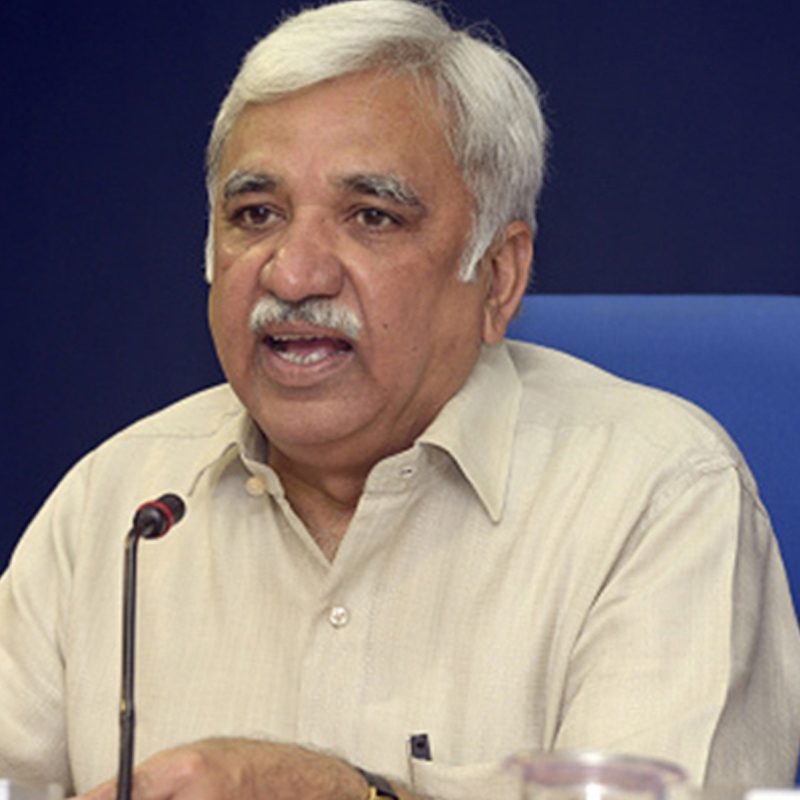
    MUMBAI: With the resignation of Prasar Bharati CEO Jawhar Sircar, the punters are betting on who is going to come in as his replacement. Among the names being talked about is the former I&B secretary Sunil Arora. He currently serves as an advisor to Prasar Bharati, a post he was given in August after retiring from the MIB.

    Arora is a 1980-batch IAS officer of the Rajasthan cadre. Sources indicate that Arora’s candidature as Prasar Bharati CEO has been recommended by the former information and broadcasting minister Arun Jaitely.

    However, observers don’t expect Arora’s candidature to be a shoo-in. Reason: it is not clear who the current I&B minister Venkaiah Naidu will back. “For all you know, he might want somebody from his state of Andhra Pradesh,” says a Prasar Bharati source. “Finally, the PM will decide.”

    Sircar submitted his resignation on 4 October, and has sought to be relieved by 4 November 2016 after which he will return to Kolkata.

  • Sunil Arora to step in Sircar’s place as Prasar Bharati CEO?

    Sunil Arora to step in Sircar’s place as Prasar Bharati CEO?

    MUMBAI: With the resignation of Prasar Bharati CEO Jawhar Sircar, the punters are betting on who is going to come in as his replacement. Among the names being talked about is the former I&B secretary Sunil Arora. He currently serves as an advisor to Prasar Bharati, a post he was given in August after retiring from the MIB.

    Arora is a 1980-batch IAS officer of the Rajasthan cadre. Sources indicate that Arora’s candidature as Prasar Bharati CEO has been recommended by the former information and broadcasting minister Arun Jaitely.

    However, observers don’t expect Arora’s candidature to be a shoo-in. Reason: it is not clear who the current I&B minister Venkaiah Naidu will back. “For all you know, he might want somebody from his state of Andhra Pradesh,” says a Prasar Bharati source. “Finally, the PM will decide.”

    Sircar submitted his resignation on 4 October, and has sought to be relieved by 4 November 2016 after which he will return to Kolkata.

  • I&B amends rules on depiction of cruelty to animals

    I&B amends rules on depiction of cruelty to animals

    NEW DELHI: The Government has amended the Cable Television Networks Rules 1994 to prevent scenes of cruelty or violence towards animals. 

    In a gazette notification, the Information and Broadcasting Ministry inserted a clause saying “depicts cruelty or violence towards animals in any form or promotes unscientific belief that causes harm to animals:”  

    Although the Gazette Notification signed by Joint Secretary (Broadcasting) Mihir Kumar Singh is dated 19 August 2016, it was placed on the Ministry website today.

    The notification also makes the relevant change in the Programme and Advertisement Codes. In August, the Shyam Benegal Committee on Film Certification had in a second report given recommendations on depiction of smoking and animal scenes which are still under consideration. 

    Also read:  Actors shown in smoking scenes in films or TV should promote anti-smoking

  • I&B amends rules on depiction of cruelty to animals

    I&B amends rules on depiction of cruelty to animals

    NEW DELHI: The Government has amended the Cable Television Networks Rules 1994 to prevent scenes of cruelty or violence towards animals. 

    In a gazette notification, the Information and Broadcasting Ministry inserted a clause saying “depicts cruelty or violence towards animals in any form or promotes unscientific belief that causes harm to animals:”  

    Although the Gazette Notification signed by Joint Secretary (Broadcasting) Mihir Kumar Singh is dated 19 August 2016, it was placed on the Ministry website today.

    The notification also makes the relevant change in the Programme and Advertisement Codes. In August, the Shyam Benegal Committee on Film Certification had in a second report given recommendations on depiction of smoking and animal scenes which are still under consideration. 

    Also read:  Actors shown in smoking scenes in films or TV should promote anti-smoking

  • Prasar Bharati CEO Jawhar Sircar officially seeks early retirement

    Prasar Bharati CEO Jawhar Sircar officially seeks early retirement

    MUMBAI: Prasar Bharati CEO Jawhar Sircar has been known to not pull any punches. Last month, he had expressed his desire to resign from his post to the media as he was not getting anywhere with the organisaton and neither was Prasar Bharati. Now, he has written to the ministry of information & broadcasting secretary (MIB) Ajay Mittal stating that he would like to resign prematurely from 4 November, says a PTI report.

    He has also written to I&B minister Venkaiah Naidu, expressing his desire to resign from his position post-Diwali – that is after 30 October. The report goes on to state that he would like to relocate to Kolkata.

    Sircar was yanked out of his position as secretary, culture, and installed as the Prasar Bharati CEO by an eminent panel led by the then Indian vice-president and a Supreme Court judge during the UPA government’s tenure in 2012. He serves as the vice-president of the Asia Pacific Broadcasting Union, which is a club of broadcasters from 67 countries. He has also had two short stints MIB secretary during his career.