Category: Regulators

  • HC asks ministry to exempt controversial film for IFFK

    HC asks ministry to exempt controversial film for IFFK

    NEW DELHI: The Kerala High Court has asked the Information and Broadcasting Ministry to grant exemption to the film “Ka Bodyscapes” in a week’s time.

    This follows a petition by the filmmaker Jayan Cherian who had been told by the forthcoming International Film festival of Kerala (IFFK) that he would not be permitted to show his film as the Ministry had refused to exempt it.

    Under the existing rules, any film selected for an international festival in India is expected to get ministerial clearance if not certified by the CBFC. The Festival is commencing on 9 December 2016.

    IFFK officials had asked Cherian to get exemption by 25 November. The exemption is necessary as the film was not cleared by the Central Board of Film Certification.

    In the case of Ka Bodyscapes, the certification body had refused to certify it on the grounds that it insulted Hindu religion and there’s a writ petition pending before the High Court in this regard.

  • Public Wi-Fi: TRAI extends time for responses

    Public Wi-Fi: TRAI extends time for responses

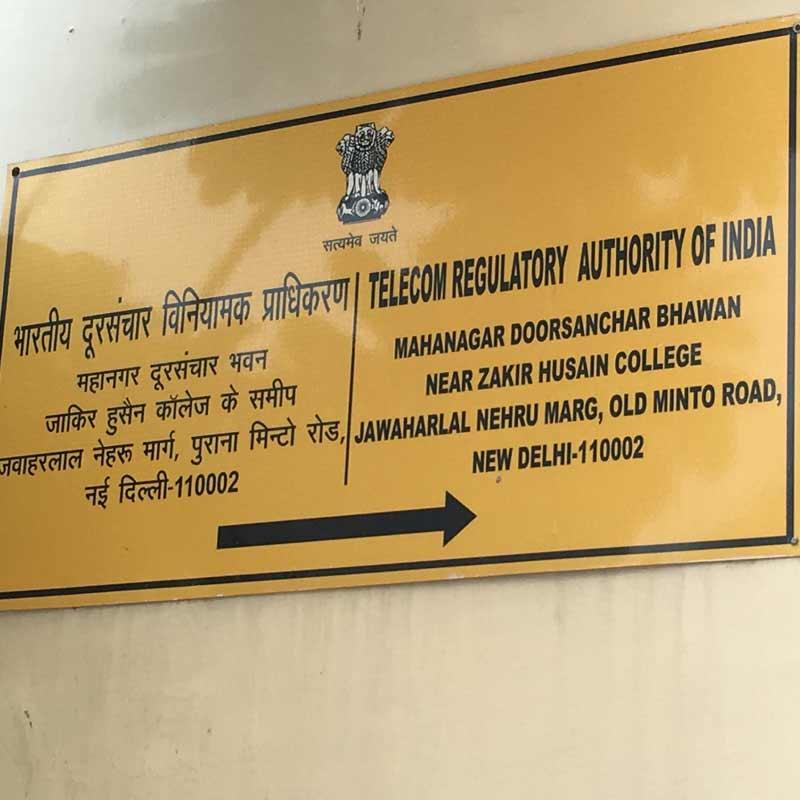
    NEW DELHI: In view of the importance attached to public Wi-Fi systems, the Telecom Regulatory Authority of India has extended time for responses to its consultation paper till 9 December 2016 but stressed no further extension would be given.

    The paper issued on 15 November was the second one issued on the subject of Wi-Fi and dealt with scalable public interoperability of Wi-Fi networks.

    Earlier, TRAI had said it realised the importance of public Wi-Fi networks as complementary to existing landline and cellular mobile infrastructure in improving broadband penetration and adoption of Digital India. Earlier on 13 July 2016, TRAI had issued a paper on “Proliferation of Broadband through Public Wi-Fi Networks” which was followed by reactions and then a workshop in Bengaluru.

    The objective of the new paper posing six questions is two-fold:

    a) To explore whether the model proposed in this Note can be incorporated in Public Wi-Fi networks to promote appropriate monetisation and business models for sustainable and scalable infrastructure deployment.

    b) To explore the roles of different stakeholders in the Public Wi-Fi network value chain and build an ecosystem for promoting scalable and sustainable partnerships for large scale nation wide deployment.

    Also read:  Public Wi-Fi: TRAI plans to evolve model, releases paper

  • Public Wi-Fi: TRAI extends time for responses

    Public Wi-Fi: TRAI extends time for responses

    NEW DELHI: In view of the importance attached to public Wi-Fi systems, the Telecom Regulatory Authority of India has extended time for responses to its consultation paper till 9 December 2016 but stressed no further extension would be given.

    The paper issued on 15 November was the second one issued on the subject of Wi-Fi and dealt with scalable public interoperability of Wi-Fi networks.

    Earlier, TRAI had said it realised the importance of public Wi-Fi networks as complementary to existing landline and cellular mobile infrastructure in improving broadband penetration and adoption of Digital India. Earlier on 13 July 2016, TRAI had issued a paper on “Proliferation of Broadband through Public Wi-Fi Networks” which was followed by reactions and then a workshop in Bengaluru.

    The objective of the new paper posing six questions is two-fold:

    a) To explore whether the model proposed in this Note can be incorporated in Public Wi-Fi networks to promote appropriate monetisation and business models for sustainable and scalable infrastructure deployment.

    b) To explore the roles of different stakeholders in the Public Wi-Fi network value chain and build an ecosystem for promoting scalable and sustainable partnerships for large scale nation wide deployment.

    Also read:  Public Wi-Fi: TRAI plans to evolve model, releases paper

  • Zee Media’s 49% stake in 92.7 BIG FM gets it 59 radio channels

    Zee Media’s 49% stake in 92.7 BIG FM gets it 59 radio channels

    NEW DELHI: Zee Media Corporation Limited (ZMCL)’s Board of Directors today approved acquisition of 49 per cent stake in 92.7 BIG FM, the radio broadcasting business of Reliance Broadcast Network Limited (RBNL), part of Anil Ambani-led Reliance ADA group. This will give Zee access to 45 running FM radio channels, apart from 14 other licences.

    As per the agreement with ZMCL, which controls Zee group’s news-related businesses, RBNL shall be transferring the 45 operational and 14 new licenses into two special purpose vehicles (SPVs), respectively, along with the assets and liabilities. Zee shall acquire 49 per cent stake in each of these two SPVs named Vrushvik Entertainment Private Limited (VEPL) and Azalia Media Services Private Limited (AMSPL).

    ZMCL and Reliance Broadcast shall also have a call/put option to acquire/sell the balance 51 per cent after the lock-in provisions on the permission holder of these licenses expire. As per government regulations, at least 51 per cent shareholding needs to be held by the permission holder for a minimum period of three years from the date the radio channels were operationalized.

    http://www.indiantelevision.com/sites/drupal7.indiantelevision.co.in/files/styles/large/public/red-fm1.jpg?itok=s2fcJFNJ

    RBNL runs one of the largest network of FM radio channels in India, which include 45 operational licenses (issued under Phase II and migrated to Phase III) and 14 new licenses (issued under Phase III). The FM channels are broadcast under the brand 92.7 BIG FM that reaches 45 cities, 1,200 towns and over 200 million people.

    The lock-in period for the 45 operational licenses shall expire on 31 March 2018, while the lock-in period for the other 14 licenses are expected to expire around March 2020.

    ZMCL COO Rajiv Singh in a statement said, “We are pleased to announce this acquisition, which shall not only be complementary to our current business but accelerate its growth too. We are currently running successfully a bouquet of 11 news and current affair channels and with the addition of 59 radio licenses, we will be reaching out to a much increased audience base and will keep them engaged on different media platforms. This acquisition shall bring about the desired business diversity and will help in achieving the sound financial objectives at an accelerated pace.”

    http://www.indiantelevision.com/sites/drupal7.indiantelevision.co.in/files/styles/large/public/red-fm2.jpg?itok=7IERO5er

    The proposed transaction, which is subject to regulatory approvals, including that from Ministry of Information & Broadcasting (MIB), is expected to close in the first half of calendar year 2017.

    Commenting on the divestment of stake, Reliance Capital ED and Group CEO Sam Ghosh said, “We are happy to bring in Zee Media as our partner in the Radio business. This transaction is part of our strategy to reduce exposure in non-core businesses and work towards further reducing debt under Reliance Capital”. 

    Why has Zee re-entered the FM radio business (remember it bid for licences in the first round FM radio auctions years back)? 

    According to ZMCL, the radio assets become attractive for the following reasons; especially as the Phase III of FM radio expansion has liberal regulations compared to earlier phases: 

    – higher penetration leading to economies of scale
    – centralized broadcasting (networking) allowed
    – radio services in larger number of cities leading to increased advertisement budget allocation
    – multiple frequencies in same geography resulting in content differentiation
    – varied content such as news, sports, current affairs, sports, etc allowed
    – license tenor increased to 15 years from 10 years

    Whether the re-entry into radio business bears fruits remains to be seen and will also depend on the condition of the general economic conditions in the country that is currently unsettled a bit because of the government’s move to demonetise currency notes of Rs. 500 and Rs. 1,000 denominations.

  • Zee Media’s 49% stake in 92.7 BIG FM gets it 59 radio channels

    Zee Media’s 49% stake in 92.7 BIG FM gets it 59 radio channels

    NEW DELHI: Zee Media Corporation Limited (ZMCL)’s Board of Directors today approved acquisition of 49 per cent stake in 92.7 BIG FM, the radio broadcasting business of Reliance Broadcast Network Limited (RBNL), part of Anil Ambani-led Reliance ADA group. This will give Zee access to 45 running FM radio channels, apart from 14 other licences.

    As per the agreement with ZMCL, which controls Zee group’s news-related businesses, RBNL shall be transferring the 45 operational and 14 new licenses into two special purpose vehicles (SPVs), respectively, along with the assets and liabilities. Zee shall acquire 49 per cent stake in each of these two SPVs named Vrushvik Entertainment Private Limited (VEPL) and Azalia Media Services Private Limited (AMSPL).

    ZMCL and Reliance Broadcast shall also have a call/put option to acquire/sell the balance 51 per cent after the lock-in provisions on the permission holder of these licenses expire. As per government regulations, at least 51 per cent shareholding needs to be held by the permission holder for a minimum period of three years from the date the radio channels were operationalized.

    http://www.indiantelevision.com/sites/drupal7.indiantelevision.co.in/files/styles/large/public/red-fm1.jpg?itok=s2fcJFNJ

    RBNL runs one of the largest network of FM radio channels in India, which include 45 operational licenses (issued under Phase II and migrated to Phase III) and 14 new licenses (issued under Phase III). The FM channels are broadcast under the brand 92.7 BIG FM that reaches 45 cities, 1,200 towns and over 200 million people.

    The lock-in period for the 45 operational licenses shall expire on 31 March 2018, while the lock-in period for the other 14 licenses are expected to expire around March 2020.

    ZMCL COO Rajiv Singh in a statement said, “We are pleased to announce this acquisition, which shall not only be complementary to our current business but accelerate its growth too. We are currently running successfully a bouquet of 11 news and current affair channels and with the addition of 59 radio licenses, we will be reaching out to a much increased audience base and will keep them engaged on different media platforms. This acquisition shall bring about the desired business diversity and will help in achieving the sound financial objectives at an accelerated pace.”

    http://www.indiantelevision.com/sites/drupal7.indiantelevision.co.in/files/styles/large/public/red-fm2.jpg?itok=7IERO5er

    The proposed transaction, which is subject to regulatory approvals, including that from Ministry of Information & Broadcasting (MIB), is expected to close in the first half of calendar year 2017.

    Commenting on the divestment of stake, Reliance Capital ED and Group CEO Sam Ghosh said, “We are happy to bring in Zee Media as our partner in the Radio business. This transaction is part of our strategy to reduce exposure in non-core businesses and work towards further reducing debt under Reliance Capital”. 

    Why has Zee re-entered the FM radio business (remember it bid for licences in the first round FM radio auctions years back)? 

    According to ZMCL, the radio assets become attractive for the following reasons; especially as the Phase III of FM radio expansion has liberal regulations compared to earlier phases: 

    – higher penetration leading to economies of scale
    – centralized broadcasting (networking) allowed
    – radio services in larger number of cities leading to increased advertisement budget allocation
    – multiple frequencies in same geography resulting in content differentiation
    – varied content such as news, sports, current affairs, sports, etc allowed
    – license tenor increased to 15 years from 10 years

    Whether the re-entry into radio business bears fruits remains to be seen and will also depend on the condition of the general economic conditions in the country that is currently unsettled a bit because of the government’s move to demonetise currency notes of Rs. 500 and Rs. 1,000 denominations.
  • Stay on Care World TV ban extended till 28 November

    Stay on Care World TV ban extended till 28 November

    NEW DELHI: The Bombay High Court today extended till 28 November 2016 its stay on the order of the Information and Broadcasting Ministry imposing a one-week ban against Care World India TV. 

    The extension came even as the I and B Ministry filed its reply, after the TV channel informed the court of Justice M S Karnik that it wanted to amend its petition. The channel will be required to satisfy the Court on the next date – 28 November – as to what amendments it wants to make. The court had earlier stayed the order till 24 November.

    Seven Star Satellite Pvt Ltd counsel Mayur Khandeparkar told the court in the last hearing on 8 November that a show cause had been issued to the channel which had also been given a hearing by the Inter-Ministerial Committee, but the final order indicated that none of the arguments given by the channel had been taken into consideration and “therefore it is not a reasoned order.” Care World was earlier banned from the midnight of 9 November to midnight of 16 November 2016.

    Khandeparkar also said that the programme ‘Kya Karun main ab’ against which the ministerial order had come had already been taken off air and subsequent episodes would only come subject to the final order of the court. 

    The judge also said in his order that the channel would not be permitted to broadcast this programme till its interim order was vacated.

    Also read:  HC stays MIB order against Care World

  • Stay on Care World TV ban extended till 28 November

    Stay on Care World TV ban extended till 28 November

    NEW DELHI: The Bombay High Court today extended till 28 November 2016 its stay on the order of the Information and Broadcasting Ministry imposing a one-week ban against Care World India TV. 

    The extension came even as the I and B Ministry filed its reply, after the TV channel informed the court of Justice M S Karnik that it wanted to amend its petition. The channel will be required to satisfy the Court on the next date – 28 November – as to what amendments it wants to make. The court had earlier stayed the order till 24 November.

    Seven Star Satellite Pvt Ltd counsel Mayur Khandeparkar told the court in the last hearing on 8 November that a show cause had been issued to the channel which had also been given a hearing by the Inter-Ministerial Committee, but the final order indicated that none of the arguments given by the channel had been taken into consideration and “therefore it is not a reasoned order.” Care World was earlier banned from the midnight of 9 November to midnight of 16 November 2016.

    Khandeparkar also said that the programme ‘Kya Karun main ab’ against which the ministerial order had come had already been taken off air and subsequent episodes would only come subject to the final order of the court. 

    The judge also said in his order that the channel would not be permitted to broadcast this programme till its interim order was vacated.

    Also read:  HC stays MIB order against Care World

  • TRAI reduces ceiling tariff for mobile banking services

    TRAI reduces ceiling tariff for mobile banking services

    NEW DELHI: It couldn’t have come at a more opportune moment, especially when the country is reeling under a severe cash crunch in the aftermath of demonetization of Rs 500 and Rs 1,000 currency notes. Telecom Regulatory Authority of India (TRAI) in an order yesterday reduced the ceiling tariff for the use of unstructured supplementary service data (USSD)-based mobile banking services from Rs 1.50 to Rs.0.50.

    TRAI also amended the Mobile Banking (Quality of Service) Regulations to increase the number of stages from 5 to 8 per USSD session.

    These amendments will facilitate banks, their agents or any entity authorized by the Reserve Bank of India for better delivery of banking and payment services to the consumers through mobile phones over USSD.

    Though these regulatory decisions are an outcome of a detailed consultation process initiated in August 2016, the timing cannot be missed as PM Modi-led government’s move on arresting black money and bring about more transparency through digitalization, including digital banking, has led to partial chaos in society and economy in the short to medium terms.

    “The availability of and easy access to banking services for all our citizens is a major objective of public policy. However, the harsh reality is that a large section of our population is still unbanked/under-banked. With a significant penetration of mobile telephony in rural India, the mobile phone can be leveraged to achieve the goal of financial inclusion. Accordingly, in November, 2013, with a view to facilitate mobile banking for financial inclusion, TRAI had established a framework to facilitate the agents of the banks to interface with the access service providers for use of SMS, USSD and IVR channels to provide mobile banking services and prescribed ceiling tariff of Rs. 1.50 per USSD session for USSD-based mobile banking service. However, all these initiatives did not lead to the desired result and both the number of transactions and success rate are below expectation,” TRAI said in a statement while mandating the tariff reductions.

    The latest diktat on USSD tariffs, which come into force with immediate effect, would, according to TRAI, hopefully result in greater financial inclusion in the country and contribute to the fulfillment of an important aspect of Digital India by encouraging a ‘less cash’ society.

    Welcoming the government’s initiatives to accelerate India’s progress into a `less cash’ economy, Vodafone India MD & CEO Sunil Sood said, “Vodafone India is committed to help actualise the government’s several initiatives designed to make India a digital economy. To ease the burden of masses, we are waiving off all USSD charges presently levied for mobile banking till 31 December 2016. As several million customers use feature phones, we are hopeful that this free access to mobile banking will encourage them to adopt it as their preferred and convenient mode for banking.”

  • TRAI reduces ceiling tariff for mobile banking services

    TRAI reduces ceiling tariff for mobile banking services

    NEW DELHI: It couldn’t have come at a more opportune moment, especially when the country is reeling under a severe cash crunch in the aftermath of demonetization of Rs 500 and Rs 1,000 currency notes. Telecom Regulatory Authority of India (TRAI) in an order yesterday reduced the ceiling tariff for the use of unstructured supplementary service data (USSD)-based mobile banking services from Rs 1.50 to Rs.0.50.

    TRAI also amended the Mobile Banking (Quality of Service) Regulations to increase the number of stages from 5 to 8 per USSD session.

    These amendments will facilitate banks, their agents or any entity authorized by the Reserve Bank of India for better delivery of banking and payment services to the consumers through mobile phones over USSD.

    Though these regulatory decisions are an outcome of a detailed consultation process initiated in August 2016, the timing cannot be missed as PM Modi-led government’s move on arresting black money and bring about more transparency through digitalization, including digital banking, has led to partial chaos in society and economy in the short to medium terms.

    “The availability of and easy access to banking services for all our citizens is a major objective of public policy. However, the harsh reality is that a large section of our population is still unbanked/under-banked. With a significant penetration of mobile telephony in rural India, the mobile phone can be leveraged to achieve the goal of financial inclusion. Accordingly, in November, 2013, with a view to facilitate mobile banking for financial inclusion, TRAI had established a framework to facilitate the agents of the banks to interface with the access service providers for use of SMS, USSD and IVR channels to provide mobile banking services and prescribed ceiling tariff of Rs. 1.50 per USSD session for USSD-based mobile banking service. However, all these initiatives did not lead to the desired result and both the number of transactions and success rate are below expectation,” TRAI said in a statement while mandating the tariff reductions.

    The latest diktat on USSD tariffs, which come into force with immediate effect, would, according to TRAI, hopefully result in greater financial inclusion in the country and contribute to the fulfillment of an important aspect of Digital India by encouraging a ‘less cash’ society.

    Welcoming the government’s initiatives to accelerate India’s progress into a `less cash’ economy, Vodafone India MD & CEO Sunil Sood said, “Vodafone India is committed to help actualise the government’s several initiatives designed to make India a digital economy. To ease the burden of masses, we are waiving off all USSD charges presently levied for mobile banking till 31 December 2016. As several million customers use feature phones, we are hopeful that this free access to mobile banking will encourage them to adopt it as their preferred and convenient mode for banking.”

  • FM P-III: A disappointing fortnight of slow & low bids

    FM P-III: A disappointing fortnight of slow & low bids

    NEW DELHI: Although Hyderabad and Dehradun continued to lead with bids of Rs 23,43,48,266 and Rs 15,61,00,590, respectively in the FM radio’s Phase III auctions for frequencies, the first fortnight remained disappointing with little movement in the bids or the price percentage increase on completion of 55 rounds.

    In fact, the number of rounds fell from four to three for the first time on the 14th day of auction on 21 November 2016. While Muzaffarpur showed a price percentage increase of one, 44 cities have still failed to attract any bids.

    Agartala has joined the band of Alappuzha (Alleppey), Erode, Hubli-Dharwad, Nellore, Salem, Vellore and Vijaywada where bids remained at just over Rs 70 million. Bids for Tiruchy increased to just above Rs 50 million and Tirupathi and Puducherry to a little over Rs 40 million. Amravati, Bhavnagar, Jamnagar and Ujjain bid a little over Rs 35 million and Mysuru a little over Rs 32 million.

    Thus, apart from minor rise in Agartala and Ujjain, there has been little movement in other cities over the past week. The first day of auction on 26 October 2016 saw a winning price of Rs 1,820 million against the aggregate price of Rs 1,792 million, while the second day saw low bids and no bids from three cities.

    Meanwhile, South Asia FM Ltd has been declared as the winning bidder for five radio FM channels, just a day after the commencement of the auction for the second batch of Phase III. The company will be allotted frequencies in Surat, Amritsar, Patna, Chandigarh and Jammu.

    South Asia FM Limited, one of the 14 shortlisted bidders, is a public incorporated entity. It is classified as a non-government company and is registered at Chennai. Its authorized share capital is Rs. 6,550,000,100 and its paid up capital is Rs. 6,153,605,100.It is involved in motion picture, radio, television and other entertainment activities.

    Ministry of Information and Broadcasting (MIB) sources told indiantelevision.com that the aim was to continue till all the channels slated in the second batch were auctioned.

    This data has been compiled on the basis of system-generated “Final Round Result Report” and “Frequency Identification Report” accessible through auction administrator role.

    Also Read

    FM radio Phase III frequency allocation to bidders completed in three rounds