Category: Regulators

  • Films Division shorts in cinema halls: Centre mulling revival

    Films Division shorts in cinema halls: Centre mulling revival

    NEW DELHI: All cinema halls may soon have to screen the news features produced by the Films Division, sources in the Information and Broadcasting Ministry said.

    As a first step, the Government had earlier this year waived the 1% rental charged by Films Division in lieu of supplying public services awareness films including news features to facilitate exhibition of such films in the cinema halls of the country.

    These sources told indiantelevision.com that provisions have been kept in the proposed amendments to the Cinematograph Act 1952 to empower the Central Government to issue directions so that such films may get adequate opportunity of being exhibited.

    Meanwhile, Films Division sources told indiantelevision.com that a beginning had already been made and almost all the PVR theatres were showing shorts that went on for just around three to four minutes. However, the aim to revive the practice prevalent around two decades earlier was to show a news feature by the Division before the main feature film commences.

    At one stage, some private filmmakers had gone to court saying that there was no reason for only Films Division films being shown. As a result, cinema halls had stopped screening of the Division films. However, the Supreme Court ultimately ruled over a decade earlier that theatres should show films of relevance to society irrespective of who has made it. But, cinema halls have been reluctant to show these films.

    As a result, the Films Division appealed to the ministry to take decisive steps to ensure that the films – like those on the Swachhta Campaign or other ongoing programmes of the government should be shown. It is learnt that cinema owners have said that they will generally not accept films that are more than three minutes long, and therefore the Centre may step in to make this mandatory.

  • No policy announcements, it’s simply ‘Mann ki Baat’

    No policy announcements, it’s simply ‘Mann ki Baat’

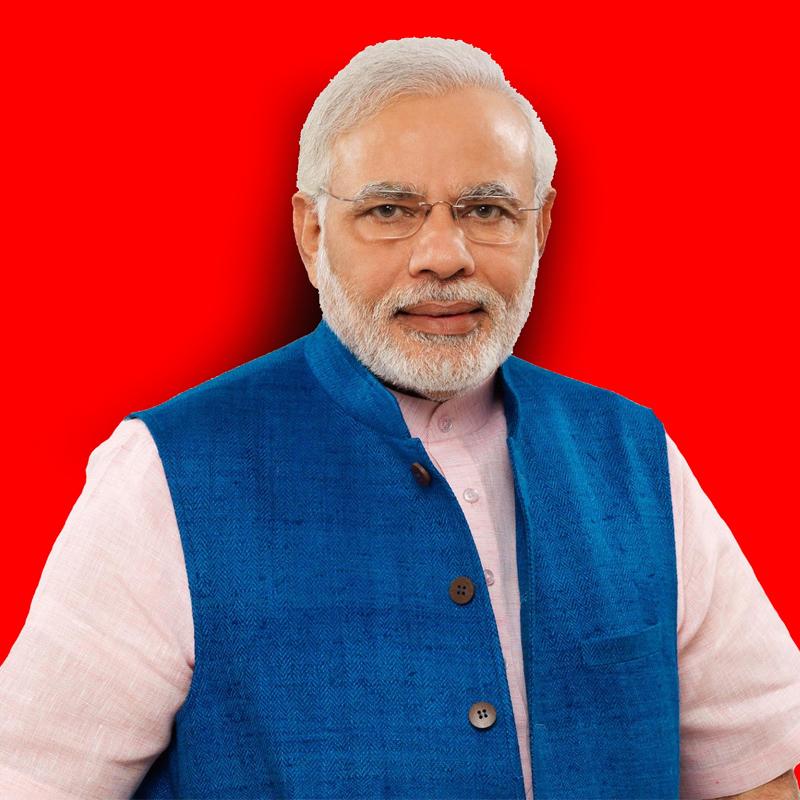
    NEW DELHI: The Government has made it clear that the prime minister Narendra Modi’s monthly ‘Mann ki Baat’ broadcast does not cover any public policy or announcements.

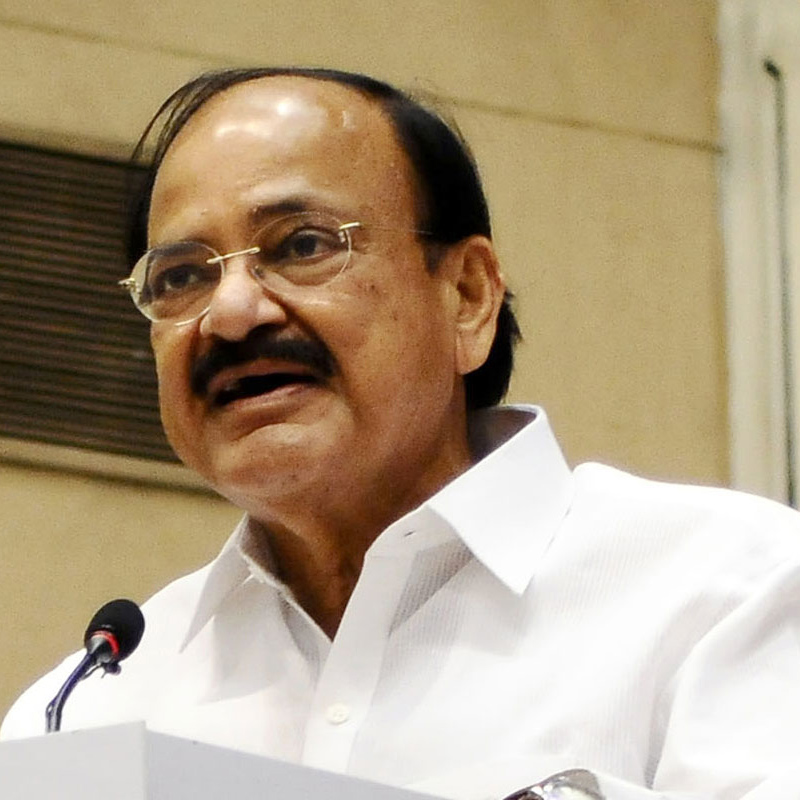
    The minister of state for information and broadcasting Rajyavardhan Rathore said in the Parliament that “Mann Ki Baat is a unique initiative of the prime minister to reach across to the masses through the Radio and connect with the common man on regular basis, inform them about the initiatives of the Government and seek their support in nation building and governance”.

    He added that through this programme the Prime Minister has directly shared his concerns on issues affecting citizens of the country like cleanliness, saving the girl child, welfare of Divyangs, uprooting the menace of drugs and road rage etc. It also provides the listener an opportunity to suggest topics and issues faced by the common man and thus become a part of participative governance.

    The prime minister has now made the broadcast for 26 months.

    All India Radio has commenced the regional language broadcast of Prime Minister Narendra Modi’s ‘Mann ki Baat’ immediately after the Hindi broadcast is over.

    AIR Director General Fayyaz Sheheryar told Indiantelevision.com’s sister concern Radioandmusic.com that this will be in addition to the broadcast on regional kendras that comes at 8.00 pm on the last Sunday of the month when the Prime Minister makes his broadcast. He said that AIR had advertised before this broadcast that listeners can catch the broadcast on the entire AIR network including medium wave and FM Gold and FM Rainbow.

    In addition, the broadcast is carried live on Doordarshan National, DD News, DD Bharati, DD India and DD Kisan.    

    The broadcast can also be heard on the AIR Mobile App ‘All India Radio Live’ on Android, IOS and Windows and also give a missed call on 1922 to listen to the broadcast.

    It is streamed live by pmonradio.nic.in, allindiaradio.gov.in, newsonair.nic.in, and youtube/user/akashvaniair.

    It is also available free to all private television channels and FM channels. Letters can be sent on MyGov.in, and NarendraModi App.

    Also read

    PM’s ‘Mann Ki Baat’: AIR starts regional translation after Hindi


  • No policy announcements, it’s simply ‘Mann ki Baat’

    No policy announcements, it’s simply ‘Mann ki Baat’

    NEW DELHI: The Government has made it clear that the prime minister Narendra Modi’s monthly ‘Mann ki Baat’ broadcast does not cover any public policy or announcements.

    The minister of state for information and broadcasting Rajyavardhan Rathore said in the Parliament that “Mann Ki Baat is a unique initiative of the prime minister to reach across to the masses through the Radio and connect with the common man on regular basis, inform them about the initiatives of the Government and seek their support in nation building and governance”.

    He added that through this programme the Prime Minister has directly shared his concerns on issues affecting citizens of the country like cleanliness, saving the girl child, welfare of Divyangs, uprooting the menace of drugs and road rage etc. It also provides the listener an opportunity to suggest topics and issues faced by the common man and thus become a part of participative governance.

    The prime minister has now made the broadcast for 26 months.

    All India Radio has commenced the regional language broadcast of Prime Minister Narendra Modi’s ‘Mann ki Baat’ immediately after the Hindi broadcast is over.

    AIR Director General Fayyaz Sheheryar told Indiantelevision.com’s sister concern Radioandmusic.com that this will be in addition to the broadcast on regional kendras that comes at 8.00 pm on the last Sunday of the month when the Prime Minister makes his broadcast. He said that AIR had advertised before this broadcast that listeners can catch the broadcast on the entire AIR network including medium wave and FM Gold and FM Rainbow.

    In addition, the broadcast is carried live on Doordarshan National, DD News, DD Bharati, DD India and DD Kisan.    

    The broadcast can also be heard on the AIR Mobile App ‘All India Radio Live’ on Android, IOS and Windows and also give a missed call on 1922 to listen to the broadcast.

    It is streamed live by pmonradio.nic.in, allindiaradio.gov.in, newsonair.nic.in, and youtube/user/akashvaniair.

    It is also available free to all private television channels and FM channels. Letters can be sent on MyGov.in, and NarendraModi App.

    Also read

    PM’s ‘Mann Ki Baat’: AIR starts regional translation after Hindi


  • FM Radio revenues witness seasonal slump in Q4-16, Q1-17

    FM Radio revenues witness seasonal slump in Q4-16, Q1-17

    BENGALURU: Generally the Indian private FM industry witnesses a quarter-over-quarter (q-o-q) advertisement (ad) revenue slump in the first quarter of every year (Q1, quarter ended 30 June), which may sometimes carry over to the second quarter (Q2, quarter ended 30 September) of the fiscal. Since fiscal 2014, the industry has also seen fourth quarter (Q4, quarter ended 31 March) revenue slumps. Continuing the trend, private FM in India has seen a drop in revenue for quarters ended 31 March 2016 (Q4-16) and 30 June 2016 (Q1-17). As mentioned above trend was noticed Q4-14 and Q1-15 onwards, when the country held general elections and political parties used this so very local medium to garner votes.

    As per data released by the Telecom Regulatory Authority of India (TRAI), for Q1-17, 244 radio stations had consolidated ad revenues of Rs 468.08 crore, down 9.81 percent q-o-q as compared to the Rs 514.75 crore reported by 242 stations in Q4-16. The last quarter of the previous fiscal also saw ad revenue decline of 4.35 percent from Rs 533.70 crore reported for its immediate quarter that ended on 31 December 2015 (Q3-15).

    Please refer to Figure A below for FM Radio Ad Revenue over a five year plus period spanning a 21 quarter period starting with the quarter ended 30 June 2011 (Q1-12) until the quarter ended 30 September 2016 (Q1-17) as per TRAI data. The amounts are in Rs crore and rounded off to the nearest decimal place.

    public://f1.jpg

    As is obvious from the red dots on the chartabove, Q1-12, Q1-13, Q1-14, Q1-15, Q1-16 and Q1-17 have all seen q-o-q revenue drops, as have Q4-14, Q4-15 and as mentioned above- Q4-16.

    Figure B below shows the q-o-q and year-over-year FM Radio Ad revenue trends. Generally y-o-y, revenues have been higher across all quarters in the period under consideration in this report, except for Q3-12 that saw a y-o-y ad revenue decline. For Q3-11, TRAI Indicator Reports mentioned ad revenue of Rs 284.88 crore from 227 radio stations or an average revenue of Rs 1.25 crore per station, as compared to ad revenue per station of Rs 1.20 crore for Q3-12.

    public://f2.jpg

    Conclusion

    Overall, despite the year-end andnew fiscal drops, ad revenues as well as ad revenues per station show a linear increasing trend as more and more advertisers have begun to understand the value proposition this very local medium with a pan-India footprint can offer. Further, the third quarter of the fiscal (Q3, quarter ended 31 December) is also the festival quarter of the year in India – a sweet quarter as far as the radio industry is concerned. The industry should see revenues rising in Q3-17.

     A few of the companies such as JagranPrakashan that has large networks like Radio City and Entertainment Network India Limited (ENIL) which has the Radio Mirchi network in the country have already started operations of the new stations that they obtained in the FM Phase 3 auctions. The revenue of the new stations acquired in phase 3 auctions by other players such as Reliance Broadcast Network Limited (RBNL, Big FM) and HT Media Limited (Hindustan Times fame, Fever FM) if/once they start operations this fiscal, the radio industry should report substantial revenue increases. Profitability may take a hit initially, but over time that too is bound to change for the better.

    Results for the quarter ended 30 September 2016 of companies whose financials are within the public domain can at the most be termed a mixed bag. While ENIL has reported a growth in revenue, its profit after tax – both on a y-o-y and a q-o-q basis have been hit with a70.3 percent y-o-y decline and a51.7 percent q-o-q decline.

    ENIL won 17 stations in Phase 3 auctions and has launched 4 new stations in Q2-17 – at Chandigarh, Ahmedabad, Surat and Jaipur. Earlier the company had launched Bengaluru, Guwahati, Hyderabad and Kochi stations. Bengaluru wasRadio Mirchi’s first launch in the second frequencies network.

    However, ENIL managing director and CEO Prashant Panday is upbeat. In ENIL’s Q2-17 results press release he said, “We have stepped up marketing spends and early research indicates that we have made a strong start and in fact have become leaders in key markets. I am confident this will translate into a stronger business in the years ahead!”

    Note:The unit of currency in this report is the Indian rupee – Rs (also conventionally represented by INR).The Indian numbering system or the Vedic numbering system has been used to denote money values. The basic conversion to the international norm would be:

    (a) 100,00,000 = 100 lakh = 10,000,000 = 10 million = 1 crore.

    (b) 10,000 lakh = 100 crore = 1 arab = 1 billion.


  • FM Radio revenues witness seasonal slump in Q4-16, Q1-17

    FM Radio revenues witness seasonal slump in Q4-16, Q1-17

    BENGALURU: Generally the Indian private FM industry witnesses a quarter-over-quarter (q-o-q) advertisement (ad) revenue slump in the first quarter of every year (Q1, quarter ended 30 June), which may sometimes carry over to the second quarter (Q2, quarter ended 30 September) of the fiscal. Since fiscal 2014, the industry has also seen fourth quarter (Q4, quarter ended 31 March) revenue slumps. Continuing the trend, private FM in India has seen a drop in revenue for quarters ended 31 March 2016 (Q4-16) and 30 June 2016 (Q1-17). As mentioned above trend was noticed Q4-14 and Q1-15 onwards, when the country held general elections and political parties used this so very local medium to garner votes.

    As per data released by the Telecom Regulatory Authority of India (TRAI), for Q1-17, 244 radio stations had consolidated ad revenues of Rs 468.08 crore, down 9.81 percent q-o-q as compared to the Rs 514.75 crore reported by 242 stations in Q4-16. The last quarter of the previous fiscal also saw ad revenue decline of 4.35 percent from Rs 533.70 crore reported for its immediate quarter that ended on 31 December 2015 (Q3-15).

    Please refer to Figure A below for FM Radio Ad Revenue over a five year plus period spanning a 21 quarter period starting with the quarter ended 30 June 2011 (Q1-12) until the quarter ended 30 September 2016 (Q1-17) as per TRAI data. The amounts are in Rs crore and rounded off to the nearest decimal place.

    public://f1.jpg

    As is obvious from the red dots on the chartabove, Q1-12, Q1-13, Q1-14, Q1-15, Q1-16 and Q1-17 have all seen q-o-q revenue drops, as have Q4-14, Q4-15 and as mentioned above- Q4-16.

    Figure B below shows the q-o-q and year-over-year FM Radio Ad revenue trends. Generally y-o-y, revenues have been higher across all quarters in the period under consideration in this report, except for Q3-12 that saw a y-o-y ad revenue decline. For Q3-11, TRAI Indicator Reports mentioned ad revenue of Rs 284.88 crore from 227 radio stations or an average revenue of Rs 1.25 crore per station, as compared to ad revenue per station of Rs 1.20 crore for Q3-12.

    public://f2.jpg

    Conclusion

    Overall, despite the year-end andnew fiscal drops, ad revenues as well as ad revenues per station show a linear increasing trend as more and more advertisers have begun to understand the value proposition this very local medium with a pan-India footprint can offer. Further, the third quarter of the fiscal (Q3, quarter ended 31 December) is also the festival quarter of the year in India – a sweet quarter as far as the radio industry is concerned. The industry should see revenues rising in Q3-17.

     A few of the companies such as JagranPrakashan that has large networks like Radio City and Entertainment Network India Limited (ENIL) which has the Radio Mirchi network in the country have already started operations of the new stations that they obtained in the FM Phase 3 auctions. The revenue of the new stations acquired in phase 3 auctions by other players such as Reliance Broadcast Network Limited (RBNL, Big FM) and HT Media Limited (Hindustan Times fame, Fever FM) if/once they start operations this fiscal, the radio industry should report substantial revenue increases. Profitability may take a hit initially, but over time that too is bound to change for the better.

    Results for the quarter ended 30 September 2016 of companies whose financials are within the public domain can at the most be termed a mixed bag. While ENIL has reported a growth in revenue, its profit after tax – both on a y-o-y and a q-o-q basis have been hit with a70.3 percent y-o-y decline and a51.7 percent q-o-q decline.

    ENIL won 17 stations in Phase 3 auctions and has launched 4 new stations in Q2-17 – at Chandigarh, Ahmedabad, Surat and Jaipur. Earlier the company had launched Bengaluru, Guwahati, Hyderabad and Kochi stations. Bengaluru wasRadio Mirchi’s first launch in the second frequencies network.

    However, ENIL managing director and CEO Prashant Panday is upbeat. In ENIL’s Q2-17 results press release he said, “We have stepped up marketing spends and early research indicates that we have made a strong start and in fact have become leaders in key markets. I am confident this will translate into a stronger business in the years ahead!”

    Note:The unit of currency in this report is the Indian rupee – Rs (also conventionally represented by INR).The Indian numbering system or the Vedic numbering system has been used to denote money values. The basic conversion to the international norm would be:

    (a) 100,00,000 = 100 lakh = 10,000,000 = 10 million = 1 crore.

    (b) 10,000 lakh = 100 crore = 1 arab = 1 billion.


  • Broadband rose 8.3 per cent till June 16; teledensity fell in urban, hike in rural

    Broadband rose 8.3 per cent till June 16; teledensity fell in urban, hike in rural

    MUMBAI: The number of telephone subscribers in India increased from 1,058.86 million at the end of Mar-16 to 1,059.86 million at the end of Jun-16, registering a growth of 0.09% over the previous quarter. This reflects year-on-year (Y-O-Y) growth of 5.25% over the same quarter of last year. The overall Teledensity in India declined from 83.36 as on 31 March, 2016 to 83.20 as on 30 June, 2016, according to TRAI statistics.

    Trends in Telephone subscribers and Teledensity in India: Subscription in Urban Areas declined from 609.69 million at the end of Mar-16 to 609.45 million at the end of Jun-16, and Urban Teledensity also declined from 154.01 to 153.22. However, Rural subscription increased from 449.17 million to 450.41 million and Rural Teledensity also increased from 51.37 to 51.41 during the same period.

    Of the total subscription, the share of Rural subscription increased from 42.42% at the end of Mar-16 to 42.50% at the end of Jun-16.

    Composition of Telephone Subscribers: With a net addition of 1.49 million subscribers during the quarter, total wireless (GSM+CDMA) subscriber base increased from 1,033.63 million at the end of Mar-16 to 1,035.12 million at the end of Jun-16, registering a growth rate of 0.14% over the previous quarter. The year-on-year (Y-O-Y) growth rate of wireless subscribers for Jun-16 is 5.54%.

    Wireless Tele-density declined from 81.38 at the end of Mar-16 to 81.26 at the end of Jun-16, according to TRAI statistics.

    Wireline subscriber base further declined from 25.22 million at the end of Mar-16 to 24.74 million at the end of Jun-16, registering a quarterly decline rate of 1.90%. The year-on-year (Y-O-Y) decline rate in wireline subscribers for Jun-16 is 5.38%.

    Wireline Teledensity declined from 1.99 at the end of Mar-16 to 1.94 at the end of Jun-16.

    Total number of Internet subscribers increased from 342.65 million at the end of Mar-16 to 350.48 million at the end of Jun-16, registering a quarterly growth rate of 2.28%. Out of 350.48 million, Wired Internet subscribers are 20.76 million and Wireless Internet subscribers are 329.72 million. Composition of internet subscription.

    The Internet subscriber base of 350.48 million at the end of Jun- 16 comprises Broadband Internet subscriber base of 162.06 million and Narrowband Internet subscriber base of 188.42
    million.

    The broadband Internet subscriber base grew by 8.22% from 149.75 million at the end of Mar-16 to 162.06 million at the end of Jun-16. On the other hand, the narrowband Internet subscriber
    base declined by 2.32% from 192.90 million at the end of Mar-16 to 188.42 million at the end of Jun-16.

    Monthly Average Revenue Per User (ARPU) for GSM service increased by 0.96%, from `125 in QE Mar-16 to `126 in QE Jun-16. Monthly ARPU for GSM service grew by 0.09% on Y-O-Y in this
    quarter, according to TRAI statistics.

    Prepaid ARPU for GSM service per month increased from `107 in QE Mar-16 to `108 in QE Jun-16, and Postpaid ARPU per month increased from `488 in QE Mar-16 to `495 in QE Jun-16.

    On an all India average, the overall MOU per subscriber per month for GSM service declined by 1.07% from 381 for QE Mar-16 to 377 in QE Jun-16.

    Prepaid MOU per subscriber for GSM service declined from 356 in QE Mar-16 to 351 in QE Jun-16, and postpaid MOU declined from 892 in QE Mar-16 to 889 in QE Jun-16.

    Monthly ARPU for CDMA full mobility service declined by 4.86%, from `103.50 in QE Mar-16 to `98.51 in QE Jun-16. Monthly ARPU for CDMA full mobility service declined by 7.95% on Y-O-Y
    basis in this quarter.

    The total MOU per subscriber per month for CDMA full mobility service declined by 12.54%, from 260 in QE Mar-16 to 228 in QE Jun-16. The outgoing MOUs declined from 150 in QE Mar-16 to
    130 in QE Jun-16, and incoming MOUs also declined from 110 in QE Mar-16 to 98 in QE Jun-16, according to TRAI statistics.

    Gross Revenue (GR) and Adjusted Gross Revenue (AGR) of Telecom Service Sector for the QE Jun-16 has been `73,344 Crore and `53,383 Crore respectively. GR and AGR increased by 7.33% and 10.34% respectively in QE Jun-16 as compared to previous quarter.

    The year-on-year (Y-O-Y) growth in GR and AGR over the same quarter in last year has been 12.79% and 13.26% respectively.

    Pass-through charges increased from `19,956 Crore in Q.E. Mar- 16 to `19,961 in Q.E. Jun-16. The quarterly and the year-on-year (Y-O-Y) growth rates of pass-through charges for QE Jun-16 are 0.03% and 11.54% respectively.

    The License Fee increased from `3,872 Crore for the QE Mar-16 to `4,314 Crore for the QE Jun-16. The quarterly and the year-onyear (Y-O-Y) growth rates of license fee are 11.43% and 14.05%
    respectively in this quarter.

    Access services contributed 83.84% of the total Adjusted Gross Revenue of telecom services. In Access services, Gross Revenue (GR), Adjusted Gross Revenue(AGR), License Fee and Spectrum Usage Charges(SUC) increased by 9.20%, 12.21%, 13.55% and 12.42% respectively whereas, Pass Through Charges declined by 0.67% in QE Jun-16, according to TRAI statistics.

    Monthly Average Revenue per User (ARPU) for Access Services based on AGR increased from `126.91 in QE Mar-16 to `140.88 in QE Jun-16.
  • Broadband rose 8.3 per cent till June 16; teledensity fell in urban, hike in rural

    Broadband rose 8.3 per cent till June 16; teledensity fell in urban, hike in rural

    MUMBAI: The number of telephone subscribers in India increased from 1,058.86 million at the end of Mar-16 to 1,059.86 million at the end of Jun-16, registering a growth of 0.09% over the previous quarter. This reflects year-on-year (Y-O-Y) growth of 5.25% over the same quarter of last year. The overall Teledensity in India declined from 83.36 as on 31 March, 2016 to 83.20 as on 30 June, 2016, according to TRAI statistics.

    Trends in Telephone subscribers and Teledensity in India: Subscription in Urban Areas declined from 609.69 million at the end of Mar-16 to 609.45 million at the end of Jun-16, and Urban Teledensity also declined from 154.01 to 153.22. However, Rural subscription increased from 449.17 million to 450.41 million and Rural Teledensity also increased from 51.37 to 51.41 during the same period.

    Of the total subscription, the share of Rural subscription increased from 42.42% at the end of Mar-16 to 42.50% at the end of Jun-16.

    Composition of Telephone Subscribers: With a net addition of 1.49 million subscribers during the quarter, total wireless (GSM+CDMA) subscriber base increased from 1,033.63 million at the end of Mar-16 to 1,035.12 million at the end of Jun-16, registering a growth rate of 0.14% over the previous quarter. The year-on-year (Y-O-Y) growth rate of wireless subscribers for Jun-16 is 5.54%.

    Wireless Tele-density declined from 81.38 at the end of Mar-16 to 81.26 at the end of Jun-16, according to TRAI statistics.

    Wireline subscriber base further declined from 25.22 million at the end of Mar-16 to 24.74 million at the end of Jun-16, registering a quarterly decline rate of 1.90%. The year-on-year (Y-O-Y) decline rate in wireline subscribers for Jun-16 is 5.38%.

    Wireline Teledensity declined from 1.99 at the end of Mar-16 to 1.94 at the end of Jun-16.

    Total number of Internet subscribers increased from 342.65 million at the end of Mar-16 to 350.48 million at the end of Jun-16, registering a quarterly growth rate of 2.28%. Out of 350.48 million, Wired Internet subscribers are 20.76 million and Wireless Internet subscribers are 329.72 million. Composition of internet subscription.

    The Internet subscriber base of 350.48 million at the end of Jun- 16 comprises Broadband Internet subscriber base of 162.06 million and Narrowband Internet subscriber base of 188.42
    million.

    The broadband Internet subscriber base grew by 8.22% from 149.75 million at the end of Mar-16 to 162.06 million at the end of Jun-16. On the other hand, the narrowband Internet subscriber
    base declined by 2.32% from 192.90 million at the end of Mar-16 to 188.42 million at the end of Jun-16.

    Monthly Average Revenue Per User (ARPU) for GSM service increased by 0.96%, from `125 in QE Mar-16 to `126 in QE Jun-16. Monthly ARPU for GSM service grew by 0.09% on Y-O-Y in this
    quarter, according to TRAI statistics.

    Prepaid ARPU for GSM service per month increased from `107 in QE Mar-16 to `108 in QE Jun-16, and Postpaid ARPU per month increased from `488 in QE Mar-16 to `495 in QE Jun-16.

    On an all India average, the overall MOU per subscriber per month for GSM service declined by 1.07% from 381 for QE Mar-16 to 377 in QE Jun-16.

    Prepaid MOU per subscriber for GSM service declined from 356 in QE Mar-16 to 351 in QE Jun-16, and postpaid MOU declined from 892 in QE Mar-16 to 889 in QE Jun-16.

    Monthly ARPU for CDMA full mobility service declined by 4.86%, from `103.50 in QE Mar-16 to `98.51 in QE Jun-16. Monthly ARPU for CDMA full mobility service declined by 7.95% on Y-O-Y
    basis in this quarter.

    The total MOU per subscriber per month for CDMA full mobility service declined by 12.54%, from 260 in QE Mar-16 to 228 in QE Jun-16. The outgoing MOUs declined from 150 in QE Mar-16 to
    130 in QE Jun-16, and incoming MOUs also declined from 110 in QE Mar-16 to 98 in QE Jun-16, according to TRAI statistics.

    Gross Revenue (GR) and Adjusted Gross Revenue (AGR) of Telecom Service Sector for the QE Jun-16 has been `73,344 Crore and `53,383 Crore respectively. GR and AGR increased by 7.33% and 10.34% respectively in QE Jun-16 as compared to previous quarter.

    The year-on-year (Y-O-Y) growth in GR and AGR over the same quarter in last year has been 12.79% and 13.26% respectively.

    Pass-through charges increased from `19,956 Crore in Q.E. Mar- 16 to `19,961 in Q.E. Jun-16. The quarterly and the year-on-year (Y-O-Y) growth rates of pass-through charges for QE Jun-16 are 0.03% and 11.54% respectively.

    The License Fee increased from `3,872 Crore for the QE Mar-16 to `4,314 Crore for the QE Jun-16. The quarterly and the year-onyear (Y-O-Y) growth rates of license fee are 11.43% and 14.05%
    respectively in this quarter.

    Access services contributed 83.84% of the total Adjusted Gross Revenue of telecom services. In Access services, Gross Revenue (GR), Adjusted Gross Revenue(AGR), License Fee and Spectrum Usage Charges(SUC) increased by 9.20%, 12.21%, 13.55% and 12.42% respectively whereas, Pass Through Charges declined by 0.67% in QE Jun-16, according to TRAI statistics.

    Monthly Average Revenue per User (ARPU) for Access Services based on AGR increased from `126.91 in QE Mar-16 to `140.88 in QE Jun-16.

  • NDTV ban: SC to hear appeal today

    NDTV ban: SC to hear appeal today

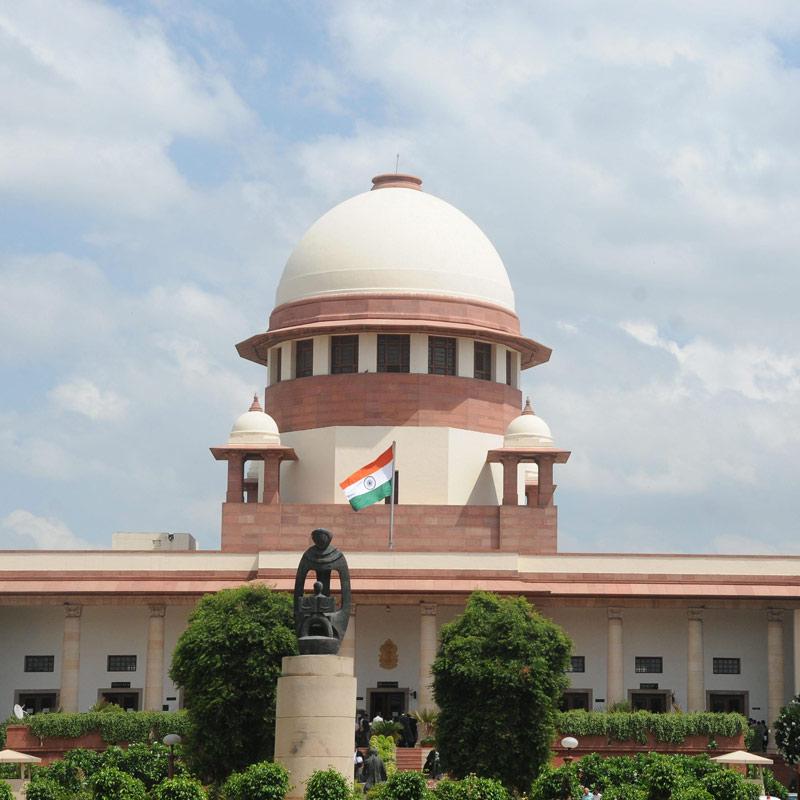
    MUMBAI: The Supreme Court in New Delhi is on Monday scheduled to hear the appeal filed by NDTV against the ban imposed on its NDTV India channel for telecasting security-related information linked to the terrorist attack on the Pathankot air force base earlier this year.

    India’s highest court had, on November 6, deferred the hearing in the case to 5 December, citing reason of no urgency for its hearing. Information and broadcasting ministry had asked NDTV India to go off-air on 9 November after the government accused it of airing sensitive information related to the terror attack on Pathankot base in January.

    NDTV had, however, refuted the allegations stating that other channels had also reported the same. Information and broadcasting minister M. Venkaiah Naidu however supported the ban, stating that it was in the interest of India’s security.

    Major media organisations and journalists condemned the ban and protested against it, comparing it with the emergency when the right of the freedom of press was violated.

    Naidu had earlier said that there have been only two cases in the past two years and the current year where the government put on hold its orders asking TV channels to prohibit transmission for limited time.

    These relate to channel DY 365 for a news broadcast on 12 June 2014 and the NDTV India for a report on 4 January 2016, Naidu told the Parliament. In both cases, he said, the channels had made representations to the ministry which were under consideration.

    In a separate case, Prannoy Roy and family-controlled NDTV heaved a sigh of relief. The channel had got a notice from SEBI in June 2016 for alleged violation of takeover norms with respect to timely disclosure of share transactions of its promoters. With regards to their petition to the Delhi High Court, the date of the hearing, which was 29 November. was adjourned to 17 January 2017.

    Also read

    http://www.indiantelevision.com/regulators/ib-ministry/telecast-ban-withheld-in-two-of-31-cases-no-imc-recast-plan-161203

    http://www.indiantelevision.com/television/tv-channels/news-broadcasting/limited-punitive-action-taken-against-31-tv-channels-in-11-years-161126

    http://www.indiantelevision.com/television/tv-channels/news-broadcasting/ndtv-india-ban-sc-to-hear-appeal-on-5-dec-govt-may-restructure-review-panel-161109

  • NDTV ban: SC to hear appeal today

    NDTV ban: SC to hear appeal today

    MUMBAI: The Supreme Court in New Delhi is on Monday scheduled to hear the appeal filed by NDTV against the ban imposed on its NDTV India channel for telecasting security-related information linked to the terrorist attack on the Pathankot air force base earlier this year.

    India’s highest court had, on November 6, deferred the hearing in the case to 5 December, citing reason of no urgency for its hearing. Information and broadcasting ministry had asked NDTV India to go off-air on 9 November after the government accused it of airing sensitive information related to the terror attack on Pathankot base in January.

    NDTV had, however, refuted the allegations stating that other channels had also reported the same. Information and broadcasting minister M. Venkaiah Naidu however supported the ban, stating that it was in the interest of India’s security.

    Major media organisations and journalists condemned the ban and protested against it, comparing it with the emergency when the right of the freedom of press was violated.

    Naidu had earlier said that there have been only two cases in the past two years and the current year where the government put on hold its orders asking TV channels to prohibit transmission for limited time.

    These relate to channel DY 365 for a news broadcast on 12 June 2014 and the NDTV India for a report on 4 January 2016, Naidu told the Parliament. In both cases, he said, the channels had made representations to the ministry which were under consideration.

    In a separate case, Prannoy Roy and family-controlled NDTV heaved a sigh of relief. The channel had got a notice from SEBI in June 2016 for alleged violation of takeover norms with respect to timely disclosure of share transactions of its promoters. With regards to their petition to the Delhi High Court, the date of the hearing, which was 29 November. was adjourned to 17 January 2017.

    Also read

    http://www.indiantelevision.com/regulators/ib-ministry/telecast-ban-withheld-in-two-of-31-cases-no-imc-recast-plan-161203

    http://www.indiantelevision.com/television/tv-channels/news-broadcasting/limited-punitive-action-taken-against-31-tv-channels-in-11-years-161126

    http://www.indiantelevision.com/television/tv-channels/news-broadcasting/ndtv-india-ban-sc-to-hear-appeal-on-5-dec-govt-may-restructure-review-panel-161109

  • Reliance Jio may be fined for using PM’s pic in ad sans permission

    Reliance Jio may be fined for using PM’s pic in ad sans permission

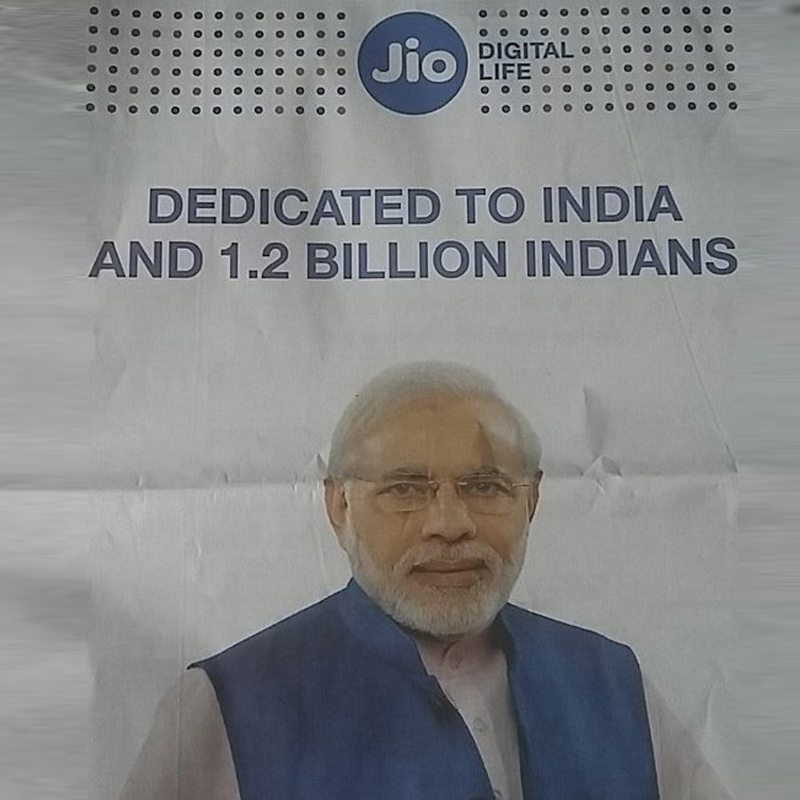
    NEW DELHI: The Government has denied that it gave permission for publication of a full-page photograph of the prime minister Narendra Modi in advertisements in newspapers about Reliance Jio.

    Minister of state for information and broadcasting Rajyavardhan Rathore said: “No permission was granted by the Prime Minister’s Office.”

    Rathore told the Parliament that the Act, ‘The Emblems and Names (Prevention of Improper Use) Act, 1950’ is administered by the Consumer Affairs, Food & Public Distribution Ministry.

    He also said that the directorate of advertising and visual publicity (DAVP) of his ministry releases Government advertisements only and does not release advertisements of any private body.

    Reliance Jio may have to pay only Rs 500 as fine for using Modi’s picture in advertisement, without permission from the government. Newspapers reported that the minor penalty could be charged from Jio.

    Rathore, in a written reply, admitted that it was aware that Reliance Jio used the PM’s photographs in the advertisement. About the actions that can be taken against Jio, he replied that the (DAVP) unit was responsible for it is the Emblems and Names (prevention of improper use) Act 1950.

    Section-3 of the Act states that no person shall use any “specified” name or emblem for the purpose of any trade, business or any such activities without the “previous permission of the central government” or officers authorised by the government. The list of names and emblems that cannot be used without prior permission from the government includes the president of India, the PM, governor of a state, the government of India or any state, Mahatma Gandhi, Indira Gandhi, Jawaharlal Nehru, United Nations Organisation, Ashok Chakra or Dharma Chakra.