Category: Regulators

  • DD, AIR asked to focus on content than reach

    DD, AIR asked to focus on content than reach

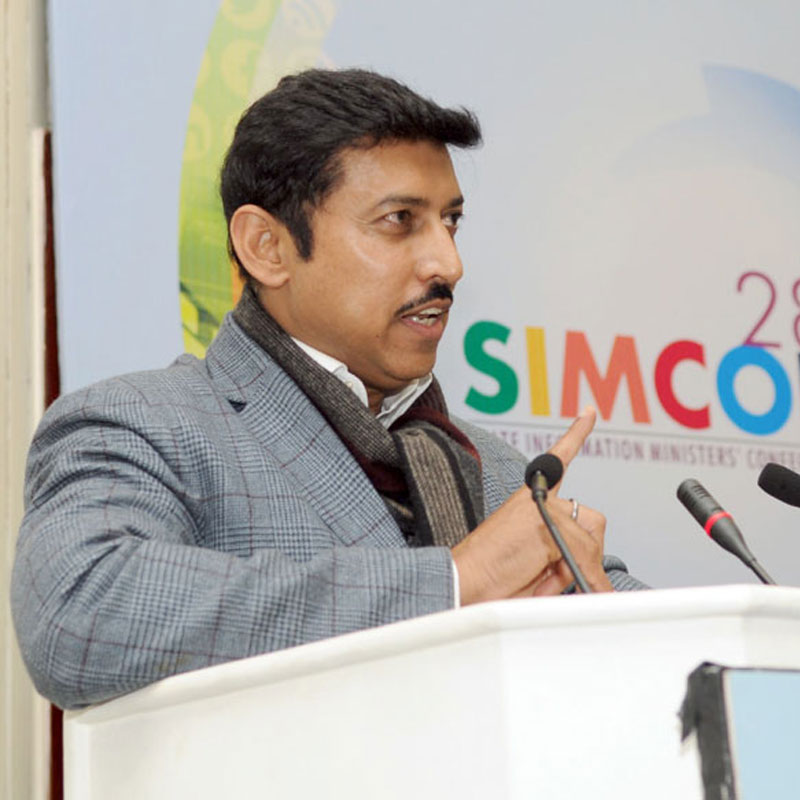
    NEW DELHI: The minister of state for information & broadcasting Rajyavardhan Rathore said that Doordarshan and AIR need to establish connect with the people not only geographically but also focus on the content and programmes.

    Speaking at the 28th State Information Ministers Conference here today, he also touched upon the activities carried out by media units and training institutes under the ministry.

    Rathore said gathering and dissemination of information was a continuous process and centre and states need to come together to create an ecosystem that enabled informed citizenry.

    Rathore said collaboration between states and Centre was the bedrock for good governance, and there was a need for moving forward together as Team India in scripting the development of the nation. Information dissemination and the analysis of the feedback was a critical component in the whole gamut of communication landscape.

    The minister urged the states to set up film facilitation units in states to ease out film shooting permissions as well as ensure seamless movement of their equipment. In this context, he said the ministry is in the process of setting up a central portal for all such related permissions and welcomed states to also collaborate in this platform as a part of ease of doing business initiative.

  • Improved tech & states role; curbs on Peace TVs, cable sans DD in new integrated policy: Naidu

    Improved tech & states role; curbs on Peace TVs, cable sans DD in new integrated policy: Naidu

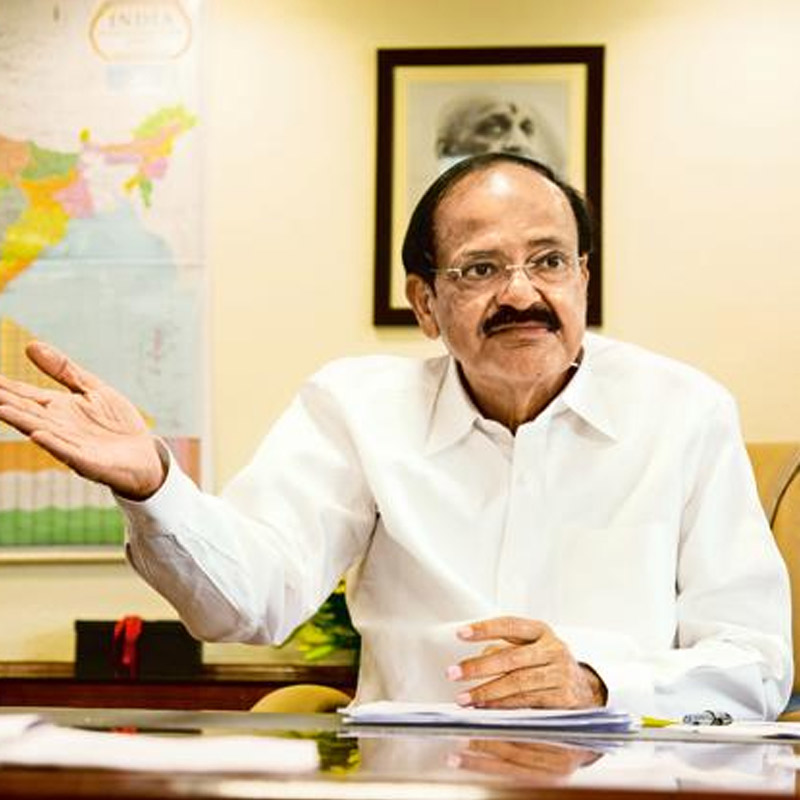
    NEW DELHI: Information and broadcasting minister M Venkaiah Naidu today laid emphasis for evolving a comprehensive “national information and communication policy” to provide citizens “enhanced access to information.”

    Addressing the 28th state Information Ministers Conference (SIMCON) here, Naidu said the Centre and the states should work together in various areas, including in dissemination of effective information, to push integrated development.

    “We need an integrated and holistic approach and coordination between the centre and states is essential,” Naidu said.

    The meet was attended by minister of state for information and broadcasting Rajyavardhan Rathore, secretary Ajay Mittal and other senior officials of the ministry apart from representatives of different states.

    The proposed policy would be prepared in consultation with states in the spirit of cooperative federalism and the principle of Team India which the prime minister firmly believed in, Naidu added.

    Elaborating on the proposed contours of the policy, Naidu said the broad objectives should be to enhance access to information and communication infrastructures and new technologies, especially in rural areas; to promote national dialogue on development issues by all citizens and facilitate informed participation of people in setting development agenda and its execution.

    The policy should rationalise multi-sectoral investments in information and communication hardware and software through their consolidation and appropriate integration in development plans and planning structures; to ensure timely, orderly and effective growth of information and communication institutions and professions through standards setting, capacity building and human resource development; and broadly define the roles of different governments at various levels and other stakeholders.

    It should preserve national cultural identity and enhance the development of cultural and artistic capabilities and institutions, while enabling productive regional and international exchanges and support national and local development initiatives, and to improve the quality of life of the people, by facilitating systematic and effective use and coordination of communication and information strategies and outcomes.

    The challenge before such a policy was to analyse the ingredients of the communication environment including competencies and resources that are critical.

    The minister further stated that the initiation of such a policy would integrate development communication, development agendas linking planners, beneficiaries and implementers of development actions. It was the endeavour of the proposed policy to make people informed participants in decision-making and development planning process. Such a communication approach also enabled policy makers to look at people as part of a solution.

    Naidu said all-round and integrated development cannot materialise without effective dissemination of information. “People have the right to information,” he said.

    While the country has evolved policies on various subjects like environment and health, there is no such policy for communication and information dissemination.

    “The centre and the state should work together to evolve the communication policy,” he said, adding that Ajay Mittal and senior officials have been directed to work with the states to work on a draft policy at the earliest. “It should also work to preserve national cultural identity,” Naidu added.

    Naidu said India has unique strength in its cultural richness and its heritage. “Any Tom, Dick and Harry came and conquered…They ‘might have’ robbed our wealth, but they could not take away our heritage,” he said.

    Naidu referred to the prime minister Narendra Modi’s repeated emphasis on ‘Sabka Saath Sabka Vikas (development with all and development for all)’ and said even leaders such as B R Ambedkar and Deen Dayal Upadhyay had laid emphasis on the development of ‘Antyodhaya’ – the last man in the queue.

    The minister said the states should take advantage of the reach of public broadcasters — All India Radio and Doordarshan, and give them “preferential treatment.” These organisations do not run with commercial considerations, he emphasised. He said that strict action should be taken against those cable operators who do not show DD News.

    Naidu said with regard to violation of cable TV operators laws, the states should appoint designated officers in all districts to ensure that no major violation like the Peace TV episode is repeated. He would be writing to chief ministers again in this regard, the minister said. (‘Peace TV’ of Zakir Naik had allegedly telecast various programmes which instigated youths towards radical thinking.)

    Speaking earlier, Mittal gave an overview of the deliberations of the first day’s meeting highlighting some of the key discussion points across sectors and suggestions received from the States. During the course of the deliberations, the separate wings of the ministry, films, broadcasting, information and Prasar Bharti (AIR & DD) made presentations regarding the policy initiatives and issues for discussions and convergence with states.

    The minister also visited the various stalls and multimedia exhibitions showcased by the media units of the ministry namely, National Film Archives of India, which organised the multimedia exhibition on the theme ‘Azaadi 70 Saal- Yaad Karo Qurbani’. The exhibition showcases the film industry’s contribution to Independence and was organised to celebrate 70th year of India’s Independence. The three themes covered include ‘Rise and Revolt: Cinema of Social Reform’, ‘Our Freedom Fighters-Through the lens of Cinema’ and ‘Saluting our Soldiers’.
  • Improved tech & states role; curbs on Peace TVs, cable sans DD in new integrated policy: Naidu

    Improved tech & states role; curbs on Peace TVs, cable sans DD in new integrated policy: Naidu

    NEW DELHI: Information and broadcasting minister M Venkaiah Naidu today laid emphasis for evolving a comprehensive “national information and communication policy” to provide citizens “enhanced access to information.”

    Addressing the 28th state Information Ministers Conference (SIMCON) here, Naidu said the Centre and the states should work together in various areas, including in dissemination of effective information, to push integrated development.

    “We need an integrated and holistic approach and coordination between the centre and states is essential,” Naidu said.

    The meet was attended by minister of state for information and broadcasting Rajyavardhan Rathore, secretary Ajay Mittal and other senior officials of the ministry apart from representatives of different states.

    The proposed policy would be prepared in consultation with states in the spirit of cooperative federalism and the principle of Team India which the prime minister firmly believed in, Naidu added.

    Elaborating on the proposed contours of the policy, Naidu said the broad objectives should be to enhance access to information and communication infrastructures and new technologies, especially in rural areas; to promote national dialogue on development issues by all citizens and facilitate informed participation of people in setting development agenda and its execution.

    The policy should rationalise multi-sectoral investments in information and communication hardware and software through their consolidation and appropriate integration in development plans and planning structures; to ensure timely, orderly and effective growth of information and communication institutions and professions through standards setting, capacity building and human resource development; and broadly define the roles of different governments at various levels and other stakeholders.

    It should preserve national cultural identity and enhance the development of cultural and artistic capabilities and institutions, while enabling productive regional and international exchanges and support national and local development initiatives, and to improve the quality of life of the people, by facilitating systematic and effective use and coordination of communication and information strategies and outcomes.

    The challenge before such a policy was to analyse the ingredients of the communication environment including competencies and resources that are critical.

    The minister further stated that the initiation of such a policy would integrate development communication, development agendas linking planners, beneficiaries and implementers of development actions. It was the endeavour of the proposed policy to make people informed participants in decision-making and development planning process. Such a communication approach also enabled policy makers to look at people as part of a solution.

    Naidu said all-round and integrated development cannot materialise without effective dissemination of information. “People have the right to information,” he said.

    While the country has evolved policies on various subjects like environment and health, there is no such policy for communication and information dissemination.

    “The centre and the state should work together to evolve the communication policy,” he said, adding that Ajay Mittal and senior officials have been directed to work with the states to work on a draft policy at the earliest. “It should also work to preserve national cultural identity,” Naidu added.

    Naidu said India has unique strength in its cultural richness and its heritage. “Any Tom, Dick and Harry came and conquered…They ‘might have’ robbed our wealth, but they could not take away our heritage,” he said.

    Naidu referred to the prime minister Narendra Modi’s repeated emphasis on ‘Sabka Saath Sabka Vikas (development with all and development for all)’ and said even leaders such as B R Ambedkar and Deen Dayal Upadhyay had laid emphasis on the development of ‘Antyodhaya’ – the last man in the queue.

    The minister said the states should take advantage of the reach of public broadcasters — All India Radio and Doordarshan, and give them “preferential treatment.” These organisations do not run with commercial considerations, he emphasised. He said that strict action should be taken against those cable operators who do not show DD News.

    Naidu said with regard to violation of cable TV operators laws, the states should appoint designated officers in all districts to ensure that no major violation like the Peace TV episode is repeated. He would be writing to chief ministers again in this regard, the minister said. (‘Peace TV’ of Zakir Naik had allegedly telecast various programmes which instigated youths towards radical thinking.)

    Speaking earlier, Mittal gave an overview of the deliberations of the first day’s meeting highlighting some of the key discussion points across sectors and suggestions received from the States. During the course of the deliberations, the separate wings of the ministry, films, broadcasting, information and Prasar Bharti (AIR & DD) made presentations regarding the policy initiatives and issues for discussions and convergence with states.

    The minister also visited the various stalls and multimedia exhibitions showcased by the media units of the ministry namely, National Film Archives of India, which organised the multimedia exhibition on the theme ‘Azaadi 70 Saal- Yaad Karo Qurbani’. The exhibition showcases the film industry’s contribution to Independence and was organised to celebrate 70th year of India’s Independence. The three themes covered include ‘Rise and Revolt: Cinema of Social Reform’, ‘Our Freedom Fighters-Through the lens of Cinema’ and ‘Saluting our Soldiers’.
  • TRAI unlikely to take final call on draft orders soon

    TRAI unlikely to take final call on draft orders soon

    NEW DELHI: The Telecom Regulatory Authority of India (TRAI) is unlikely to come out soon with its final recommendations on broadcast sector tariffs, interconnect and quality of service issues.

    “Considering the responses from stakeholders to our draft guidelines are exhaustive and lengthy running into over 100 pages, we would also need time to study them properly before taking a final call,” a senior TRAI official told indiantelevision.com.

    The broadcast companies, in particular, have been strident in criticising the draft orders and subsequent consultation papers from TRAI. The Indian Broadcasting Foundation (IBF) has gone to the extent of questioning whether TRAI can issue such guidelines as they conflict with international copyrights law and the Indian Copyright Act, 1957.

    In general, TRAI officials opine that if all the comments were to be taken into consideration, including IBF’s, then there would be no guidelines at all, draft or otherwise.

    A section of the broadcast and cable industry were hoping that if  TRAI came out with its final recommendations on issues related to tariff and interconnect by first half of January 2017, the big picture on digital rollout of TV services would have become clearer.

    Officially, the sunset date for all analog TV services in India is 31 December, 2016. However, a section of the MSO community contends that, apart from the last and Phase IV, there are still some 10 million homes in Phase III of digitisation left to be seeded with boxes.

    Also Read:

    TRAI draft tariff order skewed in favour of DPOs, will harm industry: IBF

    Slow pace of court cases, MSO registration may delay DAS deadline


  • TRAI unlikely to take final call on draft orders soon

    TRAI unlikely to take final call on draft orders soon

    NEW DELHI: The Telecom Regulatory Authority of India (TRAI) is unlikely to come out soon with its final recommendations on broadcast sector tariffs, interconnect and quality of service issues.

    “Considering the responses from stakeholders to our draft guidelines are exhaustive and lengthy running into over 100 pages, we would also need time to study them properly before taking a final call,” a senior TRAI official told indiantelevision.com.

    The broadcast companies, in particular, have been strident in criticising the draft orders and subsequent consultation papers from TRAI. The Indian Broadcasting Foundation (IBF) has gone to the extent of questioning whether TRAI can issue such guidelines as they conflict with international copyrights law and the Indian Copyright Act, 1957.

    In general, TRAI officials opine that if all the comments were to be taken into consideration, including IBF’s, then there would be no guidelines at all, draft or otherwise.

    A section of the broadcast and cable industry were hoping that if  TRAI came out with its final recommendations on issues related to tariff and interconnect by first half of January 2017, the big picture on digital rollout of TV services would have become clearer.

    Officially, the sunset date for all analog TV services in India is 31 December, 2016. However, a section of the MSO community contends that, apart from the last and Phase IV, there are still some 10 million homes in Phase III of digitisation left to be seeded with boxes.

    Also Read:

    TRAI draft tariff order skewed in favour of DPOs, will harm industry: IBF

    Slow pace of court cases, MSO registration may delay DAS deadline


  • Wi-fi proliferation: Discussion on 20 Dec

    Wi-fi proliferation: Discussion on 20 Dec

    NEW DELHI: In view of the importance attached to public Wi-Fi systems, the Telecom Regulatory Authority of India will be holding an open house discussion on 20 December 2016 in the capital on its consultation paper on “Proliferation of Broadband through Public Wi-Fi Networks” issued on 13 July 2016.

    The issuance of this paper was followed by reactions and then a workshop in Bengaluru.

    Through a set of 12 questions, the Authority had sought to get the opinion of stakeholders including internet and telecom service providers on how best Wi-fi (an acronym for Wireless Fidelity) can grow in the country.

    At the outset, the regulator had noted that the growth of Internet penetration in India and realisation of its full potential is closely tied to the proliferation of broadband services. “Broadband” is currently defined to mean a data connection that is able to support interactive services, including Internet access, with the capability of a minimum download speed of 512 kbps. It therefore refers to a means of delivering high-speed Internet access services.

    Later, on 16 November, TRAI issued a second paper on model for nation-wide interoperable and scalable wi-fi networks.

    Earlier, TRAI had said it realised the importance of public Wi-Fi networks as complementary to existing landline and cellular mobile infrastructure in improving broadband penetration and adoption of Digital India.

    The objective of the new paper issued last month posing six questions was two-fold:

    a) To explore whether the model proposed in this Note can be incorporated in Public Wi-Fi networks to promote appropriate monetization and business models for sustainable and scalable infrastructure deployment.

    b) To explore the roles of different stakeholders in the Public Wi-Fi network value chain and build an ecosystem for promoting scalable and sustainable partnerships for large scale nation wide deployment.

    Also read:

    Public Wi-Fi: TRAI plans to evolve model, releases paper


  • Wi-fi proliferation: Discussion on 20 Dec

    Wi-fi proliferation: Discussion on 20 Dec

    NEW DELHI: In view of the importance attached to public Wi-Fi systems, the Telecom Regulatory Authority of India will be holding an open house discussion on 20 December 2016 in the capital on its consultation paper on “Proliferation of Broadband through Public Wi-Fi Networks” issued on 13 July 2016.

    The issuance of this paper was followed by reactions and then a workshop in Bengaluru.

    Through a set of 12 questions, the Authority had sought to get the opinion of stakeholders including internet and telecom service providers on how best Wi-fi (an acronym for Wireless Fidelity) can grow in the country.

    At the outset, the regulator had noted that the growth of Internet penetration in India and realisation of its full potential is closely tied to the proliferation of broadband services. “Broadband” is currently defined to mean a data connection that is able to support interactive services, including Internet access, with the capability of a minimum download speed of 512 kbps. It therefore refers to a means of delivering high-speed Internet access services.

    Later, on 16 November, TRAI issued a second paper on model for nation-wide interoperable and scalable wi-fi networks.

    Earlier, TRAI had said it realised the importance of public Wi-Fi networks as complementary to existing landline and cellular mobile infrastructure in improving broadband penetration and adoption of Digital India.

    The objective of the new paper issued last month posing six questions was two-fold:

    a) To explore whether the model proposed in this Note can be incorporated in Public Wi-Fi networks to promote appropriate monetization and business models for sustainable and scalable infrastructure deployment.

    b) To explore the roles of different stakeholders in the Public Wi-Fi network value chain and build an ecosystem for promoting scalable and sustainable partnerships for large scale nation wide deployment.

    Also read:

    Public Wi-Fi: TRAI plans to evolve model, releases paper


  • ‘Mann Ki Baat’ earned Rs 4.78 cr; live streaming & app duds

    ‘Mann Ki Baat’ earned Rs 4.78 cr; live streaming & app duds

    MUMBAI: Prime Minister Narendra Modi’s radio address Mann ki Baat has reportedly got mega bucks for the All India Radio (AIR). Apart from getting millions of listeners, the programme, according to the information and broadcasting ministry, has fetched a gross revenue of over Rs 4.78 crore through advertisements.

    Prasar Bharati has informed that, as far as AIR is concerned, only the radio broadcast of Mann ki Baat is monetised and other platforms such as live streaming or app-based service are not, said the minister of state for information and broadcasting Rajyavardhan Rathore.

    Overall, the AIR registered a revenue growth in 2015-16 of Rs 447.76 crore from Rs 435.1 crore in 2014-15. Mann Ki Baat has also been visually adapted for telecast on Doordarshan channels.

    AIR, owned by the public broadcaster Prasar Bharati, so far aired 26 episodes of Mann Ki Baat. The show was launched in October 2014 and the broadcaster started monetising it by December. It is reported that AIR generates close to Rs 1 crore from Mann Ki Baat.

    According to a report in Livemint, the broadcaster has designated a total of seven minutes (five minutes before the show and two minutes after the show) for commercial revenue from Mann Ki Baat. It also airs self-promotional advertisements in those seven minutes.

    The report suggests that AIR charges an ad rate of Rs 2 lakh per 10 seconds of advertising for the PM’s radio address.

  • ‘Mann Ki Baat’ earned Rs 4.78 cr; live streaming & app duds

    ‘Mann Ki Baat’ earned Rs 4.78 cr; live streaming & app duds

    MUMBAI: Prime Minister Narendra Modi’s radio address Mann ki Baat has reportedly got mega bucks for the All India Radio (AIR). Apart from getting millions of listeners, the programme, according to the information and broadcasting ministry, has fetched a gross revenue of over Rs 4.78 crore through advertisements.

    Prasar Bharati has informed that, as far as AIR is concerned, only the radio broadcast of Mann ki Baat is monetised and other platforms such as live streaming or app-based service are not, said the minister of state for information and broadcasting Rajyavardhan Rathore.

    Overall, the AIR registered a revenue growth in 2015-16 of Rs 447.76 crore from Rs 435.1 crore in 2014-15. Mann Ki Baat has also been visually adapted for telecast on Doordarshan channels.

    AIR, owned by the public broadcaster Prasar Bharati, so far aired 26 episodes of Mann Ki Baat. The show was launched in October 2014 and the broadcaster started monetising it by December. It is reported that AIR generates close to Rs 1 crore from Mann Ki Baat.

    According to a report in Livemint, the broadcaster has designated a total of seven minutes (five minutes before the show and two minutes after the show) for commercial revenue from Mann Ki Baat. It also airs self-promotional advertisements in those seven minutes.

    The report suggests that AIR charges an ad rate of Rs 2 lakh per 10 seconds of advertising for the PM’s radio address.

  • TRAI draft tariff order skewed in favour of DPOs, will harm industry: IBF

    TRAI draft tariff order skewed in favour of DPOs, will harm industry: IBF

    NEW DELHI: The Indian Broadcasting Foundation (IBF), an apex body of broadcasting companies, has criticised sector regulator TRAI for over-regulating and proposing draft guidelines on tariff and interconnection that are skewed in favour of distribution platform operators (DPOs).

    Responding to Telecom Regulatory Authority of India (TRAI) draft orders relating to tariff, inter-connections and quality of service, IBF said the new regime will lead to “de-growth” of the industry and discourage investments and production of good quality content in the television industry.

    Pointing out that the proposed regulatory regime “regresses rather than advances”, IBF in a lengthy reply has said with over 830 channels for consumers to choose from and a large pubcaster offering of over 100 private and public TV channels, whether there a “need to regulate all aspects of a set of 200 odd pay TV channels”.

    “The question for the Authority would be, is there proven evidence of market failure that a dire need has arisen to over-regulate these 200 odd pay TV channels(?). We are of the firm belief that there is no compelling reason to regulate these channels and, accordingly, only a light touch regulation, if at all, ought to have been proposed,” IBF has submitted justifying its criticism of  draft  guidelines.

    Contending that pay TV channels (read cable and DTH services) were not essential services IBF counters there was no compelling reason to regulate these channels. “The present tariff order is based on the ‘erroneous premise’ that pay TV channels are essential services,” the broadcasting industry body said.

    Citing international copyrights and IPR laws, IBF pointed out that whole exercise undertaken by TRAI was in direct conflict with the provisions of the Indian Copyright Act, 1957.

    According to IBF, the proposed tariff and inter-connect orders conflict with the Copyright Act in the following ways and need to be “harmonised”:

    a.       The proposed tariff order(s) that impose restrictions on nature of content, prices of channels, mandated discount caps and commissions, manner of offering, etc have to be reviewed and modified in the light of specific copyright laws providing freedom to broadcast organisations to charge royalties and any other consideration/fees for their works and BRR in accordance with the market demands and contract laws.

    b.      The draft interconnect regulations issued by TRAI that take away the broadcast organisations’ exclusive rights to deal and imposes restrictions on their contractual abilities and takes away their ability to negotiate the terms of trade need to be reviewed and modified to harmonise the same with the provisions of the Copyright Act pertaining to voluntary licensing and assignments by Broadcast Organisations by permitting mutual negotiations.

    c.       The existing commercial tariff orders and regulations issued by TRAI in relation to commercial establishments is also at odds with copyright laws in as much as the Copyright Act clearly provides broadcast organisations the right to charge differential rates of royalties and license fees on commercial establishments vis-a-vis domestic/residential subscribers.

    Going a step further, IBF has raised questions over transparency and the manner in which draft guidelines were issued: “The draft consultations also do not meet the threshold of transparency mandated by Section 11(4) of the TRAI Act 1997, which requires that the Authority will ensure transparency while exercising its powers and discharging its functions.”

    Also Read:

    TRAI unlikely to take final call on draft orders soon