Category: Regulators

  • MIB stresses on digital, connectivity revolution; Google Play govt schemes

    MIB stresses on digital, connectivity revolution; Google Play govt schemes

    NEW DELHI: Information and Broadcasting Minister M Venkaiah Naidu has said the endeavour of the Government is to improve delivery systems, need to promote digital transformation and take forward the connectivity revolution in all sectors.

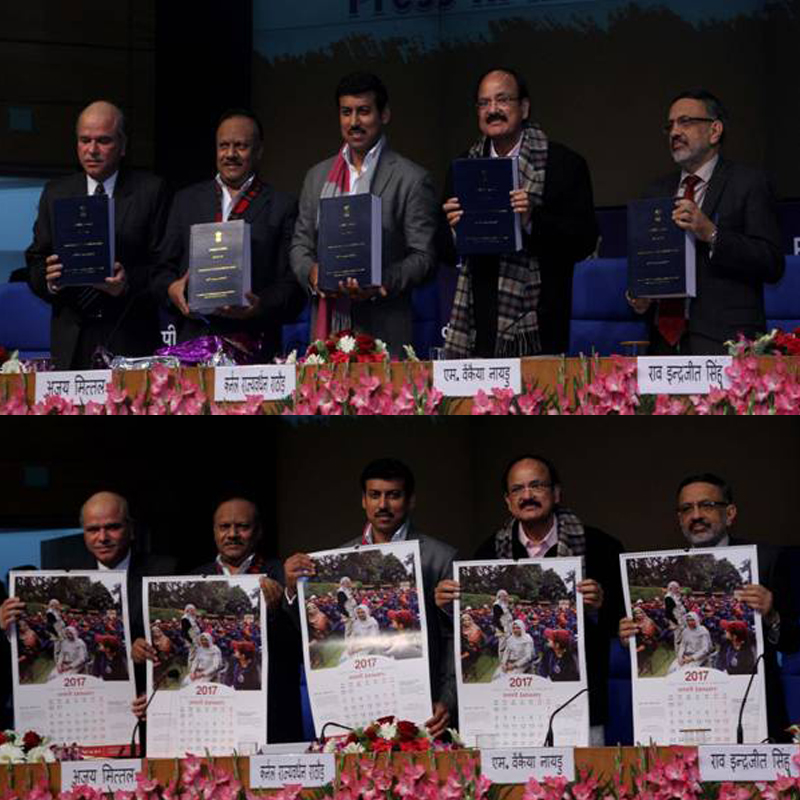
    Speaking after the release of the Government of India Calendar 2017, he lauded the growth of the Indian print media and said it continued its growth story at a steady rate of 5.13% over the previous year. Earlier, Naidu launched the Government of India Digital Calendar 2017 App. He added that the calendar App could be downloaded from Google Play store free of cost.

    A total of 5,423 new publications had been registered during the year 2015-16 with the total number of Registered Publications as on 31 March 2016 standing at 1, 10,851.

    Giving the Circulation-wise details, Naidu said that Hindi publications continued to lead with 31,44,55,106 copies per publishing day followed by English with 6,54,13,443 copies and Urdu with 5,17,75,006 copies per publishing day.

    He said the phenomenal growth of the print media sector had mandated changes in the print media policy/guidelines in the past years. The need to update policies keeping in mind the changing dynamics in the print media sector, has resulted in evolving a robust mechanism for RNI to maintain an updated list of Publications in the Country. This mechanism also facilitated weeding out illegal publications that may prove to be an irritant to law-enforcement agencies.

    Referring to the New Print Advertisement Policy framework, the Minister said that it provided for circulation verification Procedure for empanelment of Newspapers and Journals with DAVP. The procedure involved certification by RNI if circulation exceeds 45,000 copies per publishing day.

    He said the vision of the Government was to position the nation on a sustainable growth trajectory. The Government is committed to bring about transformational changes in the country with the mantra of ‘Reform, Perform & Transform’.

    The vision has been depicted in the Government of India Calendar 2017 with the theme “Mera Desh Badal Raha Hai, Aage Badh Raha Hai”.

    He also released the Press in India Report 2015-16 prepared by the Registrar of Newspapers of India. Minister of state for information & broadcasting Rajyavardhan Rathore was also present on the occasion.

    Naidu announced that the Government would be launching a 100 days campaign across the country on the theme of Good Governance from 25 December which marks the birthday of the former prime minister A B Vajpayee and is celebrated as Good Governance Day. Ministers, Members of the Parliament would be travelling across the country to highlight key initiatives of the Government that has been taken in the last two and a half years.

    The Government Calendar meanwhile showcases various flagship schemes and initiatives of the Government identifying a different theme every month:

    ·        Jan:     Skilling India for Youth Led Development

    ·        Feb:    Empowering the Poor

    ·        Mar:   Sashakt Nari, Sashakt Bharat

    ·        April: Futuristic India through Infrastructure Building

    ·        May:  MSME: India’s Economic Backbone

    ·        June: Farmers: Bread Winners of our Nation

    ·        July:   Rural Electrification: Lightning Every Home     

    ·        Aug:    Armed Forces: Pride of the Nation

    ·        Sept:   Cashless Transactions

    ·        Oct:     Swachh Bharat: New Vigour to Sanitation

    ·        Nov:   Corruption Free Governance

    ·        Dec:    Sugamya Bharat: Accessible India


    The highlights of the Press in India Report is given below:

    1

    The Total Number of Registered Publications

    i)       Newspaper category (Daily, Tri/Bi-weekly periodicities)

    ii)    Periodicals category (other periodicities)

    1,10,851

    16,136

    94,715

    2

    The number of new publicationsregistered during 2015-16

    5,423

    3

    Number of publications ceased during2015-16

                15

    4

    Number of publications  deregisteredduring 2015-16

                22

    5

    Percentage of growth of total registered publications over the previous year

    5.13 %

    6

    The largest number of publications registered in any Indian language (Hindi)

    44,557

    7

    The second largest number of publications registered in any languageother than Hindi (English)

    14,083

    8

    The State with the largest number ofregistered publications (Uttar Pradesh)

    16,984

    9

    The State with the second largest number of registered publications(Maharashtra)

    15,260

    10

    The number of  publications that submitted Annual Statements

    (This figure includes 1,341 Misc. publications)

    27,445

    11

    The total claimed circulation of publications during 2015-16

    i)       Hindi Publications

    ii)    English Publications

    iii)  Urdu Publications

    iv)  Marathi

    v)     Gujarati

    vi)  Telugu

    vii)  Odiya

    viii) Malayalam

    ix)  Tamil

    x)     Kannada

    xi)  Punjabi

    xii)                        Assamese

    xiii)                     Kashmiri

    61,02,38,581

    31,44,55,106

    6,54,13,443

    5,17,75,006

    3,67,88,737

    2,88,28,334

    2,76,45,134

    2,03,12,592

    1,55,57,673

    93,39,722

    64,85,082

    59,31,641

    13,90,759

    1,37,450

    12

    The largest number of publications that submitted Annual Statements in any Indian language (Hindi).

    14,316

    13

    The second largest number of publications that submitted Annual Statements in any language (English).

    2,174

    14

    The largest circulated Daily: “Ananda Bazar Patrika”, Bengali, Kolkata.

    11,50,038

    15

    The Second largest circulated Daily:“Hindustan Times” English, Delhi.

    9,92,239

    16

    The largest circulated Hindi Daily:“Punjab Kesari”, Jalandhar

    7,36,399

    17

    The largest circulated Multi-edition Daily: “Dainik Bhaskar”, Hindi. (45 editions)

    46,14,939

    18

    The second largest circulated Multi-edition Daily: “The Times of India”, English. (33 editions)

    44,21,374

    19

    The largest circulated Periodical: “The Sunday Times of India”, English/Weekly edition, Delhi.

    8,02,466

    20

    The largest circulated Periodical inMalayalam“Vanitha”,Malayalam/Fortnightly edition, Kottayam.

    6,94,291

    21

    Total Title Applications Received

    Titles Approved

    20,999

    12,817

    22

    Titles Deblocked during 2015-16

    (As they did not apply for registration within 2 years)

    7,754


  • Maintain status quo on broadcast guidelines, Madras HC tells TRAI

    Maintain status quo on broadcast guidelines, Madras HC tells TRAI

    NEW DELHI: The Madras High Court today ordered that the Telecom Regulatory Authority of India (TRAI) should maintain status quo with regard to any tariff orders or regulations for the broadcast sector.

    The Court directed that the stay will be in place till 12 January when the case comes up for hearing.

    The Madras HC order came on a petition filed by Star India and Vijay TV on the ground that the TRAI orders are in conflict with the Copyright Act 1957. As a result of this court order and pending the full hearing of the case, TRAI would not be able to pass any guideline for issues such as broadcast tariff, broadcast interconnect, and quality of services.

    A TRAI spokesperson said that although it was still waiting to receive the order from the Court, one immediate result would be that the draft tariff and interconnect guidelines issued by the regulator will be subject to the order of the court in this regard.

    A few months ago, TRAI had issued draft guidelines on tariff interconnect and quality of service, while TRAI chairman RS Sharma had told indiantelevision.com earlier this month that the regulator would come out with its final recommedation by the end of the year.

    It may be recalled that the Indian Broadcasting Foundation had also said in reaction to the TRAI drafts that the exercise was in direct conflict with the provisions of the Copyright Act.

    The comments had been stated in the comments to the Telecommunication (Broadcasting and Cable Services) Interconnection (Addressable Systems) Regulations 2016; the Telecommunication (Broadcasting and Cable Services) (Eighth) (Addressable Systems) Tariff Order 2016; and the Standards of Quality of Service) and Consumer Protection (Digital Addressable Systems) Regulations 2016.

    The IBF has said the Copyright Board is fully empowered to adjudicate upon disputes between any person and Content or Broadcast Reproduction Rights owners. Hence the Copyright Act and Rules provide for protection, monetisation, enforcement and adjudication procedures for all copyrightable work and broadcast reproduction rights.

    Also read:

    DAS 4 deadline extended to 31 Mar

  • Maintain status quo on broadcast guidelines, Madras HC tells TRAI

    Maintain status quo on broadcast guidelines, Madras HC tells TRAI

    NEW DELHI: The Madras High Court today ordered that the Telecom Regulatory Authority of India (TRAI) should maintain status quo with regard to any tariff orders or regulations for the broadcast sector.

    The Court directed that the stay will be in place till 12 January when the case comes up for hearing.

    The Madras HC order came on a petition filed by Star India and Vijay TV on the ground that the TRAI orders are in conflict with the Copyright Act 1957. As a result of this court order and pending the full hearing of the case, TRAI would not be able to pass any guideline for issues such as broadcast tariff, broadcast interconnect, and quality of services.

    A TRAI spokesperson said that although it was still waiting to receive the order from the Court, one immediate result would be that the draft tariff and interconnect guidelines issued by the regulator will be subject to the order of the court in this regard.

    A few months ago, TRAI had issued draft guidelines on tariff interconnect and quality of service, while TRAI chairman RS Sharma had told indiantelevision.com earlier this month that the regulator would come out with its final recommedation by the end of the year.

    It may be recalled that the Indian Broadcasting Foundation had also said in reaction to the TRAI drafts that the exercise was in direct conflict with the provisions of the Copyright Act.

    The comments had been stated in the comments to the Telecommunication (Broadcasting and Cable Services) Interconnection (Addressable Systems) Regulations 2016; the Telecommunication (Broadcasting and Cable Services) (Eighth) (Addressable Systems) Tariff Order 2016; and the Standards of Quality of Service) and Consumer Protection (Digital Addressable Systems) Regulations 2016.

    The IBF has said the Copyright Board is fully empowered to adjudicate upon disputes between any person and Content or Broadcast Reproduction Rights owners. Hence the Copyright Act and Rules provide for protection, monetisation, enforcement and adjudication procedures for all copyrightable work and broadcast reproduction rights.

    Also read:

    DAS 4 deadline extended to 31 Mar

  • Clarify status with Star India, TDSAT asks Canara Star

    Clarify status with Star India, TDSAT asks Canara Star

    NEW DELHI: Canara Star Communications Pvt. Ltd Karnataka, which has a long-pending dispute with Star India with regard to payments, has been given one more opportunity by the Telecom Disputes Settlement and Appellate Tribunal to reply to an affidavit of 23 March 2016 by the broadcaster alleging there was no entity of the name of the MSO on the website of the Corporate Affairs Ministry.

    Canara Star was given one more week from 20 December 2016 to file its affidavit, and Star India was permitted to respond to the affidavit if it so desired.

    Members B B Srivastava and A K Bhargava put up the matter for further hearing on 20 January 2017.

    The Tribunal said: “It is seen that the affidavit which has been filed by Canara Star is not prima facie in conformity with the directions given by the Tribunal on 18 December 2015.

    Canara Star had originally come before the Tribunal against disconnection notices by Star India as for default in payment. One of the grounds on which the disconnection notice was challenged was that another MSO had started operating in those areas and, as a result, the petitioner’s subscriber base had gone down substantially and the petitioner had been making request for downgradation of its subscriber base and consequently a reduction in the fixed fee payable by it as monthly subscription fee.

    As there appeared to be some substance in the petitioner’s grievance, and, on a joint request, the matter was referred to the Mediation Centre. The Tribunal was informed that, before the Mediation Centre could intervene, the parties were able to arrive at some understanding in regard to Kumta and Bhatkal areas but Canara Star was also getting signals from Star India for transmission in the DAS area of Bangalore and there too the MSO happened to be in default in payment of the subscription fees.

    Star India wanted a comprehensive settlement that should cover both analogue and digital areas covering Bangalore also.

    Canara, which has allegedly sold its business to another MSO called All Digital, was to produce its deed of transfer of establishment to All Digital which was made a party in the petition filed by Star India.

    Earlier this year, Canara Star had been asked by the TDSAT to present a payment schedule to Star India to settle their dispute.

    However, then chairman Justice Aftab Alam and members — Kuldip Singh and B B Srivastava accepted the plea by Star India counsel Arjun Natarajan that this schedule should not come in the way of its requirement to furnish a guarantee. Earlier, on 4 February, the Bench had granted a week’s time to Canara Star represented by Counsel Tushar Singh, to furnish a guarantee.

    In terms of the earlier order of 14 January, the directors of Canara Star were present in person before TDSAT on 29 January.

    In the hearing in third week of December, the Tribunal had asked Canara Star to intimate Star India whether it admits the SMS reports submitted by the broadcaster for the period 2014 to January 2015.

    The common order by the Tribunal on three petitions including one by Star India against Canara Star claiming recovery dues of around Rs 3 crore pertaining to the MSO’s operations in DAS area of Bangalore said this was subject to the two parties failing to arrive at a final settlement.

    Also read:

    Canara Star asked by TDSAT to pay Star India Rs 18.91 lakh subject to final outcome of dispute

  • Clarify status with Star India, TDSAT asks Canara Star

    Clarify status with Star India, TDSAT asks Canara Star

    NEW DELHI: Canara Star Communications Pvt. Ltd Karnataka, which has a long-pending dispute with Star India with regard to payments, has been given one more opportunity by the Telecom Disputes Settlement and Appellate Tribunal to reply to an affidavit of 23 March 2016 by the broadcaster alleging there was no entity of the name of the MSO on the website of the Corporate Affairs Ministry.

    Canara Star was given one more week from 20 December 2016 to file its affidavit, and Star India was permitted to respond to the affidavit if it so desired.

    Members B B Srivastava and A K Bhargava put up the matter for further hearing on 20 January 2017.

    The Tribunal said: “It is seen that the affidavit which has been filed by Canara Star is not prima facie in conformity with the directions given by the Tribunal on 18 December 2015.

    Canara Star had originally come before the Tribunal against disconnection notices by Star India as for default in payment. One of the grounds on which the disconnection notice was challenged was that another MSO had started operating in those areas and, as a result, the petitioner’s subscriber base had gone down substantially and the petitioner had been making request for downgradation of its subscriber base and consequently a reduction in the fixed fee payable by it as monthly subscription fee.

    As there appeared to be some substance in the petitioner’s grievance, and, on a joint request, the matter was referred to the Mediation Centre. The Tribunal was informed that, before the Mediation Centre could intervene, the parties were able to arrive at some understanding in regard to Kumta and Bhatkal areas but Canara Star was also getting signals from Star India for transmission in the DAS area of Bangalore and there too the MSO happened to be in default in payment of the subscription fees.

    Star India wanted a comprehensive settlement that should cover both analogue and digital areas covering Bangalore also.

    Canara, which has allegedly sold its business to another MSO called All Digital, was to produce its deed of transfer of establishment to All Digital which was made a party in the petition filed by Star India.

    Earlier this year, Canara Star had been asked by the TDSAT to present a payment schedule to Star India to settle their dispute.

    However, then chairman Justice Aftab Alam and members — Kuldip Singh and B B Srivastava accepted the plea by Star India counsel Arjun Natarajan that this schedule should not come in the way of its requirement to furnish a guarantee. Earlier, on 4 February, the Bench had granted a week’s time to Canara Star represented by Counsel Tushar Singh, to furnish a guarantee.

    In terms of the earlier order of 14 January, the directors of Canara Star were present in person before TDSAT on 29 January.

    In the hearing in third week of December, the Tribunal had asked Canara Star to intimate Star India whether it admits the SMS reports submitted by the broadcaster for the period 2014 to January 2015.

    The common order by the Tribunal on three petitions including one by Star India against Canara Star claiming recovery dues of around Rs 3 crore pertaining to the MSO’s operations in DAS area of Bangalore said this was subject to the two parties failing to arrive at a final settlement.

    Also read:

    Canara Star asked by TDSAT to pay Star India Rs 18.91 lakh subject to final outcome of dispute

  • DD’s digital terrestrial transmission meet today as TRAI paper awaits finalisation

    DD’s digital terrestrial transmission meet today as TRAI paper awaits finalisation

    NEW DELHI: Even as a consultation paper on Digital Terrestrial Transmission by the Telecom Regulatory Authority of India is pending finalisation, Doordarshan is holding a workshop with stakeholders to explore the potential of DTT services.

    The workshop on “Digital Terrestrial Transmission: Business Opportunities” is being organized on 23 December 2016 in the capital and will be addressed by experts.

    Experts from the Indian Institute of Management Ahmedabad, various stakeholders including Content providers, private broadcasters, receiver manufactures, and officers at Doordarshan will be participating in this workshop.

    In the paper issued on 22 June 2016, TRAI wanted to know if stakeholders perceive the need for introduction of DTT in multiple broadcasting distribution platforms and what the appropriate strategy for DTT implementation across the country should be.

    indiantelevision.com had earlier reported that the government was in the final stages of this exercise. Later, the website quoted then Prasar Bharati Chief Executive Officer Jawhar Sircar as saying that the pubcaster had itself cleared this more than a year earlier, even while pointing out that this would necessitate use of the Prasar Bharati infrastructure.

    DD, which presently has exclusive domain over terrestrial broadcasting, ranks amongst the world’s largest terrestrial television networks. It has a network of 1412 analog transmitters that provide TV services through two national channels namely, DD National and DD News. In addition to this, the network also broadcast several regional TV channels over the terrestrial network in a time sharing mode to meet the local and regional needs of people in different parts of the country. All TV channels provided by DD are free-to-air.

    In its paper, TRAI had asked whether DTT broadcasting should be opened for participation by the private players, and which model or a combination thereof for Dtt will be most suitable in Indian context.

    Trai also wanted to know what the approach for implementing DTT network (MFN/SFN/Hybrid) should be and how many digital multiplex per DTT operator should be planned for metro, major cities, urban and rural areas.

    Expert opinion had also been sought on the most appropriate frequency band as per National Frequency Allocation Plan 2011 for implementation of Digital terrestrial transmission including mobile TV.

    The DTT platform is flexible and content format agnostic – newer formats of TV channels such as HD TV, 3D TV, UHD TV, data and radio services etc. can thus be delivered with reduced transmission power requirements. Digitisation also allows for government bodies to reclaim spectrum and repurpose it.

    With standardized DTT transmission and clear advantages in terms of effective frequency utilization as well as enhanced TV quality, many countries the world over have laid down clear roadmaps to switch-off analog terrestrial TV transmission with a transition to DTT. In India, though work for changeover from Analog terrestrial transmission to digital terrestrial transmission by DD has already commenced, a clear roadmap is however unavailable.

  • DD’s digital terrestrial transmission meet today as TRAI paper awaits finalisation

    DD’s digital terrestrial transmission meet today as TRAI paper awaits finalisation

    NEW DELHI: Even as a consultation paper on Digital Terrestrial Transmission by the Telecom Regulatory Authority of India is pending finalisation, Doordarshan is holding a workshop with stakeholders to explore the potential of DTT services.

    The workshop on “Digital Terrestrial Transmission: Business Opportunities” is being organized on 23 December 2016 in the capital and will be addressed by experts.

    Experts from the Indian Institute of Management Ahmedabad, various stakeholders including Content providers, private broadcasters, receiver manufactures, and officers at Doordarshan will be participating in this workshop.

    In the paper issued on 22 June 2016, TRAI wanted to know if stakeholders perceive the need for introduction of DTT in multiple broadcasting distribution platforms and what the appropriate strategy for DTT implementation across the country should be.

    indiantelevision.com had earlier reported that the government was in the final stages of this exercise. Later, the website quoted then Prasar Bharati Chief Executive Officer Jawhar Sircar as saying that the pubcaster had itself cleared this more than a year earlier, even while pointing out that this would necessitate use of the Prasar Bharati infrastructure.

    DD, which presently has exclusive domain over terrestrial broadcasting, ranks amongst the world’s largest terrestrial television networks. It has a network of 1412 analog transmitters that provide TV services through two national channels namely, DD National and DD News. In addition to this, the network also broadcast several regional TV channels over the terrestrial network in a time sharing mode to meet the local and regional needs of people in different parts of the country. All TV channels provided by DD are free-to-air.

    In its paper, TRAI had asked whether DTT broadcasting should be opened for participation by the private players, and which model or a combination thereof for Dtt will be most suitable in Indian context.

    Trai also wanted to know what the approach for implementing DTT network (MFN/SFN/Hybrid) should be and how many digital multiplex per DTT operator should be planned for metro, major cities, urban and rural areas.

    Expert opinion had also been sought on the most appropriate frequency band as per National Frequency Allocation Plan 2011 for implementation of Digital terrestrial transmission including mobile TV.

    The DTT platform is flexible and content format agnostic – newer formats of TV channels such as HD TV, 3D TV, UHD TV, data and radio services etc. can thus be delivered with reduced transmission power requirements. Digitisation also allows for government bodies to reclaim spectrum and repurpose it.

    With standardized DTT transmission and clear advantages in terms of effective frequency utilization as well as enhanced TV quality, many countries the world over have laid down clear roadmaps to switch-off analog terrestrial TV transmission with a transition to DTT. In India, though work for changeover from Analog terrestrial transmission to digital terrestrial transmission by DD has already commenced, a clear roadmap is however unavailable.

  • Star Den, Flag Telecom, You & Idea FDI meet on 28 Dec

    Star Den, Flag Telecom, You & Idea FDI meet on 28 Dec

    MUMBAI: The foreign investment board will consider 17 foreign investment proposals on 28 December, including that of Star Den Media Services and others.

    Star Den Media Services Pvt. Ltd. develops and distributes television, cable, and the related network platforms. It offers a platform for distributing television channels in India through all fixed networks including cable, direct to home, and internet protocol television.

    Other investment proposals include that of Idea Cellular Infrastructure Services, Flag Telecom Singapore Pte Ltd and You Broadband India.

    FIPB had in June this year rejected a proposal of Flag Telecom Singapore, a wholly-owned unit of Reliance Communications (RCom), to set up a telecom subsidiary in India. Flag Telecom reportedly planned to acquire a company, payout for which would have been around US$120 million — in two parts.

    Now, the Foreign Investment Promotion Board, helmed by the economic affairs secretary Shaktikanta Das, is planning to meet on 28 December, 2016. Around 17 proposals would be discussed, a finance ministry meeting notice stated. AMP Solar India, Grand Pvt Ltd. and Sanofi Synthelabo India proposals would also be considered.

    India allows FDI in some of the industry sectors via the automatic route, but, in certain segments that are considered sensitive for the economy and security, the proposals need to be cleared by FIPB first.

    FIPB had earlier met on 26 September to consider foreign investment proposals, including that of Idea Cellular Infrastructure Services.

    The Indian government has taken a series of measures in the recent past to give a fillip to foreign direct investment. In the first half of the current fiscal year, the inflows were USD 21.62 billion. FDI increased by 29 per cent to USD 40 billion in 2015-16 as compared to the previous fiscal.

  • Star Den, Flag Telecom, You & Idea FDI meet on 28 Dec

    Star Den, Flag Telecom, You & Idea FDI meet on 28 Dec

    MUMBAI: The foreign investment board will consider 17 foreign investment proposals on 28 December, including that of Star Den Media Services and others.

    Star Den Media Services Pvt. Ltd. develops and distributes television, cable, and the related network platforms. It offers a platform for distributing television channels in India through all fixed networks including cable, direct to home, and internet protocol television.

    Other investment proposals include that of Idea Cellular Infrastructure Services, Flag Telecom Singapore Pte Ltd and You Broadband India.

    FIPB had in June this year rejected a proposal of Flag Telecom Singapore, a wholly-owned unit of Reliance Communications (RCom), to set up a telecom subsidiary in India. Flag Telecom reportedly planned to acquire a company, payout for which would have been around US$120 million — in two parts.

    Now, the Foreign Investment Promotion Board, helmed by the economic affairs secretary Shaktikanta Das, is planning to meet on 28 December, 2016. Around 17 proposals would be discussed, a finance ministry meeting notice stated. AMP Solar India, Grand Pvt Ltd. and Sanofi Synthelabo India proposals would also be considered.

    India allows FDI in some of the industry sectors via the automatic route, but, in certain segments that are considered sensitive for the economy and security, the proposals need to be cleared by FIPB first.

    FIPB had earlier met on 26 September to consider foreign investment proposals, including that of Idea Cellular Infrastructure Services.

    The Indian government has taken a series of measures in the recent past to give a fillip to foreign direct investment. In the first half of the current fiscal year, the inflows were USD 21.62 billion. FDI increased by 29 per cent to USD 40 billion in 2015-16 as compared to the previous fiscal.

  • States may decide Pak artistes films fate

    States may decide Pak artistes films fate

    NEW DELHI: The Central Government will not intervene in cases involving protests about Pakistani actors working in Indian films if the film had been certified by the Central Board of Film Certification.

    Even as the controversy over Shah Rukh Khan having met a local part chief in connection with his upcoming film ‘Raees’ starring Pakistani actress Mahira Khan rages, the information and broadcasting ministry (MIB) sources told indiantelevision.com that this was more of a law and order problem which fell into the realm of the state governments.

    In October this year, the Film & Television Producers Guild of India Ltd had expressed “genuine concern for all those film producers who invested heavily in films featuring artistes from across the border.”

    Even as it expressed unflinching support to the Central Government and its solidarity with the Indian armed forces on their supreme sacrifice at Uri (Jammu and Kashmir) and courage and valor displayed during the recent counter-terrorism operations, it noted there had been some discourse in the media recently with regard to certain threats to disrupt the release of these movies.

    The Guild, which represents most of the active Hindi film producers, there are many film producers who had either already shot their films or were in the process of completing their unfinished films prior to the escalation of hostilities with Pakistan. These included Karan Johar (‘Ae Dil Hai Mushkil’ with Fawad Khan and ‘Dear Zindagi’ with Ali Zafar) which had also been certified by the CBFC and released.

    Pakistani actor Fawad Khan was also seen in ‘Kapoor and Sons’, and earlier in ‘Khoobsoorat’ opposite Sonam Kapoor.

    Meanwhile, the sources said no permission had been granted to any Pakistani TV or radio channel to broadcast in India.

    Also read

    Bollywood supports Govt’s Pak policy; pleads for ongoing projects

    Film Industry supports Govt on Pak but says do not stop ongoing projects