Category: Regulators

  • India, US should resolve IPR issues at earliest: IACC

    India, US should resolve IPR issues at earliest: IACC

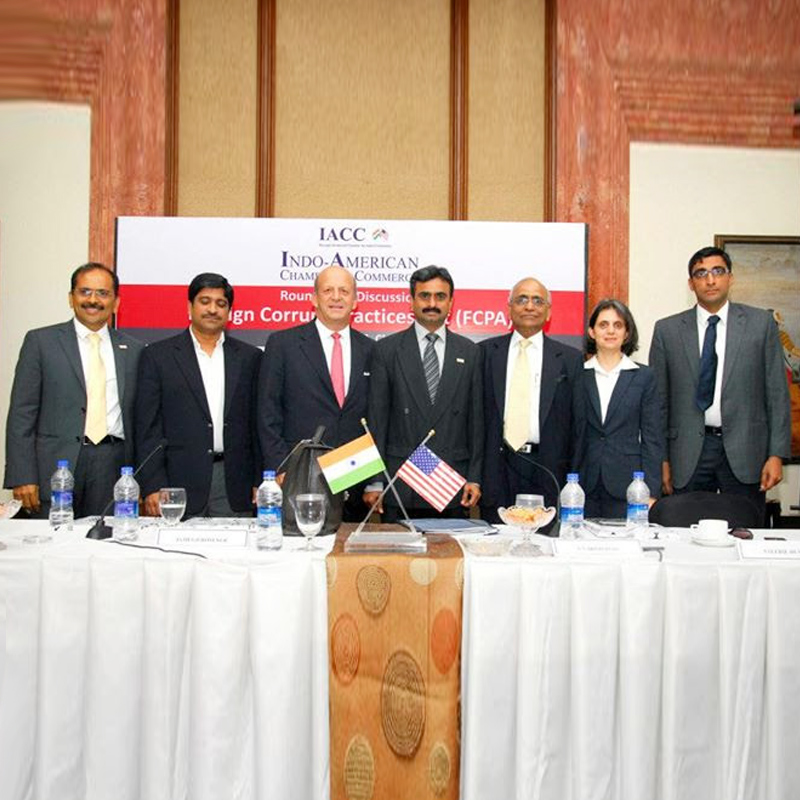
    NEW DELHI: India and the United States should exchange a bouquet of “wish lists” includig IPR issues aimed at fast tracking resolution of bilateral issues that impede accelerated flow of investment between the two countries, Indo American Chamber of Commerce national president N VSrinivasan said today.

    Broad contours of the wish lists should include amicable settlement of IPR issues leading to earliest conclusion of the Bilateral Investment Treaty (BIT), Totalization Agreement, a sound legal framework to expeditiously settle disputes, settlement of issues emanating from non-tariff measures and importantly a fast solution to nagging visa problems.

    He said that there was a growing realization among the US corporations that India, lying mid-way between West and the East, has the potential to emerge as a Gateway for serving both markets. Many corporations are seriously discussing these ideas in their board room meetings, while others are taking concrete steps towards investing in India with a renewed interest. “We have to capitalize on the situation by removing impediments to flow of investments and take concrete step toease doing business in India to leverage our position as an attractive investment destination,” according to Srinivasan.

    The US President – Elect Donald Trump is in the process of recalibrating the policies to deal pragmatically with each country by their level of importance and economic engagement. Against this backdrop, India’s recent policy initiatives like Make in India, Digital India, Smart city project, high budget investments in infrastructure etc. where critical technical and financial investments are needed, would stand to benefit.

    Trump has has made it very clear that he is averse to regional trade agreements like NAFTA, emerging Trans Pacific Partnership (TPP) etc. which according to him have been militated against the US interests.

    Flagging the contentious issues that are coming up in the bilateral economic negotiations, such as tardy intellectual property rights (IPR) protection and their enforcement, retrospective tax regime in India, insistence on deciding economic disputes under Indian laws etc, the IACC President said these issues can be settled in a spirit of give and take.

    There has been a proliferation of Indian companies and start-ups in the US, mostly in the ICT sector. These are set up mostly by people who migrated to the US at various stages, particularly during the dotcoms days. Their business enterprises are providing gainful employment to many US citizens. Most of the IT and technology platforms in India, such as mobile telephony, credit/debit card networks, climate tracking equipment, heavy duty computers, drones, sensors etc are working on equipment mostly imported from the US.

    “We are happy and privileged to have two administrations in the US and India, which are pro-business and believe in creating an environment for seamless business activities. Donald Trump’s significant business interests in India in various sectors and his statement of intent to forge a strong business relationship are pointers to an exciting bilateral business relationship”.

  • Court orders stay on music licensing societies from collecting royalties ahead of New Year

    Court orders stay on music licensing societies from collecting royalties ahead of New Year

    MUMBAI: It’s a judgment that has taken some time a-coming. For long Indian event organisers and agencies have been battling with the music licensing in various courts – the IPRS and PPL and Novex Communications – on their legal standing to collect royalties for music that is played out during ground events that the former organise. While the first two represent the interests of writers, authoris, composers and almost all Indian and international music labels, the latter collects royalties from event organisers for music from the YRF and Zee Music stable.

    With many parties and gigs planned by many event organisers planned for the new year – which is a plum time for these three bodies to collect revenues for live events and parties – the Event & Entertainment Management filed a petition with the Delhi high court on 21 December. It named the Indian government, the Copyright Off ice and PPL, IPRS, and Novex Communications as respondents to the case.

    The petition highlighted that despite the fact that currently neither of the bodies issuing ‘licenses’ are infact registered copyright societies – PPL / IPRS and Novex – however they still continue to grant licenses and continue to be in the business of granting licenses.”

    Two days later, on 23 December 2016, Justice Sanjeev Sachdeva issued an order which reads. “..the respondent Nos.3 (PPL) to 5 (IPRS and Novex Communications) are restrained from acting in contravention of Section 33 of the Act and the respondent Nos.1 and 2 (Union of India and Copyright Office respectively) are directed to take action in accordance with law for any breach of provisions of Section 33 by the respondent Nos.3 to 5.”

    According to the EEMA , this effectively means that the three bodies have been barred from collecting money for music licensing for events until the next hearing which is scheduled for 24 April 2017.

    “The Music Licensing lobby (PPL / IPRS / Novex) has been engaged in illegal issuance of licenses since over two years now and flouts all laws by openly threatening venues to stop events unless the license is procured,” says EEMA secretary (legal) Ankur Kalra: “Venues in turn pressurise event managers to do the same who despite knowing that it is wrong are forced to procure these licenses in order to safeguard their events. The music licensing ‘societies’ today are private limited companies operating purely for profit and very little or no money actually reaches the artists. It has become an organised syndicate and when we highlighted the same to the court we got an injunction almost immediately. We will take this battle forward and ensure that all event managers, venues and police departments are educated on this matter so that they are not part of the exploitation.”

    Adds EEMA legal counsel Abhishek Malhotra: “The music industry has been going through a flux. While the law clearly provides that issue and grant of licenses can be done only through a registered copyright society, these three entities have been effectively carrying on this business in violation of the clear legal provisions. This order as well as the government of India’s endorsement of the issues facing the users of music is therefore a welcome development. “

    We contacted several senior professionals from the music industry. Most were in the dark about the Delhi high court injunction order. However, the IRPS head Rakesh Nigam exclaimed that the order does not concern “the IPRS as it has been functioning under section 30 of the Copyright Act. The High Court’s verdict concerns bodies working under section 33 of the Act.”

    (courtesy http://www.radioandmusic.com/biz)

  • Court orders stay on music licensing societies from collecting royalties ahead of New Year

    Court orders stay on music licensing societies from collecting royalties ahead of New Year

    MUMBAI: It’s a judgment that has taken some time a-coming. For long Indian event organisers and agencies have been battling with the music licensing in various courts – the IPRS and PPL and Novex Communications – on their legal standing to collect royalties for music that is played out during ground events that the former organise. While the first two represent the interests of writers, authoris, composers and almost all Indian and international music labels, the latter collects royalties from event organisers for music from the YRF and Zee Music stable.

    With many parties and gigs planned by many event organisers planned for the new year – which is a plum time for these three bodies to collect revenues for live events and parties – the Event & Entertainment Management filed a petition with the Delhi high court on 21 December. It named the Indian government, the Copyright Off ice and PPL, IPRS, and Novex Communications as respondents to the case.

    The petition highlighted that despite the fact that currently neither of the bodies issuing ‘licenses’ are infact registered copyright societies – PPL / IPRS and Novex – however they still continue to grant licenses and continue to be in the business of granting licenses.”

    Two days later, on 23 December 2016, Justice Sanjeev Sachdeva issued an order which reads. “..the respondent Nos.3 (PPL) to 5 (IPRS and Novex Communications) are restrained from acting in contravention of Section 33 of the Act and the respondent Nos.1 and 2 (Union of India and Copyright Office respectively) are directed to take action in accordance with law for any breach of provisions of Section 33 by the respondent Nos.3 to 5.”

    According to the EEMA , this effectively means that the three bodies have been barred from collecting money for music licensing for events until the next hearing which is scheduled for 24 April 2017.

    “The Music Licensing lobby (PPL / IPRS / Novex) has been engaged in illegal issuance of licenses since over two years now and flouts all laws by openly threatening venues to stop events unless the license is procured,” says EEMA secretary (legal) Ankur Kalra: “Venues in turn pressurise event managers to do the same who despite knowing that it is wrong are forced to procure these licenses in order to safeguard their events. The music licensing ‘societies’ today are private limited companies operating purely for profit and very little or no money actually reaches the artists. It has become an organised syndicate and when we highlighted the same to the court we got an injunction almost immediately. We will take this battle forward and ensure that all event managers, venues and police departments are educated on this matter so that they are not part of the exploitation.”

    Adds EEMA legal counsel Abhishek Malhotra: “The music industry has been going through a flux. While the law clearly provides that issue and grant of licenses can be done only through a registered copyright society, these three entities have been effectively carrying on this business in violation of the clear legal provisions. This order as well as the government of India’s endorsement of the issues facing the users of music is therefore a welcome development. “

    We contacted several senior professionals from the music industry. Most were in the dark about the Delhi high court injunction order. However, the IRPS head Rakesh Nigam exclaimed that the order does not concern “the IPRS as it has been functioning under section 30 of the Copyright Act. The High Court’s verdict concerns bodies working under section 33 of the Act.”

    (courtesy http://www.radioandmusic.com/biz)

  • TV industry gives mixed reaction to MIB’s DAS III & IV extension

    TV industry gives mixed reaction to MIB’s DAS III & IV extension

    MUMBAI: Even as recently as a month ago, India’s ministry of information and broadcasting (MIB) and the industry regulator the Telecom Regulatory Authority of India announced that the DAS IV deadline of 31 December 2016 was sacrosanct and that the cable TV industry would have to bite the bullet. So, when the MIB announced on 22 December that it was pushing forward the Phase IV date to 31 March 2017 and the Phase III date to 31 January 2017, eyebrows were raised once again globally.

    Can the MIB ever stand firm on deadlines or can it set realistic ones, asked potential international investors who have been waiting to hear some positive developments about India’s digitizing-in-stops-and-starts cable TV sector?

    But, the response on the ground amongst India’s TV broadcasters and cable TV operators was mixed. Some have welcomed the decision; others have been harshly critical of the MIB’s postponement rationale.

    The MIB said the extension was being done “in lieu of uncertainty in the market due to pending court cases and unsatisfactory progress of installation of set-top boxes (STBs) in Phase IV areas.”

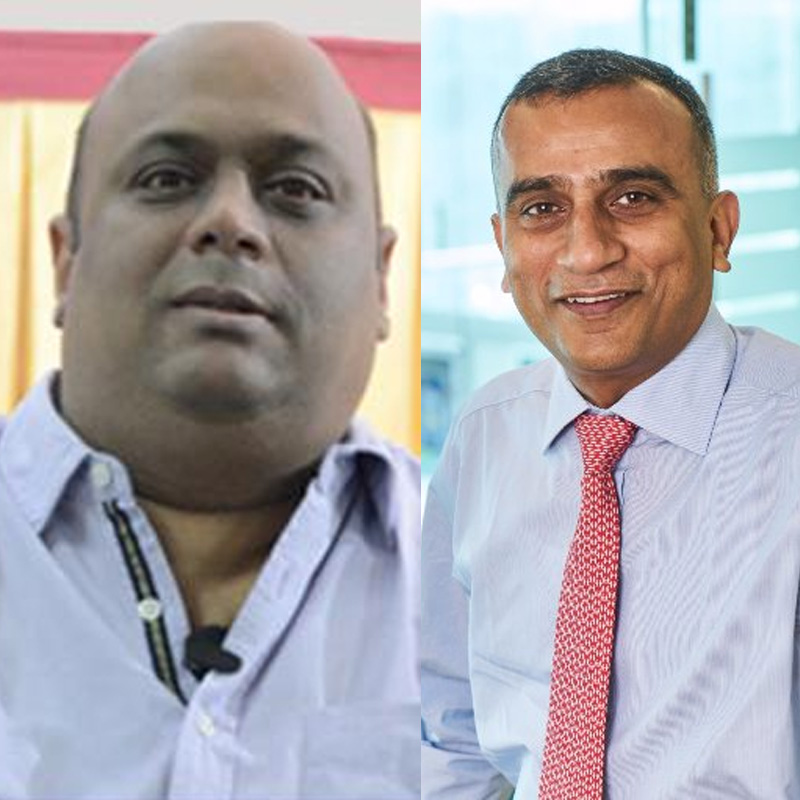
    Speaking to Indiantelevision.com, Viacom 18 group CEO Sudhanshu Vats said, “Owing to lack of preparedness of the industry toward digitisation, it is a good move provided there are no more extensions at all.”

    Questions an investment banker unwilling to be identified: “The cable TV trade has been given four to five years to digitize. And, they have not managed to do the job well over this period. What miracle will they perform in one month and three months? What’s to guarantee that the court cases will be settled and that government will not once again become weak-kneed and go in for a further postponement when these fresh deadlines come up? Investors want certainty, not this joke that the government has made of DAS.”

    Hathway Cable & Datacom’s Delhi distributor Vinod Chauhan said, although the order does not directly impact his operation since he was in the area covered under DAS I, it was a good move, but he questioned the logic behind it. Hathway Cable has been expanding into Phase III markets and had hopes that broadband and this expansion would help it increase its ARPUs.

    Siti Networks Ltd COO strategy & compliances Anil Malhotra said that the MSO’s planning for switching over to digital coincided with the government’s deadline of 31 December 2016. He said that there was pickup in demand for digital STBs of late. “We are not worried at all since we have a huge inventory of imported STBs,” Malhotra said.

    As the brief talk veered toward the effect of demonetisation, he said that entertainment was one of the primary essentials in the hectic lives of people today. “Everyone is ready and prepared to shell out Rs 1000-1100 for good quality STBs,” Malhotra added.

    Star India legal and regulatory affairs president and general counsel Deepak Jacob expresed his disappointment about the government’s decision. “When the DAS IV deadline was finally set for 31 December 2016 as per a government notification approved by Parliament, the ministry ideally cannot and should not extend the deadline at all,” he said emphatically. “Now, the government should stick to its new deadline and not allow any posptonment.”

    Smaller cable TV operators are however pleased about the lifeline they have got. Said Maharashtra Cable Operators Foundation (MCOF) president Arvind Prabhoo: “I think the MIB realised that covering diverse areas in a vast country like India was a challenge. Also, taking into consideration the pending court cases against digitisation, the ministry has rightly extended the deadline. It is a good, welcome move.”

    MSO Den Network CEO S N Sharma pointed out that the decision was not going to play a spoiler. He said, “It is not a six month or a year’s extension. It is just three months. The decision looks fine to me. I think this will give everyone sufficient time to do the seeding.”

    Most small cable networks in DAS IV service very few consumers. They are well below the size to viably provide digital cable TV. Most of these have resigned to the fate of losing their business and only livelihood, opined Hyderabad based Sky Vision MD R.S. Raju . “The currency demonetisation put a further damper. Consumers completely stopped spending on non-essential purchases, and STB deployment has been badly hit in rural areas, where plastic money is not prevalent, and new currency notes are in short-supply,” he said.

    He revealed that the MIB had some none to encouraging facts to reveal at the 18 th task force meeting.

    “The I&B ministry has declared certain (un-encouraging) data on STB deployments, up to 25 October 2016. Between 31 August & 25 October 2016, 1.97 million STBs were seeded in DAS IV areas. In Phase III, 0.876 million STBs were seeded in the same period. Combined, 2.84 million STBs were deployed in these two months. To date, pan-India, 92.4 million STBs have been deployed till 25 October 2016, according to MIB data,” Raju said.

    “As per earlier MIB data till 26 July 2016, 17.8 million STBs were seeded in DAS IV areas. Combined with the new data, this indicates that 19.77 million STBs have been seeded in DAS IV areas. DAS IV covers 61.08 million rural TV households spanning 28 states & 6 union territories (2011 Census),” Raju added.

    Raju further informed, “With very low ARPUs and the high cost of laying long length fibre networks to small pockets of Phase IV areas, most MSOs have only ‘cherry picked’ a few DAS IV areas to expand their operations. Few new headends have been set up or are planned in DAS IV areas. Generally, DAS IV areas are serviced from existing headends in neighbouring DAS III areas.”

    He revealed that a representative of the Consumer Electronics and Appliances Manufacturers Association (CEAMA) mentioned that no major purchase orders were received recently by the indigenous STB manufacturers (from MSOs) at the same task force meeting.

    A representative of the Indian Broadcasting Foundation (IBF) mentioned that very few requests had so far been received by its broadcaster members from MSOs for interconnect agreements for Phase IV areas.

    It would be logical to conclude that rural TV viewers will either shift to Doordarshan’s FreeDish or one of the six private, pay DTH platforms, stated Raju.

    At the same meeting, MIB joint secretary (P&A) Mihir Kumar Singh asked the members to suggest measures to implement Phase IV by the notified cut-off date, added Raju.

    And since none of them could offer logical feasible solutions, the MIB has had to take the stance it has. Additionally, the letter from the Andhra Pradesh chief minister N. Chandrababu Naidu to MIB minister M Venkaiah seeking postponement Naidu could have also forced the government to take the decision.

  • TV industry gives mixed reaction to MIB’s DAS III & IV extension

    TV industry gives mixed reaction to MIB’s DAS III & IV extension

    MUMBAI: Even as recently as a month ago, India’s ministry of information and broadcasting (MIB) and the industry regulator the Telecom Regulatory Authority of India announced that the DAS IV deadline of 31 December 2016 was sacrosanct and that the cable TV industry would have to bite the bullet. So, when the MIB announced on 22 December that it was pushing forward the Phase IV date to 31 March 2017 and the Phase III date to 31 January 2017, eyebrows were raised once again globally.

    Can the MIB ever stand firm on deadlines or can it set realistic ones, asked potential international investors who have been waiting to hear some positive developments about India’s digitizing-in-stops-and-starts cable TV sector?

    But, the response on the ground amongst India’s TV broadcasters and cable TV operators was mixed. Some have welcomed the decision; others have been harshly critical of the MIB’s postponement rationale.

    The MIB said the extension was being done “in lieu of uncertainty in the market due to pending court cases and unsatisfactory progress of installation of set-top boxes (STBs) in Phase IV areas.”

    Speaking to Indiantelevision.com, Viacom 18 group CEO Sudhanshu Vats said, “Owing to lack of preparedness of the industry toward digitisation, it is a good move provided there are no more extensions at all.”

    Questions an investment banker unwilling to be identified: “The cable TV trade has been given four to five years to digitize. And, they have not managed to do the job well over this period. What miracle will they perform in one month and three months? What’s to guarantee that the court cases will be settled and that government will not once again become weak-kneed and go in for a further postponement when these fresh deadlines come up? Investors want certainty, not this joke that the government has made of DAS.”

    Hathway Cable & Datacom’s Delhi distributor Vinod Chauhan said, although the order does not directly impact his operation since he was in the area covered under DAS I, it was a good move, but he questioned the logic behind it. Hathway Cable has been expanding into Phase III markets and had hopes that broadband and this expansion would help it increase its ARPUs.

    Siti Networks Ltd COO strategy & compliances Anil Malhotra said that the MSO’s planning for switching over to digital coincided with the government’s deadline of 31 December 2016. He said that there was pickup in demand for digital STBs of late. “We are not worried at all since we have a huge inventory of imported STBs,” Malhotra said.

    As the brief talk veered toward the effect of demonetisation, he said that entertainment was one of the primary essentials in the hectic lives of people today. “Everyone is ready and prepared to shell out Rs 1000-1100 for good quality STBs,” Malhotra added.

    Star India legal and regulatory affairs president and general counsel Deepak Jacob expresed his disappointment about the government’s decision. “When the DAS IV deadline was finally set for 31 December 2016 as per a government notification approved by Parliament, the ministry ideally cannot and should not extend the deadline at all,” he said emphatically. “Now, the government should stick to its new deadline and not allow any posptonment.”

    Smaller cable TV operators are however pleased about the lifeline they have got. Said Maharashtra Cable Operators Foundation (MCOF) president Arvind Prabhoo: “I think the MIB realised that covering diverse areas in a vast country like India was a challenge. Also, taking into consideration the pending court cases against digitisation, the ministry has rightly extended the deadline. It is a good, welcome move.”

    MSO Den Network CEO S N Sharma pointed out that the decision was not going to play a spoiler. He said, “It is not a six month or a year’s extension. It is just three months. The decision looks fine to me. I think this will give everyone sufficient time to do the seeding.”

    Most small cable networks in DAS IV service very few consumers. They are well below the size to viably provide digital cable TV. Most of these have resigned to the fate of losing their business and only livelihood, opined Hyderabad based Sky Vision MD R.S. Raju . “The currency demonetisation put a further damper. Consumers completely stopped spending on non-essential purchases, and STB deployment has been badly hit in rural areas, where plastic money is not prevalent, and new currency notes are in short-supply,” he said.

    He revealed that the MIB had some none to encouraging facts to reveal at the 18 th task force meeting.

    “The I&B ministry has declared certain (un-encouraging) data on STB deployments, up to 25 October 2016. Between 31 August & 25 October 2016, 1.97 million STBs were seeded in DAS IV areas. In Phase III, 0.876 million STBs were seeded in the same period. Combined, 2.84 million STBs were deployed in these two months. To date, pan-India, 92.4 million STBs have been deployed till 25 October 2016, according to MIB data,” Raju said.

    “As per earlier MIB data till 26 July 2016, 17.8 million STBs were seeded in DAS IV areas. Combined with the new data, this indicates that 19.77 million STBs have been seeded in DAS IV areas. DAS IV covers 61.08 million rural TV households spanning 28 states & 6 union territories (2011 Census),” Raju added.

    Raju further informed, “With very low ARPUs and the high cost of laying long length fibre networks to small pockets of Phase IV areas, most MSOs have only ‘cherry picked’ a few DAS IV areas to expand their operations. Few new headends have been set up or are planned in DAS IV areas. Generally, DAS IV areas are serviced from existing headends in neighbouring DAS III areas.”

    He revealed that a representative of the Consumer Electronics and Appliances Manufacturers Association (CEAMA) mentioned that no major purchase orders were received recently by the indigenous STB manufacturers (from MSOs) at the same task force meeting.

    A representative of the Indian Broadcasting Foundation (IBF) mentioned that very few requests had so far been received by its broadcaster members from MSOs for interconnect agreements for Phase IV areas.

    It would be logical to conclude that rural TV viewers will either shift to Doordarshan’s FreeDish or one of the six private, pay DTH platforms, stated Raju.

    At the same meeting, MIB joint secretary (P&A) Mihir Kumar Singh asked the members to suggest measures to implement Phase IV by the notified cut-off date, added Raju.

    And since none of them could offer logical feasible solutions, the MIB has had to take the stance it has. Additionally, the letter from the Andhra Pradesh chief minister N. Chandrababu Naidu to MIB minister M Venkaiah seeking postponement Naidu could have also forced the government to take the decision.
  • Efficient digital transition; MyGov.in pockets citizen engagement award

    Efficient digital transition; MyGov.in pockets citizen engagement award

    NEW DELHI: MyGov website has won the Platinum Award for the Most Innovative Citizen Engagement while the Online Management, Monitoring and Accounting System (OMMAS) for Pradhan Mantri Gram SadakYojana (PMGSY) won the Gold Award.

    The Silver Award was won by Coimbatore City Municipal Corporation. The Jury Choice was given to IT Initiatives of SimhasthKumbh, Ujjain.

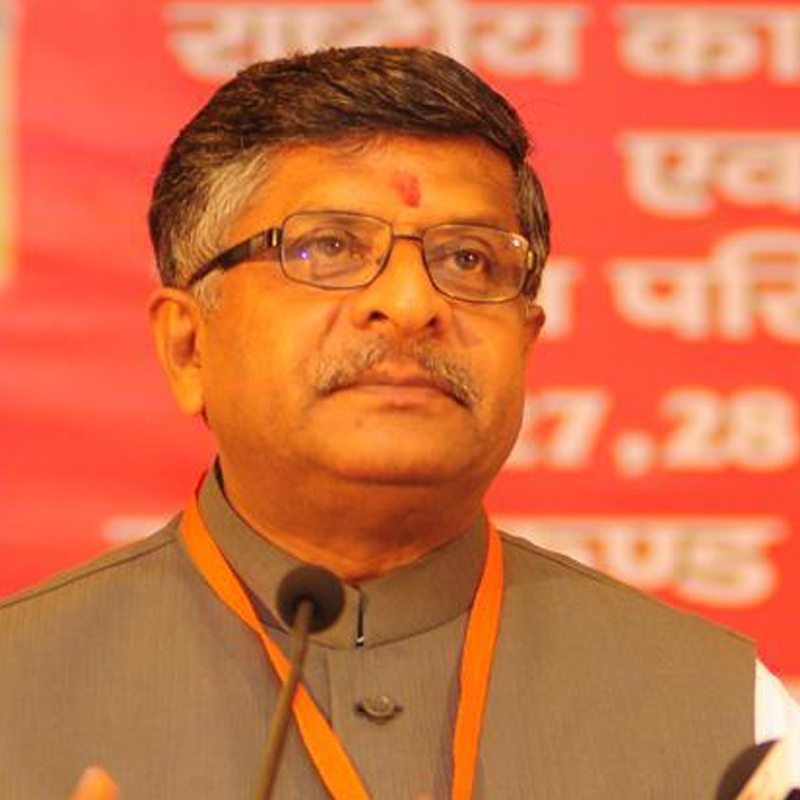
    Communications and Information Technology Minister Ravi Shankar Prasad presented the first “Digital India Awards” as part of the Government’s ambitious programme of “Digital India” on its axiom of “Minimum Government and Maximum Governance”.

    The awards are for those who facilitate the Government’s efforts to promote and uphold the use of World Wide Web for enhancing efficiency and transparency of Government Machinery and encouraging its speedy transition towards Digital India.

    The first edition of the awards was organized by the National Informatics Centre (NIC) under the ambit of India Portal (http://india.gov.in).

    Digital innovation along with E-Governance initiatives of Government Ministries and Departments across India were evaluated under various categories. Three awards Platinum, Gold and Silver were presented in each category to the winners shortlisted from the nominations received under each category.

    The categories included Exemplary Online Service, Open Data Champion, Most Innovative Citizen Engagement, Outstanding Digital Initiative by Local body, Best Mobile App, Web Ratna – Ministry/ Department, Web Ratna – State/ UT, Web Ratna-District.

    In the Outstanding Digital Initiative by Local Body Platinum Award was bagged by Surat Municipal Corporation, followed by Greater Visakhapatnam Municipal Corporation and Web and Mobile based Integrated Complaint Logging and Resolution Tracking System – Madurai Corporation winning the Gold and Silver award respectively.

    The Jury Choice was given e-NagarSewaUP – Electronic Workflow based Reform for ULBs in Uttar Pradesh.

    In the Exemplary Online Service Category Platinum Award was bagged by VYAS- VarnijYakar Automation System for Department of Commercial Taxes, Uttar Pradesh, followed by E-permit, Commercial tax department, Gujarat and One Stop Clearance System, Punjab Bureau of Investment Promotion winning the Gold and Silver award respectively.

    In the Open Data Champion Category Platinum Award was won by Office of the Registrar General, India. The Health and Family Welfare and Directorate of Marketing & Inspection won the Gold Award. The Silver award was bagged by the Rajya Sabha and National Crime Records Bureau.

    For Best Mobile App, Citizen Cop Mobile App Chattisgarh won the Platinum Award. Mid-Day Meal Mobile App, Himachal Pradesh won the Gold Award. The Silver Award was won by GARV – GrameenVidyutikaran App Ministry of Power.

    For Web Ratna – Ministry / Department category, the Platinum was bagged by Human Resource Development Ministry, Gold by Health & Family Welfare Ministry, and Silver by External Affairs Ministry.

    For Web Ratna – State/ UT category the Platinum award has been won by Rajasthan followed by Tamil Nadu and Haryana in the Gold and Silver section respectively. For Web Ratna – District category the Platinum award has been won by Website of Collectorate, North Goa, followed by e-Governance friendly website & Initiatives of District Kupwara, J&K and district administration Udham Singh Nagar website, Uttarakhand in the Gold and Silver section respectively.

    A Compendium for Digital India Awards 2016 was also released on this occasion. A comprehensive government services portal was also launched by the Shri P. P. Chaudhary on this occasion.

    Minister of State for Communications and Information Technology P P Chaudhary; Electronics & Information Technology|(MeitY) Secretary Aruna Sundarrajan, Principal Scientific Advisor R Chidambaram; MeitY Additional Secretary Ajay Kumar, NIC DG Neeta Verma, and Senior officials from (MeitY), NIC, state and Central Senior dignitaries were also present.

    Digital India Awards plays a major role in recognizing the noteworthy and sustainable initiatives in the realm of e-Governance for better delivery of information and services. At the same time Digital India Awards have re-established itself as an important platform to disseminate information about such path breaking initiatives, encouraging others to customize and replicate the successful solutions. The Awards through its unique initiative has contributed to the overall increase in quality and quantity of web presence of various government departments across the country. Most importantly, it has created an atmosphere for further innovation in the web based services sphere promoting and encouraging Government Departments/Ministries and States to come out with their best.

  • Efficient digital transition; MyGov.in pockets citizen engagement award

    Efficient digital transition; MyGov.in pockets citizen engagement award

    NEW DELHI: MyGov website has won the Platinum Award for the Most Innovative Citizen Engagement while the Online Management, Monitoring and Accounting System (OMMAS) for Pradhan Mantri Gram SadakYojana (PMGSY) won the Gold Award.

    The Silver Award was won by Coimbatore City Municipal Corporation. The Jury Choice was given to IT Initiatives of SimhasthKumbh, Ujjain.

    Communications and Information Technology Minister Ravi Shankar Prasad presented the first “Digital India Awards” as part of the Government’s ambitious programme of “Digital India” on its axiom of “Minimum Government and Maximum Governance”.

    The awards are for those who facilitate the Government’s efforts to promote and uphold the use of World Wide Web for enhancing efficiency and transparency of Government Machinery and encouraging its speedy transition towards Digital India.

    The first edition of the awards was organized by the National Informatics Centre (NIC) under the ambit of India Portal (http://india.gov.in).

    Digital innovation along with E-Governance initiatives of Government Ministries and Departments across India were evaluated under various categories. Three awards Platinum, Gold and Silver were presented in each category to the winners shortlisted from the nominations received under each category.

    The categories included Exemplary Online Service, Open Data Champion, Most Innovative Citizen Engagement, Outstanding Digital Initiative by Local body, Best Mobile App, Web Ratna – Ministry/ Department, Web Ratna – State/ UT, Web Ratna-District.

    In the Outstanding Digital Initiative by Local Body Platinum Award was bagged by Surat Municipal Corporation, followed by Greater Visakhapatnam Municipal Corporation and Web and Mobile based Integrated Complaint Logging and Resolution Tracking System – Madurai Corporation winning the Gold and Silver award respectively.

    The Jury Choice was given e-NagarSewaUP – Electronic Workflow based Reform for ULBs in Uttar Pradesh.

    In the Exemplary Online Service Category Platinum Award was bagged by VYAS- VarnijYakar Automation System for Department of Commercial Taxes, Uttar Pradesh, followed by E-permit, Commercial tax department, Gujarat and One Stop Clearance System, Punjab Bureau of Investment Promotion winning the Gold and Silver award respectively.

    In the Open Data Champion Category Platinum Award was won by Office of the Registrar General, India. The Health and Family Welfare and Directorate of Marketing & Inspection won the Gold Award. The Silver award was bagged by the Rajya Sabha and National Crime Records Bureau.

    For Best Mobile App, Citizen Cop Mobile App Chattisgarh won the Platinum Award. Mid-Day Meal Mobile App, Himachal Pradesh won the Gold Award. The Silver Award was won by GARV – GrameenVidyutikaran App Ministry of Power.

    For Web Ratna – Ministry / Department category, the Platinum was bagged by Human Resource Development Ministry, Gold by Health & Family Welfare Ministry, and Silver by External Affairs Ministry.

    For Web Ratna – State/ UT category the Platinum award has been won by Rajasthan followed by Tamil Nadu and Haryana in the Gold and Silver section respectively. For Web Ratna – District category the Platinum award has been won by Website of Collectorate, North Goa, followed by e-Governance friendly website & Initiatives of District Kupwara, J&K and district administration Udham Singh Nagar website, Uttarakhand in the Gold and Silver section respectively.

    A Compendium for Digital India Awards 2016 was also released on this occasion. A comprehensive government services portal was also launched by the Shri P. P. Chaudhary on this occasion.

    Minister of State for Communications and Information Technology P P Chaudhary; Electronics & Information Technology|(MeitY) Secretary Aruna Sundarrajan, Principal Scientific Advisor R Chidambaram; MeitY Additional Secretary Ajay Kumar, NIC DG Neeta Verma, and Senior officials from (MeitY), NIC, state and Central Senior dignitaries were also present.

    Digital India Awards plays a major role in recognizing the noteworthy and sustainable initiatives in the realm of e-Governance for better delivery of information and services. At the same time Digital India Awards have re-established itself as an important platform to disseminate information about such path breaking initiatives, encouraging others to customize and replicate the successful solutions. The Awards through its unique initiative has contributed to the overall increase in quality and quantity of web presence of various government departments across the country. Most importantly, it has created an atmosphere for further innovation in the web based services sphere promoting and encouraging Government Departments/Ministries and States to come out with their best.

  • Wi-fi proliferation, Net Telephony discussion in January

    Wi-fi proliferation, Net Telephony discussion in January

    NEW DELHI: The open house discussion in the capital on the Telecom Regulatory Authority of India’s consultation paper on “Proliferation of Broadband through Public Wi-Fi Networks” which was earlier slated for 20 December has now been rescheduled for 9 January 2017 to get greater participation in view of the importance attached to public Wi-Fi systems.

    The issuance of this paper on 13 July 2016 was followed by reactions and then a workshop in Bengaluru.

    Through a set of 12 questions, the Authority had sought to get the opinion of stakeholders including internet and telecom service providers on how best Wi-fi (an acronym for Wireless Fidelity) can grow in the country.

    At the outset, the regulator had noted that the growth of Internet penetration in India and realisation of its full potential is closely tied to the proliferation of broadband services. “Broadband” is currently defined to mean a data connection that is able to support interactive services, including Internet access, with the capability of a minimum download speed of 512 kbps. It therefore refers to a means of delivering high-speed Internet access services.

    Later, on 16 November, TRAI issued a second paper on model for nation-wide interoperable and scalable wi-fi networks.

    Earlier, TRAI had said it realised the importance of public Wi-Fi networks as complementary to existing landline and cellular mobile infrastructure in improving broadband penetration and adoption of Digital India.

    Meanwhile, TRAI has also scheduled on 12 January 2017 an open house discussion on internet telephony based on its paper of 22 June 2016 issued after noting that unified IP based backbone and the benefits associated with the converged telecom access scenario has enabled service providers to launch more and more converged services such as Internet Telephony, IPTV, Mobile TV etc. In the Consultation Paper, Trai had also pointed out that use of Internet Protocol (IP)-based networks, including the Internet, continues to grow around the world due to the multitude of applications it supports and particularly due to Voice Over IP (VoIP). IP-based networks are capable of providing real-time services such as voice and video telephony as well as non real-time services such as email and are driven by faster Internet connections, widespread take-up in broadband and the emergence of new technologies.

    Also read:

    Public Wi-Fi: TRAI plans to evolve model, releases paper

    Wi-fi proliferation: Discussion on 20 Dec

    TRAI gives 2nd extension to Internet telephony consultation


  • Wi-fi proliferation, Net Telephony discussion in January

    Wi-fi proliferation, Net Telephony discussion in January

    NEW DELHI: The open house discussion in the capital on the Telecom Regulatory Authority of India’s consultation paper on “Proliferation of Broadband through Public Wi-Fi Networks” which was earlier slated for 20 December has now been rescheduled for 9 January 2017 to get greater participation in view of the importance attached to public Wi-Fi systems.

    The issuance of this paper on 13 July 2016 was followed by reactions and then a workshop in Bengaluru.

    Through a set of 12 questions, the Authority had sought to get the opinion of stakeholders including internet and telecom service providers on how best Wi-fi (an acronym for Wireless Fidelity) can grow in the country.

    At the outset, the regulator had noted that the growth of Internet penetration in India and realisation of its full potential is closely tied to the proliferation of broadband services. “Broadband” is currently defined to mean a data connection that is able to support interactive services, including Internet access, with the capability of a minimum download speed of 512 kbps. It therefore refers to a means of delivering high-speed Internet access services.

    Later, on 16 November, TRAI issued a second paper on model for nation-wide interoperable and scalable wi-fi networks.

    Earlier, TRAI had said it realised the importance of public Wi-Fi networks as complementary to existing landline and cellular mobile infrastructure in improving broadband penetration and adoption of Digital India.

    Meanwhile, TRAI has also scheduled on 12 January 2017 an open house discussion on internet telephony based on its paper of 22 June 2016 issued after noting that unified IP based backbone and the benefits associated with the converged telecom access scenario has enabled service providers to launch more and more converged services such as Internet Telephony, IPTV, Mobile TV etc. In the Consultation Paper, Trai had also pointed out that use of Internet Protocol (IP)-based networks, including the Internet, continues to grow around the world due to the multitude of applications it supports and particularly due to Voice Over IP (VoIP). IP-based networks are capable of providing real-time services such as voice and video telephony as well as non real-time services such as email and are driven by faster Internet connections, widespread take-up in broadband and the emergence of new technologies.

    Also read:

    Public Wi-Fi: TRAI plans to evolve model, releases paper

    Wi-fi proliferation: Discussion on 20 Dec

    TRAI gives 2nd extension to Internet telephony consultation


  • MIB stresses on digital, connectivity revolution; Google Play govt schemes

    MIB stresses on digital, connectivity revolution; Google Play govt schemes

    NEW DELHI: Information and Broadcasting Minister M Venkaiah Naidu has said the endeavour of the Government is to improve delivery systems, need to promote digital transformation and take forward the connectivity revolution in all sectors.

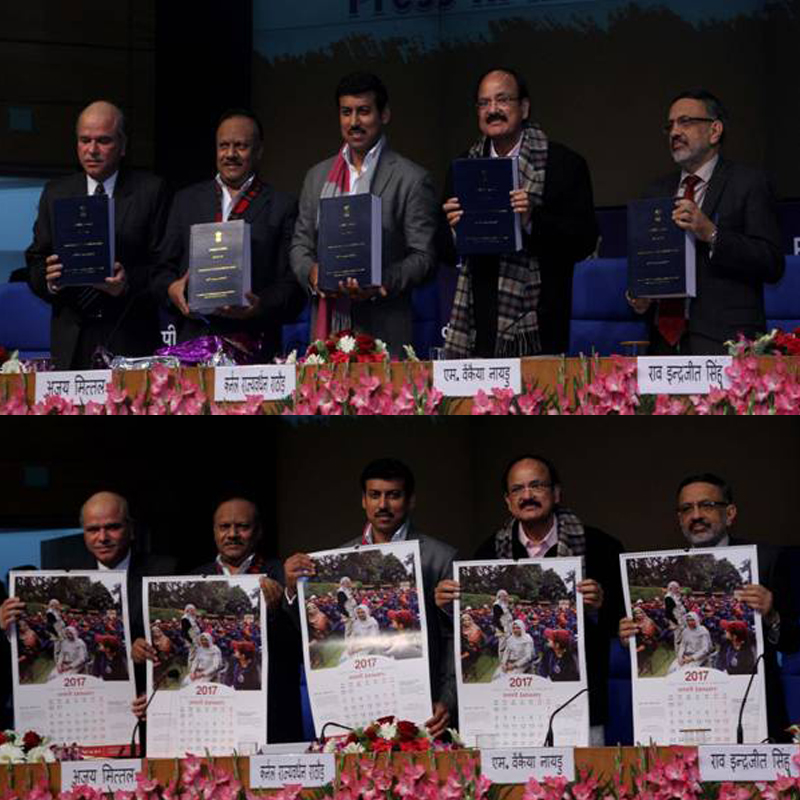
    Speaking after the release of the Government of India Calendar 2017, he lauded the growth of the Indian print media and said it continued its growth story at a steady rate of 5.13% over the previous year. Earlier, Naidu launched the Government of India Digital Calendar 2017 App. He added that the calendar App could be downloaded from Google Play store free of cost.

    A total of 5,423 new publications had been registered during the year 2015-16 with the total number of Registered Publications as on 31 March 2016 standing at 1, 10,851.

    Giving the Circulation-wise details, Naidu said that Hindi publications continued to lead with 31,44,55,106 copies per publishing day followed by English with 6,54,13,443 copies and Urdu with 5,17,75,006 copies per publishing day.

    He said the phenomenal growth of the print media sector had mandated changes in the print media policy/guidelines in the past years. The need to update policies keeping in mind the changing dynamics in the print media sector, has resulted in evolving a robust mechanism for RNI to maintain an updated list of Publications in the Country. This mechanism also facilitated weeding out illegal publications that may prove to be an irritant to law-enforcement agencies.

    Referring to the New Print Advertisement Policy framework, the Minister said that it provided for circulation verification Procedure for empanelment of Newspapers and Journals with DAVP. The procedure involved certification by RNI if circulation exceeds 45,000 copies per publishing day.

    He said the vision of the Government was to position the nation on a sustainable growth trajectory. The Government is committed to bring about transformational changes in the country with the mantra of ‘Reform, Perform & Transform’.

    The vision has been depicted in the Government of India Calendar 2017 with the theme “Mera Desh Badal Raha Hai, Aage Badh Raha Hai”.

    He also released the Press in India Report 2015-16 prepared by the Registrar of Newspapers of India. Minister of state for information & broadcasting Rajyavardhan Rathore was also present on the occasion.

    Naidu announced that the Government would be launching a 100 days campaign across the country on the theme of Good Governance from 25 December which marks the birthday of the former prime minister A B Vajpayee and is celebrated as Good Governance Day. Ministers, Members of the Parliament would be travelling across the country to highlight key initiatives of the Government that has been taken in the last two and a half years.

    The Government Calendar meanwhile showcases various flagship schemes and initiatives of the Government identifying a different theme every month:

    ·        Jan:     Skilling India for Youth Led Development

    ·        Feb:    Empowering the Poor

    ·        Mar:   Sashakt Nari, Sashakt Bharat

    ·        April: Futuristic India through Infrastructure Building

    ·        May:  MSME: India’s Economic Backbone

    ·        June: Farmers: Bread Winners of our Nation

    ·        July:   Rural Electrification: Lightning Every Home     

    ·        Aug:    Armed Forces: Pride of the Nation

    ·        Sept:   Cashless Transactions

    ·        Oct:     Swachh Bharat: New Vigour to Sanitation

    ·        Nov:   Corruption Free Governance

    ·        Dec:    Sugamya Bharat: Accessible India


    The highlights of the Press in India Report is given below:

    1

    The Total Number of Registered Publications

    i)       Newspaper category (Daily, Tri/Bi-weekly periodicities)

    ii)    Periodicals category (other periodicities)

    1,10,851

    16,136

    94,715

    2

    The number of new publicationsregistered during 2015-16

    5,423

    3

    Number of publications ceased during2015-16

                15

    4

    Number of publications  deregisteredduring 2015-16

                22

    5

    Percentage of growth of total registered publications over the previous year

    5.13 %

    6

    The largest number of publications registered in any Indian language (Hindi)

    44,557

    7

    The second largest number of publications registered in any languageother than Hindi (English)

    14,083

    8

    The State with the largest number ofregistered publications (Uttar Pradesh)

    16,984

    9

    The State with the second largest number of registered publications(Maharashtra)

    15,260

    10

    The number of  publications that submitted Annual Statements

    (This figure includes 1,341 Misc. publications)

    27,445

    11

    The total claimed circulation of publications during 2015-16

    i)       Hindi Publications

    ii)    English Publications

    iii)  Urdu Publications

    iv)  Marathi

    v)     Gujarati

    vi)  Telugu

    vii)  Odiya

    viii) Malayalam

    ix)  Tamil

    x)     Kannada

    xi)  Punjabi

    xii)                        Assamese

    xiii)                     Kashmiri

    61,02,38,581

    31,44,55,106

    6,54,13,443

    5,17,75,006

    3,67,88,737

    2,88,28,334

    2,76,45,134

    2,03,12,592

    1,55,57,673

    93,39,722

    64,85,082

    59,31,641

    13,90,759

    1,37,450

    12

    The largest number of publications that submitted Annual Statements in any Indian language (Hindi).

    14,316

    13

    The second largest number of publications that submitted Annual Statements in any language (English).

    2,174

    14

    The largest circulated Daily: “Ananda Bazar Patrika”, Bengali, Kolkata.

    11,50,038

    15

    The Second largest circulated Daily:“Hindustan Times” English, Delhi.

    9,92,239

    16

    The largest circulated Hindi Daily:“Punjab Kesari”, Jalandhar

    7,36,399

    17

    The largest circulated Multi-edition Daily: “Dainik Bhaskar”, Hindi. (45 editions)

    46,14,939

    18

    The second largest circulated Multi-edition Daily: “The Times of India”, English. (33 editions)

    44,21,374

    19

    The largest circulated Periodical: “The Sunday Times of India”, English/Weekly edition, Delhi.

    8,02,466

    20

    The largest circulated Periodical inMalayalam“Vanitha”,Malayalam/Fortnightly edition, Kottayam.

    6,94,291

    21

    Total Title Applications Received

    Titles Approved

    20,999

    12,817

    22

    Titles Deblocked during 2015-16

    (As they did not apply for registration within 2 years)

    7,754