Category: Regulators

  • Mittal wants self-regulation for new media, Rathore says IT Act adequate

    Mittal wants self-regulation for new media, Rathore says IT Act adequate

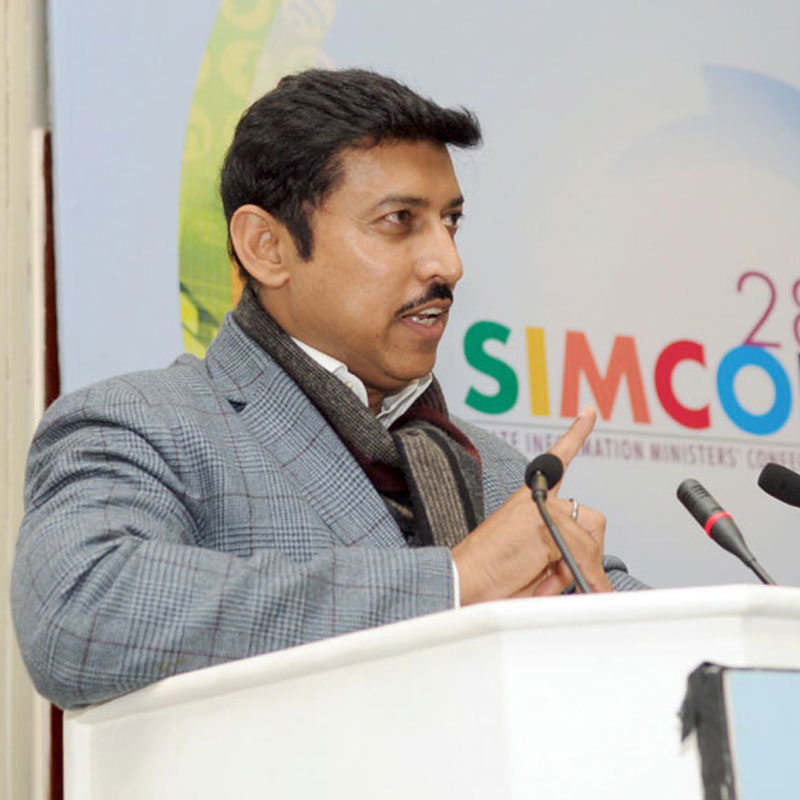
    NEW DELHI: Even as Minister of State for Information and Broadcasting Rajyavardhan Rathore categorically told Parliament earlier this month that his Ministry was not contemplating any regulatory framework for censorship of content appearing on the internet, Secretary Ajay Mittal has said the Centre is concerned about new media in the absence of a regulatory framework.

    Speaking in Kolkata at the Merchants’ Chamber of Commerce and Industries (MCCI), Mittal said

    “An important area of challenge in the new media is that there is unfortunately no regulatory framework. What you cannot see on TV or hear on your radio, it is all possibly up there in open access.”

    Mittal said much more was needed to be done to prepare the government and its officers to deal with the “completely new paradigm of digital media”.

    He said the Ministry was discussing with the state governments and “we are now going to train their people in the information sector so that they can deal with the challenges created by new media that is causing a whole lot of concern.”

    Mittal said questions have also been raised in Parliament on “this issue of digital media without any boundaries. We are very clear that in the media space the best form of regulation is self regulation and the government would like to keep away as far as possible.”

    Rathore had said in reply to a question about censoring new platforms for publication and broadcasting of media content like social networks and online video services that Section 69A of the Information Technology Act 2000 provides for blocking access to information under specific conditions. He said the Act has provisions for removal of objectionable online content.

    The Information Technology (Intermediary Guidelines) rules 2011 require that the Intermediaries shall observe due diligence while discharging their duties and shall inform the users of computer resources not to host, display, upload, modify, publish, transmit, update or share any information that is harmful, objectionable, affects minors and is unlawful in any way.

    As far as OTT was concerned, sources in the ministry told indiantelevision.com that this was still a new subject, and the government would take action in the event of any complaints from viewers and subscribers.

    The Ministry, sources said, has no control over films appearing online as this falls in the ambit of the IT Act which is administered by IT Ministry.
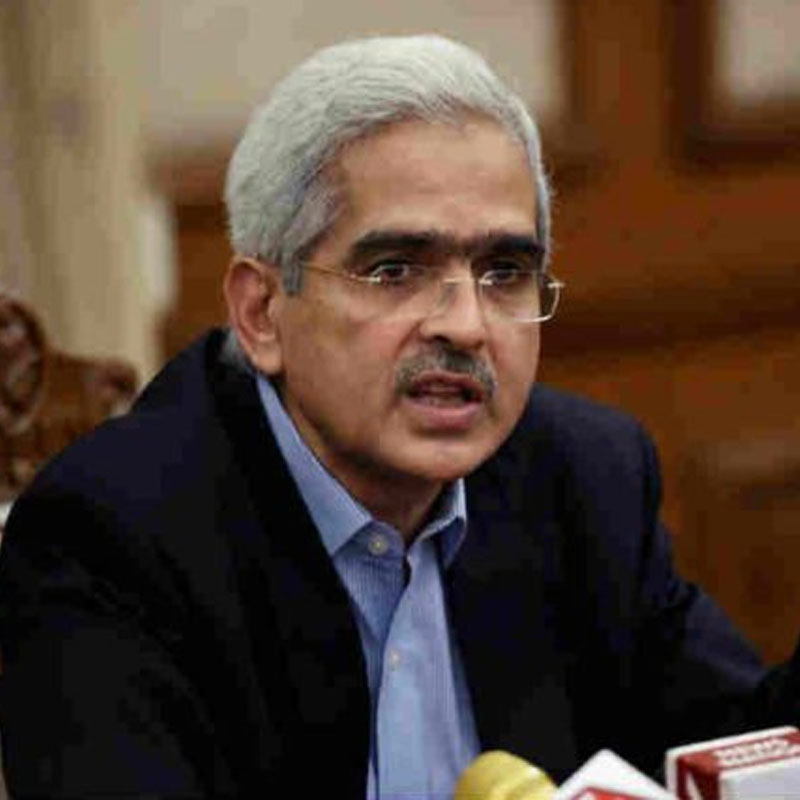
  • Nod to Idea, Star Den & four may fetch Rs 1200 cr FDI; You & Crest proposals deferred

    Nod to Idea, Star Den & four may fetch Rs 1200 cr FDI; You & Crest proposals deferred

    MUMBAI: Inter-ministerial body Foreign Investment Promotion Board has okayed six investment proposals, including Idea Cellular and Star Den Media Services expecting an investment of Rs 1,200 crore (USD 176.5 million).

    Idea Cellular Infrastructure Services (ICISL) had filed an application to raise foreign investment level in it to 67.5 per cent. ICISL is a wholly-owned subsidiary of Idea, which has become a foreign-owned firm with more than 50 per cent overseas investment. Star Den Media Services Pvt. Ltd. develops and distributes television, cable, and the related network platforms. It offers a platform for distributing television channels in India through all fixed networks including cable, direct to home, and internet protocol television.

    Other proposals which got a go-ahead are — Sanofi Synthelabo India, Boehringer Ingelheim India, A Menarini India Pvt Ltd and Recipharm Participation. The FIPB, led by the economic affairs secretary Shaktikanta Das, rejected three proposals, including AMP Solar India Pvt Ltd. and six proposals were deferred for further consultation and want of more information.

    Among the proposals deferred were You Broadband India, Crest Premedia Solutions and Scientific Publishing Services.

    Indiantelevision.com had earlier reported that the board will consider 17 foreign investment proposals on 28 December, including that of Star Den Media.

    FIPB had in June this year rejected a proposal of Flag Telecom Singapore, a wholly-owned unit of Reliance Communications (RCom), to set up a telecom subsidiary in India. Flag Telecom reportedly planned to acquire a company, payout for which would have been around US$120 million — in two parts.

    India allows FDI in some of the industry sectors via the automatic route, but, in certain segments that are considered sensitive for the economy and security, the proposals need to be cleared by FIPB first. FIPB had earlier met on 26 September to consider foreign investment proposals, including that of Idea Cellular.

    The Indian government has taken a series of measures in the recent past to give a fillip to foreign direct investment. In the first half of the current fiscal year, the inflows were USD 21.62 billion. FDI increased by 29 per cent to USD 40 billion in 2015-16 as compared to the previous fiscal.

    Also Read:

    Star Den, Flag Telecom, You & Idea FDI meet on 28 Dec

    Govt defers decision on FDI for Vodafone to acquire You Broadband

  • Nod to Idea, Star Den & four may fetch Rs 1200 cr FDI; You & Crest proposals deferred

    Nod to Idea, Star Den & four may fetch Rs 1200 cr FDI; You & Crest proposals deferred

    MUMBAI: Inter-ministerial body Foreign Investment Promotion Board has okayed six investment proposals, including Idea Cellular and Star Den Media Services expecting an investment of Rs 1,200 crore (USD 176.5 million).

    Idea Cellular Infrastructure Services (ICISL) had filed an application to raise foreign investment level in it to 67.5 per cent. ICISL is a wholly-owned subsidiary of Idea, which has become a foreign-owned firm with more than 50 per cent overseas investment. Star Den Media Services Pvt. Ltd. develops and distributes television, cable, and the related network platforms. It offers a platform for distributing television channels in India through all fixed networks including cable, direct to home, and internet protocol television.

    Other proposals which got a go-ahead are — Sanofi Synthelabo India, Boehringer Ingelheim India, A Menarini India Pvt Ltd and Recipharm Participation. The FIPB, led by the economic affairs secretary Shaktikanta Das, rejected three proposals, including AMP Solar India Pvt Ltd. and six proposals were deferred for further consultation and want of more information.

    Among the proposals deferred were You Broadband India, Crest Premedia Solutions and Scientific Publishing Services.

    Indiantelevision.com had earlier reported that the board will consider 17 foreign investment proposals on 28 December, including that of Star Den Media.

    FIPB had in June this year rejected a proposal of Flag Telecom Singapore, a wholly-owned unit of Reliance Communications (RCom), to set up a telecom subsidiary in India. Flag Telecom reportedly planned to acquire a company, payout for which would have been around US$120 million — in two parts.

    India allows FDI in some of the industry sectors via the automatic route, but, in certain segments that are considered sensitive for the economy and security, the proposals need to be cleared by FIPB first. FIPB had earlier met on 26 September to consider foreign investment proposals, including that of Idea Cellular.

    The Indian government has taken a series of measures in the recent past to give a fillip to foreign direct investment. In the first half of the current fiscal year, the inflows were USD 21.62 billion. FDI increased by 29 per cent to USD 40 billion in 2015-16 as compared to the previous fiscal.

    Also Read:

    Star Den, Flag Telecom, You & Idea FDI meet on 28 Dec

    Govt defers decision on FDI for Vodafone to acquire You Broadband

  • Licence fee payable to copyright owners; HC ‘no’ to vacate injunction

    Licence fee payable to copyright owners; HC ‘no’ to vacate injunction

    NEW DELHI: The Delhi High Court vacation judge Justice Najmi Waziri has declined to vacate the injunction obtained by Event and Entertainment Management Association (EEMA) from the court earlier this month against collection of licence fees by the Indian Performing Rights Society, the Phonographic Performance Ltd and Novex.

    However, the court gave directions whereby a complete list of performances would be kept for which payments are claimed and these will be subject to the final outcome of the petition by EEMA.

    Earlier, on 23 December 2016, Justice Sanjeev Sachdeva had accepted that IPRS, PPL, and Novex were not registered copyright societies under section 33 of the Copyright Act, and had therefore restrained them from collecting any licence fee from performers or performing societies. He listed the matter for further hearing on 24 April 2017.

    EEMA had filed caveats in the event of these bodies seeking to challenge the restraint order and were therefore present in court when the challenge came up before the vacation bench.

    The vacation bench said for the interim period, EEMA members / the event organizer will provide PPL/IPRS/Novex a list of songs that they intend to play before an event on mail. PPL / IPRS / Novex will thereafter need to confirm in writing if they own the tracks.

    The event organisers will pay the amount before the event as per mutual negotiation with the copyright owner. The License issuing company/entity shall provide proof by way of legal agreements within seven days of the invoice, to the satisfaction of the event organiser. In case the event organiser is not satisfied by the proof provided, a refund can be claimed through the courts. The money will not be appropriated till such time that the matter is mutually resolved  

    Thus, copyright licence fees can only be collected under Section 30 which is reserved for owners of the copyright with the clear proviso that, when called upon to do so, they need to prove their ownership.

    Additionally, PPL/IPRS/Novex were asked to put up a detailed list on their website listing all songs they own, including the names of the authors / producers they have acquired them from along with the dates of validity of the contract till 31 March 2016.

    In addition to this, the licensing companies have to upload the valid legal agreements by which they claim ownership of these tracks by 31 December 2016.

    In the order that came after hearing EEMA counsel Ramji Srinivasan and Ashwani Kumar for the respondents, the Court instructed PPL/IPRS/Novex to set up an online payment gateway within one month of this hearing wherein we will be able to easily obtain permissions online.

    In a statement issued later, EEMA described the order as ‘very positive’ in the direction of transparency and accountability that EEMA and the creative fraternity across the music industry has been fighting for.

    The statement added that EEMA believes that copyright fees should be paid to the rightful creators and owners of copyright in a transparent and reasonable manner so that the rightful owners should receive their due and the rates being charged are logical and reasonable.

    Also Read:

    Court orders stay on music licensing societies from collecting royalties ahead of New Year


  • Licence fee payable to copyright owners; HC ‘no’ to vacate injunction

    Licence fee payable to copyright owners; HC ‘no’ to vacate injunction

    NEW DELHI: The Delhi High Court vacation judge Justice Najmi Waziri has declined to vacate the injunction obtained by Event and Entertainment Management Association (EEMA) from the court earlier this month against collection of licence fees by the Indian Performing Rights Society, the Phonographic Performance Ltd and Novex.

    However, the court gave directions whereby a complete list of performances would be kept for which payments are claimed and these will be subject to the final outcome of the petition by EEMA.

    Earlier, on 23 December 2016, Justice Sanjeev Sachdeva had accepted that IPRS, PPL, and Novex were not registered copyright societies under section 33 of the Copyright Act, and had therefore restrained them from collecting any licence fee from performers or performing societies. He listed the matter for further hearing on 24 April 2017.

    EEMA had filed caveats in the event of these bodies seeking to challenge the restraint order and were therefore present in court when the challenge came up before the vacation bench.

    The vacation bench said for the interim period, EEMA members / the event organizer will provide PPL/IPRS/Novex a list of songs that they intend to play before an event on mail. PPL / IPRS / Novex will thereafter need to confirm in writing if they own the tracks.

    The event organisers will pay the amount before the event as per mutual negotiation with the copyright owner. The License issuing company/entity shall provide proof by way of legal agreements within seven days of the invoice, to the satisfaction of the event organiser. In case the event organiser is not satisfied by the proof provided, a refund can be claimed through the courts. The money will not be appropriated till such time that the matter is mutually resolved  

    Thus, copyright licence fees can only be collected under Section 30 which is reserved for owners of the copyright with the clear proviso that, when called upon to do so, they need to prove their ownership.

    Additionally, PPL/IPRS/Novex were asked to put up a detailed list on their website listing all songs they own, including the names of the authors / producers they have acquired them from along with the dates of validity of the contract till 31 March 2016.

    In addition to this, the licensing companies have to upload the valid legal agreements by which they claim ownership of these tracks by 31 December 2016.

    In the order that came after hearing EEMA counsel Ramji Srinivasan and Ashwani Kumar for the respondents, the Court instructed PPL/IPRS/Novex to set up an online payment gateway within one month of this hearing wherein we will be able to easily obtain permissions online.

    In a statement issued later, EEMA described the order as ‘very positive’ in the direction of transparency and accountability that EEMA and the creative fraternity across the music industry has been fighting for.

    The statement added that EEMA believes that copyright fees should be paid to the rightful creators and owners of copyright in a transparent and reasonable manner so that the rightful owners should receive their due and the rates being charged are logical and reasonable.

    Also Read:

    Court orders stay on music licensing societies from collecting royalties ahead of New Year


  • TRAI violations query: Reliance Jio mum on ‘response’

    TRAI violations query: Reliance Jio mum on ‘response’

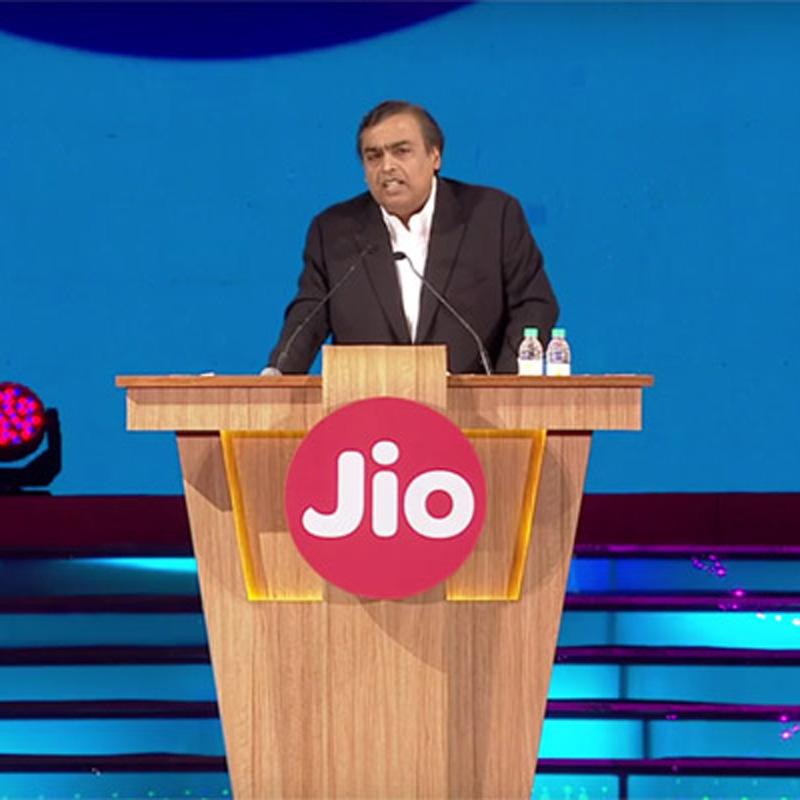
    MUMBAI: Reliance Jio chose not to respond to queries regarding its reply to TRAI that was expected today (29 December) in connection with questions raised against alleged violations in extending its free offer till 31 March 2017 much beyond its introductory offer. After two emailed queries and phone calls from indiantelevision.com, Jio chose not to respond.

    Airtel had last week filed a petition before TDSAT (Telecom Disputes Settlement and Appellate Tribunal) accusing TRAI of being ‘sleeping trustee’ and a ‘mute spectator’ to the violations carried out by Jio. Airtel had filed the petition after TRAI questioned Jio over its extended free services as Happy New Year offer.

    Reliance Jio had sought time till 29 December before it responds to the above-mentioned query.

    Soon after Jio announced its offer earlier this month, TRAI came up with a statement assuring that it will closely examine the new offer. However, TRAI failed to come to any conclusion on its examination which is why Airtel then filed the petition.

    As a result, TRAI asked Jio company to explain why its extended free services should not be seen as a violation of existing regulation which restricts promotional offers to 90 days.

    Jio, in a meeting with TRAI, had reportedly said that the latest offer was different from the previous offer as, in the former, the company provided 4GB of free data per day, but in the latter case, it restricted the free internet up to 1GB under Fair Usage Policy. Jio also stressed the fact that in the new offer if the data limit was exhausted, then one had to buy recharge vouchers, which was not the case in the initial offer.

    The petition was presented before the TDSAT bench last Friday, where TRAI sought 10 additional days to take a decision. The next date of hearing has been set on 6 January whereas Jio was expected to respond by 29 December.

  • TRAI violations query: Reliance Jio mum on ‘response’

    TRAI violations query: Reliance Jio mum on ‘response’

    MUMBAI: Reliance Jio chose not to respond to queries regarding its reply to TRAI that was expected today (29 December) in connection with questions raised against alleged violations in extending its free offer till 31 March 2017 much beyond its introductory offer. After two emailed queries and phone calls from indiantelevision.com, Jio chose not to respond.

    Airtel had last week filed a petition before TDSAT (Telecom Disputes Settlement and Appellate Tribunal) accusing TRAI of being ‘sleeping trustee’ and a ‘mute spectator’ to the violations carried out by Jio. Airtel had filed the petition after TRAI questioned Jio over its extended free services as Happy New Year offer.

    Reliance Jio had sought time till 29 December before it responds to the above-mentioned query.

    Soon after Jio announced its offer earlier this month, TRAI came up with a statement assuring that it will closely examine the new offer. However, TRAI failed to come to any conclusion on its examination which is why Airtel then filed the petition.

    As a result, TRAI asked Jio company to explain why its extended free services should not be seen as a violation of existing regulation which restricts promotional offers to 90 days.

    Jio, in a meeting with TRAI, had reportedly said that the latest offer was different from the previous offer as, in the former, the company provided 4GB of free data per day, but in the latter case, it restricted the free internet up to 1GB under Fair Usage Policy. Jio also stressed the fact that in the new offer if the data limit was exhausted, then one had to buy recharge vouchers, which was not the case in the initial offer.

    The petition was presented before the TDSAT bench last Friday, where TRAI sought 10 additional days to take a decision. The next date of hearing has been set on 6 January whereas Jio was expected to respond by 29 December.

  • Mithun Chakraborty resigns Rajya Sabha seat on grounds of ill health

    Mithun Chakraborty resigns Rajya Sabha seat on grounds of ill health

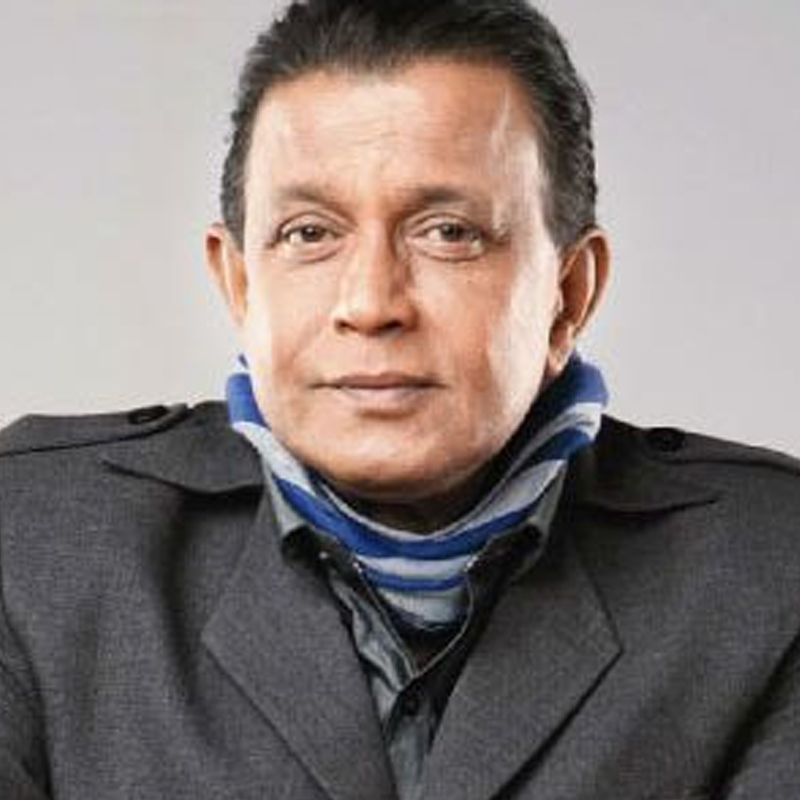
    NEW DELHI: Yesteryears actor and dancing star Mithun Chakraborty, who had become a Member of the Rajya Sabha on behalf of the Trimanool Congress in April 2014, has resigned on ground of sickness.

    Mithun has resigned nearly one and half years before the end of his term.
    After his innings as the Grand Master on the Dancing reality show Dance India Dance, Mithun has generally avoided any public appearance and there have been unconfirmed reports of him suffering from prolonged illness.

    TMC leader Derek O’Brien was quoted by ANI as saying, “He resigned from RS on health grounds. We continue to share warm relationship with him and his family. We wish him speedy recovery”.

    He attended only three days of Parliament in nearly two years and Deputy Chairman P J Kurien also commented on this in the house.

    He has written to the Chairman that because of his health condition he is not been able to fulfil his duty in Rajya Sabha and that is why he is relinquishing his seat, sources added.
    His tensure has not been without controversy as he was named for his association with Saradha group. He later said Saradha had not paid his due amount.

    Mithun’s real name is Gourang Chakraborty but he is commonly referred as ‘Mithun Da’. Mithun began his career in the Indian film industry as a junior artist and went on to establish himself as a superstar.

    Mithun is also known for his fusion of “Disco and Desi”. He is also recognized as one of the best “dancing-heroes” in Bollywood.

  • Mithun Chakraborty resigns Rajya Sabha seat on grounds of ill health

    Mithun Chakraborty resigns Rajya Sabha seat on grounds of ill health

    NEW DELHI: Yesteryears actor and dancing star Mithun Chakraborty, who had become a Member of the Rajya Sabha on behalf of the Trimanool Congress in April 2014, has resigned on ground of sickness.

    Mithun has resigned nearly one and half years before the end of his term.
    After his innings as the Grand Master on the Dancing reality show Dance India Dance, Mithun has generally avoided any public appearance and there have been unconfirmed reports of him suffering from prolonged illness.

    TMC leader Derek O’Brien was quoted by ANI as saying, “He resigned from RS on health grounds. We continue to share warm relationship with him and his family. We wish him speedy recovery”.

    He attended only three days of Parliament in nearly two years and Deputy Chairman P J Kurien also commented on this in the house.

    He has written to the Chairman that because of his health condition he is not been able to fulfil his duty in Rajya Sabha and that is why he is relinquishing his seat, sources added.
    His tensure has not been without controversy as he was named for his association with Saradha group. He later said Saradha had not paid his due amount.

    Mithun’s real name is Gourang Chakraborty but he is commonly referred as ‘Mithun Da’. Mithun began his career in the Indian film industry as a junior artist and went on to establish himself as a superstar.

    Mithun is also known for his fusion of “Disco and Desi”. He is also recognized as one of the best “dancing-heroes” in Bollywood.

  • India, US should resolve IPR issues at earliest: IACC

    India, US should resolve IPR issues at earliest: IACC

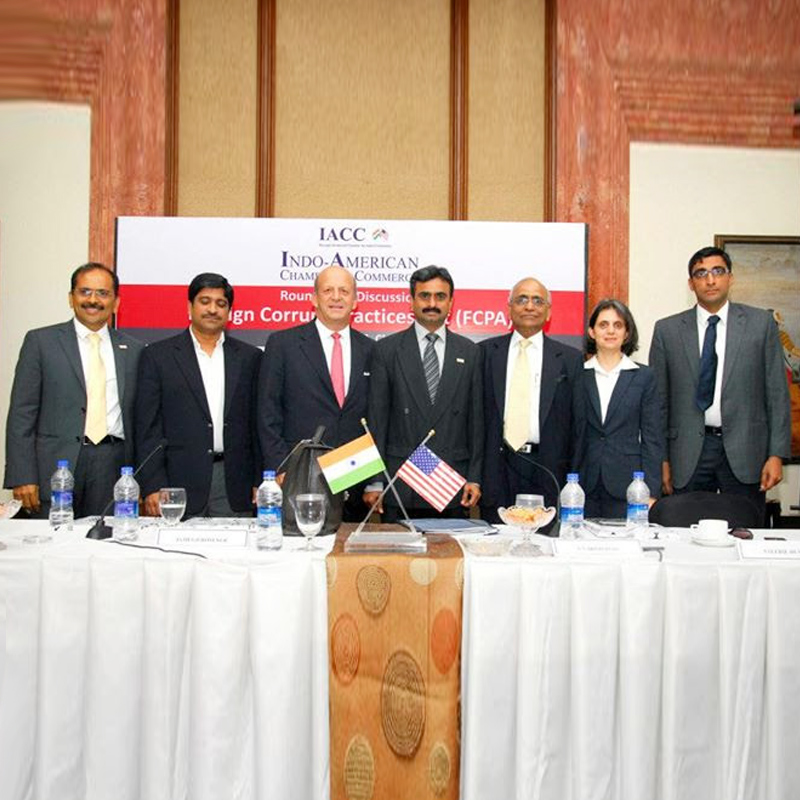
    NEW DELHI: India and the United States should exchange a bouquet of “wish lists” includig IPR issues aimed at fast tracking resolution of bilateral issues that impede accelerated flow of investment between the two countries, Indo American Chamber of Commerce national president N VSrinivasan said today.

    Broad contours of the wish lists should include amicable settlement of IPR issues leading to earliest conclusion of the Bilateral Investment Treaty (BIT), Totalization Agreement, a sound legal framework to expeditiously settle disputes, settlement of issues emanating from non-tariff measures and importantly a fast solution to nagging visa problems.

    He said that there was a growing realization among the US corporations that India, lying mid-way between West and the East, has the potential to emerge as a Gateway for serving both markets. Many corporations are seriously discussing these ideas in their board room meetings, while others are taking concrete steps towards investing in India with a renewed interest. “We have to capitalize on the situation by removing impediments to flow of investments and take concrete step toease doing business in India to leverage our position as an attractive investment destination,” according to Srinivasan.

    The US President – Elect Donald Trump is in the process of recalibrating the policies to deal pragmatically with each country by their level of importance and economic engagement. Against this backdrop, India’s recent policy initiatives like Make in India, Digital India, Smart city project, high budget investments in infrastructure etc. where critical technical and financial investments are needed, would stand to benefit.

    Trump has has made it very clear that he is averse to regional trade agreements like NAFTA, emerging Trans Pacific Partnership (TPP) etc. which according to him have been militated against the US interests.

    Flagging the contentious issues that are coming up in the bilateral economic negotiations, such as tardy intellectual property rights (IPR) protection and their enforcement, retrospective tax regime in India, insistence on deciding economic disputes under Indian laws etc, the IACC President said these issues can be settled in a spirit of give and take.

    There has been a proliferation of Indian companies and start-ups in the US, mostly in the ICT sector. These are set up mostly by people who migrated to the US at various stages, particularly during the dotcoms days. Their business enterprises are providing gainful employment to many US citizens. Most of the IT and technology platforms in India, such as mobile telephony, credit/debit card networks, climate tracking equipment, heavy duty computers, drones, sensors etc are working on equipment mostly imported from the US.

    “We are happy and privileged to have two administrations in the US and India, which are pro-business and believe in creating an environment for seamless business activities. Donald Trump’s significant business interests in India in various sectors and his statement of intent to forge a strong business relationship are pointers to an exciting bilateral business relationship”.