Category: Regulators

  • Highlight women’s rights, broadcasters told

    Highlight women’s rights, broadcasters told

    NEW DELHI: In the wake of rampant cases of molestations of women, even in public places like in Bengaluru recently on New Year’s Eve, the government has issued a directive to TV broadcasters and FM radio stations to highlight the importance of treating women with respect and equality.

    The Ministry of Information and Broadcasting (MIB) on Wednesday sent out an advisory to FM radio and television broadcasters, which have signed the licence conditions and other government regulations, to air programmes on TV and radio to convey the message that women need to be “treated with respect and equality”.

    Both TV and radio broadcasters, the MIB said as per stipulations, need to broadcast public interest announcements for maximum of one hour per day suitable/proportional time slots interspersed during that day to highlight the women’s issue.

    For FM radio broadcasters, MIB advised two jingles of 60 seconds and 57 seconds duration should be aired. The private FM Radio stations were advised to broadcast the jingles at least twice a day during peak hours.

  • TRAI to meet b’casters, MSOs, DTH ops, telcos on ’17 roadmap

    TRAI to meet b’casters, MSOs, DTH ops, telcos on ’17 roadmap

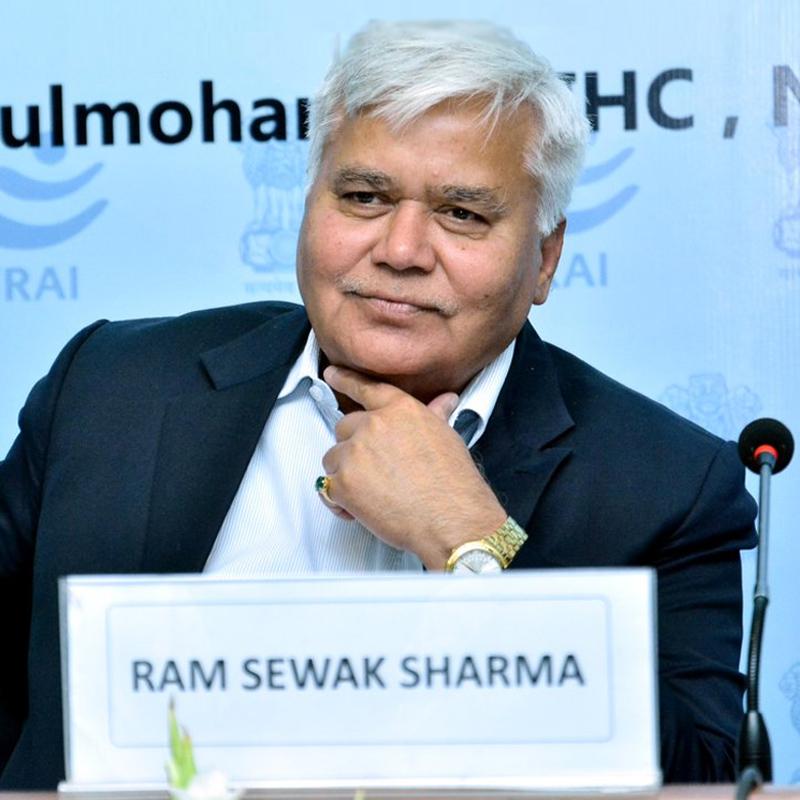
    NEW DELHI: As promised by TRAI chairman RS Sharma, the regulator is getting pro-active. It has scheduled meetings with top executives of telecom, broadcasting, DTH and MSO companies over the next one week starting 6 January, 2017 to seek their opinion on issues to be taken up during 2017.

    The first of these high-level meetings would take place Friday when TRAI Chairman and other officials would interact with CEOs of all telecom companies, including Bharti, Vodafone and Reliance Jio, to discuss and identify important issues that need to be taken up during the year, PTI reported.

    A similar meeting is slated with top executives of cable, broadcasting, MSO and DTH companies on January 10, 2017, PTI quoted TRAI sources as saying.

    “We have invited the CEOs of all telecom companies, including Bharti Airtel, Vodafone, Idea Cellular, Reliance Jio and others for a discussion on January 6. Similarly, we have invited top executives of broadcasting companies, MSOs, and DTH companies on January 10,” the PTI report quoted sources as saying.

    TRAI’s latest initiatives are in line with what Chairman RS Sharma had told indiantelevision.com in a year-end interview middle of December 2016 on charting a roadmap for 2017.

    “What we plan to do in 2017 is something interesting. While there will be always issues that will need TRAI’s urgent attention — for example, the government may ask for advice on spectrum prices — we are trying to create a calendar for the next year…. highlighting the works that need to be taken up in 2017 and which will act as a roadmap,” Sharma had told indiantelevision.com.

    Asked about the issues likely to be taken up by TRAI in2017, in consultation with the industry, Sharma had indicated it could involve data and consumer protection, Internet of Things (IoT), digital terrestrial broadcasting and other issues related to emerging technologies.

    ALSO READ

    “There would be a lot on TRAI’s plate in 2017” – RS Sharma

  • TRAI to meet b’casters, MSOs, DTH ops, telcos on ’17 roadmap

    TRAI to meet b’casters, MSOs, DTH ops, telcos on ’17 roadmap

    NEW DELHI: As promised by TRAI chairman RS Sharma, the regulator is getting pro-active. It has scheduled meetings with top executives of telecom, broadcasting, DTH and MSO companies over the next one week starting 6 January, 2017 to seek their opinion on issues to be taken up during 2017.

    The first of these high-level meetings would take place Friday when TRAI Chairman and other officials would interact with CEOs of all telecom companies, including Bharti, Vodafone and Reliance Jio, to discuss and identify important issues that need to be taken up during the year, PTI reported.

    A similar meeting is slated with top executives of cable, broadcasting, MSO and DTH companies on January 10, 2017, PTI quoted TRAI sources as saying.

    “We have invited the CEOs of all telecom companies, including Bharti Airtel, Vodafone, Idea Cellular, Reliance Jio and others for a discussion on January 6. Similarly, we have invited top executives of broadcasting companies, MSOs, and DTH companies on January 10,” the PTI report quoted sources as saying.

    TRAI’s latest initiatives are in line with what Chairman RS Sharma had told indiantelevision.com in a year-end interview middle of December 2016 on charting a roadmap for 2017.

    “What we plan to do in 2017 is something interesting. While there will be always issues that will need TRAI’s urgent attention — for example, the government may ask for advice on spectrum prices — we are trying to create a calendar for the next year…. highlighting the works that need to be taken up in 2017 and which will act as a roadmap,” Sharma had told indiantelevision.com.

    Asked about the issues likely to be taken up by TRAI in2017, in consultation with the industry, Sharma had indicated it could involve data and consumer protection, Internet of Things (IoT), digital terrestrial broadcasting and other issues related to emerging technologies.

    ALSO READ

    “There would be a lot on TRAI’s plate in 2017” – RS Sharma

  • Respond to Vodafone’s TRAI challenge in two weeks, govt directed

    Respond to Vodafone’s TRAI challenge in two weeks, govt directed

    MUMBAI: Terming it as “premature”, the central government has opposed a plea by the telecom major Vodafone Mobile Services challenging TRAI’s recommendation to impose Rs 1,050 crore penalty for not providing interconnectivity to Reliance Jio.

    The government rejected the plea by Vodafone, which operates in 21 circles, against a penalty of Rs 50 crore per telecom circle recommended by TRAI. The Telecom Regulatory Authority of India had suggested the penalty on grounds that Vodafone had violated terms and conditions relating to points of interconnection among service providers.

    Additional solicitor-general Sanjay Jain, appearing on behalf of the Centre, said that since the role of TRAI was advisory, what material did the telecom company had to show that the Centre’s decision would be clouded by the recommendation.

    Justice Sanjeev Sachdeva, who was hearing the matter, directed the Centre to file a short affidavit within two weeks and limit it to the question of maintainability of the suit.

    TRAI recommendation was made to DoT (department of telecommunications), and is based on a complaint by Reliance Jio Infocomm Ltd, which alleged that Vodafone had refused to comply with interconnection norms. TRAI had also recommended a similar penalty on Bharti Airtel and Idea Cellular Ltd.

    Senior advocate Rajiv Nayar, appearing for Vodafone, urged the court to decide whether TRAI exceeded its jurisdiction by giving the recommendation. The telecom argued that TRAI has the power to impose “financial disincentives” for breach of Quality of Service regulations and to ensure compliance of terms and conditions of licence.

    The ASG opposed the maintainability of the petition, saying once DoT took a decision, then it was an appealable order.

    The court gave the telecom ministry and TRAI two weeks to file their reply on the issue of maintainability and listed it for hearing on 6 February.

  • Respond to Vodafone’s TRAI challenge in two weeks, govt directed

    Respond to Vodafone’s TRAI challenge in two weeks, govt directed

    MUMBAI: Terming it as “premature”, the central government has opposed a plea by the telecom major Vodafone Mobile Services challenging TRAI’s recommendation to impose Rs 1,050 crore penalty for not providing interconnectivity to Reliance Jio.

    The government rejected the plea by Vodafone, which operates in 21 circles, against a penalty of Rs 50 crore per telecom circle recommended by TRAI. The Telecom Regulatory Authority of India had suggested the penalty on grounds that Vodafone had violated terms and conditions relating to points of interconnection among service providers.

    Additional solicitor-general Sanjay Jain, appearing on behalf of the Centre, said that since the role of TRAI was advisory, what material did the telecom company had to show that the Centre’s decision would be clouded by the recommendation.

    Justice Sanjeev Sachdeva, who was hearing the matter, directed the Centre to file a short affidavit within two weeks and limit it to the question of maintainability of the suit.

    TRAI recommendation was made to DoT (department of telecommunications), and is based on a complaint by Reliance Jio Infocomm Ltd, which alleged that Vodafone had refused to comply with interconnection norms. TRAI had also recommended a similar penalty on Bharti Airtel and Idea Cellular Ltd.

    Senior advocate Rajiv Nayar, appearing for Vodafone, urged the court to decide whether TRAI exceeded its jurisdiction by giving the recommendation. The telecom argued that TRAI has the power to impose “financial disincentives” for breach of Quality of Service regulations and to ensure compliance of terms and conditions of licence.

    The ASG opposed the maintainability of the petition, saying once DoT took a decision, then it was an appealable order.

    The court gave the telecom ministry and TRAI two weeks to file their reply on the issue of maintainability and listed it for hearing on 6 February.

  • TRAI: FM Radio ad revenues move up in Q2-17

    TRAI: FM Radio ad revenues move up in Q2-17

    BENGALURU: After the recent slump in advertisement revenues by private FM radio stations in the quarters ended 30 June 2016 (Q1-17) and 31 March 2016 (Q4-17), the trend seems have been averted, albeit marginally for Q2-17 (quarter ended 30 September 2016, current quarter) according to the data released by The Telecom Regulatory Authority of India.

    According to TRAI data, radio combined ad revenues reported by 259 stations were Rs 502.13 crore or an average of Rs 1.94 lakh per station for Q2-17. This was slightly higher than the Rs 1.92 crore (combined revenue Rs 468.08 crore from 244 stations)for the immediate trailing quarter. Q2-17 ad revenue was however short by about Rs 10 lakh per station as compared to the corresponding year ago quarter for which TRAI reported combined ad revenue of Rs 481.56 crore (2.04 crore per station) from 236 stations.

    Please refer to Figure A below for FM Radio Ad Revenue over a five year plus period spanning a 22 quarter period starting with the quarter ended 30 June 2011 (Q1-12) until the quarter ended 30 September 2016 (Q2-17) as per TRAI data. The amounts are in Rs crore and rounded off to the nearest decimal place in the case of combined ad revenue and two decimal places in the case of Average Revenue per station.

    public://r-fig1.jpg

    In absolute terms, combined Radio ad revenue in Q2-17 increased 4.2 percent and 7.3 percent year-over-year (y-o-y, as compared to the corresponding quarter of the previous year) and quarter-over-quarter (q-o-q, immediate trailing quarter) respectively. Average revenue per station in the current quarter declined 5 percent y-o-y, but increased 1.1 percent q-o-q. The total number of stations in Q2-17 increased 9.7 percent y-o-y and 6.1 percent q-o-q.

    Please refer to Figure B for y-o-y and q-o-q changes

    public://r-fig2.jpg

    Conclusion

    Overall, despite the year-end and first quarter of a new fiscal drops, ad revenues as well as ad revenues per station show a linear increasing trend as more and more advertisers have begun to understand the value proposition this very local medium with a pan-India footprint can offer. Further, the third quarter of the fiscal (Q3, quarter ended 31 December) is also the festival quarter of the year in India – a sweet quarter as far as the radio industry is concerned. However, It remains to be seen how demonetisation has affected ad revenues for the fledgling medium for Q3-17. As mentioned above, during the third quarter of a fiscal radio ad revenues have historically been the highest.


  • TRAI: FM Radio ad revenues move up in Q2-17

    TRAI: FM Radio ad revenues move up in Q2-17

    BENGALURU: After the recent slump in advertisement revenues by private FM radio stations in the quarters ended 30 June 2016 (Q1-17) and 31 March 2016 (Q4-17), the trend seems have been averted, albeit marginally for Q2-17 (quarter ended 30 September 2016, current quarter) according to the data released by The Telecom Regulatory Authority of India.

    According to TRAI data, radio combined ad revenues reported by 259 stations were Rs 502.13 crore or an average of Rs 1.94 lakh per station for Q2-17. This was slightly higher than the Rs 1.92 crore (combined revenue Rs 468.08 crore from 244 stations)for the immediate trailing quarter. Q2-17 ad revenue was however short by about Rs 10 lakh per station as compared to the corresponding year ago quarter for which TRAI reported combined ad revenue of Rs 481.56 crore (2.04 crore per station) from 236 stations.

    Please refer to Figure A below for FM Radio Ad Revenue over a five year plus period spanning a 22 quarter period starting with the quarter ended 30 June 2011 (Q1-12) until the quarter ended 30 September 2016 (Q2-17) as per TRAI data. The amounts are in Rs crore and rounded off to the nearest decimal place in the case of combined ad revenue and two decimal places in the case of Average Revenue per station.

    public://r-fig1.jpg

    In absolute terms, combined Radio ad revenue in Q2-17 increased 4.2 percent and 7.3 percent year-over-year (y-o-y, as compared to the corresponding quarter of the previous year) and quarter-over-quarter (q-o-q, immediate trailing quarter) respectively. Average revenue per station in the current quarter declined 5 percent y-o-y, but increased 1.1 percent q-o-q. The total number of stations in Q2-17 increased 9.7 percent y-o-y and 6.1 percent q-o-q.

    Please refer to Figure B for y-o-y and q-o-q changes

    public://r-fig2.jpg

    Conclusion

    Overall, despite the year-end and first quarter of a new fiscal drops, ad revenues as well as ad revenues per station show a linear increasing trend as more and more advertisers have begun to understand the value proposition this very local medium with a pan-India footprint can offer. Further, the third quarter of the fiscal (Q3, quarter ended 31 December) is also the festival quarter of the year in India – a sweet quarter as far as the radio industry is concerned. However, It remains to be seen how demonetisation has affected ad revenues for the fledgling medium for Q3-17. As mentioned above, during the third quarter of a fiscal radio ad revenues have historically been the highest.


  • Telcos’ carbon footprint: TRAI may seek reduction, green tech soon

    Telcos’ carbon footprint: TRAI may seek reduction, green tech soon

    MUMBAI: Telecom regulator TRAI is seeking to come out with a consultation paper that would review issues related to reduction in carbon footprint for the telecom infrastructure that includes mobile towers. A TRAI source said the green telecommunication discussion topics are expected to be finalised over next few weeks after a reference from the DoT (Department of Telecom.)

    (Owing mainly to several policy reforms, telecom sector investments in India meanwhile are expected to reach Rs 68,000 crore (approx US$ 10 billion) this fiscal year, according to telecom secretary J S Deepak, which is approx a 670 per cent increase since FY16.)

    DoT had asked TRAI to review the targets that had been stated earlier with regard to percentage of towers to be powered by hybrid energy in a time-bound manner, and the methodology of calculation of carbon footprint from the telecom networks, including base transceiver station (BTS), the TRAI source said, PTI reported.

    It said that the consultation paper would be the next step in the regulator’s previous recommendations of 2011 on the subject. TRAI had recommended to the government to reduce carbon footprint by mobile operators, which was accepted by the government, and the latter had issued directions with regard to targets through use of green technologies.

    However, the telecom operators had concerns about the capex related to conversion of BTS into green towers through the use of hybrid energy and other means, the source pointed out. The new consultation paper would review methodology of calculation and the milestone (of carbon footprint).

    TRAI had, in 2011, sought industry views on issues such as — how should the carbon footprint of the telecom industry be judged; how should carbon credit policy be evolved, and the time-frame for implementing.

    It had sought views on issues such as what proportion of non-grid power supply to towers in rural areas could be anticipated to be through renewable sources of energy, and a relevant metric for certifying a product as green. It had also sought from the industry an estimate of the carbon footprint of the mobile, fixed and broadband networks.

    TRAI had, in the paper, noted that the growing infrastructure required more electricity. Part of the power came from the grid and remainder through burning of fossil. Both sources contributed to negative eco effects.

  • Telcos’ carbon footprint: TRAI may seek reduction, green tech soon

    Telcos’ carbon footprint: TRAI may seek reduction, green tech soon

    MUMBAI: Telecom regulator TRAI is seeking to come out with a consultation paper that would review issues related to reduction in carbon footprint for the telecom infrastructure that includes mobile towers. A TRAI source said the green telecommunication discussion topics are expected to be finalised over next few weeks after a reference from the DoT (Department of Telecom.)

    (Owing mainly to several policy reforms, telecom sector investments in India meanwhile are expected to reach Rs 68,000 crore (approx US$ 10 billion) this fiscal year, according to telecom secretary J S Deepak, which is approx a 670 per cent increase since FY16.)

    DoT had asked TRAI to review the targets that had been stated earlier with regard to percentage of towers to be powered by hybrid energy in a time-bound manner, and the methodology of calculation of carbon footprint from the telecom networks, including base transceiver station (BTS), the TRAI source said, PTI reported.

    It said that the consultation paper would be the next step in the regulator’s previous recommendations of 2011 on the subject. TRAI had recommended to the government to reduce carbon footprint by mobile operators, which was accepted by the government, and the latter had issued directions with regard to targets through use of green technologies.

    However, the telecom operators had concerns about the capex related to conversion of BTS into green towers through the use of hybrid energy and other means, the source pointed out. The new consultation paper would review methodology of calculation and the milestone (of carbon footprint).

    TRAI had, in 2011, sought industry views on issues such as — how should the carbon footprint of the telecom industry be judged; how should carbon credit policy be evolved, and the time-frame for implementing.

    It had sought views on issues such as what proportion of non-grid power supply to towers in rural areas could be anticipated to be through renewable sources of energy, and a relevant metric for certifying a product as green. It had also sought from the industry an estimate of the carbon footprint of the mobile, fixed and broadband networks.

    TRAI had, in the paper, noted that the growing infrastructure required more electricity. Part of the power came from the grid and remainder through burning of fossil. Both sources contributed to negative eco effects.

  • Mittal wants self-regulation for new media, Rathore says IT Act adequate

    Mittal wants self-regulation for new media, Rathore says IT Act adequate

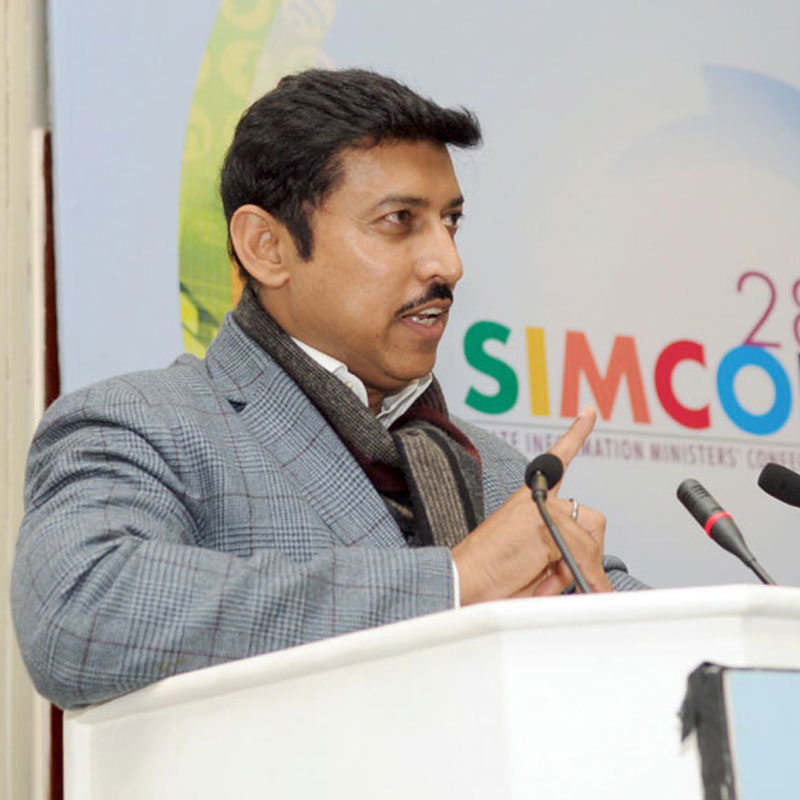
    NEW DELHI: Even as Minister of State for Information and Broadcasting Rajyavardhan Rathore categorically told Parliament earlier this month that his Ministry was not contemplating any regulatory framework for censorship of content appearing on the internet, Secretary Ajay Mittal has said the Centre is concerned about new media in the absence of a regulatory framework.

    Speaking in Kolkata at the Merchants’ Chamber of Commerce and Industries (MCCI), Mittal said

    “An important area of challenge in the new media is that there is unfortunately no regulatory framework. What you cannot see on TV or hear on your radio, it is all possibly up there in open access.”

    Mittal said much more was needed to be done to prepare the government and its officers to deal with the “completely new paradigm of digital media”.

    He said the Ministry was discussing with the state governments and “we are now going to train their people in the information sector so that they can deal with the challenges created by new media that is causing a whole lot of concern.”

    Mittal said questions have also been raised in Parliament on “this issue of digital media without any boundaries. We are very clear that in the media space the best form of regulation is self regulation and the government would like to keep away as far as possible.”

    Rathore had said in reply to a question about censoring new platforms for publication and broadcasting of media content like social networks and online video services that Section 69A of the Information Technology Act 2000 provides for blocking access to information under specific conditions. He said the Act has provisions for removal of objectionable online content.

    The Information Technology (Intermediary Guidelines) rules 2011 require that the Intermediaries shall observe due diligence while discharging their duties and shall inform the users of computer resources not to host, display, upload, modify, publish, transmit, update or share any information that is harmful, objectionable, affects minors and is unlawful in any way.

    As far as OTT was concerned, sources in the ministry told indiantelevision.com that this was still a new subject, and the government would take action in the event of any complaints from viewers and subscribers.

    The Ministry, sources said, has no control over films appearing online as this falls in the ambit of the IT Act which is administered by IT Ministry.