Category: Regulators

  • TRAI tariff: Madras HC extends status quo; SC to hear regulator’s appeal on 16 Jan

    TRAI tariff: Madras HC extends status quo; SC to hear regulator’s appeal on 16 Jan

    NEW DELHI: The Madras High Court today extended to 19 January 2017 the status quo with regard to any TRAI tariff orders or regulations for the broadcast sector in a case by Star TV and Vijay TV.

    Meanwhile, the Supreme Court is scheduled to hear on 16 January 2017 the appeal by the Telecom Regulatory Authority of India against this interim order issued last month by Madras HC.

    In the Madras High Court, the broadcasters had sought to argue that the TRAI orders are in conflict with the Copyright Act 1957. As a result of that court order and pending the full hearing of the case, TRAI would not be able to pass any guideline for issues such as broadcast tariff, broadcast interconnect, and quality of services.

    A TRAI spokesperson said that although it was still waiting to receive the order from the Court, one immediate result would be that the draft tariff and interconnect guidelines issued by the regulator will be subject to the order of the High Court in this regard unless the apex court accepted the regulator’s appeal.

    A few months ago, TRAI had issued draft guidelines on tariff interconnect and quality of service, while TRAI chairman RS Sharma had told indiantelevision.com earlier this month that the regulator would come out with its final recommedation by the end of the year.

    It may be recalled that the Indian Broadcasting Foundation had also said in a submission to TRAI that the regulator’s draft guidelines were in direct conflict with the provisions of the Indian Copyright Act and similar regulations under the Berne Convention.

    The IBF had said the Copyright Board is fully empowered to adjudicate upon disputes between any person and Content or Broadcast Reproduction Rights owners. Hence the Copyright Act and Rules provide for protection, monetisation, enforcement and adjudication procedures for all copyrightable work and broadcast reproduction rights.

    Also read: Maintain status quo on broadcast guidelines, Madras HC tells TRAI
  • TV adcaps case in Delhi HC deferred to 20 April

    TV adcaps case in Delhi HC deferred to 20 April

    NEW DELHI: The Delhi High Court has adjourned the hearing of the ad cap on television channels again, this time to 20 April 2017, as the concerned bench did not sit today.

    On 29 September 2016, the matter was put off to today as the bench headed by Chief Justice G Rohini did not have time to hear the matter in view of part-heard cases. 

    In the hearing on 29 March 2016, a plea was made on behalf of the Information and Broadcasting Ministry that a proposal was being contemplated to amend the relevant provision relating to limiting ads to 12 minutes an hour.

    (Thus, the hearing has been pending for two years since then I and B Minister Arun Jaitley had said at a public function that he did not see the need for any kind caps on the media.)
     
    When the case comes up next, the court is also expected to take up an application by the intervenor — Home Cable Network Pvt Ltd — seeking vacation of the order staying action against violating television channels.

    On 13 May 2016, the court had agreed to take up vacation of stay at the next hearing. The court had, on 11 February 2016, agreed to take up the application by Discovery Communications to intervene in the matter. 

    Earlier, on 27 November 2015, the court presided over by the chief justice had said the matter had been pending for sometime and, therefore, it would hear and conclude the case in the next hearing. 

    On that day, MIB had informed the court that it was in talks with the News Broadcasters Association (NBA) and other stakeholders on the issue of the advertising cap. This was the first time that the ministry had put in an appearance in the petition filed by the NBA against the Telecom Regulatory Authority of India (TRAI) and others.

    The case, filed by NBA and others against TRAI and the Union Government, has so far been adjourned from time to time on the plea that the government and the broadcasters are in talks on this issue.

    The court has already directed that the order that TRAI would not take any action against any channel pending the petition would continue. In an earlier hearing, the court had, at the regulator’s instance, directed that all channels keep a record of the advertisements run by them.

    The NBA had challenged the ad cap rule, contending that TRAI does not have jurisdiction to regulate commercial airtime on television channels. Apart from the NBA, the petitions have been filed by Sarthak Entertainment, Pioneer Channel Factory, E24 Glamorus, Sun TV Network, TV Vision, B4U Broadband, 9X Media, Kalaignar, Celebrities Management, Eanadu Television and Raj Television.

    Meanwhile, a separate petition filed in the High Court by Vikki Choudhry and Home Cable Network Pvt Ltd., which too will be heard on the next date, seeks to charge MIB with dereliction of duties to take action against offending pay TV broadcasters for violating the terms and conditions of the licenses/permission for Uplinking and Downlinking.

    The Court had in June last year asked the Ministry to file its reply in four weeks in this matter. Notice was issued only to the Ministry, although the petition also listed several other broadcasting companies as respondents. 

    Also read:   Cap on TV ads, challenge to stay ‘action against channels’ hearing put off

    Also read:   137 GEC and news pay channels violated ad cap rule in second quarter

  • TV adcaps case in Delhi HC deferred to 20 April

    TV adcaps case in Delhi HC deferred to 20 April

    NEW DELHI: The Delhi High Court has adjourned the hearing of the ad cap on television channels again, this time to 20 April 2017, as the concerned bench did not sit today.

    On 29 September 2016, the matter was put off to today as the bench headed by Chief Justice G Rohini did not have time to hear the matter in view of part-heard cases. 

    In the hearing on 29 March 2016, a plea was made on behalf of the Information and Broadcasting Ministry that a proposal was being contemplated to amend the relevant provision relating to limiting ads to 12 minutes an hour.

    (Thus, the hearing has been pending for two years since then I and B Minister Arun Jaitley had said at a public function that he did not see the need for any kind caps on the media.)
     
    When the case comes up next, the court is also expected to take up an application by the intervenor — Home Cable Network Pvt Ltd — seeking vacation of the order staying action against violating television channels.

    On 13 May 2016, the court had agreed to take up vacation of stay at the next hearing. The court had, on 11 February 2016, agreed to take up the application by Discovery Communications to intervene in the matter. 

    Earlier, on 27 November 2015, the court presided over by the chief justice had said the matter had been pending for sometime and, therefore, it would hear and conclude the case in the next hearing. 

    On that day, MIB had informed the court that it was in talks with the News Broadcasters Association (NBA) and other stakeholders on the issue of the advertising cap. This was the first time that the ministry had put in an appearance in the petition filed by the NBA against the Telecom Regulatory Authority of India (TRAI) and others.

    The case, filed by NBA and others against TRAI and the Union Government, has so far been adjourned from time to time on the plea that the government and the broadcasters are in talks on this issue.

    The court has already directed that the order that TRAI would not take any action against any channel pending the petition would continue. In an earlier hearing, the court had, at the regulator’s instance, directed that all channels keep a record of the advertisements run by them.

    The NBA had challenged the ad cap rule, contending that TRAI does not have jurisdiction to regulate commercial airtime on television channels. Apart from the NBA, the petitions have been filed by Sarthak Entertainment, Pioneer Channel Factory, E24 Glamorus, Sun TV Network, TV Vision, B4U Broadband, 9X Media, Kalaignar, Celebrities Management, Eanadu Television and Raj Television.

    Meanwhile, a separate petition filed in the High Court by Vikki Choudhry and Home Cable Network Pvt Ltd., which too will be heard on the next date, seeks to charge MIB with dereliction of duties to take action against offending pay TV broadcasters for violating the terms and conditions of the licenses/permission for Uplinking and Downlinking.

    The Court had in June last year asked the Ministry to file its reply in four weeks in this matter. Notice was issued only to the Ministry, although the petition also listed several other broadcasting companies as respondents. 

    Also read:   Cap on TV ads, challenge to stay ‘action against channels’ hearing put off

    Also read:   137 GEC and news pay channels violated ad cap rule in second quarter

  • Schedules fixed for broadcasts in five poll-bound states

    Schedules fixed for broadcasts in five poll-bound states

    NEW DELHI: All India Radio and Doordarshan, which provide a platform for political parties to make poll broadcasts before every election, will also organise a maximum of two panel discussions and/or debates on the Kendras/Stations for the forthcoming elections to the state assemblies in Goa, Punjab, Manipur, Uttarakhand & Uttar Pradesh.

    Each eligible party can nominate one representative to such a programme, but the Election Commission of India will approve the names of coordinators for such panel discussions and debates in consultation with the Prasar Bharati Corporation.

    The Commission has, as in previous years, worked out a schedule for the time to be given for poll broadcasts to different parties. The facilities of use of broadcast time and telecast time will be available only to National Parties and Recognized State Parties in the states where the polls are scheduled.

    The facilities will be available from the Regional Kendra of the All India Radio and Doordarshan and in the headquarters in the relevant states and relayed by other stations within the respective States.

    A base time of 45 minutes will be given to each National Party uniformly on the Regional Kendra of Doordarshan network and All India Radio network in the respective states.

    The additional time to be allotted to the parties has been decided on the basis of the poll performance of the parties in the last assembly election from the respective above mentioned States/UTs.

    In a single session of broadcast, no party will be allocated more than 15 minutes.
    The period of broadcast and telecast will be between the last date of filing the nominations and will end two days before the date of poll in the respective states.

    However, there will be no telecast or broadcast during the 48 hours preceding the close of polls as per specific provisions of the Representation of People Act, 1951. Prasar Bharati in consultation with the Commission will decide the actual date and time for broadcast and telecast. This will be subject to the broad technical constraints governing the actual time of transmission available with the Doordarshan and All India Radio.

    The guidelines prescribed by the Commission for telecast and broadcast will be strictly followed. The telecasts/broadcasts on Doordarshan/AIR will not permit criticism of other countries; attack on religions or communities; anything obscene or defamatory; incitement of violence; anything amounting to contempt of court; aspersion against the integrity of the President and Judiciary; anything affecting the unity, socereignty and integrity of the Nation; or any criticism by name of any person.

    The parties will be required to submit transcripts and recording in advance. The parties can get this recorded at their own cost in studios, which meet the technical standards prescribed by Prasar Bharati or at the Doordarshan/All India Radio Kendras. They can, as an alternative, have these recorded in the studios of Doordarshan and All India Radio by advance requests. In such cases, the recordings may be done at the State Capital and at timings indicated by Doordarshan/All India Radio in advance.

    Time Vouchers will be available in the denomination of 5 minutes with one voucher having time allotment from one to four minutes and the parties will be free to combine them suitably. The allotment of time to different political parties is given in a statement enclosed herewith.

    Introduced for the Lok Sabha elections in 1998, the scheme of free broadcasts was extended by the Commission to the State Assemblies held after 1998 and General Elections to the Lok Sabha in 1999, 2004 and 2009.

    With the amendments to the Representation of People Act 1951 through “Election and Other Related Laws (Amendment) Act, 2003” and the rules notified thereunder, equitable time sharing for campaigning by recognized political parties on electronic media now has statutory basis.

    In exercise of the powers conferred by clause (a) of the Explanation below section 39A of the Representation of People Act, 1951, the Central Government has notified all such broadcasting media which are owned or controlled or financed wholly or substantially by funds provided to them by the Central Government as the electronic media for the purposes of that section. Therefore, the Commission has decided to extend the said scheme of equitable time sharing on electronic media through Prasar Bharati Corporation to the ensuing General Election to the five State Legislative Assemblies.

    http://www.indiantelevision.com/sites/drupal7.indiantelevision.co.in/files/styles/large/public/air1.jpg?itok=fIWl61t7

    http://www.indiantelevision.com/sites/drupal7.indiantelevision.co.in/files/styles/large/public/air2_0.jpg?itok=xkznzoWo

    http://www.indiantelevision.com/sites/drupal7.indiantelevision.co.in/files/styles/large/public/air3.jpg?itok=G-wYK1BF

    http://www.indiantelevision.com/sites/drupal7.indiantelevision.co.in/files/styles/large/public/air4.jpg?itok=wB0-DAKu

    http://www.indiantelevision.com/sites/drupal7.indiantelevision.co.in/files/styles/large/public/air5.jpg?itok=UxUc30Ox

  • Schedules fixed for broadcasts in five poll-bound states

    Schedules fixed for broadcasts in five poll-bound states

    NEW DELHI: All India Radio and Doordarshan, which provide a platform for political parties to make poll broadcasts before every election, will also organise a maximum of two panel discussions and/or debates on the Kendras/Stations for the forthcoming elections to the state assemblies in Goa, Punjab, Manipur, Uttarakhand & Uttar Pradesh.

    Each eligible party can nominate one representative to such a programme, but the Election Commission of India will approve the names of coordinators for such panel discussions and debates in consultation with the Prasar Bharati Corporation.

    The Commission has, as in previous years, worked out a schedule for the time to be given for poll broadcasts to different parties. The facilities of use of broadcast time and telecast time will be available only to National Parties and Recognized State Parties in the states where the polls are scheduled.

    The facilities will be available from the Regional Kendra of the All India Radio and Doordarshan and in the headquarters in the relevant states and relayed by other stations within the respective States.

    A base time of 45 minutes will be given to each National Party uniformly on the Regional Kendra of Doordarshan network and All India Radio network in the respective states.

    The additional time to be allotted to the parties has been decided on the basis of the poll performance of the parties in the last assembly election from the respective above mentioned States/UTs.

    In a single session of broadcast, no party will be allocated more than 15 minutes.
    The period of broadcast and telecast will be between the last date of filing the nominations and will end two days before the date of poll in the respective states.

    However, there will be no telecast or broadcast during the 48 hours preceding the close of polls as per specific provisions of the Representation of People Act, 1951. Prasar Bharati in consultation with the Commission will decide the actual date and time for broadcast and telecast. This will be subject to the broad technical constraints governing the actual time of transmission available with the Doordarshan and All India Radio.

    The guidelines prescribed by the Commission for telecast and broadcast will be strictly followed. The telecasts/broadcasts on Doordarshan/AIR will not permit criticism of other countries; attack on religions or communities; anything obscene or defamatory; incitement of violence; anything amounting to contempt of court; aspersion against the integrity of the President and Judiciary; anything affecting the unity, socereignty and integrity of the Nation; or any criticism by name of any person.

    The parties will be required to submit transcripts and recording in advance. The parties can get this recorded at their own cost in studios, which meet the technical standards prescribed by Prasar Bharati or at the Doordarshan/All India Radio Kendras. They can, as an alternative, have these recorded in the studios of Doordarshan and All India Radio by advance requests. In such cases, the recordings may be done at the State Capital and at timings indicated by Doordarshan/All India Radio in advance.

    Time Vouchers will be available in the denomination of 5 minutes with one voucher having time allotment from one to four minutes and the parties will be free to combine them suitably. The allotment of time to different political parties is given in a statement enclosed herewith.

    Introduced for the Lok Sabha elections in 1998, the scheme of free broadcasts was extended by the Commission to the State Assemblies held after 1998 and General Elections to the Lok Sabha in 1999, 2004 and 2009.

    With the amendments to the Representation of People Act 1951 through “Election and Other Related Laws (Amendment) Act, 2003” and the rules notified thereunder, equitable time sharing for campaigning by recognized political parties on electronic media now has statutory basis.

    In exercise of the powers conferred by clause (a) of the Explanation below section 39A of the Representation of People Act, 1951, the Central Government has notified all such broadcasting media which are owned or controlled or financed wholly or substantially by funds provided to them by the Central Government as the electronic media for the purposes of that section. Therefore, the Commission has decided to extend the said scheme of equitable time sharing on electronic media through Prasar Bharati Corporation to the ensuing General Election to the five State Legislative Assemblies.

    http://www.indiantelevision.com/sites/drupal7.indiantelevision.co.in/files/styles/large/public/air1.jpg?itok=fIWl61t7

    http://www.indiantelevision.com/sites/drupal7.indiantelevision.co.in/files/styles/large/public/air2_0.jpg?itok=xkznzoWo

    http://www.indiantelevision.com/sites/drupal7.indiantelevision.co.in/files/styles/large/public/air3.jpg?itok=G-wYK1BF

    http://www.indiantelevision.com/sites/drupal7.indiantelevision.co.in/files/styles/large/public/air4.jpg?itok=wB0-DAKu

    http://www.indiantelevision.com/sites/drupal7.indiantelevision.co.in/files/styles/large/public/air5.jpg?itok=UxUc30Ox

  • TRAI allowing Jio to contravene rules, Airtel files affidavit in TDSAT

    TRAI allowing Jio to contravene rules, Airtel files affidavit in TDSAT

    MUMBAI: Bharti Airtel has escalated its legal battle against the telecom regulator TRAI, filing an additional affidavit in the telecom tribunal TDSAT in which it has slammed the watchdog for what it termed “tacitly” allowing Reliance Jio Infocomm to break rules around “anti-competitive” promotional offers.

    In the affidavit filed with the Telecom Disputes Settlement Appellate Tribunal (TDSAT) on Tuesday, India’s No. 1 telco Airtel has made the allegations, Sat release stated.

    On 23 December, Airtel had moved TDSAT against TRAI for not acting against Jio despite the latter reportedly violating its regulatory orders that restrain operators from offering free voice calls and providing promotional plans beyond an initial 90-day period.

    TDSAT then asked TRAI to furnish a reply for which the latter sought time even as it sent a notice to Jio. The next date for hearing the matter is 1 February. Meanwhile, TDSAT permitted Jio to also become party to the case so that the operator will also be filing its application on the matter.

    “It is respectfully submitted that the present appeal is at a very initial stage and pleadings are yet to be completed. The appellant is filing the present additional affidavit only to bring on record certain additional grounds of challenge. Since the present appeal is at an initial stage and the pleadings are yet to be completed, no prejudice whatsoever will be caused to the respondent if the present affidavit is taken on record. Moreover, the said grounds are essential to the adjudication of the present appeal and thus grave prejudice will be caused to the appellant if the present affidavit is not taken on record,” Bharti has said in its additional affidavit, the FE reported.

    Bharti has reiterated its allegation that the free services offered by Jio were predatory as they had been introduced only to kill competition rather than encourage it.

    Also Read:

    Jio HNY: TDSAT raps TRAI as contest deepens

    TRAI violations query: Reliance Jio mum on ‘response’

  • TRAI allowing Jio to contravene rules, Airtel files affidavit in TDSAT

    TRAI allowing Jio to contravene rules, Airtel files affidavit in TDSAT

    MUMBAI: Bharti Airtel has escalated its legal battle against the telecom regulator TRAI, filing an additional affidavit in the telecom tribunal TDSAT in which it has slammed the watchdog for what it termed “tacitly” allowing Reliance Jio Infocomm to break rules around “anti-competitive” promotional offers.

    In the affidavit filed with the Telecom Disputes Settlement Appellate Tribunal (TDSAT) on Tuesday, India’s No. 1 telco Airtel has made the allegations, Sat release stated.

    On 23 December, Airtel had moved TDSAT against TRAI for not acting against Jio despite the latter reportedly violating its regulatory orders that restrain operators from offering free voice calls and providing promotional plans beyond an initial 90-day period.

    TDSAT then asked TRAI to furnish a reply for which the latter sought time even as it sent a notice to Jio. The next date for hearing the matter is 1 February. Meanwhile, TDSAT permitted Jio to also become party to the case so that the operator will also be filing its application on the matter.

    “It is respectfully submitted that the present appeal is at a very initial stage and pleadings are yet to be completed. The appellant is filing the present additional affidavit only to bring on record certain additional grounds of challenge. Since the present appeal is at an initial stage and the pleadings are yet to be completed, no prejudice whatsoever will be caused to the respondent if the present affidavit is taken on record. Moreover, the said grounds are essential to the adjudication of the present appeal and thus grave prejudice will be caused to the appellant if the present affidavit is not taken on record,” Bharti has said in its additional affidavit, the FE reported.

    Bharti has reiterated its allegation that the free services offered by Jio were predatory as they had been introduced only to kill competition rather than encourage it.

    Also Read:

    Jio HNY: TDSAT raps TRAI as contest deepens

    TRAI violations query: Reliance Jio mum on ‘response’

  • Dhillon among three women on Film Tribunal

    Dhillon among three women on Film Tribunal

    NEW DELHI: The Film Certification Appellate Tribunal, which is the official body for appeals against decisions of the Central Board of Film Certification, has once again got more women members as compared to their male counterparts.

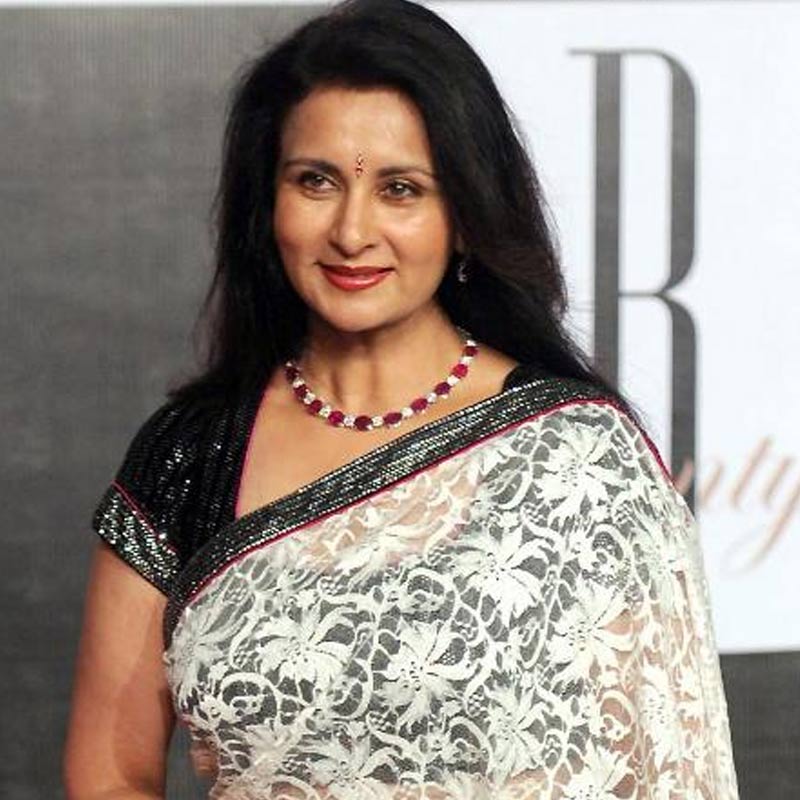
    Actress Poonam Dhillon, journalist-turned-politician Shazia Ilmi, lawyer Bina Gupta represent the women on the Tribunal, which has four members apart from the chairman. According to a list posted on the information and broadcasting ministry’s website, journalist Shekhar Iyer is the lone male member of the Tribunal.

    The FCAT is headed by former Delhi Lokayukta Justice Manmohan Sarin, who was appointed chairman in November 2016. The post was earlier held by the retired Delhi High Court judge S K Mahajan, who passed away in September 2016.

    Justice Sarin, who was also the chief justice of Jammu and Kashmir High Court, has a three-year tenure as head of the Tribunal.

  • Dhillon among three women on Film Tribunal

    Dhillon among three women on Film Tribunal

    NEW DELHI: The Film Certification Appellate Tribunal, which is the official body for appeals against decisions of the Central Board of Film Certification, has once again got more women members as compared to their male counterparts.

    Actress Poonam Dhillon, journalist-turned-politician Shazia Ilmi, lawyer Bina Gupta represent the women on the Tribunal, which has four members apart from the chairman. According to a list posted on the information and broadcasting ministry’s website, journalist Shekhar Iyer is the lone male member of the Tribunal.

    The FCAT is headed by former Delhi Lokayukta Justice Manmohan Sarin, who was appointed chairman in November 2016. The post was earlier held by the retired Delhi High Court judge S K Mahajan, who passed away in September 2016.

    Justice Sarin, who was also the chief justice of Jammu and Kashmir High Court, has a three-year tenure as head of the Tribunal.

  • TRAI ideas on public WiFi in three weeks; Mumbai gets 500 hotspots

    TRAI ideas on public WiFi in three weeks; Mumbai gets 500 hotspots

    MUMBAI: Telecom regulator TRAI has said it will finalise in 20-25 days its views on ‘public WiFi networks’ terming the affordability and availability of broadband as a “prerequisite” for growth of digital transactions. Public WiFi networks would offer data connectivity at 10 per cent of the prevailing rates.

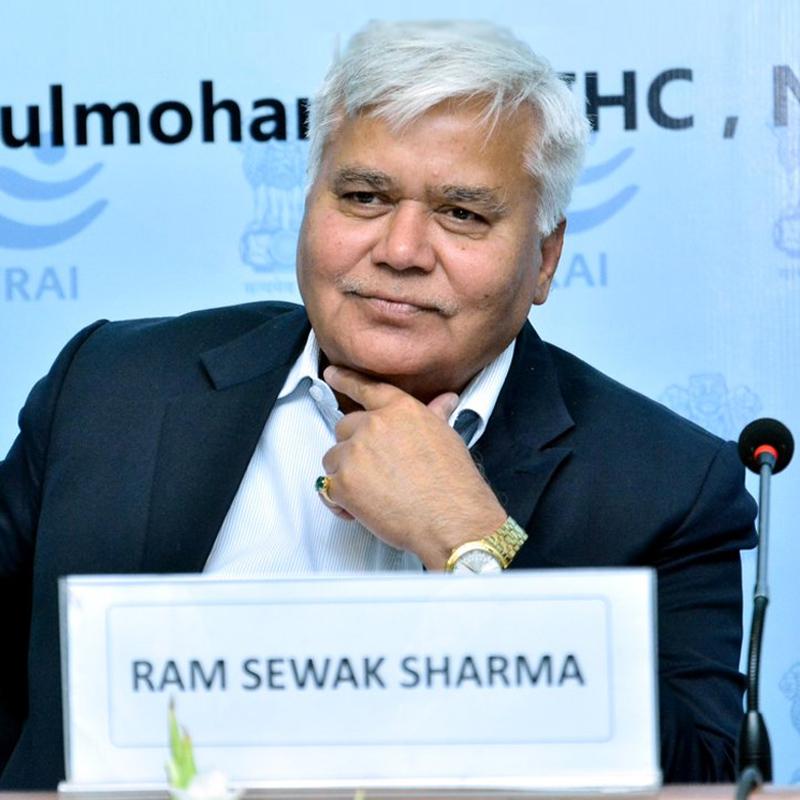
    TRAI chairman R S Sharma said their recommendations would come in in 20-25 days. The basic objective of Digital India was to encourage digital transactions of all kinds, he said, adding that the broadband access needed to be ubiquitous, reliable and robust.

    In its consultation paper floated in July last year, TRAI had said that it is estimated that cost per MB in Wi-Fi Network could be less than 2 paise per MB while consumers on an average are paying around 23 paise per MB for the data usage in the cellular network like 2G, 3G and 4G.

    The broadband shortage with regard to wired infrastructure will also be addressed through the growth of community WiFI hotspots. Digital payment channels have seen major rise in transactions after demonetisation.

    Meanwhile, Maharashtra chief minister Devendra Fadnavis announced the rollout of the largest public WiFi service in Mumbai by launching 500 live hotspots across Mumbai. The hotspots in the metro will go up to 1,200 by 1 May (Maharashtra Day), Fadnavis assured.

    The state’s mega-project to turn Mumbai into a “WiFi city” was announced in August 2015. For its free internet, the government has been using the state-run MTNL network. The free network is good for either 1GB of data (offered at 20Mbps) or 30 minutes, whichever is reached first.

    Also Read:

    Wi-fi proliferation: Discussion postponed to 28 Dec

    “There would be a lot on TRAI’s plate in 2017” – RS Sharma

    Wi-fi proliferation, Net Telephony discussion in January