Category: Regulators

  • TRAI gets support from Subhash Chandra on inter-connect  guidelines

    TRAI gets support from Subhash Chandra on inter-connect guidelines

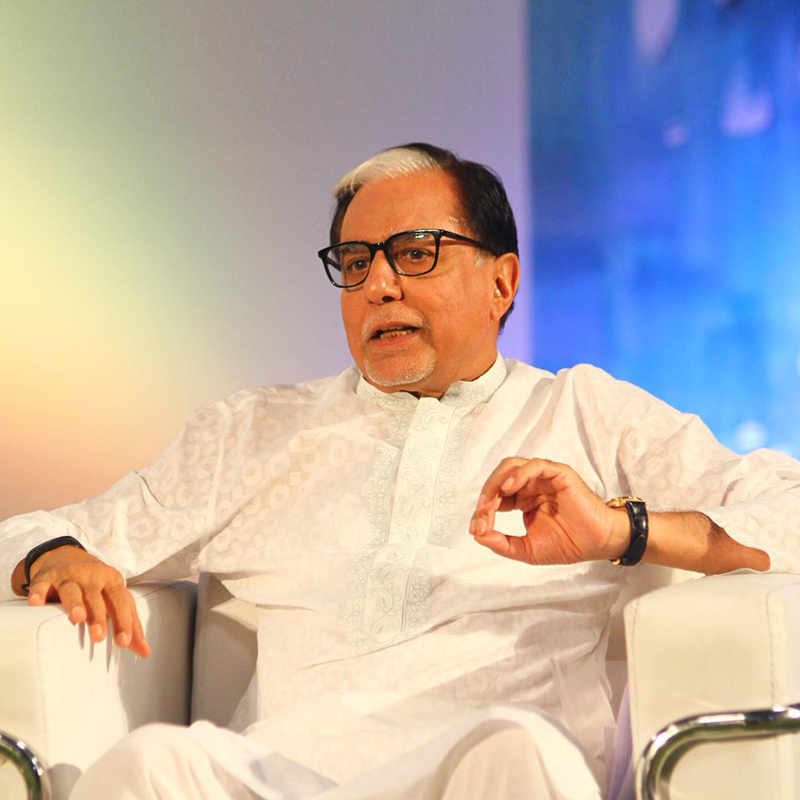
    NEW DELHI: Urging all the stakeholders of the Indian broadcast and cable segments to sink their differences and “come together” for the overall benefit  of the industry, Zee group chairman Subhash Chandra supported regulator TRAI’s draft inter-connect guidelines that, amongst other such broadcast regulations, have been put on hold owing to them legally challenged in courts.  

    “I am a strong supporter of (TRAI’s draft) inter-connect regulations,” Chandra, a Rajya Sabha Member of Parliament from Haryana state, said, adding that in order to reduce litigations amongst stakeholders in the industry it was paramount to “support” such regulations.

    However, Chandra made it clear that though broadcast and cable industry should back TRAI draft guidelines at present — “at least temporarily” — such guidelines should be relaxed over a period of time and jocularly added that rampant litigations financially enriched lawyers only. He was responding to a question from the audience on growing division between broadcasters and distribution platforms, especially the MSOs and LCOs.

    Earlier, delivering the keynote address at the SATCAB meet organized by the All-India Dish Antennae Aavishkaar Sangh, the Zee/Essel Group founder said that there was no reason why the estimated 230,000 (his estimates) local cable operators in the country should not shed allegiance to multiple industry bodies and “unite under one umbrella” to become a force to reckon with so that their voice could be heard more forcefully in the corridors of power.

    Pointing out that not only the MSOs and LCOs should unite, but “all stakeholders” like broadcasters too, Chandra sounded a word of caution, “As an industry we need to be alert to technological evolution.” He added that unless that happens, others, like telcos, “will take a lead over consumer experience”, which will be “our weakness.”

    Chandra said the cable industry had to prepare itself “to catch up with the future” as at present the industry was at “ground level with basic set top boxes”, for example, when technology (like 3D printing) could soon make it possible for viewers to get a different experience in, say, a TV cookery show.

    Referring to various concerns of the LCOs, he said he had ensured that the issue of entertainment tax got subsumed in the Goods and Services Tax (GST), but for him to take up issues relating to the sector stakeholders needed to unite.

    Going back in time to 1992, he dwelt on how the idea of Zee had been drawn up and how when he had given this information to a senior official in the Ministry of Information and Broadcasting (MIB), he had been strongly criticized for the whole idea and was told it would never succeed. “But in just three months of launch”, he said, “Zee had 300,000 television homes subscribing to it.”  

    ALSO READ:

    Top M&E industry honchos see no major benefit from Budget ’17

    MSOs join issues with TRAI tariff plea at Madras HC

    Tariff order: Don’t notify without SC nod, TRAI told; Madras HC case to continue
     

  • Jio offers: TDSAT gives TRAI time to explain

    Jio offers: TDSAT gives TRAI time to explain

    MUMBAI: The Telecom Disputes Settlement and Appellate Tribunal (TDSAT) has asked the Telecom Regulatory Authority of India (TRAI) to clarify whether Reliance Jio Infocomm’s offers — Happy New Year offer and Welcome offer — are aligned with the letter and spirit of the tariff order.

    TDSAT asked TRAI to provide an explanation on whether the provision of the two Jio offers as well as their implementation follow Telecom Consumers Protection Regulation. TRAI is expected to file its response by 15 February before TDSAT takes a decision possibly on next hearing on 20 February.

    The tribunal has asked TRAI to explain whether Jio’s two offers are at variance. TRAI has also been been told to explain whether Jio had informed its subscribers that the two offers were non-similar and whether it took the ‘subscriber’s approval’. 

    TRAI had stated that Jio’s New Year offer was not violative of the principles of non-discrimination, interlinked rule compliance and was non-predatory. TRAI recently gave a go-ahead to Jio’s free mobile voice calling and data plan on the condition that the scheme is not a violation of the guidelines on promotional offers.

    On 4 December 2016, Jio launched Happy New Year offer which was distinct from its earlier Welcome Offer and could not be treated as an extension of the earlier promotional offer as the benefits were different. Bharti Airtel and Idea Cellular had petitioned TDSAT for allowing Jio to continue its promotional offer for over 90 days.

    Jio spokesperson however said that Airtel’s intention was to divert attention from its own violation of licensing conditions by denying PoIs to Jio. Airtel was also acting against consumer interest by opposing Jio’s ‘free voice’ benefit. All Jio plans had been found to be non-predatory by TRAI, Jio stated.

    Also Read:

    TRAI allowing Jio to contravene rules, Airtel files affidavit in TDSAT

    Idea petitions TDSAT against TRAI; price war set to escalate

  • Clarify Rs 3,050-cr PoI penalty norms, telecom panel asks TRAI

    Clarify Rs 3,050-cr PoI penalty norms, telecom panel asks TRAI

    MUMBAI: The Telecom Commission as sought clarity from TRAI in the matter relating to the latter recommending Rs 50 crore per circle penalty on Vodafone India, Bharti Airtel and Idea Cellular in October 2016. The panel directed the department of telecom (DoT) to seek clarity from TRAI on whether the regulator can impose the penalty for violation for interconnect norms.

    The penalty was recommended by TRAI on the three telcos accused of denying interconnectivity to newcomer telco Reliance Jio. According to TRAI, the penalty for Airtel and Vodafone was at Rs 1,050 crore each, while for Idea it was around Rs 950 crore. DoT had earlier sought legal opinion from attorney-general on whether it had the powers to impose the penalty, to which he had opined that DoT could impose the penalty.

    A senior government official reportedly said the panel now asked DoT to seek clarification from TRAI on 10-12 points, including whether the 90-day period was given to the operators for providing point of interconnection (PoI), method of calculating penalty of Rs 50 crore per circle etc.

    Meanwhile, the panel has also okayed demand of Rs 2,834 crore to be raised from operators which provided services between February 2012, when Supreme Court cancelled their licences, and till the time they procured fresh permits after buying spectrum in auction.

    Experts said other issues that needed clarification included whether the penalty was reached after calculating congestion in the network on a monthly average and the fine was based upon the license as contract and not on PoI pact between the operators. Jio had in August submitted to TRAI that it will need 12,727 PoIs for mobile services and 3,068 PoIs for STD facilities before its commercial launch.

    Also Read:

    http://www.indiantelevision.com/regulators/trai/trai-hc-asks-idea-dot-to-file-affidavit-on-plea-170124

    http://www.indiantelevision.com/iworld/telecom/rs-30k-cr-to-enhance-jio-coverage-a-g-clears-dots-power-to-penalise-telcos-170114

    http://www.indiantelevision.com/regulators/tdsat/jio-hny-tdsat-raps-trai-as-contest-deepens-170106

    http://www.indiantelevision.com/regulators/trai/respond-to-vodafones-trai-challenge-in-two-weeks-govt-directed-170104

  • Streamline media grievance redressal, SC asks govt

    Streamline media grievance redressal, SC asks govt

    NEW DELHI: Action was taken in 52 cases of television and two of radio in the past three years for violation of the Programme or Advertisement Code of the Government. Minister of state for information and broadcasting Rajyavardhan Rathore said the action in most cases was limited to apology scrolls, or switching off channels for a brief period.

    This included in the case of TV 19,15 and 18 cases in 2014, 1015 and 2016, respectively, and one each in the case of FM radio in 2015 and 2016.

    Meanwhile, the minister said the Supreme Court had, on 12 January 2017, advised the Government to formalise the complaint redressal mechanism including the period of limitation within which a complaint can be filed. 

    The court also said the concerned statutory authority which shall adjudicate upon the same including the appellate and other redressal mechanisms, leading to a final conclusive determination. 

    At present, an Inter-Ministerial Committee takes action on complaints forwarded to it. In addition, there is self-regulation at the level of the Advertisement Standards Council of India, the Broadcast Content Control Council and the News Broadcast Standards Authority.

    The Inter Ministerial Committee (IMC) under Section 20 of the Cable Television Networks (Regulation) Act 1995 comprising officers  from Ministries of Home Affairs, Defence, External Affairs, Law & Justice, Women & Child Development, Health & Family Welfare, Consumer Affairs and a representative from Advertising Standards Council of India, to take cognizance suo moto or to look into specific complaints regarding content on private TV channels on any platform including FM Radio channels.

    As and when there is a prima facie case of violation by private satellite TV channels and private FM channels regarding content aired by them, the matter is placed before the IMC for its consideration/recommendations. Thus, IMC functions in a recommendatory capacity. The final decision is taken on the basis of the recommendations of IMC by the Ministry after which action is taken such as issuing warnings or advisories to the channels or asking them to run apology scrolls on their channels or directing the channels to be taken off air for a limited period depending on the gravity of the violation.

    Apart from this, the Ministry has also issued directions to States to set up District level and State level Monitoring Committees to regulate content telecast of local TV channels carried on Cable TV Networks.

    Also Read:
    SC to MIB: Get mechanism to deal with complaints on TV, radio shows

    MIB urgently seeks pending 78 channels’ equipment details

    Govt warning to TV channels on b’cast norms breach

    Mittal wants self-regulation for new media, Rathore says IT Act adequate

  • Streamline media grievance redressal, SC asks govt

    Streamline media grievance redressal, SC asks govt

    NEW DELHI: Action was taken in 52 cases of television and two of radio in the past three years for violation of the Programme or Advertisement Code of the Government. Minister of state for information and broadcasting Rajyavardhan Rathore said the action in most cases was limited to apology scrolls, or switching off channels for a brief period.

    This included in the case of TV 19,15 and 18 cases in 2014, 1015 and 2016, respectively, and one each in the case of FM radio in 2015 and 2016.

    Meanwhile, the minister said the Supreme Court had, on 12 January 2017, advised the Government to formalise the complaint redressal mechanism including the period of limitation within which a complaint can be filed. 

    The court also said the concerned statutory authority which shall adjudicate upon the same including the appellate and other redressal mechanisms, leading to a final conclusive determination. 

    At present, an Inter-Ministerial Committee takes action on complaints forwarded to it. In addition, there is self-regulation at the level of the Advertisement Standards Council of India, the Broadcast Content Control Council and the News Broadcast Standards Authority.

    The Inter Ministerial Committee (IMC) under Section 20 of the Cable Television Networks (Regulation) Act 1995 comprising officers  from Ministries of Home Affairs, Defence, External Affairs, Law & Justice, Women & Child Development, Health & Family Welfare, Consumer Affairs and a representative from Advertising Standards Council of India, to take cognizance suo moto or to look into specific complaints regarding content on private TV channels on any platform including FM Radio channels.

    As and when there is a prima facie case of violation by private satellite TV channels and private FM channels regarding content aired by them, the matter is placed before the IMC for its consideration/recommendations. Thus, IMC functions in a recommendatory capacity. The final decision is taken on the basis of the recommendations of IMC by the Ministry after which action is taken such as issuing warnings or advisories to the channels or asking them to run apology scrolls on their channels or directing the channels to be taken off air for a limited period depending on the gravity of the violation.

    Apart from this, the Ministry has also issued directions to States to set up District level and State level Monitoring Committees to regulate content telecast of local TV channels carried on Cable TV Networks.

    Also Read:
    SC to MIB: Get mechanism to deal with complaints on TV, radio shows

    MIB urgently seeks pending 78 channels’ equipment details

    Govt warning to TV channels on b’cast norms breach

    Mittal wants self-regulation for new media, Rathore says IT Act adequate

  • Expedite Prasar CEO appointment, govt urged

    Expedite Prasar CEO appointment, govt urged

    NEW DELHI: Prasar Bharati chairman Surya Prakash has written to the government to expedite the selection of a new CEO and member (personnel) in the pubcaster.

    Prakash told the indiantelevision.com that he had sought from the government to ensure the vacancies are filled soon to facilitate decision-making.

    A high-level committee headed by India’s vice-president Hamid Ansari is needed to meet as stipulated in the Prasar Bharati Act 1990 to select a new CEO and other members.

    Meanwhile, member (finance) Rajeev Singh is scheduled to take over as the interim chief executive officer of the pubcaster from 6 February. He succeeds Suresh C Panda who was the member (personnel) and is due to retire on 4 February.

    The decision was taken at a board meeting held recently in Hyderabad. Panda had been appointed as the acting CEO after Jawhar Sircar demitted office on 4 November.

    Singh, who has been serving Prasar Bharati as member (finance) since April 2015, was previously with Bharat Sanchar Nigam Ltd in different roles for a little over nine years. Singh is an engineering graduate from Nagpur University and is a post-graduate in business administration from Faculty of Management Studies, University of Delhi.

    Singh’s appointment comes at a time when the public broadcaster is all set to revamp Doordarshan by introducing new prime time programming in February following e-auctions for these slots.

    The information and broadcasting ministry had issued an advertisement, calling applications for the post of member (personnel) and received 56 applications.

  • Expedite Prasar CEO appointment, govt urged

    Expedite Prasar CEO appointment, govt urged

    NEW DELHI: Prasar Bharati chairman Surya Prakash has written to the government to expedite the selection of a new CEO and member (personnel) in the pubcaster.

    Prakash told the indiantelevision.com that he had sought from the government to ensure the vacancies are filled soon to facilitate decision-making.

    A high-level committee headed by India’s vice-president Hamid Ansari is needed to meet as stipulated in the Prasar Bharati Act 1990 to select a new CEO and other members.

    Meanwhile, member (finance) Rajeev Singh is scheduled to take over as the interim chief executive officer of the pubcaster from 6 February. He succeeds Suresh C Panda who was the member (personnel) and is due to retire on 4 February.

    The decision was taken at a board meeting held recently in Hyderabad. Panda had been appointed as the acting CEO after Jawhar Sircar demitted office on 4 November.

    Singh, who has been serving Prasar Bharati as member (finance) since April 2015, was previously with Bharat Sanchar Nigam Ltd in different roles for a little over nine years. Singh is an engineering graduate from Nagpur University and is a post-graduate in business administration from Faculty of Management Studies, University of Delhi.

    Singh’s appointment comes at a time when the public broadcaster is all set to revamp Doordarshan by introducing new prime time programming in February following e-auctions for these slots.

    The information and broadcasting ministry had issued an advertisement, calling applications for the post of member (personnel) and received 56 applications.

  • MSOs join issues with TRAI tariff plea at Madras HC

    MSOs join issues with TRAI tariff plea at Madras HC

    MUMBAI: In a fresh twist to a face-off between broadcasters and regulator TRAI over tariff matters vis-a-vis international and Indian copyright laws, country’s MSOs have joined issues requesting Madras High Court to hear their views too.

    According to cable industry sources, All India Digital Cable Federation (AIDCF), India’s apex body for digital multi-system operators (MSOs), has impleaded itself in the case and urged the Madras High Court — hearing a case filed by Star India and Vijay TV filed against Telecom Regulatory Authority of India (TRAI) over draft tariff guidelines — that while disposing off the case it’s viewpoints should also be heard and taken into account.

    The sources indicated that the MSOs had moved the court about 10 days back as they apprehended the viewpoints of  distribution platforms of TV services in India, notably the MSOs, may not be heard; especially when they have views that don’t converge with those of the petitioners on all aspects of the petition.

    Though Indiantelevision.com was not able to get full details of the MSOs’ stand in the court, industry observers explained that the presence of distributors of TV services in Madras HC makes the case interesting as the Indian Broadcasting Foundation (IBF) too has urged to be heard during the hearing of the case.

    After Star India and Vijay TV had moved the Madras High Court appealing against TRAI’s jurisdiction to pass guidelines over tariff and commercial matters where copyrights was involved relating to content, the regulator had moved the Supreme Court seeking succour.

    However the apex court, while  directing TRAI that it could continue with its regulation-framing exercises and seek its nod before mandating guidelines, also observed that the regulatory body should argue its case before the Madras High Court, declining to stay proceedings in the high court.

    The high court had asked TRAI to maintain status quo on tariff guidelines till full hearing of the case filed by Star India and Vijay TV. The next hearing is scheduled middle of this month.

    ALSO READ:

    Tariff order: Don’t notify without SC nod, TRAI told; Madras HC case to continue
    TRAI tariff: Madras HC extends status quo; SC to hear regulator’s appeal on 16 Jan

    Maintain status quo on broadcast guidelines, Madras HC tells TRAI

  • MSOs join issues with TRAI tariff plea at Madras HC

    MSOs join issues with TRAI tariff plea at Madras HC

    MUMBAI: In a fresh twist to a face-off between broadcasters and regulator TRAI over tariff matters vis-a-vis international and Indian copyright laws, country’s MSOs have joined issues requesting Madras High Court to hear their views too.

    According to cable industry sources, All India Digital Cable Federation (AIDCF), India’s apex body for digital multi-system operators (MSOs), has impleaded itself in the case and urged the Madras High Court — hearing a case filed by Star India and Vijay TV filed against Telecom Regulatory Authority of India (TRAI) over draft tariff guidelines — that while disposing off the case it’s viewpoints should also be heard and taken into account.

    The sources indicated that the MSOs had moved the court about 10 days back as they apprehended the viewpoints of  distribution platforms of TV services in India, notably the MSOs, may not be heard; especially when they have views that don’t converge with those of the petitioners on all aspects of the petition.

    Though Indiantelevision.com was not able to get full details of the MSOs’ stand in the court, industry observers explained that the presence of distributors of TV services in Madras HC makes the case interesting as the Indian Broadcasting Foundation (IBF) too has urged to be heard during the hearing of the case.

    After Star India and Vijay TV had moved the Madras High Court appealing against TRAI’s jurisdiction to pass guidelines over tariff and commercial matters where copyrights was involved relating to content, the regulator had moved the Supreme Court seeking succour.

    However the apex court, while  directing TRAI that it could continue with its regulation-framing exercises and seek its nod before mandating guidelines, also observed that the regulatory body should argue its case before the Madras High Court, declining to stay proceedings in the high court.

    The high court had asked TRAI to maintain status quo on tariff guidelines till full hearing of the case filed by Star India and Vijay TV. The next hearing is scheduled middle of this month.

    ALSO READ:

    Tariff order: Don’t notify without SC nod, TRAI told; Madras HC case to continue
    TRAI tariff: Madras HC extends status quo; SC to hear regulator’s appeal on 16 Jan

    Maintain status quo on broadcast guidelines, Madras HC tells TRAI

  • TRAI experiments with investor-led duct-laying plan

    TRAI experiments with investor-led duct-laying plan

    MUMBAI: TRAI is helping out with a pilot project at Baijnath Dham (Deoghar, Jharkhand) where infrastructure providers have been invited to lay ducts based on demand of telecom, Internet and broadcast distribution service providers.

    TRAI is experimenting the investor-led initiative of facilitating the project in Jharkhand where ducts would be laid as per the next 20-year requirement and need of Internet, telecom and broadcast distribution service-providers.

    A TRAI official told moneycontrol that no digging would be permitted once the ducts were laid and the service-provider uses them. Companies might simply push their fibre into and via the ducts as per their requirements.

    The official said it would assist in cutting down operational expenses as the ‘right of way’ fees that was paid to administrative and municipal authorities while digging would also come down.

    The expansion of mobiles and data usage on mobiles notwithstanding, the idea of further spreading fixed broadband through fibre could not be secondary. If the idea was triumphed, on-demand services would be available and that would become a model for media cable companies, telecom and Internet service-providers to follow in rest of India.

    Also Read:

    TRAI advocates help of cable operators to spread broadband

    Government to link rural areas by optic fibre network for broadband growth