Category: Regulators

  • Madras HC to hear Star India’s rejoinder in TRAI challenge today

    NEW DELHI: Following the completion of arguments of the All-India Digital Cable Federation and Videocon d2h, the Madras High Court will today commence hearing a rejoinder by the petitioners — Star India and Vijay TV.

    Concluding his arguments in the petition by Star India and Vijay TV challenging the jurisdiction of TRAI to issue tariff orders on the ground that the subject of content fell under the Copyright Act, counsel for AIDCF A R L Sundaresan explained how the Telecom Regulatory and Copyright Law do not infringe upon each other. AIDCF had intervened in the matter.

    AIDCF also explained the flow of revenue and the breakup, and what is carriage, network capacity fee, distribution fee etc. It told the court how the money would be divided amongst different stakeholders including broadcasters under the new tariff regulations. The concept of carriage fee, distribution fee and network capacity fees were explained with help of charts.

    Videoco d2h counsel Vijay Raman said the petition militates against the right of stakeholders to do business as guaranteed in Article 19 (1) of the Constitution. The new tariff order had asked broadcasters to declare their minimum retail price per channel to consumers and give ‘a la carte’ price for pay channels. This would give greater choice to the consumer.

    Earlier last week, TRAI counsel Saket Singh had said that, prior to the tariff order, the broadcaster would sell distribution right to the multi-system operators at wholesale price level, and MSOs would accordingly sell to the consumers. Thus, the consumer had no direct link with the pricing.

    The new tariff had taken away the power of distributors in terms of pricing and that has been given to the broadcaster. Hence, they are the master of their channel and can price the consumer, accordingly. The consumer also got the right to refuse to pay for channels he did not watch. Singh also explained the concept of carriage fee.

    Although the Supreme Court had, in early May, while staying the tariff order directed the Madras High Court to complete hearing within four weeks, the high court had commenced the hearing in the last week of June. The hearing had commenced with the pleadings of counsel for the petitioners.

    Meanwhile, TRAI TV reference interconnect offer (RIO) and Quality of service order (QoS) came into effect from 2 May following the order of the High Court.

    In the hearing in April-end, it had said Section 3 of the Tariff order and all other consequences of such implementation/enforcement would be subject to the outcome of the main petition.

    Apart from the Tariff order which had originally been issued on 10 October last year, the regulator also issued the DAS Interconnect Regulations which had been issued on 14 October last year, and the Standards of Quality of Service and Consumer Protection (Digital Addressable Systems) Regulations which had been issued on 10 October last year.

    The orders can be seen at:
    http://trai.gov.in/sites/default/files/Tariff_Order_English_3%20March_20…
    http://www.trai.gov.in/sites/default/files/QOS_Regulation_03_03_2017.pdf
    http://www.trai.gov.in/sites/default/files/Interconnection_Regulation_03…

    Also Read :Decks cleared for TRAI tariff order implementation as HC declines stay (updated)

    Star India case questioning TRAI jurisdiction over content postponed
  • Venkaiah Naidu is NDA nominee for India’s vice-president

    NEW DELHI: Information and broadcasting minister M Venkaiah Naidu has been named as the ruling National Democratic Alliance’s candidate for becoming the vice-president of India. The opposition has already announced the senior politician Gopal Das Gandhi as its candidate.

    A Rajya Sabha member of the Bharatiya Janata Party from Rajasthan (elected in May last year), Naidu is also the minister of housing and urban poverty alleviation.

    Born on 1 July 1949, Naidu began his career as a student leader in Andhra University in the early seventies. A senior member of the party, he has also been the national president from 2002 to 2004. Earlier, he was the union cabinet minister for rural development in the Atal Bihari Vajpayee government.

    He was elected as an MLA to the Andhra Pradesh Legislative Assembly twice from Udayagiri constituency in Nellore district, in 1978 and 1983. After having served in various organisational posts of the BJP at the state and national level, he was elected as a member of the Rajya Sabha from Karnataka in 1998. He has since been re-elected twice — in 2004 and 2010 — from Karnataka.

    He served as the party spokesperson from 1996 to 2000, bringing to the job his panache for quirky alliterations and similes. Unlike most politicians from southern India, Naidu made an effort to master Hindi, going on to address public rallies in northern India.

    After the NDA victory in the 1999 general elections, he became the union cabinet Minister for rural development in the government headed by Vajpayee. He was known for pushing for reforms in Rural development and for the many schemes introduced during this period such as the ‘Pradhan Mantri Gram Sadak Yojana.

    He succeeded Jana Krishnamurthy as the National President of the Bharatiya Janata Party in 2002. On 28 January 2004, he was elected unopposed for a full three-year term. After the defeat of the BJP led NDA in the 2004 general elections, he resigned from his post on 18 October 2004 and was succeeded by L.K. Advani.

    However, he has remained in the forefront of the BJP as one of its senior vice-presidents and an important campaigner. Naidu raised special status to Andhra Pradesh issue in Rajya Sabha (as opposition member in February 2014) and demanded special category state status to AP. The then prime minister had agreed to it, though it was not included in the AP Reorganisation Act-2014.

    Following the victory of the BJP in the 2014 general elections, he has sworn as the Minister for Urban Development and Parliamentary Affairs on 26 May 2014. Naidu is also involved with the Swarna Bharath Trust, a social service organisation founded by him in Nellore. The trust runs a school for poor, orphaned and special-needs children and imparts self-employment training programmes especially for women and youth.

    Born at Chavatapalem in the Nellore district, he completed schooling from V R High School, Nellore, and pursued his bachelor’s degree in politics and diplomatic studies from V R College. Later, he acquired a bachelor’s degree in law with a specialisation in international law from Andhra University College of Law, Visakhapatnam. He was a swayamsevak in the Rashtriya Swayamsevak Sangh and joined Akhil Bhartiya Vidyarthi Parishad during his college days.He was elected as the president of the students union of colleges affiliated to the Andhra University. He came into spotlight for his prominent role in the Jai Andhra Movement of 1972. While K Venkata Ratnam led the movement from Vijayawada, Naidu took active part in the agitation in Nellore, until it was called off a year later.

    In 1974, he became the convener of the anti-corruption Jayaprakash Narayan Chhatra Sangharsh Samiti of Andhra Pradesh. He took to streets in protest against the emergency and was imprisoned. From 1977–80, he was president of its youth wing.

  • Prasar to distribute 1 mn free STBs, Chhattisgarh channel plan reiterated

    MUMBAI: Pubcaster Prasar Bharati, in an attempt to reach out to people in the “media dark” region, may be distributing for free around a million direct- to-home (DTH) set-top boxes in Naxal-hit areas of India an official has said.

    Besides a dedicated DD channel for Chhattisgarh, union minister of information and broadcasting M Venkaiah Naidu stated that a high-power transmitter would be commissioned in Jagdalpur (Bastar district headquarter) which would beam signal of AIR Jagdalpur to a radius of 200 km.

    A proposal by the public broadcaster stated that 5-10 lakh units of DTH STBs will be given away for free to people in areas suffering due to left-wing extremism, PTI reported. A senior information and broadcasting ministry confirmed that they would distribute the STBs in naxal-infested areas.

    Addressing an event in Raipur recently, Naidu had said that such an initiative would help people in tribal and remote areas of naxal-hit states to connect with government’s various development schemes. Naidu also said that the government would distribute 10,000 free DTH STBs in tribal and remote areas of Chhattisgarh.

    The measure would help people in Naxal-hit areas to watch about 100 television channels for free.

    Also Read :

    Star to focus on school-level games via FTA sports channel

    IIS overhaul & DD RNUs to focus on regional infra & local content

    FreeDish auction on 4 July, different reserve prices for GEC and news

    58% watched DD English news as per 4-wk average, pubcasters’ overhaul under way

  • TRAI Net Neutrality OHD in Bengaluru on 25 July

    NEW DELHI: An Open House Discussion has been slated in Bengaluru later this month on the Telecom Regulatory Authority’s pre-consultation paper on Net Neutrality which had been issued in mid-2016.

    The OHD will be held on 25 July after which the authority will begin work on its final recommendations.

    In a pre-consultation paper on Net Neutrality to ensure national security and customer privacy issued on 30 May 2016, the regulator had asked what should be regarded as the core principles of net neutrality in the Indian context and what key issues are required to be considered so that the principles of net neutrality are ensured.

    The regulator has also asked what the reasonable traffic management practices that may need to be followed by telecom service providers should be while providing internet access services and whether there any other current or potential practices in India that may give rise to concerns about net neutrality or its misuse.

    Stakeholders have been asked about the precautions with respect to the activities of TSPs and content providers to ensure that national security interests are preserved, and customer privacy is maintained.

    The regulator says it had issued a paper on 27 March last year and after much discussion among stakeholders and the government, the Department of Telecom had asked TRAI certain questions leading to the present paper.

    At the outset, TRAI says that during the last decade, the telecom industry in India has grown tremendously, both in terms of penetration as well as connectivity. Today, India is one of the fastest growing information and communication technologies markets in the world, fueled largely by the cellular mobile revolution. Starting from a few million connections in 1997, there are more than a billion connections, with 97.5 per cent of them being wireless subscribers. With this, the overall teledensity in India at the end of 2015 stood at 81.83 per cent.

    India has also witnessed tremendous growth in terms of the total number of Internet users. At the end of December 2015, there were over 331 million internet subscribers in the country, of which about 94 per cent (over 311 million) were wireless internet users.

  • Hearing to end next week in Madras HC on Star India challenge to TRAI Tariff order

    NEW DELHI: The Madras High Court was today told by Telecom Regulatory Authority of India counsel Saket Singh the reasons for moving from analogue to digital and the necessity of the new tariff order.

    Concluding his arguments in the petition by Star India and Vijay TV challenging the jurisdiction of TRAI to issue tariff orders on the ground that content came under the Copyright Act, Singh said digital addressable system had led to greater transparency leading to the subscriber base going up, which led to higher advertising revenue.

    While adjourning the matter for 17 July, the Court indicated that arguments will commence on behalf of intervenors All India Digital Cable Federation and Videcon d2h. This will be followed by rejoiner arguments by the petitioners, after which the court will reserve its orders.

    Singh said the aim was to create level playing field for rates to distributor platforms  and give an effective and informed choice to the consumer.

    The new tariff had asked broadcasters to declare their minimum retail price per channel to consumers and give a la carte price for pay channels. This would give greater cChoice to consumer.

    The bench asked why HD and SD cHannels could not be regulated in the same bouquet. Singh also wondered why broadcasters are using this as one of the contentions as they themselves during the consultation process wanted HD and SD to be separated. They had also said so in their responses to the consultation paper on the subject.He said that the channels at that stage had only wanted the free-to-air and pay channels to be in separate boiuquets.

    Singh showed to the court the broadcasters comments during consultation process.

    He said prior to the tariff order, broadcaster would sell distribution right to multi-system ioperators at wholesale prices level and MSOs would accordingly sell to the consumers. Thus the consumer had no direct link to pricing.

    The new tariff had taken away the power of distributors in terms of pricing and that has been given to the broadcaster. Hence they are the master of their channel and can price the consumer accordingly.

    The consumer also got the right to refuse to pay for channels he did not watch. Singh also explained the concept of carriage fee.

    Although the Supreme Court had in early May while staying the tariff order directed the Madras High Court to complete hearing within four weeks, the High Court had commenced the in the last week of June.

    The hearing had commenced with the pleadings of counsel for the petitioners.

    Meanwhile, TRAI TV reference interconnect offer (RIO) and Quality of service order (QoS) came into effect from 2 May following the order of the High Court.

    In the hearing in April-end, it had said Section 3 of the Tariff order and all other consequences of such implementation/enforcement would be subject to the outcome of the main petition.

    Apart from the Tariff order which had originally been issued on 10 October last year, the regulator also issued the DAS Interconnect Regulations which had been issued on 14 October last year, and the Standards of Quality of Service and Consumer Protection (Digital Addressable Systems) Regulations which had been issued on 10 October last year.

    The orders can be seen at:
    http://trai.gov.in/sites/default/files/Tariff_Order_English_3%20March_20…
    http://www.trai.gov.in/sites/default/files/QOS_Regulation_03_03_2017.pdf
    http://www.trai.gov.in/sites/default/files/Interconnection_Regulation_03…

    Also Read

    Decks cleared for TRAI tariff order implementation as HC declines stay (updated)

    Star India case questioning TRAI jurisdiction over content postponed
     

  • Wi-fi Hotspots: Architecture and Specification document released by TRAI

    NEW DELHI: A “Public Wifi Pilot” laying the foundation for setting up nationwide public wifi network with the help of public data officers (PDOs) has been issued by the Telecom Regulatory Authority of India.

    The aim of this effort is to help set up large number of public wi-fi hotspots across the country on a scale similar to what has been done in most of the developed countries.

    This will not only increase worldwide availability of data to the consumers but will also improve India’s overall ranking in the data usage. Interested entities are requested to submit their willingness to TRAI by 25 July 2017.

    TRAI said the telecom industry is seeing rapid transformation through drop in data prices, increased speed, and increased consumption of data packs. India is also creating a slew of digital platforms to help its citizens with better access to various services.

    According to reports, Indians consumed more cellular data than China, and as much as the US in the current cellular data pricing regime. TRAI believes that by adopting an Open Architecture approach, emphasis on innovation and consumer experience is placed as the winning criteria.

    This network architecture is built around an Open Architecture based Wi-Fi Access Network Interface {WANI} that facilitates participation of PDO providers, access point hardware/software providers, application providers etc. There could be any number of entities participating in the network making it truly unbundled and open architecture, as mentioned in the pilot document released on 7 July 2017.

    The document entitled “Open Wi-fi Framework- Architecture & specification (version 0.5)” represents an exciting opportunity to achieve for data exactly what PCOs did for Long Distance Calling. It will bring a new generation of users and entrepreneurs into the market to bridge the need of last mile connectivity. The opportunities created are immense and will benefit 100’s of millions of users in India waiting to get affordable access to Internet.

    A statement by TRAI said the regulator was overwhelmed with the response received from a number of startup companies for participating in this pilot project for the nationwide wi-fi network.

  • Total private TV channels now 883, six more cancellations in June 2017

    NEW DELHI: With an increase of just one channel in June 2017, the total number of functional private television channels has gone up to 883, though permission was granted to 1078,

    This number is still far short of the claim made last year that the country will have 1500 channels by the end of March this year.

    The master list issued by the Government of 883 includes nine channels whose permission has been “cancelled by the Information and Broadcasting Ministry due to security denial by Home Ministry However stay order given by Court.”

    The licences of 195 (as against 189 by end of May 2017) were cancelled. (This does not include the nine whose cases were stayed by Courts.)

    In the 883, the number of news channels has fallen to 388 from 391 as on 31 May, while there are 495 general entertainment channels. Of these, 776 channels including 367 news channels are permitted to uplink from and downlink in India. Another 89 including fifteen news channels are uplinked from overseas and permitted to downlink into India.

    In comparison, the country has only eighteen channels including six news channels which are uplinked from India but permitted to downlink in other countries.

    The number of total channels had grown from 869 in February-end 2016 to 892 in February-end this year but has fallen by ten since then. In fact, the number had risen to 899 by the end of December 2016 when the total cancellations were 155. By January-end this year, the number had fallen to 889 of which twelve banned channels had received stay orders from Courts.

    Channels permitted in June includes just one newx channel – TV 1 News 24×7 owned by Lakshmi Gold Khazaanaa Pvt. Ltd. The other channels permitted in June this year are: FYI TV18 HD and History TV 18 Tamil owned by AETN 18 Media Pvt. Ltd; Enter 10 Bangla and Shaandaar Cinema owned by Enter 10 Television Pvt. Ltd; Prerna owned by Graphisads Private Limited; and BNB owned by BnB Entertainment Pvt. Ltd.

    The list of the channels permitted as on 30 June 2017 along with their area and language of operation and the names of owning companies has been placed on the I and B Ministry site mib.nic.in.

    The Parliamentary Standing Committee for Information Technology which goes into issues relating to Information and Broadcasting had last year noted that the State Finance Commission while drafting its proposals for the 12th Plan (2012-17) had assumed that the number of permitted TV channels would rise to 1500.

    Meanwhile, the Committee was told that the present set up of Electronic Media Monitoring Centre had developed logging and recording facility for 900 TV channels and is thus fully equipped to start monitoring of all permitted channels available on public domain.

    The Broadcast Engineering Consultants India Ltd. (BECIL) is configuring all available free to air channels in the content monitoring system of the EMMC.

  • Star Vijay case in Madras HC: TRAI to conclude arguments today, AIDCF & Videocon to argue tomorrow

    MUMBAI: In the Star-Vijay-TRAI case hearing in the Madras High Court, one of the TRAI’s senior counsel P Wilson concluded his arguments on Wednesday. The other TRAI (Telecom Regulatory Authority of India) counsel Saket Singh is expected to put forth his arguments on Thursday, official sources told Indiantelevision.com

    Interveners in the case — All India Digital Cable Federation (AIDCF) and Videocon hope to put forth their arguments on Friday. And, on Friday itself, the Madras High Court would provide a rejoinder date — for the final outcome and directive in the case that challenged the jurisdiction of TRAI to issue tariff orders on the ground that content came under the Copyright Act.

    TRAI TV reference interconnect offer (RIO) and Quality of service order (QoS) came into effect from 2 May following the order of the high court.

    In the hearing in April-end, it had said Section 3 of the Tariff order and all other consequences of such implementation/enforcement would be subject to the outcome of the main petition.
     
    Apart from the Tariff order, the regulator also issued the DAS Interconnect Regulations, and the Standards of Quality of Service and Consumer Protection (Digital Addressable Systems) Regulations which had been issued on 10 October last year.

    Also Read:

    Star-TRAI case hearing in Madras High Court starts 

    Star & Vijay TV amend plea, TRAI asked by Madras HC to file response

    SC stays new TRAI tariff, asks Madras HC to complete hearing in four weeks


  • Broadcasting Content Council gets new chairman – ex-SC judge Vikramjit Sen

    NEW DELHI: Former Supreme Court Judge Justice Vikramajit Sen has been appointed the new Chairperson of Broadcasting Content Complaints Council (BCCC), the independent self-regulatory body set up by the Indian Broadcasting Foundation in June 2011 to examine content-related complaints relating to all non-news general entertainment channels in India.

    Justice Sen succeeds former Punjab and Haryana High Court Chief Justice, Justice Mukul Mudgal, whose three-year term as BCCC Chairperson has come to an end. The Board of Directors of IBF announced the appointment.

    A delegation of the IBF Board, led by the Foundation President. Punit Goenka, and comprising its Directors Aroon Purie, Rajat Sharma, Uday Shankar and I. Venkat, met Justice Sen and invited him to chair the BCCC for the next three years.

    Justice Sen, an alumnus of St. Xavier’s School (Delhi) and St. Stephen’s College (Delhi), earned his degree in Law from Faculty of Law, Delhi University. After a long tenure as a Judge of the Delhi High Court, he was appointed Chief Justice of Karnataka High Court and elevated as a Judge of the Supreme Court of India in 2012, an office he served till December 2015.

    In his farewell message, Justice Mudgal thanked all members of BCCC and the IBF Board. “Your presence and constant support greatly helped me perform my duties at BCCC. It is very encouraging that over the years, BCCC has evolved into a robust and credible self-regulatory mechanism of global standards,” he said.

    In his acceptance message, Justice Sen said, “I am looking forward to this exciting assignment. Independence of the media is extremely important and equally important is the responsibility that comes along with it.”

    In his welcome message to the new BCCC Chairperson, Goenka said, “Our Board is confident that Justice Sen’s presence will stimulate the process of adjudicating complaints received from various stakeholders, including the Ministry of Information & Broadcasting, and take forward the process of transparent and impartial decision-making.”

    In its six-year-long journey, BCCC, which is a 13-member body, has handled more than 40,000 content-related complaints. The Council’s 67th meeting, under the stewardship of its new Chairperson Justice Vikramajit Sen, will be held in August.

    Former Chief Justice of Madras and Delhi high courts and former Chairperson of Law Commission of India, Justice A.P. Shah, was the founding Chairperson of BCCC.

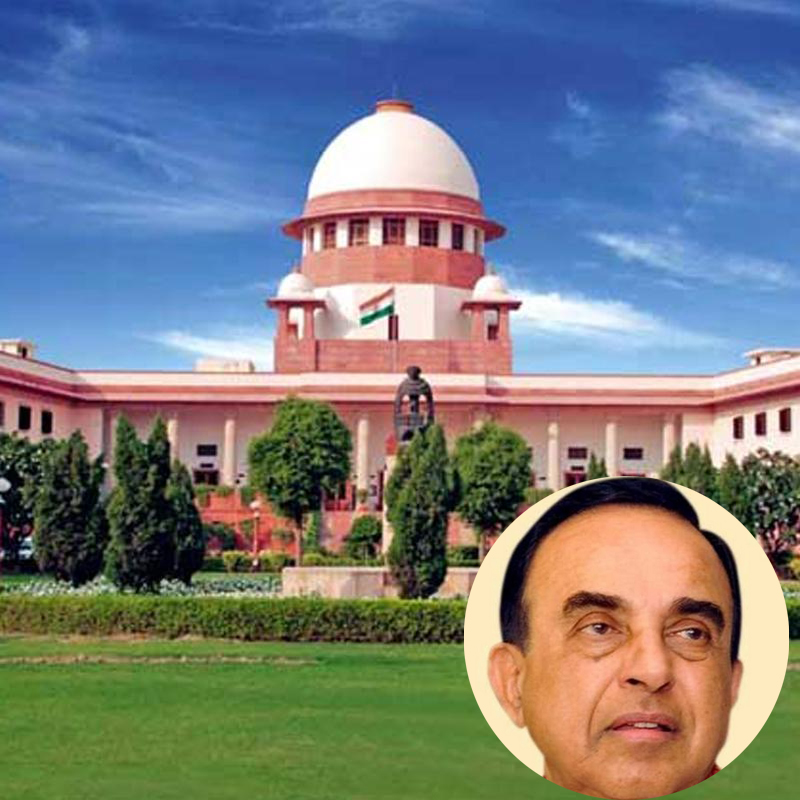
  • Swamy seeks transparency in IPL media rights through SC

    Swamy seeks transparency in IPL media rights through SC

    NEW DELHI: The Indian Premier League, which saw a brief lull in controversy with Lalit Modi preferring to remain overseas, appears to be in for another storm, this time over broadcast rights.

    Bharatiya Janata Party member and Rajya Sabha MP Subramaniam Swamy has moved the Supreme Court seeking a transparent mechanism for auction of telecast rights of IPL cricket matches for the next five years. The auction is slated for 17 July 2017.

    Swamy told indiantelevision.com that his petition for e-auctioning of IPL media rights was expected to come up for hearing on Friday this week or Monday next week. He said that there is a requirement of non-discriminatory and transparent method, with the best international practices, to be adopted for distribution of the valuable media rights so as to ensure the maximum revenue in the larger national interest.

    The petition questioned the manner in which the rights worth Rs 250 billion to Rs 300 billion were being distributed by the Board of Control for Cricket in India (BCCI).

    Seeking a stay of the present system, he said the huge investments make it mandatory to have the auction process robust, completely transparent in order to maximise the revenue and prevent vested interest from making undue gains.

    Swamy mentioned the matter before the bench headed by Chief Justice J S Khehar for early hearing of the matter as the BCCI next week.

    A lawyer himself, Swamy cited various orders of the apex court after finding irregularities committed by country’s apex cricket body. He said that as the BCCI was found having irregularities, illegalities, misappropriation and asymmetries in the functioning, the Supreme formed the Mudgal Committee as an investigator and then the Justice R M Lodha Committee was formed on 22 January 2015 by the Supreme Court.

    The Supreme Court on 30 January 2017 appointed a four-member committee of administrators headed by former Comptroller and Auditor General of India Vinod Rai to run the affairs of the BCCI and implement court-approved recommendations of the Lodha panel on reforms.

    Also Read :

    Vivo wins IPL title rights for Rs 21.9 bn

    IPL ’18 media rights decision likely in July, player recruitment norms to be tweaked

    Sports channels ratings dive in week 26

    IPL: Oppo, Vivo, Jio & Amazon ads ruled