Category: Regulators

  • Karti told to move petition relating to INX Media in Delhi High Court

    Karti told to move petition relating to INX Media in Delhi High Court

    NEW DELHI: Karti Chidambaram, son of former Union Minister P Chidambaram, will have to go to the trial court or the High Court in Delhi with his petition seeking to quash a Central Bureau of Investigation FIR in a bribery case involving INX Media.

    The Madras High Court today said the case does not come under its jurisdiction and the Delhi High Court has territorial jurisdiction in this case.

    Karti had moved the court after a Supreme Court order asked him to appear before the CBI in its New Delhi office on 23 August, to help the investigating agency with its probe on the alleged kickbacks that his company, INX Media paid to get clearances from the Foreign Investment Promotion Board.

    Karti had told the Supreme Court that he is ready to appear before the agency today itself, but needs protection. While directing him to appear before the CBI, the SC told Karti to carry with him all documents necessary.

    The Madras High Court, in an earlier order this month, had stayed the Look Out Circular (LOC) issued against Karti and four others. The Supreme Court had later said that it would review the HC order cancelling the LOC issued by Foreigner Regional Registration Officer (FRRO).

    On 16 May, CBI raided the Chidambaram residence in Chennai, along with 13 other locations in New Delhi, Gurugram, Mumbai and Chandigarh. The raids were regarding a 2007 case in which INX Media had allegedly paid bribes to get an FIPB approval.

    While the clearance granted was only for Rs 40 million, the actual foreign investment was reportedly much higher. An FIR was filed against Karti, Indrani Mukherjee and Peter Mukerjea, who owned INX media.

  • Star India wins: SC disallows Prasar from retransmitting shared sports feed live

    Star India wins: SC disallows Prasar from retransmitting shared sports feed live

    NEW DELHI: The Supreme Court has said that shared feed of sporting events can only be carried on the terrestrial network of Doordarshan or DD FreeDish. 

    The judgement would help private broadcasters like Star India from possible losses in subscription and advertising revenues due to sharing of signals with Prasar Bharati which were eventually carried by private DTH and cable operators. Immediately after the judgment became known, DD and PB officials went into a huddle to study the ramifications. A DD official declined to comment.

    In a significant judgment, a division bench headed by Justice Ranjan Gogoi said that, though the Sports Broadcasting Signals (Mandatory Sharing with Prasar Bharati) Act, 2007, allows the feed of a sporting event of national importance to be shared mandatorily with Prasar Bharati, the public broadcaster cannot utilise it on a notified channel which has to be compulsorily carried by private distribution platforms. 

    While the judgement enables Prasar Bharati to expropriate the feed, the private sports channels will not be competing against Prasar Bharati on a commercial basis for the same content. 

    The judgment came on an appeal by the pubcaster against an order obtained by Star India from a two-judge bench of the Delhi High Court comprising Justice B D Ahmed and Vibhu Bakhru.

    Also Read:

    Star Bharat to be available on DD FreeDish as b’caster’s fourth FTA offering

    Prasar may soon launch OTT, keep tabs on DD costs, exploit reach

  • TRAI to host APAC regulators’ meet in Delhi

    TRAI to host APAC regulators’ meet in Delhi

    NEW DELHI: Delegates from more than 23 countries will be participating in the Asia-Pacific Regulators’ Roundtable followed by the International Training Programme being organized next week by the International Telecommunication Union (ITU) and the Telecom Regulatory Authority of India (TRAI).

    About 60 delegates from different countries have registered for the “ITU-TRAI Asia-Pacific Regulators’ Roundtable” and the “ITU- TRAI International Training Program (ITP) 2017” during 21-22 August 2017 and 23-25 August 2017 respectively.

    The Regulators’ Roundtable is the 7th edition of the Asia-Pacific Region initiative to organize an annual Roundtable to provide telecommunication/ICT regulators in the region to mutually learn from the experiences of each other.

    In a release, TRAI said: “Regulators around the globe have been dealing with the regulatory challenges created by the digital advancements. Digitization has created rapid technological progress and growth, which has generated tremendous benefits for all economies around the world. New opportunities for growth and innovation are emerging, and it is crucial that the new regulatory requirements and challenges are anticipated and addressed at both National and International level, in a coordinated way. Growing innovation and rapid deployment of digital technologies necessitates a proactive regulatory framework”.

    The main regulatory challenges include promoting growth in digital ecosystem, maximizing consumers’ interest, ensuring level playing field for all players on new and cross-sectoral markets, promoting competition, among others.

    The Regulators’ Roundtable fosters dynamic and strategic discussions, facilitates sharing of information, relevant experiences and practices as well as conclusively debate on possible solutions and opportunities for potential collaboration to address emerging regulatory issues and challenges in Digital Societies, TRAI Secretary Sunil Gupta.

    The ITU-TRAI International Training Programme 2017 will build skills to address the policy and regulatory issues in the era beyond convergence of telecommunications and information technology. In particular, the event will focus on the implications of Collaborative Regulations for Digital Societies, he added.

  • Modi invites Indians’ ‘Mann ki Baat’, to be aired by AIR, DD, pvt channels & DTH platforms

    Modi invites Indians’ ‘Mann ki Baat’, to be aired by AIR, DD, pvt channels & DTH platforms

    NEW DELHI: Telephone lines opened on 16 August for people wanting to give their viewpoints to the prime minister Narendra Modi. Indians can call on toll-free number 1800 11 7800 before the 34th installment of his monthly Mann Ki Baat is broadcast.

    Messages can also be sent via the mygov.in website and narendramodi.in and those who miss the broadcast can listen in toll-free by dialling 1922.

    The next broadcast is slated for 27 August 2017 at 11 am over the entire network of All India Radio. Telephone lines for views will remain open till 23 August.

    The broadcast will be originated by All India Radio, Delhi, and will be relayed by all AIR stations, all AIR FM channels (FM Gold and FM Rainbow), local radio stations, Vividh Bharati stations and five community radio stations.

    The regional versions of the Mann Ki Baat will be originated by the capital AIR stations in non-Hindi speaking zones and will be broadcast immediately after the Hindi broadcast, and repeated at 8 pm on the same day. The regional versions shall be relayed by all AIR stations including local radio stations in the respective states.

    The broadcast is visually adapted by Doordarshan and other private TV and news channels in India and broadcast simultaneously. Similarly, radio in the private sector patches AIR. All DTH platforms also carry it.

    It is live streamed for global audience and is accessible through mobile app, All India Radio Live.

    Over the last one year, the Mann Ki Baat programme has become immensely popular in every nook and corner of the country and is eagerly awaited every month.

    The direct heart to heart address by the Prime Minister on issues concerning every citizen of the country has made the broadcast popular in every household in the country.

    ALSO READ ;

    Mann ki Baat ten-second ad rate is Rs 200,000

    PM Modi live-streams new ideas to youth

    No policy announcements, it’s simply ‘Mann ki Baat’

  • Rajasthan Patrika’s FM Tadka to launch four stations

    Rajasthan Patrika’s FM Tadka to launch four stations

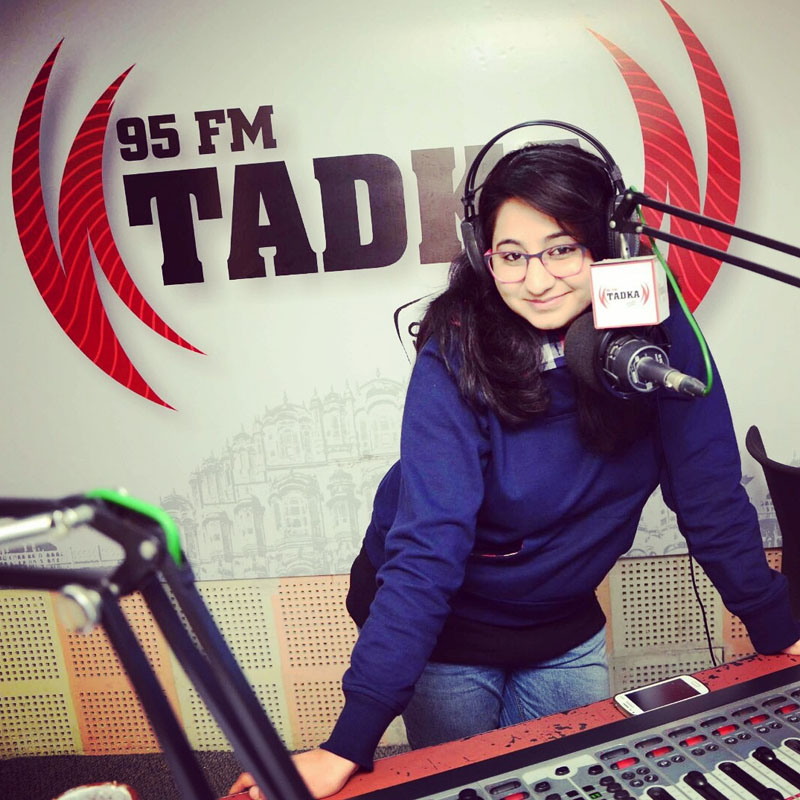
    MUMBAI: Rajasthan Patrika Group’s FM Tadka that recently launched two new stations in Ajmer and Bikaner, will soon be launching four new stations in Jammu, Srinagar, Aligarh, and Muzaffarpur. Amongst the four, Aligarh and Muzaffarpur will be launched within a month.

    Jammu being a sensitive area, Radioandmusic.com out of curiosity happened to ask the Programming Head of FM Tadka Jaipur AJ (Adbreak Jockey) Sufi, if they are ready for challenges. To this, he said, “If you are running a radio station, it does not matter if you are operating in Jaipur, Jammu or Srinagar. When you sit on the RJs chair, you have a lot of responsibilities. According to the Radio bible, no sex, no religion, no politics on the radio is to be aired and an RJ has to keep these things under consideration. So when jocking in Jammu we won’t talk about communal things, we also won’t jock such things in Jaipur.”

    The team is much more excited to be a part of Jammu and Srinagar as they will get to know about their lifestyle and also get a chance to design radio programmes according to them. “Jammu and Srinagar are a great challenge and a wonderful playground to work on. Jammu is a khichdi of Punjabis, Muslims, Pandits, more so music will be contemporary, Sufi and Punjabi,” stated Sufi.

    For detailed report, read here:

    FM Tadka to launch four new stations

    ALSO READ :

    MIB: Set up cable TV regulatory panels, Century, Chinar & Pan India among 6 FM licences revoked

    State-level television committees to monitor FM & Community Radio

    Govt formalising TV & radio complaints’ redressal mechanism

  • MIB: Set up cable TV regulatory panels, Century, Chinar & Pan India among 6 FM licences revoked

    NEW DELHI: The information and broadcasting ministry has issued directions to states to set up district-level and state-level monitoring committees to regulate content telecast on cable TV/FM radio channels/community radio stations to ensure adherence to the AIR Broadcast Code.

    Meanwhile, the licences of a total of six FM radio channels being operated by six companies in different parts of the country were revoked under FM Phase II. The six are — Century Communication, Chinar Circuits, Kushal Globalo Ltd. Pan India Network, Positive Radio Pvt Ltd, and Singla Property Dealer Pvt Ltd.

    According to ministry sources, a total 312 private FM radio channels are being operated by 44 Indian companies.

    The sources told Indiantelevision.com that during the last three years and the current year, the ministry issued four show-cause notices to 93.5 Red FM, Hit 95 FM, 94.3 FM Radio One and Radio City 91.1 FM on 23 January 2015, 17 February 2016, 2 September 2016 and 1 August 2016, respectively, for airing allegedly vulgar, obscene and objectionable content in violation of the provisions of GOPA and programme and advertising code as followed by All India Radio (AIR).

    Action was taken eight times on violation of provision of GOPA and Programme and Advertising Codes as followed by AIR by private FM radio channels by airing of obscene, vulgar and objectionable content during the last three years and the current year. These include two advisories to all channels and one only to Tamil Nadu-based FM channels. The channels that came under the scanner were ENIL Patna (Radio Mirchi), Malayala Manorama Kochi (Radio Mango), Digital Radio Broadcasting (Delhi) Ltd (Red fM), Clear Media (India) Pvt Ltd (Hit 95 FM), and Next Radio Delhi (94.3).

    Private FM Radio broadcasters have to follow the rules and regulation prescribed in the Grant of Permission Agreement (GOPA) signed by them with the Government. Private Satellite TV channels are required to abide by the terms and conditions as mentioned in the Policy Guidelines for Uplinking and Downlinking of Private Satellite TV channels in India.

    Only Indian companies registered under the Company’s Act, 2013 are eligible for bidding and obtaining permission for FM radio channels. The conditions are elaborated in the Policy Guidelines for expansion of FM radio broadcasting through private agencies Phase-III.

    GOPA provides that FM Radio Channels should follow the same Programme and Advertisement Codes as followed by All India Radio. These codes contain a whole range of parameters to regulate content on FM channels.

    ALSO READ :

    State-level television committees to monitor FM & Community Radio

    No plan for one-stop broadcast authority at present, says Rathore

    MIB flags issue of anti-national content on cable channels, seeks industry advisory

  • TRAI’s final recommendations on net neutrality likely by September

    NEW DELHI: India’s telecoms and broadcast regulator Telecom Regulatory Authority of India (TRAI) is expected to come out with its final recommendations on net neutrality next month.

    TRAI chairman R S Sharma told indiantelevision.com  that after detailed discussions were held in Bengaluru last month on the consultation paper on Net Neutrality (NN) issued mid-2016, a similar round has been fixed for 30 August 2017 in Delhi after which TRAI will begin work on its final recommendations to ensure national security and customer privacy.

    However, the issue of NN has different meanings in different parts of the globe and depends on how regulators view the issue in terms of their own markets. For example, the present FCC chairman Ajit Pai is in favour of repealing of a regulatory framework that allowed his predecessor to establish robust rules of the road for the internet and is in the process of dismantling the previous regime’s regulatory framework for NN. In Asia too, NN is defined and regulated differently and there is no uniform approach to the issue.

    One of the chief arguments for Net Neutrality, senior tech journalists have argued, is that without rules in place, the internet could well grow into a system of tiers, akin to cable television, in which large content companies would dominate because of their ability to pay for better access to consumers.

    Asked whether the tariff order — which has been in suspended animation for few months now owing to some stakeholders moving Indian courts against its implementation — will come into effect on 2 September 2017, Sharma refused to commit anything as the matter would be subject to the outcome of court decisions.

    Referring to a paper on data protection, he said the present aim was only to start a discussion on the subject. He denied that the consultation paper had anything to do with the controversy around Apple refusing to cooperate on certain demands of the Indian regulator or had been prompted by it. “In fact, the controversy had been kicked off just over a week earlier whereas the paper had been under preparation earlier,” Sharma said.

    Elaborating on TRAI’s guiding principles, the chairman said that the organisation issues a paper or initiates a public debate or comes out with recommendations  for “transparency, (to) ensure non-discrimination, consumer protection, industry’s growth and encourage positive competition.”

    At a time when online piracy and theft of online data is gaining momentum in India, as also criticism of the country’s lack of a comprehensive legislation to protect data, including those mentioned in Adhaar, Sharma said TRAI has taken all the necessary steps to protect consumer data that it collects via its various apps.

    Though Sharma refused to be drawn into the online piracy issue (largely that falls under the domain of Commerce Ministry), he did say that inter-operable set top boxes, being tested by some government organisations in collaboration with TRAI, had provisions for dealing with pirated software.

    When questioned about the permission granted to Tamil Nadu government owned Arasu to distribute digital TV signals and consequent leanings towards similar set-up in the states of Telangana and Punjab, Sharma said the Authority had thrice given recommendations advising that state governments and political or religious groups should not be permitted to enter the broadcasting sector. “We still stand by those recommendations. But the ministry (MIB) has said the recommendations were under consideration,” he added.  

    He agreed that technologies were converging and said that regulations, attitude and outlook will “soon have to move in that direction.”

    ALSO READ :

    Star & Vijay TV amend plea, TRAI asked by Madras HC to file response

    Tata Sky & Airtel DTH pleas against TRAI tariff in Delhi HC on Friday

    “There would be  a lot on TRAI’s plate in 2017” – RS Sharma


  • TV content: Madras HC seeks Centre’s clarification on regulatory mechanism

    TV content: Madras HC seeks Centre’s clarification on regulatory mechanism

    NEW DELHI: Joining issues with a petition presently being heard by the Supreme Court on a similar matter, the Madras High Court yesterday directed the federal government to clarify on the existing regulatory setup governing contents aired by television channels in India.

    The first bench comprising Chief Justice Indira Banerjee and Justice M Sunder gave this direction to assistant solicitor general Su Srinivasan, who appeared for the central government, during the hearing of a public interest litigation (PIL) to stop telecast of Tamil reality show ‘Bigg Boss’, hosted by actor Kamal Haasan on Vijay TV, part of Star India, according to a report filed by PTI from Chennai.

    The matter has been posted for further hearing on August 18, 2017.

    Earlier, senior counsel P S Raman, who appeared on behalf of the actor and anchor of the TV show, submitted that there were two bodies to regulate the channels. One was the Broadcasting Content Complaints Council (BCCC), a self-regulatory body headed by a retired Supreme Court judge and the other was ministry of information and broadcasting (MIB), the PTI report quoted Raman as telling the local high court.

    BCCC is a self-regulatory body set up by the Indian Broadcasting Foundation, an industry organisation that has a large number of TV channels as its members. Though there’s no formal content regulatory body in India on the lines of American FCC or the UK’s Ofcom or Singapore’s MDA, IBF’s self regulatory body takes up complaints relating to TV content. Separately, the content code, part of India’s Cable TV Act (enforced by MIB) outlines broad guidelines for TV content.

    The PTI report stated that petitioner Saravanan has alleged that in the reality show Haasan played with emotions and behaviour of female contestants, which he termed vulgar and obscene. He further submitted that to protect Tamil culture and tradition and in the interest and welfare of the general public, the telecast of the show must be stalled immediately.

    “The dress code and behaviour of female contestants on the show are very vulgar and obscene making my family members and me uncomfortable in watching the programme. Also, the reference to ‘cheri’ (slum) behavior, made by a participant to describe the behaviour of another contestant, greatly hurt downtrodden people,” the petitioner said.

    Meanwhile, the Supreme Court is hearing a similar case and has enquired from the central government whether it has a proper mechanism in place to regulate TV content.

    Outgoing film certification (CBFC) chief Pahlaj Nihalani, dubbed nationalist and ultra-conservative by a section of content producers and audience alike, in a media interview had urged the government to extend CBFC’s jurisdiction to oversee television shows too.

    ALSO READ:

    Govt formalising TV & radio complaints’ redressal mechanism

    SC to MIB: Get mechanism to deal with complaints on TV, radio shows

    Awarded adman Prasoon Joshi is new CBFC chief, Pahlaj Nihalani exits

  • TRAI starts process of STBs’ interoperability, issues consultation note

    NEW DELHI: Realising that lack of technical interoperability of set-top boxes creates problems for consumers wanting to switch over to another service provider, the Telecom Regulatory Authority of India today issued a consultation note on the solution architecture for technically interoperable STBs after receiving 28 comments to a pre-consultation note issued on 4 April 2016.

    All stakeholders which include CAS providers, SoC vendors, middleware providers, EPG solution providers, STB manufacturers, smart card providers, and service providers like Broadcasters, Multi System Operators, and DTH operators are requested to provide their written comments on the proposed solution architecture for technical interoperable STBs by 25 August 2017.

    Subsequently, TRAI is planning to organise a workshop on proposed solution architecture for technically interoperable STB during the first fortnight of September 2017 to elaborate in detail on various technical aspects commented upon by the stakeholders in response to this consultation note.

    After incorporation of comments received from the stakeholders and the workshop, TRAI will be launching a pilot project on STB interoperability. Entities interested in pilot projects for deployment of Interoperable STBs can also send their details to TRAI.

    TRAI said this inter-operability between different service providers has an adverse effect on competition and service quality in the Pay-TV distribution market. Non-availability of STB in an open market is also a major hindrance to technological innovations. Whenever, a consumer changes its service provider, the STB of existing service provider becomes useless as the same STB cannot be used; resulting in electronic waste (e-waste). The availability of practical solution which can provide technical interoperability of STB is always desirable.

    The framework of interoperable STB should ensure the following:

    a. The level of security should be similar to or better than what is present today.

    b. The framework must be sound enough to prevent reception of services by unauthorized persons.

    c. The prices of the interoperable STBs should remain comparable to non-interoperable STBs.

    d. The portability cost should reduce considerably

    e. The DPOs should be able to choose security solutions (Conditional Access System) as per their requirements.

    f. The proposed solution must be able to identify pirates, if any

    g. The User Interface (UI) and Electronic Program Guide (EPG) format customization.

    h. The framework should ensure that TV channels with EPG listing continue toØ be available to the consumers on migration to another operator.

    At the outset, TRAI said digital TV broadcasting services can be received by a subscriber using STB which is connected with the TV set (sometimes the STB is in-built in the TV set). The STB receives TV signals from distribution network and decodes them into viewable form on a TV set. STB enables the subscriber to view only those TV channels which he/she has subscribed.

    Cable TV and direct-to-home (DTH) platforms are the major distribution platforms for delivery of TV broadcasting services in India. Whereas, the DTH services delivered in digital mode since beginning, the migration of cable TV services, from analogue to digital, has also been completed with implementation of Digital Addressable Cable TV systems (DAS) in the country.

    Presently, Distribution Platform Operator (DPO) provides STB, which is compatible with his network to provide services to subscriber. Over a period of time, variety of technologies has been deployed by DPOs into the networks. It has led to a situation where STBs provided by one operator are not compatible with the system of the other operator. This impedes portability of a subscriber from one operator to another in case he wishes to do so

    TRAI collaborated with IIT-Bombay and Centre for Development of Telematics (C-DOT). The issues identified by stakeholders in response to the pre-consultation paper were communicated to C-DOT and IIT-Bombay. Now C-DOT, the telecom technology development centre of the Government of India, in close coordination with TRAI, has developed a solution for interoperable STBs. Describing the same, C-DOT has provided TRAI, a copy of the document titled “C-DOT framework and feature requirements for the ecosystem entities towards implementation of STB interoperability framework.”

    Through this consultation note, TRAI presents the solution architecture for technically interoperable STB to all the concerned stakeholders to seek their comments on proposed solution.

    Some of the reasons for non-interoperability of STBs and the C-DOT framework and feature requirements for the ecosystem entities towards implementation of STB interoperability framework” are available on trai.gov.in.
  • Govt warned 55 violators of programme & ad codes in 3 yrs, says Rathore

    NEW DELHI: The government issued 55 advisories or warnings since 2014 to various channels for violation of the Programme or Advertising Codes, the Parliament has been told.

    These include four advisories to all channels of which two were issued this year, one relating to telecast of Republic Day events with accompaniment of sign language.

    There were nineteen cases in 2014, 17 in 2015, 16 last year and three this year, the minister of state for information and broadcasting Rajyavardhan Rathore said.

    In most cases, channels have been issued warnings or advisories and in some cases to run apology scrolls.

    Permission to uplink and downlink private satellite TV channel is granted in accordance with the extant Policy Guidelines of Uplinking and downlinking of TV channels in India. Such permission holder companies, are required to abide by all the rules and regulations mentioned in the Policy Guidelines.

    Whenever any information/complaints about alleged irregularities in the functioning of any TV channel or their allied companies comes to the notice of this ministry, action is taken on case to case basis, under the provisions of the Policy Guidelines.

    In addition, all permitted broadcasters are required to ensure that all programmes and advertisements telecast on private satellite TV channels and transmitted/retransmitted through the Cable TV Network are required to adhere to the Programme and Advertisements Codes prescribed under the Cable Television Networks (Regulations) Act, 1995 and Cable Television Networks Rules, 1994 framed thereunder.

    ALSO READ :

    No plan for one-stop broadcast authority at present, says Rathore

    Prasar Bharati finds transmitter tenders plaint unsubstantiated

    Govt rules out TV channel categorisation (updated)