Category: Regulators

  • MIB minister Smriti Irani orders review of DD prime time auction process

    MIB minister Smriti Irani orders review of DD prime time auction process

    NEW DELHI: Doordarshan has put on hold the prime time slots auctioned to Ektaa Kapoor-managed Balaji Telefilms and Saaibaba Telefilms following instructions from the ministry of information and broadcasting (MIB).

    Doordarshan sources told Indiantelevision.com that the action was taken after a directive from the office of the MIB secretary in mid-August, just before two of the slotted programmes were slated to go on air on DD National.

    The sources, who did not want to be identified, said the new MIB minister Smriti Irani had decided to review the whole process and take a fresh look at the concept of auctioning slots for prime time in Doordarshan.

    Prime time auctions were held as part of the pubcaster’s efforts to infuse some breath of fresh air in the programming lineup of its main channel and also earn additional revenue in the process.

    Balaji Telefilms bagged four slots and Saaibaba Telefilms pocketed two slots as a result of Doordarshan’s prime time slot auction, although financial details are not known.

    Bag Films and Media of Delhi, which had also been shortlisted, had failed to bag any slot as its bids were lower than those by the other two bidders.

    ALSO READ:

    Doordarshan slots Rafi, Kishore & Lata tribute show from Sat

    DD relaxes norms for prime time slot bidders as incentive

    Suresh Panda may be Prasar Bharati interim CEO; liberal DD auction criteria recommended

  • Govt urges TV and radio channels to publicise ‘Swachhta’ campaign

    Govt urges TV and radio channels to publicise ‘Swachhta’ campaign

    NEW DELHI: Private television and FM channels and radio stations have been requested to give adequate attention to the ‘Swachhta ki Seva’ campaign launched by the prime minister Narendra Modi in his ‘Mann ki Baat’ broadcast on 27 August 2017.

    “Keeping in view the public interest and importance of the matter,” the ministry of information and broadcasting has requested the media to “build the idea of the campaign in their programming so as to bring the message home to the maximum viewers.”

    In his broadcast on All-India Radio, Modi had called upon the nation to undertake the SHS campaign from 15 September 2017, culminating on Gandhi Jayanti, that is, on 2 October 2017.

    The aim of the campaign, he said, was to intensify the focus on cleanliness and create an environment of cleanliness across the country in the spirit of a ‘Jan Andolan’ (public movement).

    The ministry, in its request, said: “(The) media has a strong social and cultural impact on (the) society because of its inherent ability to reach out (to) a large number of people in the shortest possible time. (The) media, therefore, can play an important role in building public opinion and awareness in favour of the campaign.”

    The request was sent to seven different organisations of TV, FM and community radio channels. These are: News Broadcasters Association (NBA), the Indian Broadcasting Foundation (lBF), Association of Regional Television Broadcasters of India, Association of Radio Operators for India (AROI), Community Radio Association (CRA), Federation of Community Radio Stations (FCRS), and Community Radio Forum of India.

  • RS TV audit sought, content sharing with Prasar proposed by Veep

    RS TV audit sought, content sharing with Prasar proposed by Veep

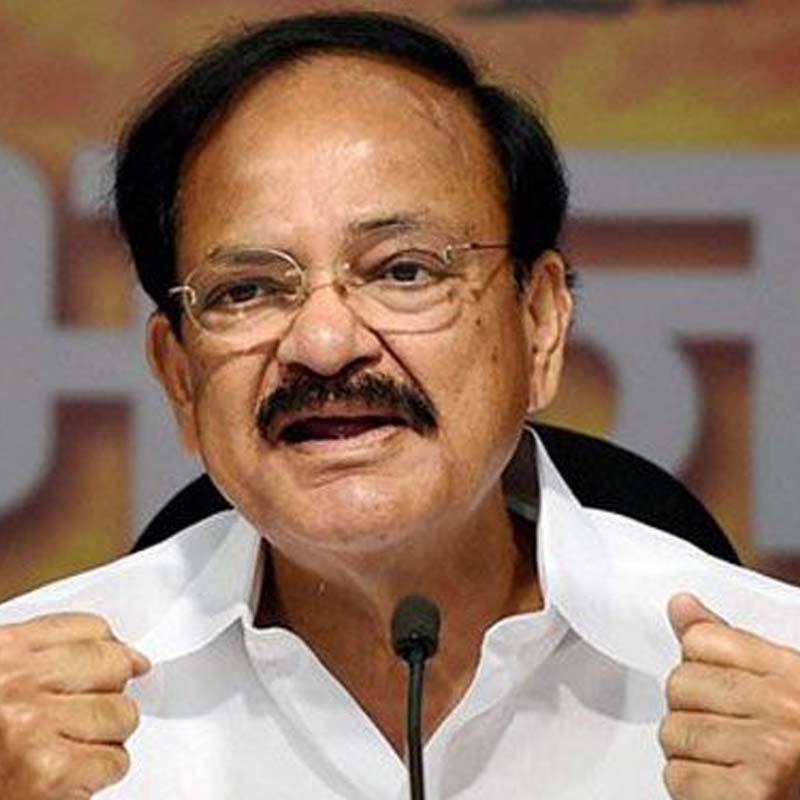
    MUMBAI: India’s vice-president M Venkaiah Naidu, who is also the chairman of Rajya Sabha, has sought audit of the upper house broadcaster.

    RSTV, Naidu also said, should be able to quantify the reach of the channel (viewership) besides having systems for feedback on and evaluation of content. Efforts, he said, needed to be made to expand its reach with a clear plan of action, suggesting the possibility of synergy with Prasar Bharati through sharing of content.

    During a review, he was surprised to notice it was spending Rs 125 million for making “Raag Desh,” a commercial film produced by former RS TV editor and CEO Gurdeep Singh Sappal. It was based on Indian National Army trials, the court martial of its officers — Col Gurbaksh Singh Dhillon, Col Prem Sehgal and Major Shah Nawaz Khan.

    Naidu was informed that the channel had invested around Rs 3.75 billion since August 2011 when it started, the Times of India reported.

    Naidu sought a full-fledged professional and expense audit after he also found that an annual rent of Rs 250 million was being paid for office premises in New Delhi and around Rs 35 million spend on housing-keeping and hiring of cabs. Naidu wants to, instead, explore the possibility of owning an office.

    Naidu also questioned on RS TV’s original mandate, reach of the channel, present content mix, utilisation of manpower and other resources, expenditure, and the scope for rationalisation, Mint reported.

    The Competition Commission of India (CCI) meantime ordered a probe against the pubcaster Prasar Bharati for alleged abuse of dominance with regard to infrastructural facilities for FM radio broadcasting.

    The probe was ordered based on a complaint filed by Mumbai-based Clear Media against Prasar and the MIB. Clear Media had entered into an agreement with Prasar in 2006 for using its common transmission tower in Delhi. The dispute started after the collapse of the tower in 2014.

    The fair trade regulator, however, rejected similar complaints against the MIB, saying it was a government department responsible for framing rules without any involvement in any economic activity.

  • Prasar Bharati, Dish TV, Star, Zee and BES bat for KU-band open-sky policy

    Prasar Bharati, Dish TV, Star, Zee and BES bat for KU-band open-sky policy

    NEW DELHI: A number of stakeholders in the Indian broadcast and satellite industry, including the country’s first DTH service provider Dish TV, Star India, Zee, the pubcaster Prasar Bharati, and industry organisations such as Broadband India Forum and CASBAA are batting for an open-sky policy relating to KU-band transponders.

    The reason for this support for an open-sky satellite policy is rooted in the need for increasing KU-band transponder capacity. The allotment of KU-band transponder on foreign satellites is regulated by the country’s space agency Indian Space and Research Organisation (ISRO) when it is unable to provide space on Indian satellites to domestic customers.

    While Dish TV does not see “any justification” in the closed-door or regulated policy regime followed for KU-band transponder capacity, Star India is of the opinion that absence of such a policy is limiting DTH platforms’ capacity to provide additional services. Though Prasar Bharati, managers of Doordarshan and All-India Radio, gets preference on Indian satellites, it has also supported an open policy.

    “At present, KU-band is permitted for HITS, DTH, uplinks and DSNGs/VSATs. These applications should be enabled for open-sky policy, which will allow the broadcasters/DTH operators to negotiate long-term contracts. As satellite life is 15-17 years, operators give benefit in long-term contracts to the extent of 50 per cent,” Dish TV has said, adding that, at present, ISRO executes only three-year contracts.

    According to Star India (its parent 21 Century Fox has a minority in DTH operator Tata Sky), “With the introduction of new satellite TV channels, DTH operators require more KU-band capacity with footprint over India to enable to uplink all such channels on such DTH platforms… (but), owing to the lack of open-sky policy in KU-band, DTH platforms are restricted to provide limited value-added services. The open-sky policy for DTH will unlock such value-added services and enable viewers to consume such immersive and interactive content.”

    Why is this clamour for an open-sky policy regarding KU-band transponder?

    At present, any request for additional KU-band capacity on foreign satellites to expand business by Indian customers is hampered as they are unable to negotiate directly, and have to go through ISRO’s commercial arm Antrix that acts as a gate-keeper and, after a deal is concluded with a foreign satellite for KU-band transponders, also charges a commission.

    This happens when ISRO is unable to provide space on Indian satellites, which are increasing in number but have failed to keep pace with the demands of the domestic companies. Incidentally, there is no restriction on leasing C-band transponder capacity on a foreign satellite.

    “For DTH services, acquisition of KU-band transponder capacity is highly regulated and is done through an intermediary (Antrix that is a government organisation). As a result, there has been considerable delay in acquiring KU-band transponders…and also due to non-availability of adequate transponders, DTH service-providers are unable to chalk out their business plans. This is necessitated as the current procedures are fraught with restrictive practices,” said Broadband Forum India, an industry organisation comprising member-companies providing services via satellites.

    Hong Kong-based Asian industry body CASBAA, pointing that it has been seeking a “less restrictive policy” for KU-band for over a decade, has said a PwC-researched paper for it mid-2016 concluded that the policy for KU-band was “in effect a very restrictive satellite policy as presently operated in India,” which “artificially suppress(es) demand, which in turn leads directly to a reduction in growth, profits, and therefore lower tax revenues.”

    Though the bogey of national security is often raised when liberalisation of satellite policies are talked about, CASBAA, while discounting such fears, suggested following medium-term policy tweaks to ease KU-band capacity crunch, which were also listed out by some other stakeholders too:

    i) ISRO/Antrix can regularly publish a list of pre-cleared satellites and operators who are permitted to supply transponders to the Indian market. Indian DTH operators should be free to negotiate and contract capacities directly from them.

    ii) An efficient procedure can be established for DTH operators to obtain security clearance from ISRO before contracting the transponder capacity directly from foreign satellites.

    iii) Contracting for incremental capacity or extending the contracts of existing suppliers can and should be completely left for DTH operators without any need to seek additional, duplicative approvals from ISRO/Antrix. DTH operators would need to keep the ISRO updated with the contracted capacities and contract durations.

    The issue of freeing up KU-band transponder lease regime has been discussed for years, but its gaining momentum as the present PM Modi-led government in New Delhi has been talking about furthering economic liberalization and easing norms for doing business in India.

    Broadcast Engineering Society (BES), a government organisation, too is in favour of  an open-sky policy. “Keeping in view the growing number of TV channels and their carriage on various platforms, it has become inevitable for the government to go for an open-sky policy for KU-band,” BES stated, adding technological advancement and growth of HD channels, apart from experimental 4K services, has necessitated this.

    The stakeholders were expressing their views on KU-band satellite capacity vis-à-vis an open-sky policy as part of a consultation process initiated by sector regulator TRAI on ease of doing broadcast business in India. Incidentally the regulator has been recommending in vain an open-sky policy for several years now.

    ALSO READ :

    ISRO stresses on indigenization; TRAI for Open Sky policy

    ISRO’s ‘South Asia Satellite’ to carry 12 ku-band transponders

    Could India blocking ABS’ FTA TV signals lead to breach of ITU norms?

    MIB: No DPO request for infra sharing, DTH ops’ transponder demand up
  • Radio City becomes first Indian network to offer curated playlists on Apple Music

    Radio City becomes first Indian network to offer curated playlists on Apple Music

    MUMBAI: For a radio station, both talk shows and music, play an equally important role in order to entertain listeners. The uniqueness that any radio station has is its exclusive list of songs. As iPhone users cannot enjoy the feature of FM radio on their phones, Radio City has stepped in to give them the experience on their devices.

    Radio City has an exclusive collaboration with Apple Music to offer thematic playlists to users. The exclusive tie-up will allow music lovers across the country to enjoy a world-class music experience through dynamic playlists curated by the FM player in India.

    The playlists will be inspired by Radio City’s popular shows like Love Guru, Radio City Top 25, Suno Na Dilli and Kasa Kaay Mumbai; two other thematic playlists include Flashback Cassette and Chillout Zone. Featuring songs from the 80s, 90s, 2000s to the recent hits, the playlists will span across different genres, from older melodies to the grooviest of all tracks. At the same time, all playlists will be dynamic and will be updated based on current trends and consumer preferences.

    Radio City CEO Abraham Thomas said, “We are known for our well-researched and mood-mapped music. Curating playlists on Apple’s platform will help us utilize these strengths to offer our listeners content that enhances their music experience. Furthermore, the availability of our playlists on Apple Music will make it easier for our listeners to enjoy quality music on a device of their choosing, at a time and place of their convenience.”

    Jagran New Media COO – digital Rachna Kanwar said, “Radio City’s tie-up with Apple Music will add tremendously to our mobile-first approach. Our highly curated playlists will be the first of its kind by any Indian radio network on Apple Music. Digital audiences will be able to discover, first hand and on a highly engaging platform like Apple Music the results of our complex research analytics. Radio City’s analytics engine blends years of consumer preferences, helping us deliver the most enjoyable and relevant music experience to have ever been offered by an Indian radio network.”

    For detailed report, read here:

    Radio City becomes the first Indian radio network to offer curated playlists on Apple Music

  • Cinema 24×7 gains most, Media Worldwide, Malai Murasu and Anaadi in 10 new channels’ list

    Cinema 24×7 gains most, Media Worldwide, Malai Murasu and Anaadi in 10 new channels’ list

    NEW DELHI: As many as 10 private television channels got clearance in August and early September 2017, with Cinema 24×7 Pvt Ltd being the largest gainer with seven general entertainment slots.

    The other three are — Bangla Talkies by Media Worldwide Ltd, and two news channels: Malai Murasu Seithikal by Chennai Murasu Pvt Ltd, and Anaadi TV by Asnani Builders and Developers Ltd.

    Following cancellation of permission to 216 channels, the total number of permitted private TV channels in the country is 881 as on 5 September 2017, which includes 10 channels which had been granted stay by the courts of law.

    Thus, the total number which had received clearance from the government stands at 1097. As many as nine channels were cleared in August and one earlier this month. The ministry of information and broadcasting has not revealed the 216 channels licences of which have been cancelled.

    The list of 881 includes 387 news and 494 GEC channels. While 780, including 367 news channels, have been permitted to uplink and downlink from within the country, 84, including 15 news channels, have been uplinked overseas and downlinked in India. A total of 17 channels including 12 GECs are uplinked from India but beamed overseas.

    Of the channels which have stay orders, five belong to Mahua Media Private Ltd and four belong to STV Enterprises Ltd.

    But, this total is far short of the claim made last year that India will have 1500 channels by the end of March this year.

    The number of total channels had grown from 869 in February-end 2016 to 892 in February-end this year but had fallen by 10 since. In fact, the number had risen to 899 by the end of December 2016 when the total cancellations were 155. By January-end this year, the number had fallen to 889 of which 12 banned channels had obtained stay orders from the courts.

    The list of the channels permitted as on 5 September 2017 along with their area and language of operation and the names of owning companies has been placed on the ministry’s site.

    The Parliamentary Standing Committee for Information Technology which goes into issues relating to information and broadcasting had last year noted that the State Finance Commission while drafting its proposals for the 12th Plan (2012-17) had assumed that the number of permitted TV channels would rise to 1500.

    Meanwhile, the Committee was told that the present set up of Electronic Media Monitoring Centre had developed logging and recording facility for 900 TV channels and is thus fully equipped to start monitoring of all permitted channels available on public domain.

    The Broadcast Engineering Consultants India Ltd. (BECIL) is configuring all available free to air channels in the content monitoring system of the EMMC.

  • Radio City starts offering locally relevant content at metro stations

    Radio City starts offering locally relevant content at metro stations

    MUMBAI: Giving a new dimension to travel entertainment, Radio City 91.1 FM, a leading radio network, has partnered with LMRC (Lucknow Metro Rail Corporation) to offer specialised content across all stations.

    The service, inaugurated by the home minister Rajnath Singh and the UP chief minister Yogi Aditya Nath, the Lucknow Metro will make commute trendier.

    Radio City has partnered with LMRC to create customised content packages during peak and off-peak hours respectively which comprises songs, jingles and a special trivia from ‘City ke Kone Kone Se’ to integrate Radio City’s ideology of ‘Rag Rag Mein Daude City’.

    A TOH jingle has been specially composed and produced in house for Radio City LMRC that will be integrated on an hourly basis. In tandem with Radio City’s terrestrial music strategy of offering mood-mapped music, the playlist will be topical and in sync with the city’s listener’s preferences. An all-encompassing capsule, the content created will be a healthy mix of local happenings and music, refreshed every fortnight.

    Radio City 91.1FM CEO Abraham Thomas said, “Radio City has been a pioneer in launching path breaking initiatives and Radio City LMRC is a testimony that reflects our leadership stance.”

    Radio City surprised Lucknowites with a special message from actor and singer Farhan Akhtar on air during their first metro ride in the city.

    Akhtar said, “Music and travel go hand in hand I believe every metro rider will enjoy the interim journey to the fullest.”

    To kick off proceedings, Radio City installed a studio set-up at Char Bagh metro station where Radio City RJs will broadcast their shows live. In addition to this, Radio City has also created selfie zones across all eight metro stations where commuters can click and post it on their social media pages tagging Radio City and stand a chance to win a free monthly pass of Lucknow Metro.

    This partnership further amplifies Radio City’s brand philosophy of “Rag Rag Mein Daude City” by providing locally relevant content.

  • TRAI workshop on interoperable STBs later this month

    TRAI workshop on interoperable STBs later this month

    NEW DELHI: Following the issuance of a consultation paper by it on 11 August, the Telecom Regulatory Authority of India has now organised a workshop on solution architecture for technical interoperable set top box on 26 September in the capital. The paper had been issued after responses to a pre-consultation paper issued on 4 April this year. 

    TRAI says it had suo moto taken up the issue of STB interoperability in the broadcasting TV sector. Presently, the Distribution Platform Operator (DPO) provides STB, which is compatible with his network to provide services to a subscriber. 

    Over a period of time, variety of technologies has been deployed by DPOs into the networks. It has led to a situation where STBs provided by one operator are not compatible with the system of the other operator. This impedes portability of a subscriber from one operator to another in case he wishes to do so. 

    In the perspective of subscribers, provision of switch-over from one operator to another without replacing the STB is known as technical interoperability, whereby the same STB can be used by the subscriber for availing the services of any other operator after authorisation form that operator. 

    Recognising the significance of choice to the subscribers to change their service provider, TRAI also approached various academia & research organisations to collaborate with them to find solutions for interoperability of STB.

    In response, IIT-Bombay came onboard and has been working on the issue. IIT Bombay was independently charged with studying the feasibility of open STBs and suggest possible paths towards its implementation. This study concluded that open STBs are indeed feasible and recommended that a programme towards its implementation should be undertaken. They suggested an open STB architecture consisting of a secure communication channel between the open STB and the operator dependent  CAS module based on asymmetric cryptography. The keys for such a system are to be managed by a central trusted authority.

    The telecom technology development Centre for Development of Telematics (C-DOT) came up with a framework for interoperable STBs based on Smart Card. Approaches suggested independently by IIT Bombay, and the architecture independently developed by C-DOT have strong similarities. 

    A total of 19 comments have been received.

    TRAI’s objective is to chalk out a framework to facilitate consumer choice, innovation, orderly growth and healthy competition in the industry. The framework should enable an ecosystem to give the market a chance to evolve at its own pace and independently respond to consumer demands.

    This workshop has been organised to deliberate on the proposed architecture solution. TRAI has also contemplated launching a pilot project with a short-term objective of development of a prototype of the interoperable STB & compatible Smart cards. The TRAI notice also contains the technical details of the interoperability framework.

    The workshop has been organised to discuss the feasibility of this pilot with the stakeholders. Objectives of the pilot are:

    1.    Demonstrate that separation of STB & operator specific CAS functionality is possible in a secure manner.

    2.    Frame out & test the specifications for interoperable STBs & SCs in real life conditions, and suggest improvements.

    3.    Jointly develop a business model that fairly allocates value to each provider.

    4.    Fine tune the architecture proposed by C-DOT and finalize the specifications based on pilot.

    5.    Test out integrated and swapping of SCs with STBs in a fully secure manner.

    Also read :

    TRAI starts process of STBs’ interoperability, issues consultation note


  • MIB directs states to ensure TV digitisation & action against defaulters

    MIB directs states to ensure TV digitisation & action against defaulters

    NEW DELHI: Noting that it has been receiving a number of complaints alleging analogue signals were still being transmitted by some cable operators, the ministry of information and broadcasting (MIB) has directed local administrations in the country to crack down on such errant LCOs and report back on the actions taken.

    This move comes within days of a notice to around 180 multi-system operators — granted provisional licenses — who had failed to comply with requirements of the government regarding digitisation, including updating information on the number of digital boxes seeded in their areas of operation.

    In a letter to all state chief secretaries, MIB additional secretary Jayashree Mukherjee reiterated the government had mandated only digital encrypted signals can be carried on the cable TV networks in the country from 1 April 2017 and carriage of analogue signals and/or unencrypted signals after that date was a violation of the Cable Television Network (Regulation) Act 1995 for which authorised local level officers had powers under the law to seize the equipment of the defaulting cable operators.

    The letter also pointed out that no reports were being received from the authorised local officials on action taken on complaints forwarded by the MIB, which had also prepared a check list for inspection of MSOs and sent it to officials of various local administrations on 25 April 2017. The directive was simple: plan regular inspection and take prompt action against the defaulters.

    “Very poor response on carrying out of inspection by the authorised officers has been received,” the MIB letter rued, requesting various state chief secretaries to direct their colleagues to be more active on this front against defaulters.

    ALSO READ:

    MIB show-causes MSOs on incomplete digitization info

    MIB seeks all new MSO applications online

  • Smriti Irani & Rathore retain two portfolios each, latter elevated

    Smriti Irani & Rathore retain two portfolios each, latter elevated

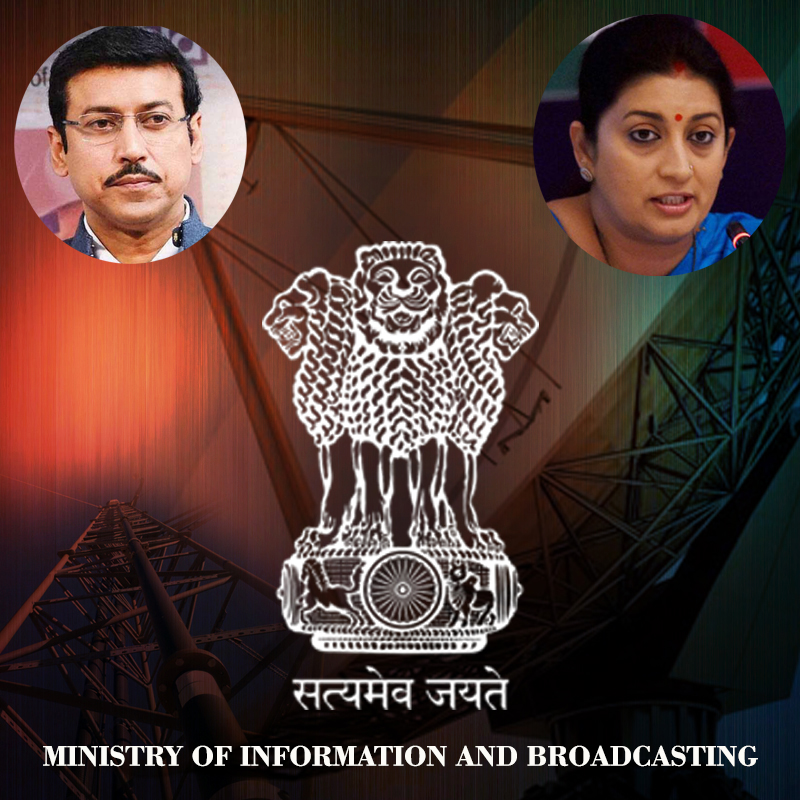
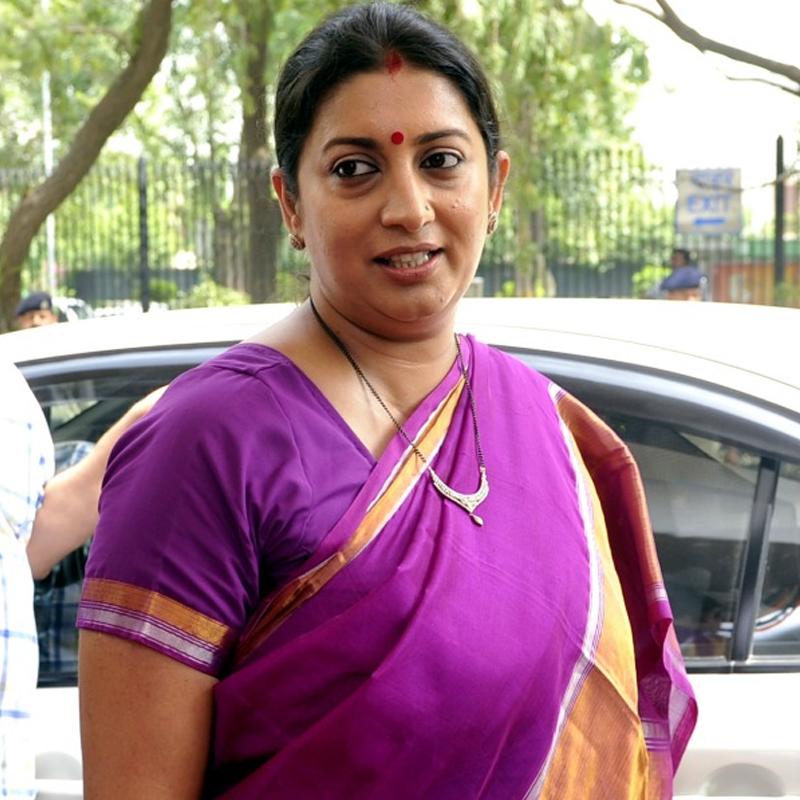
    NEW DELHI: Textile minister Smriti Zubin Irani has also been made the union minister for information and broadcasting (MIB) in the allocation of portfolios after reshuffle and expansion of the Union Cabinet.

    Irani was earlier given the additional charge of the ministry of information and broadcasting after M Venkaiah Naidu resigned following his nomination as the vice-president. It was feared that she would be divested of one of her two portfolios after the reshuffle, but she will continue to hold both.

    Meanwhile, Col. (Retd.) Rajyavardhan Singh Rathore has been elevated as the minister of state (independent charge) of youth affairs and sports, even as he will continue to hold the post of minister of state for information and broadcasting.

    Irani comes from a media and entertainment background having been a television actress. Rathore is a professional shooter who won a silver in the Olympics and multiple medals at the Commonwealth and Asian Games and is the recipient of both, a Padma Shri for sports and an Ati Vishisht Seva Medal for the Army.

    ALSO READ :

    Smriti Irani gets additional charge as MIB minister

    Smriti Irani tweets industry body advisory urging restraint by TV news channels

    NFDC to manage International Film Festival of India now

    Govt wants all ministry ads in Hindi too