Category: Regulators

  • TRAI sets new targets for carbon emissions by telecom sector

    TRAI sets new targets for carbon emissions by telecom sector

    NEW DELHI: With the world coming to grips with problems of climate change and greenhouse gas emissions, the Telecom Regulatory Authority of India has set 30% as the target for reduction in carbon emission by the year 2019-20 and 40 per cent by the year 2022-23 taking the base year as 2011-12.

    The regulator has revised the formula for calculation of carbon footprint by only recommending the target for overall reduction, in its recommendations following responses to its consultation paper issued early this year. TRAI has decided not to recommend any sub-targets for induction of RET.

    The directives of the Department of Telecom of 4 January 2012 have been amended in its recommendations.

    TRAI is in the process of preparing a strategy to tackle the problems created by the telecom sector concerning climate change.

    Following a request received from the DoT, TRAI had issued the Consultation Paper on Approach towards Sustainable Telecommunications on 16 January 2017. The paper had raised 14 questions on which stakeholders had to respond by 27 February 2017 but this date was extended to 28 March 2017.

    TRAI had issued a paper on similar issues in 2012 and the DoT had in fact given directions on that basis, but new issues have cropped up with emerging technologies.

    India has the second largest and fastest growing mobile telephone market in the world. Power and energy consumption for telecom network operations is by far the most important significant contributor of carbon emissions in the telecom industry.

    Hence, it is important for the telecom operators to shift to energy-efficient technologies and alternate sources of energy. Moreover, going green has also become a business necessity for telecom operators with energy costs becoming as large as 25 per cent of total network operations costs. A typical communications company spends nearly one per cent of its revenues on energy which for large operators may amount to several million rupees.

    The Telecom Sector witnessed substantial growth in the number of subscribers during the year 2015-16 and up to September 2016. As of November 2016, the subscriber base was 1123.95 million, out of which 1099.51 million were wireless subscribers.

    To develop the roadmap, a comprehensive program and viability gap funding for mobilising the renewable energy technology deployment in telecom sector, DoT constituted a Renewable Energy Technology (RET) committee that submitted its report on 1 August 2014. The recommendations of RET committee were further examined by a departmental committee which has submitted its report in May 2015.

    In light of the above mentioned reports of the Committee and deliberation thereof, DoT had sought recommendations of TRAI on the methodology of measuring Carbon Emission and calibration of Directives issued by DoT in 2012 and approach for implementation (Target on the implementation of RETs).

  • DRM best system as it utilises existing tech, uses less spectrum: Pal

    DRM best system as it utilises existing tech, uses less spectrum: Pal

    NEW DELHI: Even as the Telecom Regulatory Authority of India has scheduled an open house discussion on digital radio broadcasting based on a paper issued by it on 10 July this year, the Digital Radio Mondiale has strongly urged the government to encourage the efforts of digitising the All-India Radio medium wave and short wave transmissions using the DRM standard.

    In its response to the consultation paper, the Indian wing of DRM Consortium has said the government should also facilitate full utilisation and announcement of a roadmap for the complete switchover of radio broadcasting, including the private FM and Community Radio Stations, to digital radio in India.

    DRM Consortium – India head Yogendra Pal, in his detailed response, said that the existing analogue transmission equipment (both AM and FM) can be upgraded to DRM operation, reducing initial setup cost (depending on hardware manufacturer/model)

    He said when upgrading an analogue transmitter to full-digital operation, the same or even more coverage than with analogue before can be achieved, while significantly reducing transmission power, enabling green and cost-optimised broadcast networks for the future

    DRM allows for a flexible trade-off between transmission power, coverage requirements and content capacity, to always enable the most economic operation for any given coverage scenario

    The Consortium “strongly feels that there is an urgent need to frame a roadmap for digital radio broadcasting in all bands. This includes the FM band and private FM broadcasters too.

    There is no doubt that FM analogue radio is a very good standard. It provides stereo audio broadcasting, it is a robust and well established. There are millions of FM receivers and there is demand for the expansion of private FM broadcasting and community radio stations.

    Referring to the usage of FM spectrum, he said available FM spectrum is not sufficient to meet the full demand by Indian broadcasters and the public. FM Band is from 88MHz to 108 MHz that is, 20 MHz bandwidth. One single FM channel needs 200 kHz bandwidth. So, theoretically, there can be a maximum 100 FM channels in the full FM band.  But, unfortunately, neither is a full band available for broadcasting nor can two adjacent channels be broadcast without some guard band. The same FM frequency can be repeated only after about 400 to 600 km, or with a frequency separation of several hundred kHz. Although FM broadcasting is popular, the possibilities for extending the FM coverage in its band of 88-108 MHz remain limited.

    In addition to stereo audio content, analogue FM enables the broadcast of a very low bit data channel. Analogue FM, an early 20th century technology, is a successful standard but, in truth, it has reached its spectrum, coverage and improvement limits. It might be a good solution for here and now but not a strategic choice for the future, with increasing expectations of the public regarding audio quality, service diversity, and added-value services tying radio in with modern media consumption. This, in time, has to be and will be accompanied and, eventually, replaced by the digital, compressed, enhanced features of digital radio. Using only 50 per cent spectrum, digital (DRM) in VHF band is able to offer multiple services on a single frequency, 5.1 surround sound quality and a number of value added services along with significant transmission power savings.

    “So keeping in tune with the vision of the new government, it is time to plan digital broadcasting in VHF (FM) band also using the already adopted DRM standard and thus benefitting from the following salient features:

    1.    Equally supporting all terrestrial radio broadcasting bands, including MW, SW and VHF bands (with the FM band II included alongside band I and band III). The audio quality offered by DRM is equally excellent on all the transmission bands: MW, SW or VHF

    2.    Robust signal unaffected by noise, fading or other forms and interference in all bands

    3.    Clear and powerful sound quality with facility for stereo and 5.1 surround

    4.    More audio content and choice: Up to three audio programmes and one data channel on one frequency

    5.    Extra multimedia content: Digital radio listeners can get multimedia content including audio, text, images and in future even small-scale video, such as:

    a.    Text messages in multiple languages

    b.    Journaline – advanced text based information service supporting all classes of receivers, providing anytime-news for quick look-up on the receiver’s screen; interactivity and geo-awareness allowing targeted advertising

    c.    Electronic Programme Guide (EPG), showing what’s up now and next; search for programmes and schedule recordings

    d.    Slideshow Programme accompanying images and animation

    e.    Traffic information

    Due to the inherent advantages of digital broadcasting, broadcasters the world over are adopting high quality digital delivery systems with TV leading the way. Mandatory digitisation of cable TV networks in India is the example. Digitisation of the terrestrial radio broadcasting is also inevitable. In fact the Planning Commission in 2006 had given timelines for the switch-off of analogue radio and terrestrial TV transmissions in India as well. AIR and DD started taking action in this direction.

    AIR has chosen the ITU endorsed DRM standard, with all technical specifications published and freely accessible to the Indian industry for the digitisation of its terrestrial radio networks. But the task of migrating AIR’s terrestrial broadcast services today is still incomplete. Therefore, it is essential that the full potential of DRM digital radio in MW & SW is soon utilised by configuring the best possible audio quality, finalizing the service selection for each location, and adding value-added services such as Journaline text and EWF (DRM’s Emergency Warning Functionality), and a roadmap is provided for the complete switchover of radio broadcasting, including private FM and community radio Stations, to DRM digital in India. This task, demanded to be carried out immediately by the by the ministry of information and broadcasting (MIB) will require a department-spanning stringent management that also reaches out to the public and the Indian receiver and automotive industry.

    DRM is the newest and most technologically advanced global digital radio standard. It is internationally standardized by ITU and ETSI for digitising terrestrial radio broadcasts in all frequency bands (both AM and FM bands). It is capable of fully serving India’s needs, with all its diverse coverage demands, at low energy costs and with rich and freely accessible features set. DRM is the digital radio standard in direct succession to its analogue predecessor technologies AM and FM. It matches existing ITU-conforming channelization and frequency regulations, and maintains full ownership on the technology, its deployment, product development and roll-out in the hands of the government and industry.

    In January 2017, then MIB minister M Venkaiah Naidu had lauded the national public broadcaster All India Radio (AIR) under Prasar Bharati for having successfully completed phase 1 of the national digital radio roll-out. AIR has completed the installation of the nationwide network of 37 powerful medium and short wave transmitters operating in simulcast  and/or pure DRM mode, resulting from a significant national investment.

    Phase II inaugurated by him is aimed at finalizing the selection of programmes per region, the implementation of all DRM features and the improvement of the content quality provided by those transmitters, and will ultimately result in the official launch of DRM digital radio services by AIR to listeners.

    Though DRM has not officially been launched yet as a service to the public, given that phase 2 of the national roll-out of DRM digital radio by AIR has just started a few months ago, the industry is already showing their commitment and support to be in the market with products once AIR’s DRM services will officially launch.

    Probably the most important factor for establishing modern radio listening habits is the support for AIR’s digital radio roll-out demonstrated by the automotive industry. Mahindra & Mahindra demonstrated their line-fit DRM receiver in car models launched not long ago. Also Maruti Suzuki has launched cars with DRM line-fit receivers. In early 2017, Hyundai joined by announcing two new car models with native DRM support. By late summer 2017 this has grown to a total of five models ranging from entry-level products to high-end cars – all radio sets with DRM functionality included, at no extra cost. Many major automotive brands have scheduled the launch of DRM capable car receivers for India in the next two years, almost all of them based on chipsets developed and produced in India.

    Today India is in a leading position worldwide by rolling out digital radio on a national level using the DRM standard, with great cooperation and product export opportunities into countries all over Asia-Pacific and beyond. Currently countries such as Pakistan (for both local coverage in the FM band and large-area coverage in the AM bands), Indonesia, South and Southern Africa, and many more are in the process of adopting and/or rolling out DRM for national coverage. In addition, a huge portion of the world’s population is already covered by DRM transmissions on international shortwave.

    In the past, several digital radio standards have been thoroughly tested and reviewed by Indian authorities, and DRM was tested, identified and confirmed to be the best suited option for India’s radio digitization needs (incl. the detailed “Report of the Expert Committee on Prasar Bharati” under Dr Sam Pitroda). DRM is the most advanced standard to-date, incorporating the experiences and lessons learned from previous approaches. It utilizes the latest audio codec “MPEG xHE-AAC”, which ensures the highest possible audio quality even for very robust transmission signals.

    From a cost and business perspective, DRM transmission equipment and receivers are easy to calculate and cheap to produce by manufacturers: Firstly, given that DRM is an open standard, no ‘licence’ (or ‘permission to use proprietary technology’) is required.

    All aspects of the DRM technology are published and freely accessible, and no single company or entity owns the DRM technology. There is no use-fee or revenue sharing approaches for the DRM technology – neither for broadcasters nor for listeners.

    DRM can carry up to four services per transmission as a flexible mixture of data and (up to three) audio services

    DRM ensures clear sound with the latest MPEG audio codec technology xHE-AAC, enabling multiple stereo programmes in FM quality on a single MW transmission, stereo services over SW, and multiple stereo or even 5.1 surround services in the FM band

    Thanks to the Journaline advanced text application, DRM makes the broadcast’s rich textual information treasure with news, sports updates and much more, in the past only available on the broadcaster’s web page, available to all listeners right on the radio sets as part of the radio service – free to air, without the need to pay for Internet access, and simultaneously in a multitude of languages with every DRM transmission

    DRM allows the broadcaster to transmit multiple audio and data services in a single transmission, without any extra cost or the need to sign licence contracts

    DRM allows the broadcaster to transmit special or even B2B data applications such as traffic services, without extra cost or the need to sign licence contracts

    The ITU approved DRM standard provides identical functionality on all broadcast bands from large-area coverage in the AM bands to local/regional coverage in the FM band, ensuring optimized and low-cost receiver design

    DRM is the only digital radio ITU standard to also cover national and international shortwave transmissions

    DRM in VHF bands uses less spectrum than current stereo FM broadcasts, whilst additionally deriving the potential benefits of increased robustness, reduced transmission power, increased coverage or additional services: While analogue FM transmissions carry a single audio service within a bandwidth of at least 200 kHz, a DRM digital radio signal carries up to three audio services along with value-added services in better-than-FM quality within only 96 kHz bandwidth for the on-air signal.

    It helps in automatically switch for disaster & emergency warnings in case of impending disasters. In large areas, automatically presenting the audio message, while providing detailed information on the screen in all relevant languages simultaneously. Great potential to become the surest and widest means of alerting the population to emergencies.

    DRM supports multi- and single-frequency network operation (MFN/SFN). SFN operation allows multiple transmitters to cover a common area on a single frequency, which allows for new and more efficient network designs by extending coverage areas with additional synchronized transmitters as required, and solving typical network problems such as signal outages due to shadowing by using small-power gap-filler transmitters. In contrast, analogue FM services required additional individual FM frequencies for each additional transmitter in the network, as otherwise the signal in the overlapping coverage areas would be destroyed.

    DRM supports the automatic hand-over to other frequencies and even other networks (AFS – Automatic Frequency Checking & Switching) once the receiver leaves the coverage area of the currently tuned transmission, and thus keeps the selected service tuned as long as possible while on the move without the needs for any user interaction.

    DRM is fully compliant with the frequency allocations of the current FM and its analogue transmissions. And using DRM’s simulcast operation mode, it guarantees for a smooth transition from analogue FM services to future DRM-only operation by initially inserting the new digital services in the existing FM band without affecting the already existing analogue transmissions.

    The extension of the licence (which should be free, or at nominal cost) would be dependent on the broadcaster getting digital services on the air (within a specified period of i.e. 1or 2 years). This is realistic as the digital signal in DRM is only 100 kHz wide and can be contained within the 800 kHz FM allocation, or it can be placed independently wherever there is a gap in the spectrum (and not necessarily next to the FM frequency).

    DRM suggested a smooth and non-disruptive migration from analogue-only FM to future digital-only DRM transmissions in the FM band over a period of time, and with full protection for the FM licences issued to broadcasters as part of Phase-III and previously. During this transition period DRM’s simulcasting capabilities and flexibility in terms of using gaps in the FM spectrum while peacefully co-existing with analogue FM services (and, thereby, greatly extending the overall capacity of the FM band) are key success factors.

    DRM has recommended the following ‘very flexible’ approach:

    1. Complete the allocation of Phase III of private FM auctions (for 15 years permission as per the existing policy) as early as possible. And as an incentive for going digital, allocate an additional frequency (absolutely free for, say, five years) to each of the successful bidders in VHF band for DRM services with the condition to implement the DRM digital services within a definite period of, say, one or two years. Failing this initial setup term or failing to continuously operate the additional digital transmission at any time during the proposed five-year period, the allocation of the additional frequency for DRM digital should be deemed to be cancelled and available for separate auctioning to third parties.
    2. Allocate an additional frequency (absolutely free for, say, five years) to each of the existing FM broadcasters in VHF band for DRM services on the condition to implement the DRM digital services within, say, one or two years period. Failing this initial setup term or failing to continuously operate the additional digital transmission at any time during the special licence grant (of, say, five years), the allocation of the additional frequency for DRM digital should be deemed to be cancelled and available for separate auctioning to third parties.
    3. Irrespective of whether or not the licencee chooses to use the free additional digital-only, licenced to obtain permission to migrate their main analogue FM frequency to DRM on the existing terms and conditions.
    4. Announce that no analogue radio transmissions (including analogue FM licence extensions) would be allowed after 15 years or at the end of the current FM licence terms, respectively, and develop a policy to renew the licences of the existing private FM players, as and when these expire, for the maximum period of 15 years from now keeping in view the time for analogue transmissions proposed to be allowed to the successful bidders of Phase III.
    5. Within the period of five years, develop and announce plans for the allocation of frequencies for DRM digital transmissions in the VHF band for AIR, private FM and Community Radio Stations. Also keep the requirements in view for the All India Highway Advisory Service in DRM digital proposed to be started by the National Highway Authority of India (NHAI).
    6. AIR should also develop and announce its plan for DRM digital implementation in VHF bands, as well as the remaining analogue MW & SW transmitters, as per the above proposed 15-years switchover period from now.
    7. Develop and announce policy for DRM digital implementation for Community Radio stations also along similar lines.
  • MIB takes note of banned Zakir Naik content on Kashmir TV channels

    MIB takes note of banned Zakir Naik content on Kashmir TV channels

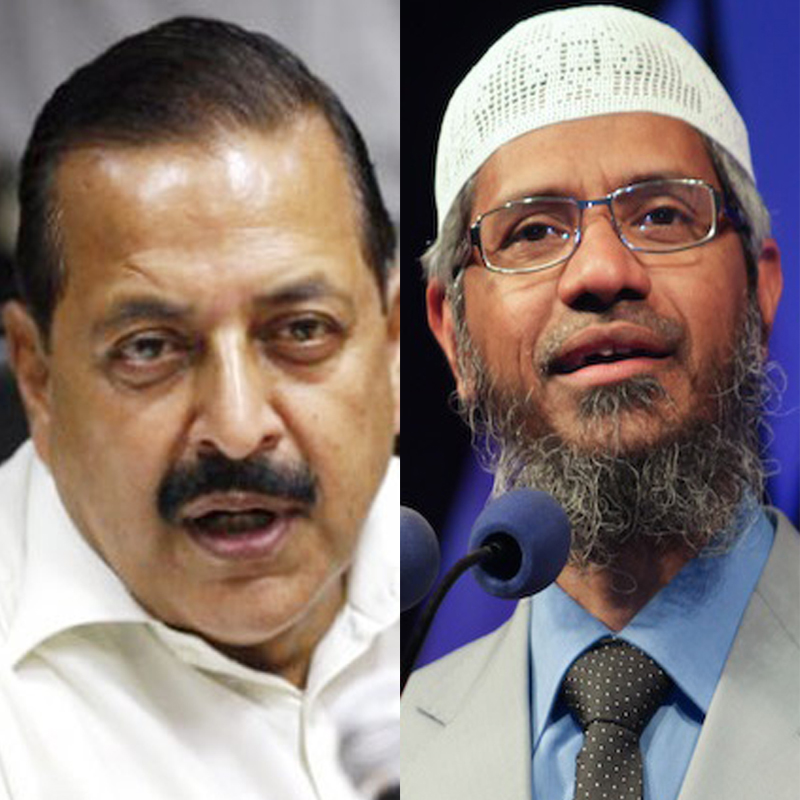
    MUMBAI: Despite a ban on Peace TV, the hate preacher Zakir Naik’s speeches reportedly continued to be telecast on channels in Jammu and Kashmir, and the ministry of information and broadcasting (MIB) has taken note of a news report in this regard. Naik was, earlier this year, declared a proclaimed offender and the National Investigation Agency (NIA) undertook a process to attach his assets.

    The ministry, the Times of India reported, is expected to write to Jammu and Kashmir chief secretary to take suitable action in the case. Also, the MIB may, reportedly, issue show-cause notices to cable operators in the state, who are broadcasting the controversial speeches.

    Minister of state in the Prime Minister’s Office Jitendra Singh said that they would convey to the related government departments and tell them to verify the development and a stand accordingly.

    NIA chargesheet against Naik has revealed that his organisation had connections with terror groups. He has been accused of spreading hatred through his provocative speeches, funding terrorists and laundering billions of rupees over the years. The NIA also claimed that Naik had engaged in “anti-India activities”. It was not just his hate speeches, but NIA also accused his organisation of providing “financial and tactical” aid to terror suspects.

    ALSO READ

    Report illegal TV channels, Govt alerted

    Peace TV Saga: 24 TV channels identified unfit for telecast in 2015 by India

    Indian govt warns against re-transmission of Peace TV illegally

  • Digital radio broadcasting issues to be discussed under TRAI aegis in Delhi on 25 Oct

    Digital radio broadcasting issues to be discussed under TRAI aegis in Delhi on 25 Oct

    NEW DELHI: An Open House Discussion is being held later this month on the Consultation Paper issued earlier this year on Digital Radio Broadcasting by the Telecom Regulatory Authority of India.

    The paer on the subject had been issued on 10 July 2017 and several responses have been received by TRAI, including a detailed reply from the Digital Radio Mondiale Consortium – India welcoming the concept and underlining various advantages of the technology for both, terrestrial and satellite radio broadcasting. The OHD will be held in Delhi on 25 October 2017, for which TRAI had posed 13 questions.

    The paper had been issued even as TRAI noted that All-India Radio is active in implementation of digital radio in MW and SW bands but there is no initiative in FM radio space, either by public or private FM radio broadcasters.

    Since FM is primarily used for analogue transmission, TRAI had said that it appeared as if the frequency allocations under these policy guidelines are only for analogue transmission. Analogue FM technology can provide only one channel per frequency. Therefore, existing FM radio channels provide limited services to their listeners. In addition, analogue radio broadcasting is facing competition from emerging technologies and other platforms like webcasting, podcasting and internet streaming etc.

    In view of this, the TRAI had suo moto issued the consultation paper on issues related to digital radio broadcasting in India.

    Late last year, TRAI had commenced a similar exercise in digital terrestrial television. Interestingly, both DTT and digital radio broadcasting have been the domain so far of the pubcaster Prasar Bharati.

    At the outset, TRAI has noted that radio is a prevalent source for providing entertainment, information and education to the masses due to its wide coverage, portability, low set-up cost and affordability.

    At present, terrestrial radio coverage in India is available in Frequency Modulation (FM) mode and Amplitude Modulation (AM) mode (Short Wave and Medium Wave). All India Radio (AIR) along with private sector radio broadcasters are providing terrestrial radio broadcast services throughout the country transmitting programs in AM and FM frequency bands.

    AIR has 420 radio stations (AM & FM) that cover almost 92 per cent of the country by area and more than 99.20 per cent of the country’s population. Private sector radio broadcasters transmit programmes in FM mode only and presently operate through 293 radio stations. Private sector radio broadcasters are licensed to operate in FM frequency band (88-108 MHz).

    In Phase-I of FM Radio, the government auctioned 108 FM radio channels in 40 cities. Out of these, only 21 FM radio channels became operational and subsequently migrated to Phase-II in 2005. Phase-II of FM Radio commenced in 2005 when a total of 337 channels were put on bid across 91 cities having population equal to or more than 300,000. Of 337 channels, 222 channels became operational. At the end of Phase-II, 243 FM Radio channels were operational in 86 cities.

    In Phase-III expansion of FM radio, 966 FM radio channels are to be made available in 333 cities. In the first batch of Phase-III, 135 private FM Radio channels in 69 cities were auctioned in 2015. Out of these, 96 FM Radio channels in 55 cities have been successfully auctioned.

    In the second batch of Phase-III, 266 private FM Radio channels in 92 cities were auctioned in 20162. Out of these, 66 FM Radio channels in 48 cities have been auctioned. As on 31st March 2017, 293 FM radio stations have been made operational in 84 cities by 32 private FM Radio broadcasters.

    In order to encourage radio broadcasting for the specific sections of society, the government has allowed setting up of Community Radio Stations (CRS). CRS typically broadcast in FM band with low power transmitters restricting its coverage to the local community within approx 10 KM. There are 206 operational CRS at present.

    Radio signals on FM are presently transmitted in analogue mode in the country. Analogue terrestrial radio broadcasting when compared with digital mode is inefficient and suffers with operational restrictions as discussed below:

    Digital radio broadcasting has existed since quite sometime around the world. The International Telecommunications Union (ITU) recommendations have described four major standards for broadcast of digital radio which are DAB, ISDB-TSB, HD Radio and DRM.

    In keeping with the pace of deployment of digital radio around the globe, the government in 2010 took a decisive step forward for transition from analogue radio services of AIR to digital mode of transmission. AIR conducted rigorous trials over the years and adopted the Digital Radio Mondiale (DRM) standard for low frequency band (MW and SW). It has initiated digitisation of its MW and SW radio network in three phases. It has recently concluded phase-I of digitisation of its network with deployment of 37 digital (DRM) transmitters throughout the country, which are now operational and is now in the process of launching phase-II of the DRM project by offering full features/services from these DRM transmitters and further improving service quality.

    Also read: After DTT, TRAI launches exercise on digital radio broadcasting

    After DTT, TRAI now launches exercise on digital radio broadcasting


  • WOW Cinema petitions TDSAT on delayed auctions for DD FreeDish slots

    WOW Cinema petitions TDSAT on delayed auctions for DD FreeDish slots

    MUMBAI: Peeved by Doordarshan’s decision to keep a new round of e-auctions for slots for private TV channels on pubcaster’s FTA DTH service FreeDish on hold and fear of being shoved off the platform after annual contract expiry, WOW Cinema has moved disputes tribunal TDSAT questioning Prasar Bharati’s stand.

    Wow Cinema’s manager Cinema 24×7 Pvt. Ltd. has requested telecoms and broadcast disputes tribunal TDSAT, amongst other temporary relief, to restrain DD’s parent Prasar Bharati from removing the TV channel from the DTH platform after expiry of the agreed terms in September 2017 till the final disposal of the present petition.

    As reported by Indiantelevision.com earlier, slots for private broadcasters were not being filled up after falling vacant on DD FreeDish with the expiry of annual contracts, while Prasar Bharati has also reportedly put on hold a fresh round of e-auctions since August 2017 citing “administrative reasons”.

    This stance of the pubcaster, according to the petition, would/could affect more TV channels on DD FreeDish. According to the petition, which is likely to come up for preliminary hearing on 12 October 2017 at TDSAT, on account of absence of clarity on e-auctions from Prasar Bharati and the agreement with the petitioner coming to an end September 2017, WOW Cinema would not be available to viewers of FreeDish despite the petitioner’s willingness to fulfil all future obligations as part of auto-renewal of the contract.

    However, Prasar Bharati, through its counsel, has argued that since the petitioner was free to participate in a fresh round of auctions (as and when it happens) and would be governed by a fresh agreement on winning a slot, the request for an auto-extension was unfounded.

    It was also submitted by Prasar Bharati that two more channels (VAA Movies and RT Movies) too had gone off DD FreeDish due to the expiry of their agreements in August 2017— and so Wow Cinema is not an exception.

    DD FreeDish, a multi-channel FTA DTH service, was launched by Prasar Bharati in December 2004 and, at present, carried approximately 80 SD TV channels, along with 32 radio channels. This Ku-Band DTH service provides TV coverage throughout the Indian Territory (except Andaman & Nicobar islands) and, reportedly, has a subscriber base of about 22 millions.

    Though FreeDish is now over a decade old, but it’s only in the last few years that private TV channels realised its importance and the platform’s reach. With BARC India starting to measure rural audience, the primary base of FreeDish, private broadcasters started to jump on to the FTA bandwagon — even paying sizable carriage fee. WOW Cinema, for example, paid Rs. 80 million in an e-auction for a year’s shelf life on DD’s KU-band platform.

    Not only some private TV channels from the stable of big broadcast companies like Zee, Viacom18, Sony and Discovery, GECs and news channels included, had hopped on to the FTA bandwagon, but the likes of Star India had recently launched revamped or new TV channels (Star Bharat and Star Sports First) on the DD FreeDish with fresh programming to extend their reach and improve on audience measurement data.

    ALSO READ:

    10 FreeDish slots may fall vacant by Oct-end as renewals hang fire

    Doordarshan puts off 37th FreeDish auction

  • TV ad-cap case in Delhi HC deferred till Jan ’18, Home Cable matter to come up too

    TV ad-cap case in Delhi HC deferred till Jan ’18, Home Cable matter to come up too

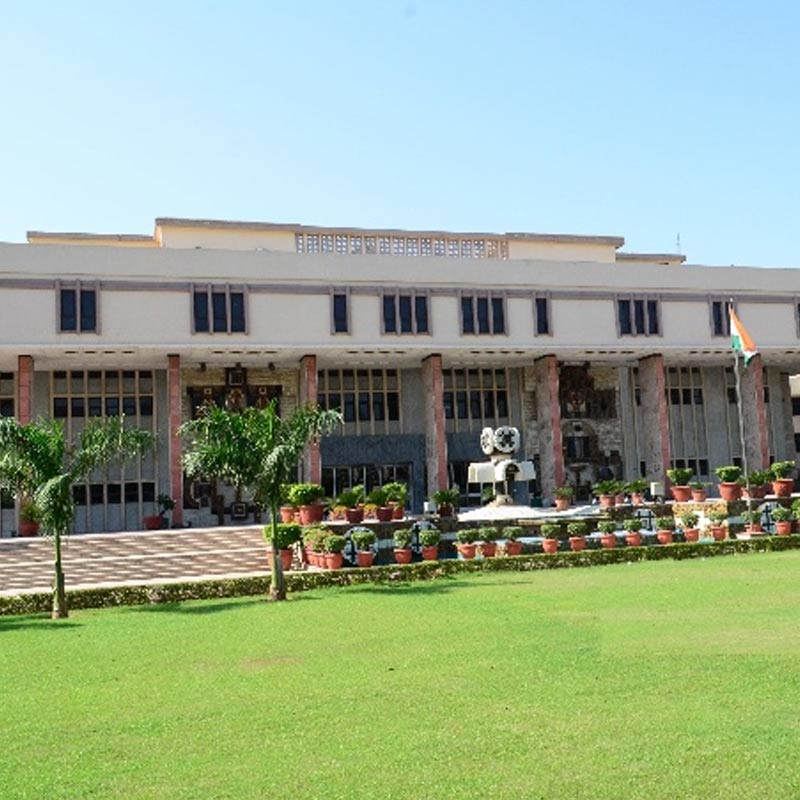
    NEW DELHI: The Delhi High Court has again adjourned the hearing of the case of ad cap on television channels, this time to early next year, as the concerned bench was hearing part-heard matter.

    On 21 April 2017, the matter, which will now be heard on 16 January, 2018, had been put off by the concerned bench for the same reason. Earlier, on 12 January 2017, it had been put of as the then Chief Justice G Rohini did not sit that day. The matter had come up today before the acting chief justice Gita Mittal and justice Jayant Nath.

    In the hearing on 29 March 2016, a plea was made on behalf of the information and broadcasting ministry that a proposal was being contemplated to amend the relevant provision relating to limiting ads to 12 minutes an hour.

    (Thus, the hearing has been pending for almost three years since then information and broadcasting minister Arun Jaitley in January 2015 had said at a public function that he did not see the need for any kind caps on the media.)

    When the case comes up next, the court is also expected to take up an application by the intervenor — Home Cable Network Pvt Ltd — seeking vacation of the order that had stayed action against (ad cap rule) ‘violating’ television channels.

    On 13 May 2016, the court had agreed to take up vacation of stay at the next hearing. The court had, on 11 February 2016, agreed to take up the application by Discovery Communications to intervene in the matter.

    Earlier, on 27 November 2015, the court presided over by the chief justice had said the matter had been pending for sometime and, therefore, it would hear and conclude the case in the next hearing.

    On that day, the MIB had informed the court that it was in talks with the News Broadcasters Association (NBA) and other stakeholders on the issue of the advertising cap. This was the first time that the ministry had put in an appearance in the petition filed by the NBA against the Telecom Regulatory Authority of India (TRAI) and others.

    The case, filed by NBA and others against TRAI and the Union Government, had been adjourned from time to time on the plea that the government and the broadcasters are in talks on this issue.

    The court has already directed that the order that TRAI would not take any action against any channel pending the disposal of the petition would continue to be in force. At an earlier hearing, the court had, at the regulator’s instance, directed that all channels keep a record of the advertisements run by them.

    The NBA had challenged the ad-cap rule, contending that TRAI does not have jurisdiction to regulate commercial airtime on television channels. Apart from the NBA, petitions had been filed by Sarthak Entertainment, Pioneer Channel Factory, E24 Glamorous, Sun TV Network, TV Vision, B4U Broadband, 9X Media, Kalaignar, Celebrities Management, Eanadu Television and Raj Television.

    Meanwhile, a separate petition filed in the high court by Vikki Choudhry and Home Cable Network, which too will be heard on the next date, seeks to charge MIB with dereliction of duties in taking action against the ‘offending’ pay TV broadcasters for violating the terms and conditions of the licenses/permission for uplinking and downlinking.

    The court had in June last year asked the ministry to file its reply in four weeks in this matter. A notice was issued only to the ministry, although the petition also listed several other broadcasting companies as respondents.

    Also read:   

    TV adcaps case in Delhi HC deferred to 20 April

    Cap on TV ads, challenge to stay ‘action against channels’ hearing put off

    137 GEC and news pay channels violated ad cap rule in second quarter


  • MIB issued licence to ZMCL; Leader, Turner and Zee ME among five cancelled last month, nine allowed as per court orders

    MIB issued licence to ZMCL; Leader, Turner and Zee ME among five cancelled last month, nine allowed as per court orders

    MUMBAI: In all, the number of private satellite TV channels having valid permission in India as of 30 September, 2017, are 877. Of these, the number of permitted news and current affairs channels is 388, according to data provided by the ministry of information and broadcasting (MIB).

    In fact, the total number of permissions granted to private satellite TV channels so far is 1098, of which 221 permissions have been cancelled so far.

    Last month, MIB issued one and cancelled five licences. The solitary permission granted was to Zee Media Corporation Ltd (ZMCL), to launch Zee Uttar Pradesh Uttarakhand.

    The channels licences of which were revoked are — Leader Television and Entertainment’s Leader TV, L And C Media’s SS Entertainment, Turner International India’s TCM Turner Classic Movies, Vyjayanthi Televentures’ Mayabazar and Zee Cinema Middle East.

    Of the 877 channels, nine have been cancelled by the MIB but are running following orders from the courts of law. These are —

    1. Punjab Today

    2. STV    Jammu-Kashmir News
    (Earlier STV – Marathi News)

    3. STV Haryana News

    4. STV    UP    News (STV-Rajasthan)
    (Earlier STV    Bihar-Jharkhand News)

    5. Mahuaa Media Private News
    Uplinking    03-03-2016*

    6. Mahuaa News
    Mahuaa Media Private Limited
    News
    Uplinking    03-03-2016*

    7. First    India    (earlier, Mahuaa Khobor)
    Mahuaa Media Private Limited
    News
    Uplinking    03-03-2016*

    8. Mahua  Music  (Mahuaa  News  Line)
    (Uttar Pradesh /Uttrakhand)
    [earlier Mahuaa Bangla]    
    Mahua Media Private Limited
    Non-news
    Uplinking    03-03-2016*

    9. Mahuaa Movies
    Mahuaa Media Private Limited
    Non-news     
    Uplinking    03-03-2016*

    The total number of TV channels permitted for uplinking from India, and downlinking into India is 778, of which 368 are new channels, and the remainder is the number of non-news channels.

    The number of TV channels permitted for uplinking from India but not permitted to downlink in India is 16, of which five are news channels. And, the number of TV channels permitted to only downlink into India (uplinked from aboard) is 83, of which 15 are news channels.

    click here to view list

  • MIB reverts to earlier norms of seeking nod from ISRO on uplink/downlink of TV channels

    MIB reverts to earlier norms of seeking nod from ISRO on uplink/downlink of TV channels

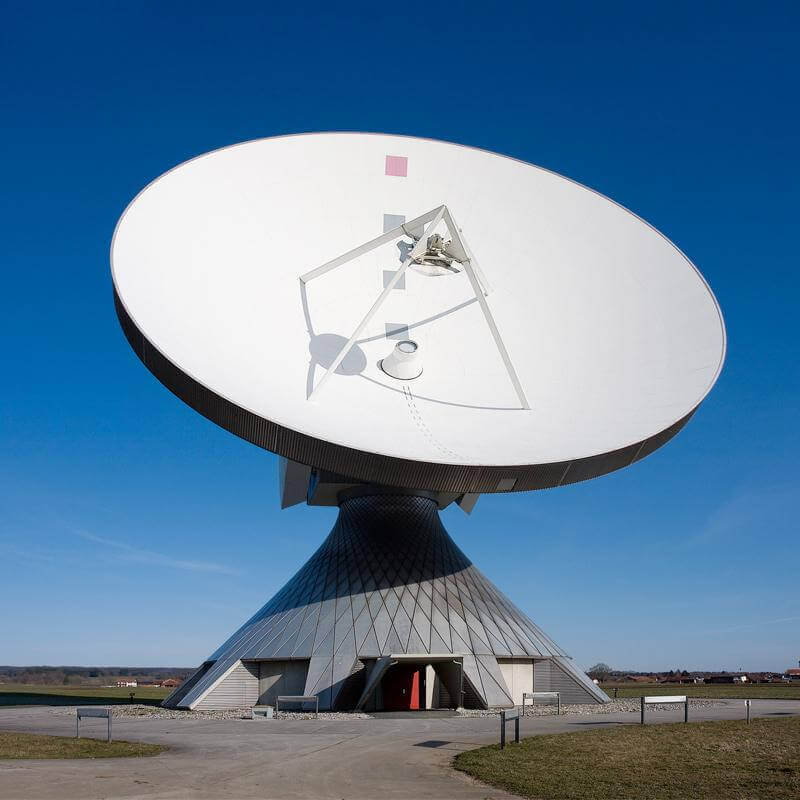
    NEW DELHI: At a time when one arm of the government is said to be exploring review of usage norms for satellite frequencies for users of satellite services, Ministry of Information and Broadcasting has cancelled an earlier order — which simplified clearances for uplinking and downlinking of TV channels on permitted teleports and satellites — and reverted to an older tradition of also getting an okay from Department of Space (DOS), which could make the process lengthy.

    In a recent official communiqué, MIB stated DOS observed that by not referring TV channels’ applications relating to uplink/downlink to it, certain “key aspects” provided by the applicant were “not getting examined” and which could “create interference issues and difficulties in coordination with Indian satellites” at a later stage.

    Pointing out that a policy decision taken earlier by it has been reviewed

    in the light of DOS observations, MIB added, “It has been decided to revert to the erstwhile practice of referring all applications, seeking uplinking permission/change of teleport and/or satellite in respect of TV channels, to DOS for its no-objection with reference to proposed satellite’s coordination with Indian satellites.”

    A prior nod from DOS for uplink/downlink of TV channels on teleports and satellites, already permitted by MIB, was considered “duplication” of the clearance process and, thus, done away with by MIB in February 2017 as part of PM Modi-led government’s bid to ease norms of doing business in India. DOS, managed directly by the Prime Minister’s Office, oversees activities of Indian Space and Research Organisation (ISRO), an organization responsible for Indian satellites.

    MIB, while withdrawing its early-2017 order, said its decision comes into effect immediately.

    Interestingly, according to government sources, Wireless, Planning and Co-ordination (WPC) division, under Ministry of Telecoms, is exploring a review of clearance norms for users of satellite services in India and also optimizing value of satellite frequencies.

    At present, for a customer of satellite services, whether on Indian or foreign satellite, getting clearance for satellite capacity is a lengthy and time consuming process involving green signal from multiple government organizations, including DOS/ISRO and WPC.

    Telecoms and broadcast regulator TRAI has suggested a couple of times, in lengthy set of recommendations, that with an explosion in communications services, it was time India ought to explore an Open Sky Policy relating to satellite services; especially in KU-band category.

    ALSO READ:

    ISRO stresses on indigenization; TRAI for Open Sky policy

    Prasar Bharati, Dish TV, Star, Zee and BES bat for KU-band open-sky policy

    Will foreigners buy into easing of FDI in cable TV, DTH?

  • Prasar launches music auditions online application, FreeDish slot auction suspended

    Prasar launches music auditions online application, FreeDish slot auction suspended

    MUMBAI: Prasar Bharati chairman A Surya Prakash has launched an online application system for music auditions across all genres for the All India Radio (AIR).

    The aspirants who wanted to apply and get themselves graded would now have a better experience in terms of accessibility and availability, the release added. The AIR conducts auditions in different genres of music, including classical, light, folk, tribal and western, and award suitable grades to them.

    Meanwhile, the information and broadcasting ministry has reportedly suspended auction of slots on FreeDish, and would review the channel slot auction process of the air DTH platform. The ministry has asked the pubcaster to suspend e-auctioning of slots on FreeDish until further notice, sources told Mint.

    Doordarshan holds e-auction once in a couple of months to award channel slots on FreeDish to private broadcasters. The platform carries 80 channels, including private channels such as Sony Pal, Star Utsav, Zee Anmol, Rishtey and news channels — ABP News, Aaj Tak, and News 24.

  • TRAI’s broadband duct idea be made into a law, govt urged

    TRAI’s broadband duct idea be made into a law, govt urged

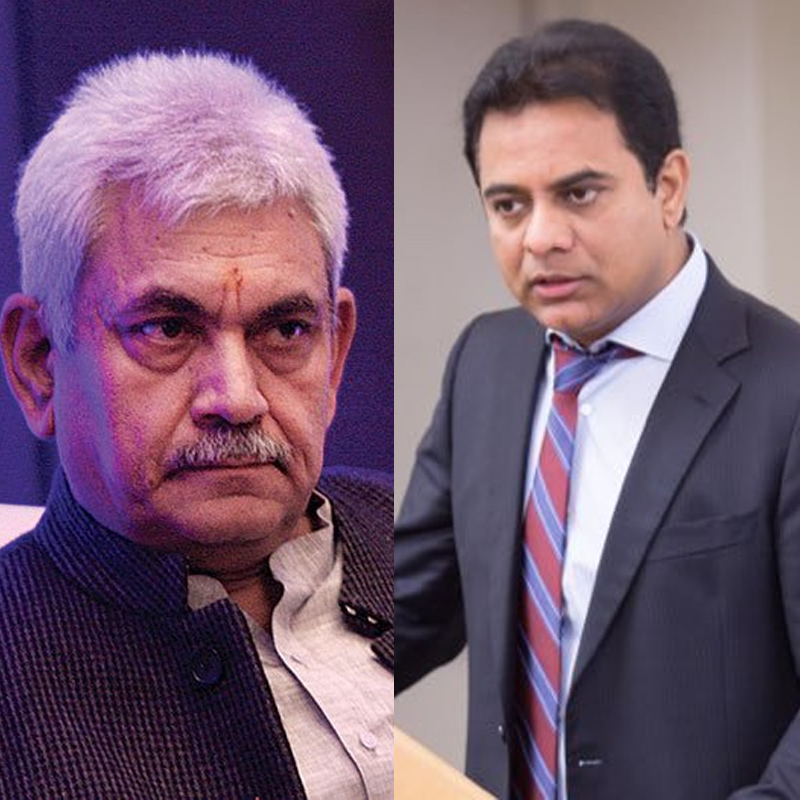
    MUMBAI: The idea that every building plan must have a broadband cable duct should be made into a law, the union minister Manoj Sinha has been urged.

    Telangana IT minister K T Rama Rao, in a letter to Sinha, said that the state expected that the categorisation of broadband service as a utility and mandating duct-laying in building would pave the way for an exponential increase in broadband penetration in India, PTI reported.

    Rao said that the state had created the Telangana Fiber Grid Corporation Limited to build a broadband network to reach every home, institution and government office. Telangana Fiber Grid (T-Fiber) was envisioned to establish a top-class network infrastructure to facilitate the realisation of ‘Digital Telangana’ goal on the back of Mission Bhagiratha, a drinking water project.

    Hailing the TRAI’s suggestion that every building plan must have the duct, Rao requested Sinha to make that into a law to ensure that the last meter connectivity issues for broadband networks were resolved.

    Rao said that they had learnt that the Telecom Commission had approved of the TRAI’s recommendation that a completion certificate (CC) to the building should only be given if it had incorporated the duct in its plan.

    Rao, who is popular as KTR, also sought Sinha’s intervention in directing the ministry of urban development to give similar directive to all state governments to implement the TRAI recommendation.