Category: Regulators

  • TDSAT rejects DD’s interim measure for FreeDish

    TDSAT rejects DD’s interim measure for FreeDish

    NEW DELHI: While giving relief to slot-holders on Doordarshan FreeDish, to ensure their continuity till the government decides its new policy over the next two months, the Telecom Disputes Settlement and Arbitration Tribunal (TDSAT) also rejected the interim formula proposed by Doordarshan in its letter to the main petitioner Cinema 24×7.

    TDSAT chairman justice Shiva Keerti Singh, and members B B Srivastava and A K Bhargava said: “We find no good reason either from the submission or from the order of the respondent (Prasar Bharati) as to why the earlier direction and policy on pro-rata basis is being discontinued, that too when the respondents have claimed that a regular policy to replace the existing policy is likely to come within two months.”

    The tribunal also rejected the submission by Prasar Bharati counsel Rajeev Sharma and additional solicitor general Tushar Mehta that no interim order was required in view of the order of Prasar Bharati of 27 October 2017.

    The tribunal fixed the next date of hearing on 14 December 2017 and said that rejoinder if any by the broadcasters could be filed within two weeksafter the four weeks given to Prasar Bharati to file its reply.

    The full text of the order of the tribunal was:

    “To avoid undue hardship to the petitioners and possible discrimination vis-a-vis those who have been earlier granted continuity on pro-rata basis, we pass the following interim directions:

    (i)  The petitioners or others similarly situated as them, who need continuity because of non-holding of the e-auction and have applied or apply for the same, shall  be allowed continuity on pro-rata basis.

    (ii)  The respondent will be entitled to charge on pro-rata basis either on the basis of the highest bid amount or the reserved price whichever is higher.  We further clarify that the highest bid amount would mean the highest bid in that category in the preceding year.

    (iii) This interim order will not create any right or equity in favour of anyone and the arrangement shall come to end as soon the central government declares its new general policy and take steps to fill up the slots in accordance with such policy.  It is clarified that it will not be open for any petitioner or other operator to claim any right to continue on the basis of such interim arrangement.

    (iv) The benefit of this interim arrangement shall be made available to the willing petitioners and other similarly situated operators at once and in any case within three days of their approaching the concerned respondent with an application.

    All the petitions are admitted.”

    The tribunal also analysed the proposed interim formula proposed by Doordarshan. It said “In the final analysis, the order declares the stand of the respondent with regard to “interim measures” in the following words:

    “Now therefore in view of above, DD can as an interim measure follow a model on the pattern of FM auction policy of the government for two months or till the central government policy is made, whichever is earlier for the channels which are going to be off the air, on completion of their contract period may be offered continuity of operation at the highest bid amount for any of the channels auctioned in the past, together with revenue sharing at the rate of 50 per cent of the gross profit or 4 per cent of the gross revenue or 2.5 per cent of upfront highest bid amount whichever is higher.  This system, as an interim arrangement, should be operated on first come first served basis if the terms and conditions of the short duration extension are acceptable to the existing contract holder.

    The interim arrangement / measure is irrespective of and notwithstanding the contents of the proceedings pending before the hon’ble tribunal and / or any other proceedings, if any, this interim measure will not create any right or equity in favour of anyone and shall come to end automatically upon the central government declaring its policy or after two months whichever is earlier and it will not be open for any operator to claim any right to continue or any other right based upon such an interim measure.”

    Sharma and Mehta had made it clear during arguments that this formula was akin to the formula applied in the FM Radio auctions.

    Apart from Cinema 24×7 which runs WoW Cinema and News Nation Network Pvt Ltd who had filed the case,  four other petitioners joined the case yesterday with fresh petitions: Enterr 10 TV Pvt Ltd, B4U Broadband India Pvt Ltd,  Independent News Service Pvt Ltd, and ABP News Network Pvt Ltd.

    These broadcasters filed either because of their channels having either gone off the air or the likelihood that they will go off air very soon due to efflux of time leading to expiry of the annual agreement and a decision by the respondent not to hold the 37th e-Auction till further orders. The letter to Cinema 24×7 itself noted that some channels are going off air this month and some in February next year.

    The tribunal was informed in September by Prasar Bharati that the e-Auction was put on hold because a new policy was under contemplation and the pubcaster wanted to take steps for filling the slots falling vacant in terms of the new policy.

    The tribunal noted that: “The petitioners have no quarrel with the stand and they are not opposed to the respondent taking steps for filling up the slots on regular basis as per their new policy as and when it is formulated and implemented. Their grievance is that such producers who have been enjoying slots on the basis of their offer in the auction should not be thrown out of their vocation and the public should not be deprived of their channel because of there being no policy in the interregnum.  They are against such state of vacuum”.
  • TDSAT interim order ensures continuity for private channels on FreeDish

    TDSAT interim order ensures continuity for private channels on FreeDish

    NEW DELHI: Private TV channels on Doordarshan’s FreeDish with expired licences have been informed by the Telecom Disputes Settlement and Arbitration Tribunal (TDSAT) that they can continue airing until further orders. This applies to even those whose licences are soon to expire.

    Channels can continue on a pro rata basis taking the bid with which they had won the slots or the reserve price, whichever is higher, as benchmark. This can continue till the government formulates a new policy within two months.

    TDSAT chairman justice Shiva Keerti Singh, and members B B Srivasatava and A K Bhargava gave three days to any other channels similarly affected to take advantage of this interim order by informing the tribunal.

    While admitting all the petitions before it, the tribunal asked the government to file its reply within four weeks.

    Earlier in the morning, the government through counsel Rajeev Sharma presented a letter sent to Cinema 24×7 which laid down a new formula aiming at bringing the pricing at par with the system followed for FM channel auctions which also provides for revenue sharing.

    Sharma said that Prasar Bharati was in the process of reorienting its content to live up to its credo of public service broadcasting and had therefore sought a time of two months. However, channels whose licences will expire this month or in February next year can continue by paying the highest bid amount and by sharing its revenue with the pubcaster. However, counsel for the private channels rejected this as discriminatory.

    Counsel Aman Lekhi who represented Cinema 24×7 said the government could not bring an interim policy which was not relatable to something that law recognises. He said this would also amount to creating two classes of TV channels: those who were on a pro rata basis and those who were being forced to pay an amount that was higher than the amount for which they had successful bid for the channels. There was no guarantee that the government will not revert to the existing prices after the two-month exercise was over.

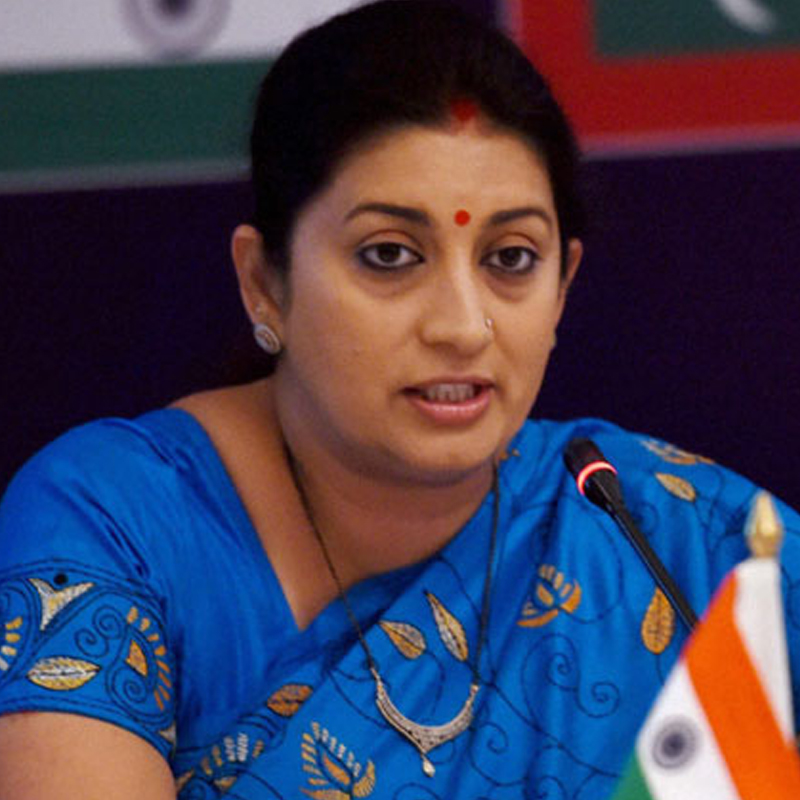
    He added that the ad hoc exercise was even unnecessary since the government is in contemplation. Such a measure doesn’t give certainty or continuity and alterations have to be by ‘sound consideration’. In fact, he stated that even Prasar Bharati was unaware why the auction was called off by the Minister of Information and Broadcasting Smriti Irani.

    Senior advocate Ramji Srinivasan added that it was clear that DD was eager to continue with the auctions but the ministry had arbitrarily stopped them. He also said that ‘continuity’ implied continuing with the existing policy and not imposing something completely new.

    He said equating general entertainment channels with news channels was sheer arbitrariness. This may result in closing the channels and shutting doors to people.

    Assistant solicitor general Tushar Mehta added that the aim of the government had been to balance equations on both sides. He said that in the FM auctions, the channels shared revenue of fifty per cent apart from the bid amount in the e-auctions and so the same policy was sought to be extended to the TV channels on FreeDish.

    Apart from Cinema 24×7 which runs Wow Cinema and News Nation, others who joined the fray today included Enterr 10 TV Pvt Ltd., B4U Broadband India Pvt Ltd, and Independent News Service Pvt Ltd.

    The letter sent by a senior executive of Doordarshan said that Doordarshan “can as an interim measure follow a model on the pattern of FM auction policy of the government for two months or till the centralgovernment policy is made, whichever is earlier for the channels which are going to be off the air on completion of their contract period” and they may “be offered continuity of operation at the highest bid amount for any of the channels auctioned in the past, together with revenue sharing at the rate of 50 per cent of the gross profit or 4 per cent of the gross revenue  or  2.5 per cent of upfront highest bid amount whichever is higher. This system, as an interim arrangement should be operated on first come first served basis if the terms and conditions of the short duration extension are acceptable to the existing  contract holder.”

    The letter noted that FreeDish has witnessed a significant growth spurt in free to air (FTA) channels in  2015-2016 and the popular FTA channels spanning general entertainment, movies and music have targeted core TV audiences and according to estimates reported in the media to have earned Rs 5 to 7 billion. Keeping so many vacant slots will not only affect revenue from one of Doordarshan’s largest sources but will also force people to shift to other expensive options.

    Soon after Smriti Irani became the Minister of Information and Broadcasting (MIB) few months back, the decision of halting the bids for FreeDish slot was announced. This came at a time when FreeDish was testing its MPEG4 technology in an attempt to encrypt the platform and also expand the number of TV channels that could be carried. At present 80 channels are carried on the FTA DTH platform. 

    Also Read:

    WOW Cinema petitions TDSAT on delayed auctions for DD FreeDish slots

    10 FreeDish slots may fall vacant by Oct-end as renewals hang fire

    TDSAT gives Prasar Bharati 2 days to respond to FreeDish auction suspension

    Dish TV moves TDSAT against Star Life OK name change & turning FTA

  • TRAI open house to discuss ease of doing broadcast biz

    TRAI open house to discuss ease of doing broadcast biz

    NEW DELHI: An Open House Discussion is to be held on 1 November in New Delhi next month on ways to find out easier ways of doing broadcast business and cause least harassment to entrepreneurs.

    With the fast changing regulatory framework for the media and entertainment sector, which in India is one of the fastest growing, the Telecom Regulatory Authority of India (TRAI) had issued a pre-consultation paper in April this year later followed up with a consultation paper in July.

    The Government has launched an ambitious programme of regulatory reforms aimed at making it easier to do business in India. The programme aims to pinpoint the bottlenecks and ease them to create a more business-friendly environment. The efforts have yielded some results with India ranked at 130 according to the World Banks’ Ease of Doing Business report. However, there is still huge scope for further improvement.

    TRAI notes that the International Monetary Fund has branded India as the brightest spot in the Global Economy. Several Global Institutions have projected India as the leading destination for FDI in the World and a number of recent global reports and assessments, show that India has considerably improved its policies, practices and economic profile.

    The aim is also to remove entry barriers by laying down well defined and transparent procedures and processes. This will create a level playing field for competition in the sector and facilitate innovation and technology adoption for providing better quality of services. The sector can then attract investment through investor friendly policies

    Subjects to be covered are related to processes and procedures for obtaining permission/license/registration for the following broadcasting services and subsequent compliances connected with these permissions.

    The fields include:
    Uplinking of TV channels
    (b) Downlinking of TV channels
    (c) Teleport services
    (d) Direct-to-home services
    (e) Private FM services
    (f) Headend-in-the sky services
    (g) Local Cable Operators
    (h) Multi System Operators
    (i) Community Radio Stations

    The questions raised are:

    1. Is there a need for simplification of policy framework to boost growth of satellite TV industry? If yes, what changes do you suggest in present policy framework relating to satellite TV channels and why?
    2. Is there a need in present policy framework relating to seeking permission for making changes in the name, logo, language, format, etc. related to an operational satellite TV channel? If so, what changes do you suggest and why? Is there a need for simplification of policy framework to boost growth of satellite TV industry? If yes, what changes do you suggest in present policy framework relating to satellite TV channels and why?
    3. Do you agree witb some of the stakeholders comments at the pre-consultation stage that Annual Renewal Process of TV channels needs simplification?
    4. Do you agree with stakeholders’ comments that coordination with multiple agencies/ Government departments related to starting and operating of a TV channel can be simplified? If so, what should be the mechanism and framework for such single window system?
    5. Is present framework of seeking permission for temporary uplinking of live coverage of events of national importance including sports events is complicated and restrictive? If yes, what changes do you suggest and why?
    6. Do you feel the need to simplify policy framework for seeking permission/license for starting and running of following services:
    (iii) Teleport services
    (iv) DTH service
    7. As per your understanding, why open sky policy for Ku band has not been adopted when it is permitted for ‘C’ band? What changes do you suggest to simplify hiring of Ku band transponders for provision of DTH/HITS services?
    8. What are the operational issues and bottlenecks in the current policy framework related to:
    (iii) Teleport services
    (iv) DTH service
    How these issues can be simplified and expedited?
    9. What are the specific issues affecting ease of doing business in cable TV sector? What modifications are required to be made in the extant framework to address these issues?
    10. Is there a need to increase validity of LCO registration from one year? In your view, what should be the validity of LCO registration?
    11. What are the issues in the extant policy guidelines that are affecting the ease of doing business in FM sector? What changes and modifications are required to address these issues?
    12. Is there a need to streamline the process of assignment of frequency by WPC and clearances from NOCC to enhance ease of doing business? What changes do you suggest and why?
    13. What are the reasons for delay for allocation of frequencies by WPC? What changes do you suggest to streamline the process?
    14. What are the key issues affecting the indigenous manufacturing of various broadcasting equipments and systems. How these issues can be addressed?
    15. Is there any other issue which will be relevant to ease of doing business in broadcasting sector? .
    16. Are there any issues in conducting trial projects to assess suitability of a new technology in broadcasting sector?
    17. What should the policy framework and process for consideration and approval of such trial projects?

  • TRAI says all stakeholders responsible to protect user data

    TRAI says all stakeholders responsible to protect user data

    NEW DELHI: The Telecom Regulatory Authority of India (TRAI) has assured its commitment to protect data and define each stakeholder’s responsibility to enable the same. Speaking at ‘i-Bharat 2017’, TRAI chairman R S Sharma said that information privacy, security and data ownership need to be defined.

    Any decision will be taken only after seeking views and conducting open houses with relevant stakeholders. Several consultation papers are out in the public domain for recommendations and suggestions.

    He highlighted the plight of users who weren’t even aware of the long-term consequences of sharing their data and its being misused. In some instances, the privacy policy of a service provider seeks the right to use the data of the customer in any form.

    TRAI is expected to release its views on net neutrality soon but added that it calls for access to internet content without discrimination in data speed or cost. He added that digital consent and blockchain were emerging trends and suggested that there should be a provision for data portability as well.

  • Smriti Irani: Need to reduce gap between regional & national news & democratize viewership

    Smriti Irani: Need to reduce gap between regional & national news & democratize viewership

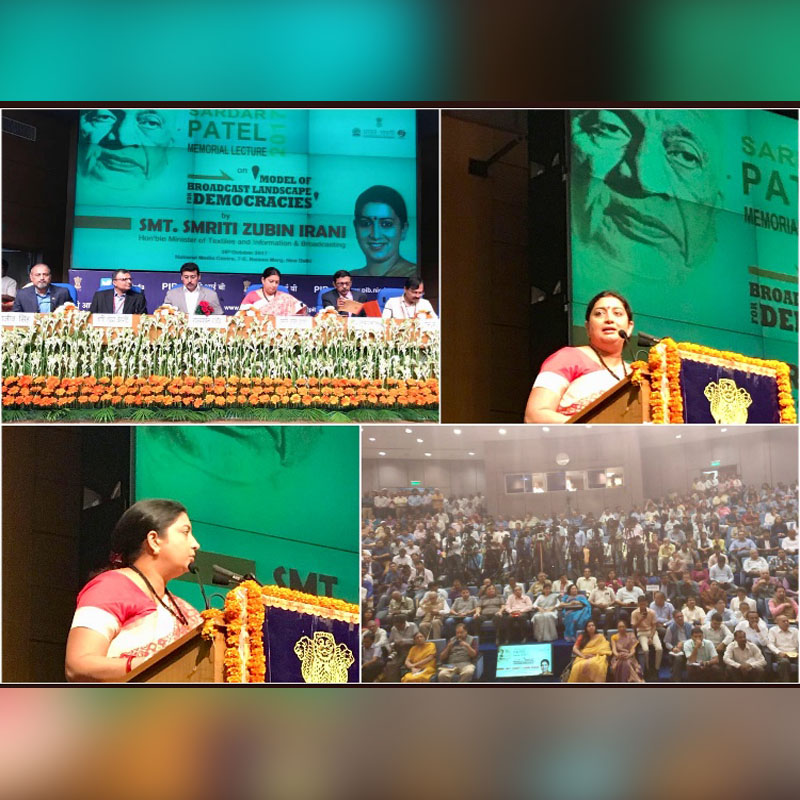
    NEW DELHI: Stressing on the need for a model structure of broadcasting, which can strengthen the Indian democracy, Minister for Information and Broadcasting Smriti Irani yesterday exhorted the media to reduce the gap between regional and national news, thus democratizing viewership, and the need for meeting objectives of public good and entertainment.

    “If we want the broadcasting landscape to be strong, the first and the foremost requirement is to give as much importance to the regional content as the national content…(and) reduce the gap between the regional news and  national content,” Irani said yesterday while delivering the Sardar Patel Memorial Lecture 2017 themed ‘Model of Broadcast: Landscape for Democracies’.
     
    Describing the broadcast news landscape as a “spectator sport”, the minister said the rush for audience ratings has reduced everything to “headlines competing with hashtags” in the wake of social media explosion taking place in the country that has provided a new pathway for information dissemination.

    Coming down heavily on a certain section of the media for being driven by TRPs, forsaking codes, ethics and conduct rules, unlike another section, Irani said, ”There is a need to democratize the (audience) measurement system in the country.”

    According to the feisty minister, who also holds the portfolio for Textiles Ministry, a model structure of broadcasting should focus on “democratized viewership” based on an accurate measurement system that reflects the strength of regional languages, varied tastes of viewers/consumers and bridges the divide on issues related to agenda setting, creative content and revenue between the mainstream and regional platforms.

    Stressing the importance of the sector keeping abreast with trends in the social media, which she described as a “disruptive” force, Irani said though the broadcasting sector is based on business propositions and technological upgradation, the ‘Mann ki Baat’ programme of Prime Minister Narendra Modi aired on AIR was an ideal example of how a technology platform blended his message with citizen understanding and awareness of the issues highlighted in each episode.

    Highlighting the difference in the way pubcasters — Doordarshan and All India Radio — functioned vis-a-vis a large section of the private sector media, Irani added: ”If you look at the broadcasting sector, the overriding focus of the public broadcaster has been on serving the public good. In today’s times, however, when news has become a spectator sport, there is a need to bridge the gap between serving the public good and providing entertainment.”

    The annual lecture held at the National Media Centre in the Capital, started by All India Radio way back in the 1950s, was attended by Minister of State for MIB Rajyavardhan Rathore, pubcaster Prasar Bharati chairman A. Surya Prakash and Prasar Bharati CEO Shashi S. Vempati, apart from other senior government officials.

    Even as Irani lauded the public broadcaster’s endeavour to focus on public good, she said it was the “duty of the public broadcaster to speak fairly and freely, as it is doing now”. She also called upon the pubcaster to weave stories on the lives of ordinary people, which could have an impact both within India and abroad.

    The minister said it would be the endeavour of MIB to promote the concept of “design thinkers” for content generation in the digital space in the light of growing use of technology by the young generation in areas of internet, mobile content and animation & gaming. This would also incorporate the elements of the New India vision envisaged by the Prime Minister by 2022.

    Highlighting the fulcrum strength of her ministry, Irani said that the Information Service officers’ profile would be strengthened in the future by giving them skill sets along with an integrated administrative exposure so as to enable them to serve policy and programmes of the people through the medium of information. This would be along the lines of Sardar Patel’s vision of creating a steel frame to serve the people through the channel of information dissemination, she added.

    The first Patel memorial lecture was delivered by C. Rajagopalachari, while the other distinguished speakers in the series have included stalwarts like Dr. Zakir Hussain, Dr. A.P.J. Abdul Kalam and Morarji Desai.

    Also Read: Smriti Irani tweets industry body advisory urging restraint by TV news channels

    MIB minister Smriti Irani orders review of DD prime time auction process

    Smriti Irani gets additional charge as MIB minister

    BARC India to TRAI and MIB: Tweak legislation to make data tamper-proof

  • Govt launches interactive IPR website

    Govt launches interactive IPR website

    NEW DELHI: A website has been launched by the government to effectively implement the National Intellectual Property Rights (IPR) Policy.

    The official website for the Cell for IPR Promotion and Management (CIPAM) of the Department of Industrial Policy and Promotion (DIPP) was launched by Minister for Commerce and Industry Suresh Prabhu here today. Secretary DIPP Ramesh Abhishek was also present.

    The website is interactive providing regular updates on all upcoming events including awareness and sensitization programs being conducted, as also information on all Intellectual Property Rights. It would make available resource material on IPRs specially curated for various levels: schools, universities, industry and enforcement agencies.

    One can read the latest news and updates, specially curated feed on all latest happenings in the world of IP, insightful and educational blogs by CIPAM and IP experts.

    The website provides regular updates on the latest IP trends – statistics on applications filed, examined, grants and disposal for various IPRs. It would provide information on the various initiatives being taken by the Government to strengthen the IPR regime in the country.

    The website can be reached on www.cipam.gov.in or follow CIPAM on Twitter at @CIPAM_India for updates.

  • Rural India gets e-commerce & TV ready via optic fibre network

    Rural India gets e-commerce & TV ready via optic fibre network

    NEW DELHI: The BharatNet project, which aims to deploy high-speed optical fibre cables across rural areas of the country, has now reached 83,000 gram panchayats, according to Department of Telecommunications Secretary Aruna Sundararajan.

    Speaking at ‘i-Bharat 2017’ on the theme ICT Elucidations for Unserved and Unsolved, organised by FICCI in association with the Ministry of Electronics and Information Technology, Sundararajan said that by December this year the first phase of BharatNet will be complete. This would provide 100,000 gram panchayats with broadband connectivity by laying underground optic fibre cable lines.

    The DoT is aggressively monitoring the prestigious BharatNet initiative that aims to provide Internet connectivity to 2,50,000 gram panchayats or village blocks by March 2019.

    The entire project, when complete, is expected to give a fillip to e-commerce services, including e-governance, education and television services to far flung areas of the country.

    The DoT Secretary said fibre-isation was a national imperative and the government, industry and chambers of commerce needed to work in coalition to achieve the objective of doubling the telecom footprint in the country by 2020.

    Quoting from internet guru Mary Meeker’s 2017 report released in May this year, she said there are over 355 million monthly active internet users in India, while nearly 109 million smartphones were shipped in 2016. Nearly 46 per cent of internet users in India consume content in local languages. In the first quarter of 2017, 27 million smartphones were shipped. Most Indians used the internet on their mobile phones (80 per cent usage was on mobile as compared to the global average of 50 per cent). The most used browser in India was UC Browser, followed by Chrome and Opera. WhatsApp, Facebook Messenger, Shareit, Truecaller and Facebook are the most used apps in India.

    She said these figures threw up challenges in the policy domain, particularly in terms of security; data privacy and protection, data regulation and data monetisation.

    Hewlett-Packard Enterprise MD Som Satsangi said that with the impending large-scale migration of people from the rural areas to the proposed smart cities, the challenge before the industry would be to meet their rising expectations and services on demand. The industry must be ready to provide low-cost, affordable solutions to the aspirational people at the bottom of the pyramid.

    Indian Express Group executive director Anant Goenka said India would soon overtake China as the consumer base for telecom and IT and therefore, if the objective was to shape digital India, there was a need to look beyond the current trends. The Aadhaar database must be leveraged while tackling privacy issues.

    FICCI ICT & Digital Economy Committee Chairman Virat Bhatia said following the government initiatives, the internet landscape of India is about to experience a tectonic-shift. The next millions of users that will come on the internet by 2020 will utilise ICT as a socio-economic tool of development. To fulfil the dream of ‘New India’, “we all have to work towards good governance and streamlining the marginalised section of the society and transforming India into an empowered and inclusive knowledge-based society,” he said.

    FICCI secretary general Sanjaya Baru emphasised the need to have pre-policy consultations between the government and industry rather than resort to post-policy alterations which leads to needless confusion. FICCI, he said, would initiate closed-door consultations for industry so that its representatives can have a free and frank discussion with policy makers in the government.

  • TRAI recommends liberalised internet telephony and emergency services

    TRAI recommends liberalised internet telephony and emergency services

    NEW DELHI: Internet telephony services can be provided by access service providers to its subscribers who may be using Internet of other access service providers as Internet Telephony service is un-tethered from the underlying access network.

    In its final recommendations on internet telephony, the Telecom Regulatory Authority of India (TRAI) has said that the Department of Telecom (DoT) should issue a clarification to the effect since this is the authority’s understanding of present access service licences.

    However, if the DoT has a different understanding, the authority recommends that the DoT may issue an amendment to access service licences so that Internet telephony service is un-tethered from the underlying access Network.

    TRAI had issued a consultation paper on the Regulatory Framework on Internet Telephony on 22 June 2016 issued after noting that unified IP based backbone and the benefits associated with the converged telecom access has enabled service providers to launch several converged services such as internet telephony, IPTV, mobile TV etc.

    In the consultation paper, TRAI had also pointed out that the use of internet protocol (IP)-based networks, including the internet, continues to grow around the world due to the multitude of applications it supports and particularly due to Voice Over IP (VoIP). IP-based networks are capable of providing real-time services such as voice and video telephony as well as non real-time services such as email and are driven by faster internet connections, widespread take-up in broadband and the emergence of new technologies.

    The final recommendations also say that the UL (VNO) licensee with access service authorisation should also be allowed to provide un-tethered  Internet Telephony in the designated service area.

    Internet Telephony calls originated by International out roamers from international locations should be handed over at the international gateway of licensed ILDOs and international termination charges should be paid to the terminating access service provider. In case the access provider is not able to ensure that internet telephony call originated outside the country is coming through ILDO gateway, international out-roaming to internet telephony subscribers of the access provider should not be allowed.

    A service provider should use the mobile numbering series for providing internet telephony. TSPs should be allowed to allocate same number to the subscriber for both cellular mobile service and internet telephony service.

    A service provider may also use the SDCA linked numbering series for providing internet   telephony. However, in this case, mobility should be limited to consumer premises.

    The access service providers providing Internet Telephony service  may be encouraged to facilitate access to emergency number calls using location  services; however, they may not  be mandated to provide  such services at present. The subscribers may be informed about the limitations of providing access to emergency services to internet telephony subscribers in unambiguous terms.

    Full recommendations can be seen on www.trai.gov.in


  • Fever FM revenue up but HT Media revenue shrinks

    Fever FM revenue up but HT Media revenue shrinks

    BENGALURU: Indian media group HT Media Limited (HT Media) reported a drop in consolidated revenues and increase in consolidated profits for the quarter ended 30 September 2017 (Q2-18, current quarter) as compared to the corresponding year ago quarter (y-o-y). The company reported 11.2 percent y-o-y drop in consolidated total income at Rs 6,041.3 million in Q2-18 as compared to Rs 6,802.3 million. Net profit after tax, however, more than doubled (up 2.14 times) y-o-y to Rs 662.2 million in the current quarter as compared to Rs 309.3 million.

    HT Media has four segments-Printing and Publishing of Newspapers & Periodicals (Printing); Radio Broadcast & Entertainment (Radio); Digital; and Multimedia Content Management (Multimedia). The y-o-y drop in revenue was mainly due to drop in revenues of the company’s printing segment.

    The company reported an 18.4 percent increase in revenue for its radio segment that operates radio stations under the brand Fever FM for the current quarter. HT Media’s radio segment reported an operating profit of Rs 26.2 million as compared to an operating loss of Rs 3.3 million in Q2-17. HT Media, in its investor presentation for the current quarter, informed that its radio business continued robust growth and increase in profit margins. It says further there was revenue growth in core stations, while new stations continued to perform adding to top line in a profitable manner and that synergies in costs had brought in margin expansion.

    Printing segment revenue declined 5.9 percent y-o-y in Q2-18 to Rs 4,948.9 million from Rs 5,259.5 million in Q2-17. Printing segment operating profit more than doubled (2.25 times) to Rs 1,048.8 million in Q2-18 as compared to Rs 467.2 million in Q2-17. HT Media’s digital segment revenue declined 9.5 percent to Rs 337 million from Rs 372.5 million. Digital segment reported an operating loss of Rs 116.2 million in the current quarter as compared to an operating loss of Rs 128.6 million in Q2-17.

    HT Media’s Multimedia segment reported operating revenue of Rs 444.6 million and an operating profit of Rs 8.5 million. The Multimedia segment had revenue of Rs 473.4 million in Q1-18 and an operating profit of Rs 2.9 million.

    HT Media chairperson and editorial director Shobhana Bhartia said, “Advertising revenue growth continues to be a challenge in our coreprint business, with this quarter witnessing high level of uncertainty across industries on account of GST implementation. Our radio business continues to do well. New radio stations are generating revenue and the entire radio business witnessed an increase in operating profits. While advertising revenue in print has been soft, operating profits continue to grow steadily on the back of strong cost management and aided by favourable currency and commodity rates.”

    “GST is expected to stabilise soon which should lead to a better macroeconomic environment and result in higher advertising spends. With growth coming back to core business, we hope to deliver better results to our shareholders,” added Bhartia.

  • TDSAT gives Prasar Bharati 2 days to respond to FreeDish auction suspension

    TDSAT gives Prasar Bharati 2 days to respond to FreeDish auction suspension

    NEW DELHI: Prasar Bharati has two days more to come out with the real reason for suspending the auctions on its DTH service FreeDish in August this year. From 27 October 2017 the telecoms and broadcast disputes tribunal TDSAT will hear two petitions challenging the decision of public broadcaster.

    In the last hearing, the tribunal had told petitioners Cinema 24×7, (distributors of WOW Cinema),  News Nation Network and others to file applications with Prasar Bharati. It had said it would hear the matter if not resolved by the pubcaster.

    When the matter came up yesterday, only Cinema 24×7 (WOW Cinema) was represented by its counsels. Prasar Bharati, represented by Assistant Solicitor General Tushar Mehta, sought two more days to finalise the government and Prasar Bharati’s stand on the issue.

    Soon after Smriti Irani became the Minister of Information and Broadcasting (MIB) few months back, the decision of halting the bids for FreeDish slot was announced. This came at a time when FreeDish was testing its MPEG4 technology in an attempt to encrypt the platform and also expand the number of TV channels that could be carried. At present 80 channels are carried on the FTA DTH platform.  

    ALSO READ:

    WOW Cinema petitions TDSAT on delayed auctions for DD FreeDish slots

    10 FreeDish slots may fall vacant by Oct-end as renewals hang fire