Category: Regulators

  • VTV & DY365 to go off air for violating programming act

    VTV & DY365 to go off air for violating programming act

    MUMBAI: In two separate cases, the ministry of information and broadcasting (MIB) has asked channels VTV and DY 365 to be taken off air. 

    In the first case, VTV has been asked to go off air for a day on 16 December, for violating the provisions of the programme code under Cable TV Networks Regulation Act of 1995. The channel telecast a news programme namely, ‘viral truth’ on 20 March 2017 at 7 pm in which a man could be seen brutally beating up children in an orphanage and the video started trending on social media alleging that this incident occurred in RMVM school of Valsad Gujarat. However, when the channel conducted its own investigation about this video, it found that the video was of an incident in an orphanage in Egypt. While reporting the news, the channel showed disturbing visuals of the orphan kids who were beaten up and thrashed brutally by the manager.

    The inter-ministerial committee believes the channel tried to sensationalise the issue to grab the attention of its viewers and such visuals not only offend good taste/decency but also denigrate children by showing them being brutally tortured.

    In the second case, an Assamese channel DY 365 has been asked to go off air for three days from  15-18 December 2017. It telecast a news report on 6 June 2017 at 12.59 pm in which a man could be seen tossing a new-born baby up and down in the air. He hurls and slings the baby in every possible manner and direction without a shred of care and concern. The video meant to expose an extremely dangerous superstition allegedly prevalent in some parts of Assam where people believe that undergoing this ritual will keep the child safe. 

    The ministry believes the visuals are extremely disturbing, and not suitable for unrestricted public exhibition and has recommended that the channel may be handed Three days off-air penalty for violation of the provisions of programme & advertising codes.

    The channel was in violation of Rule 6 (1) (a), (l) & (o) of the Cable Television Networks Rules, 1994 under the Cable Television Networks Regulation Act, 1995.

    Also Read:

    I&B tightens up on condom ads on TV

    MIB takes note of banned Zakir Naik content on Kashmir TV channels

  • Jio continues leading broadband subs addition while wireline internet loses subs in Oct

    Jio continues leading broadband subs addition while wireline internet loses subs in Oct

    BENGALURU: Mukesh Dhirubhai Ambani’s Reliance Infocomm Limited (Jio) closed the month with 145.96 million wireless broadband subscribers having added 7.34 million subscribers during October 2017. Since 1 January 2017, the new telecom behemoth has added 129.91 million subscribers between 1 January 2017 and 31 October 2017 according to data released by the Telecom Regulatory Authority of India (Trai). In terms of growth, however, Jio had to accede to third place–it grew by 5.30 percent as compared to 7.69 percent growth by the Sunil Mittal-led Bharti Airtel Limited and 5.31 percent growth by Vodafone in October 2017.

    India’s wireline broadband internet subscriber base has been declining over the past few months. Overall, the number of wired broadband internet subscriber base declined by 0.33 percent month-on-month in October 2017 to 17.98 million from 18.04 million. Among the top-five wired broadband service providers, the three private players gained subscribers while the public sector service providers lost them.

    Overall broadband internet service providers

    The top-five service providers (across wired, mobile wireless and fixed wireless, such as Wi-fi, Wi-Max, point-to-point, radio, and V-Sat) constituted 92.17 percent share of the total broadband subscribers at the end of October 2017. These service providers were Jio (145.96 million), Bharti Airtel (66.92 million), Vodafone (48.42 million), Idea Cellular (31.03 million), and BSNL (21.21 million).

    Top-five wireless broadband internet service providers

    In October 2017, the wireless broadband internet subscriber base in India grew by 15.34 million. Jio numbers have been mentioned above. Airtel reported the second largest addition of wireless subscribers in the month with 4.63 million additions to reach a subscriber base of 64.8 million. Vodafone added 2.44 million subscribers in the month under review and reached a subscriber base of 48.41 million followed by Idea Cellular which added 1.42 million subscribers with a subscriber base of 31.03 million as on 31 October. Anil Dhirubhai Ambani-led Reliance Communications Limited (RCom) had a stable wireless broadband subscriber base in October 2017 of 8.98 million.

    According to Trai data, as on 31 October 2017, the top-five wireless broadband service providers were Jio (145.96 million), Bharti Airtel (64.80 million), Vodafone (48.41 million), Idea Cellular (31.03 million), and Reliance Communications (8.98 million).

    Top-five wireline broadband internet service providers

    As on 31 October 2017, the top-five wired broadband service providers were BSNL (9.48 million), Airtel (2.13 million), Atria Convergence Technologies or ACT(1.26 million), MTNL (0.94 million), and Hathway Cable & Datacom (0.68 million). As mentioned above, Airtel, ACT and Hathway gained 0.01 million, 0.02 million and 0.01 million subscribers, respectively, in October 2017 while BSNL and MTNL lost 0.06 million and 0.1 million subscribers, respectively.

    Other broadband internet service providers

    MSOs and (LCOs) or cable video service providers also offer wired broadband internet services in the country. These cable service providers have a number of subsidiaries and alliances, hence broadband numbers are split as applicable. The consolidated subscription numbers of these entities could be larger than the numbers of some of the wired internet services providers mentioned above. However, it must be noted that some of these MSOs and LCOs could have lost subscribers in October 2017 considering that the top-five wired broadband internet services providers have lost only 0.03 million of the 0.06 million wireline internet subscribers in during the month.

  • I&B tightens up on condom ads on TV

    I&B tightens up on condom ads on TV

    MUMBAI: Condom ads are off prime time television. The latest advisory from the information and broadcasting (I&B) ministry has asked broadcasters to keep them out of the purview of children and only telecast them between 10 pm and 6 am.

    The ministry said that it had taken note of objections regarding condom ads – which are “targeted at a particular age group” – being aired on some channels that are considered as ‘indecent especially for children.’ It used Rule 7 (7) and Rule 7 (8) of the Cable TV Networks Rules, 1994 to tell broadcasters to refrain from telecasting ads of condoms that could be considered inappropriate/indecent for viewing by children.

    Channels may air the ads at night from 10 pm to 6 am—a time when Indian kids are possibly asleep—and abide by the rules.

    Rule 7 (7) says that ‘no advertisement that endangers the safety of children or create in them any interest in unhealthy practices or shows them begging or in an undignified or indecent manner shall not be carried in the cable service.’ Rule 7 (8) says ‘indecent, vulgar, suggestive, repulsive or offensive themes or treatment shall be avoided in all advertisements.’

    The Advertising Standards Council of India (ASCI) had approached the ministry for guidance after several people complained regarding the inappropriate nature of condom ads being telecast during primetime viewing on most television channels.

    Recently, Mankind Pharma had been pushing the creative boundaries and had featured former porn-turned-Bollywood star Sunny Leone in a series of TVCs in which she cavorted around in a sensual and alluring way that could be argued as being in the zone of titillation. The company had earlier run into a spot when one of its ads had offended local groups in the western Indian state of Gujarat and it had to pull the hoardings off.

  • MIB consolidates media units

    MIB consolidates media units

    MUMBAI: The ministry of information and broadcasting (MIB) has integrated the Directorate of Film Publicity (DFP), Song and Drama Division (S&DD) and the directorate of audio visual publicity (DAVP) under the banner of Bureau of Outreach and Communication (BOC). The media units, which promote the programmes and policies of the government through different media, will function as divisions of the BOC.

    According to the ministry’s order, all Regional Offices/Field units of S&DD and DAVP will be subsumed in the 22 Regional Offices and 147 Field Units of DFP. Accordingly, S&DD and DAVP will have to close their existing Regional/Field Units and co-locate their Units in the Regional/Field Units closest to them. The Integrated Regional Units will be re-named as Regional Outreach Bureaus (ROBs). The Additional Director General (Region) will be the Controlling Officer for all administrative and financial matters relating to the ROB concerned.

  • ‘Sanskari’ India wants condom ads off primetime

    ‘Sanskari’ India wants condom ads off primetime

    MUMBAI: India is a country that takes offence at the slightest suggestion of titillation. The Advertising Standards Council of India (ASCI) has approached the ministry of Information and Broadcasting (MIB ) for withdrawing condom ads that are telecasted during prime time or ‘family viewing time’. The council received several complaints on the kind of content condom brands show in ads, which may not be suitable for kids and teenagers. The ASCI, in its letter to the ministry, has specifically stated that ads that are explicit and vulgar in nature should be aired only between 10 pm to 6 am.

    The most recent instance wherein our sanskari-ness was awakened was when Mankind put up banners across Gujarat that had Sunny Leone advertising condoms with a tagline to ‘Play Navratri but with love’ that did not impress people one bit. Twitter and Facebook were bombarded with hate posts, forcing Manforce to eventually pull down the banner.

    ASCI’s consumer council looks into the content of advertisements and decides whether the ad is a s per its self-regulation code or not. Speaking to Indiantelevision.com, ASCI secretary general Shweta Purandare said, “Given the nature of the category (condoms), some sort of intimacy shown in the ad is inevitable but viewers are upset about them being shows during family viewing time. We replied to a few complaints that were forwarded to us by the MIB , by stating that those ads were not considered objectionable as per ASCI’s code but they (I&B) could consider the timing.”

    Vouching for brands, Vizeum Media Services associate vice president Saumya Agarwal adds, “One cannot penalise the product for the incorrect/unacceptable treatment in their communication. The guidelines must be placed towards how should the creatives be designed, without demeaning any gender in any way, etc., but to put an embargo on their exposure time is not justified.”

    Calling it an extremely myopic and ad hoc approach to solving a much larger issue, Agarwal notes that given the plethora of freely available information across multiple media, this would hardly make any difference. In fact, it is an irony that a country that is promulgating sex education is also fighting to ban condom advertising to the same audience.

    Doordarshan during the 1980s had declared that sanitary pads are ‘unmentionable’ and were not allowed to be advertised before 10 pm. That created a vicious circle for the product since young girls were the primary target. Brand-Building.com brand strategist and founder Ambi MG  Parameswaran is of the opinion that there is nothing wrong with pushing what is known as ‘unmentionable’ products into a more ‘adult’ time slot. “We should remember that condoms are in fact health products, they are for family planning and for prevention of sexually transmitted disease and that needs to be kept in mind when pushing condom ads to midnight slot.”

    On a different note, Harish Bijoor Consults brand strategy expert and founder Harish Bijoor said that laws such as these will help protect the innocence of young audiences that are besotted with television. “If implemented, I do believe that the meaning of explicit should be common to all categories and not condoms alone. If showing skin above the knee is explicit, it should be common to every category for sure. If a skin cream can get away with it, why not condom brands,” he adds.

    Pointing out that brands need to self-regulated before they put out ads, Purandare added, “We are not against advertising of products but the execution is very important. Some ads are quite bold in nature and may not be appropriate for kids and we can’t allow them to show pornography at prime time. Advertisers have to be more conscious about what they put out.”

    One might want to consider the fact that even if the I&B accepts the proposal, kids and teenagers are fairly active on digital as well. They can view the content on digital platforms making it a moot point. Havas India CCO Nima Namchu believes that the content can be delivered to the target audience with a relatively higher degree of accuracy on digital media. But if the idea is to regulate content so that explicit content is not viewed by our children, then this step with ads on television will perhaps be followed by similar requests with digital content as well.

    Doesn’t the nature of the product need ads to be creative with raunchiness and ‘explicit’ communication? Our media experts tend to think otherwise. While Namchu thinks that is not the case, Agarwal adds that categories like alco-bev (Alcohol and Beverages), condoms, feminine hygiene need to be portrayed sensitively without falling into the obvious traps and there must be some sure shot ‘socially responsible’ guidelines in order to prevent marketers crossing the line of objectification of women which is indeed objectionable!

    If and when the move happens, it will impact brand communication and marketing spends for these brands on television as the viewership between 11 pm to 5 pm is negligible. Advertisers would be forced to find alternative routes, use surrogate advertising and move to digital platforms. Harish Bijoor added, “The loss is more for the medium of television rather than for the brand player. The brand player will find other means to advertise. Water will find its own level.”

    Purandare also points out that whether prime time ban would only be applicable for certain products or the entire category would be I&B’s call.

    A head of a big TV network, who did not wished to be named, says it is “hypocritical “ on the part of any government or regulator to say condom ads pollute Indian culture or corrupt young minds, especially when government  itself runs awareness campaigns for HIV/AIDS.

    “At a time when bursting population is becoming a problem for a government and the country, saying young people should not be taught or made aware of sexual activities of humans, especially as it has a big health angle (prevention against AIDS, etc.), any effort to push ads of condoms to unearthly hours past midnight defeats the whole purpose of sex-health education of young people,” the TV exec adds. 

    However, sources in Ministry of Information and Broadcasting (MIB) said no decision has been taken on the issue yet, though, prima face, some content and it’s depiction in such ads are a bit explicit .

    KamaSutra and Durex declined to comment on the issue.

  • TRAI sees merit in using satcom for broadband delivery

    TRAI sees merit in using satcom for broadband delivery

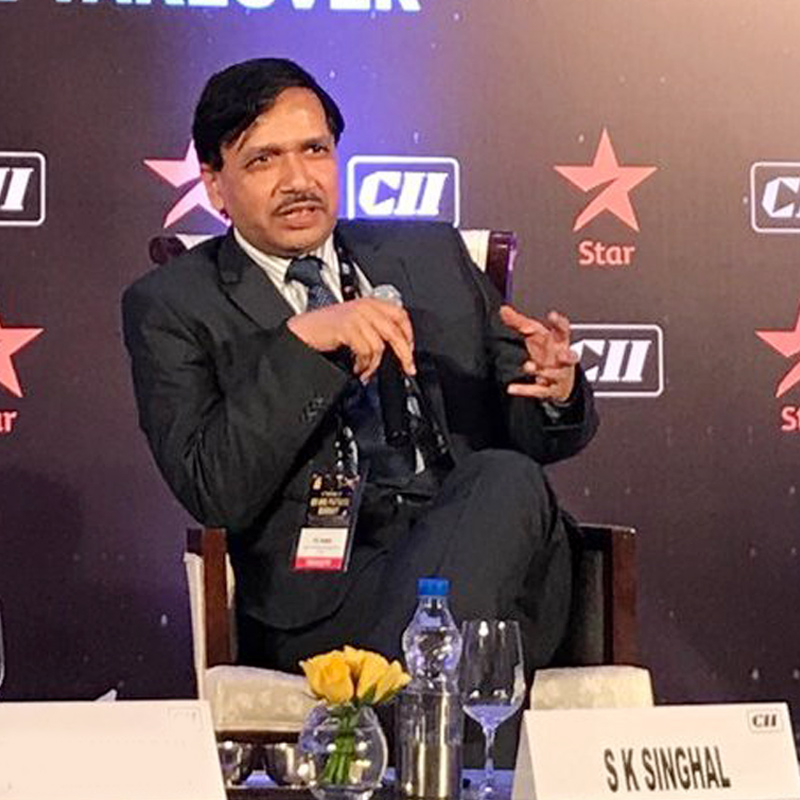
    NEW DELHI: India needs to create digital platforms, pushed by government policies and private sector entrepreneurship, which are specific to India and address its specific needs, telecom and broadcast regulator TRAI advisor SK Singhal said on Wednesday, adding that affordable broadband and allied services like television form the backbone of NTP 2018.

    “We need to create policies (including those pertaining to the digital world) that address our specific needs,” Singhal said at the CII Big Picture Summit 2017, adding that optimal usage of capacity created by cable networks is a must to deliver broadband services to every corner of India as envisioned by PM Modi.

    Singhal, along with Broadcast Engineering Consultant India Ltd (BECIL) CMD George Kuruvilla were speaking on the theme of `Connected India is Digital India’ and how for digital India to be truly implemented broadband access had to be made affordable, including all mediums of delivery like satellite communications (satcom) and cable.

    Pointing out that a stronger ‘collaboration’ is needed between operators of cable networks and those who use the pipe to deliver services, Singhal said that TRAI has already recommended to the government to use cable networks’ broadband delivery potential to fulfil the goals of the New Telecom Policy 2018.

    However, he officially admitted that to fully realise the digital potential of cable networks, some “policy hiccups” also need to be ironed out along with proper guidance in entrepreneurial skills of people who operate such networks.

    Economic Times, in September, had quoted telecoms minister Manoj Sinha as saying that the NTP 2018, expected by March 2018, will focus on providing affordable internet access to 1.3 billion Indians and facilitate domestic manufacturing to curb dependence on imports. He had added that NTP will address sector issues and make them future-proof with the onset of disruptive technologies such as fifth-generation (5G) and AI.

    Dwelling further on building broadband capacity and fully “unleash the potential” of cable networks, Singhal said set top boxes too need to be unbundled or made interoperable. TRAI has an interaction going on with all stakeholders on the issue and some field tests have also been conducted on interoperable boxes.

    Asked how the draft space policy, presently being reviewed by various stakeholders, could facilitate increased use of satellite communications to give a fillip to delivery of broadband services, Singhal skirted a direct answer as space related policies were handled by ministries of telecoms and space (department of space falls within the ambit of prime minister’s office).

    ALSO READ: MIB, TRAI allay industry fears on sat capacity leasing & content regulations

    Prasar Bharati, Dish TV, Star, Zee and BES bat for KU-band open-sky policy

    ISRO stresses on indigenization; TRAI for Open Sky policy

  • TRAI orders broadcasters to remove analogue RIOs from website

    TRAI orders broadcasters to remove analogue RIOs from website

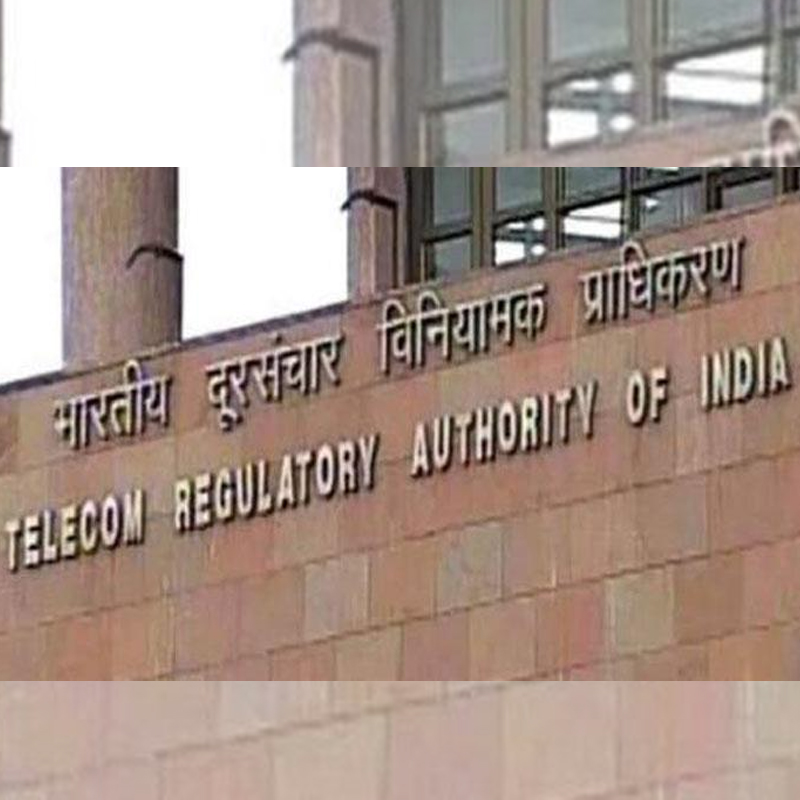
    MUMBAI: The Telecom Regulatory Authority of India (TRAI) has ordered cable TV service providers to stop displaying any reference interconnect offers(RIO) for analogue platforms.

    Broadcasters have been warned not to show any analogue RIO on its site and also refrain from making direct or indirect offers to allow their TV signals to be shown on analogue cable TV networks. MSOs have been told not to entertain any unencrypted signals on their cable TV networks.

    The TRAI has taken note of some broadcasters who have been avoiding this and continue to display analogue RIOs. “TRAI has written letters to such broadcasters individually whose analogue RIOs were found on websites,” it said.

    The necessity of the order is because 31 March 2018 is the last date for implementing Phase IV of the digital addressable cable TV systems (DAS) after which only digital encrypted signals can be carried in the country. Carrying unencrypted signals after this date will be a violation of Section 4A of the Cable Television Network (regulation) Act 1995.

  • Guest column: Net neutrality – ensuring an open internet

    Guest column: Net neutrality – ensuring an open internet

    At a time when the US Federal Communications Commission is to vote on a rollback on the Net Neutrality Rules notified during the Obama administration, the Telecom Regulatory Authority of India (TRAI) has published its recommendations on the subject. Making headlines during the days of Zero Rating and products of the kind, and coming after nearly three years of setting up of a committee by the TRAI to make recommendations in this regard (January 2015), the document attempts to balance the interest of the general public by including ‘internet access services’ within the regulation of net neutrality and excluding “specialised services” that are “optimised for specific content, protocols or user equipment where optimisation is necessary in order to meet specific quality requirements.’’

    Net neutrality, in theory, is a laudable concept. It also finds mention in the UL, VNO and ISP licensing terms notified by the Department of Telecom. The specific mention is absent from the UASL and CMTS licenses. However, this principle can nevertheless be read into the obligation to provide non-discriminatory access even by the telecom service providers. In this background, what is to be considered is whether net neutrality, with its basic principle already enshrined in the law and some contours such as specialised services yet to be clearly defined, is even required to be separately regulated.

    First, net neutrality is, as stated in the recommendations, primarily to address and ensure “public internet access”. Importantly, what has not been considered is how much of this “public” of the country actually has access to broadband. The answer would be in the vicinity of 15 per cent. Of this “preferred public population,” many would be multiple connection/access holders and, hence, the effective penetration of broadband would be less than 12 per cent. With this background, the debate, rather than focusing on net neutrality, should focus on access to broadband for all. It is only when such a objective is achieved that the issue of whether or not we have a neutral internet would really need to be studied.

    Second, OTT, which is one of the aspects central to the debate on net neutrality, has been currently left out for separate consideration. It is unclear, therefore, as to what position is taken vis-à-vis this very important piece of the net neutrality puzzle.

    Third, it is strange that the document should pluck out internet of things, a concept and technology so nascent in India that even its mention in this document makes it conspicuous by its presence. Why is there a need for identification of such detail of a technology still under development, not only in India but in most parts of the world?

    Having said the above, all the right words have been used in the recommendations–non-discriminatory access, non-provision of fast lanes, etc. All or most of these recommendations are great in theory. However, and especially with the carving out for specialised services, the workability of these recommendations, if they are to be accepted and converted into regulations, is suspect. We need to have enough cars (population access to broadband) before we can deride the provision of fast lanes.

    (Abhishek Malhotra is a partner at Bharucha & Partners)

  • TRAI releases recommendations on net neutrality

    TRAI releases recommendations on net neutrality

    MUMBAI: The Telecom Regulatory Authority of India (TRAI) has released its recommendations on net neutrality. These recommendations are the result of a long, multistage consultation process.

    On 27 March,2015, TRAI had issued a consultation paper titled ‘Regulatory Framework for Over-The-Top Service.’ Apart from issues relating to Over-The-Top (OTT) service, this consultation paper also touched upon issues related to net neutrality.

    TRAI first decided to deal with the issue of differential pricing of data access. Accordingly, after following a public consultation process, TRAI issued the “Prohibition of Discriminatory Tariffs for Data Services Regulations, 2016” on 8 Feb,2016. Subsequently, Department of Telecommunications (DoT) vide letter dated 3 March, 2016 sought TRAI’s recommendations on net neutrality including traffic management and economic, security and privacy aspects of OTT services, apa1i from other relevant standpoints as covered in the consu ltation paper dated

    27 March, 2015. TRAI considered the matter and decided to deal with the issue of Net Neutrality first. The recommendations released by TRAI today are an outcome of this decision.

  • Trai to make recommendations on net neutrality today

    Trai to make recommendations on net neutrality today

    New Delhi: The Telecom Regulatory Authority of India (Trai) will issue its much-awaited recommendations on net neutrality today.

    “We will issue the recommendations on net neutrality tomorrow,” Trai chairman RS Sharma told reporters on Monday.

    Trai, which has so far adopted a pro-net neutrality stand, is expected to stick to its stand of ensuring a free and open internet for all.

    Net neutrality requires telecom service providers to treat all internet traffic equally, without regard for the type, origin, or destination of the content or the means of its transmission.

    The recommendations are expected to include the definition of what constitutes reasonable traffic management practices by ISPs. A likely negative list of non-reasonable traffic management practices could also emerge.

    The issue has been debated upon globally as well as in India, with activists arguing the case for an open internet without any restrictions on speed.

    The recommendations that the regulator releases on Tuesday will assume significance, especially at a time when the US plans to repeal its existing rules on net neutrality, which will essentially allow telecom companies in the US to restrict broadband speeds and favour their own services if they want.

    Trai had in January floated a consultation paper on the topic, seeking views on issues such as how to ensure non-discriminatory access to content on internet, among others.

    This was followed up by an open house discussion in August which saw participation by representatives from telecom and ISPs, consulting firms, activists, and policy experts.