Category: Regulators

  • MIB has no data on OTTs; not under regulation: Minister

    MIB has no data on OTTs; not under regulation: Minister

    NEW DELHI: The government on Thursday while admitting it has no official data relating to OTT industry, including number of players and subscribers, said the Ministry of Information and Broadcasting (MIB) doesn’t regulate internet-based video services.

    “MIB does not regulate paid streaming and video-on-demand services provided over the internet. However, there are enough safeguards available under the Information Technology Act, 2000, which is administered by Ministry of Electronics and Information Technology (MEITY), for content appearing on paid streaming and video-on-demand services,” MIB junior minister Rajyavardhan Rathore informed Indian Parliament’s Lower House or Lok Sabha. 

    The government stand is significant because increasingly voices of criticism were being heard from the conservative section of society questioning edgy content on OTT platforms that technically don’t have to follow any content code like done by linear TV, which also broadly follows guidelines on content as enumerated in the Cable TV Act 1997, apart from imposing self-regulations administered by industry bodies like NBA and IBF.

    With original shows and serials on OTT platforms operating in India increasing by the day — egged on by global and domestic players like Netflix, Amazon, Hotstar, VOOT and Arre  — the fledgling industry segment has given content producers a platform where out-of-the-box themes are being tested and tried.

    According to Rathore, who was answering a series of questions on the country’s OTT services, there were no official figures available with the ministry.

    However, MIB quoted Frost & Sullivan to state it is estimated there were around 70 million unique connected viewers of which 1.3 million were paid video subscribers.

    While not directly stating whether the government proposed any content regulations for OTT platforms, Rathore clarified that IT Ministry was empowered to block and/or censure content and its distributors on several grounds, including those relating to security of the country, foreign relations and pornography.

    As of now OTT platforms in India could breathe easy as regulator TRAI, too, has not issued any guideline relating to OTT content preferring to restrict its diktat on the telecoms side of net neutrality. Still, many OTT platforms, some of which are digital extensions of traditional TV services owned by big broadcasting companies, prefer to do self-censorship on edgy content in shows like the Game of Thrones.

    ALSO READ:

    TRAI releases recommendations on net neutrality 

    Regional OTT content more than just catch-up TV    

    Can OTT players leverage market opportunities & rationalize rising content costs?
  • TRAI considers independent auditors for DAS audits

    TRAI considers independent auditors for DAS audits

    MUMBAI: In a bid to improve transparency, the Telecom Regulatory Authority of India (TRAI) is mulling the virtue of having on board independent auditors for the technical and subscription audit of the digital addressable system (DAS) of distribution platform operators (DPOs).

    In a consultation paper titled ‘Empanelment of Auditors for Digital Addressable Systems,’ the regulator is seeking views of stakeholders on various audit-empanelment related issues, such as scope of audit, eligibility criteria and experience, length of empanelment, audit fee and payment terms, time period for completion of audit work, de-empanelment, and reporting requirements of auditors. The consultation process will enable the TRAI to prepare a comprehensive document to seek proposals from auditors in line with the industry requirement and formulate guidelines to auditors.

    Written comments on the paper have been invited from the stakeholders by 22 January 2018 and counter-comments by 7 February 2018. The TRAI clarified that the empanelment of the auditors and other related activities would be done only after the ongoing matter pending before the Madras and Delhi high courts was decided.

    The interconnection regulations that form a part of the regulatory framework for DAS have provisions relating to technical audit and subscription audit, wherein it has been provided that the authority may empanel auditors for this purpose. Distributors such as multi-system operators (MSO), direct-to-home (DTH) operators, headend in the sky (HITS) and IPTV operators are required to install digital headends, including Subscriber Management System (SMS) and Conditional Access System (CAS) for distributing signals of TV channels through digital addressable systems. To have a level playing field amongst all the distributors, the authority has prescribed minimum technical specifications for addressable systems.

    Also read:

    TRAI seeks better accessibility for persons with disabilities

    Trai paper seeks to streamline uplinking, downlinking norms

    Trai paper seeks to streamline uplinking, downlinking norms

  • TRAI seeks better accessibility for persons with disabilities

    TRAI seeks better accessibility for persons with disabilities

    MUMBAI: The Telecom Regulatory Authority of India (TRAI) has turned the spotlight on one of India’s ignored sections of the society–persons with disabilities (PwD). The regulator is prodding companies to make information and communication technology more accessible to differently abled people. It notes that such people are unable to use the services either because they lack the necessary accessibility features or are incompatible for usage by them.

    The TRAI has released a consultation paper seeking the broadcast sector’s views on identifying and eradicating areas that are pain points for them and where policies are required to be frame so that PwDs don’t feel discriminated. Aids and assistive devices have been made for them but a similar change in services and content is yet to take place. The TRAI states that the law must also consider the various segments within PwDs.

    From 2.13 per cent of the population in 2001, the number of PwDs in India grew to 2.21 per cent, which is 2.68 crore of the total. The consultation paper points out that though set-top boxes (STBs) have been made accessible to them, there is a lack of content that can justify its usage. Certain additions need to be made for the visually impaired such that they can access STBs via audio. The functions they need to access without vision include channel/programme selection, display of programme information, setup options, closed captioning control and display options, video description control, current configuration information, playback controls, and input source selection.

    Similarly, people with visual impairment cannot see screens and find it difficult to navigate the keypad and menu of a TV remote. Buttons on a remote are also not designed while keeping in mind people who are unable to use their limbs or flex their fingers. Special measures, such as giving captions for those who can’t hear and audio descriptions for the blind, need to be taken.

    One section of the Rights of Persons with Disabilities (RPWD) Act 2016 states that government and local authorities must work to ensure that those with hearing impairment can enjoy TV content via subtitles or sign language. The Accessible India campaign aims to ensure that at least 25 per cent of TV shows on government channels are suited for PwDs.

    The TRAI suggests actions such as creating well-designed remote controls with legible buttons, a wireless connection between a television and the viewer’s hearing aid as ways to help them.

    India’s corporate social responsibility (CSR) laws have a provision to help PwDs. Broadcast companies that are required to undertake CSR have a fine way to spend the minimum requirement of at least 2 per cent of the average net profits in the immediate three preceding financial years. This can include developing applications, devices and services for their benefit.

    The US FCC mandates that devices used for watching TV must be accessible to PwDs and a similar case is for the UK as well.

    Also read:

    Trai paper seeks to streamline uplinking, downlinking norms

    TRAI’s final recommendations on net neutrality likely by September

    TRAI open house to discuss ease of doing broadcast biz

  • MIB recants, says only explicit condom ads banned during the day

    MIB recants, says only explicit condom ads banned during the day

    MUMBAI: After stirring the hornet’s nest on the contentious issue of restricting condom ads to only water-shedding hours, the Ministry of Information and Broadcasting (MIB) has clarified that such ads can be aired on TV during daytime. 

    In an advisory earlier this month, the MIB had asked all TV channels to air condom advertisements only between 10pm to 6am to avoid exposure of such material to children.

    But in a clarification dated 21 December 2017, the ministry said the ban on condom advertisements during daytime applies only to commercials that have sexually explicit content.

    In a release, the ministry quoted that “advertisements that do not sexually objectify women and are aimed at informing citizens regarding devices/products/medical interventions to ensure safe sex are not covered under the said advisory.”

    The ministry had earlier stated that it had taken note of objections regarding condom ads that are “targeted at a particular age group” being aired on some channels that are considered as ‘indecent especially for children.’ It used Rule 7 (7) and Rule 7 (8) of the Cable TV Networks Rules, 1994 to tell broadcasters to refrain from telecasting ads of condoms that could be considered inappropriate/indecent for viewing by children. 

    The relaxation on the issue came after the Rajasthan high court issued a notice to the Centre challenging an advisory of the MIB barring TV channels from showing condom ads during prime time.

    The petition underlined the fact that condom ads don’t violate Rule 7 of the Cable Television Network Rules, 1994 which apply to anything which endangers the safety of children or create in them any interest in unhealthy practices or shows them begging or in an undignified or indecent manner. 

    The Advertising Standards Council of India (ASCI) had approached the ministry earlier this month for guidance after several people complained regarding the inappropriate nature of the condom ads being telecast during primetime viewing on most channels. 

    Also Read:

    I&B tightens up on condom ads on TV

    ‘Sanskari’ India wants condom ads off primetime

    MIB categorises all non-Hindi and non-Eng TV channels as regional

  • 2G spectrum case: CBI acquits all accused

    2G spectrum case: CBI acquits all accused

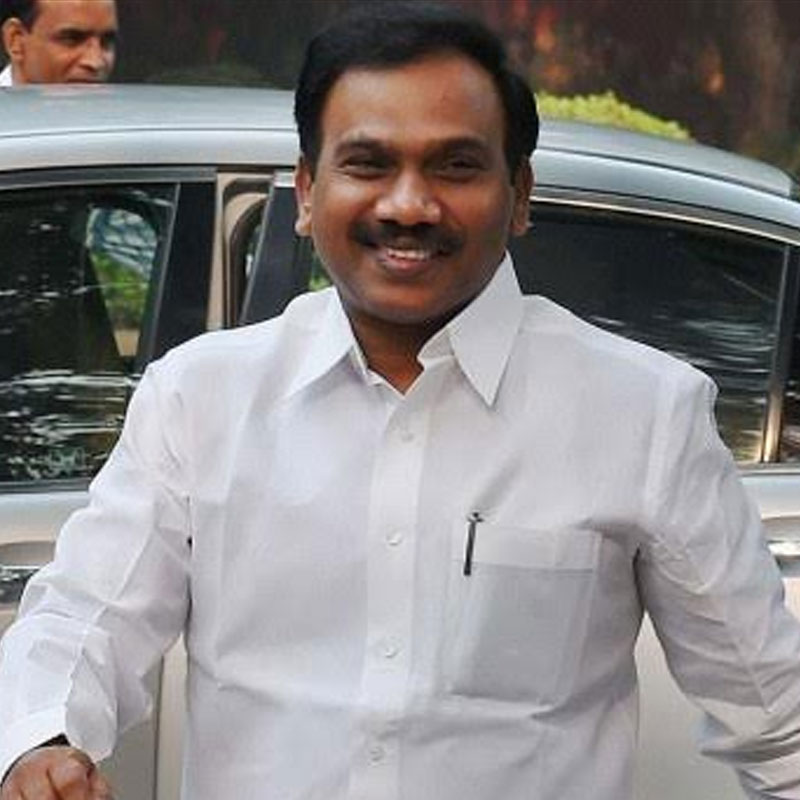
    Mumbai: A special CBI court today acquitted all accused in the three cases related to the 2G spectrum allocation. The case pertained to graft and money laundering charges against a former telecom minister, politicians, and business executives in the grant of spectrum licences

    Deciding the fate of all accused, including former telecom minister A Raja and DMK leader Kanimozhi Karunanithi, the court opined, “Absolutely no hesitation in holding that the prosecution has miserably failed to prove any charge against any of the accused, made in its well choreographed charge sheet.”

    The CBI had claimed that Raja had devised his own way of granting telecom licences, brushed aside the first-come-first-served principle, misled the (then) Prime Minister, disregarded the concerns of other ministries and ran a parallel office at home to grant licences to whosoever offered him gratification.

    The case relates to alleged below-market-price sale of lucrative telecom permits bundled with airwaves in 2008, which a federal auditor said may have cost the government as much as $28 billion in lost revenue.

    In 2012, the Supreme Court ordered 122 licenses held by eight operators to be revoked, declaring the licenses illegal and the process “wholly arbitrary, capricious and contrary to public interest.”

    Also read:

    TRAI wants spectrum cap revised to 35 per cent

    Spectrum payment limit eased, NTP to facilitate data and security 

  • MIB categorises all non-Hindi and non-Eng TV channels as regional

    MIB categorises all non-Hindi and non-Eng TV channels as regional

    MUMBAI: In its latest order, the Ministry of Information and Broadcasting (MIB) has sought to clear some of the confusion around its recent order on processing fees that broadcasters will have to bear in the event of a change in satellite or channel name, among other things.

    In an order released today, the ministry has sought to define what a regional channel is. According to it, any channel which is not in Hindi or English will be considered as being regional in nature. Moreover, spiritual and yoga channels will fall under the purview of this definition when it comes to calculating fees that they have to pay the MIB.

    On 13th December, the MIB had issued an order that sharply increased the processing fee for TV channels in supersession of an order dated 1 January 2009. Under the revision, national channels will now have to cough up Rs 100,000 while regional ones will shell out Rs 50,000 as processing fee for any change, including change of satellite, channel name/logo, language of channel, category of channel, mode of transmission, teleport, teleport location, and category of channel from general entertainment channel to news channel for temporary uplinking of a live event.

    The order had introduced two new categories for channels—regional and national—which had caused confusion in broadcasters’ minds. According to the television uplinking and downlinking guidelines, there are only two categories of channels—news and current affairs and non-news and current affairs channels.

    While the order has clarified what a regional channel is, the definition of a national channel remains to be seen. Until today, there was no clarification on which channels will be treated as regional.

    Also Read: Trai paper seeks to streamline uplinking, downlinking norms

    MIB bumps up TV channel processing fee

  • Trai paper seeks to streamline uplinking, downlinking norms

    Trai paper seeks to streamline uplinking, downlinking norms

    MUMBAI: Following a prod from the ministry of information and broadcasting (MIB) additional secretary Jayashree Mukherjee, the Telecom Regulatory Authority of India (TRAI) on 19 December issued an industry consultation paper which seeks to update guidelines related to uplinking, downlinking, of TV channels and the setting up of teleports.

    Mukherjee had sought the TRAI’s recommendations on these issues keeping in mind changes in technology, market scenarios and lessons learnt over the past six years since the guidelines were passed.  

    In its paper, Trai has asked stakeholders, such as broadcasters, if there was any need to redefine news and current affairs TV channels and non-news and current affairs TV channels more specifically.

    Pointing at a possible hike in the net-worth requirement of Rs 5 crore for obtaining a licence for uplinking or downlinking of TV channels, and an increase in process fees for applicants, the paper states that non-serious players were able to obtain licenses, which were either traded or leased to a different entity.

    “To  ensure  that  only  serious  players,  who  are  interested  in  the business of satellite TV channels, apply for obtaining license for  uplinking  or downlinking of TV channels, one way could be to increase the entry barriers. The other way could be to eliminate the incentives, which encourage trading and/or sub-leasing of licenses. Further, sub-leasing or trading of channels can also be controlled by putting in place certain checks, which discourage such practices,” the release stated.

    The paper argues that an increase in entry barriers for uplinking of TV channels from India may encourage diversion of such business opportunities to outside India. Moreover, Trai has raised the question of auctioning satellite TV channels as a complete package similar to FM radio channels. Or if industry thinks that it is possible to auction individual legs of satellite TV broadcasting – uplinking space spectrum, transponder capacity?

    And it has opened up an issue which has been a sore point for the industry: if it is advisable to restrict the use of foreign satellites for satellite TV broadcasting or uplinking of satellite TV channels to be downlinked in India from foreign soil? And also whether it is possible to auction channels without restricting the use of foreign satellites and uplinking of signals of TV channels from foreign soils. The paper appeals to stakeholders if there could be a better way to grant a licence for a TV satellite channel then what is presently followed in order to simply the procedure.

    Other issues the TRAI is seeking industry’s input on is whether encryption of all satellite TV signals – whether free to air or pay TV and what timeline should be given to licensed broadcasters to launch their channels from the date of issue of a licence and the penalties that should be levied on them in case they fail to restore their disrupted channels within a specified period. The consultation paper also approaches sensitive issues such as terms of  the tradeability of licences by a licencee.  

    On the teleport side, the TRAI is seeking to get industry’s understanding of what a teleport should be defined as in a new digital era, the licensing norms, fee structures for processing a licence, if there is a need to restrict the number of teleports in India, and their location like say in a park.

    The industry watchdog has requested that industry sends in its inputs by 18 January 2018.

    Also Read: TRAI sees merit in using satcom for broadband delivery

    TRAI’s Consultation Paper on VoIP can affect mobile TV, IPTV

    MSOs move Madras HC seeking relief on inter-connect pacts


  • Terry Burns appointed Ofcom chairman

    Terry Burns appointed Ofcom chairman

    MUMBAI: Lord Terry Burns has been appointed as the next chairman of Ofcom. This follows the digital, culture, media and sport committee pre-appointment hearing with Lord Burns. Karen Bradley, the Secretary of State for Digital, Culture, Media and Sport, has now confirmed the appointment.

    Lord Burns was until January 2016 the chairman of Channel 4 having served for six years at the public service broadcaster.

    He has also served as chairman of a number of private and public-sector organisations, including Marks & Spencer, Santander UK, Welsh Water, the National Lottery Commission, and The Royal Academy of Music.

    From 2004 to 2006, Lord Burns was independent adviser to the Secretary of State on the BBC Charter Review. He sits as a cross-bench peer in the House of Lords.

    Dame Patricia Hodgson is stepping down as chairman of Ofcom at the end of the year. Lord Burns will take up the role from 1 January 2018.

    “I am very pleased to have the opportunity to take on this role at an important time for Ofcom. The UK communications sector provides essential services to everyone in the UK and is critical to the future success of the economy,” Lord Burns said.

    Sharon White, Ofcom Chief Executive, said: “Lord Burns brings with him a wealth of experience and I am looking forward to working together as we deliver on Ofcom’s priorities.

    “I am incredibly grateful to Dame Patricia Hodgson, who has provided expert stewardship to Ofcom as chairman and deputy chairman over the past six years. Colleagues across Ofcom thank her for the contribution she’s made.”

  • FCC outvotes 2015 net neutrality rules

    FCC outvotes 2015 net neutrality rules

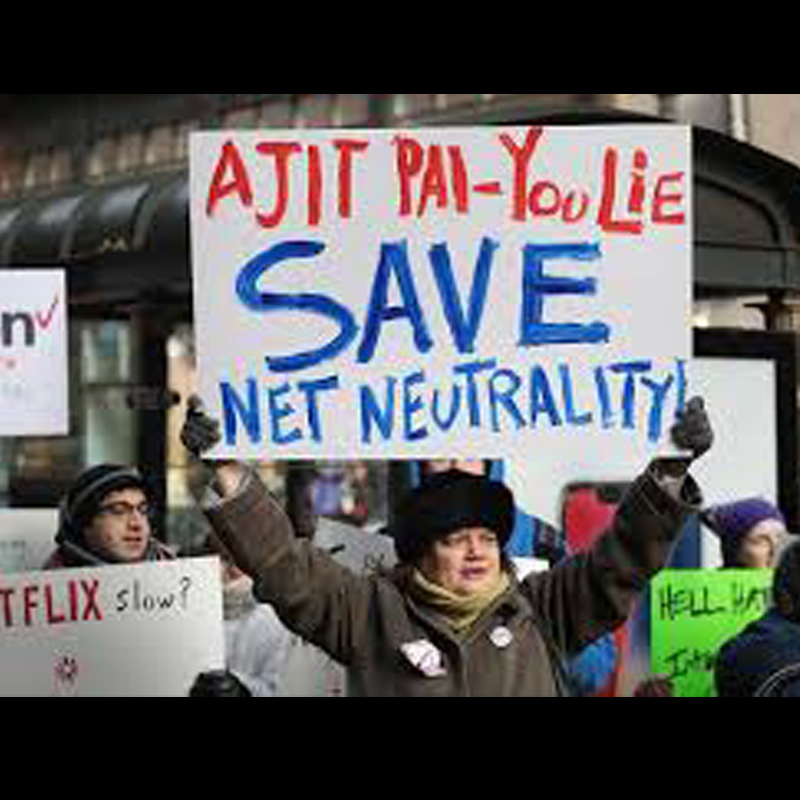
    NEW DELHI: American telecoms and broadcast regulator FCC on Thursday voted out the 2015 Obama government’s regulations relating to net neutrality, which, some critics said, put too much power in the hands of broadband companies to influence consumers’ online experiences.

    According to the FCC, it voted to restore the “longstanding, bipartisan light-touch regulatory framework” that had fostered rapid internet growth, openness, and “freedom for nearly 20 years”.

    Following detailed legal and economic analysis, as well as extensive examination of comments from consumers and stakeholders, the commission reversed the FCC’s 2015 “heavy-handed utility-style regulation” of broadband internet access service, which imposed substantial costs on the entire internet ecosystem.

    “In place of that heavy-handed framework, the FCC is returning to the traditional light-touch framework that was in place until 2015.  Moreover, the FCC today also adopted robust transparency requirements that will empower consumers as well as facilitate effective government oversight of broadband providers’ conduct,” the commission said in a statement, adding, “In particular, the FCC’s action today has restored the jurisdiction of the federal trade commission to act when broadband providers engage in anticompetitive, unfair, or deceptive acts or practices.

    “The framework adopted by the commission today will protect consumers at far less cost to investment than the prior rigid and wide-ranging utility rules. And restoring a favourable climate for network investment is key to closing the digital divide, spurring competition and innovation that benefits consumers.”

    New York Times, which has often criticised FCC chief Ajit Pai’s stand on some issues, including net neutrality, reported Mignon Clyburn, one of the Democratic commissioners who voted against the action, accused the three Republican commissioners of defying the wishes of millions of Americans. She was quoted by the newspaper as saying, “I dissent because I am among the millions outraged. Outraged because the FCC pulls its own teeth, abdicating responsibility to protect the nation’s broadband consumers.”

    Brendan Carr, a Republican commissioner, was quoted as having said it was a “great day” and dismissed “apocalyptic” warnings.

    Before the voting on net neutrality took place, Pai said, “We are helping consumers and promoting competition. Broadband providers will have more incentive to build networks, especially to underserved areas.”

    What do the FCC’s new rules mean, as and when they come into effect? In simple terms: it would allow walled garden of content and also help broadband companies and telcos to prioritise services and have different price structures for services.

    Tech magazine Wired observed that broadband providers say the public has nothing to worry about and that AT&T, Comcast and Verizon, among others, have promised not to block or throttle content. But those promises leave internet providers with quite a bit of room to prioritise their own content, or from their partners, the magazine commented.

    “AT&T, for example, already allows its DirecTV Now video-streaming service to bypass mobile subscribers’ data limits. Verizon does much the same with its Go90 video service. Sling TV and Netflix, on the other hand, still count towards customers’ data caps. The end of the FCC’s current rules will allow companies to expand the ways they prioritise certain services over others,” Wired said.

    However, some observers in the US, including the NYT, also were categorical that in the new year the FCC regulation most likely will be challenged in courts.

    The full text of the FCC statement could be accessed at https://www.fcc.gov/document/fcc-takes-action-restore-internet-freedom.

    ALSO READ:

    TRAI releases recommendations on Net Neutrality

    TRAI & FCC sign agreement on accelerating broadband deployment

    Restoring Net freedom: FCC seeks public participation

  • MIB bumps up TV channel processing fee

    MIB bumps up TV channel processing fee

    MUMBAI: The ministry of information and broadcasting (MIB) has sharply increased the processing fee for TV channels in supersession of an order dated 1 January 2009. Now, national channels will have to cough up Rs 100,000, while regional ones will shell out Rs 50,000.

    This fee will apply to broadcaster companies for any alteration, including change of satellite, channel name/logo, language of channel, category of channel, mode of transmission, teleport, teleport location and category change from general entertainment channel to news channel for temporary uplinking of a live event.

    Additionally, the same amount will be levied on a per-day basis in case of temporary uplinking of a live event. This order will come in force with immediate effect.

    The move is in sharp contrast to the government’s stated objective of improving the ease of doing business in the country bereft of complicated documentation.

    Also Read:

    Govt assures ease in licensing norms to TV channels, satellite operators