Category: Regulators

  • MIB calls for ‘fiscal prudence’ in Prasar Bharati

    MIB calls for ‘fiscal prudence’ in Prasar Bharati

    NEW DELHI: The Ministry of Information and Broadcasting (MIB) on Friday justified certain government directives to India’s publicly funded national broadcaster Prasar Bharati Corporation by saying “fiscal prudence” was the need of the hour, while reiterating its commitment to safeguard interest of the organisation’s employees.

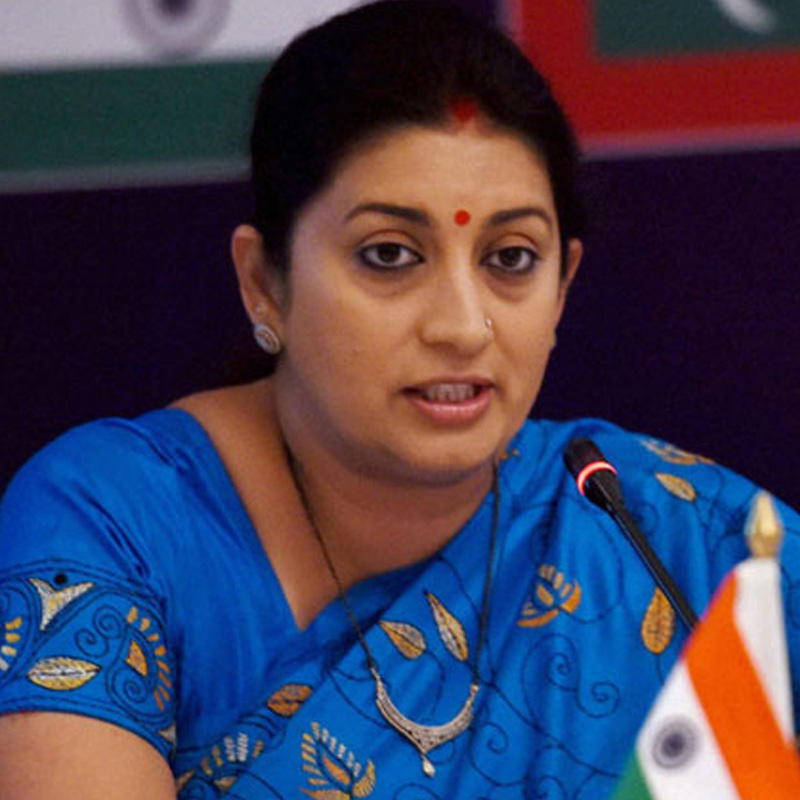
    “Fiscal prudence and accountability is the very fulcrum of the functioning of any government organisation. Prasar Bharati is as much bound by the general financial rules (GFR) of the government of India as any ministry or any organisation receiving grants-in-aid from the government,” MIB said in a statement, which, apparently, looks like a rebuttal to a report appearing in news website The Wire that questioned certain decisions of minister Smriti Irani.

    MIB also termed the story, without directly referring to it, as a “deliberate, sinister (and) motivated campaign” to “tarnish” its image by putting out a report that was “based on ill-will and incorrect appreciation with half baked facts”.

    “As per the provision of GFR, any autonomous organisation receiving grant-in-aid must sign a Memorandum of Understanding (MoU) with the ministry, clearly bringing out the physical and financial targets with timelines for activities to be done by utilising the said grant during that financial year,” MIB clarified further, adding, “For the record, irrespective of repeated reminders from the ministry, no MoU has been signed by Prasar Bharati.”

    In a news report, headlined ‘Angered by Prasar Bharati’s Defiance, Smriti Irani Blocks Salary Funds for DD, AIR’, which went viral on social media over the last few days, The Wire quoted Prasar Bharati chairman Surya Prakash, serving his second term, as saying contingency funds were utilised to pay salaries to employees for the month of January and February 2018. It also concluded that if the standoff continued, the pubcaster will run out of money by April.

    The story’s reporter, a freelance journalist who’s also written a book on BJP’s online troll army, highlighted that the federal government earmarked around Rs 2,800 crore in 2018-19 towards Prasar Bharati where the allocation is routed through the MIB, which releases monthly installments for the salaries of its approximately 5000 employees.

    The report went on to state, quoting unnamed sources in the pubcaster, that the ministry had been “raising queries and creating problems” before releasing funds and, since December, has “not released money for salaries, forcing a drawdown of contingency funds”. The crisis, the report quoted the sources as saying, began when Prakash started questioning some of  Irani’s actions.

    It must be stated here that Indiantelevision.com is not in a position to independently verify the allegations made in The Wire report and has based its present news story on an official statement put out by MIB on the website of Press Information Bureau on a day when majority of Indians took a public holiday to celebrate the festival of colours – Holi.

    However, illustrating how fiscal accountability led to “curbing of wasteful expenditure” in the Prasar Bharati, which controls Doordarshan and All India Radio, MIB said, “By bringing in Human Resource Information System in Prasar Bharati, at repeated insistence of the ministry, exact amount of expenditure on employees has been worked out and this has resulted in savings to the tune of nearly Rs 30 crore per month for the salary head (Rs 360 crore a year). The Sam Pitroda Committee had also suggested a number of measures such as manpower audit etc. to enhance financial discipline. Hence, we are hopeful that following similar footsteps, together a lot can be done to enhance transparency and accountability.”

    At a media conference last week Irani had publicly questioned Prasar Bharati management’s ability in generating additional revenues. “The tragedy was that private broadcasters grew at the cost of [pubcaster] Prasar Bharati [riding DD’s FTA FreeDish platform],” Irani had said, adding, “How can we leverage the infrastructure that taxpayer has paid for so that good content is available [and] there is increased ad spend because of sheer power of reach of Prasar Bharati?”

    Meanwhile, according to a report in The Economic Times, the MIB is scrutinising the pay packages given to senior officers in Prasar Bharati and pointing out cases of mismatch in positions to pay. Being an administrative ministry, it claims to have more power in deciding the pay for current and retired employees, superseding the directive of Prasar Bharati.

    In one particular case, Rajeev Singh, an officer at the additional secretary position in the finance wing, is drawing the salary of a secretary. This leads to a difference in pay of Rs 20,000. Seven other employees in the rank of additional director general are being probed with regard to their appointments.

    ALSO READ:

    Smriti Irani exhorts DD to leverage reach better

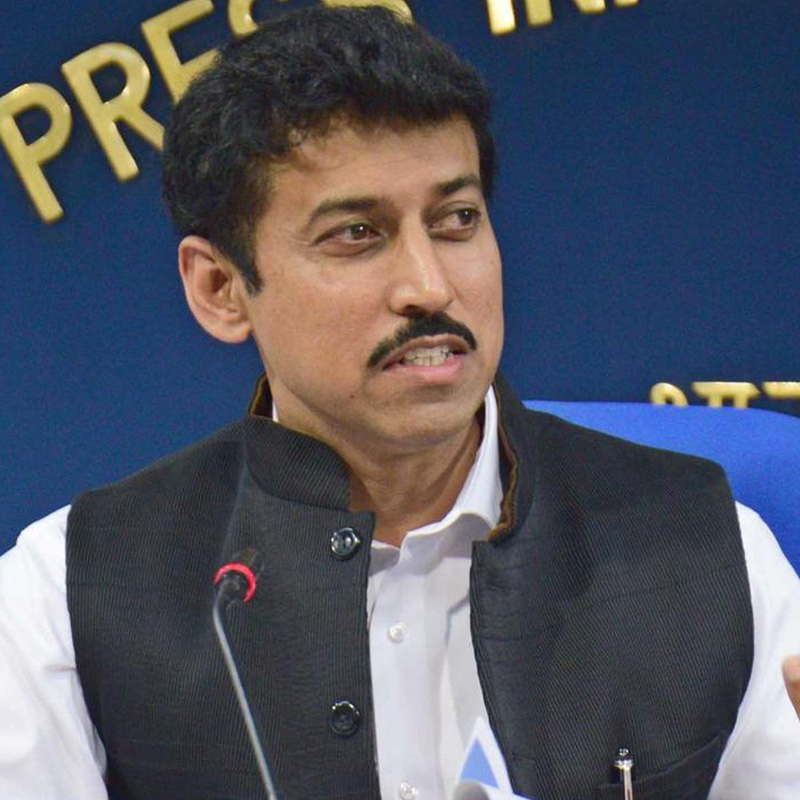
    Prasar Bharati’s main role is of pubcaster, not revenue generator, says Rathore

    MIB minister Smriti Irani orders review of DD prime time auction process

    Smriti Irani tweets industry body advisory urging restraint by TV news channels
  • Madras HC gives split verdict in Star India versus TRAI case

    Madras HC gives split verdict in Star India versus TRAI case

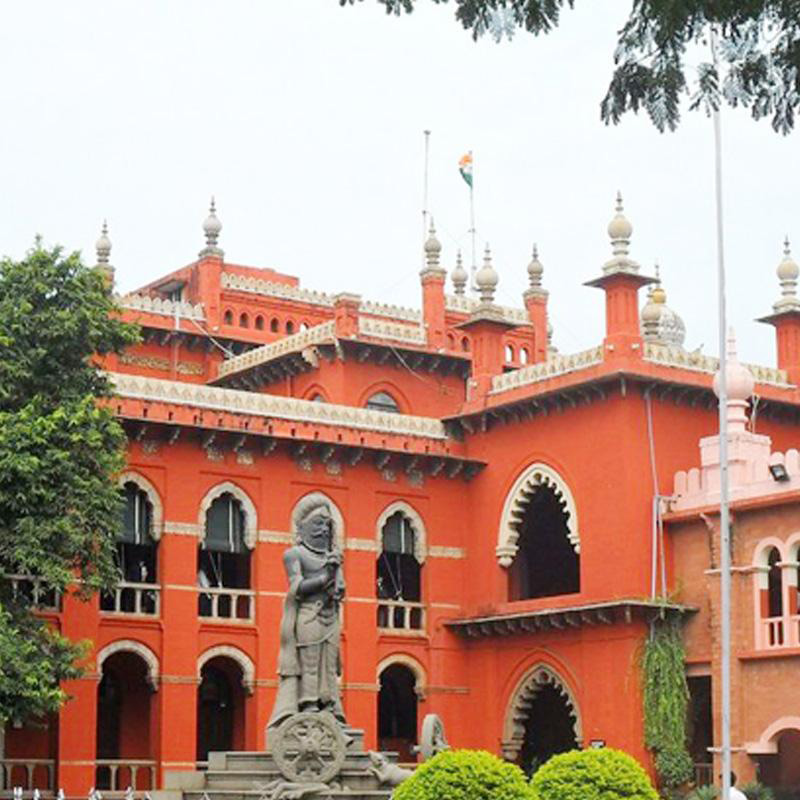
    NEW DELHI: While parts of the country took a break on a moderately warm day after playing Holi, the Madras High Court delivered a split verdict in a case involving Star India and the Telecom Regulatory Authority of India (TRAI), apart from several other private and government organisations. This effectively means that the Supreme Court will again have to take a stand on whether the regulator’s proposed tariff order relating to broadcast and cable sectors could be implemented or remains in suspended animation.

    While striking down certain aspects of the tariff guidelines (maximum retail price and discounting limits), issued by TRAI late 2016, and upholding the petitioner’s plea, the two-judge bench of the high court referred to another yet-to-be-decided judge the issue of jurisdiction of TRAI on matters such as copyright over content.

    Now that the high court has delivered a fractured verdict, raising fears of a status quo and non-implementation of the TRAI tariff guidelines in certain sections of the cable distribution industry, the Supreme Court could likely early next week take a view whether TRAI can go ahead and implement the regulations or further judicial clarity is needed.

    “The reason for putting cap of 15 per cent to the discount on the MRP of a bouquet disclosed in to the impugned Tariff Order is that, as per data available with TRAI, some bouquets are being offered by the distributors of television channels at a discount of up to 80-90 per cent of the sum of a-la-carte rates of pay channels constituting those bouquets. Such high discounts force the subscribers to take bouquets only and thus reduce subscriber choice. This, in my view, cannot be a reason to restrict the discount,” the judgement observed at one point.

    The lengthy verdict (over 140 pages) of the two-judge bench of the high court, which had been hearing a case filed by Star TV and associate Vijay TV challenging tariff guidelines of TRAI on various grounds of copyright and whether the regulator has the jurisdiction to make regulatory guidelines, was delivered after the hearings got over several months back and the verdict was kept in abeyance.

    While stakeholders refused to comment on the verdict officially, saying the fine prints of the lengthy order need to be studied over the weekend, TRAI could not be reached for its version on the Madras HC verdict.

    However, an industry observer opined that considering the high court’s observations on MRP and discounts relating to TV channels, implementing the remaining part of TRAI’s proposed tariff and inter-connect guidelines would make less sense as both the issues frowned down upon by the high court form an integral part of the overall regulations.

    The tariff issue has been in the courts since late 2016. The Delhi High Court too is hearing a similar matter involving TRAI’s proposed tariff guidelines. In this case the petitioners are DTH operators Tata Sky and Airtel Digital.

    ALSO READ:

    MSOs move Madras HC seeking relief on inter-connect pacts

    Orders reserved by Madras HC on TRAI jurisdiction case

    SC stays new TRAI tariff, asks Madras HC to complete hearing in four weeks


  • Smriti Irani exhorts DD to leverage reach better

    Smriti Irani exhorts DD to leverage reach better

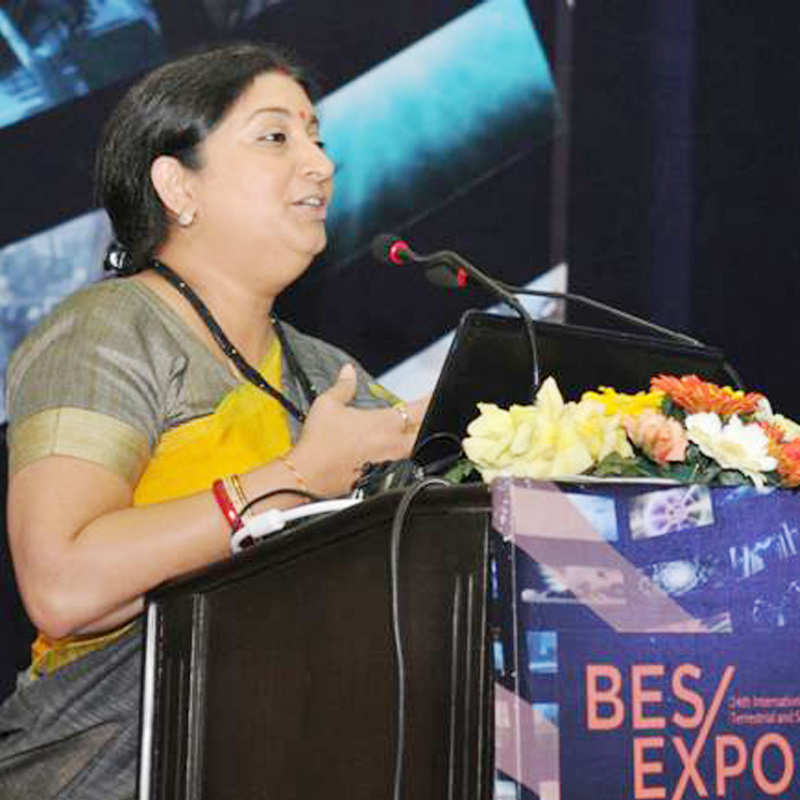
    NEW DELHI: Minister of Information and Broadcasting Smriti Irani at a public platform yesterday posed a question that may not be palatable to all but would bolster the confidence of Doordarshan bosses. She asked why the pubcaster couldn’t better leverage its own taxpayer-funded vast infrastructure for revenue generation the same way as private sector broadcasters had done.

    “The tragedy was that private broadcasters grew at the cost of [pubcaster] Prasar Bharati [riding DD’s FTA FreeDish platform],” Irani said, asking further, “How can we leverage the infrastructure that the taxpayer has paid [for] so that good content is available [and] there is increased ad spend because of sheer power of reach of Prasar Bharati?”

    According to her, India’s total advertising spend is expected to grow from 9.6 per cent last year to 12.5 per cent this year.  

    Irani, speaking at the Broadcast Engineering Society-oraginsed BES Expo 2018, went on to raise several other issues on the need of marrying good business model with technology, inadequate capacity and capability to manufacture locally STBs and the importance of broadcast engineering in the development of India’s media industry.

    DD’s KU-band DTH service, marketed under FreeDish brand, has been in the news lately with private TV channels questioning the pubcaster’s decision to not renew contracts to be on the FTA platform on expiry. Since then, DD has been giving temporary extensions to TV channels, waiting for broadcast disputes tribunal TDSAT, moved by some by some aggrieved TV channels, to give a final ruling on the matter.

    Bringing up the issue of FreeDish at a media event, Irani looked at a natural process of sending a message across to the private sector TV channels (over 800 on last count) and the mandarins of Prasar Bharati, which, by an Act of Parliament, is an autonomous body but relies heavily on government for funds.

    “The tragedy was that private broadcasters [on DD FreeDish] ended up taking a huge chunk from the ad pie not only from the ad spend of private sector, but also from government institutions like the DAVP [agency responsible for handing out government ads] on the basis of strength they leveraged from Prasar Bharati’s own infrastructure,” the minister pointed out.

    According to Irani, if Prasar Bharati, the managers and owners of DD, leveraged its infrastructure better, it would result in not only increased advertising revenue for the pubcaster but also reducing the burden of the taxpayer. She added that the government had allocated over Rs 2,500 crore to Prasar Bharati to fund its activities that also include DD’s sibling the All India Radio.

    Admitting that online consumption of video is increasing in India—40 per cent of entertainment is consumed online—and there is a growing demand in the digital arena for broadcasting, the minister asked whether Indian consumers, both rural and urban, have been sufficiently educated about digitisation of entertainment and the convergence happening in the country.

    While exhorting the stakeholders to collaborate with phone handset manufacturers to get additional numbers on video consumption patterns in terms of quality, quantity and genre, Irani said, “Data cannot have only [a] few masters… [one of the] greatest liberators in terms of data is the expanding reach of digital tech.”

    Bemoaning the country’s inability to manufacture locally good quality, cost-effective STBs in adequate numbers, Irani said, “That engineering anomaly needs to be addressed.”

    Though India is still far from digitising fully its 183 million TV homes, industry observers say the country imports almost 90 per cent of the boxes from China and ASEAN countries not because of engineering inability but lack of financial incentives.

    The BES Expo is one of the biggest broadcast technology shows in India. Nearly 300 companies from 25 countries will display their products in this year directly or through their dealers and distributors in India.

    Also Read :

    WOW Cinema petitions TDSAT on delayed auctions for DD FreeDish slots

    Right time for India-centric global news channel: Smriti Irani

    Smriti Irani: Need to reduce gap between regional & national news & democratize viewership

  • TRAI suggests simplifying processes for broadcast, cable-related businesses

    TRAI suggests simplifying processes for broadcast, cable-related businesses

    MUMBAI: The Telecom Regulatory Authority of India (TRAI), in its bid to ease business norms relating to the broadcast and cable sector, has urged the government to simplify various licensing and clearance processes, putting time limits in some cases.

    The TRAI has also said that the satellite spectrum allocation process undertaken by various government agencies, such as the WPC in the telecom ministry and the ISRO/Department of Space, should be carried out throughout the year instead of “intermittent” opening of such processes.

    Some of the recommendations that have been suggested in its latest ‘Ease of doing Business in Broadcasting Sector’ paper are:

    http://www.indiantelevision.com/regulators/trai/trai-extends-dates-for-comments-on-uplinking/downlinking-consultation-paper-180116
    http://www.indiantelevision.com/regulators/trai/trai-paper-seeks-to-streamline-uplinking-downlinking-norms-171219 
    http://www.indiantelevision.com/regulators/trai/trai-releases-paper-on-national-telecom-policy-2018-180103

    – The process of granting permission/licence/registration for broadcasting services should be streamlined by removing redundant processes, re-engineering necessary processes and making them efficient using ICT.

    – An integrated portal to be set up by the government for broadcasters, teleport operators and TV channel distributors for filing, processing, tracking applications, payments, frequency assignments, endorsements, renewals etc.

    – Security clearances to be done within 60 days.

    – Setting up a system of self declaration.

    – Total time (including all kinds of ministerial clearances) to not exceed six months for granting licences or permissions.

    – Simpler process for logo, name, format and language change.

    – Create a centre for excellence for broadcasters.

    The TRAI says that the Indian broadcasting sector presents a vibrant picture but it has ‘immense potential to move on to a higher trajectory of growth by removing procedural bottlenecks and making business propositions more attractive.’ It states that checks must be done from time to time to ensure procedures are up to date or removed if no longer needed.

    A consultation paper was issued last year after which an open house was conducted with stakeholders on the topic of ease of doing business.

    Also Read:

    TRAI extends dates for comments on uplinking/downlinking consultation paper

    Trai paper seeks to streamline uplinking, downlinking norms

    TRAI releases paper on National Telecom Policy 2018

  • TV channels cite logistical challenges in broadcast for the disabled

    TV channels cite logistical challenges in broadcast for the disabled

    NEW DELHI: A debate on broadcasting for persons with disabilities (PWDs) has thrown up more questions than solutions. TV channels have stated that though desirable, the process is expensive and challenging, for instance, in case of live events and that before setting guidelines for private broadcasters, pubcaster Doordarshan should lead by setting an example.

    Pointing out that content to be made accessible to PWDs is viewed by the masses as well, which itself increases backend work, the Indian Broadcasting Foundation (IBF) has said in a country such as India, where varied languages, dialects and language-scripts prevail, broadcasting for specially abled people is challenging.

    “There should be synergies between capacity building for equipment manufacturers, distributors/re-distributors (DPOs) as well as broadcasters who are working with the Ministry [of Information and Broadcasting] for framing the Accessibility Standards for TV channels and the entire end-to-end chain of broadcasting should be coordinated, including amongst distributors and consumer premise equipment providers,” it added.

    IBF, an industry organisation comprising TV channels, was articulating its views on a consultation paper floated by the TRAI on making broadcast and ICT services accessible to persons with disabilities.

    If the IBF stated more co-ordination was needed amongst various stakeholders in the broadcasting value chain, another industry body representing news TV channels, the News Broadcasters Association (NBA), highlighted: “Though desirable, the effort required to make broadcasting and ICT accessible to PWDs is a major and expensive exercise.”

    What are the challenges in making broadcasts suitable for PWDs? There are several financial, technical and logistical challenges, including closed captioning, which is critical for people who are deaf or hard-of-hearing, or those who may have a disability that requires audio description. Wikipedia clarifies the term `closed’ indicates that the captions are not visible until activated by the viewer, usually via the remote control or menu option. Many Hollywood and European films providing subtitles sometimes have closed captioning, too.

    “News content presents special challenges to provide subtitling, especially in multiple languages. Most news items are cut live or within minutes of an event and there is no time to redo the content in multiple languages or provide subtitles,” the IBF has pointed out adding that TV screens in most news channels are “clogged with scrolls and headlines” leaving little space for additional closed captions to be run.

    However, it was conceded by the IBF that an effort to provide closed captioning can be made in repeat news bulletins, which, again, will carry a heavy financial burden as old clips also need to be captioned apart from news.

    According to the NBA, a universal categorisation is an impediment to finding a solution to the problem of accessibility for PWDs as broadcasting and ICT services include inadequate “distribution equipment and consumer premise equipment,” including remote-control systems that have voice recognition and a touch­-screen.

    The two industry organsiations, representing a wide spectrum of TV channels in India, have not only exhorted the regulator to advise the government to provide financial incentives before launching such guidelines, but have also suggested identifying certain percentage limits (50 per cent in one case) in the category or genre of TV channels that could possibly make broadcasts more accessible to PWDs.

    “We request that the consultation on issues relating to distribution/re-distribution of broadcast signals and related equipment and technical aspects be suspended till the time Accessibility Standards for Television Channels are issued by the Ministry,” the IBF has submitted, adding DD must “take the lead” in providing access solutions such as visual captioning to PWDs and demonstrate their applicability for private broadcasters to develop appropriate programming and technology to meet threshold requirements.

    Also Read :

    TRAI seeks better accessibility for persons with disabilities

    Broadcasters, DPOs oppose TV channel auction proposal

     TRAI bats for converged regulator & renaming of NTP’18

  • Dish TV bemoans govt’s neglect of DTH sector

    Dish TV bemoans govt’s neglect of DTH sector

    MUMBAI: Dish TV, while lamenting neglect and step-motherly treatment of the whole DTH sector by the government, has exhorted policy-makers to remove various discriminations in the licencing conditions of various distribution platforms as it has resulted in taxing times for DTH operators.

    Furthermore, Dish TV has also pointed out that video distribution on OTT platforms should be brought under government regulations, similar to those governing other distribution platforms (DPs) to remove anomalies and creation of a level playing field for every stakeholder.

    “The present [regulatory] regime for the licence fee is discriminatory against the DTH operators and is designed to provide the leveraged position to cable operator, HITS, IPTV and MSO, etc in the market place as they are not required to pay any annual licence fee,” Dish TV has said in its submission to regulator TRAI’s consultation paper on issues related to uplink/downlink of TV channels and whether they could be auctioned in a way similar to FM radio licences.

    One of the largest satellite TV operators in India has added that because of discriminatory licencing regimes, the additional financial burden in terms of monthly subscription fee is put on a subscriber of DTH service when compared to subscribers of cable TV or HITS services.

    “It is a matter of record that in the month of March 2008, the Ministry of Information and Broadcasting (MIB) had taken a decision to fix the [DTH operator’s] licence fee @ 6 per cent of the gross revenue, which had the concurrence of the TRAI also. However, for reasons best known to the government, the decision is yet to be put into effect,” Dish TV has said.

    Pointing out that the DTH sector (India has six DTH licencees at present, according to MIB) has played a critical role in making the digitisation dream a success even while providing a world class experience to consumers, Dish TV has urged the government/regulator to “remove anomalies” by creating a level playing field for the DTH operators and rationalising the licence fee.

    Dish TV is also hopeful that TRAI’s new tariff structure and inter-connect regulations—which are in suspended animation owing to being legally challenged in Madras and Delhi High Courts by Star TV and Tata Sky and Airtel Digital combine, respectively—would go a long way in easing the pains of DTH ops. “Though the tariff order and the regulation are under challenge, however, it is just a matter of time that when the new regulation will sail through these minor hiccups and become a reality,” it added.

    Incidentally, as reported by Indiantelevision.com earlier, MIB is contemplating referring the issue of DTH policy guidelines review to its sister organisation, Ministry of Law, for an opinion.

    Meanwhile, Dish TV in its submission to TRAI has made a strong financial case for rationalisation of DTH licencing regime, while highlighting how owners of TV channels continue to play favourites with various DPs, has also urged a regulatory regime for video distributed on OTT platforms.

    In a section that dwells on OTT platforms, Dish TV has accused broadcasters or owners of TV channels of circumventing regulatory framework by distributing video on the internet or OTT platforms.

    Arguing that by starting OTT platforms broadcasters don’t just remain ‘broadcasters’, but also become ‘distributors’ of TV channels, Dish TV has said that such an arrangement breaches various existing regulations, including cross-media and cross-services restrictions.

    “It is important to note that the content being provided by the broadcasters [on OTT platforms] are free of cost with an intention to create a captive subscriber base and create a monopolistic situation. Because of ‘free of cost’ provision of the content by the broadcasters through OTT services, other distributor[s] of TV channels are heavily prejudiced… threatening the existence of other distribution platforms,” Dish TV has stated, adding such an arrangement could also create a monopoly where the broadcaster, being the distributor, would also control the end mile solution.

    It may be pertinent to note here that Dish TV’s sibling Zee group too has an OTT platform whereby it distributes TV programming to subscribers. Zee unveiled on Valentine’s Day a new avatar of its video streaming service called ZEE5.

    Though TRAI had initially left video streaming services out of a regulatory framework when it announced guidelines pertaining to Net Neutrality late last year, a section of the media has reported that the regulator is now thinking afresh and could bring in regulations for video content distributed via the internet (read video OTT platforms).

    Also Read :

    Law ministry likely to give opinion on DTH guidelines review

    Broadcasters, DPOs oppose TV channel auction proposal

    Dish TV-Videocon d2h deal on course

  • Right time for India-centric global news channel: Smriti Irani

    Right time for India-centric global news channel: Smriti Irani

    MUMBAI: Information and broadcasting (I&B) minister Smriti Irani is ready to take India abroad. The minister has said it is the right time for the state-owned broadcaster to launch a news channel focused on India for the international market, although she added that no decision has been taken yet.

    In an interview with the Hindustan Times, Irani added that Doordarshan’s (DD) quality of content had to improve significantly for it to compete with private news and general entertainment channels but added that Prasar Bharati (DD’s parent body) had the kind of infrastructure and reach that could not be matched by private broadcasters.

    According to Irani, the big priorities for the I&B ministry are to minimise the interference of the government, but because I&B is a sensitive area, there are many regulations that need to be reviewed. “I need to increase the efficiency of how we work, because this is the first time in the history of the I&B ministry that we have eight zones specially set up (as communication hubs for the government). Zone-wise, state-wise, our communication has to be strengthened. My third big focus is on communication in local and regional languages,” she said hoping that the CEO of Prasar Bharati can make some big-bang changes.

    “The data needs to be democratised—that data cannot have only have a few masters. It is this data that helps fund channels and programmes. It is this data that drives what the viewer consumes. Advertising decisions are based on this data. The kind of programmes produced is based on this data. If the data is opaque, it leaves many questions unanswered,” she said during the interview.

    But Irani is not in the habit of casting aspersions at random. “The facts at hand are simply that we do not have details on many aspects related to ratings agency BARC (Broadcast Audience Research Council), and when BARC gives us that information I can make a more informed decision. As things stand, there’s very little understanding of BARC in the public domain,” she said.

    She said that there have to be more voices from regional media and language-based media houses — editors, creators. “On budget day, when DD was the only channel with the finance minister and ministry officials, we saw a 582 per cent growth in viewership,” she added.

    On the talks of expanding the reach of DD News to over 100 countries, she said, “If we do something like this, we will also have to involve the Ministry of External Affairs, but there is no decision on this. Yes, the timing is right to do something like this, and the market also seems to be ready.”

    She brushed away claims that the department controls advertising. “That’s a misconception. Government departments and ministries decide how much they want to spend and where they want to spend it. We just become the channel for implementing it. To say I&B decides who spends what and where is an anomaly,” she pointed out.

    Also read:

    MIB mulls broadcast of DD News to 100 countries

    Doordarshan’s R-Day broadcast notches up record TV viewership

  • MIB admits no DTH infra sharing permission sought

    MIB admits no DTH infra sharing permission sought

    NEW DELHI: Despite the initial hype and enthusiasm over infrastructure sharing by broadcast, cable and satellite-delivered service players (such as DTH operators) and lengthy suggestions on the subject by the Telecom Regulatory Authority of India (TRAI), the government has admitted no stakeholder has evinced interest so far.

    “Ministry of Information and Broadcasting has not received any proposal from DTH operators for sharing of satellite transponders and earth station facilities with other DTH players and distribution platforms,” junior MIB minister Rajyavardhan Rathore told the Indian Parliament last week.

    Pointing out that sector regulator TRAI had made recommendations in March 2017 on infrastructure sharing by broadcast and cable sector players, the minister admitted that enabling sharing could address the issue of the demand-supply mismatch. Such a sharing could also “reduce capital and operating expenditure” of a service provider to an appreciable extent, Rathore added.

    TRAI had made suggestions on the hows and whys of infrastructure sharing, especially by DTH players, and had also exhorted the government to tweak policy guidelines to enable such sharing.

    “To enable [the] sharing of the DTH platform and transport streams transmitted on the DTH platform, the authority recommends that the guidelines for providing DTH services should be suitably amended,” TRAI had noted while making recommendations on infrastructure sharing.

    A decision to review the DTH policy guidelines is pending with the MIB with no firm decision on it being taken yet, if industry sources are to be believed, who also pointed out that the ministry may be readying files to refer the issue to the Ministry of Law and Justice for an opinion—a move that could be time consuming. The lack of a policy review has resulted in several glitches hitting DTH operators in India.

    TRAI had suggested that to ensure efficient use of scarce satellite resources, DTH operators—which have already set up earth stations and hired satellite transponder capacities, and willing to share the platform and transport stream of TV channels—should be allowed to do so with prior written intimation to the government.

    Amongst other recommendations of TRAI on sharing of infrastructure by DTH and distribution platforms, the following are noteworthy:

    — The central government should encourage sharing of infrastructure, wherever technically feasible, in TV broadcasting distribution network services on a voluntary basis.

    — To allow a new DTH operator to use the existing DTH platform and transport streams of TV channels transmitted on that platform, the conditions relating to hiring of satellite capacity and setting up of an earth station should be amended suitably.

    — A DTH operator, providing DTH services using the shared infrastructure with another DTH operator, should be allowed to establish, maintain and operate its own platform at a later date within the licence validity period if it decides so after following the due procedure.

    — An easier process should be put in place to ensure continuity of services to subscribers in the event of any disaster. One of the way in which it could be ensured is sharing of the main and the disaster recovery site in hot standby mode with the prior approval of the licensor.

    — The DTH operator, willing to share its transport stream of TV channels with another DTH operator, should ensure that the other DTH operator has valid written interconnection agreements with broadcasters concerned for distribution of pay TV channels to the subscribers.

    — On a voluntary basis, sharing of head-end used for cable TV services and transport streams transmitting signals of TV channels, among MSOs, should be permitted.

    Also Read :

    Law ministry likely to give opinion on DTH guidelines review 

    DTH’s year of consolidation

  • Law ministry likely to give opinion on DTH guidelines review

    Law ministry likely to give opinion on DTH guidelines review

    MUMBAI: Even as the government admitted in Parliament yesterday that it has granted six companies licences to operate DTH services in India, the Ministry of Information and Broadcasting (MIB) has, reportedly, referred to the Law Ministry a long-pending proposal to review DTH guidelines in the country.

    Replying to a question in Lok Sabha or Lower House on the DTH sector, Minister of Information and Broadcasting Smriti Irani, in written statement, said Dish TV, Tata Sky, Sun Direct, Reliance BIG TV, Bharti Telemedia and Videocon d2h are licenced to provide services in India under the DTH guidelines issued on 15 March 2001, which is amended from time to time.

    She said that in addition to the private players, pubcaster Doordarshan too operated a free to air DTH services in the country and there was no restriction on the total number of DTH licences.

    According to the minister, a licencee, in addition to an initial non-refundable entry fee of Rs 10 crore (Rs 100 million), is required to pay an annual licence fee that amounts to 10 per cent of its gross revenue.

    In the meanwhile, the DTH players who had been lobbying for the last 24 months or so for another review of the DTH guidelines, aimed at bringing down the annual revenue sharing percentage to between 6-8 per cent amongst other things, may have to wait for relief.

    MIB, which was studying a proposal to review the DTH guidelines based also on some past recommendations of the Telecom Regulatory Authority of India, has already referred or is in the process of referring the matter to the Law Ministry for an opinion, if government sources are to be believed.

    Amongst the six DTH licencees, a few are operating on the basis of temporary extension of their licences as the DTH guidelines do not spell out clearly the modalities for licence renewal once the initial 10-year period is over, DTH industry sources explained.

    MIB’s indecision on the regulatory review process hasn’t helped the industry much as the sector is witnessing consolidation — for example, the ongoing Dish TV-Videocon d2h merger and the sale of Reliance’s DTH business to a set of new investors — apart from the expiry of the 10-year licence period.

    Also Read:

    DTH’s year of consolidation

    Recalibrating India’s DTH sector after Airtel DTH-Warburg Pincus deal

    Dish TV-Videocon d2h deal on course

  • MIB says fewer TV channels violating ad, prog norms

    MIB says fewer TV channels violating ad, prog norms

    NEW DELHI: Indian channels seem to be finally toeing the line. The number of TV channels violating codes has been on a decline over the years. As many as 54 private television channels have violated the programme and advertising codes since 2014, though the number has been dipping, the Lok Sabha (Lower House of Parliament) was informed.

    17 channels each violated the code in 2014 and 2015, while 16 channels in 2016, Minister for Information and Broadcasting Smriti Irani said in a written reply on Thursday to question from a fellow parliamentarian.

    However, there was a sharp dip in 2017 with only four channels found to have violated the code. No violations have been reported yet this year.

    The minister said that all the programmes and advertisements telecast on private satellite TV channels were required to adhere to the Programme and Advertising Codes prescribed under the Cable Television Networks (Regulation) Act, 1995, and Cable Television Network Rules, 1994.

    The minister added that the regulations do not provide for pre-censorship of any programme or advertisement telecast on the channels. However, all programmes and advertisements were required to be in conformity with the relevant codes, which contain a whole range of parameters to regulate programmes and advertisements on TV channels.

    Irani said that action is taken against TV channels as per uplinking and downlinking guidelines whenever any violation of the codes is established.

    Also Read :

    Govt warned 55 violators of programme & ad codes in 3 yrs, says Rathore

    Prog & Advt Code violation: 30 channels faced action in 2015 & 2016

    No proposal to ban junk food ads on TV: Smriti Irani 

    MIB recants, says only explicit condom ads banned during the day