Category: Regulators

  • PMO directs MIB to withdraw guidelines on fake news

    PMO directs MIB to withdraw guidelines on fake news

    MUMBAI: The Prime Minister’s Office (PMO) has ordered the withdrawal of guidelines to crack down on journalists responsible for distributing fake news, a senior government official said today.

    “The prime minister has directed that the press statement regarding fake news be withdrawn and the matter be addressed in the Press Council of India,” a senior official in Modi’s office told news agency Reuters. No reason was given.

    On Monday, the Ministry of Information and Broadcasting (MIB) had issued a statement stating that noticing increasing instances of fake news in various mediums, including print and electronic, the guidelines for accreditation of journalists have been amended with penalties and punishment factored in.

    “On receiving any complaints of instances of fake news, the same would get referred to the Press Council of India (PCI) if it pertains to print media and to News Broadcasters Association (NBA) of India if it relates to electronic media for determination of the news item being fake or not,” the MIB statement had said, adding that the process would be completed within 15 days.

    Even as the government announced amendments in the guidelines for accreditation of print and electronic or TV journalists outlining punishments for breaches on account of fake news, the intention was termed by stakeholders as debatably honourable but an indirect way to muzzle media freedom.

    Welcoming the decision, News Broadcasters Association has issued a statement. The move has been lauded for letting industry bodies such as NBA and Press Council of India(PCI) to decide all Fake News related issues as it was proposed by Smriti Irani earlier.

    Also Read: MIB issues stringent norms on fake news in TV & print media

  • MIB issues stringent norms on fake news in TV & print media

    MIB issues stringent norms on fake news in TV & print media

    NEW DELHI: Even as the government announced amendments in the guidelines for accreditation of print and electronic or TV journalists outlining punishments for breaches on account of fake news, the intention is being termed by stakeholders as debatably honourable but an indirect way to muzzle media freedom.

    On Monday, the Ministry of Information and Broadcasting (MIB) issued a statement stating that noticing increasing instances of fake news in various mediums, including print and electronic, the guidelines for accreditation of journalists have been amended with penalties and punishment factored in.

    “On receiving any complaints of instances of fake news, the same would get referred to the Press Council of India (PCI) if it pertains to print media and to News Broadcasters Association (NBA) of India if it relates to electronic media for determination of the news item being fake or not,” the MIB statement said, adding the process would be completed within 15 days.

    Once the complaint is registered for determination of fake news, the correspondent/journalist who created and/or propagated the fake news will, if accredited with the government, have the accreditation suspended till such time the determination regarding the fake news is made by the regulating agencies.

    The Accreditation Committee of the Press Information Bureau (PIB, the government’s PR arm), which consists of representatives of both PCI and NBA, shall be consulted for validation of any accreditation request of any news media agency. The punishment for peddling fake news ranges from suspension of accreditation for a period of six months in the case of first violation to permanent cancellation on third violation.

    While examining the requests seeking accreditation, the regulatory agencies will examine whether the ‘Norms of Journalistic Conduct’ and ‘Code of Ethics and Broadcasting Standards’ prescribed by the PCI and NBA, respectively are adhered to by journalists as part of their functioning. It would be obligatory for journalists to abide by these guidelines, the government statement said.

    However, a section of the news media dubbed the government move as an indirect way to muzzle media freedom in the run-up to the general elections in the country either in late 2018 or early 2019. A meeting of various journalists’ organisations is likely to be held on Tuesday in the capital to take stock of the situation.

    The present BJP-led government in New Delhi completes its five-year term mid-2019.  

    ALSO READ:

    MIB nod to TV channels on hold till TRAI uplink, downlink suggestions

  • MIB nod to TV channels on hold till TRAI uplink, downlink suggestions

    MIB nod to TV channels on hold till TRAI uplink, downlink suggestions

    MUMBAI: It’s official now. The Indian government has put on hold, since January 2018, clearances of new applications for TV channels till the Telecom Regulatory Authority of India (TRAI) comes out with recommendations on issues relating to uplinking and downlinking of TV channels.

    According to government sources, in a note circulated mid-January 2018 by the Ministry of Information and Broadcasting (MIB) it was proposed to keep in “abeyance” permissions to all new TV channels till a “new policy” was put in place after studying recommendations from broadcast and telecoms regulator TRAI.

    TRAI had floated a consultation paper on issues relating to uplink and downlink of TV channels in India mid-December 2017 on receiving a reference from the MIB to study the particular aspect and come out with suggestions. This consultation was initiated even as the regulator had been discussing various other issues with stakeholders of the broadcast and cable sectors on ease of doing business and inputs for the National Telecom Policy 2018. Subsequently, it submitted its recommendations to the government on ease of doing business and the NTP.

    Even as the TRAI is yet to formulate its recommendations on uplink and downlink of TV channels, as an indirect fallout of the MIB proposal—as also certain other feedback from agencies like the Ministry of Corporate Affairs (MCA)—the government has also put on hold processing any change being sought by existing TV channels.

    The sources indicated that out of the 97-odd applications from TV channels under-process, 30 are fresh applications. Show-cause notices have also been issued by the MIB to some 100 companies on the advice of the MCA for various irregularities. Out of the companies asked to explain, three had applied for clearances for additional TV channels.

    Meanwhile, in its consultation paper on uplink and downlink of TV channels, amongst various other points, the TRAI had raised the following issues also:

    ·        Should net-worth requirement of the applicant company for granting uplinking permission, and/or downlinking permission be increased?

    ·        Should there be different net-worth requirements for uplinking of news and non-news channels?

    ·        Whether auction of satellite TV channels as a complete package, similar to FM radio channels, is feasible?

    ·        Is it technically feasible to auction individual legs of satellite TV broadcasting, that is uplinking space spectrum, satellite transponder capacity, and downlinking space spectrum?

    ·        Is it feasible to auction satellite TV channels without restricting the use of foreign satellites, and uplinking of signals of TV channels from foreign soil?

    ·        If it is decided to continue granting of licenses for satellite TV channels on administrative basis, as is the case presently, what should be the entry fee for grant of license for uplinking of TV channels from India, downlinking of TV channels uplinked from India, and downlinking of foreign TV channels?

    ·        What should be the license fees structure, that is fixed, variable, or semi-variable, for uplinking and downlinking of satellite TV channels? Please elaborate if any other license fee structure is proposed, with appropriate justification.

    ·        If the variable license fee structure is proposed, then what should be rate of license fee for TV channels uplinked from India and TV channels uplinked from abroad, and what should be the definition of AGR (annual gross revenue)?

    ·        If the semi-variable license fee structure is proposed, then what should be the minimum amount of license fee per annum for domestic channels (uplinked and downlinked in India), uplink only channels, and downlinking of foreign channels (uplinked from abroad)?

    ·        If the fixed license fee structure is proposed, then what should be the license fee per annum for domestic channels, uplink only channels, and downlinking of foreign channels?

    ·        What should be the periodicity for payment of the license fee to the government? Please support your answer with justification.

    ·        What should be the periodicity for review of the entry fee and license fee rates?

    .        Should all TV channels, i.e, pay as well as FTA satellite TV channels, be broadcasted through satellite in encrypted mode?

    Also Read :

    Regulatory hurdles prompt Star to telecast IPL’s Kannada feed on Star Suvarna Plus

    Broadcasters, DPOs oppose TV channel auction proposal

    No new channels added in December 2017

    MIB, DoS nudge TV channel to use Indian satellites

    MIB reverts to earlier norms of seeking nod from ISRO on uplink/downlink of TV channels
  • Smriti Irani says govt mulling legislation for online content

    Smriti Irani says govt mulling legislation for online content

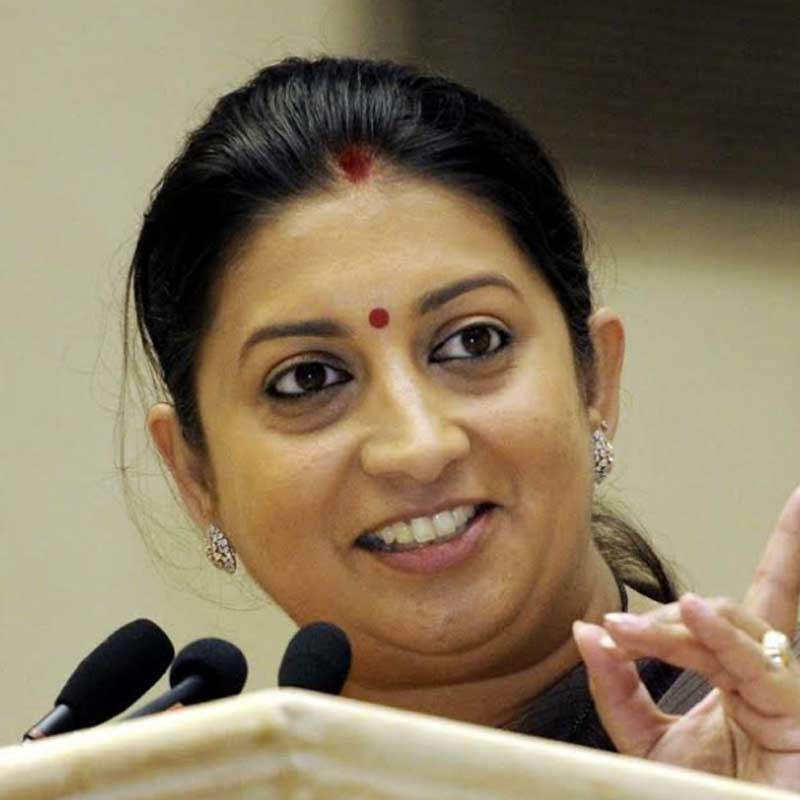
    MUMBAI: With the rising usage of social media, platforms are witnessing an increasing incidence of hate content. Since these platforms do not fall under any regulation in India, it’s a tough task to curb the problem with the help of law. Information and broadcasting minister Smriti Irani said at the Rising India summit that the ministry was planning to bring about regulations, especially for online news, opinion and entertainment content.

    With the rise of technology and social media users, the amount of fake news spreading online is also increasing. Many of the news pieces are editorialised, undermining the true information. Irani also expressed her concern over this trend at the summit. “We cannot ignore the capacity of fake news to demean. We cannot ignore the technology engineered to deteriorate,” she said.

    When a newspaper or a television channel runs news, it has to adhere to the law. There are self-regulatory bodies to set guidelines for traditional media. In the online ecosystem, however, the legislation in terms of news or video content is not very clear. Moreover, social media now acts as an open platform for citizens to voice their opinion. The Ministry of Information and Broadcasting (MIB) is currently working on to control the balance by introducing some regulation to fight this problem. Irani also mentioned that the ministry was having conversations with various stakeholders on this.

    “This is something the ministry is considering to classify similar to what is reflected in broadcasting. Having a similar line of ethics and code of conduct has to be put in place which is incumbent upon the agencies to abide by to ensure that customers do not get affected by the vested views in news, broadcasting and advertorial content,” she added.

    According to some earlier reports, the Telecom Regulatory Authority of India (TRAI) was also evaluating a consultation process to regulate online video-streaming platforms such as Netflix, Amazon Prime and Hotstar.

    Also Read:

    Smriti Irani favours facilitating constructive communication in digital world

    Ficci Frames 2018: Smriti Irani for highlighting M&E’s economic importance 

  • TDSAT tells Airtel DTH, Star to negotiate

    TDSAT tells Airtel DTH, Star to negotiate

    MUMBAI: The Telecom Disputes Settlement Appellate Tribunal (TDSAT) has asked Star India and direct to home (DTH) operator Airtel DTH to negotiate and enter into an agreement.

    Both the parties had threatened to take action against each other. Airtel DTH said it would remove all Star India channels while the broadcasters said it would disconnect its signals. Bharti Telemedia, which operates Airtel DTH, had moved TDSAT against Star India’s disconnection notice. The tribunal has restrained Star from giving effect to its disconnection notice while directing the DTH operator to clear the dues. 

    The tribunal directed the DTH operator to pay all lawful dues in accordance with the agreement by the due date as indicated in Star’s letter dated 7 March, except the amount of Rs 9.8. crore.

    “Parties are at liberty to negotiate and enter into an agreement in accordance with the regulations and their understanding. If need be, either of the party can file an application for clarification and directions,” the TDSAT said in the order.

    On 16 February, Star had issued a disconnection notice to Bharti Telemedia for non-signing of the subscription agreement, non-payment of subscription fees and non-submission of subscribers reports.

    “Due to failure to arrive at mutually acceptable terms with Star India, with effect from 8 March 2018 all Star network channels will be temporarily discontinued from your packs,” the DTH operator informed its subscribers.

    The tribunal has also clubbed the matter with those involving Star India and DTH operators Dish TV and Videocon d2h. The two DTH operators had moved TDSAT in August 2017 after Star rebranded its Hindi GEC Life OK as Star Bharat and launched the pay channel on DD’s free DTH platform Free Dish.

    Also Read:

    Airtel Digital TV disconnects Star India channels

    Tata Sky woos new customers with free Star Sports channels

    Madras HC gives split verdict in Star India versus TRAI case

  • TRAI-Star case back to Madras HC with SC rider

    TRAI-Star case back to Madras HC with SC rider

    NEW DELHI: The Supreme Court (SC) today referred the case relating to the Telecom Regulatory Authority of India (TRAI) and Star India involving the proposed tariff regulations back to the Madras high court (HC) with a rider that the judgement should be delivered within a month.

    TRAI had filed a review petition in the SC after the Madras HC delivered a split verdict on the case on 2 March 2018.

    The Madras HC judges, while agreeing that various tariff-related points (such as capping the discount offered by broadcasters and maximum retail price [MRP]) in the TRAI’s proposed tariff regulations were arbitrary, could not arrive at a consensus whether the regulator had overstepped to regulate business models related to copyrights over content.

    The Madras HC had further said that another judge would hear the issues. It was hearing the case as petitioners Star India and Vijay TV had filed a case against the 2016 tariff regulations and the SC had directed the HC to dispose of the case within a certain time frame. While striking down certain aspects of the tariff guidelines (MRP and discounting limits), issued by the TRAI late in 2016 and upholding the petitioners’ plea, the two-judge bench of the high court referred to another yet-to-be-decided judge the issue of jurisdiction of the TRAI on matters such as copyright over content.

    “The reason for putting a cap of 15 per cent to the discount on the MRP of a bouquet disclosed in to the impugned tariff order is that, as per data available with the TRAI, some bouquets are being offered by the distributors of television channels at a discount of up to 80-90 per cent of the sum of a-la-carte rates of pay channels constituting those bouquets. Such high discounts force the subscribers to take bouquets only and thus reduce subscriber choice. This, in my view, cannot be a reason to restrict the discount,” the judgement observed at one point.

    The lengthy verdict (over 140 pages) of the two-judge bench of the HC, which had been hearing a case filed by Star TV and associate Vijay TV challenging the TRAI’s tariff guidelines on various grounds of copyright and whether the regulator had the jurisdiction to make regulatory guidelines, was delivered after the hearings got over several months back and the verdict was kept in abeyance.

    Also Read:

    SC could take up TRAI-Star case on tariff regulations

    Madras HC gives split verdict in Star India versus TRAI case

  • Complaints against misleading ads rose by 50% in 2017

    Complaints against misleading ads rose by 50% in 2017

    MUMBAI: The number of cases registered with regard to misleading advertisements has been on the rise. Grievance against Misleading Advertisements is a separate portal by the Department of Consumer Affairs to dispose of such complaints.

    Over the last three years, there has been a steady rise in the number of cases registered. In 2015, the launch year, there were 641 cases that shot up to 2032 the next year. Last year, 2017, saw a whopping 3302 cases being submitted to the portal.

    The departments had entered into a memorandum of understanding with the Advertising Standards Council of India (ASCI), a self-governing body, to process misleading ads in the print and electronic media, which will be received on the portal.

    In a reply to a question asked in the parliament, Minister of State for Information and Broadcasting (MIB) Rajyavardhan Rathore said that there was no pre-censorship done for TV channels but all broadcasters needed to abide by advertising rules set by the Cable TV Act and also could not telecast ads found violating ASCI’s codes.

    Also Read;

    Healthcare products lead in ASCI norms breach, 143 complaints upheld

    Ad spend on connected TV globally slated to grow in 2018

  • TDSAT ‘reserves’ order on landing-page case

    TDSAT ‘reserves’ order on landing-page case

    NEW DELHI: Telecoms and disputes tribunal TDSAT on Thursday reserved its order—the judge will pronounce the verdict later—on a case filed by a few multi-system operators (MSO) on sector regulator Telecom Regulatory Authority of India’s (TRAI) decision to ban the use of boot-up or landing page for anything else other than promotion of the distribution platform’s services.

    TDSAT, after hearing all sides, including TRAI, will now give a direction later. The arguments, amongst other issues, revolved around the fact whether all laid down norms and procedures were followed by the regulator before passing an order on the landing page matter on 8 December 2017.

    “In order to protect the interest of service providers and consumers, and orderly growth of the sector, [TRAI] directs all broadcasters and distributors of TV channels to restrain from placing any registered satellite TV channel, on the landing page LCN or landing channel or boot-up screen within 15 days from the date of issuance of this direction,” the regulator had stated in its order, asserting it was well within its right and powers to do so.

    Soon after this directive was issued, a clutch of MSOs and TV channels, including Fastway (operating in Punjab and Haryana states), DEN Networks and the Times group, moved the TDSAT challenging the regulator’s diktat.

    The landing or the boot-up page is what a viewer sees first when a TV set and the connected set-top box are switched on. This page on the screen remains for a certain period of time after which the EPG or the electronic programming guide of the distribution service provider comes up. The landing page, considered hot real estate, usually carries paid advertisements of a TV channel programme or messages (like audience-measurement data relating to a particular TV channel or even initial sampling of a new channel). The commercial use of the landing page results in sizeable revenue for distribution platforms.

    Asked about the legality of the whole issue, lawyer Abhishek Malhotra, a partner in Bharucha & Partners, a law firm specialising in media sector-related cases, said, “The legal position on transparency required to be followed by TRAI under Section 11(4) of the Act is very clear and has been reiterated by the Supreme Court. It seems likely that non-observance by TRAI of this basic condition could result in the matter being remanded back before the merits of the matter are taken up.”

    While passing the directive on use of the landing page, TRAI had said it had received a number of representations from stakeholders stating the practice of placing a registered TV channel—whose audience data was recently released—on the landing page had the potential to influence TV-audience measurements.

    The genesis of this TRAI order is connected to the rousing debut of an English news channel last year, which got high viewership ratings from the audience-measurement agency and the data was questioned by a section of the competition on the grounds that some unethical practices were followed. It had then resulted in a public spat.

    Also Read :

    TRAI tightens landing-page norms

    Republic TV curiosity factor wanes, NBA channels data absent in week 21

    Republic TV, TRAI, NBA and the case of multiple LCNs

    News channel controversy: BARC India fires riposte to NBA

    “Dual LCNs is not the best thing to do” — Chrome Data CEO Pankaj Krishna


  • ISRO, DoT turf wars delaying connectivity reach: govt official

    ISRO, DoT turf wars delaying connectivity reach: govt official

    MUMBAI: India builds low-cost satellites but has the most expensive bandwidth, a senior Indian government official said on Tuesday, blaming turf wars between ISRO and Department of Telecoms (DoT) for delays in taking connectivity to far-flung areas.

    DoT special secretary N Sivasailam also flagged issues of costs and said that the Indian Space and Research Organisation (ISRO) should do more in order to take the charges at par with global experience.

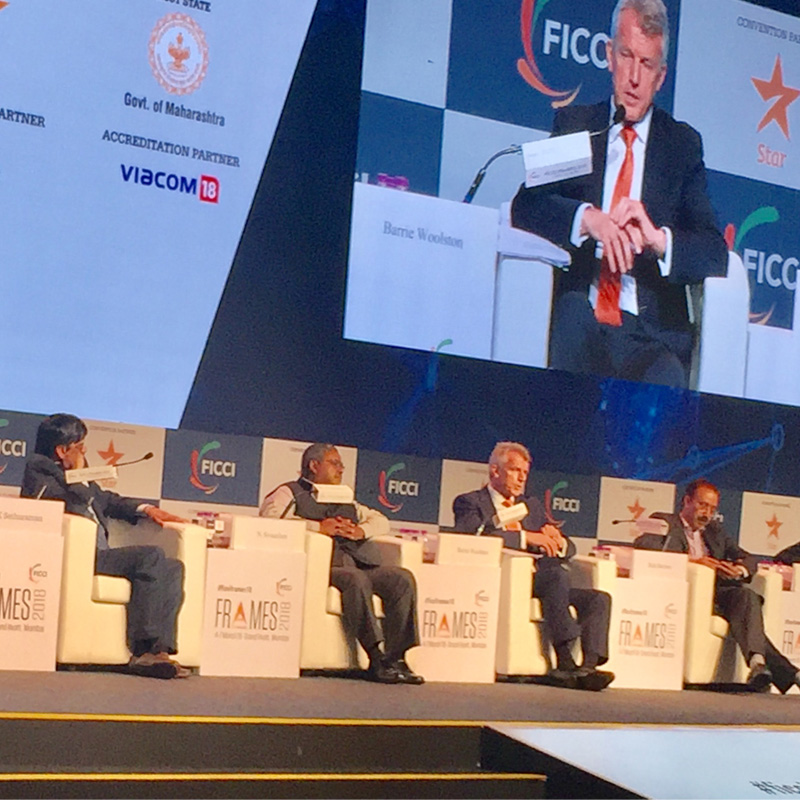
    “Here is the paradox. We produce the cheapest satellite but the costliest bandwidth,” Sivasailam was quoted by PTI as saying in a report, adding that India required more transponders on satellites. He was speaking at the ongoing FICCI-Frames 2018 here at a session on ‘Digital India: Sparking the Access Revolution.’ The session also had a talk by ISRO director for the satcom and navigation programme office, K Sethuraman, who dwelled on the agency’s vision for satellite programme of India.

    Sivasailam said there is a “problem of domains” between the DoT and the ISRO that has impacted, for the last 20 years, the roll-out of connectivity in the far flung areas of the country. 

    “The problem is of domains. We [DoT] don’t want to leave our domain [of spectrum allocation]. ISRO doesn’t want to leave its domain. It is a domain related problem…I do not see people coming together and negotiating this aspect out,” he said. Admitting that there is “politics”, which “makes things difficult”, PTI reported, adding that Sivasailam pitched for both the agencies getting over the problems for an overall benefit. 

    “It is time it stopped because it is hurting business development and ultimately people are not getting [benefited],” he said. On the critical issue of pricing, he asserted it will cost around Rs 150 to serve one user with the current cost structure in the country, whereas in the US, it costs $1 or Rs 65. “If the US is getting it for $1 for the same bandwidth for the life of the satellite, I should be getting it at the same rate. There is no reason why it should not happen in India. That is my refrain,” he said.

    Conceding that ISRO helps take satellite connectivity to 5240 far-flung locations in the country, including 4300 in North-East India, Sivasailam elaborated that the cost of satellite, bandwidth and spectrum makes “operations unviable”. 

    “If you have the volume of business, we should be able to provide at the rates internationally available and that is a matter of some concern for us. We have been working on it, but not necessarily successful on this,” he said, stressing that the industry will have to find solutions on this and DoT and ISRO also need to work together on this issue.

    Speaking of self-regulation in over the top (OTT) services, he said it cannot substitute regulation. “When you talk of regulator’s way of looking at regulations, it lies on consumer side and that’s where self-regulation in itself will fail,” he said, pointing out that while it is particularly important in the telecom sector with issues of call drop and number portability, it may not be applicable too much in the broadcasting sector.

    Sivasailam also spoke of the Telecom Regulatory Authority of India (TRAI) recommendation on in-flight connectivity, which will be taken to the Telecom Commission “sooner than later” and it “could be a reality soon”. On 20 January 2018, the TRAI came out with recommendations suggesting that airlines should be allowed to offer in-flight connectivity over Indian airspace, including broadband services. The Civil Aviation Ministry, Department of Space and DoT now have to act on the suggestions to make it a reality. 

    The Telecoms Ministry official said there are discussions within the department on whether to allow both voice and data on flights or restrict it to voice connectivity alone. The new telecom policy will also be out “very soon,” he said.

    Also Read :

    M&E stakeholders need to collaborate for growth: Sudhanshu Vats

    Broadcasters see positive future for TV in India

  • SC could take up TRAI-Star case on tariff regulations

    SC could take up TRAI-Star case on tariff regulations

    MUMBAI: The Star India-TRAI (Telecom Regulatory Authority of India) case, which attracted a split verdict in the Madras High Court (HC) recently, took another turn today with the Supreme Court (SC) while adjourning case till Monday showed inclination to dispose of the case itself.

    As per reports emanating from the SC, the broadcast carriage regulator TRAI will likely file in SC a transfer petition by Monday when the apex court will look into the case for possible listing for likely hearing in July 2018.

    The Madras HC judges, while agreeing that various tariff related points (like capping discounting offered by broadcasters and MRP, for example) in TRAI’s proposed tariff regulations were arbitrary, could not arrive at a consensus whether the regulator had overstepped to regulate business models related to copyrights over content.

    The Madras HC had further said that another judge would hear the issues. It was hearing the case as petitioners Star India and Vijay TV had filed a case against the 2016 tariff regulations and the SC had directed the HC to dispose of the case within a certain time frame.

    As hearings continued in the HC, other industry bodies like AIDCF and a couple of companies joined the issue with high profile lawyers arguing the case for and against the petition.

    Also Read :

    Madras HC gives split verdict in Star India versus TRAI case

    MSOs move Madras HC seeking relief on inter-connect pacts

    Orders reserved by Madras HC on TRAI jurisdiction case