Category: Regulators

  • Prasar Bharati’s policy on DD Free Dish to be out soon

    Prasar Bharati’s policy on DD Free Dish to be out soon

    MUMBAI: The suspense surrounding Prasar Bharti’s policy on its free direct-to-home (DTH) platform is likely to end soon. The pubcaster has told the Telecom Disputes Settlement and Appellate Tribunal (TDSAT) that it will come out with a new policy for DD Free Dish in a few weeks.

    Prasar Bharti made this submission before the tribunal that is hearing petitions filed by broadcasters against Doordarshan’s decision to scrap slot auctions without putting in place a new policy.

    As a result, Prasar Bharati has finally decided to expedite matters by framing a new policy on DD Free Dish.

    “The respondent – Prasar Bharti submits that the respondent is in the process of taking a policy decision in respect of subject matter of these petitions. It is expected that such decision may be taken within few weeks,” the TDSAT noted in its brief order.

    Following Prasar Bharati’s submission, the tribunal has posted the matter under the same head on 28 May. The tribunal also told Prasar Bharati to bring on record any decision that it takes in the meantime.

    “It appears that pleadings are already complete in these matters and there is no requirement of taking any further evidence. However, if there is any subsequent development, the parties will be at liberty to take required steps,” the TDSAT stated.

    Broadcasters have argued that DD can allow channels to continue on Free Dish on pro-rata basis. They also contended that DD’s decision amounts to discrimination as it has earlier granted continuity to channels on a pro-rata basis.

  • MIB proposes installation of chip in DTH boxes: Report

    MIB proposes installation of chip in DTH boxes: Report

    MUMBAI: In order to make the measurement process of viewership better, the Ministry of Information and Broadcasting (MIB) has proposed of an in-built chip in set-top boxes (STBs). According to a report by The Asian Age, the ministry has sought that all direct-to-home (DTH) operators should install a chip in all new set-top boxes to record data about channels watched and their duration.

    The MIB has made this recommendation to the regulatory body Telecom Regulatory Authority of India (TRAI). The proposal was squeezed into the voluminious DTH sector recommendations and the TRAI has asked for a separate and detailed proposal in regard to the matter.

    “Regarding asking DTH operators to instal a chip in new STBs, it is stated that this is a new issue and cannot be part of the reference. If the MIB desires the TRAI’s recommendation on this issue, it may send a separate reference to TRAI as per the provisions of TRAI Act 1997,” TRAI said in a communication to the ministry.

    If the step is taken, it would ensure a wider and better measurement system of viewership preferences across the country. Other than that, the move may also lead to the end of the Broadcast Audience Research Council’s (BARC) monopoly in the measurement system.

    The proposal of allowing the renewal of licences to only DTH operators that have no dues pending to government has been approved by the TRAI.

    Also read:

    TRAI bats for issuing DTH licences for 20 years

    BARC begins new subscription service PreView


  • TRAI bats for issuing DTH licences for 20 years

    TRAI bats for issuing DTH licences for 20 years

    MUMBAI: The Telecom Regulatory Authority of India (TRAI) has reiterated its recommendation to the Ministry of Information and Broadcasting (MIB) that direct-to-home licences be issued for a period of 20 years and then renewed for 10 years, and a one-time entry fee of Rs 10 crore be charged in the new DTH licensing regime.

    In July 2014, the TRAI had made a number of recommendations regarding the issues related to the new DTH licensing regime.

    However, the MIB had proposed, after considering comments from other ministries and departments, to grant DTH license for an initial period of 10 years and thereafter, renewal of license after 10 years.

    The ministry had sought TRAI’s views on the proposal.

    In its response yesterday, the telecom regulator said, “It is felt that a longer licence period would provide certainty in the market.

    Keeping a short license period may adversely affect the potential investment in the sector and would also negate the efforts of the government, inter alia, including the liberalisation of the FDI regime”.

    Stating that a longer duration of license helps in better futuristic business planning, the TRAI noted that in the telecom sector, the license period under the Unified License (UL) regime is 20 years and renewal is 10 years at a time.

    “In view of the growing convergence between the broadcasting and telecom sectors, it is logical to align the license period for DTH sector with that in the telecom sector under the UL.

    In view of above, TRAI reiterates its earlier recommendations,” it said.

    Under the UL, operators are free to provide all telecom services with one licence.

    Currently, the license is valid for 10 years.

    The TRAI also reiterated its recommendation of one-time entry fee of Rs 10 crore to be charged in the new DTH licensing regime.

    The MIB, however, proposed to increase the one-time entry fee to Rs 25 crore for the license period of 10 years.

    In its response, the TRAI said, “In order to encourage more entrants in the DTH industry, and to compete with the cable industry, wherein there is no entry fee, the TRAI recommends to retain the entry fee to Rs 10 crore”.

    Currently, the DTH operators also need to pay an initial entry fee of Rs 10 crore.

  • No specific instance of paid news on private TV channels yet: MIB

    No specific instance of paid news on private TV channels yet: MIB

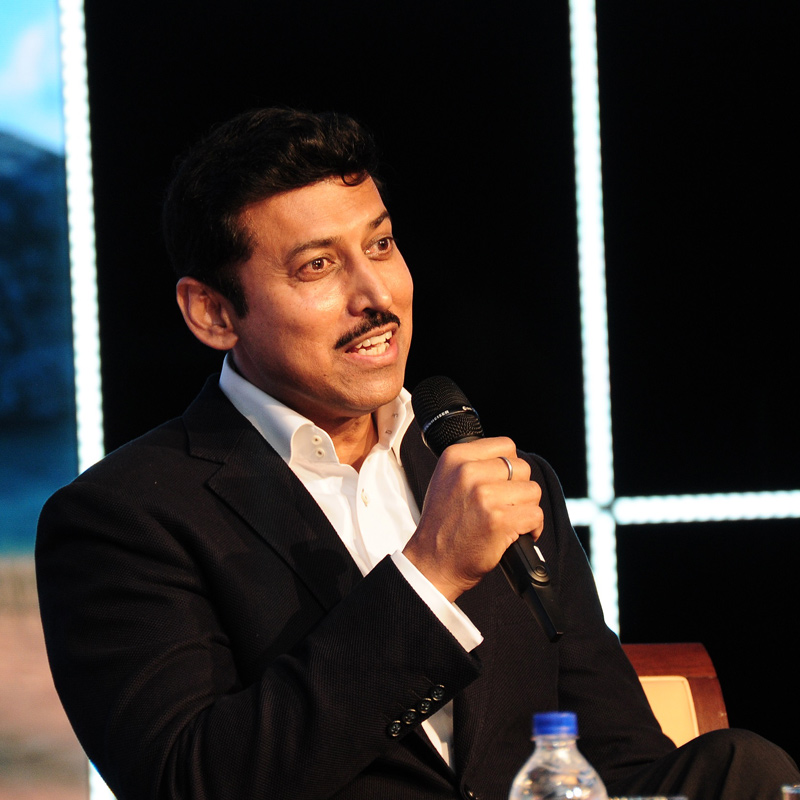
    MUMBAI: The Ministry of Information and Broadcasting (MIB) has not yet had to face the menace of paid news on news channels. In a reply to the Lok Sabha or Lower House of Parliament, junior minister of MIB Rajyavardhan Singh Rathore informed that no specific instance of paid news in electronic media (private satellite TV channels) has been brought to the notice of the ministry.

    He further added that instances of paid news during election time were directly dealt by the Election Commission of India under the Representation of the People Act, 1951. The existing provisions contained in the Programme and Advertising Codes (PAC) and the existing mechanism are considered adequate to regulate content on TV channels.

    The minister was speaking in response to questions raised regarding paid news on 24X7 news channels and the ministry’s action on the same. Rathore also stated that the existing rules under the Cable TV Network Rules of 1994 were good enough to ensure channels didn’t cross their lines and the act does not allow for pre-censorship, only penalty after telecast. “Action is taken against TV channels whenever violation of the PAC is established,” he said.

    The PAC contains a wide range of parameters to regulate programmes and advertisements on such TV channels including the content likely to pose menace of news sensationalism and breaking news culture. Rathore named a few rules:

    Rule 6(c) provides that no programme should be carried in the cable service which contains attack on religions or communities or visuals or words contemptuous of religious groups or which promote communal attitudes;

    Rule 6(d) provides that no programme should be carried in the cable service which contains anything obscene, defamatory, deliberate, false and suggestive innuendos and half-truths;

    Rule 6(e) provides that no programme should be carried in the cable service which is likely to encourage or incite violence or contains anything against maintenance of law and order or which promote anti-national attitudes;

    Also Read :

    MIB says fewer TV channels violating ad, prog norms

    Govt warned 55 violators of programme & ad codes in 3 yrs, says Rathore

    Prog & Advt Code violation: 30 channels faced action in 2015 & 2016

  • MIB says ISRO upping capacity to facilitate migration from foreign satellites

    MIB says ISRO upping capacity to facilitate migration from foreign satellites

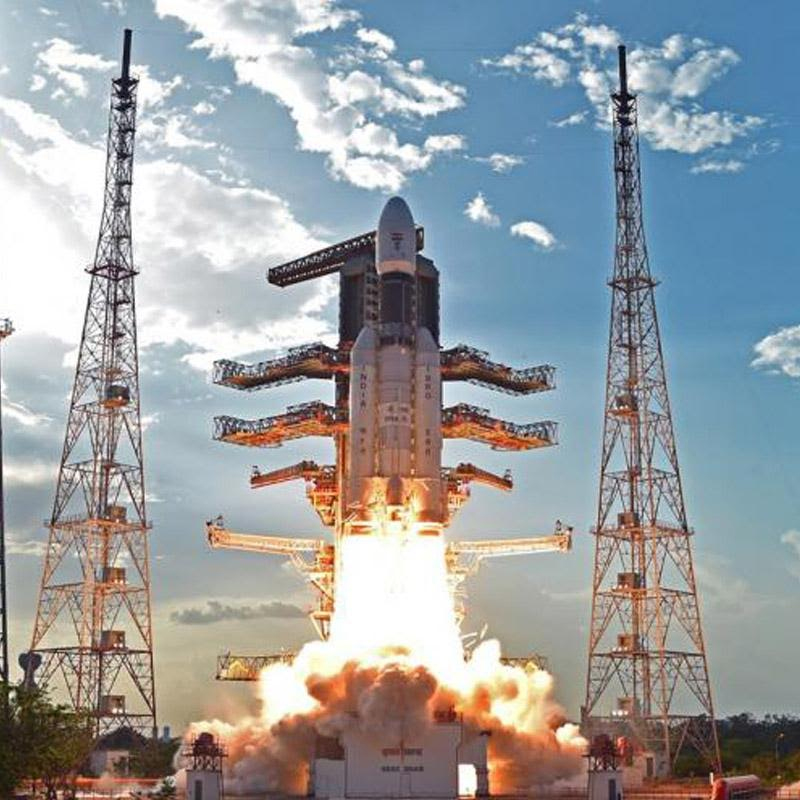
    NEW DELHI: The Indian government has admitted that inadequate capacity on Indian satellites has compelled domestic direct to home (DTH) operators to use a large number of transponders on foreign satellites and that India’s space agency Indian Space Research Organisation (ISRO) is gearing up to meet growing demands owing to proliferation of HD TV channels.

    “Presently DTH services are being supported by 42 transponders on indigenous satellites (INSAT/GSAT) and about 69 transponders on foreign satellites. There is a registered demand of additional about 64 transponders for immediate future,” junior minister at Ministry of Information and Broadcasting (MIB) Rajyavardhan Rathore informed fellow parliamentarians in Lok Sabha or the Lower House of Parliament recently.

    Without stating it in so many words though, Rathore said that as ISRO increases its satellite capacity to be able to meet the demands of Indian DTH operators, a migration from foreign satellites would become a reality — a move that MIB and Department of Space are slowly implementing to nudge users of satellite services, especially TV channels, to move away from non-Indian birds.

    “It is expected that over a period of next three years adequate capacity would be added through Indian satellites to facilitate migration of foreign capacity to Indian [satellite] capacity,” the minister said, adding, according to Telecom Regulatory Authority of India (TRAI) data, there has been a significant growth in the number of high definition (HD) satellite TV channels. The number has grown from three in 2010 to 83 in 2017.

    Dwelling on TRAI’s recommendations on sharing of infrastructure on a voluntary basis, Rathore clarified that till date MIB has not received any proposal from DTH operators for sharing of satellite transponders and earth station facilities with another such player or distribution platforms. “Enabling sharing of infrastructure may address the issue of demand-supply mismatch and reduce capital and operating expenditure of the service provider to an appreciable extent,” he added.

    Meanwhile, addressing another set of queries raised by parliamentarians relating to DTH, the minister said a total number of 1922 complaints/grievances against private DTH service providers were received through monitoring systems of the government and TRAI over the last three years on various issues ranging from technical/financial/policy matters to delay or improper installation, malfunctioning of STBs, issues of interoperability, disruption of signals during bad weather, improper billing, channel packaging, FTA channels, etc. As many as 1811 complaints were addressed by MIB till date.

    As soon as complaints are received, they are brought to the attention of the DTH operator concerned and later a follow-up action too is undertaken to evaluate compliance and whether the problems were resolved or not, the minister explained.

    According to the minister, sector regulator TRAI had issued last year a set of tariff guidelines to boost healthy competition among DTH service providers and bring down the subscription prices for consumers. The guidelines were legally contested by some stakeholders and are awaiting judicial advice, he added.

    ALSO READ:

    MIB admits no DTH infra sharing permission sought

    MIB, DoS nudge TV channel to use Indian satellites

    MIB to collect data on satellite capacity needs, digital chatter

    MIB, TRAI allay industry fears on sat capacity leasing & content regulations


  • MIB forms committee to draft online media norms

    MIB forms committee to draft online media norms

    MUMBAI: After retracting the order which called for guidelines to punish journalists for fake news, the government has upped the ante to regulate online media. Smriti Irani-led Ministry of Information and Broadcasting (MIB) has constituted a committee of 10 members to discuss and recommend a regulatory framework for online media.

    The order which was released on 4 April named the secretaries of the ministries of Home, Electronics and Information Technology, and the departments of Legal Affairs, and Industrial Policy and Promotion as part of the committee. Along with that, it will have representatives from the Press Council of India, News Broadcasters Association and the Indian Broadcasters Federation.

    It has been reported earlier also that government was in talks to come up with regulations  for online media. Speaking at an event, Irani said that the ministry was planning to bring about regulations, especially for online news, opinion and entertainment content.

    In the terms of references, three reasons have been cited. The first one is to “delineate the sphere of online information dissemination which needs to be brought under regulation, on the lines applicable for print and electronic media”.

    The second reason is to “recommend appropriate policy formulation for online media/news portal and online content platforms, including digital broadcasting which encompasses entertainment/infotainment and news/media aggregators, keeping in mind the extant FDI norms, programme and advertising code for TV channels, norms circulated by PCI, code of ethics framed by NBA and norms prescribed by IBF”.

    Finally the order said that the committee would analyse the international scenario on such existing regulatory mechanism to incorporate the best practices.

    Commenting on the update, news broadcaster NDTV said, “The youngest and most democratic of all media – online media – must be allowed self-regulation: the chance to develop and implement its own guidelines for responsible and fair journalism. The IT Act already applies to online content. The government move that seeks to decide new rules for online media excludes any representatives from online news publishers and reads as exclusionary and coercive. Online publishers are perfectly capable of forming a credible organization, pairing their own leaders with eminent and independent voices, similar to those that represent broadcasters and print media. Allow a real discussion, a genuine debate. That is the fundamental operating principle of the internet.”

    When a newspaper or a television channel runs news, it has to adhere to the law. There are self-regulatory bodies to set guidelines for traditional media. In the online ecosystem, however, the legislation in terms of news or video content is not very clear.

    Since a while, governments all over the globe have been attempting to prevent “fake news”. In India, the move has been criticised by many media professionals and organisations as a step to curb the freedom of media. The authority is looking to restrict news content spread via YouTube, Facebook and WhatsApp as the order refers to “digital broadcasting” too.

    Also Read :

    Smriti Irani says govt mulling legislation for online content

    Comment: MIB’s botched whip on fake news akin to testing waters

  • TRAI urges govt to set up public wi-fi systems

    TRAI urges govt to set up public wi-fi systems

    MUMBAI: The Telecom Regulatory Authority of India (TRAI) is of the opinion that the the government must encourage public wi-fi solutions from a public policy point of view. “The availability of broadband services at a very low cost and in every corner of the country is the basic requirement of digital India,” it said in a report.

    In the report on ‘Public Wi-Fi Open Pilot Project’, submitted to the Telecoms Ministry, TRAI  said, “Wi-fi is a technology that can easily meet this requirement [for digital India]. The recommendation envisages an architecture that supports one time authentication requirement, interoperability across different wi-fi networks, ease of payment through any instrument and above all inexpensive service.”

    According to TRAI,  global internet traffic is anticipated to increase three times to 3.3 ZB per year by 2021 from 1.2 ZB per year in 2016 and wi-fi will play an important role in driving that growth. Public wi-fi hotspots are crucial for broadband internet in international countries. As per a Cisco report, the number of public wi-fi hotspots is set to increase from 94 million in 2016 to 541.6 million in 2021. The density of WiFi hotspots will also increase from one hotspot for 150 people to one hotspot for 20 people.

    The authority noted that India significantly lags behind other countries in terms of providing access to broadband, especially to people in rural areas. Since there is a significant section of the population still to be connected, it feels there is a need to take some measures so as to provide broadband services to the unconnected. This calls for introduction of new set of small players in the wi-fi service provisioning space, who will be able to extend their resources through a process of incentivisation.

    The report shows that mobile network data usage in India remains dominant currently as compared to other forms of internet usage. This can be attributed to a number of factors, including the cost and affordability of different broadband services, lack of fixed line coverage and relatively small number of public wi-fi zones. “This situation highlights the need for better proliferation of public wi-fi networks that can offer a more affordable and flexible alternative for scaling up of internet access,” it says.

    The regulator has come prepared. In 2017, it conducted a pilot trial of the suggested framework in the recommendations. Several companies registered to be app providers, software and hardware service providers and public data offices with a vision to ‘establish an open architecture based on wi-fi access network interface (WANI)’ in such a way that smaller entities were easily able to setup systems and users were able to easily identify and connect to them. Its opinion is that the prices must be of lower denominations such as Rs 2.

    The pilot was conducted to demonstrate that unbundling of services reduces rework, speeds up development and hence is the most effective way to tackle this complex problem. It also highlighted that multi-provider, inter-operable, collaborative model increases the overall innovation in the system, dismantles monopolies and encourages passing of benefits to end user. The pilot allowed for real life testing and suggestion of improvements as well as fine tune technology.

    The public wi-fi pilot outcome aims to offer a seamless experience to end users. As an encouragement for small entrepreneurs such as tea shops, grocery shops to set up and maintain access points, it wants to uncomplicated issues like unbundling authentication, payment and accounting from hardware and software running on the access point.

    TRAI mentions the operating guidelines to include a speed of at least 2 Mbps and e-KYC linked to Aadhaar or m-KYC via OTP authentication. The providers must set up systems capable of withstanding cyber attacks such as malware, denial of service (DoS) and even customer data and privacy protection.

    It calls the pilot a success since 96.3 per cent of the persons found the system user friendly and just 3.7 per cent of the persons believed that there is still a scope for improvement. It now intends to expand the second phase in two large cities – Delhi and Bengaluru – at junctures like airports, railway/metro stations, bus stands and other public places. This will allow testing WANI framework at scale.

    As an encouragement, TRAI says that the success of the pilot addresses the issues of interoperability and payment options. The WANI architecture would unleash the power of wi-fi and provide an impetus to the number of public hotspots in the country thereby providing the user a good quality of service and also a foolproof payment system.

    Also Read:

    Industry hails doubling of digital allocation

    Wi-Fi: TRAI plans to set up ‘open’ WANI, seeks inter-operable, sachet-priced model

  • MIB directs BARC to stop landing page impressions for measurements

    MIB directs BARC to stop landing page impressions for measurements

    MUMBAI: Clamping down on the practice of running a channel on multiple logical channel numbers (LCNs) allegedly for influencing television ratings, the Ministry of Information and Broadcasting (MIB) has advised the Broadcast Audience Research Council (BARC) to discontinue the adoption of landing channels for the purposes of television audience measurement with immediate effect. Moreover, the ministry has asked BARC to send a compliance report on the same.

    According to government sources, non­compliance on the landing page advisory “shall be violation of the Policy Guidelines for Television Rating Agencies in India.”

    The development comes close on the heels of the Telecom Regulatory   Authority   of  India’s (TRAI) statement on the issue on Tuesday. The telecom regulator issued a consultation paper to discuss the issue of the landing page (the page that appears when one switches on the STB and the TV set) and its many uses and misuses with the industry stakeholders.

    Pointing out that the practice of running a channel on multiple logical channel numbers (LCNs) allegedly for influencing television rating was brought to the notice of the regulator, the TRAI statement said. Some TV channels allegedly, in collusion, with the distributors, placed some television channels on multiple LCNs (meaning at several places in different programming genres in the EPG), it added.

    Also Read:

    TRAI initiates consultation on landing page issue

    TDSAT ‘reserves’ order on landing-page case

    TRAI tightens landing-page norms

  • Comment: MIB’s botched whip on fake news akin to testing waters

    Comment: MIB’s botched whip on fake news akin to testing waters

    With the scourge of fake news rampant globally, any attempt to counter it is always a welcome move. And just for that India’s Minister of Information and Broadcasting Smriti Irani cannot be faulted even if such a view is radical and would be open to severe criticism-as it was in India over the last few days with a large section of civil society coming down like a ton of bricks on the minister’s assertions on guidelines for TV and print media journalists that proposed punitive penalties for breaching some undefined norms.

    However, the wording of the press statement put out by the government’s PR arm, Press Information Bureau, on behalf of MIB is what raises questions.

    First, the government statements were aimed at “regulating” fake news and not look at avenues to arrest their spread or, as the homoeopathy strand of medicine would do, go to the root cause of the ailment. The intent becomes clear: the aim was not really to find a solution to fake news in the true sense.

    Second, the timing of the guidelines, which were aimed at handing out harsh penalties to government accredited journalists from the print and electronic media, rings some more alarm bells. Though the present BJP-led government’s official five-year tenure ends mid-2019, it is widely expected that the general elections would be held before the tenure comes to an end officially—as is mostly done, but then this government has been known to break many times tested norms-if not as early as late 2018.

    On both these counts, the honourable MIB minister was found wanting and her move was widely dubbed as nothing but an initiative to gag the news media critical of the present government. That the prime minister himself had to step in to order a rollback of the MIB diktat a day later, as officially being stated, is a story in itself.

    Let’s forget for once what some of the journalistic organisations had to say in criticism of the MIB move to cancel accreditation of journalists found peddling fake news, though the definition of fake news was not elaborated, nor was the fact as to why just on a complaint from practically anybody a journalist, whose antecedents are verified by the government annually for security reasons, will be put in the hall of shame even if it’s for varied period of time.

    Two organisations, the Press Council of India (PCI) and the News Broadcasters Association of India (NBA), made responsible to decide whether the complaint on fake news was genuine or not (according to the government statement) have not much legal standing or bandwidth to do so. While the PCI is a (toothless) watchdog for the print medium, the NBA’s self-regulatory mechanism for member-TV news channels hasn’t always worked.

    Now let’s try analysing what could have prompted such a move by MIB-a move that was unveiled seemingly without taking into confidence the PM and his office.

    It’s a known fact in India, in sharp contrast to other global markets, that a TV news channel here is started, more often than not, to flaunt one’s status symbol and increase the owner’s powers (both politically and financially) rather than being a pure journalistic means. That is not saying there are no exceptions to the rule and India has some very fine and professional news channels, which daily go through the grind of living up to the high standards of journalism. But, what explains the fact that 25-30 per cent of the total 900-odd permitted TV channels in India would fall in the news and current affairs genre? And they come in all shapes, sizes and languages. If the big guns of the news and current affairs genre mostly have scarlet bottom lines, it goes without saying that the smaller news channels are barely churning out revenue. No other country in the world has so many TV news channels.

    In a year that will lead to general elections-a period after the elections are announced is when cacophony on TV news channels start peaking-clamping down on news outlets cannot be considered a bad strategy; especially when one is not used to hear criticism. Artificial barriers become natural armours. Putting on hold future permission to TV channels by the MIB till a new policy on uplink/downlink is put in place after regulator TRAI’s recommendations is one such clampdown. But then trying to gag the news media as a whole need to be thought out and well orchestrated instead of merely announcing one evening some guidelines under the garb of attempting to regulate fake news.

    And why regulate fake news? Does that mean some fake news could have been allowed, while filtering out the more damaging ones? More importantly, why target those journalists for fake news who are accredited by the government? Did that mean that non-accredited journalists, which are in huge numbers, would have been allowed to dabble in fake news? Considering most news websites and many online ventures that pretend to deal in news but hand out mostly tainted views are not accredited with the government, either at the federal or State level, the question arises whether they would have been allowed to peddle fake news? In India, fake news is more rampant on social media platforms and little known online ventures than in mainstream media.

    But Ms. Irani and her set of advisors again cannot be faulted to try regulating the news media. From the days of the infamous Emergency unleashed by then Prime Minister Indira Gandhi in the mid-70s to her son Rajiv Gandhi in the late 1980s and few other successive governments of post-independent, India has tried to muzzle at some time or other the not-so-perfect-yet-a-vibrant media of the country. Not only such moves have backfired, including the dark days of the Emergency, but in many cases the then governments had to beat a retreat in the face of stiff opposition to any such move. So much so, folklore in the complex realm of Indian politics says that all governments that tried to regulate media in any form bit the dust and were booted out of power.

    In the mid to late 1990s, just before the first NDA government came to power under Prime Minister A B Vajpayee, the then government had tried to bring in Parliament a Broadcasting Bill, envisaging wide-ranging limits to media businesses, including cross-media restrictions of ownerships. That government didn’t remain in power to see through the proposed legislation. However, that didn’t stop other governments, including the Congress-led coalitions that ruled for 10 years after 2004, to attempt limiting media independence. Manish Tiwari, a former MIB minister in 2013, had famously proposed a common examination for journalists as the minister thought media personnel were not qualified enough.

    Cut to 2018. The storm may have blown over for the time being, but for the media to sit back and relax could be dangerous. Simply because the present government is unlike any those in the past. To take satisfaction from an explanation that the PM was totally unaware of one of his minister’s moves to gag the media could be a bad strategy for the media industry. The government was just testing the waters.

    Also Read :

    PMO directs MIB to withdraw guidelines on fake news

    MIB nod to TV channels on hold till TRAI uplink, downlink suggestions

    Smriti Irani tweets industry body advisory urging restraint by TV news channels
  • TRAI initiates consultation on landing page issue

    TRAI initiates consultation on landing page issue

    NEW DELHI: The Telecom Regulatory Authority of India (TRAI), the telecoms and broadcast regulator, now wants to discuss the issue of the landing page (the page that appears when one switches on the STB and the TV set) and its many uses and misuses with the industry stakeholders. The regulator issued a consultation paper in this regard today.

    Pointing out that the practice of running a channel on multiple logical channel numbers (LCNs) allegedly for influencing television rating was brought to the notice of the regulator, the TRAI statement said. Some TV channels allegedly, in collusion, with the distributors, placed some television channels on multiple LCNs (meaning at several places in different programming genres in the EPG), it added.

    “As the TV channel ratings measurement is done on the basis of a unique water mark ID of a channel, the data of viewership of all such multiple LCNs is aggregated and reflects in the final ratings,” the statement said, adding that on the receipt of complaints the TRAI intervened last year and acted as per the provision of existing regulations.

    The TRAI has gone on to say that alleged irregularities in trying to influence audience measurement and subsequent data later shifted to the landing page and that it received quite a few complaints regarding the same. 

    Some of the issues raised by the TRAI in its consultation paper on the landing page include the following:

    · Do you feel that the emerging concept of placing TV channels on

    the landing page can influence TRP ratings? Suggest the action,

    which may address the issue with justification.

    · Should the concept of a landing page be defined? If so, please

    suggest the definition of the landing page with justification.

    · Whether placing of a TV channel on the landing page increases

    television ratings? If yes, why TV channels whose TV ratings

    are released by a TV rating agency should not be barred from

    being placed on the landing page? If no, why are broadcasters eager to place their channels on the landing page?

    · What should be the criteria/consideration to put a TV

    channel on a landing page?

    · Can placing of TV channels on the landing page be mitigated through changes in measurement methodology of television ratings?

     · Should the landing page be used to place TV channels not

    having TRP rating or only to provide platform specific

    information? Give suggestions with justification.