Category: Regulators

  • Prasar Bharati Board approves finalising FreeDish policy

    Prasar Bharati Board approves finalising FreeDish policy

    MUMBAI: The Prasar Bharati board, at a meeting held on Monday, decided to finalise the FreeDish policy. According to an Asian Age report, the public service broadcaster gave its approval to Doordarshan which operates the entity. The finalised version will be submitted to Ministry of Information and Broadcasting (MIB).

    According to the referred report, the policy is likely to consider MIB’s direction to stop all e-auction of channels. However, in last meeting the decision was delayed with a fear that the directive could “wreck the finances of Prasar Bharati”.

    Meanwhile, PTI reported that the broadcaster was earlier asked by the MIB to review the continuation of FreeDish. It felt that the programme benefited only private channels and brought recurring liability to the government. FreeDish boasts a reach of 22 million subscribers.

    The matter had reached the Telecom Disputes Settlement Appellate Tribunal last year when channels reacted to its decision to suspend auctions after which an interim order allowed channels to continue at a pro rata basis till it decides on a new policy. The halting of auctions was done soon after Smriti Irani took charge as MIB minister. FreeDish was also looking at MPEG4 technology to carry more channels. Currently, it holds 80 channels.

    Also Read:

    DD Free Dish looks at  advertising for monetisation 

    10 FreeDish slots may fall vacant by Oct-end as renewals hang fire

  • Smriti Irani moved out of MIB as Rajyavardhan Singh Rathore gets independent charge

    Smriti Irani moved out of MIB as Rajyavardhan Singh Rathore gets independent charge

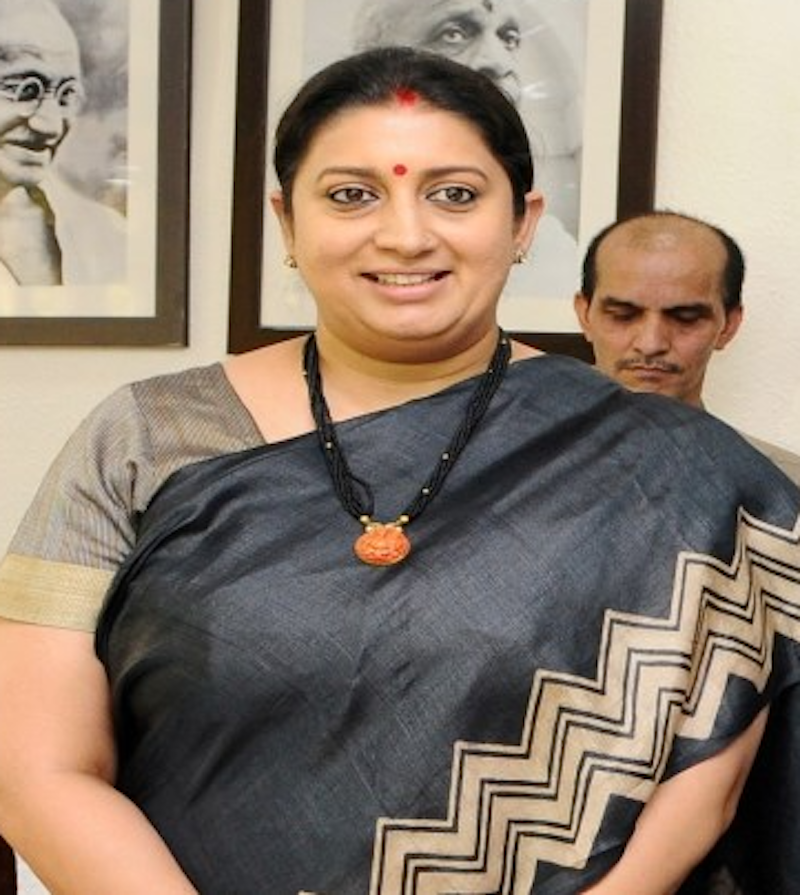
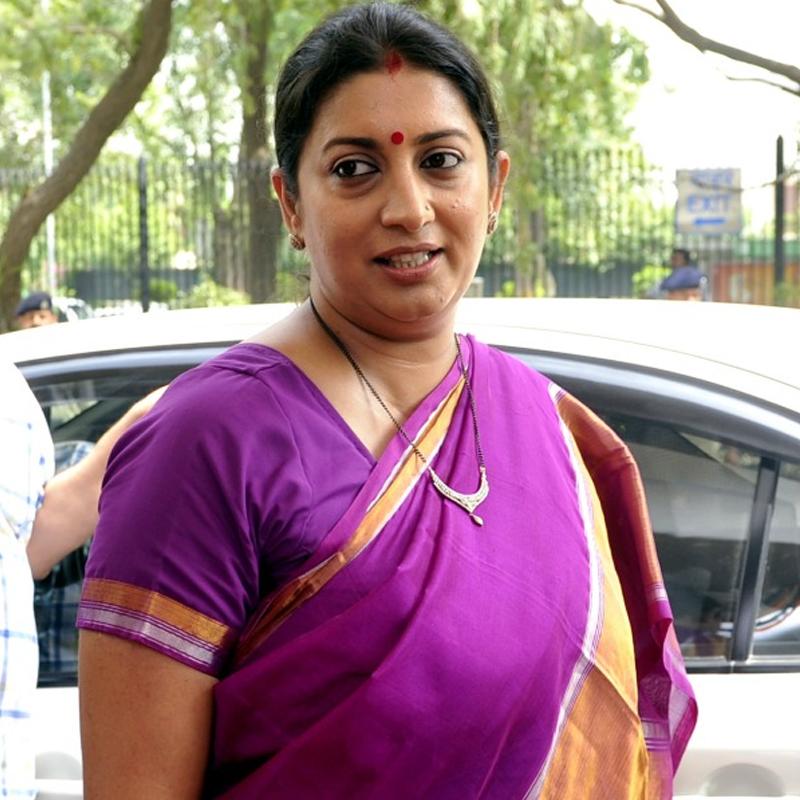
    MUMBAI: There’s change at the top at the ministry of information and broadcasting (MIB).  Smriti Irani has been moved out of her post as mininster and kept solely in charge of the textiles ministry. Replacing her is Rajyavardhan Singh Rathore – her minister of state – who has now been given independent charge of the MIB.

    That things were afoot in the ministry was sounded out earlier this week.  Irani cancelled her trip to Cannes where a strong Indian delegation is attending the film festival. Earlier it was announced that she would be leading an eight member panel to the famed French Riviera cinema confab.

    Rathore – a former sportsman and army man – has been a permanent fixture in the ministry for the past four years as a state minister. He has patiently waited on the sidelines over that period and has finally earned his stripes getting independent charge of the MIB as the government gears up for the coming national elections in 2019.

    Irani had, a couple of days ago, delivered the Sardar Patel Memorial Lecture 2017 themed ‘Model of Broadcast: Landscape for Democracies’ during the course of which she had called the broadcast news landscape as a “spectator sport” in which the rush for audience ratings has reduced everything to “headlines competing with hashtags” in the wake of social media explosion taking place in the country that has provided a new pathway for information dissemination.

    The media has been speculating about the reasons for her departure. Among them: the recent National Film Awards run in with president’s office about his presenting the citations to winners; and her views on fake news and journalists, and wanting to bring in curbs on online media. Sources close to the government rubbish these allegations as canards, stating that Irani has been a loyal party person and she steps into – and out of any – role that the high command asks her get into.

    The Narendra Modi led government also announced other changes last evening. Finance minister Arun Jaitley- who has been ailing and was successfully operated for his kidney ailment on Monday – has been replaced by railway minister Piyush Goyal, who has been given its additional charge. That is until Jaitley gets back into action.


    Also read:

    Smriti Irani gets additional charge as MIB minister

    MIB minister Smriti Irani orders review of DD prime time auction process

    MIB moves to regulate online media: various organisations join issue   

    Online media professionals write to Smriti Irani expressing regulation concerns


  • Time to have rules ensuring no one player dominates media: Smriti Irani

    Time to have rules ensuring no one player dominates media: Smriti Irani

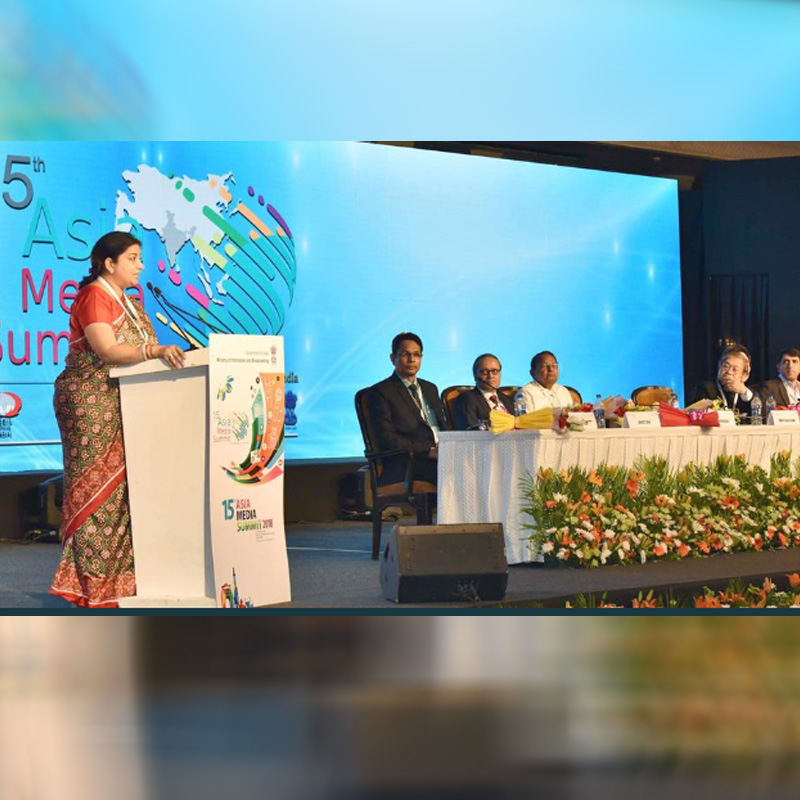
    NEW DELHI: Minister for Information & Broadcasting Smriti Zubin Irani yesterday said that the time has come to put laws, ethics and rules into place that will help in balancing the media industry so that no one dominant player can rule the roost. She, however, did not elaborate what those parameters should or could be.

    Speaking at the 15th Asia Media Summit (AMS) 2018 yesterday, she, however, hinted at her version of what good content could be, throwing oblique references to the growing digital-spurred edgy content in Indian media, including television.

    Pointing out that India will have around 969 million internet users by 2021 and that the media industry looks upon the digital world “not only as a challenge but also as an opportunity”, Irani asked, “How do we attract, retain and develop talent, which frees good content from the trappings of revenue needs and brings about a balance in media institutions?” 

    She hoped that the media event would deliberate on ways to “delve and deliberate on Asia values”, and the need for good stories to be told.

    Dwelling on the need for regulations to ensure level playing field for all, the minister referred to an address made by media baron Vineet Jain, group MD of Times Group, before her at the media conference to drive home a point that present laws may be inadequate to deal with the changing landscape of the Indian media.

    Jain, during his address to the delegates at AMS 2018, had said, “But for Indian media to realise its full potential, regulatory reforms are needed across the board – to make it easier to do business, remove anomalies in the system, and above all, ensure a fair marketplace that benefits the consumer.”

    Carrying forward, Irani said the India media is getting more consumer-centric because of the opportunities (and challenges) that the digital ecosystem is offering stakeholders, apart from the overall evolution of the industry.

    Giving a perspective of the expanding Indian media industry, Irani said India was one of the fastest growing advertising market that is expected to touch $10.59 billion by the end of 2018, while the mobile spend was estimated to grow to $1.55 billion in the current year. “We have a vibrant media industry, which has a direct established impact of Rs 1.35 lakh crore and indirect and induced benefits of Rs 4.5 lakh crore, with close to 4 million people associated with it,” she added.

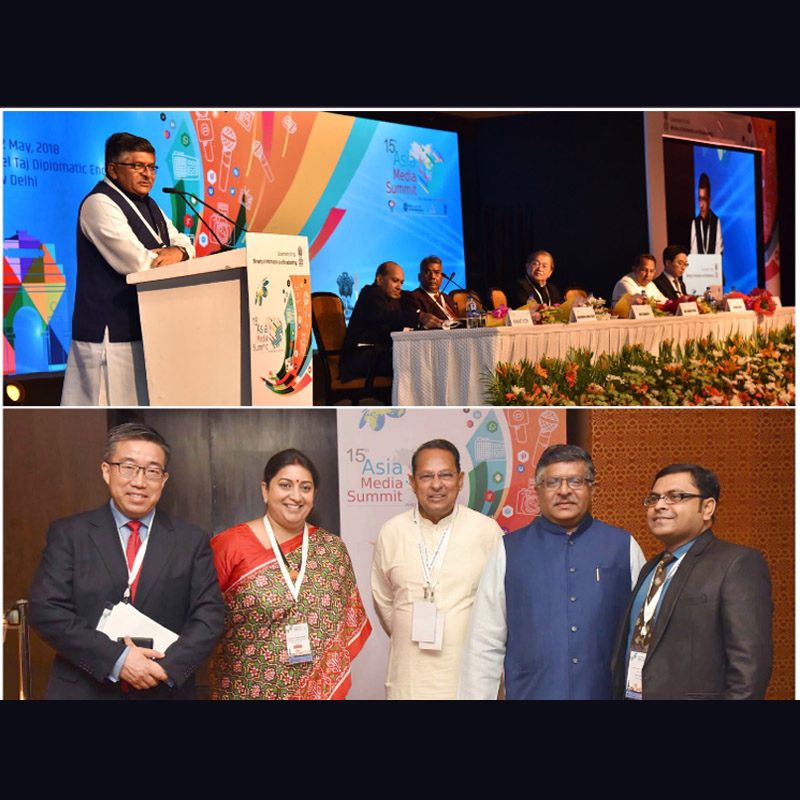
    The three-day 15th Asia Media Summit is being hosted by the Ministry of Information and Broadcasting jointly with the Indian Institute of Mass Communication (IIMC), and Broadcast Engineering Consultants India Limited (BECIL) in New Delhi. The theme of this year’s summit is ‘Telling Our Stories – Asia and More’, which would encourage regional and bilateral dialogue and cooperation to respond to challenges to the broadcasting sector in the region.

    The minster expressed hope that the event will throw up new ideas so that pathways to strengthen media institutions for a better mankind could be explored.

    Addressing the inaugural session, Minister of Information from Bangladesh Hasanul Haq Inu outlined six complex challenges the world faces today: poverty, gender disparity, terrorism, ICT revolution, climate change and uneven globalisation. Expressing concern at cybercrimes, he stressed upon the need to fight a war against cyber-criminals to keep the media safe and expanding.

    This is the first time that the Asia Media Summit is being held in India. Over 220 foreign delegates representing 39 countries (SAARC, ASEAN, East Asia, Africa, Oceania, Europe, Syria, Uzbekistan, USA, China) and senior officials of the government and members of Indian media industry are participating in the event.

    Also Read:

    MIB moves to regulate online media: various organisations join issue   

    Online media professionals write to Smriti Irani expressing regulation concerns

    TRAI seeks to regulate online streaming platforms

  • IT minister says won’t allow India to be centre of data pilferage

    IT minister says won’t allow India to be centre of data pilferage

    MUMBAI: The country’s Electronics & IT and Law & Justice minster Ravi Shankar Prasad has come down sharply on data misuse. Speaking at the 15th Asia Media Summit, he said that the government would not allow the country to become a centre of data pilferage and data commerce that, through collusive methods, would be used to influence its electoral process.

    He added that all online companies, which were in the business of data commerce, must understand the nuances of accountability. When the recent controversy surrounding data privacy cropped up, with the Facebook-Cambridge Analytica scandal, the government took a firm stand. Since it is expected that India will be a big centre of data analytics, there is a need to have a proper coordination on data availability, data utility, data innovation, data anonymity and data privacy. Prasad also mentioned that a committee headed by a retired Supreme Court judge was looking into the issues and would soon come out with a data protection law.

    Though social media poses several challenges, Prasad said that the government was committed to the freedom of press but there was a need to segregate the real from the dangerous. The media, he said, had all the rights to inform, circulate, criticise, advice and counsel but the constitution allows for reasonable restrictions to be placed.

    He stated that he was in favour of self-regulation by media along with adherence to the IT Act, which says that content should not be dangerous, libellous or impinge upon the security and integrity of a country or encroach upon copyrights.

    Also Read :

    Efficient digital transition; MyGov.in pockets citizen engagement award

    FB reveals CA harvested data of up to 87 mn people

  • MIB reminds TV channels, teleport ops about timely online payments

    MIB reminds TV channels, teleport ops about timely online payments

    NEW DELHI: In an apparent bid to make broadcasters/TV channels and teleport operators to follow its diktat on online payments for renewals and renewal fees, the Ministry of Information and Broadcasting (MIB) issued two notices recently cautioning stakeholders that any breach could result in adverse consequences.

    “Non-payment or delayed payments of prescribed annual permission fee tantamount to violation of uplinking/downlinking guidelines and attract action regarding continuation/revocation of permission under the relevant clauses of uplinking and downlinking guidelines 2011,” one of the MIB notices stated, adding it has been observed that a number of broadcasters and teleport operators had not been paying the requisite permission fee.

    Directing broadcasters and teleport operators to deposit outstanding dues within 15 days from the issue of the notice, MIB said, cracking the whip, that any failure to do so will attract action under the existing policy guidelines.

    “It must also be ensured that the time schedule for payment of required fee, as prescribed in the uplinking and downlinking guidelines 2011, is strictly adhered to. It may also be ensured before making any request to MIB that there are no outstanding against the channel/teleport operators on the date of application,” the notice said.

    In another notice, MIB reminded stakeholders about the submission of online applications for change of name or logo or any other issue, apart from foreign remittance proposals.

    “It is reiterated that the instructions given in the notice regarding online submission of applications may be strictly adhered to,” the second notice from the government said.

    These notices come close on the heels of the Indian Broadcasting Foundation, the apex industry body for TV channels in India, petitioning the Prime Minister’s Office on the steep hike by MIB in processing fees and other administrative costs.

    MIB, in the past, has maintained that the facility of online payments to the government by stakeholders was introduced to reduce paperwork and make life easy for all.

    Also Read:

    MIB mandates broadcasters to make applications via Broadcast Seva

    MIB seeks all new MSO applications online 

    New portal to help ease of broadcast business

  • Spectrum auction: TRAI consulting international agencies

    Spectrum auction: TRAI consulting international agencies

    MUMBAI: The Telecom Regulatory Authority of India (TRAI) is in the midst of consulting various international agencies and experts and hopes to finalise its recommendation on spectrum auction “soon”, chairman R S Sharma has said.

    Sharma said that a review meeting on the telecom auction was held in the TRAI last week. “There is a lot of work being done. We are consulting international agencies, consultants as well as experts and we will come out with our recommendations soon,” Sharma told PTI.

    But he declined to give a specific timeframe for the finalisation of recommendations on the issue. The government is planning to hold the largest-ever spectrum auction of 3,000 MHz radiowaves in the upcoming sale. It has sought recommendations from Trai on the applicable reserve price and related issues for auction of spectrum in the frequency bands 700 MHz, 800 MHz, 900 MHz, 1,800 MHz and 2,100 MHz, 2,300 MHz, 2,500 MHz, 3,300-3,400 MHz and 3,400-3,600 MHz.

    Trai is also expected to give its opinion on timing of the proposed spectrum auction.

    In the previous auction held in 2016, the government had put a total of 2,354.55 MHz of mobile airwaves for sale in the bands of 700 MHz, 800 MHz, 900 MHz, 1,800 MHz, 2,100 MHz and 2,300 MHz, cumulatively valued at Rs 5.63 trillion at base price.

    However, nearly 60 per cent of the radiowaves, including premium 4G bands, remained unsold in that auction. In the five-day auction in 2016, seven telecom companies made commitment of Rs 65,789 crore for buying 964.80 MHz of spectrum across multiple frequency bands.

    The apex industry association COAI is of the view that operators are not ready for the next round of spectrum auction at this point given the deep financial stress and ongoing consolidation in the sector.


  • TRAI extends submission date for consultation on landing page norms

    TRAI extends submission date for consultation on landing page norms

    MUMBAI: The Telecom Regulatory Authority of India (TRAI) has extended the date of submission for comments on its consultation paper regarding landing page norms. The new dates for comments and counter comments are 4 May and 11 May respectively.

    The regulator had issued the consultation paper on 4 April seeking comments and counter comments by 20 April and 27 April respectively. It also mentioned that no further request for extension would be entertained.

    In November 2017, TRAI had issued orders to television distributors to refrain from placing registered satellite TV channels that had subscribed to a TV ratings agency, on the boot-up screen or landing channel. Two days ago, it assured the Telecom Disputes Settlement Appellate Tribunal (TDSAT) that it would withdraw the order and discuss the matter with stakeholders before proceeding on the issue.

    The TRAI diktat, incidentally, had come after a clutch of news broadcasters had made allegations against a fellow TV channel of making use of the boot-up page to manipulate audience ratings and sampling of the product by viewers.

    The landing or the bootup page is what a viewer sees first when a TV set and the connected set-top box are switched on. This page on the screen remains for a certain period of time after which the EPG or the electronic programming guide of the distribution service provider comes up. The landing page, considered hot real estate, usually carries paid advertisements of a TV channel programme or messages (like audience measurement data relating to a particular TV channel or even initial sampling of a new channel). The commercial use of the landing page results in sizable revenue for distribution platforms.

    Also Read :

    TRAI initiates consultation on landing page issue

    TRAI assures TDSAT on withdrawal of landing page order

    TRAI tightens landing-page norms

  • TRAI assures TDSAT on withdrawal of landing page order

    TRAI assures TDSAT on withdrawal of landing page order

    NEW DELHI: Broadcast carriage regulator Telecom Regulatory Authority of India (TRAI) assured the sector disputes tribunal yesterday during a hearing that a November 2017 order pertaining to landing or boot-up page of TV sets will be withdrawn within two weeks and the issue discussed with the stakeholders before any further move on the matter.

    An order of the TRAI in November 2017 banning the use of the landing page for any other activity other than promotion of a distribution platform had been challenged by a few MSOs and broadcasters on the ground that proper process wasn’t followed by the regulator before issuing the directive.

    The TRAI diktat, incidentally, had come after a clutch of news broadcasters had made allegations against a fellow TV channel of making use of the boot-up page to manipulate audience ratings and sampling of the product by viewers.

    The TRAI also informed the Telecom Disputes Settlement and Appellate Tribunal (TDSAT) that it had issued a consultation paper on 3 April 2018 to debate and discuss the landing-page issue threadbare with various stakeholders.

    The landing or the bootup page is what a viewer sees first when a TV set and the connected set-top box are switched on. This page on the screen remains for a certain period of time after which the EPG or the electronic programming guide of the distribution service provider comes up. The landing page, considered hot real estate, usually carries paid advertisements of a TV channel programme or messages (like audience measurement data relating to a particular TV channel or even initial sampling of a new channel). The commercial use of the landing page results in sizable revenue for distribution platforms.

    After the TRAI’s submission on the issue on Wednesday, the TDSAT noted that once the regulator withdrew its order, all the petitions would be treated as infructuous. Till then, the tribunal interim order staying the TRAI directive remains in force. The next date of hearing is 7 May 2018.

    While passing the directive in November, the TRAI had said it had received a number of representations from stakeholders stating the practice of placing a registered TV channel—whose audience data was recently released—on the landing page had the potential to influence the TV audience measurements.

    The Ministry of Information and Broadcasting, in a separate order, in the first week of April 2018 had directed audience measurement organisation BARC India to desist from using landing page data of any channel for its overall audience data.

    Also Read :

    TRAI initiates consultation on landing page issue

    MIB directs BARC to stop landing page impressions for measurements

    TDSAT ‘reserves’ order on landing-page case

  • MIB moves to regulate online media: various organisations join issue

    MIB moves to regulate online media: various organisations join issue

    NEW DELHI: Even as a debate on the need to regulate online news media gains momentum, various organisations have moved the Ministry of Information and Broadcasting (MIB) hoping to be made a part of the committee that will look into various aspects of proposed regulations—a panel that surprisingly doesn’t include, at present, any representation from the sector that is being sought to be brought under checks.

    According to media industry sources, Broadband India Forum (BIF), chambers of commerce FICCI and Confederation of Indian Industries (CII), Internet and Mobile Association of India and Hong Kong-based Asian media advocacy group CASBAA are amongst some of the organisations that have sought representation on the government panel to add value to the policy-making process. The MIB secretary is the convener of the nine-member panel at present.

    In an order issued in the first week of April this year, MIB had announced constitution of a committee for framing regulations for online media, news portals and online content, which would look not only look into the areas mentioned but also at digital broadcasting, entertainment and other media aggregators. The government justification has been that considering the print and electronic medium were governed by various government-mandated rules and also self-regulatory policies, online media (both news and entertainment) ought also to be brought under a similar regulatory framework.

    Though it’s not spelt out in so many words, industry observers feel that despite broadcast carriage regulator TRAI keeping away from it for the time being, video OTT and social media platforms could be brought under the proposed regulatory framework.

    The panel, despite some representation from overall media industry (Indian Broadcasting Foundation, News Broadcasters Association of India and Press Council of India), looks dominated by the government at the moment with members including secretaries from the Ministry of Electronics & IT, Ministry of Home Affairs and the Ministry of Law and Ministry of Commerce, apart from the CEO of another government organisation called MyGov.com. What raises some hope is that the convener can add representatives from any other organisation as deemed fit.

    Meanwhile, the Press Trust of India on Monday reported that the Congress attacked the Modi government over its proposal to install a chip in television set-top boxes to ascertain viewership data, dubbing the move a serious breach of privacy and the “next stage of surveillance.”

    Congress communications in-charge Randeep Surjewala alleged that I&B minister Smriti Irani wanted to now know about shows people watched within the four walls of their bedrooms. In a Twitter post, Surjewala referred to the Modi government as “surveillance sarkar” (surveillance government), raising questions over the right to privacy.

    “In a serious breach of privacy, Smriti Iraniji wants to know what show you watch on your TV, within the four walls of your bedroom, without your permission! Why? ‘Ab ki baar Surveillance sarkar’. The right to privacy broken into pieces,” PTI quoted the Surjewala tweets as stating.

    Within its lengthy views on the DTH sector, the MIB had proposed installing a chip in new set-top boxes that would provide data about channels watched and the duration of the viewing. A senior official of the ministry, according to the PTI report, said that the move was aimed at getting “more authentic” viewership figures for every channel that would “help advertisers and the DAVP (government’s media buying agency) to spend their advertising expenditure wisely.”

    ALSO READ:

    MIB forms committee to draft online media norms

    MIB proposes installation of chip in DTH boxes: Report

  • TRAI begins discussion on uplinking, downlinking guidelines

    TRAI begins discussion on uplinking, downlinking guidelines

    MUMBAI: The Telecom Regulatory Authority of India (TRAI) has set the ball rolling for consultation on uplinking and downlinking guidelines with stakeholders. The regulator convened an open-house discussion (OHD) on its consultation paper on ‘issues relating to uplinking and downlinking of television channels’ in India on 11th April 2018. A number of stakeholders, including associations, broadcasters, service providers and individuals, attended the OHD.

    The TRAI has initiated this consultation process to seek the views of the stakeholders on the issues involved. The objective of this consultation process is to review the provisions of the existing uplinking guidelines and downlinking guidelines so as to ensure orderly growth of the broadcasting sector and in turn provide impetus to socio-cultural and economic development, a release issued the telecom regulator stated.
    A total number of 38 stakeholders have submitted their comments on the issues raised in the consultation paper.

    The TRAI had floated a consultation paper on issues relating to uplink and downlink of TV channels in India mid-December 2017 on receiving a reference from the Ministry of Information anf Broadcasting (MIB) to study the particular aspect and come out with suggestions. This consultation was initiated even as the regulator had been discussing various other issues with stakeholders of the broadcast and cable sectors on ease of doing business and inputs for the National Telecom Policy (NTP) 2018. Subsequently it submitted its recommendations to the government on the ease of doing business and NTP.

    Also Read:

    MIB nod to TV channels on hold till TRAI uplink, downlink suggestions

    MIB proposes installation of chip in DTH boxes: Report