Category: I&B Ministry

  • MIB mulls amendments permitting live coverage of counter-terrorism measures by security forces

    MIB mulls amendments permitting live coverage of counter-terrorism measures by security forces

    NEW DELHI: The Information and Broadcasting Ministry (I&B) is considering a proposal to prohibit live media coverage of counter terrorism operations by security forces. 


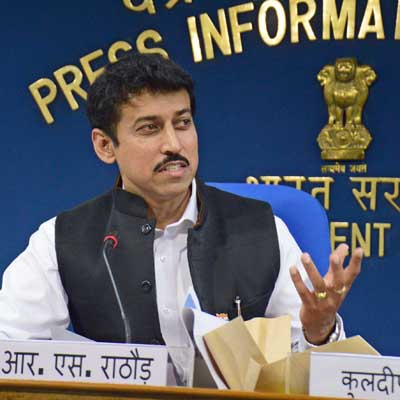
    Minister of State for I&B Rajyavardhan Rathore told Parliament that the Home Ministry wants amendments in the existing laws in this regard.


    The issue of coverage by television channels is presently part of the self-regulation guidelines drawn up by the News Broadcasting Standards Authority of the News Broadcasters Association. The Press Council of India had issued similar guidelines with regard to print media. 


    These guidelines were drawn up after the 26 November, 2008 attacks in Mumbai. Following a controversy that live telecasts of the counter-terrorism operations were in all likelihood been seen by the masterminds in Pakistan who had planned the attacks.


    As far as Prasar Bharati is concerned, it is governed by the Programme and Advertising Code which is also part of the Cable TV Networks (Regulation) Act 1995 and therefore equally applicable to private television channels.


    The Inter-Ministerial Committee examines complaints under the Act and the Rules drawn up a year earlier in 1994.

  • Govt. moves to stop screening on internet websites as notice is issued to two lawyers

    Govt. moves to stop screening on internet websites as notice is issued to two lawyers

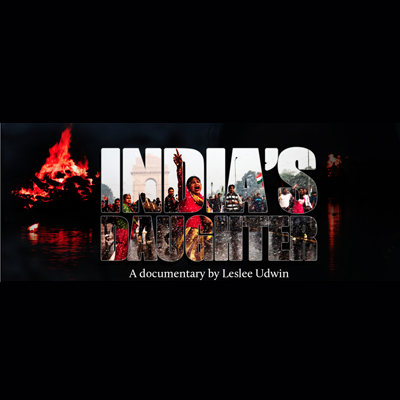
    NEW DELHI:  Even as the documentary “India’s Daughter” by Oscar-winning British filmmaker Leslee Udwin on the Nirbhaya gang-rape case has been telecast by BBC4 on a channel not available in India despite the ban by the Delhi High Court, two lawyers who defended the rapists have been issued notices for their allegedly anti-women remarks.


    The notices were issued by the Bar Council of India to M L Sharma and A P Singh under a provision of the advocates act and their licences to practice may be cancelled if BCI is not satisfied with their response.


    Sharma has already refuted the charge that he made any such remarks in the documentary.


    Within hours, the film became available on YouTube despite a message that showed “URL Blocked”. It also became available on some other websites.


    Home Minister Rajnath Singh said two days earlier that the government was exploring ways to block the film on YouTube. He also said action would be taken for the telecast of the film last night and added that he was pained by the development


    The documentary was to have been aired in the UK, Denmark, Sweden, Switzerland, Norway, Canada, and India (NDTV 24X7) on International Women’s Day 8 March.


    But a statement from the BBC two days earlier said given the “intense level of interest” it would telecast the film later. Butthe channel later said in a communication to the Home Ministry that it had no plans to telecast the documentary in India, “in compliance with the Indian Government’s directive”.


    Singh had also said that it would attempt to block the telecast in other countries and the External Affairs and Information and Broadcasting Ministries had been asked to ensure the film was not broadcast on any platform anywhere in the world.

     
    Singh had made a statement in Parliament amid massive uproar over how permission was granted to the filmmaker to interview Mukesh Singh, one of the six men who brutally raped and tortured a 23-year-old paramedical student on a moving bus on 16 December 2012. She had died 13 days later in a Singapore hospital.

    In the interview, Mukesh Singh said the rape and killing was deliberate to teach women a lesson, and displayed no remorse as he blamed the woman.

    The BBC said in its statement, “This harrowing documentary, made with the full support and co-operation of the victim’s parents, provides a revealing insight into a horrific crime that sent shock waves around the world and led to protests across India demanding changes in attitudes towards women.”

    “The film handles the issue responsibly and we are confident the programme fully complies with our editorial guidelines,” it said.

    Delhi Police chief BS Bassi said: “We took a regular order from a competent court and informed BBC and other channels against broadcasting and uploading of the video of the interview on internet and so that nobody violates the law.” The Delhi Police have filed a case and have started investigation, Mr Bassi said. He said permission to take interview is always the discretion of the concerned authority, so we are not looking for criminality in that.


    The Delhi Police has written to the Telecom and Communications Ministry and sought blocking of the film on YouTube. The Police may also question the crew who shot the film. While its co-producer Dibang is in India, Udwin is understood to have left late last night for the United Kingdom. (Ms Udwin was producer of the award-winning feature film ‘East is East’ which had starred Om Puri among others around twenty years earlier,)


    Lalita Kumaramangalam felt that showing the film was ‘morally wrong’ as the broadcaster did not think about the anguish that women who have faced such things will go through.


    However, film lyricist and Rajya Sabha member Javed Akhtar said the film should be shown to reveal to the world what rapists are like. He said he could have understood the ban if Mukesh’s lawyer had asked for it. He said the goal of such documentaries is to bring out disgust against rapists’ point of view. “It makes people aware such a mindset is not uncommon.”


    Bharatiya Janata Party member of Parliament from Mumbai Poonam Mahajan has said in an article that the film only shows the mindset of men.


    Meanwhile, people took to the streets in Varanasi earlier this week and burnt an effigy of the BBC in protest against the documentary.


    Minister of State for Parliamentary Affairs Mukhtar Abbas Naqvi said the channel that broadcast the Nirbhaya documentary will not be forgiven.


    The victim’s father, who had cooperated with the filmmaker, has now said that BBC should not have been shown in view of the ban.


    Meanwhile, Udwin has said society created the rapists by teaching them “what to think”. She said she was not inspired by the rape to make the film, but the wave of protests this generated all over the country within hours of the report. In an interview with India Insight (a blog on Reuter website), she said the argument that airing the convict’s interview would amount to giving him a platform to promote his views was “stupid” and “uneducated.”


    In a separate interview to CNN, Udwin described the people she spoke with – the attorneys, the lawyers, and the culprits – as “ordinary, apparently normal and certainly unremarkable men.” 


    CNN says that Udwin’s documentary illustrates how even people with power in India harbour shockingly similar attitudes. One of the lawyers who represented the attackers says he would burn his own daughter alive if she behaved dishonourably. Another defence lawyer gestures with his hands to describe women as “flowers” who must be protected by men and “diamonds” who face inevitable assault if they end up in the wrong places.
  • Govt. assures Parliament that film on Nirbhaya incident of December 2012 will not be telecast

    Govt. assures Parliament that film on Nirbhaya incident of December 2012 will not be telecast

    NEW DELHI: Following strong protests in Rajya Sabha today, Home Minister Rajnath Singh committed to members that the government will move to court to restrain the screening of the film on the ghastly Nirbhaya incident of 16 December 2012 by British filmmaker Leslee Udwin while informing the upper house that a first information report has already been filed against the producers.


    The uproar arose out of the revelation in the press meet on 3 March by Udwin and co-producer Dibang that the film contained interviews conducted in Tihar Jail with those who have been convicted in the case, including Mukesh Singh who had justified the gang rape.


    Singh said that he is personally hurt by the incident and he has spoken to the authorities to stop screening of the documentary in India. He said the government will act promptly and firmly against those officials and others responsible for giving permission to the BBC and a British filmmaker to go ahead with the interviews and to subsequently allow its broadcast.


    Earlier before question, Minister of State for Parliamentary Affairs Mukhtar Abbas Naqvi gave an absolute assurance that the government would act, but this did not satisfy the opposition, and some members trooped into the Well of the House to disrupt proceedings. The House session was being chaired by its Deputy Chairman P.J.Kurien, who had to adjourn for 15 minutes.


    Singh said, “The condition was given to shoot the interview for social purpose and not for commercial use. A legal notice was issued to them when the jail authorities came to know that it violated the conditions. The permission to shoot the documentary was given with conditions.”


    Later, Minister of State for Information and Broadcasting Rajyavardhan Singh Rathore said, “The airing of documentary would be contempt of court. This entire documentary is against the programming code of I&B ministry. Language seems to incite violence against women, and instills fear.”


    Although nobody has been named in the FIR, Delhi Police Commissioner B S Bassi maintained that the ‘main actor’ is the person who has made these assertions.


    He urged the media not to broadcast any assertion which transgresses the domain of law. “This was a ghastly crime. One has to take into consideration that reporting of a crime does not transgress the domain of law and if that happens then the law will have to take its own course,” he told reporters.


    The FIR was registered under IPC sections 505 (Statements conducing to public mischief), 504 (Intentional insult with intent to provoke breach of the peace) 505(1)(b) (With intent to cause, or which is likely to cause, fear or alarm to the public), 509 (Word, gesture or act intended to insult the modesty of a woman) and section 66A of the IT Act (Punishment for sending offensive messages through communication service) at the Economic Offences Wing (EOW) of Delhi Police.


    Udwin had claimed that she took permission from the then Director General of Tihar jail Vimla Mehra to interview Mukesh Singh in prison for the BBC. 


    Asked about this claims, Bassi said, “I am not aware of any permission. Even if it was given, it was given to remain in the domain of law. If any act transgresses the domain of law and particularly IPC, I am duty bound to take action and we have registered a case.”


    The India-United King co-production India’s Daughter was slated for a world premiere simultaneously in India, the UK, Denmark, Sweden, Switzerland, Norway and Canada.


    NDTV 24×7 was to telecast of the interview-based documentary in India on International Women’s Day – 8 March at 9.00 pm. 


    India’s Daughter tells the story of the horrific Delhi gang rape and of the unprecedented protests and riots, which this horrific event ignited throughout India, demanding changes in attitudes towards women. 


    Udwin said Mukesh Singh, the driver of the bus in which the 23-year-old paramedical student was brutally gang-raped by six men, said women who went out at night had only themselves to blame if they attracted the attention of gangs of male molesters.

  • Govt. invites applications for e-auction of first batch of phase III FM Radio stations

    Govt. invites applications for e-auction of first batch of phase III FM Radio stations

    NEW DELHI: A notice was issued by the Information and Broadcasting Ministry (I&B) inviting applications for the first batch of phase III FM auctions for 135 stations in 69 cities which already have FM channels.


    In addition, e-auction will be held in eight new cities in Jammu and Kashmir and the northeastern states.


    While the Notice Inviting Applications (NIA) was issued on 2 March, the pre bid conference will be on 10 March, the last date for seeking clarifications on NIA will be on 11 March, clarifications to NIA on 16 March, last date for submission of applications on 23 March, publication of ownership details of applicants on 7 April, Bidder Ownership Compliance Certificate on 10 April, pre-qualification of bidders on 17 April or completion of requisite formalities whichever is later and a mock auction within a week of that and the main e-auction a week thereafter.


    The Ministry has placed the full details of the formalities on its website mib.nic.in and has appointed M/s C1 India Private Limited as the ‘Auctioneer’ to advise the Government on the Auction. Administration of the e-auction shall also be the responsibility of M/s C1 India Private Limited.


    It has also placed on the website the reserve price of each city and station for e-auction.


    The Auction shall be a Simultaneous Multiple Round Ascending (SMRA) e-auction, conducted over the internet. Bidders will be able to access the Electronic Auction System to be used for participation in the auctions using web browsing software: Internet Explorer 11.x, or Mozilla 34.x or Google Chrome 37.x.


    The EAS is a designated computer resource for the receiving of electronic records under the provisions of Section 13(2) of the Information Technology Act 2000, as amended from time to time.


    Prior to the auction, bidders will have to procure Class-III Digital Signature Certificate(s) (DSC) for signing and encryption issued by any valid Certifying Authority (approved by Controller of Certifying Authorities) in India which is mandatory for accessing the Electronic Auction System (EAS). The details of the licensed Certifying Authorities (CAs) are available on www.cca.gov.in.


    Winning Bidders of FM channel(s) in each city shall be determined in the first stage, a Channel Allocation Stage, which will allocate FM channel(s) simultaneously for all the cities. The second stage, a Frequency Allocation Stage, will identify specific frequencies for the winning bidders. 

  • Action taken against 50 channels since 2012 for programme or advertising code violation

    Action taken against 50 channels since 2012 for programme or advertising code violation

    NEW DELHI: Action has been taken against three television channels so far in 2015, of which two have been taken without issue of any show cause notice.


    Colors was issued an order on 8 January relating to the programme Fear Factor Khatron Ke khiladi – Darr ka Blockbuster following a show cause notice sent initially on 22 May last year.


    Lemon TV was issued a warning on 19 January for telecast of programme Khauf Ke 10 Destination.


    NTV Telugu News was taken off air for seven days following an order on 19 January for telecast of a song-based programme Cine Colors containing obscene visuals.


    Minister of State for Information and Broadcasting Rajyavardhan Rathore told the Rajya Sabha today that apart from these, action was taken 16 times in 2012, 32 times in 2013 and 22 times in 2014 against various channels on violation of Programme and Advertisement code.


    Action was taken – including warnings – against 49 channels between 2012 and 2115. This includes nine channels, which figured more than once in the list of actions taken from 2012 onwards.


    This includes advisories issued to all channels in 12 cases between 2012 and 2013 against telecast of certain advertisements or to ensure that the Censor Certificate is shown before telecast of a film, avoid unnecessary scenes of road rage and rash driving, reporting on children, comparison of speech of the Prime Minister with the speech of other political leaders on Independence Day 2013, telecasting programmes promoting blind belief, telecast of inflammatory and provocative news/programmes in a sensational manner, and direct telecast of the events round the clock  relating to public demonstrations likely to encourage violence and against maintenance of law and order and likely to promote anti-national attitudes.

  • Govt. denies interference in working of CBFC

    Govt. denies interference in working of CBFC

    NEW DELHI: The Government has categorically denied any interference in the decision-making of the Central Board of Film Certification or any coercion on the chairperson or any other member by the Information and Broadcasting Ministry.


    Minister of state for I&B Rajyavardhan Singh Rathore said that the Ministry had ‘at no point’ communicated with the chairperson or members regarding certification of any film.


    While announcing that Pahlaj Nihalani was made chairman and 10 new Board members had been appointed to fill the places of nine members who resigned, Rathore told Parliament that the legal regime with regard to CBFC is well laid out and it is the Board alone which decides within its jurisdiction.


    Aggrieved producers have the right to move the Film Certification Appellate Tribunal headed by a retired Judge of a High Court which decides matters in appeal in accordance with the Cinematograph Act.


    There are adequate provisions in the Act and the Rules to protect the autonomy of the Board.


    He said Leela Samson’s tenure as chairperson had ended in March but she had continued to hold charge because as per the Certification Rules an outgoing Chairperson has to hold charge until the new incumbent takes over. While there is no such rule for the members, fourteen members whose tenure had ended on 24 May had been asked to continue until further orders.

    The resignation of Samson and nine other members who resigned alleging interference was accepted with effect from 19 January this year.

  • No role in CBFC’s decision to put list of offensive words on hold: I&B

    No role in CBFC’s decision to put list of offensive words on hold: I&B

    NEW DELHI: Even as the Central Board of Film Certification (CBFC) has put on hold the list of 28 “objectionable and abusive” words to be banned from Indian films, the Information and Broadcasting Ministry has denied any role in this.


    A Ministry official told Indiantelevision.com that any decision in this regard may have been taken at the level of the Board or by its chairman Pahlaj Nihalani, who had issued the list, leading to protests from some members.


    Interestingly, in reply to a question in the Rajya Sabha in this regard on 24 February, Minister of State for I&B Rajyavardhan Rathore had said, “CBFC under the Ministry certifies films for public screening in accordance with the Cinematograph Act, 1952 and Cinematograph (Certification) Rules, 1983. Section 5B of the Cinematograph Act, 1952 provides principles for guidance in certifying films. Guidelines for certification of films notified under the Cinematograph (Certification) Rules lay down among other things that CBFC shall be guided by the following principles in this regard: (i) human sensibilities are not offended by vulgarity, obscenity or depravity; and (ii) such dual meaning words as obviously cater to baser instincts are not allowed.”


    Interestingly, the Minister refrained from making a comment on the list issued by Nihalani.


    Meanwhile, it is learnt that Nihalani will be meeting Ministry officials in New Delhi in the next few days.


    Earlier in a circular to the producers’ association and regional officers, the Board listed several “objectionable words” that are being used in films and directed its regional officers to ensure a ban on the list of cuss words. It also aimed to seek more conformity from directors and scriptwriters on cultural matters and political correctness. It also said ‘Mumbai’ should be used in place of ‘Bombay’ in films.


    The list led to a Twitter war where some members said Nihalani had taken the decision unilaterally.


    However, Nihalani told Indiantelevision.com that he was within his rights to issue the list as he was only following the powers given to him under the Cinematograph Act and was only referring to words that the Certification Guidelines do not allow.


    It is learnt that during a several-hours-long meeting of CBFC in Mumbai earlier this week, several members of the board opposed the move to impose such a ban. It is understood that status quo would be maintained and the list will be put on hold, the source said.


    The letter by Nihalani directed its regional officers not to issue certificates to films, which use these words, which are abuses in Hindi and English, and it has also been specified that double meaning words, violence against women and glorification of bloodshed should not be allowed.

  • ‘Festivals of India’ to focus on Digital India & its gains: Culture Ministry

    ‘Festivals of India’ to focus on Digital India & its gains: Culture Ministry

    NEW DELHI: Digital India and its gains will form a highlight of the next round of ‘Festivals of India’ during 2015-16.


    The Culture Ministry has set the ball rolling for holding the next round of ‘Festivals of India’ abroad with Culture secretary Ravindra Singh holding a video conference with Ambassadors/High Commissioners of South Korea, Australia, Mauritius and Myanmar in this regard. Similar festivals have already been organised successfully in various countries like Malaysia, China, Indonesia, South Africa and Japan among others. 


    The secretary emphasised that social media should be utilised to the maximum extent possible. Discussing the details with the Ambassadors and High Commissioners, the secretary pointed out that these festivals can be used to showcase Indian art, culture, life and achievements.


    The Ambassadors and High Commissioners favoured the idea of projecting the face of modern India by showcasing the rise of Digital India and other modern technological developments in the field of space. They were also of the opinion of showcasing the journey of Indian civilization from 5000 years ago to the modern India. Singh shared the experience of the festivals held in other countries recently like South Africa and China and various themes of these festivals like Buddhism, Yoga, exhibitions on cricket etc. He also asked these countries to collaborate among themselves and schedule the activities in such a way that the artistic performances and exhibitions being run in a particular country can be presented in the neighboring countries too. Each country decides the events and themes of a festival. Ambassador to South Korea was in favour of festival theme based on Buddhism since it has a large Buddhist population.


    Ambassador to Myanmar emphasised that the Yoga and Ayurveda can be of special interest in Myanmar. Representative of Indian High Commission in Australia favoured the theme based on Tribal Art. The ambassadors were of the opinion that the states should also be involved actively in these festivals. 


    Senior officials of the Ministry of Culture and representatives from National Museum, National Council of Science Museums, National Gallery of Modern Art and other organizations involved in these festivals were also present during the Video Conference.  

  • English ads on TV only a small fraction as compared to Hindi & regional ads: Rathore

    English ads on TV only a small fraction as compared to Hindi & regional ads: Rathore

    NEW DELHI: The audio-visual medium received 55.7 per cent of the government advertisements in Hindi as compared to 32.38 per cent in the print medium in rupee terms during 2014-15 until 13 February.


    Minister of State for Information and Broadcasting Rajyavardhan Rathore told the Parliament that only 2.79 per cent advertisements were given in English to the audio-visual medium as compared to 28.53 per cent in the print medium.


    The regional electronic media received 41.49 per cent of the advertisements as against 30.09 per cent to the print medium.

  • Directive given to ensure display of amended Preamble of Constitution

    Directive given to ensure display of amended Preamble of Constitution

    NEW DELHI: Following the controversy that arose when a government advertisement relating to Republic Day reproduced the original Preamble to the Constitution, the Government has given directions that only the amended version of the same should be reflected if an ad displays the Preamble.


    Information and Broadcasting Minister Arun Jaitley told Parliament today that directions in this regard have been issued to the Directorate for Advertising and Visual Publicity for strict compliance.


    The controversy had arisen as the amended Preamble has the words ‘Secular’ and ‘Socialist,’ which did not appear in the advertisement.


    DAVP annually issues print advertisements to all empanelled publications on the occasion of Republic Day to commemorate the date and the moment when India became a Republic by adopting the Constitution. This year also a similar practise was followed and six different designs were given to all the empanelled publications.


    In one of the advertisement designs issued, the photograph of the original calligraphic representation of the Preamble to the Constitution has been used in the background as a water-mark for enhancing the aesthetic and artistic value. The calligraphic representation has been sourced from the website of the Parliament Museum, New Delhi. The Calligraphic representation and decorated preamble as available in the Parliament Museum is the only such decorated copy till date. The intention of using it as a watermark was to enhance the aesthetic value of the design.


    The photo of the original Preamble was a way of honouring founding fathers of the Constitution and there was nomala fide intention to the publication of the un-amended version.


    The same original calligraphic representation and decorated Preamble of the Constitution was used in an advertisement commemorating Dr B. R. Ambedkar on the occasion of his birth anniversary on 14 April 2012, he said.