Category: I&B Ministry

  • Airwaves are public property & community radio stations are an extension of that concept: Jaitley

    Airwaves are public property & community radio stations are an extension of that concept: Jaitley

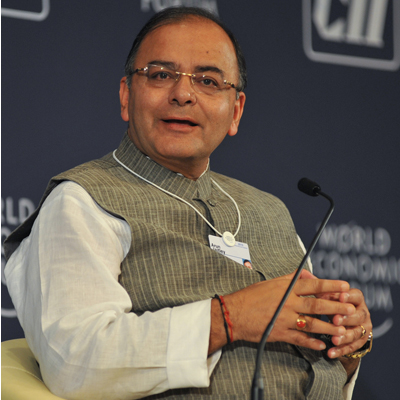
    NEW DELHI: Information and Broadcasting Minister Arun Jaitley said today that the government was committed to ensuring that ‘airwaves’ constitutes property of the people or the community and there is no interference of the state in creating any monopoly in this regard.


    He said Community Radio as a medium of communication constituted an integral component of the right to free speech and expression. This medium of information dissemination formed a part of the “Airwaves”.


    Inaugurating the 5th National Community Radio Sammelan on the theme “Community Radio for Good Governance” here, Jaitley said community radio as a platform of communication formed a part of the tripartite stakeholder partnership: the broadcaster, the person disseminating the information and the listener, who was keen for information, knowledge and dissemination of facts.


    Jaitley said radio had acted as an instrument for dissemination in the past, and would also do so in the future, in which community radio would play a critical role for the expansion of radio content. Community Radio as a concept was vibrant as it facilitated the expansion of an idea – a concept that discussed a range of issues including culture, languages and practices, amongst others.


    He hoped the Sammelan would provide a roadmap to the ministry to fine tune the blueprint for policy interventions in the future.


    The Minister said the Government was committed to ensuring that the sector was expanded and strengthened to achieve the goals of inclusive growth through social change. The Sammelan also offered an opportunity to highlight the relevance of flagship schemes through the medium to people, who in turn could benefit by such interventions. Sessions on Agriculture and Community Radio, Role of the Medium in promoting Water and Sanitation with emphasis on ‘Swachh Bharat Abhiyaan’ and the relevance of the medium in the context of Jan Dhan Yojana were innovations adopted for the Conference.


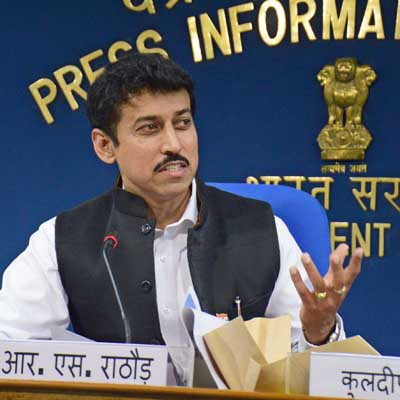
    A compendium on ‘Community Radio for Good Governance’ was released on the occasion by Jaitley and Minister of State for I&B Rajyavardhan Rathore.


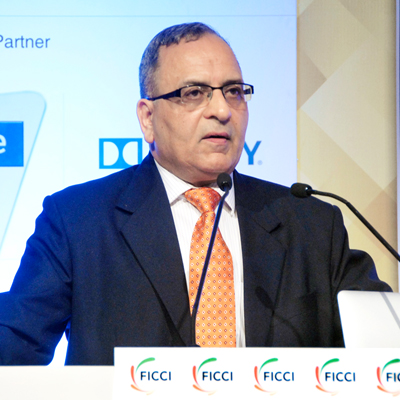
    I&B Secretary Bimal Julka said the Community Radio Model offered a third model of radio broadcasting in addition to commercial and public broadcasting. As a platform for communication they served geographic communities and communities of interest. Community radio, rural radio, cooperative radio, and development radio hold the key to unite India’s linguistic and ethnic diversity and improve economic development.


    Referring to a Supreme Court ruling of 1995, Julka said airwaves were declared public property to be used for promoting public good and ventilating plurality of views, opinions and ideas, and the role of community radio was important in this context.


    He also outlined the recommendations of the Telecom Regulatory Authority of India (TRAI) on Community Radio Stations (CRS) permissions and related issues. The terms of permission are to continue to be for five years; the duration of advertisement on a CRS is to continue to be five minutes per hour; the stipulations that rates for advertisement approved by the Directorate of Advertising and Visual Publicity on CRS are lowest and exclusive to DAVP are to be relaxed in case of CRS. Julka specifically mentioned the role and relevance of CRS during disaster management situations and said that as the medium played a critical role in the given situations consultations with NDMA would be held to outline the detailed guidelines for the said purpose.


    He also referred to the TRAI recommendations related to the allowance to be given to CRS to broadcast news and current affairs content, sourced exclusively from All India Radio (AIR) in its original form or translated into in its local language/ dialect. This would enhance the mandate of the medium in the context of operating partnership with AIR.

    Jaitley and Rathore also presented the 4th National Community Awards in various categories.


    The Conference assumes importance in view of outlining the vision for community radio in India. One of the key highlights of the three day Sammelan is the session on Access to Justice for poor and marginalized communities in the context of the role of community radio and the work done by the National Legal Services Authority. The Conference will also deliberate upon the integration of CRSs and PRIs. The role of CR stations in promoting livelihood generation and other economic activities would be discussed. Sessions on Community Learning, Emerging Demography and Migration would provide critical inputs in taking the process forward. 


    The Sammelan has brought together Community Radio Operators, policy makers, Ministries/Departments, the UN and other international bodies like UNICEF and UNESCO and other stakeholders for exchange of ideas and cross learning.


    The sessions will highlight the vision of the Community Radio movement in India and its role in setting the agenda on the development discourse at the local level. 

    The Ministry has been organizing the National Community Radio Sammelan every year since 2011. The Ministry has also been organizing intensive Awareness Workshops in various parts of the country to increase awareness about Community Radio. Sixty three workshops have been organized so far. These workshops have proved to be useful not only to operate CRS in an effective way. 

    The Ministry has so far issued 409 permissions to set up community radio stations in the country. Out of this, 179 stations have become operational while others are in the pipeline.
  • Exhibition by DAVP, Outreach Programme by DFP inaugurated in Rajasthan by Rathore

    Exhibition by DAVP, Outreach Programme by DFP inaugurated in Rajasthan by Rathore

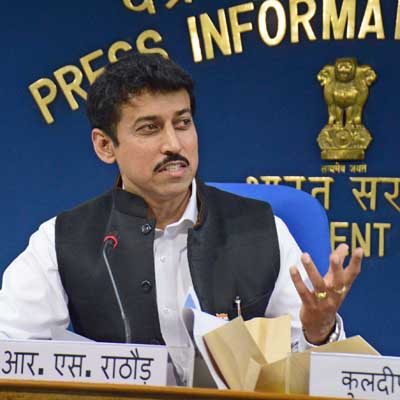
    NEW DELHI: Minister of State Rajyavardhan Rathore has said that women have excelled in all fields and have made everyone proud of their achievements.


    Speaking at the Special Outreach Programme on ‘Beti Bachao Beti Padhao’ organized by the Directorate of Field Publicity, Ministry of Information and Broadcasting at Dhankya in Jaipur, Rathore said that he could win the Olympic Medal because of the immense support provided by the two women in his life- his mother and wife.


    Rathore also inaugurated the three-day exhibition ‘Ek Bharat Shreshta Bharat’ organized by the Directorate of Advertising and Visual Publicity and released a special cover on Beti Bachao Beti Padhao brought out by the Department of Posts Rajasthan Circle. 


    Rajasthan Minister of Urban Development and Housing Rajpal Singh Shekhawat and Directorate of Field Publicity Principal DG Neelam Kapoor were also present on the occasion.

  • Media should reflect on whether airing gang rape film is justified: Jaitley

    Media should reflect on whether airing gang rape film is justified: Jaitley

    NEW DELHI: Even as the Delhi High Court is still to decide finally on the ban on India’s Daughter by Leslee Udwin, Information and Broadcasting Minister (I&B) Arun Jaitley said, over the weekend, that the media worldwide should reflect on issues surrounding the film made by BBC and specifically on whether a media organisation should allow its platform to be used by a rapist to justify his innocence.


    Asked by reporters in London to give his view on the ban, Jaitley who, is a also lawyer, said the matter was in court. 


    “The Home Ministry and Parliament had a certain view, which was expressed. Without getting into the issue because it has been challenged in the court and let the court decide this; I will only mention two points to be borne in mind by anyone who wants to produce any film on these causes,” he said.


    Jaitley pointed out to a provision under Section 228A of the Indian Penal Code, which came into force following the Justice Verma Committee report, to prohibit the naming and showing any photograph of the rape victim.


    “Secondly, it is a question for the media itself to debate whether during the pendency of the appeal, a media organisation should allow its platform to be used by a rapist to justify why he is not guilty,” he added.


    “My understanding of the English law is that on both these counts in a sub-judice matter wit the appeal pending, a media forum may not have been made available to the accused to justify his innocence,” Jaitley said.


    He made a direct link with the comments of one of the rapists, Mukesh Singh, who had claimed he was at the wheel and hence “not part of the act.”


    “These are the two crucial issues on which I would like the media itself to reflect on,” the Minister said.


  • Fifth National Community Radio Sammelan to commence in capital, Jaitley to inaugurate

    Fifth National Community Radio Sammelan to commence in capital, Jaitley to inaugurate

    NEW DELHI: The fifth National Sammelan for Community Radio Stations will be inaugurated in Delhi on 16 March by Information and Broadcasting Minister Arun Jaitely.


    Minister of State for I&B Rajyavardhan Rathore will also be present on the occasion.


    The Sammelan will bring together Community Radio Operators, policy makers, Ministries/Departments, the UN and other International bodies like UNICEF and UNESCO and other stakeholders for exchange of ideas and cross learning.


    The sessions will highlight the vision of the Community Radio movement in India and its role in setting the agenda on the development discourse at the local level. 

    The three-day workshop will discuss several important issues such as the role of community radios in good governance, sustainability, content sharing and programming for development. It will delve into the role that Community Radio can play in community learning, promoting livelihoods and agriculture, promoting water conservation and sanitation, strengthening Panchayati Raj Institutions, financial inclusion, legal literacy and facilitating access to justice for marginalized communities.


    A compendium containing inspiring stories of community radios from all over the country will be released. 

    The National Community Radio Awards would also be presented to promote better programming on CR stations and motivate CR operators to achieve goals of community empowerment. 

    The Ministry has been organising the National Community Radio Sammelan every year since 2011. The Ministry has also been organising intensive Awareness Workshops in various parts of the country to increase awareness about Community Radio. Sixty three Workshops have been organized so far. These workshops have proved to be useful not only to operate Community Radio Stations in an effective way. 

    The Ministry has so far issued 409 permissions to set up community radio stations in the country. Out of this, 179 stations have become operational while others are in the pipeline.
     

    The Ministry has also streamlined the approval process for setting up of Community Radio Stations. The applicants can now apply online and track the status of their pending application through a Comprehensive Community Radio Management Information System. A Facilitation Centre has also been set up, with a Toll Free number (1800-11-6346) for providing information. Efforts have also been taken by the Ministry to enable Community Radio Stations to sustain themselves. The Ministry has also introduced a Plan Scheme to provide financial assistance to existing and new community radio stations for infrastructure/equipment/training/capacity building etc. 


    The Ministry has also been advocating with various stakeholder Ministries like Health, Rural Development, Panchayati Raj, Science and Technology and Tribal Affairs to use the medium of CR to reach out to the masses.  

  • Media can transform rural poor’s life by providing info on central scheme: Rathore

    Media can transform rural poor’s life by providing info on central scheme: Rathore

    NEW DELHI: Minister of State for Information and Broadcasting Rajyavardhan Rathore has said that media can transform the lives of the people living in rural areas by providing information about welfare schemes.


    He said that the emergence of internet and social media has brought about an information revolution in the country. He underlined that there is need to build capacities of rural journalists for establishing better reach to the people in rural areas. 


    He stated this in a message read out at the opening of a one-day Regional Media Conference organized by the Press Information Bureau (PIB) on strengthening information dissemination on Government policies and programmes in rural areas at Jobner near Jaipur this week.


    About 70 regional journalists including stringers of newspapers and news channels participated in the one-day conference.


    One of the major objectives of the conference was receiving feedback from journalists working in rural areas on their information needs. During the interactive sessions, the participants wanted more interactions of this kind in the future and wanted a mechanism for enhanced information flow from PIB on central government schemes to rural journalists.


    In his keynote address, senior journalist Yashwant Vyas said that rural journalists have a major role in highlighting issues of local importance on which they should report fearlessly. Senior journalists Rajendra Boda, Pratap Rao, Ashok Chaturvedi and Shakti Singh addressed journalists on issues including role of different media in effective information flow in rural areas. A session on the role of media in disaster management was conducted by Bijendra Singh, who is officer on Special Duty of the State Disaster Management Department of Rajasthan. 


    The participants were also given orientation on the role of new/social media in information dissemination.

  • Paid news to be checked under amendments to Press & Registration Act: Rathore

    Paid news to be checked under amendments to Press & Registration Act: Rathore

    NEW DELHI: The Government will include provisions for checking the menace of paid news in the amendments to the Press and Registration of Books Act.


    Minister of State for Information and Broadcasting Rajyavardhan Rathore told the Lok Sabha that based on the recommendations of the Standing Committee on Information Technology, inclusion of provisions in the Act “would also be pursued as per extant guidelines”.


    In the amendments proposed to the PRB Act, the Ministry has also proposed inclusion of a section which says ‘paid news’ means publishing any news or analysis in the publication for a price in cash or kind as consideration.


    Earlier in November 2013, the Government had said it intended to bring ‘reproduction of any newspaper in electronic form’ within the ambit of the Act.


    The amendments, which have been placed on the website of the Ministry, also says that “facsimile edition” of a publication means an exact replica in full or in part of the original edition of a foreign publication ‘in so far as the contents concerned and may not include title,’ subject to the condition that any page is not published in part.


    The Government also proposes to establish a Press and Registration Appellate Board to be constituted by the central government, by notification in the official gazette, consisting of a chairperson and another member, to be nominated by the Press Council of India, established under Section 4 of the Press Council Act 1978 from among its members.


    It says that any dispute relating to registration of newspapers or publications would be referred to a “specified appellate authority” that may be prescribed by the central government.


    Under the amendments, publication means newspapers, magazines, journals or newsletters printed periodically and published in India ‘including its reproduction in electronic form or any syndication, facsimile edition, and Indian editions of periodicals published outside India.’

  • CBFC took unilateral decision to put list of offensive words on hold: Rathore

    CBFC took unilateral decision to put list of offensive words on hold: Rathore

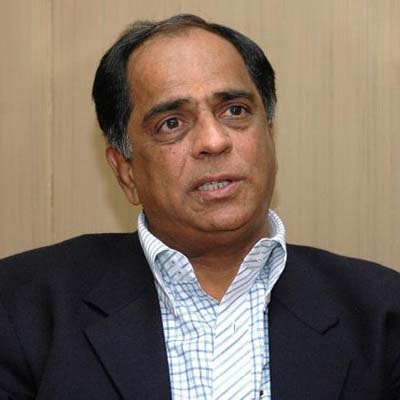
    NEW DELHI: The Parliament was informed on 13 March that the list of 28 “objectionable and abusive” words suggested for banning from Indian films by Central Board of Film Certification (CBFC) chairman Pahlaj Nahalani was held back. This, because a need was felt to consult on the same with people from different sections of society.


    Minister of State for Information and Broadcasting Rajyavardhan Rathore told the Lok Sabha today that the decision in this regard had been taken by the Board in a meeting on 23 February.


    The Minister also said that the list of objectionable words circulated by Nihalani on 12 February this year had been compiled by regional offices of the CBFC in 2003.


    Meanwhile, a Ministry official told Indiantelevision.com last month that any decision in this regard may have been taken at the level of the Board or by its chairman, who had issued the list leading to protests from some members.


    Rathore had earlier said, “CBFC under the Ministry certifies films for public screening in accordance with the Cinematograph Act, 1952 and Cinematograph (Certification) Rules, 1983. Section 5B of the Cinematograph Act, 1952 provides principles for guidance in certifying films. Guidelines for certification of films notified under the Cinematograph (Certification) Rules lay down among other things that CBFC shall be guided by the following principles in this regard: (i) human sensibilities are not offended by vulgarity, obscenity or depravity; and (ii) such dual meaning words as obviously cater to baser instincts are not allowed.”


    In a circular to the producers’ association and regional officers, the Board had last month listed several “objectionable words” that are being used in films and directed its regional officers to ensure a ban on the list of cuss words. It also aimed to seek more conformity from directors and scriptwriters on cultural matters and political correctness. It also said Mumbai should be used in place of Bombay.


    The list led to a Twitter war of words, where some members said Nihalani had taken the decision unilaterally.


    However, Nihalani told Indiantelevision.com that he was within his rights to issue the list as he was only using the powers given to him under the Cinematograph Act and was only referring to words that the Certification Guidelines do not allow.

  • IFFI to highlight films from NE; FD commissions films from region: Julka

    IFFI to highlight films from NE; FD commissions films from region: Julka

    NEW DELHI: Information and Broadcasting secretary Bimal Julka has said that the forthcoming International Film Festival of India (IFFI) in November will have a special section on the North East to expose the feature and non-feature films made in Meghalaya. 


    In addition, the Films Division has implemented a special component under a Plan Scheme for production of short films from the North East. The Division has commissioned 54 films from the North East in the past five years. 


    Julka was speaking after inaugurating the third edition of the Indian Panorama Film Festival at U Soso Tham auditorium in Shillong last evening. The festival opened with the screening of the award winning Marathi film Dr. Prakash Baba Amte: the Real Hero, directed by Samruddhi Porey.


    A host of film personalities including director Anjan Dutt were present at the inaugural ceremony, which was also attended by Meghalaya chief minister Dr. Mukul Sangma and Meghalaya Information and Public Relations minister A.L. Hek. 


    Julka said that the Ministry has been focusing on showcasing films from the North East to encourage production of films in the region. A North East Film Festival was also held in New Delhi recently.


    Appreciating film productions by young film makers from the North East, Julka said numerous short and non-feature films from the region have received National Awards.


    Julka informed that in 2014-2015, a week-long film-making workshop was also organized in Aizawl in Mizoram and another workshop is currently being conducted in Silchar in Assam. In this endeavour, the Films Division plans to conduct four such film making workshops every year in the North East, to familiarize film makers from these states with the latest technology in film making. 


    Eight feature films and three non-feature films will be screened over three days. The film festival is being organised by the Directorate of Film Festivals in collaboration with the state Government.


    Other feature films to be screened during the festival are Drishyam (Malayalam), December 1 (Kannada), Kuttram Kadithal (Tamil), Ankhon Dekhi (Hindi), Othello (Assamese), Ri (Khasi), Teenkahon (Bengali) and Ranjana Ami Ar Ashbona (Bengali). Non-feature films to be screened during the festival are Songs of the Blue Hills by Utpal Borpujari (Nagamese/English), A Dream Never Dies (Assamese) and Ek Hota Kau (Marathi). 


    Indian Panorama Film Festival is being held in Shillong for the last two years and this will be the third edition of the festival.

  • Open House for applicants of new TV channels on 20 March

    Open House for applicants of new TV channels on 20 March

    NEW DELHI: There will be an Open House meeting on 20 March for applicants for new television channels and those seeking changes in their uplinking or downlinking options.


    The Information and Broadcasting Ministry today asked those who wish to send in any requests or issues they want discussed to the Ministry by 11 March. 


    The meeting will be conducted by Director (Broadcasting) Neeti Sarkar in the Ministry premises. 


    The Ministry also said requests received after 11 March will be discussed in the next Open House meeting.


  • Applicants to FM phase III permitted to withdraw if necessary via amendment in NIA

    Applicants to FM phase III permitted to withdraw if necessary via amendment in NIA

    NEW DELHI: Operators of FM radio who had applied for migration to phase III FM but changed their minds, will be given an opportunity to withdraw the option to migrate within five days of intimation of the Non-refundable One Time Migration Fee (NOTMF).


    This follows an amendment to the Notice Inviting Applications issued on 2 March.


    The amendment has been made at the specific request of Association of Radio Operators for India (AROI) Secretary General Uday Chawla.


    The original paragraph seven reads: “The option so exercised shall be considered final and binding.”