Category: I&B Ministry

  • I&B Ministry wins Platinum Icon award for Comprehensive Web presence

    I&B Ministry wins Platinum Icon award for Comprehensive Web presence

    NEW DELHI: The Information and Broadcasting Ministry has been awarded the Platinum icon award for Comprehensive Web presence in the Web Ratna Awards 2014.


    The award was conferred by Communications & Information Technology Minister Ravi Shankar Prasad to R. Jaya, Joint Secretary on behalf of I&B Secretary Bimal Julka along with the New Media Wing team of the Ministry. C&IT Ministry Secretary R S Sharma was also present. 


    The award was presented to the Ministry for having a significant presence on all social media sites, which makes it accessible for users through multiple online platforms. The website follows GIGW guidelines. It caters to the information needs of various stakeholders by providing access to all the policies and guidelines issued by the Ministry.


    The home page of MIB website has timestamp, giving last update details. The website has a dedicated Hindi version besides regular English version. The portal has a Google enabled search facility to search within the HTML content. The website is based on Content Management System (CMS). 


    Prasad called for a collective approach of related Government departments to create a friendly outlook, after presenting the the IIIrd Web Ratna Awards. He said “Digital India” initiative is fundamentally aimed at making Government more people friendly and to bridge the gap between haves and have not through digital empowerment. 


    He said that the Government was shortly coming out with “Open Software Policy” to further the process of transparency and credibility in administration. The Department of Posts and Common Service Centers, with presence in nearly four lakh centers, are being deployed to further empower less privileged people by digitalization.


    He said with the internet penetration reaching 30 crore, India is only next to China in terms of reach and this number is all set to touch 50 crore in couple of years, India is all set to digitally transform the society.


    Web Ratna Awards have been instituted by the Ministry of Communications and Information Technology, acknowledges unique initiatives/practices of various states/UTs in the realm of e-governance. The Government has been bracing for innovation and transformation in delivery of information/services with adoption of best ICT practices.


    Web Ratna Awards recognize these e-governance initiatives and were instituted to appreciate and acknowledge the initiatives and contributions of individuals & institutions and their innovations, which have empowered the Government in achieving the vision of good governance. Web Ratna Awards was instituted in the year 2009.
     

  • I&B asks stakeholders to arrive at consensus on difficult issues for successful digitisation

    I&B asks stakeholders to arrive at consensus on difficult issues for successful digitisation

    NEW DELHI: Information and Broadcasting Ministry (I&B) additional secretary J S Mathur, who heads the Task Force for Phase III and IV of Digital Addressable Systems (DAS) for cable television has urged all stakeholders to come together and resolve issues, if targets have to be met.


    Noting in the sixth meeting held on 13 March that only seven out of 100 multi-system operators (MSOs) had given the seeding plans for Phase Ill areas.


    The data provided by them indicated that about 3.1 million set top boxes had been seeded by them with about 550,000 STBs in their stock and about 2.35 million STBs under orders of purchase. He remarked that the seeding so far was very low vis-a-vis the target.


    He said, “Each day counts towards progress in digitisation.” He also said that progress would be slow without public awareness campaign by the stakeholders.


    He said there was lack of mutual connect between broadcasters and MSOs with each stakeholder wanting to maximize self interests. There was need for coming to a consensus.


    He added that the data on subscription revenue and carriage fee from the Indian Broadcasting Foundation and News Broadcasters Association was still awaited, despite assurances.


    He emphasised that broadcasters have to contribute by mounting awareness campaign on their channels as was done by them during Phase I and Phase II and the MSOs have to contribute in this campaign. He said broadcasters should start a dialogue with MSOs immediately.


    He welcomed the initiative taken by Telecom Regulatory Authority of India (TRAI) to hold a meeting with broadcasters and MSOs to resolve the issue of interconnect agreements.


    However, the stakeholders should themselves get their act together and put in their utmost effort to ensure that such issues do not come in the way of achieving the goal of digitisation.


    He said that as pointed out by some members of the Task Force, digitisation has begun to benefit all stakeholders. Activity on the ground needs to be accomplished from now itself as it is not a matter that can be put in place overnight.


    Representative of MSOs said there were issues of content costing, due to which they were finding it difficult to plan digitisation in new areas. Seeding plans can be firmed up by MSOs only after knowing content cost. Till then, the MSOs can only give their seeding projections instead of seeding plans.


    They also stressed that revenue from Phase Ill and Phase IV areas is about 20 to 30 per cent of the total revenue from the country. So content cost in Phase Ill and Phase IV areas cannot be same as that in Phase I and Phase II areas and this has to be taken into account by all stakeholders.


    MSOs also complained that broadcasters were not entering into interconnect agreements with the MSOs for Phase Ill areas.


    Unless the input cost is known, MSOs cannot educate the consumers about the rates and there are issues of local taxation levied by some State Governments apart from local cable operators switching over to analogue when the digital signal to them is cut off by the MSO.


    Broadcasters’ representatives on the other hand said MSOs had not approached the broadcasters for entering into interconnect agreements in new areas. The broadcasters felt that this was because MSOs do not have concrete plans.


    Seeding was done by MSOs in Phase I and Phase II without first entering into interconnect agreements with broadcasters and this should not be an issue now, some of the broadcasters said.


    They claimed that channel prices had gone up due to technical upgradation from SD to HD, but there had been no increase in the advertisement rates.


    A TRAI representative said that according to a TDSAT judgment, MSO/LCO providing cable TV services were free to provide digital cable service in new areas unless it trespasses other areas. He impressed upon the broadcasters to enter into interconnect agreements with MSOs who approach them for content in Phase Ill and Phase IV areas.


    Representative of consumer forums mentioned that pricing is the main issue which the consumers are facing. He added that consumers should know the price before he switches over to digital.


    Representative  of  CEAMA  stated  that  they  approached  as  many  MSOs  as possible to clear their doubts about indigenous set top boxes. However the response from the MSOs has not been encouraging. He reiterated that they have the capacity to meet the requirements of Phase Ill and Phase IV.


    A representative of the Uttar Pradesh Government mentioned that CAF forms should be filled by the MSOs before changing to digital mode in Phase Ill and Phase IV areas. He added that the State Government was not having complete seeding data of Phase II cities.


    The representative of Jammu and Kashmir wanted consumers to be informed about the set top box price. 

  • Sonowal wants implementation of Sports Code, Jaitley pushes for emphasis on core sports

    Sonowal wants implementation of Sports Code, Jaitley pushes for emphasis on core sports

    NEW DELHI: Youth Affairs Minister Sarbananda Sonowal has urged the states to help the centre in bringing transparency and accountability in sports by implementing the Sports Code.


    Speaking at the concluding session of the Conference of Ministers of States/ UTs in-charge of Youth Affairs and Sports here on 21 March, he said his Ministry has taken several initiatives to keep sports free from controversies and corruption and it is his sincere request to State/ Union Territories to implement these initiatives particularly in reference to various NSFs.


    Sonowal said his Ministry is working on Prevention of Sports Fraud Bill in its continuing efforts for cleansing of sports in the country. 


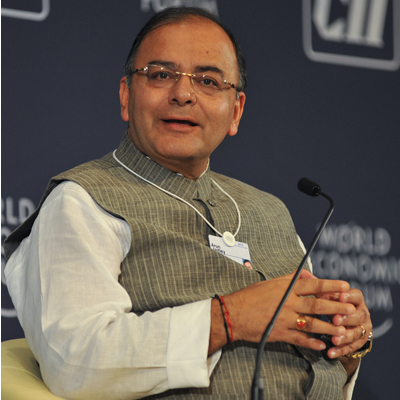
    On the other hand, Information and Broadcasting Minister Arun Jaitley suggested that concentration on sports of core competence such as hockey, wrestling, archery, badminton, boxing and shooting can produce better results for the country in international sports events like Olympics.


    In his address, he said past experience has shown that all countries cannot excel in all sports and a focused approach on sports of core competence has yielded better results for the countries world over. 


    Jaitley said that an adequate infrastructure is needed and a system has to be created where Government and sports federations need to contribute to create infrastructure at least up to the district level for creating talent in Sports. Giving the example of cricket, the Minister said, “Cricket Stadiums are owned by Federations / associations and this practice has to be extended to other sports to meet the shortage of the sports infrastructure. State resources, efforts of the federations and CSR funding can do a lot for betterment of sports and sportspersons in the country.”


    Referring to the issue of Management in sports, Jaitley said that while sports is a state subject, the Centre gives representation to the country in international sports. However, the actual management of sports is with Sports Federations. He urged the Federations to professionalize their structure for better management of sports in the country.


    The Minister said that Delhi had adequate sports infrastructure due to various international events held in the past. “However, this infrastructure is underutilized. With a liberal approach people in Delhi and NCR should be encouraged to utilize these facilities properly for sporting purposes after making a reasonable payment,” he said.


    Sonowal added that the Union budget has provided funds for innovative schemes. Funds have been allocated for setting up National Sports University at Manipur. He said, “Manipur is the nursery of sports talent and has given many internationals and Olympians. This will go on a long way in promoting sports in the North Eastern region.”


    Similarly, Finance Minister has given a special package for promotion of sports in Jammu & Kashmir, which had suffered a lot. Sonowal said his Ministry will do its best to channelize the youth of Jammu & Kashmir to join the main stream and bring laurels for the country.


    He also said that the aim was to tap young talent at school level and the Budget provided funds for launching of National Sports Talent Search Scheme to tap this talent with sports potential from schools and provide them support to achieve their peak of excellence in sports.


    Another pioneering effort that is being launched is to identify medal prospects for the Olympic Games 2016 and 2020 and has given us the scheme called ‘Target Olympic Podium’(TOP) Scheme. The Finance Minister has further extended his support to TOP scheme by arranging a contribution of Rs 10 crore per annum for the next three years through a PSU under him, the Minister added.


    The two-day meeting of State/Union Territory Ministers and Secretaries, which began from 20 March, discussed among other things schemes of Department of Youth Affairs and Department of Sports. During the course of the meeting deliberations have taken place on Rajiv Gandhi Khel Abhiyan, National Sports Talent Search Scheme, Nehru Yuva Kendra Sangathan, National Young Leaders Programme and National Programme for Youth and Adolescent Development etc.


  • Website hacking on a rise in last four years: Ravi Shankar Prasad

    Website hacking on a rise in last four years: Ravi Shankar Prasad

    NEW DELHI: A total number of 21699, 27605, 28481 and 32323 websites were hacked by various hacker groups spread across the world from 2011 to 2014, clearly showing an increase in incidents of hacking.


    According to the Indian Computer Emergency Response Team (CERT-In), these also include a total number of 308, 371, 189 and 155 Government websites hosted under ‘gov.in’ and ‘nic.in’ domains during the year 2011 to 2014. 


    Among the comprehensive measures to tackle the problem, the Government says all Central Government Ministries / Departments and State / Union Territory Governments have been advised to conduct security auditing of entire Information Technology infrastructure.


    All the new government websites and applications are to be audited with respect to cyber security prior to their hosting. The auditing of the websites and applications is to be conducted on a regular basis after hosting also. CERT-In provides necessary expertise to audit IT infrastructure of critical and other ICT sectors.


    It has been mandated that all government websites are to be hosted on infrastructure of National Informatics Centre (NIC), Education and Research Network (ERNET) or any other secure infrastructure service provider in the country. 


    NIC, which hosts the government websites is continuously engaged in upgrading and improving the security posture of its hosting infrastructure. NIC has been directed not to host websites, which are not audited with respect to cyber security. 


    All major websites are being monitored regularly to detect malicious activities, Communication and Information Technology Minister Ravi Shankar Prasad told Parliament today. 


    CERT-In issues alerts and advisories regarding latest cyber threats and countermeasures on regular basis and has published guidelines for securing the websites, which are available on its website (www.cert-in.org.in). It also conducts regular training programmes to make the system administrators aware about secure hosting of the websites. 


    The hacking of websites is tracked on a 24×7 basis and alerts issued to the concerned website owners to restore the hacked websites and taking further actions to secure the websites.

  • TV channels urged not to air live coverage of anti-terror ops

    TV channels urged not to air live coverage of anti-terror ops

    NEW DELHI: The Government has advised all television channels in public interest to safeguard innocent lives, to ensure that no operations-linked information reaches the terrorists and their handlers, and in the interest of national security, live coverage of counter-terrorism operation by the security forces should not be telecast.


    The advisory was placed on the site of the Information and Broadcasting Ministry.


    Earlier this month, Minister of State for I&B Rajyavardhan Rathore had told Parliament that the government was considering a proposal to prohibit live media coverage of counter terrorism operations by security forces and the Home Ministry wanted amendments in the extant laws in this regard.


    After the carnage in November 2008, the Ministry on 27 November, 2008, 3 December, 2008 and 20 November, 2009 had issued such advisories in public interest and in the interest of national security not to focus on or report the location, strength, movement, strategy and other related operations being followed by the Security forces engaging with the terrorists so as to avoid any adverse impact on rescue operations.


    The advisory was issued as the Ministry said it had come to its notice that some TV channels have covered live the ongoing anti-terrorist operations on 20 March, 2015.


    The advisory says that the media coverage may be restricted to periodic briefing by an earmarked official till the operation is concluded.


    Attention was drawn to clauses 5.9 and 8.1 of the Uplinking guidelines and Clauses 5.8 and 6.1 of the downlinking Guidelines as well as applicable provisions of the Cable TV Networks (Regulation) Act 1995 and Rules thereunder in this regard.


    The issue of coverage by television channels is presently part of the self-regulation guidelines drawn up by the News Broadcasting Standards Authority of the News Broadcasters Association. The Press Council of India had issued similar guidelines with regard to print media.


    These guidelines were drawn up after the 26 November, 2008 attacks in Mumbai. Following a controversy that live telecasts of the counter-terrorism operations were in all likelihood been seen by the masterminds in Pakistan who had planned the attacks.


    As far as Prasar Bharati is concerned, it is governed by the Programme and Advertising Code, which is also part of the 1995 Act and therefore equally applicable to private television channels. The Inter-Ministerial Committee examines complaints under the Act of 1995 and the Rules drawn up a year earlier in 1994.


  • Govt earns Rs 7.41 crore as processing fee from MSOs since 2011

    Govt earns Rs 7.41 crore as processing fee from MSOs since 2011

    NEW DELHI: The Government has earned Rs 7.41 crore as processing fee from multi system operators from April 2011, the Lok Sabha was informed on 20 March.


    Minister of State for Information and Broadcasting Rajyavardhan Rathore said a process fee of Rs 1 lakh was collected from MSOs at the time of submission of application for registration for providing digital addressable system.


    A sum of Rs 4.79 crore was earned till 27 January this year during 2014-15 as processing fee from MSOS.


    In comparison, the processing fee received in previous years was Rs 79 lakh in 2013-14, Rs 1.8 crore in 2012-13, and Rs 3 lakh in 2011-12.


    In addition, some states have levied entertainment tax collected directly by them, and MSOs also have to pay service tax and any other applicable taxes to the central government, the Minister said.


  • FM Radio Phase III first batch to have e-auction of 135 channels

    FM Radio Phase III first batch to have e-auction of 135 channels

    NEW DELHI: A total of 135 private FM radio channels will be auctioned in the first batch covering 69 cities in Phase III based on the reserve price formula approved by the Cabinet in 2011, the Parliament was informed on 20 March.


    This covers towns and cities, which already have FM but have vacancy for more, apart from areas which do not have FM Radio.


    Information and Broadcasting Ministry officials told Indiantelevision.com that the process would be completed by April-end.


    Speaking in the Lok Sabha, I&B Minister Arun Jaitley said that apart from news that will be taken from All India Radio (AIR) under conditions to be mutually agreed with Prasar Bharati, Phase III will consider as non-news and current affairs live coverage of sports events of local nature, information pertaining to weather and traffic, cultural events and festivals, topics relating to examinations, results, admissions, career counsel availability of employment opportunities and public announcements pertaining to civic amenities.


    In addition, categories not permitted at present, may subsequently be permitted by the Ministry from time to time, the Minister said.


    In reply to a separate question, Minister of State Rajyavardhan Rathore said that there is no proposal for community radios before the Ministry.


    The largest beneficiaries of the first batch are Maharashtra including Mumbai with 26 channels in 13 towns, Uttar Pradesh comes next with 22 channels in eight cities, followed by nine channels in six towns of Rajasthan and eight channels in five cities in Tamil Nadu. 

  • Enhanced reach & instant dissemination on social media impacts content quality

    Enhanced reach & instant dissemination on social media impacts content quality

    NEW DELHI: Minister of State for Information and Broadcasting Rajyavardhan Rathore said on 19 March that the enhanced reach and instant dissemination on social media had impacted the content style and precision of both photography and videography.


    This had led to instant communication across different social media platforms, he said while inaugurating the first National Photography and Videography Workshop organized at the National Media Centre here.


    Rathore said that the Ministry would explore the possibility of organizing similar workshops in other parts of the country including the North East wherein the potential was tremendous as the initiative was innovative in approach involving the professionals associated from the concerned domains.


    The workshop would also act as a facilitating tool in carrying forward the messages of the Government across platforms accessed by different cross sections of the population. As technology was the principal driver of innovation, it had become a critical determinant and catalyst in enhancing the skills of the individual and organization.


    The impact of the dynamic growth of technology was self- evident as there was a proliferation of changes across formats. The enhanced reach, instant dissemination on social media had impacted the content style and precision of both, photography and videography. This had led to instant communication across different social media platforms.


    The government is keen to fulfil the aspirations of Prime Minister Narendra Modi, whose emphasis has been on upgradation of skills through appropriate training methods and tools. The workshop was designed keeping in mind the basic parameters of the ‘Skill India’ initiative. Relying on the basic principles and outline of the ‘Skill India’ initiative, the workshop was an attempt to hone the skills of Government personnel associated with photography and videography.


    Speaking on the craft and art of photography, Rathore said that like any other art photography and videography could be mastered through right inputs. The workshop was an appropriate tool in this direction.


    Recounting the history of photography, Rathore mentioned that pictures had a long lasting impact. Today historic occasions were remembered on several instances only through pictographic description. This was perhaps the reason for the immense popularity of ‘Coffee Table Books’ on different subjects.


    Earlier, I&B secretary Bimal Julka said the workshop had been designed to address the immense skill opportunities that had emerged in the media and entertainment sector. As ‘Skill Development’ was a comprehensive approach involving critical stakeholders in the Government, the endeavor of the Ministry was to incorporate the ‘Skill India’ initiative across its training programmes. The workshop also provided a platform for the Government to converge its expertise and skills, keeping in mind the challenges of assignments, events in the media space dominated by social media, emerging technologies and competitive environment.


    Julka mentioned that as key programmes and initiatives of the Ministry involved technological prowess and a thorough understanding of contemporary changes, the Workshop was certainly a step in the right direction.


    He specifically highlighted the role and relevance of the workshop in the context of the archival heritage of the Ministry across platforms. It was for this purpose that an attempt had been made to bring together different aspects of technology for both, the photography and video segment. For this purpose, professional agencies specializing in digital technology, animation and graphics had been invited to provide value addition to the personnel associated from Photo Division and Doordarshan.


    The key highlight of the workshop was the Joint Session on the History of Art and Appreciation of Photography addressed by eminent photographer Rajesh Bedi and renowned cinematographer Santosh Sivan. Both shared their experiences involving the critical themes with regard to content presentation, layout, use of technology etc.


    The one-day workshop had been organised with two parallel sessions being held concurrently on Photography and Videography. The parallel sessions have been organised keeping in mind the common themes and integration between platforms and the need of skills / tools and contemporary development in both the sectors. Approximately 25 organisations / Ministries are attending the workshop. Over 135 officers participated in the Workshop. 

  • States asked to involve community radio stations in disseminating info on govt policies

    States asked to involve community radio stations in disseminating info on govt policies

    NEW DELHI: District magistrates of Indian states have been asked to proactively involve community radio stations in the dissemination of information regarding government policies. 


    A communication on the same will be sent across to District Magistrates soon. The move is a part of steps that are being taken to facilitate the enhanced role of CRS stations at the state level.


    Addressing the closing session of the fifth Community Radio Sammelan, Information and Broadcasting secretary Bimal Julka said that appropriate directions would be issued to the Directorate of Advertising and Visual Publicity to address all important issues including the enhanced presence of the medium across the media plans concerning the Central Government ministries and departments.


    Julka assured participants of the Sammelan that the inputs and suggestions given during the three-day workshop would be included in the future policy planning and deliberations of the Ministry. 


    Regarding operational issues being faced by the stations, Julka said that the Ministry had been involved in discussions with concerned stakeholders at appropriate forums including the Inter-Ministerial Committee of CRS Stations.


    He said the Sammelan convened by the Ministry provided critical inputs for harnessing the potential of the medium. As a medium, CRS stations led the way in facilitating interactive platforms amongst the community enabling an opportunity for the local communities to highlight their success stories and learn from each other. As an outreach tool, the medium played an important role in facilitating information on key flagship schemes of the government namely ‘Swachh Bharat Abhiyan’, ‘Beti Bachao. Beti Padhao’ and ‘Jan Dhan Yojna’ amongst others. 


    Julka also said that the objective was to ensure high trajectory of growth. He added that Community Radios not only made people aware about their rights and entitlements but acted as an important tool for empowerment of masses especially women and marginalized communities. As a platform, it encouraged the local youth to mainstream their talents. As a medium of communication, the CR Stations also promoted and acted as a repository of local folk songs and culture. The repository of rich heritage showcased across CR stations reiterated the diversity of the country in a language and form understood by the people.


  • Govt reiterates no plans to cap number of TV channels in country

    Govt reiterates no plans to cap number of TV channels in country

    NEW DELHI: Even as the Government has no plans to put a cap on the number of satellite television broadcasting channels in the country, the Parliament was informed today that permission had been withdrawn to 27 news and current affairs channels in the past three years.


    Minister of State for Information and Broadcasting Rajyavardhan Rathore today told Parliament that the Telecom Regulatory Authority of India (TRAI) in response to a reference by the Ministry had said on 23 July, 2010 that “no cap should be placed on the number of satellite broadcasting channels to be permitted to be downlinked from viewing in India or to be uplinked from India.”


    The Minister also said that there was no proposal to amend the uplinking and downlinking guidelines to check the increase in the number of news channels in the country.


    In reply to another question, Rathore said that the Ministry had withdrawn permission of 27 news and current affairs TV channels for reasons of non-operationalization of TV channels or surrender of permission, etc.


    He said issues related to employment of media personnel, working in the TV channels (including news channels), are governed by the prevalent Labour Laws.


    The number of permitted satellite television channels by the end of December last was 826, which include 405 news and current affairs channels and 421 general entertainment channels.


    The statistics show that 697 channels (including 382 news channels) were permitted to uplink and downlink from within the country, and 36 (including seven news channels) were uplinked from India for beaming overseas and not in the country. The number of channels uplinked from overseas and downlinked into India was 93 (including 16 news channels).


    The year 2014 has thus saw the clearance to more than 30 channels.