Category: I&B Ministry

  • MIB sends TV channels’ list to Home Ministry for fresh security clearance

    MIB sends TV channels’ list to Home Ministry for fresh security clearance

    NEW DELHI: The Ministry of Information and Broadcasting (MIB) has forwarded a list of 82 TV channels, teleports and news agencies to the Home Ministry for a fresh round of security clearance as their initial ten-year licenses expire.


    Last week, the Home Ministry had also agreed to examine all cases of multi-system operators (MSOs) awaiting security clearance to get licenses for digital addressable system. MIB secretary Bimal Julka told Indiantelevision.com that the initial license was for ten years. Julka will also be meeting concerned officials of the Home Ministry in this regard.


    If found suitable, permission will be granted for renewal for an interim period up to 31 December, 2015 or till the final decision on channels’ application for renewal of permission is taken, whichever is earlier.


    However, TV channels, teleports, news agencies and MSOs have been asked to furnish an affidavit to the effect that the company will abide by all the provisions of the latest Uplinking/ Downlinking Guidelines and other relevant instructions/ modifications issued from time to time.


    All applicants have been asked to send the information to the MIB along with supporting documents within l5 days to enable it to proceed further in the matter.


    Prominent names among those whose cases are coming up for renewal include several channels of Bennett, Coleman & Co., Eenadu Television, Panorama Television, Prism TV, Television Eighteen India, Zee Entertainment Enterprises, Zee Media Corporation (erstwhile Zee News), IBN18 Broadcast and Times Global Broadcasting Company.


    Broadcasters may also enclose the details of Board of Directors (BOD) and latest Share Holding Pattern (SHP) including foreign direct investment (FDI) component, if any, duly accompanied by requisite approval of the Foreign Investments Promotion Board (FIPB).


    The companies were also asked to ensure submission of the annual renewal fee for both Uplinking and Downlinking at rates as applicable as per Guidelines and for the period that may be due.


    For full list of TV channels, Teleports and News Agencies, click here.


  • Home Ministry to examine applications of MSOs for security clearance

    Home Ministry to examine applications of MSOs for security clearance

    NEW DELHI: Even as several multi-system operators (MSOs) have been waiting endlessly for security clearances to ensure they get licences for digital addressable system from the Government, the Home Ministry has now indicated requirement of fresh security clearance before renewal of permission can be considered.


    According to the Information and Broadcasting Ministry, which has been pursuing the matter with the Home Ministry, the latter has finally decided to examine the application of which the details sent by the MSOs have been forwarded to it. 


    If found suitable, permission will be granted for renewal for an interim period up to 31 December, 2015 or till the final decision on your application for renewal of permission is taken, whichever is earlier.


    However, MSOs have been asked to furnish an affidavit to the effect that the company will abide by all the provisions of the latest Uplinking/ Downlinking Guidelines and other relevant instructions and modifications issued from time to time. 


    All applicant MSOs have been asked to send the information to the I&B Ministry along with supporting documents at the earliest within 15 days to enable us to proceed further in the matter.


    They may also enclose the details of Board of Directors (BOD) and latest Share Holding Pattern (SHP) including FDI component, if any, duly accompanied by requisite approval of the Foreign Investments Promotion Board (FIPB). 


    The companies may also ensure submission of the annual renewal fee for both Uplinking and Downlinking at rates as applicable as per Guidelines and for the period that may be due.


    I&B Secretary Bimal Julka had earlier told Indiantelevision.com that he had sent a fresh reminder to the Home Ministry and also sought a meeting with concerned officials in this regard in view of the large number of applications pending. 


    Major players whose applications are pending for lack of Home Ministry Security clearance include Reliance Jio Media Pvt  Ltd, CAT Vision Pvt Ltd, Signum Digital Network Pvt Ltd, Digirevo Networks, Goldy Dishnet Pvt. Ltd., Citv Television Network, Sri Udav Satvision and General Entertainment Pvt Ltd.


  • I&B slots MSOs & broadcasters’ open house meet on 20th of each month

    I&B slots MSOs & broadcasters’ open house meet on 20th of each month

    MUMBAI: The Information and Broadcasting Ministry (I&B) is taking all steps possible to ensure that the sector prospers and any issue, which hampers the growth is addressed well in time.


    The Ministry, over the past several months, has taken active measures to ensure that the various stakeholders of the ecosystem meet from time to time. The meeting is aimed at becoming a forum for the stakeholders to voice their concerns and come up with solutions.


    In its latest notice, the Ministry has informed both the broadcasters and MSOs, that the open house meetings, which were earlier held on the 5th of every month, will now take place on the 20th of every month. In case, of the day being a holiday, the meeting will be held on the next day.


    The meeting will be held from 11 am to 12 pm, in two different rooms of Shastri Bhawan, New Delhi involving broadcasters and MSOs.


    The notice clearly states that only regular employees of the company, well versed with the issue, would be allowed to participate in the open house meeting. “Therefore, the participant shall have to bring authorisation letter from the top executive of the company in his/her name to participate in the open house meeting, along with photo identity card issued by the employer company,” reads the notice.


    Companies, which desire to participate in the open house have been asked to send the request of participation detailing out the issues to be discussed latest by 10th of the month to director (BC) through email at dirbc-moib@nic.in


    However, for the meeting scheduled on 20 April, issues to be discussed may be sent latest by 13 April.

  • Govt. stays decision to enlarge size of tobacco ads on packets

    Govt. stays decision to enlarge size of tobacco ads on packets

    NEW DELHI: The Government has stayed a decision taken by the Health Ministry around six months earlier to increase the size of pictorial warnings on tobacco products from 1 April.


    This follows the report by a Parliamentary panel’s assertion that it needs more time to deliberate on the issue.


    The Central Government said it will take a “measured and responsible” decision on the issue of increasing the size of pictorial warnings on tobacco in the backdrop of a controversy generated by Bharatiya Janata Party (BJP) members of the Parliamentary panel suggesting “nil” effects of smoking.


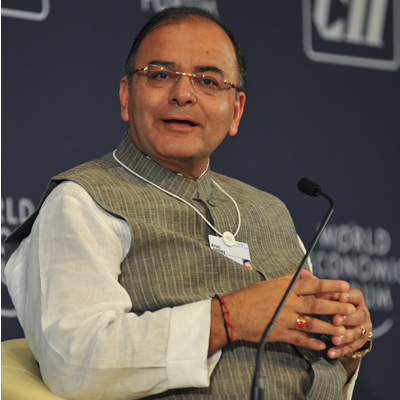
    However, Information and Broadcasting Minister Arun Jaitley made it clear that the decision of the government in the matter will not be based on the opinions of individuals.


    His comments came amid reports that Prime Minister Narendra Modi had directed removal of the members with “conflicting interests” from the Committee of Subordinate Legislations examining the provisions of Cigarettes and Other Tobacco Products Act 2003.


    However, Jaitley did not directly comment on the issue of removal of these members and said, “There is a system in the Parliament and it has also been written in the rules of procedures. There is one opinion that it should be changed. This is in the hands of the Parliament, in the hands of the chair. It is not the issue concerning the government,” he said.


    BJP MPs Dilip Gandhi, Shyam Charan Gupta and Ram Prasad Sarmah have claimed there is no clear proof yet linking cigarette puffing and cancer.


    Asserting that a “multi-pronged” approach to discourage tobacco use was needed, Jaitley said, “Individuals can give individual opinions, but government takes measured and responsible decisions.”


    Meanwhile Health Minister J P Nadda said the panel is presently deliberating the matter and his ministry will take a decision based on merit. “The subordinate legislative committee of Parliament is deliberating on the matter. After that, whatever comes, we will decide the things on its merit. Health Ministry has been consistent on the issue right from the beginning,” he said.


    Gupta’s remarks have also been criticised by opposition parties including Congress, SP and CPI(M), which alleged that there was a “conflict of interest” as Gupta was in tobacco trade and also a member of Parliamentary Committee of Subordinate Legislation looking into the rules regarding tobacco sale in the country.


    The developments come after Panel chairman Dilip Gandhi himself had said that all studies in regard to health hazards of tobacco consumption have come from abroad and one should consider the Indian aspect too.


    “All agree on the harmful effects of tobacco. But there is no Indian survey report to prove that tobacco consumption leads to cancer. All the studies are done abroad. Cancer does not happen only because of tobacco. We have to study the Indian context, as four crore people in states like Madhya Pradesh, Andhra Pradesh, Maharashtra and Chhattisgarh are dependent on bidi-making through Tendupatta,” Gandhi had said.


    Health Minister Harsh Vardhan had issued the notification around six months earlier saying that cigarette manufacturing companies will have to devote at least 85 per cent of the surface areas of cigarette packets on both sides to graphically and literally represent the statutory warning from 1 April this year. 


    In the gazette notification amending the Cigarettes and Other Tobacco Products (Packaging and Labelling) Rules 2008, every cigarette packet was asked to carry on both sides pictorial depiction of throat cancer and a message in English, Hindi or any Indian language. “I have specified that 60 per cent of the space must be devoted to a picture and 25 per cent to the legend,” he said. 

    Vardhan had said, “Graphic health warnings using a mixture of pictures and words are part and parcel of every country’s policy on cigarette marketing. Many studies have established that the inclusion of larger and more noticeable health warnings on packages significantly impact life expectancy rates and lead to savings on medical costs.” 


    Meanwhile, the Health and Family Welfare Ministry had last month launched public service advertisements and poster on tobacco control featuring India’s ambassador for tobacco control Rahul Dravid.


    The advertisements and posters have been prepared by the Ministry of Health and Family Welfare, and the World Health Organization Country Office for India (WHO), in collaboration with the Public Health Foundation of India (PHFI) and HRIDAY. 


    The anti-tobacco campaign featuring Dravid is an effort by the Ministry to reach out to millions of young and potential tobacco users to encourage them to refrain from the deadly habit of tobacco use.


    The audio and visual ads in Hindi and English, along with the posters will be used to create awareness regarding the harmful effects of tobacco use through TV, radio, at schools, community spaces, railway compartments, and social media. 
  • DAS phases face problems; Parliamentary Committee asks Govt. to make amends

    DAS phases face problems; Parliamentary Committee asks Govt. to make amends

    NEW DELHI: Even as there are consistent delays on the Home Ministry’s part to examine security clearances for multi system operators (MSOs) and complaints of non-availability of reliable set top boxes (STBs), a Parliamentary Standing Committee has said suitable steps should be taken proactively to address the concerns of all the stakeholders in achieving the final phases of digitization within the envisaged time frame.


    The Committee in its recent report said that about 50 per cent of the further demand of 110 million STBs required under the final phases of digitization is likely to be met by the domestic manufacturers, which is certainly an encouraging proposition.


    Noting that the Telecom Regulatory Authority of India (TRAI) had found interoperability of STBs expensive and recommended financial interoperability, the Committee wanted to know the progress in getting inexpensive STBs as it had been informed that indigenous STBs would be made available in sufficient number.


    Regulations notified by TRAI provide an exit option for a subscriber to change the operator/platform for any reason. The Committee said it had also been informed that the Department of Information Technology had issued a Request for Proposal (RFP) for the development of an indigenous Conditional Access System (CAS) to make interoperability of STBs possible and an Indian CAS is expected to be ready in about a year’s time.


    The Committee noted the process of digitisation under Phase I and Phase II was not smooth as there was strong opposition from cable operators’ associations, non-acceptance of revenue sharing arrangements between cable operators and MSOs, and between MSOs and broadcasters, delay in filling of Consumer Application Forms, monopoly of few selected STBs manufacturers and service providers and opposition from some State Governments.


    It had been informed that the Task Force for the final two phases will provide policy direction and take stock of the progress on a regular basis in order to implement the final phases in a professional manner.


    The Committee noted that out of the four metro cities planned to be digital, digitization has been near total in Delhi, Mumbai and Kolkata. Chennai is yet to undergo the digital transition due to several pending court cases. Phase II of digitization was concluded by 31 March, 2013 in 38 cities spanning 14 states and one union territory. The Phase III and IV digitization process is now planned to be completed by December 2015 and December 2016 respectively.


    The Committee noted that during Phase I and Phase II of the Cable TV digitization, the indigenous manufacturers were able to supply only 15 per cent of the total requirement of STBs and the rest were imported from various countries, mainly from China. As a result, complaints were received about the poor quality of STBs, their non-compliance to BIS standards, and absence of service/repair centres for STBs.


    In this regard, to meet the growing demand of STBs in the country, the Ministry has reportedly taken a number of steps to promote the indigenous manufacturing of STBs, which include increasing import duty on imported STBs from five to 10 per cent, declaring STBs as a part of ‘Telecommunications Networks’ by the Department of Telecommunications on 30 June, 2014 and confirmation by the Department of Revenue on 13 August, 2014 by extension of the same under Sec 8(3) (b) of the Central Sales Tax, 1956 thus fulfilling the major demand of the indigenous STBs manufacturers for the creation of a level playing field vis-?-vis importers.


    Moreover, the Department of Electronics and Information Technology had made it mandatory for the STBs to be BIS compliant for safety certification with effect from January 2014. The Information Technology Department had also entered into a contract with a domestic company to develop CAS domestically vide its order dated 24 July, 2014, which would be made available to the domestic vendors at $ 0.5 as against the current value of $2 or more.


    The Committee also noted that in order to give time to the domestic manufacturers of STBs, the Government had extended the cut-off dates of digitisation, which for Phase III has been extended from 30 September, 2014 to 31 December, 2015 and for Phase IV from 31 December, 2014 to 31 December, 2016.

  • DD to set up four new channels in the north eastern part of India

    DD to set up four new channels in the north eastern part of India

    NEW DELHI: Pubcaster Doordarshan is working towards launching four channels in the north east in the near future.


    Three of these channels will be in Guwahati, Imphal, Arun Prabha (Itanagar), and “Ma-Mi-Na” (Aizawl).


    While presenting his budget in February, Information and Broadcasting Minister Arun Jaitley who also holds the Finance Portfolio had said Prasar Bharati was actively working on a 24×7 television channel for the north-east, for which the clearance of the Standing Finance Committee headed by the I&B secretary had been forwarded to the pubcaster on 24 September.


    The channel was expected to provide a strong platform to rich cultural and linguistic identity of the region.


    However, Prasar Bharati has proposed that the existing north east channel be trifurcated by launching two additional 24X7 satellite channels for north eastern region designated as Arun Prabha Itanagar and “Ma-Mi-Na” Aizawl.


    The proposal is under finalization for circulation to appraisal agencies.


    The proposed Arun Prabha channel will cater to the states of Arunachal Pradesh and Sikkim and the second channel will cater to the states of Nagaland, Mizoram and Manipur and the third to Assam and Meghalaya.


    While applauding this move, the Parliamentary Standing Committee on Information Technology which also examines I&B said recently that these projects are needed to be implemented on a priority basis and specific time-frames be prescribed within which the channels would be operationalised. The Committee wanted to be apprised of the progress.


    It can be noted that at present there is a single 24X7 north east channel which is inadequate to meet the aspirations and needs of the vast north eastern region of the country, comprising eight states where multiple languages and dialects are followed.


  • I&B Ministry urges Home Ministry to expedite security clearances for MSOs

    I&B Ministry urges Home Ministry to expedite security clearances for MSOs

    NEW DELHI: Keeping in view the continuing delays in multi-system operators (MSOs) failing to get security clearance, the Information and Broadcasting Ministry (I&B) has send a fresh reminder to the Home Ministry in this regard.


    Speaking to Indiantelevision.com, I&B secretary Bimal Julka said that a meeting has also been sought with concerned officials of the Home Ministry to sort out issues, if any.


    He said that the process of digitisation will not be affected, but agreed that several proposals by private MSOs have remained pending for long periods either with the I&B or the Home Ministry.


    The I&B Ministry holds open house meetings on a regular basis with MSO representatives so that any queries can be answered.


    The Ministry had itself conceded that a proposal by Reliance Jio Media for registration as a multi-system operator under the digital addressable system was sent to the Home Ministry in February last year for security clearance and has still not been returned.


    The representative of Reliance Jio, Abhishek Soni, was told that the Home Ministry would take some time to furnish comments/security clearance.


    CAT Vision was told that a reminder was being sent to the Home Ministry in its case. Signum Digital Network was also given the same assurance.


    Digirevo Networks received a similar response to its query at the open house meeting held early this month.  


    Other MSOs received similar replies in meetings held during February and March this year include Goldy Dishnet, Citv Television Network, Sri Udav Satvision, and General Entertainment.


  • 160 MSOs get 10-year licences under DAS for specified areas; 27 denied permission

    160 MSOs get 10-year licences under DAS for specified areas; 27 denied permission

    NEW DELHI: With addition of two more multi-system operators (MSO) from Sikkim and Bihar, the total number, who have been granted permanent registration for 10 years to operate the digital addressable system during the last two months has gone up to 158 as compared to 142 by December-end.


     Most of these MSOs had been given provisional permission earlier. Thus five more MSOs have been granted permission after 5 March till 25 March.


     The MSOs, who have received permission after 5 March are Siti Maurya Cable Network Pvt. Ltd for areas in all districts in the state of Bihar except Madhepura and Arawal; Sikkim Digital Network for Gangtok city and Kabi, Phodong, Mangan, Chunthang, Lachen, Lachung, Ranka, Ranipool, 32 Mile, Singtam, Central Pandam, Namthang, Majitar, Rangpo, Duku, Pakyong, Rorathang, Rhenock, Rongli Aritar, Dalapchand, Legship, Geyzing, Pelling, Tasiding, Yuksom, Soreng, Dentak, Reshi, Sombaria, Daramdin, Melli, Bermoik, Temi, Tarku, Namchi, Jorethang and Romang; International Cable Network for Bhojpur, Buxar and Rohtash; SaiStar Digital Media Private Limited for Ahmedabad, Rajkot, Surat, and Vadodara under Phase II, all other areas under Phase III and Phase IV; and Maharaja Entertainment for pan India in all Phases of DAS.


    The list of MSOs, who have been refused permission as on 28 February has gone up to 27 from 26 with one more MSO being denied permission. Some of those in the cancelled list applied as early as March 2013.


    MSO sources, however, said that the approved list was in addition to the 140 whose names had been approved earlier in March last year.


    The Ministry website mib.nic.in has listed the areas and the date from which the MSOs have been given permission.


  • FCC proposes rules for satellite TV market modification

    FCC proposes rules for satellite TV market modification

    MUMBAI: The Federal Communications Commission (FCC) has proposed modifying satellite television market rules to enable satellite subscribers to gain access to in-state news and other programming that they currently are unable to receive. The Notice of Proposed Rulemaking implements Section 102 of the STELA Reauthorization Act of 2014 (STELAR). 


    The proposal would, as Congress directed, create regulatory parity between satellite and cable television providers. Federal law requires satellite television carriers, such as DIRECTV and DISH Network, to use the Nielsen Company’s Designated Market Area (DMA) assignments to determine, which TV broadcast stations to carry and include in their local programming packages to subscribers. DMAs describe a station’s local television market in terms of a unique group of counties and are defined by Nielsen based on measured viewing patterns. DMAs frequently cross state lines and thus may include counties from multiple states.


    Where these multistate DMAs exist, satellite subscribers located in certain out-of-state counties within a DMA (so-called “orphan counties”) are sometimes unable to receive in-state broadcast television stations. This means that some satellite subscribers may lack access to in-state news, sports, public affairs, political information and emergency information, such as severe weather alerts, school closings, road closures and other breaking news. In addition, some of these subscribers may be located in rural areas which are unable to receive in-state stations by means of over-the-air reception and which may have limited, if any, broadband service.


    Congress, through Section 102 of the STELAR, gave the Commission authority to modify a commercial television station’s local television market for purposes of satellite carriage rights. Prior to the STELAR, the Commission had authority to modify markets only in the cable carriage context. The Commission proposes to apply the existing cable rule to the satellite carriage context, while adding rules to address the unique nature of satellite television service, such as giving carriers an exception if the resulting carriage is “not technically and economically feasible.” Market modification allows the Commission, on request from a broadcaster or cable operator, to add or delete communities from a particular commercial TV broadcast station’s local television market to better reflect market realities.


    The STELAR requires the Commission to issue final rules for satellite television market modification on or before 4 September, 2015.

  • National Supercomputing Mission to launch with Rs 4500 crore corpus

    National Supercomputing Mission to launch with Rs 4500 crore corpus

    NEW DELHI: A National Supercomputing Mission will be launched at an estimated cost of Rs 4500 crore over a period of seven years.


    This was decided by the Cabinet Committee on Economic Affairs chaired by the Prime Minister Narendra Modi on 25 March.


    A press note said, “This is a visionary programme to enable India to leapfrog to the league of world class computing power nations.”


    The Mission would be implemented and steered jointly by the Department of Science and Technology (DST) and Department of Electronics and Information Technology (DeitY).


    The Mission envisages empowering national academic and R&D institutions spread over the country by installing a vast supercomputing grid comprising more than 70 high-performance computing facilities. These supercomputers will also be networked on the National Supercomputing grid over the National Knowledge Network (NKN).


    The NKN is another programme of the government, which connects academic institutions and R&D labs over a high speed network. Academic and R&D institutions as well as key user departments/ministries would participate by using these facilities and develop applications of national relevance.


    The Mission also includes development of highly professional High Performance Computing (HPC) aware human resource for meeting challenges of development of these applications.


    The Mission implementation would bring supercomputing within the reach of the large Scientific & Technology community in the country; will provide significant qualitative and quantitative improvement in R&D and higher education in the disciplines of Science & Technology; and enable the country with a capacity of solving multi-disciplinary grand challenge problems. Currently, in the top Supercomputing machines in the world, a major share is taken from advanced countries such as the US, Japan, China and the European Union (EU). The mission envisages India to be in the select league of such nations. To provide continuity in maintaining a lead in supercomputing, the Mission also includes advanced R&D. This will create requisite expertise to build state-of-the-art next generation supercomputing. The Mission supports the government’s vision of “Digital India” and “Make in India” initiatives.


    The Mission has been conceptualized and evolved keeping in view the ever increasing computing demand of the scientific and academic community in the country, international technology trends and roadmaps of leading countries in the area, strategic importance and emergence of supercomputing as a benchmark for Scientific & Technological advancements. Two key departments of the Government of India, DeitY and DST will be implementing the mission jointly through two leading organizations. These are the Centre for Development of Advanced Computing (C-DAC) and the Indian Institute of Science (IISc), Bangalore.


    Worldwide supercomputing facilities have enabled countries in their S&T capabilities in areas such as designing vehicles, aeroplanes, massive structures like high rise buildings and bridges, infrastructure, discovery of new life saving drugs, discovery and extraction of new energy sources including oil, natural gas etc. Over the years, supercomputers have benefitted mankind in several ways. Weather prediction has reached accuracy of forecast as well as real time tracking of natural phenomenon. Timely warning of cyclones in the recent past have saved many lives and property.


    The Mission aims to further such capabilities beyond current levels.