Category: I&B Ministry

  • Home Ministry asks for updated directors list of downlinked TV channels to enable 10 year renewal

    Home Ministry asks for updated directors list of downlinked TV channels to enable 10 year renewal

    NEW DELHI: The Home Ministry has asked all television channels and those managing teleports, whose downlinking permissions have expired after five years or is in the process of expiring by December this year, to furnish details afresh about their Board of Directors and key executives.

    As per a notice on the website of the Information and Broadcasting Ministry, the required information has to be filed by 10 May for the channels and teleports to apply for extension of their permissions.

    The website lists 60 TV channels whose downlinking permission is over and six channels whose permission is expiring this year.

    Channels whose permissions have expired include Sony Entertainment Television and its related channels, Zee Trends, B4U movies, BBC World, Bloomberg, DW TV, TV 5 Monde, various channels of the Discovery group, channels of Star Sports, channels of Nat Geo, AXN, NHK World, Ten Sports, Disney, CNN, Pogo, HBO, WB, Zee Café and Zee Studio.

    The six whose downlinking permissions are expiring include Al Jazeera, France 24, ESP News and Grenada TV.

    Asked why the period mentioned was five years and not ten as already stipulated, I&B secretary Bimal Julka told Indiantelevision.com that the period of licence was five years until 2011 but has since been increased to ten years. Thus, all these applicants will get renewals for ten years.

    He also said that the period had been ten years for those who uplinked and downlinked, and the aim of the 2011 change was to make the downlinking permission co-terminus with the licence period. Thus, all renewals will be for ten years.

    Julka also said that the Home Ministry had assured him that cases held up for security clearances as far as multi-system operators (MSOs) were concerned would be speeded up as the officials were until now tied up with the Nepal rescue work.

  • SC Committee suggests setting up ombudsman to monitor govt ads

    SC Committee suggests setting up ombudsman to monitor govt ads

    NEW DELHI: The Government has spent over Rs 780 crore by way of advertisements, of which a major part went to audio-visual advertisements, during the past six months till March this year.

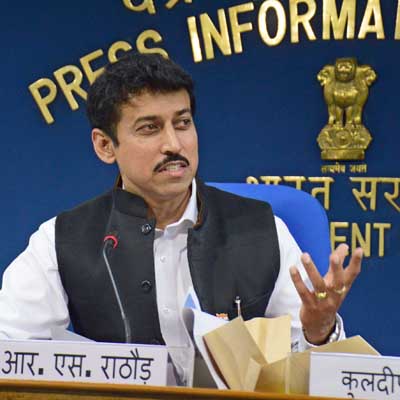
    Minister of State for Information and Broadcasting Rajyavardhan Rathore said these advertisements were issued through the Directorate of Advertising and Visual Publicity.

    Rathore said in Parliament that a Committee set up by the Supreme Court for suggesting the guidelines on Government funded advertisements following a writ petition filed had advocated appointment of an ombudsman to receive complaints of violation of guidelines prepared by them and to recommend action in accordance with the guidelines.

    The Committee also suggested that the ombudsman could recommend suitable changes to the Guidelines to deal with new circumstances and situations. Supreme Court took up the concerned writ petition for hearing on 17 February, 2015 when it reserved its judgment.

    The details of the expenditure by DAVP in the last six months are:


  • Media fraternity welcomes GST; few pose doubts over implementation

    Media fraternity welcomes GST; few pose doubts over implementation

    MUMBAI: Amidst strong controversy, Arun Jaitley led finance ministry of India tabled the Goods and Service Tax (GST) in the parliament for further debate. GST is often termed as India’s most ambitious indirect tax reform plan by economists, which aims to stitch together a common market by dismantling fiscal barriers between states. It is a single national uniform tax levied across the country on all goods and services.


    The indirect tax system in India is currently mired in multi-layered taxes levied by the Central and State governments at different stages of the supply chain such as excise duty, central sales tax (CST), value added tax (VAT) and octroi tax, among others. In GST, all these will be subsumed under a single regime. 


    Even as the entire opposition party, led by Sonia Gandhi, posed a walk out from the Parliament in protest against the procedure and particulars of the amendment, Indiantelevision.com took the opportunity to seek reactions of the vanguards of the media, cable and Direct-to-Home (DTH) industries on GST. While industry stalwarts welcomed the thought behind GST unanimously, a few posed doubts over its successful implementation.


    Dish TV CEO RC Venkateish says, “It will be good for the DTH sector. At present we are victims of multiple taxation system where we pay various taxes in entertainment tax, service tax etc. With GST, it will all get rolled under one. If the GST is approved and rolled out, we will have a tax reduction of three to 3.5 per cent and hence it will be a good move for the sector.”


    Welcoming GST wholeheartedly, Videocon D2H CEO Anil Khera opines, “GST is a welcome move. It will help the DTH sector to prosper. DTH is the biggest victim of multiple taxation policy and GST will simplify that. The industry needs a uniform taxation system and the sooner it comes the better it is.”


    Explaining why GST is good for the economy in the long run, Times Network CEO MK Anand says, “GST brings uniformity and transparency and therefore better administration. However, in the short term, there are expected to be issues. Broadcasting will move from CST, which we believe will be lower than GST as we expect and that is going to put pressure on our pricing. The broadcast ecosystem at the bottom end has elements like consultants or local operators, who may try to push for absorbing into prices. The other thing is the state wise registration and filing of GST as against the current centralised filing. This is also an additional activity that we will now have to account for and so it increases costs to some extent.”


    GTPL Hathway COO Shaji Mathews supports the concept behind GST but has doubt on its successful implementation. He explains, “Taxation has been the biggest issue when it comes to digitisation. With digitisation, often only three stakeholders are associated namely: multi system operators (MSO), broadcasters and local cable operators (LCO). However in actuality, there are two more parties involved – the government and consumers. Government has been the major gainer so far from digitisation and they have been trying to shift the tax burden on to the consumer. However the consumer is not ready to take it and hence operators have been bearing the brunt of it all. With GST, the concern is over entertainment tax, which varies from state to state. No clear information is provided whether entertainment tax will be included in GST and if yes, then at what slab. So overall, while the thought behind GST is good, there are a lot of question that are still unanswered. Moreover, since the government hasn’t made any efforts to rationalise taxation, the implementation is something that remains to be observed closely. The problem is with the mechanism that the government follows, where they don’t consider the tax payers’ point of view while implementing an amendment.”


    Another senior official from the cable fraternity asserts, “GST has the potential to emerge as a blessing in disguise. As we proceed with digitisation, uniformity in taxation is the least that we can expect. It has been very harsh on us, as we operate across different states and at times we end up paying tax for an already taxed item, which is not something that we should be facing. Overall, I welcome GST and see it as an encouraging move though only time will unfold the real story.”


    NDTV executive vice chairperson KVL Narayan Rao adds, “Frankly, GST deals more with Goods and Service providers and doesn’t impact us directly but I consider it as a beneficial move. For example, if I have to set up a new studio at a new location, GST will help me as I won’t pay multiple taxes and hence it affects the pricing.”


    Backing GST, entrepreneur Ronnie Screwvala opines, “A business friendly environment had to be developed in India and taxation is a key element to that. With the Goods and Service Tax, service tax will come down to 16 per cent, which solves many problems. Hence GST is a firm step forward towards developing a business friendly scenario in India and it will surely help the country to ensure economic growth.”


    As per information available, the government is expected to rollout GST by April 2016.With absolute majority in the Lok Sabha, it will not be a challenge for the government to pass it through in the lower house. However the bigger obstacle will come from the Rajya Sabha as Jaitley and company will have to penetrate through a larger opposition. The entire business fraternity will keenly observe the next few days of proceedings in both houses of the Parliament.

  • Mobile Apps to help passengers for railways, taxi services

    Mobile Apps to help passengers for railways, taxi services

    NEW DELHI: Despite fears that the growth of Internet is not as fast as it should be, social media and apps appear to be pervading all spheres of live.


    Taking a cue from the heavy dependence of social media and mobile on people’s lives, the Railway Ministry has launched a portal on Complaint Management in English and Hindi to address needs of the consumers. However, the mobile application is available only in English on Android platform.


    The public complaints and suggestions are being monitored on a real time basis. Necessary instructions have been issued to concerned officials to finalize the complaints at the earliest. However, no time frame has been set to redress the complaints.


    Minister of State for Railways Manoj Sinha told the Parliament that bona fide passengers could also send their suggestions through this newly launched portal.


    The details of the Railway Mobile App have been given wide publicity through Indian Railways’ sharing details on its social networking sites such as Facebook and Twitter.


    Meanwhile, the Road Transport & Highways Ministry has finalised a draft advisory for the State Governments in consultation with stakeholders with regard to taxi-hailing services using mobile apps.


    The taxi hailing services or the on-demand transport aggregating services in question are covered under Section 93 of the Motor Vehicles Act, 1988.


    The State Governments have the power to regulate such service providers under Section 93, Minister of State for Road Transport & Highways Hon Radhakrishnan told Parliament today. 

  • 178 applications for new TV channels pending: Rajyavardhan Singh Rathore

    178 applications for new TV channels pending: Rajyavardhan Singh Rathore

    NEW DELHI: A total of 178 applications for new TV channels have been pending with the Government of India since 2012.


    Information and Broadcasting Minister of State Rajyavardhan Singh Rathore said, “The grant of permission to private TV channels is dependent upon requisite clearances from various ministries and departments. After receipt of all clearances, the ministry takes up the case for grant or rejection of permissions.”


    The Minister further added that the matters were being taken up regularly with various departments and ministries at various levels for early clearance so that the permission to the TV channels could be granted.


    Giving details on the pendency, Rathore said that there were 36 applications in 2012, 59 in 2013, 56 in 2014 and 27 in 2015.


    The Minister said that the Ministry, at present, granted permission to 832 TV channels out of which 406 were news and 426 were general entertainment channels (GECs). Religious channels and sports channels are included in the GEC category.

  • MIB gets BSI’s ISO certification for Quality Management Systems

    MIB gets BSI’s ISO certification for Quality Management Systems

    NEW DELHI: The Information and Broadcasting Ministry (I&B) has been conferred the certificate of registration by the British Standard Institute (BSI) for the Quality Management System as required under ISO 9001:2008 in respect of various permissions / licenses issued by the Ministry for the broadcasting, print and films sectors.


    These include permission / license for satellite television channels, teleports, multi-system operators, community radio stations, direct-to-home services, publication of Indian editions of foreign, technical and scientific foreign magazines of news and current affairs sector and facsimile edition of foreign newspapers and grant of permission for foreign film producers. 

    The Ministry has been taking several initiatives to bring in more transparency and efficiency in the processes relating to grant of various permissions / licenses to the eligible applicants.


    The Ministry has put in place a well defined procedure and measures for ensuring quality of services offered to the customers on the basis of ISO 9001:2008. This will ensure delivery of services by the Ministry in a qualitative manner.  

  • Composition of Sports Committees, awards eligibility criteria announced

    Composition of Sports Committees, awards eligibility criteria announced

    NEW DELHI: The composition of various Indian sports committees as well as the eligibility criteria for sports awards have been announced.

    The chairman for the Arjuna Award selection committee will be headed by a retired judge of the Supreme Court or High Court. Additionally, other sports committees including Rajiv Gandhi Khel Ratna Award, Dhyan Chand Award, and Dronacharya Award will be headed by persons nominated by the Youth Affairs and Sports Ministry.


    Sports Minister Sarbanand Sonowal told Parliament that the Rashtriya Khel Protsahan Puruskar committee will be headed by the Secretary in the Ministry.


     The composition of the committees will be:


  • Majority of MSOs await security clearance held up by Home Ministry

    Majority of MSOs await security clearance held up by Home Ministry

    NEW DELHI: Nine of the 13 multi-system operators (MSOs) who attended the last two open house meetings for MSOs in the Information and Broadcasting Ministry were told that their cases are awaiting security clearance by Home Ministry, even as the Ministry has now decided to consider the cases afresh.


    Reliance Jio Media’s representative was informed that details of Reliance Jio CEO K. Jayaraman were being sent to the Home Ministry.


    Others in the queue for Home Ministry who turned up in the meetings on 30 March and 7 April are Seven Star, Infinite Television & Telecom, K Net, GTPL Hathway, Shirdi Sai Digital, Sahyog Telelink, Om Systems and Subhodhaya Communication.


    The cases of Subhodhaya Communication, Technobile System, Akshaya Diginet Cable, Technobile Systems and Bhaskar Cable Network have also been held up for other reasons including policy decisions.

  • 169 MSOs get 10-year licenses under DAS

    169 MSOs get 10-year licenses under DAS

    NEW DELHI: With the addition of eleven more multi-system operators (MSOs) after 25 March, the number of MSOs who have been granted permanent registration for ten years to operate the digital addressable system (DAS) has gone up to 169, even as the Home Ministry has been forwarded the names of 82 MSOs who have been awaiting security clearance for a long time.


    Most of these MSOs had been given provisional permission earlier. The new list is as on 10 April.


    The MSOs who have received permission after 25 March are: M C Transmission of Bhatinda for Punjab; Skyvision Master Channel for In Yanam and East Godavari District; Arohon Cable TV Network of West Bengal for 24 paraganas (south) which includes Amtala, Bishnupur, Daulatabad, Gabberia, Julpia, baruipur, Mruogranut, Srichanda, Bhasa, Bibirhut, Pailan, Roypur, Fatehpur, Sirakol, Sibanipur, Falta etc. and District of Howrah in the state of west Bengal under Phase III and IV; Machillipatnam Communication for entire Andhra Pradesh under Phase III & IV; Uday Infosys of Dhansura for Aravalli, Kheda and Sabarkantha districts; United Cable Communications of New Delhi for pan India; Radiant Digitek Network of Kota for Phase II, III, IV of entire Rajasthan; N T Broadcasting of Perambdur for Perambalur, Cuddalore, Salem, Villupuram, Trichy and Ariyalur districts in Tamil Nadu; SR Digital of Madhya Pradesh in the State including cities/towns/villages under Phase ll, lll and lV; Mahathi Warangal Communications & Cable TV Network for Warangal and Karimnagar Districts; and Yelamanchil Cable Network Pvt. Ltd of Vishakapatnam for Phase III in the State of Andhra Pradesh and Telangana.


    With the rejection of an application by Digi Navi Mumbai Network of Andheri (East), the list of MSOs who have been refused permission as on 10 April has gone up to 28. Some of those in the cancelled list applied as early as March 2013.

  • Naqvi urges Maharashtra govt to review entertainment tax policy

    Naqvi urges Maharashtra govt to review entertainment tax policy

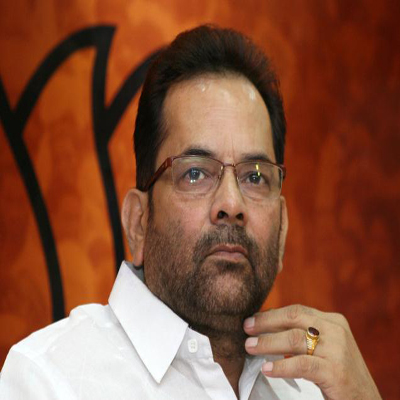
    NEW DELHI: Minister of State for Parliamentary Affairs and Minority Affairs Mukhtar Abbas Naqvi has appealed to the Maharashtra Government to review its entertainment tax structure, noting that a 40 per cent entertainment tax is levied in the state.


    A former Minister of State for Information and Broadcasting, Naqvi also stressed on the need to encourage documentary culture in India as short films and documentaries have proved to be a medium to enhance knowledge of people on different social economic and culture issues.


    He was speaking at an event in Mumbai to mark the 100 short film concept, written by him on “personalities of India” and the screening of film My Life in Mumbai over the weekend.


    He said there are significant short and documentary filmmakers and they need to be encouraged. Naqvi expressed that through short and documentary films social values, tradition and culture can be effectively showcased.


    Documentaries on issues like social, economic, political environment, human rights, education, health, gender equality, women empowerment and poverty can create an awakening in society at large.


    He added that infotainment channels in the country should have dedicated slots for showcasing short films and documentaries.