Category: I&B Ministry

  • 20 TV channels banned for flouting rules over last three years: Jaitley

    20 TV channels banned for flouting rules over last three years: Jaitley

    NEW DELHI: There have been 20 cases in the past three years in which certain television channels were asked to prohibit transmission for specific time ranging from one to 30 days, the Lok Sabha was told on 31 July.


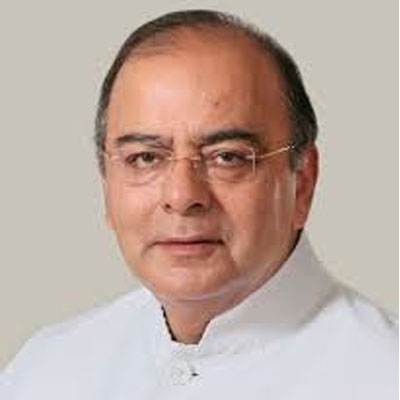
    Information and Broadcasting (I&B) Minister Arun Jaitley said action was taken in a total of 86 cases with the Ministry issuing specific warnings or advisories to channels to comply with the Programme and Advertising Codes or directing them to scroll apologies on their channel in the other 66 cases.


    The Minister said there is no provision of pre-censorship of the content telecast on TV channels but all programmes telecast are required to adhere to the Programme Code prescribed under the Cable TV Networks (Regulation) Act 1995 and the rules framed there under.


    “Action is taken whenever any violation of the said code is noticed or brought to the notice of the Ministry,” he added.


    Section 5 of the Programme Code provides that “No person shall transmit or re-transmit through a cable service any programme, unless such programme is in conformity with the prescribed programme code.” Accordingly, Programme Code has been notified through the Cable Television Networks Rules, 1994 under Rule 6. 


    Click here for list of channels banned for varying periods during the last three years. 

  • Day 4: FM Phase III provisional winning price crosses Rs 550 crore mark

    Day 4: FM Phase III provisional winning price crosses Rs 550 crore mark

    NEW DELHI: The summation of provisional winning prices at the end of the fourth day of the FM Phase III surpassed Rs 550.18 crore, which is the total reserve price of 135 channels.


    The fourth day of the e-auction showed marked enthusiasm but there were still no bids in as many as 14 cities and the provisional winning price was lower than the Clock round Price in some cases.


    In all, 16 rounds of e-auction have been completed including four today (30 July) for the 135 FM channels in all the existing 69 cities of the first stage being opened.


    At the close of the fourth day of bidding, 80 channels in 55 cities became provisionally winning channels with cumulative provisional winning price of around Rs 643 crore against their aggregate reserve price of about Rs 391 crore.


    The auction began for the fourth day with Auction Activity Requirement set at 80 per cent.


    The demand over the price in many cities fell by up to three per cent below the aggregate demand.


    The Percentage Price Increment (in INR) applicable for the Next Clock Round was five per cent in the metros of Delhi, Mumbai and Chennai, and in Bhubaneswar, Bengaluru, Ahmedabad, Guwahati, Rourkela, Jodhpur, and Pune.


    The highest Provisional winning price – the same as the Clock round price at the start of the sixteenth round – was in Delhi – Rs 86.57 crore, followed by Mumbai – Rs 78 crore with both showing sizeable increase compared to the first three days. On the other hand, Hyderabad was at Rs 18 crore, Lucknow at Rs 14 crore, Cochin at Rs 10. 21 crore and Chandigarh at Rs 15.76 crore.


    Among cities recording more than Rs 10 crore, it rose sizeably in Bengaluru – Rs 44.90 crore; Pune – Rs 29.11 crore; Chennai – Rs 25.50 crore and Ahmedabad – Rs 24.95 crore.

  • MIB does not keep record of non-carriage of mandatory channels: Jaitley

    MIB does not keep record of non-carriage of mandatory channels: Jaitley

    NEW DELHI: While multi-system operators (MSOs) and direct-to-home (DTH) operators are expected to mandatorily carry a total of 24 Doordarshan channels in digital addressable system (DAS) areas, the number of channels to be carried in the non-DAS areas is 10.


    The channels to be carried by DAS and non-DAS areas includes Gyan Darshan, which is currently off-air but Doordarshan sources tell Indiantelevision.com that some arrangement was being worked out to re-start the channel run by the Indira Gandhi National Open University.


    The channels to be carried in the DAS areas include 22 DD channels including DD National, DD Bharati, DD News, DD India, DD Sports, and Kisan Channel. The other DD channels are language channels. Other than DD, the channels for DAS areas are Rajya Sabha and Lok Sabha TV, and Gyan Darshan.


    The channels to be carried in non-DAS areas are:  DD National, DD News, Lok Sabha and Rajya Sabha TV, DD Sports, DD Urdu, DD Bharati, Kisan Channel, Gyan Darshan, and one regional language of Doordarshan channel of the State in which the cable operator is located.


    The Government has also listed a schedule of channels to be carried mandatorily by operators including local cable operators in the 35 states and union territories.


    Notifications were issued in this regard in September 2013 and again on 25 May this year.


    Information and Broadcasting (I&B) Minister Arun Jaitley told Parliament that his Ministry does not have any record of such complaints received as the authorised officers – district magistrate, or a sub-divisional magistrate, or a Commissioner of Police within his local limits of jurisdiction – have powers to take action for non-carriage of the mandatory channels by cable operators on their networks under Section 11 of the Cable Television Networks (Regulation) Act 1995.


    An advisory was also issued in June when it was brought to the notice of the Ministry that a few MSOs were not carrying some of the mandatory channels. It was clarified that non-carriage of these channels shall attract action /punishment under Sections 11and l8 of the Cable Act. Earlier, the Ministry had written to all concerned registered MSOs for DAS notified areas to carry the mandatory channels on their networks.

  • Day 3: FM Phase III sees over Rs 170 crore increase in provisional winning price

    Day 3: FM Phase III sees over Rs 170 crore increase in provisional winning price

    NEW DELHI: The third day of the e-auction for FM Radio channels in Phase III picked up marginally but there were no bids in as many as 14 cities and the provisional winning price was lower than the Clock round Price in some cases.


    In all, 12 rounds of e-auction have been completed including four today for all the 135 FM channels in all the existing 69 cities of the first stage being opened.


    At the close of third day of bidding, 80 channels in 55 cities became provisionally winning channels with cumulative provisional winning price of around Rs 549 crore against their aggregate reserve price of about Rs 377 crore. 


    The Auction began today with Auction Activity Requirement set at 80 per cent.


    The demand over the price in many cities fell by up to three per cent below the aggregate demand. 


    The Percentage Price Increment (in INR) applicable for the Next Clock Round was five in the metros of Mumbai and Chennai, and in Bhubaneswar, Bengaluru, Ahmedabad, Guwahati, Rourkela, Jodhpur, and Pune and went up to eight per cent in Dehi.


    The highest Provisional winning price – the same as the Clock round price at the start of the eighth round – was in Mumbai – Rs 67.38 crore followed closely by Delhi – Rs 65.45 crore, with both showing sizeable increase compared to the first two days. 


    Hyderabad and Lucknow remained static at Rs 18 crore and Rs 14 crore respectively. Among cities recording more than Rs 10 crore, it rose sizeably in Bengaluru – Rs 36.94 crore; and marginally higher in Chennai – Rs 20.98 crore; Pune – Rs 23.95 crore; and Ahmedabad – Rs 20.53 crore. In Cochin at Rs 10.21 crore and Chandigarh at Rs 15.61 crore, it fell just marginally below the clock round price.

  • Day 2: FM Phase III sees increase of Rs 100+ crore in provisional winning price

    Day 2: FM Phase III sees increase of Rs 100+ crore in provisional winning price

    NEW DELHI: The second day of the e-auction for FM Radio channels in Phase III infused new enthusiasm though there were no bids in as many as 14 cities and the provisional winning price was lower than the Clock round price in some cases.


    In all, eight rounds of e-auction have been completed including four today for 135 FM channels in all the existing 69 cities of the first stage.


    At the close of second day of bidding, 79 channels in 55 cities became provisionally winning channels with cumulative provisional winning price of around Rs 479 crore against their aggregate reserve price of about Rs 377 crore.


    The auction began today with Auction Activity Requirement set at 80 per cent. A total of 26 bidders were allowed to participate in the auction. 


    The demand over the price in many cities fell by up to three per cent below the aggregate demand. 


    The Percentage Price Increment (in INR) applicable for the Next Clock Round was five per cent in the metros of Mumbai and Chennai, and in Bhubaneswar, Bengaluru, Ahmedabad, Guwahati, Rourkela, Jodhpur, and Pune, whereas in Delhi, it went up to eight per cent.


    The highest Provisional winning price – the same as the Clock round price at the end of the eighth round – was in Mumbai – Rs 55.43 crore; followed by Delhi – Rs 48.11 crore with both showing sizeable increase compared to the first day; Hyderabad – Rs 18 crore; and Lucknow – Rs 14 crore. Among cities recording more than Rs 10 crore, it rose sizeably in Bengaluru – Rs 30.39 crore; and marginally in Chennai – Rs 17.26 crore; Pune – Rs 19.7 crore; Ahmedabad Rs 16.89 crore and Cochin – Rs 10.21 crore (marginally lower than the clock round price), but fell just marginally in Chandigarh – Rs 15.61 crore.


    The ongoing auction is a Simultaneous Multiple Round Ascending (SMRA) e-auction, which is being conducted online from Auction Control Room No. 404 B Wing, Shastri Bhawan.

  • Sports Ministry sets up working group to update & revise Sports Code

    Sports Ministry sets up working group to update & revise Sports Code

    NEW DELHI: A working group has been set up by the Sports Ministry headed by retired Delhi High Judge CK Mahajan to review the National Sports Development Code of India (NSDCI) and suggest changes.


    In a report to be submitted in three months, the Group will also examine the NSDCI from both sports governance and legal angles and fine-tune/revise the same with the purpose of making it more precise and succinct.


    It will make specific recommendations on preparation of Electoral College and streamlining of State/District bodies.


    The Government has been issuing various instructions from time to time and taking several initiatives to ensure transparency and good governance in the Indian Olympic Association (IOA) and in various sports federations of the country.


    All the orders, notifications, instructions and circulars issued till 2001 were amalgamated with necessary modifications, into one comprehensive NSDCI 2011, which came into force with immediate effect from 31 January that year.


    Further amendments to the various provisions of NSDCI need to be re-examined to ensure suitable amendments to relevant provisions as a lot of developments have taken place in sports sector necessitating more accountability and transparency in the functioning of the sports bodies.


    Members of the Group are lawyer Pallavi Shroff, former hockey captain Ajitpal Singh, Arjuna awardee for table tennis Indu Puri, sports journalist Neeru Bhatia, Youth Affairs & Sports Ministry joint secretary Onkar Kedia, and Ministry Advisor Lt Gen Rajiv Bhalla. The Secretary of the Sports Authority of India will be the member secretary.

  • FM Phase III e-auctions off to slow start; Govt claims Rs 395 crore as winning price

    FM Phase III e-auctions off to slow start; Govt claims Rs 395 crore as winning price

    NEW DELHI: The e-auction for FM Radio channels in Phase III got off to a slow start with no bids in certain cities and the provisional winning price lower than the clock round price.


    In all, four rounds of e-auction were held today with 135 FM channels in all the 69 cities of the first stage being opened.


    At the close of first day of bidding, 78 channels in 54 cities became provisionally winning channels with cumulative provisional winning price of around Rs 395 crore against their aggregate reserve price of about Rs 357 crore. 


    The e-auction began today (27 July) with Auction Activity Requirement set at 80 per cent. A total of 26 bidders were allowed to participate in the auction.


    However, there were no bids for 15 cities and the demand over the price in many cities fell by up to three per cent below the aggregate demand.


    The Percentage Price Increment (in INR) applicable for the next clock round was five per cent or higher in the metros of Delhi, Mumbai, and Chennai and in cities like Bhubaneswar, Bengaluru, Aurangabad, Ahmedabad, Guwahati, Jodhpur, Karnal, Patna and Pune.


    The highest provisional winning price – the same as the clock round price at the end of the fourth round – was in Mumbai – Rs 41.91 crore, Delhi – Rs 37.41 crore, Bengaluru – Rs 25 crore, Hyderabad – Rs 18 crore, Pune – Rs 16.21 crore, Chandigarh – Rs 15.61 crore; Chennai – Rs 14.2 crore; Lucknow – Rs 14 crore and Ahmedabad Rs 13.89 crore.


    The ongoing auction is a Simultaneous Multiple Round Ascending (SMRA) e-auction, which is being conducted online from Auction Control Room No. 404 B Wing, Shastri Bhawan.

  • Registered MSOs for DAS areas goes up to 315 as I&B grants new licences

    Registered MSOs for DAS areas goes up to 315 as I&B grants new licences

    MUMBAI: The Information & Broadcasting (I&B) Ministry is pulling up its socks to ensure that there is no delay in the complete digitisation of phase III areas, by December, 2015. In keeping with this, the Ministry has given six new permanent licences to multi system operators (MSOs) and 33 new provisional licences to those interested in setting up base in phase III areas.


    With this, the total number of MSOs that have been given permanent registration for a period of 10 years stands at 222 as of 22 July, 2015. While those granted provisional licence has gone up to 93 taking the total number of registered MSOs to 315.


    The MSOs that have been given permanent registration include: Tyagi Cable TV Network, ACN Cable, National Cable TV Nilgiris, Swamy Cable Network, Satellite Cable Communications and Air Media Network.


    Those given provisional licence include: Bhima Riddhi Infotainment, Shimla Broadband, Star Club, APK Networks, The Giddalur Cable Network and Sai Citi Cable Network amongst others.


    Click here to read the list of MSOs given permanent registration


    Click here to read the list of MSOs given provisional registration 

  • FM Phase III permission holders to pay Rs 9000 per month to BECIL for monitoring

    FM Phase III permission holders to pay Rs 9000 per month to BECIL for monitoring

    NEW DELHI: The Government said that permission holders of the first batch of FM Radio Phase III will have to pay Rs 9000 per channel, per city, per month as monitoring charges continuously to the Broadcast Engineers Consultants (India) Ltd (BECIL).


    This will be subject to an escalation charge of five per cent per annum on monitoring charges.


    The Information and Broadcasting (I&B) Ministry also put on its website the format of the Project Management Agreement between the permission holder and BECIL.


    Under the agreement, BECIL will make all reasonable endeavours to complete each of the activities in respect of the building, installation, commissioning and completion of the common transmission infrastructure (CTI) to the satisfaction of the first party for delivery to the permission holder in accordance with the timeline set out, provided always that the legal and beneficial ownership and all right, title and interest to all and any parts of the licence holder’s share in the Common Transmission Infrastructure (at whatever stage of completion) and the Equipment shall at all times remain with the licence holder and BECIL will not have any right at law or in equity and at anytime to make any claim of title or create any lien, charge or other encumbrance whatsoever over all or any parts of the CTI or the equipment.


    The obligations of BECIL have been set out in a clause and will automatically conclude upon the commissioning of the CTI. For the avoidance of doubt, the performance of equipment installed at the site shall be the exclusive responsibility of the licence holder.


    In terms of the Phase III FM Radio Policy, successful bidders have to co-locate transmission facilities on existing All India Radio/Doordarshan (Prasar Bharati) towers or towers to be constructed by BECIL as the case may be and common facilities have to be integrated by BECIL.


    The licence holders have to enter into an agreement with Prasar Bharati whereby Prasar Bharati has agreed to make available land and tower aperture for the cities from where the permission holders are operating to build, install and operate the common facilities and other equipment of the FM radio broadcast facility.

  • Regional Units  set up  to implement DAS; broadcasters ask MSOs for analogue rates till Dec

    Regional Units set up to implement DAS; broadcasters ask MSOs for analogue rates till Dec

    NEW DELHI: Twelve Regional Units (RUs) are being set up for implementation of Digital Addressable System (DAS) in Phase Ill areas.


    At the ninth meeting of the DAS Task Force earlier this month, Information and Broadcasting (I&B) Ministry joint secretary (broadcasting) R Jaya said these RUs will hold workshops on digitisation where all issues shall be discussed with the District Nodal officers nominated by State Governments.


    The remark came when a representative of local cable operators (LCO) from Assam said multi-system operators (MSO) are stopping signals to LCOs without any reason and the local authorised officers do not take cognisance of any violation of the provisions of the Cable TV Act. He added that there is no redressal mechanism for violations of Cable Act at State level and the cable operators do not have the means to file cases in Telecom Disputes Settlement and Arbitration Tribunal (TDSAT).


    Additional secretary J S Mathur, who chaired the meeting on 7 July, said time was fast running out and impressed on all stakeholders to ensure progress and timely completion of digitisation by the cutoff date.


    The Telecom Regulatory Authority of India’s (TRAI) GS Kesarwani was given the task to ask broadcasters to get details of MSOs who were intending to wait till September 2015 before sending requests to broadcasters for agreements in Phase III areas.


    On the other hand, Mathur said that the endeavour on the MSOs’ part should be to start using indigenously manufactured set-top-boxes (STBs) in their network.


    Kesarwani informed of a review meeting that was held by TRAI on the progress of signing inter-connect agreements for Phase Ill areas with broadcasters and MSOs. He said that three broadcasters namely Star India, Multi Screen Media (MSM) and TV18 – informed TRAI that they had received 55 requests from MSOs so far out of which they have signed commercial deals with two MSOs, whereas deals with 11 MSOs were in advance stages of negotiation.


    Kesarwani also urged MSOs who had not received any response to their requests from broadcasters, to inform TRAI.


    Saying that the Headend-in-the-Sky (HITS) operations were also covered under DAS regulations, Kesarwani asked HITS operators to apprise TRAI if no response was received from broadcasters to their requests for interconnect agreements.


    Apprehending that there may be some gap areas or MSO deficient areas, Jaya asked Indian Broadcasting Foundation (IBF) representatives to get details of these areas from broadcasters and intimate the same to the Ministry.


    Meanwhile even as they admitted some progress, representatives of national MSOs said  that broadcasters were asking for seeding plans and other data. However, MSOs were not in a position to provide this at this stage. They said channel pricing in Phase III areas was the main hurdle in signing of interconnect agreements. Some of them said that a few broadcasters had proposed agreements on analogue rates till December 2015 and others on reference inter-connect order rates.


    Even according to the TRAI, pricing can be different for different markets, they said.


    A representative of Siticable Networks said, “According to an analysis of urban areas carried out by us, it may not be feasible for any operator to carry out digitisation in urban areas having only a few hundred TV households. Even broadcasters are insisting on analogue agreements at present.”


    According to an IBF representative, broadcasters had entered into agreements with five regional MSOs. He said, “Broadcasters have filed an appeal in the Supreme Court challenging the TDSAT judgment on the tariff orders issued by TRAI.”


    On the issue of STBs, a representative of Consumer Electronics and Appliances Manufacturers Association (CEAMA ) said that no major orders were received by the industry so far from MSOs. On the other hand, while Siticable and Hathway officials said they were in talks with indigenous STB manufacturers, officials of direct-to-home (DTH) companies said that they had procured about three million STBs from Videocon.


    The meeting was attended by around 35 persons including some senior Ministry officials and some representatives from state governments.