Category: I&B Ministry

  • Day 29: One month on, focus stays on smaller cities in FM Phase III bidding

    Day 29: One month on, focus stays on smaller cities in FM Phase III bidding

    NEW DELHI: With virtually no bidding on the 29th day in the FM Phase III e-auctions with the cumulative winning price at the end of the 116th round to rising by just Rs 4 lakh from yesterday to Rs 1156.6 crore today, the focus now appears to be shifting to the 31 cities that have so far got bids between Rs 1 – 9 crore.


    Even this minuscule rise could be attributed to the fact that the number of channels went up by one to 97 channels in 56 cities, though the total bids remained the same as yesterday being above the cumulative reserve price by Rs 696.7 crore or 151.5 per cent against the aggregate reserve price of about Rs 459.8 crore.


    The cumulative provisional winning price has thus risen over the total reserve price of the first batch of 135 FM channels in 69 existing cities – Rs 550.18 crore – by Rs 606.4 crore or 110.2 per cent.  


    Cities in the corridors leading to the Rs 10 crore club appear to be Kanpur, Rajkot, Amritsar, Madurai, and Aurangabad, which have all got above Rs 6 crore each. 


    After almost one month of bidding, thirteen cities still continue to elude bidders. They are: Asansol, Gulbarga, Mangalore, Mysore, Puducherry, Rajahmundry, Siliguri, Tiruchy, Tirunveli, Tirupati, Tuticorin, Vijaywada and Warangal.


    The demand in most cities fell by up to three per cent and by four per cent below the excess demand at the price in the 116th round in Hyderabad.


    The Percentage Price Increment applicable for the Next Clock Round rose to five in Bareilly but was one in Jalgaon. There was no change in other cities.

  • Day 28: Varanasi only city to show rise in FM Phase III auction, cumulative price up marginally

    Day 28: Varanasi only city to show rise in FM Phase III auction, cumulative price up marginally

    NEW DELHI: The bidding for FM Phase III appears to have slowed down yet again with the cumulative winning price at the end of the 112th round on the 28th day rising marginally to Rs 1156.2 crore in the e-auction for the first batch.


    The focus remains on smaller cities as Ahmednagar, Bareilly and Hissar are marching forward.


    Varanasi continued to march higher to Rs 17.49 crore, but Jodhpur at Rs 11.44 crore and Kohlapur with Rs 9.44 crore were stable. Others in the aisles to enter the Rs 10 crore club appear to be Kanpur, Rajkot, Amritsar, Madurai, and Aurangabad, which have all got above Rs 6 crore each.


    The number of channels – 96 channels in 56 cities – remained the same but the total bids surpassed the cumulative reserve price by Rs 696.7 crore or 151.6 per cent against the aggregate reserve price of about Rs 459.5 crore.


    The cumulative provisional winning price has thus risen over the total reserve price of the first batch of 135 FM channels in 69 existing cities – Rs 550.18 crore – by Rs 606 crore or 110.1 per cent.


    As was reported earlier by Indiantelevison.com, 13 cities namely Asansol, Gulbarga, Mangalore, Mysore, Puducherry, Rajahmundry, Siliguri, Tiruchy, Tirunveli, Tirupati, Tuticorin, Vijaywada and Warangal continue to elude bidders.


    The demand in most cities fell by up to three per cent and by four per cent below the excess demand at the price in the 112th round in Hyderabad.


    The Percentage Price Increment applicable for the Next Clock Round rose to one each in Ahmednagar, Bareilly, Hissar, and Varanasi. There was no change in the other cities.


    The winning price has risen by more than 100 per cent above their respective reserve prices in Ahmedabad, Amritsar, Aurangabad, Bengaluru, Bhubaneshwar, Chennai, Delhi, Guwahati, Jaipur, Jodhpur, Kolhapur, Mumbai, Nasik, Patna, Pune, Rourkela and Varanasi, all of which got provisional winning bidders at prices more than double the respective reserve prices.


    The provisional winning price in the top three cities reflected no change: Delhi – Rs 169.16 crore (for just one channel); Mumbai – Rs 122.81 crore (for two channels); and Bengaluru – Rs 109.25 crore. In addition, Chennai at Rs 53.38 crore, Ahmedabad at Rs 42.68 crore, Pune at Rs 42.03 crore, Jaipur at Rs 28.34 crore, Chandigarh at Rs 19.04 crore, Hyderabad at Rs 18 crore, Patna at Rs 17.89 crore, Cochin at Rs 15.04 crore, Nasik at Rs 14.66 crore and Lucknow at Rs 14 crore have remained static for some days now.


    When queried as to why cities where the price has been static for many days are not being frozen, a senior I&B Ministry official said that the process was mechanical without human interference and therefore the computer would decide when it is time to stop. In any case, he added that someone could always come up with a higher bid even later.

  • Day 27: Smaller cities take cumulative winning price to Rs 1155 crore in FM Phase III

    Day 27: Smaller cities take cumulative winning price to Rs 1155 crore in FM Phase III

    NEW DELHI: The cumulative winning price at the end of the 108th round on the 27th day raced up to Rs 1155 crore in the e-auction for the first batch of FM Phase III cities, with smaller cities like Ahmadnagar, Sholapur and Hissar marching forward.


    After a week, the number of channels increased by two at 96 channels in 56 cities – and the total bids surpassed the cumulative reserve price by Rs 695.5 crore or 151.2 per cent against the aggregate reserve price of about Rs 459.5 crore. 


    The cumulative provisional winning price has thus risen over the total reserve price of the first batch of 135 FM channels in 69 existing cities – Rs 550.18 crore – by Rs 604.8 crore or 109.9 per cent.


    Varanasi continued to march higher to Rs 16.80 crore, and Jodhpur also showed a jump to Rs 11.44 crore, while Kohlapur was stable with Rs 9.44 crore. Others in the waiting for entry to the Rs 10 crore club appear to be Kanpur, Rajkot, Amritsar and Aurangabad, which have all got above Rs 7 crore each.  


    E-auction will continue as long as bids are received for any of the 135 channels, including the 13 cities for which no bids have come. An Information and Broadcasting Ministry source said that the bidding process was mechanical without human interference and therefore the computer would decide when it is time to stop.


    The Auction Activity Requirement rose to 100 per cent after the 59th round on 14 August, after being 90 per cent after the 37th round on 7 August.


    One channel in Guwahati had fetched a price of Rs 4.11 crore against its reserve price of Rs 37 lakh, registering a rise of almost of 980 per cent. A few days earlier, Bhubaneswar had also set a record with a single channel getting the most competitive bidding increment-wise (Rs 7.40 crore) by going up nine times the reserve price.  
     

    The 13 cities that continue to elude bidders are: Asansol, Gulbarga, Mangalore, Mysore, Puducherry, Rajahmundry, Siliguri, Tiruchy, Tirunveli, Tirupati, Tuticorin, Vijaywada and Warangal.


    The demand in most cities fell by up to three per cent and by four per cent below the excess demand at the price in the 108th round in Hyderabad.


    The Percentage Price Increment applicable for the Next Clock Round rose to five each in Ahmednagar and Hissar but was just one in Varanasi, Shillong and Sholapur. There was no change in the other cities. 


    The winning price has risen by more than 100 per cent above their respective reserve prices in Ahmedabad, Amritsar, Aurangabad, Bengaluru, Bhubaneshwar, Chennai, Delhi, Guwahati, Jaipur, Jodhpur, Kolhapur, Mumbai, Nasik, Patna, Pune, Rourkela and Varanasi, all of which got provisional winning bidders at prices more than double the respective reserve prices. 


    The provisional winning price in the top three cities reflected no change: Delhi – Rs 169.16 crore (for just one channel); Mumbai – Rs 122.81 crore (for two channels); and Bengaluru – Rs 109.25 crore.


    Chennai at Rs 53.38 crore, Ahmedabad at Rs 42.68 crore, Pune at Rs 42.03 crore, Jaipur at Rs 28.34 crore, Chandigarh at Rs 19.04 crore, Hyderabad at Rs 18 crore, Patna at Rs 17.89 crore, Cochin at Rs 15.04 crore, Nasik at Rs 14.66 crore and Lucknow at Rs 14 crore remained static.

  • EEMA & NCT Government to simplify licensing events in Delhi; talks on with Maharashtra

    EEMA & NCT Government to simplify licensing events in Delhi; talks on with Maharashtra

    NEW DELHI: The Delhi Government has appointed a nodal officer for creation of a single-window licensing process for entertainment programmes.


    This has come after prolonged negotiations between the Event and Entertainment Management Association (EEMA) with the Delhi Government. 


    The aim was to create a conducive process for license acquisition for events in the nation’s capital.


    The State Government has also agreed that EEMA member companies can do ticketed events in Delhi without paying entertainment tax in advance.


    The decision was preceded by a series of meetings between the National Executive Committee of EEMA and the Delhi government led by Chief Minister Arvind Kejriwal, Deputy Chief Minister Manish Sisodia and Tourism Minister Kapil Mishra. 


    Following a detailed EEMA representation, the Chief Minister appointed a nodal officer to engage with EEMA and find solutions in the shortest possible time.


    Commenting on the achievement, EEMA president Sabbas Joseph said, “Through the proactive approach of the Delhi government and EEMA, positive results with regards to licensing have started to show yielding a win – win situation for the entire events and experiential marketing industry. This is a big step towards making Delhi an event-friendly city.”


    EEMA treasurer Rajeev Jain added, This is indeed a big bold step by the Delhi Govt. & Dept. of Entertainment Tax. Change in the Entertainment Tax depositing framework for EEMA members is certainly a big gift to the industry and number of ticketed & corporate events in the city will see an increase. This directive is a first step to make Delhi an event-friendly city and reinforces the role of the Event Industry as a major stakeholder in the city’s growth.


    Through regular interactions with the Delhi Government and Commissioner – Excise, Entertainment & Luxury Tax, the following directives have been issued:


    Ticketed Events in Delhi


    ?  EEMA members will now be able to organize their ticketed events in Delhi without submitting any entertainment tax before the event.


    ?  Tax as per the ticket sale can be deposited after the completion of the event. Earlier this was to be done prior to ticket selling permissions being given.


    ?  To facilitate this arrangement, EEMA shall enter into an MOU with the Department of Entertainment Tax.


    ?  EEMA similarly would formulate guidelines for its members availing of this facility.


    ?  EEMA will also be submitting a Bank Guarantee of a stipulated amount as a surety on behalf of its members.


    Licensed Auditoriums under single window clearance


    ?  23 auditoriums in the city have been issued a permanent license for holding an event. More such venues are under consideration.


    Single Window Clearance: Reducing Licensing Hurdles


    ?  The government is in the process of bringing Entertainment Tax, Fire, Municipal authorities and Electricity under the purview of a single-window clearance.


    EEMA seeks to bring together the country’s leading event, sports management and brand activation companies, MICE and wedding planners, experiential marketers, entertainment professionals, artist management companies and international counterparts on the same platform.


    EEMA along with its key constituents is also engaged in similar discussions with the Maharashtra government and several other states with a view on easing the business processes and thereby generating growth in events featuring culture, music, dance, cinema and art.

  • Ad cap violation by 141 TV channels even as case to come up in September

    Ad cap violation by 141 TV channels even as case to come up in September

    NEW DELHI: Even as the advertising cap case is to come up for further hearing before the Delhi High Court on 8 September, a study shows that a total of 141 television channels comprising 36 news and current affairs channels and 105 non-news channels, continue to telecast more than 12 minutes of advertising and commercials per hour in violation of the set rules.


    The study shows that while the highest of these is 22.66 minutes by India TV and the lowest is 12.04 minutes, there are at least 17 news and 19 non-news channels clocking more than 15 minutes per hour. 


    While asking the Telecom Regulatory Authority of India (TRAI) not to take any coercive action against any channel pending hearing of the case, the Court had asked all channels and TRAI to keep a record of the advertising time consumed including commercials. 


    The petition had been filed by the News Broadcasters Association (NBA) and some channels challenging the TRAI decision to implement the directive of 12 minutes contained in the Cable Television Networks (Regulation) Act 1995. The Information and Broadcasting Ministry and TRAI are the respondents in the petition.


    Interestingly, I&B Minister Arun Jaitley had in January this year said that he was not in favour of any ad cap in the print or electronic media.


    In the petition, the news channels have taken the plea that they are free to air and therefore do not get any subscription fee from the viewers as the GEC channels do.


    TRAI says that the information is based on the data submitted by the broadcasters and TRAI bears no responsibility for the figures given. 


    According to information available to TRAI, the rest of the news channels are carrying less than 12 minutes of average duration per hour of advertisements (Commercial & Self promotional) during peak hours (7 – 10 PM) from 30 March to 29 June.


    Among the news channels, the lowest is Mathrubhumi News with 12.42 minutes and among the GEC channels, the highest is 18.69 by B4U Movies and the lowest is 12.04 by Jaya Max.

  • Day 26: Jodhpur joins Rs 10 crore club, cumulative price crosses Rs 1150 crore in FM Phase III

    Day 26: Jodhpur joins Rs 10 crore club, cumulative price crosses Rs 1150 crore in FM Phase III

    NEW DELHI: With Jodhpur joining Varanasi in the Rs 10 core+ cities and the attention zeroing in on other cities racing to this mark, the cumulative winning price at the end of the 104th round on the 26th day raced up to Rs 1151.6 crore in the e-auction for the first batch of FM Phase III cities.


    One channel in Guwahati fetched a price of Rs 4.11 crore as against its reserve price of Rs 37 lakh, registering a rise of almost 980 per cent. A few days earlier, Bhubaneswar had also set a record with a single channel getting the most competitive bidding increment-wise by going up nine times the reserve price.  


    However, there is no increase for almost a week in the number of provisional winning channels and cities – 94 channels in 56 cities – though the total bids surpassed the cumulative reserve price by Rs 692.7 crore or 150.9 per cent against the aggregate reserve price of about Rs 459 crore.


    The cumulative provisional winning price has thus risen over the total reserve price of the first batch of 135 FM channels in 69 existing cities – Rs 550.18 crore – by Rs 601.4 crore or 109.3 per cent.  


    While Varanasi marched higher to Rs 14.94 crore and Jodhpur showed an increase to Rs 10.79 crore, Kohlapur was static with Rs 9.44 crore. Others in the waiting for entry to the Rs 10 crore club appear to be Kanpur, Rajkot, Amritsar and Aurangabad, all of which have got above Rs 6 crore each. 


    The Auction Activity Requirement rose to 100 per cent after the 59th round on 14 August, after being 90 per cent after the 37th round on 7 August.


    However, there were still no bids for 13 cities namely Asansol, Gulbarga, Mangalore, Mysore, Puducherry, Rajahmundry, Siliguri, Tiruchy, Tirunveli, Tirupati, Tuticorin, Vijaywada and Warangal.


    The demand in most cities fell by up to three per cent and by four per cent below the excess demand at the price in the 100th round in Hyderabad.


    The Percentage Price Increment applicable for the Next Clock Round rose to five each in Shillong and Varanasi but was just one in Ahmednagar and Jodhpur. There was no change in the other cities.


    The winning price has risen by more than 100 per cent above their respective reserve prices in Ahmedabad, Amritsar, Aurangabad, Bengaluru, Bhubaneshwar, Chennai, Delhi, Guwahati, Jaipur, Jodhpur, Kolhapur, Mumbai, Nasik, Patna, Pune, Rourkela and Varanasi, all of which got provisional winning bidders at prices more than double the respective reserve prices.


    The provisional winning price in the top three cities reflected no change: Delhi at Rs 169.16 crore (for just one channel); Mumbai at Rs 122.81 crore (for two channels); and Bengaluru at Rs 109.25 crore.

  • Road fraught with political & bureaucratic potholes for new MIB secy

    Road fraught with political & bureaucratic potholes for new MIB secy

    For a person taking charge as the head of bureaucracy in any Ministry, perhaps the biggest challenge is to put aside his or her own personal views and get down to translating the decisions of the Government and the Minister into action.


    However, this becomes even more onerous when there are tasks that have to be accomplished within just a few months.


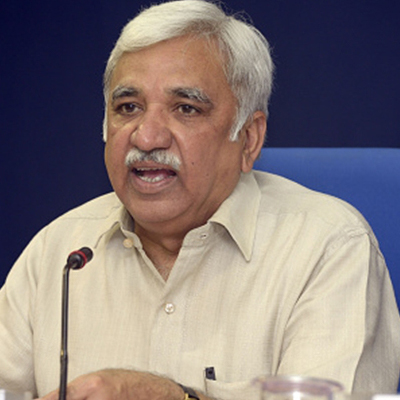
    For senior Indian Administrative Services (IAS) officer Sunil Arora, who is slated to take over as secretary in the Ministry of Information and Broadcasting (MIB) from 1 September, the first major task looming over him is Phase III of the Digital Addressable System (DAS) for Cable TV, which has to be accomplished within four months. 


    Arora is an IAS officer from the Rajasthan cadre of the 1980 batch. His immediate predecessor – Bimal Julka belongs to the 1979 batch from Madhya Pradesh. Julka took over his post in the MIB in July 2013 when Uday Kumar Varma retired.


    DAS PHASE III


    Even though the present government changed the deadlines for the last two phases of DAS, the stakeholders do not appear to be ready for it. There is still a dire shortage of compatible set top boxes (STBS), and there has been little headway despite the incentives offered under the Make in India scheme. Even at present, a large number of local cable operators (LCOs) are having to work with poor quality STBs made in China or other countries. 


    Added to that is the fact that a large number of broadcasters, multi system operators (MSOs), and LCOs still have to work out their agreements – an issue further complicated by the directives of the Telecom Disputes Settlement and Arbitration Tribunal (TDSAT), which wants a re-look at the tariffs.


    It is also a fact that analogue transmission continues in many parts of cities and towns that have gone digital and the Government has failed to get the stay of DAS in Chennai vacated. 


    TRAI


    Although these are issues that the Telecom Regulatory Authority of India (TRAI) is dealing with, all decisions relating to the broadcasting sector can only be effective if there is proper coordination between the regulator and the Ministry. This effectively means there has to be a quick response to any issues that either parties raise to the other, if deadlines have to be met.


    Other issues pending before TRAI relating to broadcasting include the need to reconsider the foreign direct investment (FDI) norms for media, shortage of spectrum, a growing demand by states seeking permissions to start their own television channels despite the TRAI having opined against it twice since 2008. 


    Although broadcasting duties were handed over to TRAI just over a decade back, it is also clear that the Ministry will have to consider whether there is need to form a broadcasting-specific body as TRAI is primarily a body set up for the telecom sector. If the Government decides to continue with TRAI handling both portfolios, the Regulator will be under pressure from the MIB to strengthen its broadcasting team and also ensure greater coordination among officers in both broadcasting and telecom.    


    With convergence of technologies becoming a reality, and with issues of spectrum already bringing telecom and broadcasting together, the National Democratic Alliance (NDA) Government has again begun to talk about convergence and this is bound to gather pace over the next two years.


    SPECTRUM


    Though the Defence Ministry has in principle agreed to hand over some spectrum and swap some other spectrum, the whole process is caught up in bureaucratic wrangles. If the Ministry wants to continue with its policy of ensuring there are no caps on the number of television and FM radio channels or direct-to-home (DTH) and Headend in the Sky (HITS) platforms in the country, the issue of spectrum will need early solution. 


    FM RADIO AUCTION


    The Government is in the midst of the FM Radio e-auction, and is committed to continue the process till all slots in the first stage of Phase III – of 69 cities, which already have FM channels – are completed. With at least 13 cities failing to get even a single bid, the new secretary may have to find ways of either lowering the reserve price for those cities or move those cities to the next stage. 


    The fact that the cumulative winnings from the channels auctioned so far has exceeded the reserve price by more 100 per cent is undoubtedly a matter of great satisfaction, but some cities failing to attract bidders remains to be an irritant.


    AD CAP


    The matter of enforcing the advertising cap of 12 minutes an hour is already before the Courts, but the Ministry may have to do a rethink in the light of the I&B Minister Arun Jaitley having said that he was opposed to ad caps on the print or electronic media, and because the free-to-air channels (most of which are news channels) have already expressed their opposition to this. TRAI had failed to get permission to take action against television channels violating its diktat of the total of 12 minutes of commercial and promotional advertisements every hour, though all broadcasters were asked to keep records of this by the Delhi High Court. 


    SPREAD OF FM RADIO vs DRM


    Even as All India Radio (AIR) has spent crores of rupees on the digitised Digital Radio Mondiale (DRM), Prasar Bharati feels that Frequency Modulation (FM), which is an analogue technology should be promoted until the nation is ready for digital radio sets. The Ministry can resolve this issue only if it can ensure adequate manufacturing at affordable process of DRM sets under the Make in India programme. Until then, this continues to be a thorn in the already dicey relations between the public service broadcaster and the Ministry.


    COMMUNITY RADIO


    More than a decade has elapsed since the introduction of community radio, but the number of operational stations still remain very low. To boost this sector, the Government introduced a new scheme last year for funding community radio, but bureaucratic wrangles continue to hold up the smooth implementation of this scheme. 


    PRASAR BHARATI & THE MINISTRY


    On paper, as per the Prasar Bharati (Broadcasting Corporation of India) Act 1990, it is clear that the pubcaster is autonomous. However, in reality this appears quite contrary.


    On the one hand, as a measure to help the pubcaster, a Group of Ministers had decided that persons employed as on 5 October, 2007 will get the salary and pension from Government funds. However, for employees who joined after that date, Prasar Bharati was left to fend for itself.  


    Since Prasar Bharati is listed as an autonomous company under the Ministry, this means – and it appears so even from the manner in which questions relating to the pubcaster are answered in Parliament – that there is dispute on what real autonomy is.


    Prasar Bharati CEO Jawhar Sircar – a former bureaucrat himself – feels the government does not given him full freedom and there is interference at every level and has said so either in speeches in articles by him or others in the pubcaster.


    While there is generally full autonomy as far as content goes, there are allegedly checks and balances placed by the government in administrative matters. 


    Journalists on the Parliamentary beat are often flabbergasted by the fact that when it suits the Government, a reply will say that the pubcaster is an autonomous body, and yet there are times when the Government has intervened even in appointments in Prasar Bharati.


    FOREIGN DIRECT INVESTMENT


    The TRAI had given its recommendations for an increased FDI in many sectors of the media in a report in July 2013. Although there was some change by the Government earlier this year, it has still not implemented the FDI report of TRAI in full.  


    SECURITY CLEARANCE


    While the Home Ministry has decided it is doing away with security clearance for MSOs, it has not taken a decision as far television channels are concerned. While the issue relating to foreign ownership can be understood, the denial of security clearance to Sun TV continues to flummox everyone in the media.


    It is generally felt that an accused is not guilty till proven, but the Home Ministry and the MIB appear to have decided that the Maran brothers should be denied security clearance despite the fact that the cases against them have no relation to the security of the country, and are in fact an incursion on the freedom of the media. Even the Supreme Court while permitting Sun Group companies to take part in the FM auction said so.


    PAID NEWS


    It is now almost five years since the issue of paid news became the talk of the town. The Press Council of India set up a committee, which even gave recommendations, and a Parliamentary Panel along the Election Commission also wanted some steps to be taken to stop this. However, there has been no tangible action so far in this matter.


    FILM INDUSTRY


    The film industry has been raising similar issues year after year. As far as taxation issues were concerned, it was hoped that the Goods and Services Tax (GST), when implemented will help. But the way the matter is stuck in Parliament forces the industry to just wait and watch.


    Entertainment tax is another issue on which there has been no unanimity and states have different taxes. About a decade earlier a proposal for bringing cinema into the Concurrent List of the Constitution might have solved the problem, but most states opposed the idea. 


    In a country producing around 1000 feature films every year, apart from the large number of films from overseas, India still suffers from an acute shortage of theatres, with the number less than 11,000. With the high rates of ticketing charged by the multiplexes, the average cinegoer is denied the pleasure of seeing a film in a cinema hall. 


    All attempts to curb video piracy appear to have failed because the film industry and the government have failed to work together to curb the menace. This in turn means huge losses for the makers of bold films unless there are big stars to lure the audiences.


    The Film Museum has been in the planning and making for more than a decade, but it does not appear that the Museum planned for 2013 to coincide with a centenary of cinema will see the light of day for at least a couple more years.


    The Film and Television Institute of India (FTII) has been caught in a logjam that just refuses to untangle. The appointment of a Chairperson, who was said to be close to the ruling party, is what triggered the issue, but the continued struggle has led to the police making an entry into the campus in Pune. 


    Clearly, the new MIB secretary has his job cut out for him and will have to tread carefully on the long road ahead – but it is not without political or bureaucratic potholes that can hold up even his best intentions.
     

  • Security clearance axed, provisional MSOs to get 10-year licences in due course

    Security clearance axed, provisional MSOs to get 10-year licences in due course

    NEW DELHI: The Home Ministry has officially informed the Information and Broadcasting (I&B) Ministry that it will not insist on security clearance for multi system operators (MSOs) for digital addressable television for cable television.


    Confirming the same to Indiantelevision.com, a senior I&B Ministry source also informed that the practice of giving provisional licences to some MSOs will continue.


    A new list on 20 August said that a total of 372 MSOs had been issued licences, of which 146 were provisional licences. The rest 226 had ten-year licences.


    Explaining the rationale behind this, the source said that the aim was to check the veracity of MSOs, which had been given provisional licence.


    The source added that every one of these MSOs would get ten-year licences like the others if nothing adverse was found against them.

  • Day 25 of FM Phase III: Guwahati tots Rs 4.07 crore; up 976% than reserve price

    Day 25 of FM Phase III: Guwahati tots Rs 4.07 crore; up 976% than reserve price

    NEW DELHI: On the 25th day of the e-auction for the first batch of FM Phase III cities, the surprise came from the North East where one channel in Guwahati fetched a price of Rs 4.07 crore as against its reserve price of just Rs 37 lakh, registering an increase of a whopping 976 per cent.


    It may be recalled that a few days earlier, Bhubaneswar also set a record with a single channel getting the most competitive bidding increment-wise by going up nine times the reserve price.


    On the other hand, after Varanasi (at Rs 12.29 crore today), it now looks like Jodhpur’s turn to enter the Rs 10 crore club in the e-auction as it showed an increase to Rs 9.22 crore. Even as the hope for revenue continues to rest on cities racing to the Rs 10 crore mark, the cumulative winning price at the end of the 100th round on the 25th day went up to Rs 1147 crore.


    However, there has been no increase for almost a week in the number of provisional winning channels and cities – 94 channels in 56 cities – though the total bids surpassed the cumulative reserve price by Rs 688.3 crore or 150 per cent against the aggregate reserve price of about Rs 459 crore.


    The cumulative provisional winning price has thus risen over the total reserve price of the first batch of 135 FM channels in 69 existing cities – Rs 550.18 crore – by Rs 597 crore or 108.5 per cent.  


    Kohlapur has now been static for a few days with Rs 9.44 crore and others waiting to enter the Rs 10 crore club appear to be Kanpur, Rajkot, Amritsar and Aurangabad, which have all got above Rs 6 crore. 


    Bid continue to elude 13 cities namely Asansol, Gulbarga, Mangalore, Mysore, Puducherry, Rajahmundry, Siliguri, Tiruchy, Tirunveli, Tirupati, Tuticorin, Vijaywada and Warangal even now.


    The demand in most cities fell by up to three per cent and by four per cent below the excess demand at the price in the 100th round in Hyderabad.


    The Percentage Price Increment applicable for the Next Clock Round rose to five each in Shillong and Varanasi but was just one in Guwahati and Jodhpur. There was no change in the other cities.


    The winning price has risen by more than 100 per cent above their respective reserve prices in Ahmedabad, Amritsar, Aurangabad, Bengaluru, Bhubaneshwar, Chennai, Delhi, Guwahati, Jaipur, Jodhpur, Kolhapur, Mumbai, Nasik, Patna, Pune, Rourkela and Varanasi, all of which got provisional winning bidders at prices more than double the respective reserve prices.


    The provisional winning price in the top three cities reflected no change: Delhi at Rs 169.16 crore (for just one channel), Mumbai at Rs 122.81 crore (for two channels) and Bengaluru at Rs 109.25 crore.


    Chennai at Rs 53.38 crore, Ahmedabad at Rs 42.68 crore, Pune at Rs 42.03 crore, Jaipur at Rs 28.34 crore, Chandigarh at Rs 19.04 crore, Hyderabad at Rs 18 crore, Patna at Rs 17.89 crore, Cochin at Rs 15.04 crore, Nasik at Rs 14.66 crore and Lucknow at Rs 14 crore remained static.


    Auction will now resume on Monday, 31 August.

  • Day 24: Varanasi pips Kohlapur to enter Rs 10 crore club in FM Phase III auction

    Day 24: Varanasi pips Kohlapur to enter Rs 10 crore club in FM Phase III auction

    NEW DELHI: Even as Varanasi became the next city to enter the Rs 10 crore club, hope continued to centre around 10 cities that have crossed the Rs 6 crore figure in bids.


    While Varanasi marched into Rs 10 crore club with Rs 10.11 crore, Kohlapur was close behind with Rs 9.44 crore though cities like Kanpur, Rajkot, Amritsar and Aurangabad do not seem to be far behind.  


    On the 24th day in the e-auction for the first batch of FM Phase III cities, the cumulative provisional winning price showed a marginal rise to Rs 1143 crore at the end of the 96th round.


    The number of provisional winning channels and cities remained the same as yesterday: 94 channels in 56 cities, but the total bids surpassed the cumulative reserve price by Rs 684.1 crore or 149.1 per cent against the aggregate reserve price of about Rs 459 crore. 


    The cumulative provisional winning price has thus risen over the total reserve price of the first batch of 135 FM channels in 69 existing cities – Rs 550.18 crore – by Rs 592.8 crore or 107.7 per cent.


    The cumulative winning price is exclusive of the migration fee, which will take the total revenue even higher. Information and Broadcasting Ministry source also reiterated that the notice inviting auction was clear that the e-auction will continue as long as bids are received for any of the 135 channels. This included the 13 cities for which no bids have come.


    The Auction Activity Requirement rose to 100 per cent after the 59th round on 14 August, after being 90 per cent after the 37th round on 7 August.


    The 13 cities bids for which no bids have been received are: Asansol, Gulbarga, Mangalore, Mysore, Puducherry, Rajahmundry, Siliguri, Tiruchy, Tirunveli, Tirupati, Tuticorin, Vijaywada and Warangal.


    The demand in most cities fell by up to three per cent and by four per cent below the excess demand at the price in the 96th round in Hyderabad.


    The Percentage Price Increment applicable for the Next Clock Round rose to five each in Jodhpur and Varanasi but was just one in Guwahati and Shillong. There was no change in the other cities.


    The winning price has gone up by more than 100 per cent above their respective reserve prices: Ahmedabad, Amritsar, Aurangabad, Bengaluru, Bhubaneswar, Chennai, Delhi, Guwahati, Jaipur, Jodhpur, Kolhapur, Mumbai, Nasik, Patna, Pune, Rourkela and Varanasi, which got provisional winning bidders at prices more than double the respective reserve prices. A single channel in Bhubaneswar created a new record by getting the most competitive bidding increment-wise by going up nine times the reserve price.


    The provisional winning price in the top three cities reflected no change: Delhi at Rs 169.16 crore (for just one channel), Mumbai at Rs 122.81 crore (for two channels) and Bengaluru at Rs 109.25 crore.


    Chennai at Rs 53.38 crore, Ahmedabad at Rs 42.68 crore, Pune at Rs 42.03 crore, Jaipur at Rs 28.34 crore, Chandigarh at Rs 19.04 crore, Hyderabad at Rs 18 crore, Patna at Rs 17.89 crore, Cochin at Rs 15.04 crore, Nasik at Rs 14.66 crore and Lucknow at Rs 14 crore remained static.