Category: I&B Ministry

  • MIB updates areas in 7 states & 1 UT to be covered in DAS Phase III

    MIB updates areas in 7 states & 1 UT to be covered in DAS Phase III

    NEW DELHI: The Ministry of Information and Broadcasting (MIB) today further updated the urban areas to be covered in seven states and one union territory during Phase III of the Digital Addressable System (DAS) to be completed by the end of this year.


    This is in addition to the 16 states for which upgradation was announced on 16 October.


    The seven states are: Andhra Pradesh; Chhattisgarh; Jammu & Kashmir; Kerala; Madhya Pradesh; Manipur and Telengana, and the Union Territory of Daman & Diu.


    Earlier last month, the states and union territories where changes were made were: Arunachal Pradesh, Assam, Gujarat, Haryana, Himachal Pradesh, Jharkhand, Mizoram, Nagaland, Odisha, Rajasthan, Punjab, Tripura, Uttarakahd, Uttar Pradesh, Andaman and Nicobar, and Puducherry.


    MIB’s updated list with regard to these states and UTs also indicates areas that have been deleted and those which have been added, apart from the number of television households to be covered in each case.


    The changes have been made on the basis of reports of empowered officers in each state.


    The list does not contain areas covered in the first two phases.


    The list of areas to be covered in Phase III had been issued on 30 April this year.

  • MIB asks stakeholders for details of DAS public awareness campaigns

    MIB asks stakeholders for details of DAS public awareness campaigns

    NEW DELHI: All broadcasters, multi system operators (MSOs) and cable operators have been asked by the Ministry of Information and Broadcasting (MIB) to send details of the public awareness campaign being carried out by them about the third phase of digital addressable system (DAS) and the need for having a set top box (STB) in every television home.


    The stakeholders have been asked by MIB Joint Secretary (Broadcasting) R Jaya to send this information within 15 days along with documentary proof.


    Stressing that every TV home has to have an STB, she said it was essential that MSOs and cable operators carry only digital encrypted signals after 31 December this year.


    At the outset, she said that since the cut-off date was very near, it was presumed that broadcasters, MSOs and LCOs had already done their bit.


    Under Section 44 of the Cable Television Networks (Regulation) Act 1995 and the Rules framed there-under, the centre had notified phased implementation of DAS in the country by the cable operators.


    Phases I and ll of cable digitisation had been completed and Phase lll of digitisation, which will cover all the remaining urban areas in the country was scheduled for completion by 31 December this year, while rural areas would be covered in phase lV to be completed by 31 December, 2016.


    Jaya said that the public must be aware that they require a STB before the cutoff date and drew attention to the provision under Rule 12 of the Rules, which states, “Every Broadcaster, MSO and LCO shall create public awareness among, and provide information to, the subscribers in the notified areas from a period at least thirty days prior to the date such areas are notified either through advertisements in the print and electronic media or through such other means including leaflets, printing on the reverse of website, the receipts, personal visits, group meetings with subscribers or consumer groups. This should contain the salient features of DAS.”

  • Fewer new MSO applicants held up for lack of security clearance by MHA

    Fewer new MSO applicants held up for lack of security clearance by MHA

    NEW DELHI: Imparting a pace of urgency in view of the approaching deadline for implementation of digital addressable system (DAS), the last three Open House meetings between the Ministry of Information and Broadcasting (MIB) and multi system operators (MSOs) showed greater positivity with most applicants being told their applications had been processed.


    This is contrary to the practice a few months earlier when MSOs were told in most meetings that the Ministry of Home Affairs (MHA) had not yet given security clearance to them.


    While there were some cases where such clearance is awaited, MSOs like DEN Discovery, DEN Premium, DEN Ambey, Den Enjoy, Mahvir DEN, GTPL and Good Media News were given other reasons for delay but were generally given an optimistic message.


    The MHA had some months earlier streamlined and relaxed national security clearance norms for certain sensitive sectors including the media sector.


    The Parliament had been informed by the Home Ministry that its new policy guidelines included doing away with national security clearance for MSOs in the media sector. 


    The guidelines are aimed at bringing about a healthy balance between meeting the imperatives of national security and facilitating the ease of doing business and promoting investment in the country.


    However MIB sources told Indiantelevision.com that the Ministry had still not received any note from the Home Ministry in this regard.


    Sources also said that a majority of the 203 MSOs who had been given provisional licences by 20 October are awaiting security clearance from the Home Ministry. 
  • AIR to host monthly Cultural Music Heritage Shows

    AIR to host monthly Cultural Music Heritage Shows

    NEW DELHI: All India Radio (AIR) will be organising monthly Cultural Music Heritage shows as part of safeguarding the country’s musical heritage featuring prominent artistes.


    The opening concert on 28 October will be by renowned santoor exponent Pandit Bhajan Sopori and his son Abhay Rustom Sopori. The concert will be telecast live on DD Bharati at 6.30 pm.


    Being organised by AIR’s national channel, the show will showcase the musical brilliance shared between generations of musicians.


    The show titled A Musical Legacy intends to highlight the musical skills passed from generation to generation amongst musicians.


    The concert to be held once a month will see rendition from talented duos like Padamshree Debu Choudhary and his son Pratik Choudhary, Pandit Manprasad and son Lalit Prasad, L.K.Pandit and Mita Pandit, Pandit Rajendar Prassana and Ritesh Prassana.


    The series, which forms a part of Prasar Bharati’s mission of ‘Bahujan Hitaya, Bahujan Sukhaya’ is a platform where the rich legacy of the artists would be showcased.


    “Radio has not only conserved the musical legacy but given dimensions to it to make it relevant with changing times,” said AIR DG F. Sheheryar.

  • Number of MSOs for DAS areas touches 429 with 200 provisional licensees

    Number of MSOs for DAS areas touches 429 with 200 provisional licensees

    NEW DELHI: Even as two months remain for digital addressable system (DAS) Phase III deadline of 31 December, 2015, a total of 429 multi system operators (MSOs) had obtained licences for DAS as on 21 October.


    Of these, 226 MSOs have 10-year licences, whereas 203 have obtained provisional licences since the Information and Broadcasting (I&B) Ministry has still not received any formal communication of the Home Ministry’s decision to do away with security clearances for MSOs.


    According to the last list issued on 30 September, the Ministry had registered a total of 400 MSOs including 173, which were provisional.


    Thus while there has been no increase in the number of permanent (10-year) licence holders, the number of provisional MSOs has gone up to 203.


    According to the list put on the I&B Ministry’s website, Kal Cables and Digi Cable Network Pvt Ltd of Mumbai remain on the cancellation list.


    Thirteen MSOs, which had earlier been granted permanent licences were permitted to change their areas of operation. 


    The only new entrant in the permanent licence holder is Nilgiri Cable TV Private Ltd for the third and fourth phase of DAS in Tamil Nadu.

  • I&B minister Arun Jaitley asks media to strike a balance

    I&B minister Arun Jaitley asks media to strike a balance

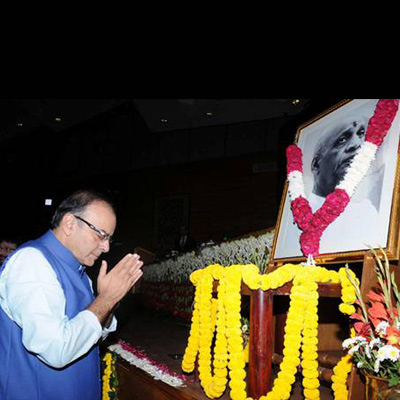
    NEW DELHI: Information and Broadcasting Minister Arun Jaitley today cautioned the media to strike a fine balance between freedom of speech and expression and the reasonable restrictions so as to maintain public order and integrity and sovereignty of India.


    He said free speech is an aid to good governance in view of the changes taking place in the media landscape and the scope and content of issues related to Right to Freedom of Speech and Expression.


    The overall scenario was also influenced by technological tools that brought about a change in the form, style and method of dissemination. These developments also impacted the definition of news, which today was increasingly being influenced by the camera and channel driven mode.


    Jaitley made these remarks while delivering the Sardar Patel Memorial Lecture 2015 on: “Is it possible to impose reasonable restriction on Freedom of Speech & Expression given today’s media landscape,” which was organised by All India Radio on behalf of Prasar Bharati.


    The Minister referred to the evolution of media and the right to freedom of speech and expression. Citing global examples, Jaitley brought out the finer aspects of the freedom of speech vis-?-vis privacy; need to protect the source of information in public interest and media restraint with regard to matters that were sub-judice. He said that these issues had generated discussions amongst academicians, media fraternity and other concerned stakeholders.


    The Minister lauded the judiciary for its role in expanding the scope of Right to Freedom of Speech and Expression over the years. Various judicial pronouncements had underlined the spirit of the idea behind the Right to Freedom of Speech and Expression under the Constitution and correlated contemporary developments, issues and changes in the media space. 


    Judicial pronouncements subsequently in specific cases focused on issues pertaining to the idea of reasonableness related to restrictions under the Article 19 (2) of the Constitution in the interest of sovereignty, security and public order. Nonetheless due to the pluralistic character of the media space, it was important to exercise caution taking into account public order and sensibilities. He said that these restrictions could only be imposed by law and were specific rather than general so as to prevent misuse.


    Regarding the media landscape, Jaitley said satellite television had brought about a sea change in the presentation of news. In the current scenario, the recipient of information had the right to information and knowledge which was also being considered part of the debate under Right to Freedom of Speech and Expression.


    The dissemination process in the social media space had also impacted the information flow and contributed to the public debate and setting of agendas in the policy framework. Social media had led to the empowerment of citizens by giving them a voice. Decision makers were increasingly using social media to gauge public sentiments on government policies making public reactions, among other things, the new agenda setters for governance.


    Jaitley touched upon the global practices being followed in the context of social media restrictions. He referred to the ‘right to be forgotten’ incorporated by the European Court of Human Rights, which empowered the state authority to remove the reference of the aggrieved person from internet citing citizen’s right to privacy. He also spoke about the jurisdictional principles with respect to reasonable restrictions on Freedom of Speech and Expression in the light of changes and issues that had been raised in this context.


    These lectures started in 1955 and the first Memorial lecture was delivered by Sri C. Rajagopalachari.  In this series, the speakers in the previous years included Dr. Zakir Hussain, Morarji Desai, and Dr. A.P.J. Abdul Kalam.

  • EC to confer awards to media for creating electoral awareness

    EC to confer awards to media for creating electoral awareness

    NEW DELHI: National Media Awards will be presented to media houses for conducting campaigns to educate and make voters aware of the 2014 Lok Sabha elections.


    Announcing this, the Election Commission of India asked for entries by 15 November and said the awards will be presented on 25 January, the National Voters Day.


    Awards will be given separately to print and electronic media. The Commission has directed Chief Electoral Officers of all states to send nominations of two media houses, which worked to create awareness during elections.


    The Commission has directed its award related circular to be uploaded to the Chief Electoral Officer’s website. Media houses may also send their nominations directly to the Election Commission, it said.


    A jury constituted by the Election Commission will consider nominations, which should reach it along with the states CEOs’ recommendation by 30 October.


    The Election Commission will also award civil society organisations for outstanding campaigning to create voter awareness. Civil societies extending maximum co-operation to the Chief Electoral Officer’s office may be nominated for this award.


    Written recommendation of Chief Electoral Officer or District Election Officer should accompany every nomination, it said. Self-nomination would not be considered.

  • BCCC gets more complaints on harm than sex, obscenity & nudity on TV

    BCCC gets more complaints on harm than sex, obscenity & nudity on TV

    NEW DELHI: The story goes that when some visually impaired persons touched different parts of an elephant, each had their own description on what an elephant looked like.


    The situation is similar for the average television viewer, who is now forced to differentiate between the meaning of ‘rape,’ ‘molestation,’ and what the authorities term ‘harm.’


    When watching television news, TV soaps or feature films on the small screen, one is left aghast and shocked at the number of cases of rape and molestation being reported or depicted. In fact, it is a well known fact that news television channels only report on less than 30 per cent of the rape or molestation cases actually taking place every day.


    Various discussions are held on TV channels on why this is happening and why men are turning into barbaric rapists. Even daily soaps and movies telecast by general entertainment channels (GECs) have shown a marked increase in depiction of rape cases, molestation or undignified treatment of women.


    In its annual report of 2014, the National Crime Records Bureau (NCRB) said the number of rapes in the country rose by nine per cent to 33,707 in 2014 – with New Delhi reporting 1,813 rapes, making it the city with the highest number of such cases. Mumbai and Bengaluru recorded 607 and 103 rapes respectively.


    In 2012, a similar report had highlighted 47 per cent of complaints related to sex, obscenity and nudity.


    But amidst all this, the Broadcasting Content Complaints Council (BCCC), the self- regulatory authority for entertainment TV channels, said it was now getting more complaints under Harm and Offence category than those related to sex, obscenity and nudity.


    Data released by it showed that BCCC had addressed a total of 27,676 complaints, including 5,262 specific complaints since inception.


    The BCCC, which was established by the Indian Broadcasting Foundation and is now headed by Justice (Retd) Mukul Mudgal, is considering setting up a mechanism through which complaints regarding content on TV could be lodged via Twitter.


    “For the period 3 July, 2012 to 22 August, 2015, the highest percentage (39 per cent) of complaints were related to the theme Harm and Offence, followed by those related to religion and community (28 per cent) of the 4,545 specific complaints,” BCCC secretary general Ashish Sinha said.


    This comes as a surprise, especially when compared with the First Status Report in January 2012 when 47 per cent of complaints were related to sex, obscenity and nudity. Now only eight per cent of complaints pertain to sex, obscenity and nudity, BCCC said.


    The Harm and Offence theme complaints pertain to portrayal of persons with disabilities, child marriage, abuse or exploitation, stereotyping of women, mistreatment of animals and airing of content offensive to public feeling, BCCC officials said.


    “A large number of these complaints were received from the Information and Broadcasting Ministry and most were against the content of English TV programmes,” BCCC said. Officials said that even Courts and the I&B ministry are directing issues or complaints to it. 


    BCCC claimed that the drop in number of complaints about obscenity appeared to be the result from its constant focus in this area adding that the bulk of penal action taken was related to this aspect.


    However, the BCCC had no answer when asked if the lesser number of complaints related to obscenity reflected a greater level of maturity, only adding that no such study had been done.


    Even as all this appears difficult to accept when one sees the soaps and films on GEC channels, Justice Mudgal said the self regulatory mechanism was doing well. In fact, he said there had been 100 per cent compliance of its directions by member channels of IBF.


    The BCCC also said that among complaints relating to crime and violence were nearly 11 per cent of the specific complaints between 3 July, 2014 and 22 August, 2015. The objections were not only against crime-based shows but also against violence shown in daily soaps as well as reality shows.


    Eleven per cent complaints of the 4,545 specific complaints were related to horror programmes while those pertaining to depiction of smoking scenes, consumption of alcohol and drugs were found to be less than one per cent.


    Approximately 28 per cent of the complaints under the religion and community theme, where most complaints pertained to mythology-based programmes aired on various channels.


    Sinha said BCCC did not go into interpreting mythology as it felt there were various interpretations prevalent and the council did not find itself competent to do so.


    Two per cent of the complaints pertained to grievances against depiction of wrong map of India, insult to the National Flag and wrong portrayal of court proceedings.


    BCCC also said it has issued 15 detailed orders to channels in which broadcasters were asked to run apology scrolls and in four cases to furnish financial penalties.


    Perhaps the average viewer needs to be educated on how ‘harm’ is different from rape or molestation, especially when women and children or differently abled persons are involved.   
  • Big Picture round up: Best time for M&E even as clear policies needed for TV & films

    Big Picture round up: Best time for M&E even as clear policies needed for TV & films

    NEW DELHI: This is perhaps the best time for the media and entertainment (M&E) industry as the sector is being seen for the first time as an exporter and major source of foreign investment.


    This was the general impression at various sessions of the Big Picture summit organised by the Confederation of Indian Industry (CII), where speakers also said that the promulgation of goods and services tax would be a great help.


    However, problems were raised about shortage of screens for the film sector and state governments and the centre were asked to offer whatever help they could to overcome this.


    Even as they were assured by Finance Ministry officials that the GST would be an anathema to their woes, the sector – particularly the film sector – appeared skeptic as it had to content with other problems such as piracy, shortage of screens and a lack of good content writers.


    In the session on Taxing Times for M&E at which Revenue Special Secretary Rashmi Verma and Member Service Tax and GST V S Krishnan sought to allay fears, Film Federation of India vice president Ravi Kottarakara said the film industry had at one time been the most powerful entertainment medium but had now lost its power despite making more than a thousand films in different languages every year. He said this was because the success rate was just five per cent and the competition from other screens had increased apart from the malaise of piracy and multiple taxation.


    The session was moderated by Network 18 advisor to the chairman A P Parigi. 


    Kottarakara said people tended to forget that 95 per cent of the films failed at the box office and lost money and only remembered films, which had created records. The share of the film industry in M&E has fallen from 60 per cent to 13 per cent, he said.


    He also regretted that the film industry was at a crossroads since development in other sectors was at the cost of the film industry and so it was going through one of its worst phases despite going global. In the mind of the government, cinema was akin to sins like lotteries or liquor. Even in Delhi, cinema houses came under the Shops and Establishments Act and not as an art.


    Even banks were wary of financing films and the filmmakers had to struggle for finance.


    Kottarakara described GST as a double-edged sword and said that assurance was needed that the states would not interfere once the new tax regime came in.


    Hinduja Ventures whole time director Ashok Mansukhani said that the media industry exists only on passion. He wondered why service tax was levied on this industry when it was entertaining people and said this appeared unrealistic.


    He said that the first multi system operator (MSO) had come in 1965 and taxes came in much later when the government found a new source of earning money.


    It was also unrealistic of the government to have digitised 30 million cable television homes in the last two years and was expecting to digitise 70 million homes in less than 15 months. “No other country has ever been able to do this,” Mansukhani said.


    Mansukhani wanted GST to be transparent and urged the government to clear transitional problems. “At present there are 24 types of VAT in the country,” he informed.


    Ernst and Young partner and markets leader Farokh Balsara called for a speedier decision on greater foreign direct investment (FDI).


    Zee Network’s legal expert Avnindra Mohan wanted to know if television was considered a media or a goods industry, considering the way it was treated. “The television industry needs equity and fairness, clarity, and a help in development. But all these are missing,” he lamented.


    As an example, Mohan said 50 per cent went into taxes in the direct to home (DTH) industry, 40 per cent into licence fee and only 10 per cent came to the operator.


    In comparison, the session on Increasing Exports was more positive as most speakers felt that this was the best time for the industry as the government was looking towards it as an exporter and foreign export earner.


    Viacom 18 executive vice president Ferzad Palia said Indian television serials had ample scope to travel overseas but were not available in as many as 140 countries.


    Motion Pictures Distribution MD Uday Singh was of the opinion that something had to be done about the low screen density in the country. However, he noted the growth in mobiles and said OTT will spur this growth.


    Wizcraft founder Sabbas Joseph said despite his experience of the International Indian Film Academy (IIFA) Awards, he had realised there were some success stories of Indian artistes overseas but no picture of a unified M&E industry. “There is a need for deep introspection and the dependence on the government is a mistake,” he voiced.


    In a third session on regional cinema conducted by Delhi film critic Shubhra Gupta, the filmmakers were unanimous that regional cinema contained the heart and soul of the country’s culture but that Doordarshan and other channels failed to encourage this.


    Ashoke Vishwanathan of Kolkata said cinema had gone global but had not reached other parts of the country. He wanted an educated National Film Policy. He was seconded by Kannada filmmaker P Seshadhri who said filmmakers had to act as entrepreneurs since there were few distributors for takers of serious regional cinema.


    Assam State Film Finance and Development Corporation chairperson Bobbeeta Sharma said the state government was now helping the industry in the state. She wondered why Doordarshan was not lending a helping hand.


    Drishyam Films CEO Shiladitya Bora related how the attempt was to depend less on the large screen and so made films that appealed to all kinds of audiences. 

  • Broadcasters ready to extend existing analogue agreements in view of tardy pace of agreements, DAS Task Force told

    Broadcasters ready to extend existing analogue agreements in view of tardy pace of agreements, DAS Task Force told

    New Delhi: With less than three months to go for the deadline of Phase III of Digital Addressable System, the Indian Broadcasting Foundation has said that broadcasters are ready to extend the existing analogue interconnect agreements with multisystem operators for transition from analogue to digital service in view of the slow progress in signing of interconnect agreements.


     The commitment was made in the last meeting of the Task Force set up by the Information and Broadcasting Ministry in its meeting on 22 September. The minutes of the meeting were placed on the Ministry website today.


    The meeting was presided over by special secretary J S Mathur who asked the Telecom Regulatory Authority of India (TRAI) to convene a meeting of broadcasters and MSOs resolve issues. (It may be recalled that TRAI had earlier asked both broadcasters and MSOs to approach it in case of any problems with regard to interconnect agreements.


    Referring to the low number of interconnect agreements, Mathur remarked that without signing of agreements between broadcasters and MSOs, the progress on digitisation was not possible.


    Agreeing there had been slow progress in signing of agreements with major MSOs as the latter were awaiting the decision in a case before the Telecom Disputes Settlement and Arbitration Tribunal, the IBF said broadcasters had signed provisional agreements with many applicant operators, who have digitised their networks under the condition that they would get registered as MSOs for DAS operation before the cut-off date for Phase III.


    IBF was asked to submit an area-wise list indicating the status of signing of agreements to the Ministry. The meeting was told that just 62 of the 300-odd multi system operators had signed agreements with broadcasters.


    Mathur expressed his gratitude to the Indian Broadcasting Foundation for developing the advertisement on cable TV digitization in Phase lll areas and airing it on their member channels. He said All India Radio and Doordarshan were already giving advertisements on cable digitisation on their channels and they need to scale it up. The IBF representative said the Ads had been planned in bilingual format but IBF will consider making it multilingual as requested.


    Joint Secretary (Broadcasting) R Jaya said as a next step towards publicity awareness campaign, broadcasters and MSOs should now inform the cable TV users in Phase III areas through scroll messages on their channels to get STBs installed in their homes before the cut-off date.


    Jaya mentioned that MSOs registration by the Ministry was open. In case broadcasters have entered into agreements with non-registered operators they should ensure that they have applied for MSO registration with MIB. She advised broadcasters to impress upon these operators to immediately register themselves as MSOs with the Ministry failing which they cannot operate digital services.


    Meanwhile announcing that the toll free help line is expected to start operating soon, Jaya told the meeting that seven regional workshops had been held so far with Nodal officers in different cities, and these officers had been advised to provide the right of way (RoW) to the MSOs/LCOs under the provisions of the Cable Television Networks (Regulation) Act 1995 and also give details of those Phase III areas in their districts where no registered MSO is operating.


    The nodal officials were told to disseminate a clear message that the cut off dates are final and the analogue cable viewers should change to digital before the cutoff date.


    She said twelve regional units including the central unit in Delhi have been established for monitoring the implementation of DAS Phase III areas under Mission Digitisation project.


    Referring to the fact that seven regional workshops had been held so far, she said Nodal officers were being advised to provide the right of way (Row) to the MSOs/LCOs under the provisions of the Cable Television Networks (Regulation) Act 1995 and, also intimate Phase III areas in their districts where no registered MSO is operating. The nodal officials were also told to disseminate a clear message that the cut off dates are final and the analogue cable viewers should change to digital before the cutoff date.


    The workshops have been held at Chandigarh, Lucknow, Ahmedabad, Jaipur, Bhopal, Shillong and Hyderabad. A workshop at Patna had to be cancelled due to elections in the state. The workshops had been successful in sensitizing the state nodal officers about their role and responsibilities In the pre and post digitization period in phase lll areas.


    The Siticable representative said broadcasters have not responded to their requests for interconnect agreements for phase III areas so far and so they are unable to fix the channel package rates and get the SAF and CAF forms filled up from subscribers as required under DAS regulations. He questioned the propriety of running of digital cable service by cable operators without first getting registered from MIB as per the DAS regulations,


    The representative of the Telecom Authority of India said it was up to broadcasters and MSOs to continue existing interconnect agreement even after transition from analogue to digital. He added that there was no impropriety in running the digital service by an operator before the cutoff date without registration from the Ministry.


    The representative of IMCL said it had signed 60% of interconnect agreements with broadcasters in Phase III areas. Regarding interconnect agreements with other broadcasters they requested TRAI to intervene.


    The representative of MOCF mentioned that MSOs were not signing interconnect agreements with LCOs and TRAI should intervene and prescribe a standard interconnect agreement.


    A representative of the cable operator association from Assam said since no agreements were being signed in Assam despite requests from MSOs, broadcasters should nominate a nodal officer to deal with the issue at regional level.


    ASSOCHAM said it had along with a Cable Operators Federation already started a Chetna Yatra which was planned mandatorily to cover 450 cities sensitizing the consumers and operators alike about the cable digitisation in Phase III areas by 31 December. He added that a comprehensive report on this will be submitted to the Ministry.


    Members made various suggestions about the awareness campaign. A representative of the local cable operators association from Assam said that to make this effective, the TV Ads should be in regional languages. He wanted to know whether the Chetna Yatra planned to cover north east also.


    A representative of ARTBI said it did not have the facility to dub the ad in different regional languages but said its member channels would run it if this was provided to them.