Category: I&B Ministry

  • Finance Ministry defers Jasper Infotech’s investment proposal in Den’s Macro Commerce

    Finance Ministry defers Jasper Infotech’s investment proposal in Den’s Macro Commerce

    New Delhi: The Finance Ministry has deferred a decision on a proposal by Jasper Infotech Private Limited which wanted to make downstream investment in Macro Commerce Private Limited.

    The investment was for uplinking of Non-news TV channels by purchasing 50 percent stake in the company from Den Networks Limited, its existing holding company.

    Approval has been deferred for foreign investment of up to 100 percent in a new company proposed to be incorporated in India by publishing firm Macmillan Publishers International Ltd, UK.

    The decisions of the ministry are on the recommendations of the Foreign Investments Promotion Board (FIPB).

  • Finance Ministry defers Jasper Infotech’s investment proposal in Den’s Macro Commerce

    Finance Ministry defers Jasper Infotech’s investment proposal in Den’s Macro Commerce

    New Delhi: The Finance Ministry has deferred a decision on a proposal by Jasper Infotech Private Limited which wanted to make downstream investment in Macro Commerce Private Limited.

    The investment was for uplinking of Non-news TV channels by purchasing 50 percent stake in the company from Den Networks Limited, its existing holding company.

    Approval has been deferred for foreign investment of up to 100 percent in a new company proposed to be incorporated in India by publishing firm Macmillan Publishers International Ltd, UK.

    The decisions of the ministry are on the recommendations of the Foreign Investments Promotion Board (FIPB).

  • Govt  aims at plugging loopholes that enable copyright theft

    Govt aims at plugging loopholes that enable copyright theft

    NEW DELHI: The Government has approved an Intellectual Property Rights (IPR) policy aimed at creating a strong legal framework to protect IPR and create public awareness about the economic, social and cultural benefits of IPRs among all sections of society.

    Policy approved by the Union Cabinet has seven objectives which include IPR Awareness: Outreach and Promotion; Generation of IPRs; Legal and Legislative Framework; Administration and Management; Commercialization of IPRs; Enforcement and Adjudication; and Human Capital Development. The National Intellectual Property Rights (IPR) Policy will endeavor for a “Creative India; Innovative India’.

    The Policy recognises the abundance of creative and innovative energies that flow in India, and the need to tap into and channelise these energies towards a better and brighter future for all.

    The National IPR Policy is a vision document that aims to create and exploit synergies between all forms of intellectual property (IP), concerned statutes and agencies. It sets in place an institutional mechanism for implementation, monitoring and review. It aims to incorporate and adapt global best practices to the Indian scenario. This policy shall weave in the strengths of the Government, research and development organizations, educational institutions, corporate entities including MSMEs, start-ups and other stakeholders in the creation of an innovation-conducive environment, which stimulates creativity and innovation across sectors, as also facilitates a stable, transparent and service-oriented IPR administration in the country.

    The Policy recognizes that India has a well-established TRIPS-compliant legislative, administrative and judicial framework to safeguard IPRs, which meets its international obligations while utilizing the flexibilities provided in the international regime to address its developmental concerns.  It reiterates India’s commitment to the Doha Development Agenda and the TRIPS agreement.

    While IPRs are becoming increasingly important in the global arena, there is a need to increase awareness on IPRs in India, be it regarding the IPRs owned by oneself or respect for others’ IPRs. The importance of IPRs as a marketable financial asset and economic tool also needs to be recognised. For this, domestic IP filings, as also commercialization of patents granted, need to increase. Innovation and sub-optimal spending on R&D too are issues to be addressed.

    The broad contours of the National IPR Policy are a Vision Statement about an India where creativity and innovation are stimulated by Intellectual Property for the benefit of all; an India where intellectual property promotes advancement in science and technology, arts and culture, traditional knowledge and biodiversity resources; an India where knowledge is the main driver of development, and knowledge owned is transformed into knowledge shared.

    The aim is to stimulate a dynamic, vibrant and balanced intellectual property rights system in India to  foster creativity and innovation and thereby, promote entrepreneurship and enhance socio-economic and cultural development; and focus on enhancing access to healthcare, food security and environmental protection, among other sectors of vital social, economic and technological importance.

    The action by different ministries/ departments shall be monitored by The Department of Industrial Policy and Promotion (DIPP) which shall be the nodal department to coordinate, guide and oversee implementation and future development of IPRs in India.

    Welcoming the policy, NASSCOM also appreciated the decision to hand over IPR to the Department of Industrial Policy and Promotion. This single umbrella approach will help leverage linkages between various IP offices. The proposed Cell for IPR Promotion and Management (CIPAM) to be constituted under the aegis of DIPP, would be an important connection with the inventors and innovators.

    NASSCOM had in its interaction with the think tank highlighted  difficulties that companies face in monetizing intangibles like IPR and the proposal to create a ‘simple loan guarantee scheme to encourage start-ups’ based on IPRs as mortgage-able assets; financial support and securitization of IP rights for commercialization by enabling valuation of IP rights as intangible assets. 

    NASSCOM said the IT industry is committed to partner with the DIPP in the modernization efforts. Further, Periodic reviews and updates of  IP related rules, guidelines, procedures will ensure an effective IPR regime and NASSCOM is committed to work closely with the DIPP as the policy is implemented to support an innovation led Industry in India. 

  • Govt  aims at plugging loopholes that enable copyright theft

    Govt aims at plugging loopholes that enable copyright theft

    NEW DELHI: The Government has approved an Intellectual Property Rights (IPR) policy aimed at creating a strong legal framework to protect IPR and create public awareness about the economic, social and cultural benefits of IPRs among all sections of society.

    Policy approved by the Union Cabinet has seven objectives which include IPR Awareness: Outreach and Promotion; Generation of IPRs; Legal and Legislative Framework; Administration and Management; Commercialization of IPRs; Enforcement and Adjudication; and Human Capital Development. The National Intellectual Property Rights (IPR) Policy will endeavor for a “Creative India; Innovative India’.

    The Policy recognises the abundance of creative and innovative energies that flow in India, and the need to tap into and channelise these energies towards a better and brighter future for all.

    The National IPR Policy is a vision document that aims to create and exploit synergies between all forms of intellectual property (IP), concerned statutes and agencies. It sets in place an institutional mechanism for implementation, monitoring and review. It aims to incorporate and adapt global best practices to the Indian scenario. This policy shall weave in the strengths of the Government, research and development organizations, educational institutions, corporate entities including MSMEs, start-ups and other stakeholders in the creation of an innovation-conducive environment, which stimulates creativity and innovation across sectors, as also facilitates a stable, transparent and service-oriented IPR administration in the country.

    The Policy recognizes that India has a well-established TRIPS-compliant legislative, administrative and judicial framework to safeguard IPRs, which meets its international obligations while utilizing the flexibilities provided in the international regime to address its developmental concerns.  It reiterates India’s commitment to the Doha Development Agenda and the TRIPS agreement.

    While IPRs are becoming increasingly important in the global arena, there is a need to increase awareness on IPRs in India, be it regarding the IPRs owned by oneself or respect for others’ IPRs. The importance of IPRs as a marketable financial asset and economic tool also needs to be recognised. For this, domestic IP filings, as also commercialization of patents granted, need to increase. Innovation and sub-optimal spending on R&D too are issues to be addressed.

    The broad contours of the National IPR Policy are a Vision Statement about an India where creativity and innovation are stimulated by Intellectual Property for the benefit of all; an India where intellectual property promotes advancement in science and technology, arts and culture, traditional knowledge and biodiversity resources; an India where knowledge is the main driver of development, and knowledge owned is transformed into knowledge shared.

    The aim is to stimulate a dynamic, vibrant and balanced intellectual property rights system in India to  foster creativity and innovation and thereby, promote entrepreneurship and enhance socio-economic and cultural development; and focus on enhancing access to healthcare, food security and environmental protection, among other sectors of vital social, economic and technological importance.

    The action by different ministries/ departments shall be monitored by The Department of Industrial Policy and Promotion (DIPP) which shall be the nodal department to coordinate, guide and oversee implementation and future development of IPRs in India.

    Welcoming the policy, NASSCOM also appreciated the decision to hand over IPR to the Department of Industrial Policy and Promotion. This single umbrella approach will help leverage linkages between various IP offices. The proposed Cell for IPR Promotion and Management (CIPAM) to be constituted under the aegis of DIPP, would be an important connection with the inventors and innovators.

    NASSCOM had in its interaction with the think tank highlighted  difficulties that companies face in monetizing intangibles like IPR and the proposal to create a ‘simple loan guarantee scheme to encourage start-ups’ based on IPRs as mortgage-able assets; financial support and securitization of IP rights for commercialization by enabling valuation of IP rights as intangible assets. 

    NASSCOM said the IT industry is committed to partner with the DIPP in the modernization efforts. Further, Periodic reviews and updates of  IP related rules, guidelines, procedures will ensure an effective IPR regime and NASSCOM is committed to work closely with the DIPP as the policy is implemented to support an innovation led Industry in India. 

  • No fixation of Govt percentage for advertisements in states: Rijiju

    No fixation of Govt percentage for advertisements in states: Rijiju

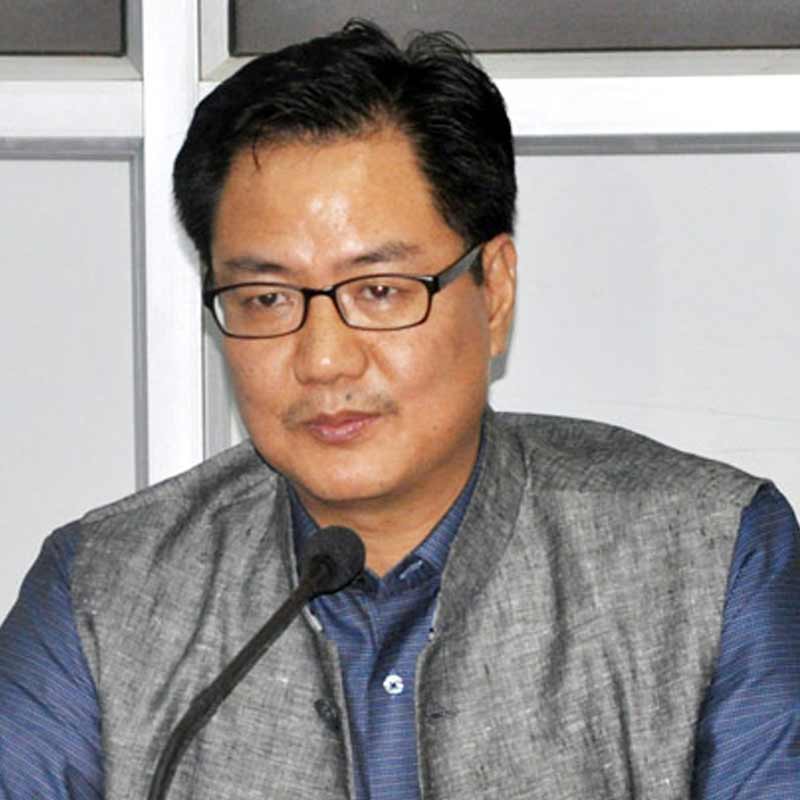
    New Delhi: The Government has denied that any orders have been issued for fixing the percentage of expenditure for ‘A’ ‘B’ and ‘C’ linguistic regions on advertising in Hindi and English.

    Minister of State for Home Kiren Rijiju said a certain percentage of total expenditure on Government advertisements to be given in Hindi and English may be decided by Central Ministries/Departments according to their requirements.

    This was in accordance with the President’s Orders on the recommendations of the Eighth part of the report of the Committee of Parliament on Official Language, he added in a reply in Parliament.

    Region “A” means the States of Bihar, Haryana, Himachal Pradesh, Madhya Pradesh, Chhattisgarh, Jharkhand, Uttarakhand,  Rajasthan and Uttar Pradesh and the Union Territories of Delhi and Andaman and Nicobar Islands; “Region A” means the States of

    “Region B” means the States of Gujarat, Maharashtra and Punjab and the Union Territory of Chandigarh, Daman and Diu and Dadra and Nagar Haveli.

    “Region C” means all other States and Union Territories

  • No fixation of Govt percentage for advertisements in states: Rijiju

    No fixation of Govt percentage for advertisements in states: Rijiju

    New Delhi: The Government has denied that any orders have been issued for fixing the percentage of expenditure for ‘A’ ‘B’ and ‘C’ linguistic regions on advertising in Hindi and English.

    Minister of State for Home Kiren Rijiju said a certain percentage of total expenditure on Government advertisements to be given in Hindi and English may be decided by Central Ministries/Departments according to their requirements.

    This was in accordance with the President’s Orders on the recommendations of the Eighth part of the report of the Committee of Parliament on Official Language, he added in a reply in Parliament.

    Region “A” means the States of Bihar, Haryana, Himachal Pradesh, Madhya Pradesh, Chhattisgarh, Jharkhand, Uttarakhand,  Rajasthan and Uttar Pradesh and the Union Territories of Delhi and Andaman and Nicobar Islands; “Region A” means the States of

    “Region B” means the States of Gujarat, Maharashtra and Punjab and the Union Territory of Chandigarh, Daman and Diu and Dadra and Nagar Haveli.

    “Region C” means all other States and Union Territories

  • MIB’s new joint secretary in charge of Prasar Bharati affairs

    MIB’s new joint secretary in charge of Prasar Bharati affairs

    NEW DELHI: Senior Indian Postal Service officer Anju Nigam has been appointed Joint Secretary in the Information and Broadcasting ministry.

    Nigam is a 1988 officer and will take charge for a period of five years or until further orders (whichever is earlier) from the date she assumes charge.

    She takes the place of Indian Administrative Service officer Puneet Kansal who was in charge various matters such as e-auctions and other issues in Prasar Bharati, Kansal was from the Sikkim cadre in the 1996 batch.

  • MIB’s new joint secretary in charge of Prasar Bharati affairs

    MIB’s new joint secretary in charge of Prasar Bharati affairs

    NEW DELHI: Senior Indian Postal Service officer Anju Nigam has been appointed Joint Secretary in the Information and Broadcasting ministry.

    Nigam is a 1988 officer and will take charge for a period of five years or until further orders (whichever is earlier) from the date she assumes charge.

    She takes the place of Indian Administrative Service officer Puneet Kansal who was in charge various matters such as e-auctions and other issues in Prasar Bharati, Kansal was from the Sikkim cadre in the 1996 batch.

  • Parliamentary Committee: I&B allocations and Plan Execution Strategy

    Parliamentary Committee: I&B allocations and Plan Execution Strategy

    NEW DELHI: A Parliamentary Committee has said it is ‘constrained’ that the quantum allocation for the Information and Broadcasting ministry under the Plan segment so far in the 12th Plan period is insufficient to fulfil the envisaged objectives and has recommended a high level review for requisite enhancement of Plan fund allocation in the ensuing Plan period.

    This was particularly so considering the wide mandate of this ministry to reach out to the billion plus population of the country, the Standing Committee for Information Technology which examines issues relating to I&B said.

    A scrutiny of trend of utilization of Plan funds during the four years of the 12th Plan Period (2012-13 to 2015-16) indicates that a sum of Rs 2,802.72 crore was spent against the Budget Estimate (BE) allocation of Rs 3,729.53 crore in the corresponding period.

    When compared to the Revised Estimate (RE) allocation which was of the order of Rs 2,918 crore for these years, it depicts 96 percent utilization.

    The Gross Budgetary Support (GBS) approved for the ministry in the 12th Five Year Plan was Rs 7,583 crore, accounting for 39 percent increase over the 11th Plan allocation.

    For the year 2016-17, the Committee said the ministry should take up the matter with the Finance ministry for enhancement of Plan funding at the RE stage. Most importantly, the ministry should also take steps to strengthen its Plan execution strategy so that the fund allocated at the BE stage in the current fiscal is optimally utilized.

    The Committee which comprises members of both Houses of Parliament wanted to be apprised of the steps taken by the ministry for overall increase in the allocation of funds and measures taken to scale up financial performance in the year 2016-17.

    A close look at the financial performance of the ministry for the year 2015-16 indicated that they were able to spend Rs 734.39 crore on Plan schemes against an outlay of Rs 914.53 crore at the BE Stage.

    The reasons for shortfall in utilization of funds during 2015-16 had been broadly attributed to reduction of outlay at the RE stage by the Finance ministry, long processes for procurement of goods and services for Prasar Bharati, and delay in approval of the new schemes for the 12th Five Year Plan period under the sectors particularly in Film and Broadcasting.

    The Committee noted that the ministry stated that the low expenditure of Prasar Bharati had poorly reflected on the ministry’s overall expenditure for the year 2015-16. An outlay of Rs 800 crore has been made for financing the Plan schemes of the ministry for the year 2016-17, which is Rs 114.53 crore lesser than the BE allocation made in the year 2015-16. According to the ministry, the overall reduction in allocation of funds would impact financing of the planned schemes.

    The Committee which comprises members of both houses of parliament observed that the annual Plan expenditure of the ministry so far during the 12th Plan period, on an average, has been a little over Rs 700 crore.

    In its statement, the ministry told the Committee that the GRB for the 11th Plan stood at Rs 5,439 crore for financing the Plan schemes of the ministry. The GBS for the 12th Five Year Plan period was increased by over 39 percent amounting to Rs 7,583 crore during the 12th Plan period. Besides, a provision of Rs 1,000 crore had been kept for Internal and Extra Budgetary Resources (IEBR) by Prasar Bharati for financing the new content development schemes of Prasar Bharati during the 12th Five Year Plan.

    The ministry said the increased GBS helped it in achieving various goals and objectives including completion of the New Media Centre and Soochna Bhavan, successfully commemorating 100 years of Indian cinema, launching of Social Media Platform to enable government’s presence and to have direct interface with target audience, increased monitoring capacity of TV channels by the Electronic Media Monitoring Centre, visible increase in community Radio stations, successful completion of Phases I, II, III (substantially) of Cable TV Digitization and launching and operationalization of the Kisan Channel.

    The utilization trend of funds during the four years of the 12th Plan (Rs in crores) is:

    YEAR

    2012-13

    2013-14

    2014-15

    2015-16

    Total

    BE

    905.00

    905.00

    1005.00

    914.53

    3729.53

    RE

    676.00

    740.00

    752.00

    750.00

    2918

    Expenditure

    612.10

    715.22

    740.78

    734.39

    2802.74

    percent Exp w.r.t RE

    91

    97

    99

    98

    96 (2012-13 to 2015-16)

  • Parliamentary Committee: I&B allocations and Plan Execution Strategy

    Parliamentary Committee: I&B allocations and Plan Execution Strategy

    NEW DELHI: A Parliamentary Committee has said it is ‘constrained’ that the quantum allocation for the Information and Broadcasting ministry under the Plan segment so far in the 12th Plan period is insufficient to fulfil the envisaged objectives and has recommended a high level review for requisite enhancement of Plan fund allocation in the ensuing Plan period.

    This was particularly so considering the wide mandate of this ministry to reach out to the billion plus population of the country, the Standing Committee for Information Technology which examines issues relating to I&B said.

    A scrutiny of trend of utilization of Plan funds during the four years of the 12th Plan Period (2012-13 to 2015-16) indicates that a sum of Rs 2,802.72 crore was spent against the Budget Estimate (BE) allocation of Rs 3,729.53 crore in the corresponding period.

    When compared to the Revised Estimate (RE) allocation which was of the order of Rs 2,918 crore for these years, it depicts 96 percent utilization.

    The Gross Budgetary Support (GBS) approved for the ministry in the 12th Five Year Plan was Rs 7,583 crore, accounting for 39 percent increase over the 11th Plan allocation.

    For the year 2016-17, the Committee said the ministry should take up the matter with the Finance ministry for enhancement of Plan funding at the RE stage. Most importantly, the ministry should also take steps to strengthen its Plan execution strategy so that the fund allocated at the BE stage in the current fiscal is optimally utilized.

    The Committee which comprises members of both Houses of Parliament wanted to be apprised of the steps taken by the ministry for overall increase in the allocation of funds and measures taken to scale up financial performance in the year 2016-17.

    A close look at the financial performance of the ministry for the year 2015-16 indicated that they were able to spend Rs 734.39 crore on Plan schemes against an outlay of Rs 914.53 crore at the BE Stage.

    The reasons for shortfall in utilization of funds during 2015-16 had been broadly attributed to reduction of outlay at the RE stage by the Finance ministry, long processes for procurement of goods and services for Prasar Bharati, and delay in approval of the new schemes for the 12th Five Year Plan period under the sectors particularly in Film and Broadcasting.

    The Committee noted that the ministry stated that the low expenditure of Prasar Bharati had poorly reflected on the ministry’s overall expenditure for the year 2015-16. An outlay of Rs 800 crore has been made for financing the Plan schemes of the ministry for the year 2016-17, which is Rs 114.53 crore lesser than the BE allocation made in the year 2015-16. According to the ministry, the overall reduction in allocation of funds would impact financing of the planned schemes.

    The Committee which comprises members of both houses of parliament observed that the annual Plan expenditure of the ministry so far during the 12th Plan period, on an average, has been a little over Rs 700 crore.

    In its statement, the ministry told the Committee that the GRB for the 11th Plan stood at Rs 5,439 crore for financing the Plan schemes of the ministry. The GBS for the 12th Five Year Plan period was increased by over 39 percent amounting to Rs 7,583 crore during the 12th Plan period. Besides, a provision of Rs 1,000 crore had been kept for Internal and Extra Budgetary Resources (IEBR) by Prasar Bharati for financing the new content development schemes of Prasar Bharati during the 12th Five Year Plan.

    The ministry said the increased GBS helped it in achieving various goals and objectives including completion of the New Media Centre and Soochna Bhavan, successfully commemorating 100 years of Indian cinema, launching of Social Media Platform to enable government’s presence and to have direct interface with target audience, increased monitoring capacity of TV channels by the Electronic Media Monitoring Centre, visible increase in community Radio stations, successful completion of Phases I, II, III (substantially) of Cable TV Digitization and launching and operationalization of the Kisan Channel.

    The utilization trend of funds during the four years of the 12th Plan (Rs in crores) is:

    YEAR

    2012-13

    2013-14

    2014-15

    2015-16

    Total

    BE

    905.00

    905.00

    1005.00

    914.53

    3729.53

    RE

    676.00

    740.00

    752.00

    750.00

    2918

    Expenditure

    612.10

    715.22

    740.78

    734.39

    2802.74

    percent Exp w.r.t RE

    91

    97

    99

    98

    96 (2012-13 to 2015-16)