Category: I&B Ministry

  • FTII to broad base its course content; introduce choice based credit systems

    FTII to broad base its course content; introduce choice based credit systems

    NEW DELHI: The Film and Television Institute of India is to have new syllabus for its courses aimed at streamlining academic course work.

    The Governing Council of the FTII in its 129th meeting held in Mumbai today also gave approval to the Academic Council’s proposal to convert FTII into a holistic institute of cinema, television and allied arts, offering varied choice of subjects related to cinema and digital media.

    The GC also approved the vision document of FTII, which proposes to switch from teacher centric approach to learning centric approach, giving students enough flexibility to steer his / her career.

    The GC Meeting was chaired by Chairman Gajendra Chauhan and Information and Broadcasting Ministry Secretary Ajay Mittal attended the meeting as a special invitee.

    The Academic Council of FTII, headed by noted filmmaker and television producer B P Singh, had drawn up an action plan for broad basing the course content. The proposal envisages setting up of nine different “schools” under the aegis of FTII, which will offer 22 courses, including short-term courses in music composing, animation and gaming, prosthetics and make up, costume design etc, besides the core subjects like direction, cinematography, acting, editing and sound design.

    The new syllabus aims to finish the courses in time bound manner. The new syllabus has been drawn up through a collaborative process taking inputs from academics, experts and alumni of FTII.

    The institute will also introduce Choice Based Credit System which would replace the present system of annual assessment. The new syllabus under semester system would be introduced from August 2016 batch, while existing batches will continue to be covered under the old system. The GC also approved appointment of a Proctor and new rules regarding hostel accommodation.

    Film maker Rajkumar Hirani, actor Satish Shah, former Indian Institute of Management, Bangalore, Director Pankaj Chandra, former Mumbai Univesity Vice Chancellor Dr Rajan Welukar, Indian Institute of Mass Communication, New Delhi, DG K G Suresh, Films DivisonDG Mukesh Sharma, Ramoji Film & Television Institute, Hyderabad, Director Pavan Manvi, and noted film critic Bhavana Somayya were among those attended the meeting.

  • FTII to broad base its course content; introduce choice based credit systems

    FTII to broad base its course content; introduce choice based credit systems

    NEW DELHI: The Film and Television Institute of India is to have new syllabus for its courses aimed at streamlining academic course work.

    The Governing Council of the FTII in its 129th meeting held in Mumbai today also gave approval to the Academic Council’s proposal to convert FTII into a holistic institute of cinema, television and allied arts, offering varied choice of subjects related to cinema and digital media.

    The GC also approved the vision document of FTII, which proposes to switch from teacher centric approach to learning centric approach, giving students enough flexibility to steer his / her career.

    The GC Meeting was chaired by Chairman Gajendra Chauhan and Information and Broadcasting Ministry Secretary Ajay Mittal attended the meeting as a special invitee.

    The Academic Council of FTII, headed by noted filmmaker and television producer B P Singh, had drawn up an action plan for broad basing the course content. The proposal envisages setting up of nine different “schools” under the aegis of FTII, which will offer 22 courses, including short-term courses in music composing, animation and gaming, prosthetics and make up, costume design etc, besides the core subjects like direction, cinematography, acting, editing and sound design.

    The new syllabus aims to finish the courses in time bound manner. The new syllabus has been drawn up through a collaborative process taking inputs from academics, experts and alumni of FTII.

    The institute will also introduce Choice Based Credit System which would replace the present system of annual assessment. The new syllabus under semester system would be introduced from August 2016 batch, while existing batches will continue to be covered under the old system. The GC also approved appointment of a Proctor and new rules regarding hostel accommodation.

    Film maker Rajkumar Hirani, actor Satish Shah, former Indian Institute of Management, Bangalore, Director Pankaj Chandra, former Mumbai Univesity Vice Chancellor Dr Rajan Welukar, Indian Institute of Mass Communication, New Delhi, DG K G Suresh, Films DivisonDG Mukesh Sharma, Ramoji Film & Television Institute, Hyderabad, Director Pavan Manvi, and noted film critic Bhavana Somayya were among those attended the meeting.

  • Column-Policy Cross-Connections

    Column-Policy Cross-Connections

    Point 1: With over 1.2 billion population, India is a dream market for any product or service. In short, a land of opportunities.

    Point 2: Despite economic liberalisation started in early 1990s and followed through by successive governments, including the present one in New Delhi, India is still termed a challenging market.

    Just like any other sector, India’s INR 1,157 billion media and entertainment (M&E) industry too gets affected by the two aforementioned points.

    That the M&E industry holds immense potential can be easily seen in various crystal-ball gazing done.

    Indian Government Economic Survey 2016, an annual report card for Indian economy released every February, states the M&E recorded “unprecedented growth” over the last two decades making it one of the fastest growing industries in India. It is projected to grow at a CAGR of 13.9 percent to reach INR 1964 billion by 2019, the Survey states, adding digital advertising and gaming are projected to drive the growth of this sector in the coming years.

    The FICCI-KPMG annual report on Indian M&E sector, released in March, also reiterates the optimism. According to the report, the sector is expected to be worth INR 2,260 billion by 2020 and the advertising sector grew by 14.7 percent from INR 414 billion in 2014 to INR 475 billion in 2015.

    But then what’s holding back big bang investments not only from Indian investors but also foreign ones? Especially when China, the only other market in Asia that outstrips India in terms of size and opportunities, is mostly closed for foreign investors with stringent rules relating to M&E sectors.

    My theory is that despite successive governments from 1990 (it was in 1991 that economic liberalisation was set in motion in India and Indians also got exposed to satellite TV in few years from then) following up on that, full benefits have failed to accrue to the country. Reason? Various liberalisation processes and easing norms of doing business get enmeshed with other policy decisions— some taken in isolation — thereby continuing to make India a challenging market.

    Take, for example, the much talked about government step in June in liberalising FDI investment norms for various sectors, including media, defence, pharmaceuticals and retail.

    FDI policy on broadcasting carriage services as of June 2016


    Sector/Activity

    New Cap and Route

    5.2.7.1.1

    (1)Teleports(setting up of up-linking Hubs/Teleports);

    (2)Direct to Home (DTH);

    (3)Cable Networks (Multi System operators (MSOs) operating at National or State or District level and undertaking upgradation of networks towards digitalization and addressability);

    (4)Mobile TV;

    (5)Headend-in-the Sky Broadcasting Service(HITS)

    100%


    Automatic

    5.2.7.1.2 Cable Networks (Other MSOs not undertaking upgradation of networks towards digitalization and addressability and Local Cable Operators (LCOs))

    Infusion of fresh foreign investment, beyond 49% in a company not seeking license/permission from sectoral Ministry, resulting in change in the ownership pattern or transfer of stake by existing investor to new foreign investor, will require FIPB approval

    (Source: Commerce Ministry)


    The government in June said that FDI in all broadcast carriage services like cable, MSO, DTH, mobile TV, HITS have been upped to 100 percent and brought under automatic route, which means bureaucratic and lengthy permission processes have been lessened.

    Small caveat in automatic route investment norms notwithstanding, Indian companies and foreign investors should have been popping the champagne bottles. But industry reactions were sober to the extent of being subdued.

    General analysis of the aforementioned decision, in short, was: the government took a big step, but not a giant one. Why?

    According to government data, total FDI flow into India since April 2000 to December 2015 stood at US$ 408.68 billion. But the media sector’s share of FDI inflows from 2000-2015 was pegged at $4.48 billion.

    Considering the burgeoning media industry and newer technologies coming in, this sector’s share of FDI during this 15-year period should have been higher.

    So, why are foreign investors hesitant in investing in India, especially when PM Modi’s dream of Digital India can dovetail into building digital infrastructure capable of delivering many media services?

    The federal government may be trying its best to ease norms of doing business in India and live up to its claim of ‘India being a fav destination for foreign investors’, other proposed and existing policy decisions not only send out confused signals, but, actually, create more impediments.

    Take, for example, broadcast carriage regulator TRAI’s two discussion papers on infrastructure sharing in TV broadcasting distribution and  set-top-box interoperability .
    TRAI’s contentions for floating these discussion subjects are to explore avenues to reduce expenditure of companies providing these services by doing away with duplication (in the first case) and examine whether interoperable STBs can largely benefit the consumers.

    Critics of both these TRAI discussion subjects opine that if followed through and converted into regulations, both measures could add another layer of restrictions on the industry.

    Hong Kong-based Asian media industry organisation CASBAA, which also has Indian members, doesn’t mince words when it said in its submission on STB interoperability that the TRAI paper was based on a “number of untested, unproven presuppositions concerning the practice of technical interoperability”.

    Countering TRAI assertions, CASBAA said, “Regulator-imposed technical interoperability requirements will impose very large burdens on Indian consumers and industry players and risk stifling innovation in development of new features of interest to consumers.”

    If a holistic view is taken of both the TRAI consultations, surprisingly aimed at bringing down media services to a common denominator having little USPs, it’s no wonder the likes of Comcast and Liberty Media or closer home the Hong Kong-headquartered PCCW, for instance, have not been enthused much to invest in Indian broadcast carriage segment despite FDI norms liberalisation and a whopping over 100 million TV homes still on the plate.

    It’s not only TRAI, but also the general layout of the taxation and financial environment, apart from other cross-media restrictions, which would deter foreign investors.

    A DTH service provider in India, for example, on an average pays 40 percent tax, including an annual 10 percent licence fee, while ARPUs range between INR 175-220 for most of the six DTH companies. Why would AT&T, parent company of American DirecTV, invest in a DTH operation in India?

    Or, for that matter, why would Comcast or PCCW invest in Indian cable TV distribution when a large number of LCO operations are still far from transparent?

    Add to that a slowing down of the digital rollout — the earlier two phases of the proposed four-phased digitisation of TV services did manage to bring about increased transparency resulting in higher tax revenues for the government — and you have a pitch that’s not conducive for fair foreign investment game.

    Singapore-based market media market research company Media Partners Asia estimates approximately $2 billion has been invested by strategic and foreign institutional investors in Indian pay-TV distribution platforms, which certainly is peanuts considering  over 250 million TV homes are target consumers.

    If confusing policy signals were not enough, stellar performer ISRO’s new-found love for Make In India and resultant insistence on weaning away all Indian users of satellite-based services from foreign satellites to INSAT — informal as of now but gaining currency — is also fodder to scare a foreign investor as such moves smack of throwback to pre-90s when India was dubbed a closed market and not an open economy.

    That’s why, I would insist, till systematic changes are brought about in the country and various government organisations and regulators also see the big picture on regulations instead of functioning within their own small islands, attempts by any Indian government to make India the most favoured destination for foreign investments will not bear ripened fruit. And, in the process, full benefits won’t accrue to the consumers.

    (1 USD= INR 67)

    (Anjan Mitra is Consulting Editor of Indiantelevision.com and will write a fortnightly column on media matters.)

     

  • Column-Policy Cross-Connections

    Column-Policy Cross-Connections

    Point 1: With over 1.2 billion population, India is a dream market for any product or service. In short, a land of opportunities.

    Point 2: Despite economic liberalisation started in early 1990s and followed through by successive governments, including the present one in New Delhi, India is still termed a challenging market.

    Just like any other sector, India’s INR 1,157 billion media and entertainment (M&E) industry too gets affected by the two aforementioned points.

    That the M&E industry holds immense potential can be easily seen in various crystal-ball gazing done.

    Indian Government Economic Survey 2016, an annual report card for Indian economy released every February, states the M&E recorded “unprecedented growth” over the last two decades making it one of the fastest growing industries in India. It is projected to grow at a CAGR of 13.9 percent to reach INR 1964 billion by 2019, the Survey states, adding digital advertising and gaming are projected to drive the growth of this sector in the coming years.

    The FICCI-KPMG annual report on Indian M&E sector, released in March, also reiterates the optimism. According to the report, the sector is expected to be worth INR 2,260 billion by 2020 and the advertising sector grew by 14.7 percent from INR 414 billion in 2014 to INR 475 billion in 2015.

    But then what’s holding back big bang investments not only from Indian investors but also foreign ones? Especially when China, the only other market in Asia that outstrips India in terms of size and opportunities, is mostly closed for foreign investors with stringent rules relating to M&E sectors.

    My theory is that despite successive governments from 1990 (it was in 1991 that economic liberalisation was set in motion in India and Indians also got exposed to satellite TV in few years from then) following up on that, full benefits have failed to accrue to the country. Reason? Various liberalisation processes and easing norms of doing business get enmeshed with other policy decisions— some taken in isolation — thereby continuing to make India a challenging market.

    Take, for example, the much talked about government step in June in liberalising FDI investment norms for various sectors, including media, defence, pharmaceuticals and retail.

    FDI policy on broadcasting carriage services as of June 2016


    Sector/Activity

    New Cap and Route

    5.2.7.1.1

    (1)Teleports(setting up of up-linking Hubs/Teleports);

    (2)Direct to Home (DTH);

    (3)Cable Networks (Multi System operators (MSOs) operating at National or State or District level and undertaking upgradation of networks towards digitalization and addressability);

    (4)Mobile TV;

    (5)Headend-in-the Sky Broadcasting Service(HITS)

    100%


    Automatic

    5.2.7.1.2 Cable Networks (Other MSOs not undertaking upgradation of networks towards digitalization and addressability and Local Cable Operators (LCOs))

    Infusion of fresh foreign investment, beyond 49% in a company not seeking license/permission from sectoral Ministry, resulting in change in the ownership pattern or transfer of stake by existing investor to new foreign investor, will require FIPB approval

    (Source: Commerce Ministry)


    The government in June said that FDI in all broadcast carriage services like cable, MSO, DTH, mobile TV, HITS have been upped to 100 percent and brought under automatic route, which means bureaucratic and lengthy permission processes have been lessened.

    Small caveat in automatic route investment norms notwithstanding, Indian companies and foreign investors should have been popping the champagne bottles. But industry reactions were sober to the extent of being subdued.

    General analysis of the aforementioned decision, in short, was: the government took a big step, but not a giant one. Why?

    According to government data, total FDI flow into India since April 2000 to December 2015 stood at US$ 408.68 billion. But the media sector’s share of FDI inflows from 2000-2015 was pegged at $4.48 billion.

    Considering the burgeoning media industry and newer technologies coming in, this sector’s share of FDI during this 15-year period should have been higher.

    So, why are foreign investors hesitant in investing in India, especially when PM Modi’s dream of Digital India can dovetail into building digital infrastructure capable of delivering many media services?

    The federal government may be trying its best to ease norms of doing business in India and live up to its claim of ‘India being a fav destination for foreign investors’, other proposed and existing policy decisions not only send out confused signals, but, actually, create more impediments.

    Take, for example, broadcast carriage regulator TRAI’s two discussion papers on infrastructure sharing in TV broadcasting distribution and  set-top-box interoperability .
    TRAI’s contentions for floating these discussion subjects are to explore avenues to reduce expenditure of companies providing these services by doing away with duplication (in the first case) and examine whether interoperable STBs can largely benefit the consumers.

    Critics of both these TRAI discussion subjects opine that if followed through and converted into regulations, both measures could add another layer of restrictions on the industry.

    Hong Kong-based Asian media industry organisation CASBAA, which also has Indian members, doesn’t mince words when it said in its submission on STB interoperability that the TRAI paper was based on a “number of untested, unproven presuppositions concerning the practice of technical interoperability”.

    Countering TRAI assertions, CASBAA said, “Regulator-imposed technical interoperability requirements will impose very large burdens on Indian consumers and industry players and risk stifling innovation in development of new features of interest to consumers.”

    If a holistic view is taken of both the TRAI consultations, surprisingly aimed at bringing down media services to a common denominator having little USPs, it’s no wonder the likes of Comcast and Liberty Media or closer home the Hong Kong-headquartered PCCW, for instance, have not been enthused much to invest in Indian broadcast carriage segment despite FDI norms liberalisation and a whopping over 100 million TV homes still on the plate.

    It’s not only TRAI, but also the general layout of the taxation and financial environment, apart from other cross-media restrictions, which would deter foreign investors.

    A DTH service provider in India, for example, on an average pays 40 percent tax, including an annual 10 percent licence fee, while ARPUs range between INR 175-220 for most of the six DTH companies. Why would AT&T, parent company of American DirecTV, invest in a DTH operation in India?

    Or, for that matter, why would Comcast or PCCW invest in Indian cable TV distribution when a large number of LCO operations are still far from transparent?

    Add to that a slowing down of the digital rollout — the earlier two phases of the proposed four-phased digitisation of TV services did manage to bring about increased transparency resulting in higher tax revenues for the government — and you have a pitch that’s not conducive for fair foreign investment game.

    Singapore-based market media market research company Media Partners Asia estimates approximately $2 billion has been invested by strategic and foreign institutional investors in Indian pay-TV distribution platforms, which certainly is peanuts considering  over 250 million TV homes are target consumers.

    If confusing policy signals were not enough, stellar performer ISRO’s new-found love for Make In India and resultant insistence on weaning away all Indian users of satellite-based services from foreign satellites to INSAT — informal as of now but gaining currency — is also fodder to scare a foreign investor as such moves smack of throwback to pre-90s when India was dubbed a closed market and not an open economy.

    That’s why, I would insist, till systematic changes are brought about in the country and various government organisations and regulators also see the big picture on regulations instead of functioning within their own small islands, attempts by any Indian government to make India the most favoured destination for foreign investments will not bear ripened fruit. And, in the process, full benefits won’t accrue to the consumers.

    (1 USD= INR 67)

    (Anjan Mitra is Consulting Editor of Indiantelevision.com and will write a fortnightly column on media matters.)
     

  • Modi’s monthly broadcast reminds media about  National Emergency’s shackles

    Modi’s monthly broadcast reminds media about National Emergency’s shackles

    NEW DELHI: “There might have been locks on newspaper houses, radio might have been speaking just one kind of language,” but “given the opportune moment, the citizens gave an example of the power of Democracy.”

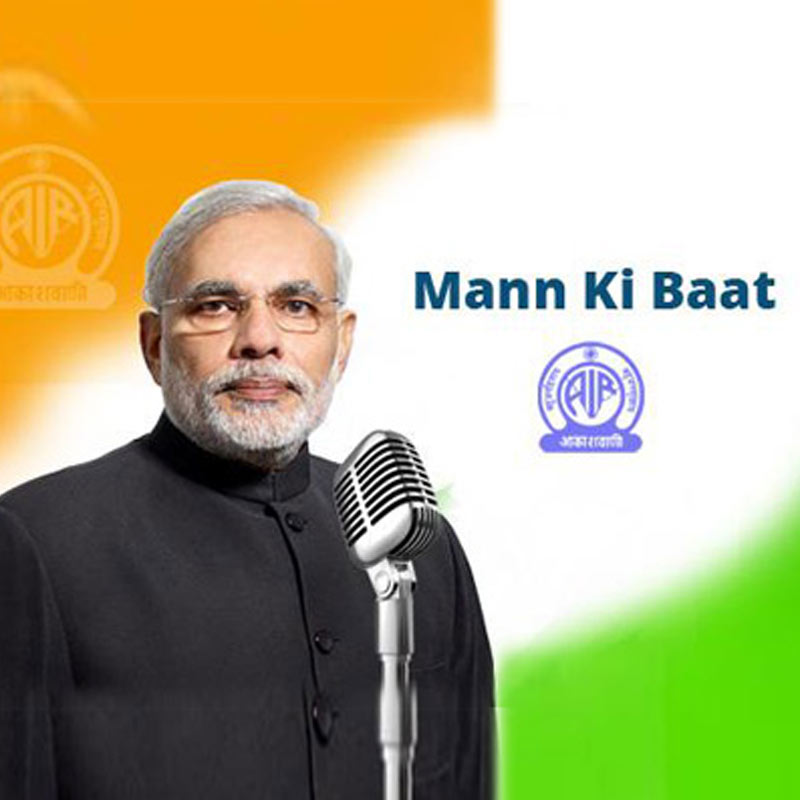
    Referring to the National Emergency that was declared on the night of 25-26 June 1975, 41 years ago to the date, in his monthly ‘Mann Ki Baat’, Modi added, “A great example of the democratic strength of the common people was witnessed during Emergency”.

    The 21st edition of ‘Mann ki Baat’ on 26 June 2016 on All India Radio coincided with the anniversary of the declaration of the National Emergency of 1975, often referred to as the dark day for the Indian media.

    Modi said the country’s strength lies in its people and and making democracy a living embodiment.

    He noted at the outset that “sometimes my ‘Mann Ki Baat’ is ridiculed a lot and is criticized much also. However, this can only happen because all of us are committed to democracy.”

    (In the May broadcast, Modi had lauded All India Radio for broadcasting his monthly ‘Mann ki Baat’ in regional languages on the day he talks to the nation.)

  • Modi’s monthly broadcast reminds media about  National Emergency’s shackles

    Modi’s monthly broadcast reminds media about National Emergency’s shackles

    NEW DELHI: “There might have been locks on newspaper houses, radio might have been speaking just one kind of language,” but “given the opportune moment, the citizens gave an example of the power of Democracy.”

    Referring to the National Emergency that was declared on the night of 25-26 June 1975, 41 years ago to the date, in his monthly ‘Mann Ki Baat’, Modi added, “A great example of the democratic strength of the common people was witnessed during Emergency”.

    The 21st edition of ‘Mann ki Baat’ on 26 June 2016 on All India Radio coincided with the anniversary of the declaration of the National Emergency of 1975, often referred to as the dark day for the Indian media.

    Modi said the country’s strength lies in its people and and making democracy a living embodiment.

    He noted at the outset that “sometimes my ‘Mann Ki Baat’ is ridiculed a lot and is criticized much also. However, this can only happen because all of us are committed to democracy.”

    (In the May broadcast, Modi had lauded All India Radio for broadcasting his monthly ‘Mann ki Baat’ in regional languages on the day he talks to the nation.)

  • Chrome at variance with MIB on DAS Phase III, claims 78.6 per cent completed

    Chrome at variance with MIB on DAS Phase III, claims 78.6 per cent completed

    MUMBAI: Even as the Information & Broadcasting Ministry has claimed almost 100 per cent digitization in the ongoing Phase III of digital addressable systems, Chrome Data Analytics & Media says its studies show the figure is much lower at 78.6 per cent.

    The Task Force for the final two phases set up by the Ministry was informed in its 15th meeting on 30 May 2016 that about 41 million set top boxes had been seeded in Phase III despite the pending cases in many high courts.

    As reported by indiantelevision.com, the claim was made by Information and Broadcasting joint secretary R Jaya who had earlier told the 14th meeting on 16 February 2016 that around 90.44 percent success had been achieved in DAS phase III. During the meeting it was informed that the seeding of STBs by MSOs increased from 6.91 million to 12.43 million between 31 December 2015 and 15 February 2016.

    However, Chrome says its calculation of 78.6 per cent is primarily based on the 31.83 million C&S population that was digitized out of a total of 40.50 million C&S population in DAS III areas.

    This number was based on primary research that supports the company’s proprietary tools like the Chrome subscriber establishment survey, widely used by the broadcasting industry, taking into account the Census 2011 numbers.

    Chrome Data Analytics & Media CEO Pankaj Krishna told indiantelevision.com that “what we have seen in the current DAS phase is significant gains for DTH players, with their considerable infrastructure contributing towards these gains.”

    Phase IV of DAS, the last phase of digitization that aims at covering all the remaining urban and rural areas in the country is set to be completed by 31 December 2016.

  • Chrome at variance with MIB on DAS Phase III, claims 78.6 per cent completed

    Chrome at variance with MIB on DAS Phase III, claims 78.6 per cent completed

    MUMBAI: Even as the Information & Broadcasting Ministry has claimed almost 100 per cent digitization in the ongoing Phase III of digital addressable systems, Chrome Data Analytics & Media says its studies show the figure is much lower at 78.6 per cent.

    The Task Force for the final two phases set up by the Ministry was informed in its 15th meeting on 30 May 2016 that about 41 million set top boxes had been seeded in Phase III despite the pending cases in many high courts.

    As reported by indiantelevision.com, the claim was made by Information and Broadcasting joint secretary R Jaya who had earlier told the 14th meeting on 16 February 2016 that around 90.44 percent success had been achieved in DAS phase III. During the meeting it was informed that the seeding of STBs by MSOs increased from 6.91 million to 12.43 million between 31 December 2015 and 15 February 2016.

    However, Chrome says its calculation of 78.6 per cent is primarily based on the 31.83 million C&S population that was digitized out of a total of 40.50 million C&S population in DAS III areas.

    This number was based on primary research that supports the company’s proprietary tools like the Chrome subscriber establishment survey, widely used by the broadcasting industry, taking into account the Census 2011 numbers.

    Chrome Data Analytics & Media CEO Pankaj Krishna told indiantelevision.com that “what we have seen in the current DAS phase is significant gains for DTH players, with their considerable infrastructure contributing towards these gains.”

    Phase IV of DAS, the last phase of digitization that aims at covering all the remaining urban and rural areas in the country is set to be completed by 31 December 2016.

  • Auction of 2nd batch of 266 FM Phase III channels around mid-Sept

    Auction of 2nd batch of 266 FM Phase III channels around mid-Sept

    NEW DELHI: The e-auction of the second batch of FM Radio Phase-III channels comprising 266 channels in 92 cities is to be held around mid-September this year. The channels include 227 channels in 69 fresh cities and 39 channels in 23 existing cities which had remained unsold as there were no bids.

    As in the first stage, the e-auctions will be conducted by C1 India Private Ltd and the process commenced on 20 June with the notice inviting applications (NIA).

    A Pre Bid conference will be held on 11 July 2016 at 2:30 PM and the last date for seeking clarifications on NIA is 14 July 2016 by 12:00 noon. Clarifications to NIA will be given on 21 July 2016.

    The last date for submission of Applications is 1 August 2016 by 5:00 pm. This will be followed on 16 August with the publication of ownership details of applicants. The Bidder Ownership Compliance Certificate will be issued on 22 August 2016.

    The Pre-Qualification of Bidders will be done by 1 September 2016 or completion of requisite formalities whichever is later, followed four to five days later by a Mock Auction.

    The main auction will start four days after the mock auction.

    The first payment of 25 per cent of the Successful Bid Amount will be made within five calendar days, and the remaining within 15 calendar days of the close of the Auction and notification of successful bidders by the government.

    The e-auction of the first batch of private FM radio phase-III comprising 135 channels in 69 Phase-II existing cities commenced on 27 July 2015 and was completed on 9 September 2015 after 125 rounds of bidding. Out of these, no bid was received in 13 cities having 26 channels, and partial bids were received in 9 cities with 12 channels remaining unsold, which Information and Broadcasting minister Arun Jaitley justified on the ground of “the demand – supply based market economics and bidder’s strategy”.

    However, he told Parliament on 4 December 2015 that the Ministry had received the full payment of Rs.1,055.9 crore notified on 16 September 2015 by 1 October that year

    Against the cumulative reserve price of Rs.550.18 crore for 135 channels, the government received aggregate provisional commitment of Rs.1156.9 crore for 97 channels in 56 cities. Out of 97 channels, 53 channels in 35 cities were sold at a premium over reserve price whereas 44 channels in 21 cities were sold at reserve price.

    The Ministry had decided to conduct e-auction of FM Radio Channels in batches under the extant FM Phase-III Policy.

    For the second batch, the Simultaneous Multiple Round Ascending e-auction process will be carried out for allotting the FM channels, conducted over the Internet. Bidders will be able to access the Electronic Auction System to be used for participation in the Auctions using web browsing software: Internet Explorer 11.x, or Mozilla 34.x. The EAS is a designated computer resource for the receiving of electronic records under the provisions of Section 13(2) of the Information Technology Act 2000, as amended from time to time.

    While issuing the notice for inviting applications, the government said it reserved the right to summarily disqualify any pre-qualified Bidder, at any stage of the Auction or after the Auction is completed on grounds of noncompliance with eligibility conditions, misrepresentation, non-compliance with the Auction Rules, non-compliance with any other pre-condition prescribed for participating in the Auction or for getting the FM channel, or any matter that may, in the opinion of the government, be contrary to general public interest.

    Interested parties were asked to get a copy of this document and any subsequent amendments to the NIA from the MIB website, www.mib.nic.in.

    Before operating the FM service a separate specific license i.e. Wireless Operating License shall be obtained by the company from the WPC (Wireless Planning & Co-ordination) Wing of Ministry of Communications & IT, permitting utilization of appropriate frequencies/band for the establishment and operation of concerned wireless component of FM radio Service under usual terms and conditions of such license. The Grant of such License shall be governed by the rules, procedures and guidelines and shall be subject to compliance with all requirements of the WPC wing.

    Winning Bidders of FM channel(s) in each city shall be determined in the first stage, a Channel Allocation Stage, which will allocate FM channel(s) simultaneously for all the cities. A second stage, a Frequency Allocation Stage, will identify specific frequencies for the Winning Bidders. More specifically, the two stages shall operate as follows:

    The Channel Allocation Stage will allocate number (count) of FM Channels in each of the Cities to the winning bidders. In this stage, Bidders in each City will bid for number of Channels only without linkage to any specific Radio frequency. This stage will consist of a number of Clock Rounds. These rounds will stop once the Auction Activity Requirement is 100 percent and there is no bid submitted by any of the bidders for all Cities in all the channels.
     

  • Auction of 2nd batch of 266 FM Phase III channels around mid-Sept

    Auction of 2nd batch of 266 FM Phase III channels around mid-Sept

    NEW DELHI: The e-auction of the second batch of FM Radio Phase-III channels comprising 266 channels in 92 cities is to be held around mid-September this year. The channels include 227 channels in 69 fresh cities and 39 channels in 23 existing cities which had remained unsold as there were no bids.

    As in the first stage, the e-auctions will be conducted by C1 India Private Ltd and the process commenced on 20 June with the notice inviting applications (NIA).

    A Pre Bid conference will be held on 11 July 2016 at 2:30 PM and the last date for seeking clarifications on NIA is 14 July 2016 by 12:00 noon. Clarifications to NIA will be given on 21 July 2016.

    The last date for submission of Applications is 1 August 2016 by 5:00 pm. This will be followed on 16 August with the publication of ownership details of applicants. The Bidder Ownership Compliance Certificate will be issued on 22 August 2016.

    The Pre-Qualification of Bidders will be done by 1 September 2016 or completion of requisite formalities whichever is later, followed four to five days later by a Mock Auction.

    The main auction will start four days after the mock auction.

    The first payment of 25 per cent of the Successful Bid Amount will be made within five calendar days, and the remaining within 15 calendar days of the close of the Auction and notification of successful bidders by the government.

    The e-auction of the first batch of private FM radio phase-III comprising 135 channels in 69 Phase-II existing cities commenced on 27 July 2015 and was completed on 9 September 2015 after 125 rounds of bidding. Out of these, no bid was received in 13 cities having 26 channels, and partial bids were received in 9 cities with 12 channels remaining unsold, which Information and Broadcasting minister Arun Jaitley justified on the ground of “the demand – supply based market economics and bidder’s strategy”.

    However, he told Parliament on 4 December 2015 that the Ministry had received the full payment of Rs.1,055.9 crore notified on 16 September 2015 by 1 October that year

    Against the cumulative reserve price of Rs.550.18 crore for 135 channels, the government received aggregate provisional commitment of Rs.1156.9 crore for 97 channels in 56 cities. Out of 97 channels, 53 channels in 35 cities were sold at a premium over reserve price whereas 44 channels in 21 cities were sold at reserve price.

    The Ministry had decided to conduct e-auction of FM Radio Channels in batches under the extant FM Phase-III Policy.

    For the second batch, the Simultaneous Multiple Round Ascending e-auction process will be carried out for allotting the FM channels, conducted over the Internet. Bidders will be able to access the Electronic Auction System to be used for participation in the Auctions using web browsing software: Internet Explorer 11.x, or Mozilla 34.x. The EAS is a designated computer resource for the receiving of electronic records under the provisions of Section 13(2) of the Information Technology Act 2000, as amended from time to time.

    While issuing the notice for inviting applications, the government said it reserved the right to summarily disqualify any pre-qualified Bidder, at any stage of the Auction or after the Auction is completed on grounds of noncompliance with eligibility conditions, misrepresentation, non-compliance with the Auction Rules, non-compliance with any other pre-condition prescribed for participating in the Auction or for getting the FM channel, or any matter that may, in the opinion of the government, be contrary to general public interest.

    Interested parties were asked to get a copy of this document and any subsequent amendments to the NIA from the MIB website, www.mib.nic.in.

    Before operating the FM service a separate specific license i.e. Wireless Operating License shall be obtained by the company from the WPC (Wireless Planning & Co-ordination) Wing of Ministry of Communications & IT, permitting utilization of appropriate frequencies/band for the establishment and operation of concerned wireless component of FM radio Service under usual terms and conditions of such license. The Grant of such License shall be governed by the rules, procedures and guidelines and shall be subject to compliance with all requirements of the WPC wing.

    Winning Bidders of FM channel(s) in each city shall be determined in the first stage, a Channel Allocation Stage, which will allocate FM channel(s) simultaneously for all the cities. A second stage, a Frequency Allocation Stage, will identify specific frequencies for the Winning Bidders. More specifically, the two stages shall operate as follows:

    The Channel Allocation Stage will allocate number (count) of FM Channels in each of the Cities to the winning bidders. In this stage, Bidders in each City will bid for number of Channels only without linkage to any specific Radio frequency. This stage will consist of a number of Clock Rounds. These rounds will stop once the Auction Activity Requirement is 100 percent and there is no bid submitted by any of the bidders for all Cities in all the channels.