Category: I&B Ministry

  • Kurnool LCO’s office sealed, 3 others’ being investigated: MIB on Peace TV

    Kurnool LCO’s office sealed, 3 others’ being investigated: MIB on Peace TV

    NEW DELHI: While denying that the Information and Broadcasting Ministry had asked the Home Ministry to help in keeping a check on illegal channels, the government today said that five complaints had been received in July on the carriage of un-permitted satellite TV channels:

    Yesterday, Information and Broadcasting Minister M Venkaiaih Naidu had told the Rajya Sabha that action had ‘reportedly’ been taken in Kurnool and Aurangabad for carriage of illegal channels.

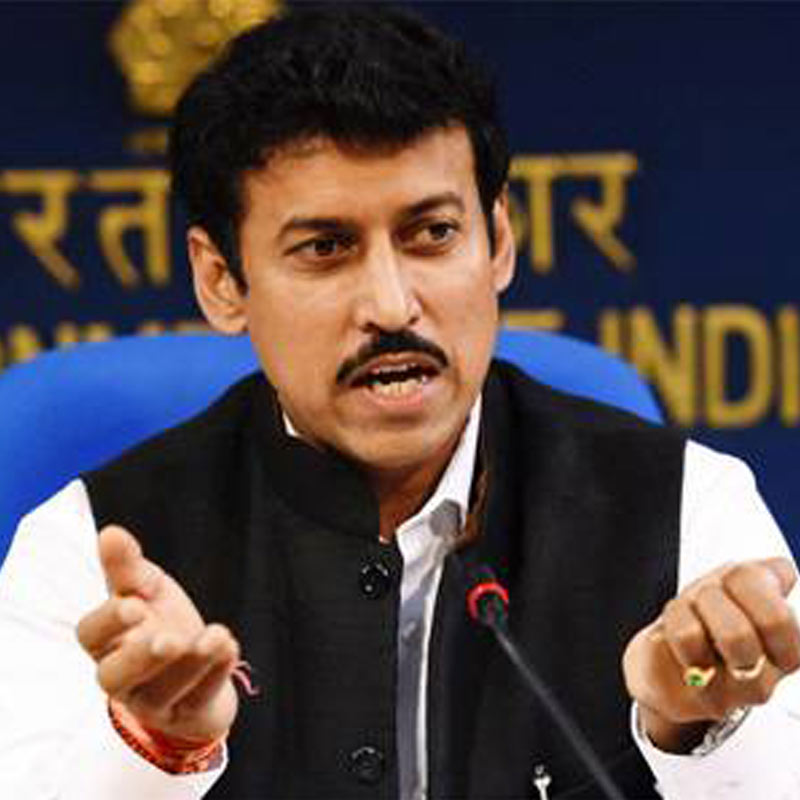
    However, the Lok Sabha was told today by Minister of State Rajyavardhan Rathore that the office of Seema Communication Pvt. Ltd. in Kurnool had been sealed and equipment seized This was on a complaint on 9 July 2016 by Rajya Sabha member T G Venkatesh against the LCO for telecasting the non-permitted ‘Peace TV’ in Kurnool District. The complaint was sent to the District Collector, Kurnool on 10 July 2016. The DC carried out the instructions and found that the operator was actually carrying the non-permitted channel and an FIR was lodged by the authorized officer.

    However, another complaint on 12 July from Vinay Patil against Yashodeep Cable Network for transmission of the same channel in Aurangabad District was found to be incorrect as the Deputy Commissioner found that this channel was not being carried by the LCO.

    Another complaint of 7 July 2016 from Kuldeep Kumar Sahani against Venkata Sai Entertainment Pvt. Ltd. for illegal transmission of Peace TV in Nizamabad District was sent to District Collector, Nizamabad, on 22 July 2016 for further necessary action by the authorized Officer.

    A complaint about Peace TV on 9 July 2016 from A Thirupathi Reddy against Sri Sai Communications in Karimnagar District was sent to District Collector, Karimnagar on 22 July 2016 for further necessary action by the authorized Officer.

    A fifth complaint of 8 July 2016 from Nandyal Digital TV Communications against Siti Vision Digital Media Pvt. Ltd. for illegal transmission of Peace TV in Kurnool District was sent to District Collector, Kurnool, on 22 July 2016 for further necessary action by the authorized Officer.

    Apart from advisories sent to the authorized officers, MSOs, and LCOs, the minister said an appeal was issued on social media platform to the general public to report cases of transmission of un-permitted satellite TV channels by cable operators.

    Meanwhile, the minister said that in addition to satellite channels, the ministry has received recommendations from the Telecom Regulatory Authority of India on its query that the procedure for cable operators to transmit local (ground based) channels had not defined in the Act.

    Peace TV from Dubai and as many as fourteen television channels from Pakistan figured in a list of 24 channels which the Home Ministry identified as ‘not conducive to the security environment in the country’ in December 2015.

    The Pakistani channels are PTV, PTV Home, PTV World, Geo TV, Dawn, Express, Waqat, Q TV, Madni TV, Noor TV, Hadi TV, Aaj, Filmax and STV.

    Out of the other ten, there are two from Nepal (one identified as Nepal, and the other as Kantipur), and one channel each from Bangladesh (NTV Bangladesh), Maldives (TV Maldives), Bhutan (Bhutan Broadcasting Service), and there was a United Kingdom-based channel, Ahmedia Channel.

    The other channel from Arab countries was Saudi TV while the nationality of two channels was not disclosed: ARY TV and XYZ TV.
  • Kurnool LCO’s office sealed, 3 others’ being investigated: MIB on Peace TV

    Kurnool LCO’s office sealed, 3 others’ being investigated: MIB on Peace TV

    NEW DELHI: While denying that the Information and Broadcasting Ministry had asked the Home Ministry to help in keeping a check on illegal channels, the government today said that five complaints had been received in July on the carriage of un-permitted satellite TV channels:

    Yesterday, Information and Broadcasting Minister M Venkaiaih Naidu had told the Rajya Sabha that action had ‘reportedly’ been taken in Kurnool and Aurangabad for carriage of illegal channels.

    However, the Lok Sabha was told today by Minister of State Rajyavardhan Rathore that the office of Seema Communication Pvt. Ltd. in Kurnool had been sealed and equipment seized This was on a complaint on 9 July 2016 by Rajya Sabha member T G Venkatesh against the LCO for telecasting the non-permitted ‘Peace TV’ in Kurnool District. The complaint was sent to the District Collector, Kurnool on 10 July 2016. The DC carried out the instructions and found that the operator was actually carrying the non-permitted channel and an FIR was lodged by the authorized officer.

    However, another complaint on 12 July from Vinay Patil against Yashodeep Cable Network for transmission of the same channel in Aurangabad District was found to be incorrect as the Deputy Commissioner found that this channel was not being carried by the LCO.

    Another complaint of 7 July 2016 from Kuldeep Kumar Sahani against Venkata Sai Entertainment Pvt. Ltd. for illegal transmission of Peace TV in Nizamabad District was sent to District Collector, Nizamabad, on 22 July 2016 for further necessary action by the authorized Officer.

    A complaint about Peace TV on 9 July 2016 from A Thirupathi Reddy against Sri Sai Communications in Karimnagar District was sent to District Collector, Karimnagar on 22 July 2016 for further necessary action by the authorized Officer.

    A fifth complaint of 8 July 2016 from Nandyal Digital TV Communications against Siti Vision Digital Media Pvt. Ltd. for illegal transmission of Peace TV in Kurnool District was sent to District Collector, Kurnool, on 22 July 2016 for further necessary action by the authorized Officer.

    Apart from advisories sent to the authorized officers, MSOs, and LCOs, the minister said an appeal was issued on social media platform to the general public to report cases of transmission of un-permitted satellite TV channels by cable operators.

    Meanwhile, the minister said that in addition to satellite channels, the ministry has received recommendations from the Telecom Regulatory Authority of India on its query that the procedure for cable operators to transmit local (ground based) channels had not defined in the Act.

    Peace TV from Dubai and as many as fourteen television channels from Pakistan figured in a list of 24 channels which the Home Ministry identified as ‘not conducive to the security environment in the country’ in December 2015.

    The Pakistani channels are PTV, PTV Home, PTV World, Geo TV, Dawn, Express, Waqat, Q TV, Madni TV, Noor TV, Hadi TV, Aaj, Filmax and STV.

    Out of the other ten, there are two from Nepal (one identified as Nepal, and the other as Kantipur), and one channel each from Bangladesh (NTV Bangladesh), Maldives (TV Maldives), Bhutan (Bhutan Broadcasting Service), and there was a United Kingdom-based channel, Ahmedia Channel.

    The other channel from Arab countries was Saudi TV while the nationality of two channels was not disclosed: ARY TV and XYZ TV.
  • Around ninety violations of Programme and Advertising Codes since 2013: Rathore

    Around ninety violations of Programme and Advertising Codes since 2013: Rathore

    NEW DELHI: Action was taken in 88 cases since 2013 to ensure compliance with or against violation of the Proigramme and Advertising Codes by private television channels.

    Minister of State for Information and Broadcasting Rajyavardhan Rathore told the Rajya Sabha today that this included thirteen cases of advisories issues to all news or general entertainment channels on issues like depiction of children, showing of road accident cases, urging channels to use sign language in Republic Day broadcasts, advisories about specific advertisements, showng films with displaying the Central Board of Film Certification certificate, telecast of anti-terrorist operations by security forces etc.

    There were 32 cases of violation in 2013, 22 in 2014, 23 in 2015 and eleven so far this year, the Mihister said.

    Amiong these, those channels which figure more than once in the list include Manoranjan TV, Colors, FTV, DY365, NTV, Comedy Central, and Raj News.

    indiantelevision.com had earlier this week reported that there were a total of 49 complaints since 2013 – four in 2016 – for vulgarity in advertisements.

  • Around ninety violations of Programme and Advertising Codes since 2013: Rathore

    Around ninety violations of Programme and Advertising Codes since 2013: Rathore

    NEW DELHI: Action was taken in 88 cases since 2013 to ensure compliance with or against violation of the Proigramme and Advertising Codes by private television channels.

    Minister of State for Information and Broadcasting Rajyavardhan Rathore told the Rajya Sabha today that this included thirteen cases of advisories issues to all news or general entertainment channels on issues like depiction of children, showing of road accident cases, urging channels to use sign language in Republic Day broadcasts, advisories about specific advertisements, showng films with displaying the Central Board of Film Certification certificate, telecast of anti-terrorist operations by security forces etc.

    There were 32 cases of violation in 2013, 22 in 2014, 23 in 2015 and eleven so far this year, the Mihister said.

    Amiong these, those channels which figure more than once in the list include Manoranjan TV, Colors, FTV, DY365, NTV, Comedy Central, and Raj News.

    indiantelevision.com had earlier this week reported that there were a total of 49 complaints since 2013 – four in 2016 – for vulgarity in advertisements.

  • Around Rs seven lakh spent on DD India in 2015-16: Rathore

    Around Rs seven lakh spent on DD India in 2015-16: Rathore

    NEW DELHI: While saying that no deadline had been fixed for restructuring Prasar Bharati, Minister of State for Information and Broadcasting Minister Rajyavardhan Rathore said Rs 6.46 lakh was allotted in the year 2015-16 for programming of DD India which was used for normal production activities.

    He told the Rajya Sabha today that no fund was allotted specifically for re-launching of DD-India and so no expenditure was incurred on this account.

    He said DD India was launched on 14 March 1995. It was initially known as DD World and renamed as DD India in 2000. The channel reaches 38 countries at present.

    He said the affairs of Prasar Bharati are conducted under the provisions of Prasar Bharati Act 1990 which essentially aims to confer autonomy upon the organization.

    Adequate provision has been made in the Act itself to make Prasar Bharati accountable. Prasar Bharati is accountable to the Parliament through its various Committees and laying of its annual accounts and annual reports as also through various questions raised in the Parliament.

    The Prasar Bharati Board, apart from Chairman and three whole time members, comprises of six part time members and other ex-officio members and the Board is empowered to take all decisions as per provision of Prasar Bharati Act 1990.

  • Around Rs seven lakh spent on DD India in 2015-16: Rathore

    Around Rs seven lakh spent on DD India in 2015-16: Rathore

    NEW DELHI: While saying that no deadline had been fixed for restructuring Prasar Bharati, Minister of State for Information and Broadcasting Minister Rajyavardhan Rathore said Rs 6.46 lakh was allotted in the year 2015-16 for programming of DD India which was used for normal production activities.

    He told the Rajya Sabha today that no fund was allotted specifically for re-launching of DD-India and so no expenditure was incurred on this account.

    He said DD India was launched on 14 March 1995. It was initially known as DD World and renamed as DD India in 2000. The channel reaches 38 countries at present.

    He said the affairs of Prasar Bharati are conducted under the provisions of Prasar Bharati Act 1990 which essentially aims to confer autonomy upon the organization.

    Adequate provision has been made in the Act itself to make Prasar Bharati accountable. Prasar Bharati is accountable to the Parliament through its various Committees and laying of its annual accounts and annual reports as also through various questions raised in the Parliament.

    The Prasar Bharati Board, apart from Chairman and three whole time members, comprises of six part time members and other ex-officio members and the Board is empowered to take all decisions as per provision of Prasar Bharati Act 1990.

  • Last date for application in auction of second batch of 266 FM channels in Phase III extended by one week

    Last date for application in auction of second batch of 266 FM channels in Phase III extended by one week

    NEW DELHI: The last date for receipt of applications for the e-auction of the second batch of FM Radio Phase-III channels comprising 266 channels in 92 cities has been extended to 8 August 2016 by 5 pm.

    Similarly in an amendment issued today, the Information and Broadcasting Ministry has extended the last date for issuing clarifications to 26 July 2016, Earlier, these dates were 1 August and 21 July 2016 respectively.

    The auctions, which include 227 channels in 69 fresh cities and 39 channels in 23 existing cities which had remained unsold as there were no bids, are to be held around mid-September this year.

    Changes in Networth Clause

    The Ministry also made some changes in the networth requirements of applicants, which can be seen on its website mib.nic.in. Essentially, this does away with networth till 30 June 2016 but remains confined to three years or from incorporation till 31 March 3016. However, provisional financial statement will have to be given till 30 June 2016.

    Recent increase in FDI increase included

    Additionally, the Ministry made public some queires in the NIA and their answers from the Ministry. Among other clarifications, the Ministry said that the FDI Cap of 26% prescribed under FM Radio Phase III Policy guidelines of 25 July 2011 were being raised to 49% in accordance with the Ministry order of 21 July 2016.

    As in the first stage, the e-auctions will be conducted by C1 India Private Ltd and the process will commenced on 20 June with the notice inviting applications (NIA).

    A Pre Bid conference was held on 11 July 2016 at 2:30 PM and the last date for seeking clarifications on NIA was 14 July 2016 by 12:00 noon.

    The last date for submission of Applications will be followed on 16 August with the publication of ownership details of applicants. The Bidder Ownership Compliance Certificate will be issued on 22 August 2016.

    The Pre-Qualification of Bidders will be done by 1 September 2016 or completion of requisite formalities whichever is later, followed four to five days later by a Mock Auction.

    The main auction will start four days after the mock auction.

  • Last date for application in auction of second batch of 266 FM channels in Phase III extended by one week

    Last date for application in auction of second batch of 266 FM channels in Phase III extended by one week

    NEW DELHI: The last date for receipt of applications for the e-auction of the second batch of FM Radio Phase-III channels comprising 266 channels in 92 cities has been extended to 8 August 2016 by 5 pm.

    Similarly in an amendment issued today, the Information and Broadcasting Ministry has extended the last date for issuing clarifications to 26 July 2016, Earlier, these dates were 1 August and 21 July 2016 respectively.

    The auctions, which include 227 channels in 69 fresh cities and 39 channels in 23 existing cities which had remained unsold as there were no bids, are to be held around mid-September this year.

    Changes in Networth Clause

    The Ministry also made some changes in the networth requirements of applicants, which can be seen on its website mib.nic.in. Essentially, this does away with networth till 30 June 2016 but remains confined to three years or from incorporation till 31 March 3016. However, provisional financial statement will have to be given till 30 June 2016.

    Recent increase in FDI increase included

    Additionally, the Ministry made public some queires in the NIA and their answers from the Ministry. Among other clarifications, the Ministry said that the FDI Cap of 26% prescribed under FM Radio Phase III Policy guidelines of 25 July 2011 were being raised to 49% in accordance with the Ministry order of 21 July 2016.

    As in the first stage, the e-auctions will be conducted by C1 India Private Ltd and the process will commenced on 20 June with the notice inviting applications (NIA).

    A Pre Bid conference was held on 11 July 2016 at 2:30 PM and the last date for seeking clarifications on NIA was 14 July 2016 by 12:00 noon.

    The last date for submission of Applications will be followed on 16 August with the publication of ownership details of applicants. The Bidder Ownership Compliance Certificate will be issued on 22 August 2016.

    The Pre-Qualification of Bidders will be done by 1 September 2016 or completion of requisite formalities whichever is later, followed four to five days later by a Mock Auction.

    The main auction will start four days after the mock auction.

  • No plans to regulate TV content through CBFC: MIB

    No plans to regulate TV content through CBFC: MIB

    NEW DELHI: Even as debates rage on regarding film and television content with the government admitting complaints regarding vulgar advertisements on TV are received regularly and addressed, Ministry of Information and Broadcasting (MIB) has said there’s no move yet to regulate TV content via an existing body.

    Dwelling on the Central Board of Film Certification (CBFC), its recent run-ins with films producers on alleged censorships and a proposed restructuring of the certification body, Minister of State for MIB Rajyavardhan Rathore has said government doesn’t propose to regulate TV content via CBFC.

    Rathore made these observations regarding CBFC and TV content regulation in Parliament last week

    Holding forth on CBFC, the minister admitted that a restructuring report by the Shyam Benegal Committee was “under examination”,  but added the government had not received any formal complaint/representation from the Indian film industry regarding the functioning of CBFC.

    Rathore told Lok Sabha (Lower House of Parliament) late last week that differences in opinion relating to certification of individual films do exist between the producers and the Board. Such cases are dealt with in accordance with the provisions of the Cinematograph Act 1952, he added.

    The existing system under the Cinematograph Act, 1952 provides the requisite checks and balances as far as certification of films is concerned. Periodical reviews by expert committees are undertaken. Sufficient provisions for addressing grievances of film producers with regard to film certification exist in present regulations, the junior MIB minister informed fellow parliamentarians.

    A review committee under noted film-maker Shyam Benegal was constituted by MIB some time back. The committee has given its report suggesting some radical changes in the CBFC’s functioning and role.

    Complaints regarding vulgarity in TV ads

    A total of 49 complaints – four in 2016 – for vulgarity in advertisements on television channels were reported to MIB since 2013.

    In most cases, advisories were issued to TV channels concerned, but there were a few cases where the channels had to run apology scrolls or were forced to shut down for a fixed period.

    There were also two instances of advisories to all channels in these years.

    According to figures available with MIB, there were 26 complaints in 2013, nine in 2014, eleven in 2015 and four so far this year.

    Only Manoranjan TV, FTV, and NTV have figured thrice in these years for broadcast of vulgarity in advertisements.

    Under existing regulatory framework, all programmes and advertisements telecast on TV channels and transmitted/retransmitted through cable TV networks and DTH platforms are required to adhere to the Programme and Advertising Codes prescribed under the Cable TV Networks (Regulation) Act, 1995.

    Action is taken suo-motu as well as when violations are brought to the notice of the ministry.

    These codes contain a whole range of parameters to regulate programmes and advertisements, including provisions to address content of obscenity, vulgarity and violence in TV programmes and advertisements.

    Information from the Electronic Media Monitoring Centre (EMMC) and other sources like an Inter-Ministerial Committee (IMC) are collated on prima facie violation of the Programme and Advertising Codes for the MIB to pursue the matter.

    Government said directions to the States have been issued to set up district-level and State-level monitoring committees to monitor content telecast on cable TV channels. These are recommendatory bodies, which function to aid and assist MIB.


  • No plans to regulate TV content through CBFC: MIB

    No plans to regulate TV content through CBFC: MIB

    NEW DELHI: Even as debates rage on regarding film and television content with the government admitting complaints regarding vulgar advertisements on TV are received regularly and addressed, Ministry of Information and Broadcasting (MIB) has said there’s no move yet to regulate TV content via an existing body.

    Dwelling on the Central Board of Film Certification (CBFC), its recent run-ins with films producers on alleged censorships and a proposed restructuring of the certification body, Minister of State for MIB Rajyavardhan Rathore has said government doesn’t propose to regulate TV content via CBFC.

    Rathore made these observations regarding CBFC and TV content regulation in Parliament last week

    Holding forth on CBFC, the minister admitted that a restructuring report by the Shyam Benegal Committee was “under examination”,  but added the government had not received any formal complaint/representation from the Indian film industry regarding the functioning of CBFC.

    Rathore told Lok Sabha (Lower House of Parliament) late last week that differences in opinion relating to certification of individual films do exist between the producers and the Board. Such cases are dealt with in accordance with the provisions of the Cinematograph Act 1952, he added.

    The existing system under the Cinematograph Act, 1952 provides the requisite checks and balances as far as certification of films is concerned. Periodical reviews by expert committees are undertaken. Sufficient provisions for addressing grievances of film producers with regard to film certification exist in present regulations, the junior MIB minister informed fellow parliamentarians.

    A review committee under noted film-maker Shyam Benegal was constituted by MIB some time back. The committee has given its report suggesting some radical changes in the CBFC’s functioning and role.

    Complaints regarding vulgarity in TV ads

    A total of 49 complaints – four in 2016 – for vulgarity in advertisements on television channels were reported to MIB since 2013.

    In most cases, advisories were issued to TV channels concerned, but there were a few cases where the channels had to run apology scrolls or were forced to shut down for a fixed period.

    There were also two instances of advisories to all channels in these years.

    According to figures available with MIB, there were 26 complaints in 2013, nine in 2014, eleven in 2015 and four so far this year.

    Only Manoranjan TV, FTV, and NTV have figured thrice in these years for broadcast of vulgarity in advertisements.

    Under existing regulatory framework, all programmes and advertisements telecast on TV channels and transmitted/retransmitted through cable TV networks and DTH platforms are required to adhere to the Programme and Advertising Codes prescribed under the Cable TV Networks (Regulation) Act, 1995.

    Action is taken suo-motu as well as when violations are brought to the notice of the ministry.

    These codes contain a whole range of parameters to regulate programmes and advertisements, including provisions to address content of obscenity, vulgarity and violence in TV programmes and advertisements.

    Information from the Electronic Media Monitoring Centre (EMMC) and other sources like an Inter-Ministerial Committee (IMC) are collated on prima facie violation of the Programme and Advertising Codes for the MIB to pursue the matter.

    Government said directions to the States have been issued to set up district-level and State-level monitoring committees to monitor content telecast on cable TV channels. These are recommendatory bodies, which function to aid and assist MIB.