Category: I&B Ministry

  • Indo-Bangladesh radio channel Akashvani Maitree launched by President Mukherjee

    Indo-Bangladesh radio channel Akashvani Maitree launched by President Mukherjee

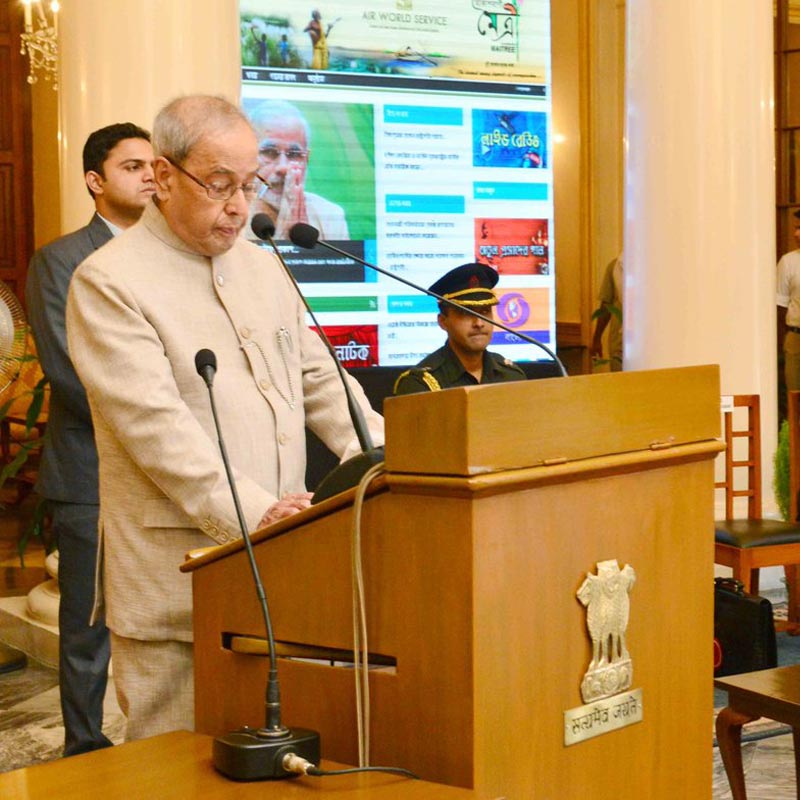
    NEW DELHI: President Pranab Mukherjee today said blending of software content from both India and Bangladesh in the fields of art, culture, literature, music, and sports will help promote and preserve the composite Bengali cultural heritage which is the proud inheritance of all Bengali speaking people.

    Launching Akashvani Maitree channel in Kolkata, he said this will make the channel a unique one and establish it in the hearts of millions of radio loving people both in India and Bangladesh as well as outside.

    Test trials had begun several months earlier and it was to have been launched in June but waited till the President could go.

    The President said India and Bangladesh are not just neighbours but are bound by an umbilical connection of ethnicity and kinship. India always attaches highest importance to bilateral relations with Bangladesh because of our shared history, heritage, culture, language, physical proximity and also the role which the two nations can play together for the development and prosperity of the entire subcontinent and beyond.

    The bedrock on which the edifice of this unique relationship stands is the unwavering faith of both the countries in democratic values, principles of liberalism, egalitarianism, secularism and respect for each other’s sovereignty and integrity.

    With the launch of Akashvani Maitree, he said a new chapter is being added in the annals of India-Bangladesh relations. He said that Akashvani Maitree and its multimedia website is a unique venture and initiative of All India Radio not only for the Bengali listeners in West Bengal, Bangladesh and the adjoining areas but the entire Bengali speaking Diaspora living in different parts of the globe.

    The station is a terrestrial channel beamed from Chinsurah from a state-of-the-art DRM high power transmitter which is capable of reaching out to listeners in both West Bengal and the whole of Bangladesh.

    AIR External Services Director Amlan Jyoti Mazumdar had earlier told Indiantelevision.com that the most unique aspect was that the new channel would also beam programmes that are either co-proiductions or produced by producers from Bangladesh. It could also be streamed online on airworldservice.org.

  • Indo-Bangladesh radio channel Akashvani Maitree launched by President Mukherjee

    Indo-Bangladesh radio channel Akashvani Maitree launched by President Mukherjee

    NEW DELHI: President Pranab Mukherjee today said blending of software content from both India and Bangladesh in the fields of art, culture, literature, music, and sports will help promote and preserve the composite Bengali cultural heritage which is the proud inheritance of all Bengali speaking people.

    Launching Akashvani Maitree channel in Kolkata, he said this will make the channel a unique one and establish it in the hearts of millions of radio loving people both in India and Bangladesh as well as outside.

    Test trials had begun several months earlier and it was to have been launched in June but waited till the President could go.

    The President said India and Bangladesh are not just neighbours but are bound by an umbilical connection of ethnicity and kinship. India always attaches highest importance to bilateral relations with Bangladesh because of our shared history, heritage, culture, language, physical proximity and also the role which the two nations can play together for the development and prosperity of the entire subcontinent and beyond.

    The bedrock on which the edifice of this unique relationship stands is the unwavering faith of both the countries in democratic values, principles of liberalism, egalitarianism, secularism and respect for each other’s sovereignty and integrity.

    With the launch of Akashvani Maitree, he said a new chapter is being added in the annals of India-Bangladesh relations. He said that Akashvani Maitree and its multimedia website is a unique venture and initiative of All India Radio not only for the Bengali listeners in West Bengal, Bangladesh and the adjoining areas but the entire Bengali speaking Diaspora living in different parts of the globe.

    The station is a terrestrial channel beamed from Chinsurah from a state-of-the-art DRM high power transmitter which is capable of reaching out to listeners in both West Bengal and the whole of Bangladesh.

    AIR External Services Director Amlan Jyoti Mazumdar had earlier told Indiantelevision.com that the most unique aspect was that the new channel would also beam programmes that are either co-proiductions or produced by producers from Bangladesh. It could also be streamed online on airworldservice.org.
  • Do not mix news with views and avoid speculation: Naidu

    Do not mix news with views and avoid speculation: Naidu

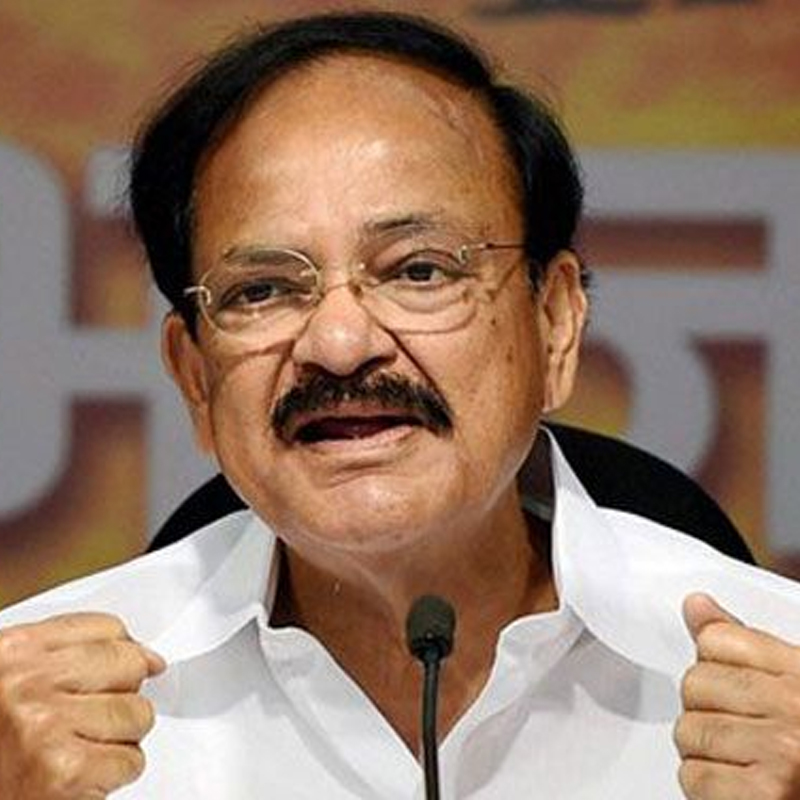
    NEW DELHI: Information & Broadcasting Minister M Venkaiah Naidu today handed out some sanskari (rooted in culture) advise to officials of All India Radio and Doordarshan while reminding them of a pubcaster’s responsibilities in dishing out information devoid of sensationalism.

    Stressing on the need for upholding credibility in dissemination of information by public broadcasters, the Minister said, “Public service broadcasters have a great responsibility on their shoulders to ensure credibility in the era of competition.”

    Naidu was speaking at a review meeting during a visit to the All India Radio (AIR) and Doordarshan (DD) centres in Hyderabad on Monday.
    Naidu infused confidence in the officials of different media units of Ministry of Information and Broadcasting (MIB) while interacting with them to understand their problems.

    He said the information empowerment of the people is quintessential in the age of information revolution, and information is “great ammunition in the hands of the people in fighting corruption, poverty and inequalities from the society for the overall development of India”.

    The Minister added that the public discourse should be guided by development rather than disruptive tactics and politics.
    Public broadcasters must excel in factual information while communicating to the mass audience. He advised those in the public broadcaster Prasar Bharati, parent of DD and AIR, not to jump to conclusions but confirm the news before putting it on air.

    “A public broadcaster, while disseminating information must abstain from obscenity, vulgarity and violence”, he said, adding that people in the media while producing programmes, plays, cultural programmes, must keep in mind India’s great heritage, culture, traditions and customs in mind.

    He advised people in media to maintain high standards in informing the masses, keeping in mind the philosophy and guidelines established by the founding fathers in various spheres of public life. “Let us not mix news with views and create a bad practice,” Naidu exhorted Prasar Bharati officials.

    He advocated that media should work together in bringing social harmony and discourage politicisation of social issues and not play into the hands of terrorists and to avoid in “turning them into heroes”.
    He wanted the media to be biased towards rural people, agriculturists, down trodden sections, women and disabled people in giving more coverage to highlight their grievances.

  • Do not mix news with views and avoid speculation: Naidu

    Do not mix news with views and avoid speculation: Naidu

    NEW DELHI: Information & Broadcasting Minister M Venkaiah Naidu today handed out some sanskari (rooted in culture) advise to officials of All India Radio and Doordarshan while reminding them of a pubcaster’s responsibilities in dishing out information devoid of sensationalism.

    Stressing on the need for upholding credibility in dissemination of information by public broadcasters, the Minister said, “Public service broadcasters have a great responsibility on their shoulders to ensure credibility in the era of competition.”

    Naidu was speaking at a review meeting during a visit to the All India Radio (AIR) and Doordarshan (DD) centres in Hyderabad on Monday.
    Naidu infused confidence in the officials of different media units of Ministry of Information and Broadcasting (MIB) while interacting with them to understand their problems.

    He said the information empowerment of the people is quintessential in the age of information revolution, and information is “great ammunition in the hands of the people in fighting corruption, poverty and inequalities from the society for the overall development of India”.

    The Minister added that the public discourse should be guided by development rather than disruptive tactics and politics.
    Public broadcasters must excel in factual information while communicating to the mass audience. He advised those in the public broadcaster Prasar Bharati, parent of DD and AIR, not to jump to conclusions but confirm the news before putting it on air.

    “A public broadcaster, while disseminating information must abstain from obscenity, vulgarity and violence”, he said, adding that people in the media while producing programmes, plays, cultural programmes, must keep in mind India’s great heritage, culture, traditions and customs in mind.

    He advised people in media to maintain high standards in informing the masses, keeping in mind the philosophy and guidelines established by the founding fathers in various spheres of public life. “Let us not mix news with views and create a bad practice,” Naidu exhorted Prasar Bharati officials.

    He advocated that media should work together in bringing social harmony and discourage politicisation of social issues and not play into the hands of terrorists and to avoid in “turning them into heroes”.
    He wanted the media to be biased towards rural people, agriculturists, down trodden sections, women and disabled people in giving more coverage to highlight their grievances.

  • European trust in media: radio outshines social networks, TV falls steeply

    European trust in media: radio outshines social networks, TV falls steeply

    NEW DELHI: This one will make radio fans go ga-ga with delight.

    Radio still remains the number one trusted source of news for European citizens even as the overall perception of the trustworthiness of the media has decreased over the last five years.

    The European Broadcasting Union (EBU) also found that social media, increasingly the primary source of news, is the least trusted, and even a distrusted medium in Europe.

    The annual Eurobarometer survey showed that although trust has decreased for radio as well, it remains by far the most trusted source of information. Most countries show a positive attitude towards radio and it came out as the primary trusted source in 20 countries, with an average of 55% positive response. Particularly high scores came from Sweden (74%), Finland (66%) and Denmark (57%).

    Television, the second most trusted medium, is still the number one source in 11 countries but trust in television has decreased much more rapidly over the last year than the other media – with 10 points as opposed to radio, which only fell by three points, and the written press, the internet, and social media which decreased by only one point.

    In only one out of 33 countries surveyed, Albania, the number of people who trusted social media as a source of news outweighed those who tended not to. In all other countries people “tend not to trust” social networks, with those in Sweden, Luxembourg, and Britain having the least trust in social networks as a source of information.

    The internet also scored particularly low, as in the majority of countries, people “tend not to trust” it. Only 12 countries had positive results, most of which are in Southeast Europe.

    The written press is not perceived to be much more trustworthy than the internet.

    Only 13 countries showed positive results, mostly in Nordic and Benelux regions where people have more trust in the press. In 14 countries it is regarded as the least trusted medium.

    Roberto Suárez Candel, head of Media Intelligence Service at EBU, told The Guardian that the results did not come as a surprise: “People maintain a strong relationship with radio and TV, which are still their primary sources of information and entertainment.”

    “It is also not surprising that in countries with a high level of funding for public service TV and radio there tends to be more trust in the media in general – they produce good quality content and provide valuable information for society,” he told The Guardian.

  • European trust in media: radio outshines social networks, TV falls steeply

    European trust in media: radio outshines social networks, TV falls steeply

    NEW DELHI: This one will make radio fans go ga-ga with delight.

    Radio still remains the number one trusted source of news for European citizens even as the overall perception of the trustworthiness of the media has decreased over the last five years.

    The European Broadcasting Union (EBU) also found that social media, increasingly the primary source of news, is the least trusted, and even a distrusted medium in Europe.

    The annual Eurobarometer survey showed that although trust has decreased for radio as well, it remains by far the most trusted source of information. Most countries show a positive attitude towards radio and it came out as the primary trusted source in 20 countries, with an average of 55% positive response. Particularly high scores came from Sweden (74%), Finland (66%) and Denmark (57%).

    Television, the second most trusted medium, is still the number one source in 11 countries but trust in television has decreased much more rapidly over the last year than the other media – with 10 points as opposed to radio, which only fell by three points, and the written press, the internet, and social media which decreased by only one point.

    In only one out of 33 countries surveyed, Albania, the number of people who trusted social media as a source of news outweighed those who tended not to. In all other countries people “tend not to trust” social networks, with those in Sweden, Luxembourg, and Britain having the least trust in social networks as a source of information.

    The internet also scored particularly low, as in the majority of countries, people “tend not to trust” it. Only 12 countries had positive results, most of which are in Southeast Europe.

    The written press is not perceived to be much more trustworthy than the internet.

    Only 13 countries showed positive results, mostly in Nordic and Benelux regions where people have more trust in the press. In 14 countries it is regarded as the least trusted medium.

    Roberto Suárez Candel, head of Media Intelligence Service at EBU, told The Guardian that the results did not come as a surprise: “People maintain a strong relationship with radio and TV, which are still their primary sources of information and entertainment.”

    “It is also not surprising that in countries with a high level of funding for public service TV and radio there tends to be more trust in the media in general – they produce good quality content and provide valuable information for society,” he told The Guardian.

  • Communication is critical tool to ensure last mile connectivity: Naidu

    Communication is critical tool to ensure last mile connectivity: Naidu

    NEW DELHI: Information and Broadcasting Minister M Venkaiah Naidu said today that the Government had placed communication as a critical cog in the wheel of change and it had been woven into a policy matrix which aims at maximum governance, minimum government.

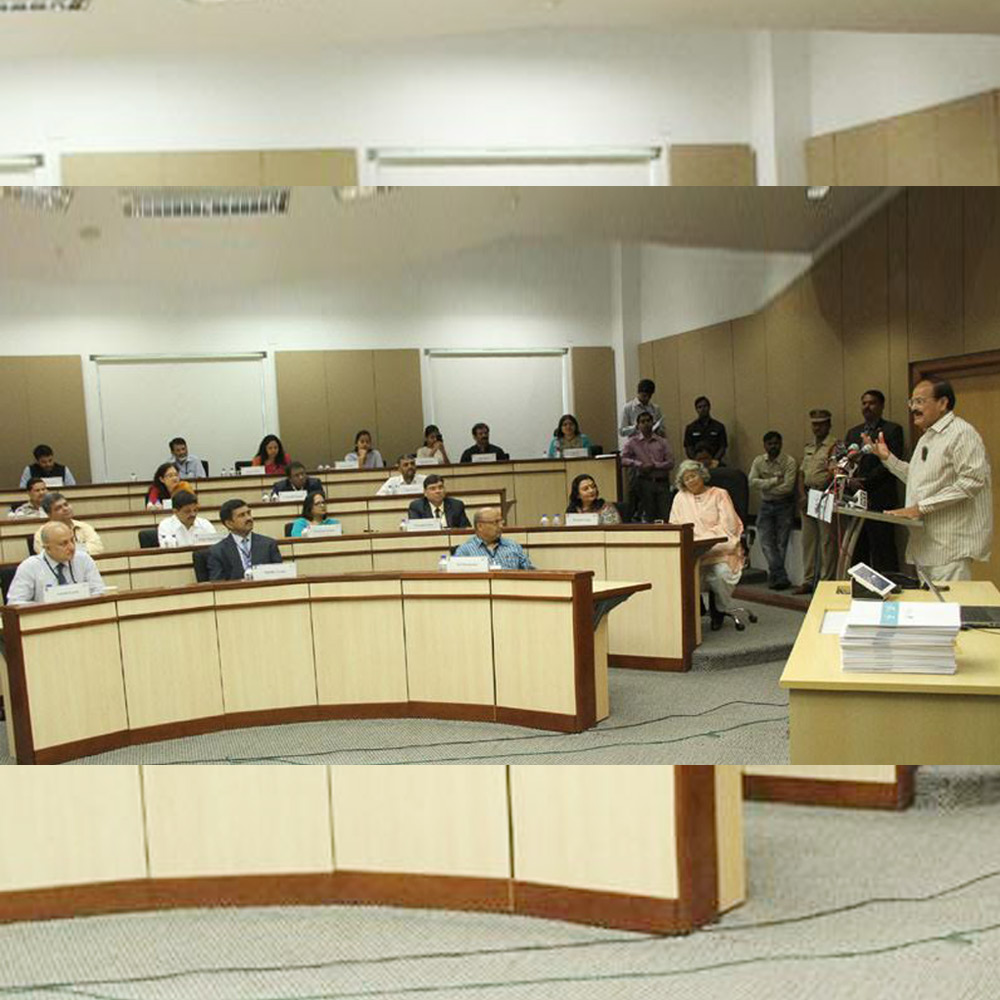
    Speaking at the valedictory function of Mid Career Training Programme for Senior Indian Information Service officers (IIS) at Indian School of Business, in Hyderabad today, Naidu said,“Today, we live in an age of instant communication, the images and tools of the media landscape influence our thought process on a continuous basis. The need to constantly re-invent our understanding and perception through an institutionalised skill upgradation program which includes a re-examination of our approach towards the communication process”, he stated.

    Naidu said that the government in the past two years had embarked on a programme of communication innovation – adopting methods, seeking spaces to ensure last mile connectivity to the people. “Our approach has attempted to weave different platforms, varied contents through a focussed 360 degree approach. While we have succeeded in adopting a new communication philosophy which incorporates the Citizens concerns, there are areas which still reflect chinks in the armour of government communication”, he said.

    He said the ministry had taken up the initiative of providing Information Service Officers skill upgradation through an institutionalised training policy. The objective is to plug the gaps in the Government’s communication approach in areas of content design, social marketing, branding, impact assessment and weaving technologies in the digital age. To bring about a change always creates a dissonance in the government process. He said that the two weeks training program is aimed to offer a fresh perspective, clarity on the nuances of communication management and gave tools and ideas to keep pace with the digital communication world to the IIS officers. He informed the officers that they would be going to the University of Berkeley for a further one week program training programme on the contemporary changes in the communication discourse.

    Naidu said recent advances in technology and communication space have completely overhauled the way the Government interacts with the citizens. This change being led by Social Media has ushered in a new era of Governance. it is absolutely necessary for constant upgradation of skills of officers in light of development of new technologies, he added.

    He said that in the last two years the present government has taken a lot of Citizen centric initiatives but communicating the benefits remains a challenge. Social and behaviour change communication is a critical factor in the success of Swachh Bharat Abhiyan which is a major flagship scheme of the government. “I am hopeful that the Media Strategy and Planning in the changing scenario of social advertising, a course module taught at ISB during the training of the officers, would benefit in defining the communication roadmap for the government social sector schemes and to ensure last mile reach”, he said.

    As the digital media continues to influence the communication and media landscape, social and digital media planning has to be an integral part of the government’s communication strategy. “I am sure the exposure to the officers about the best practises in digital media planning around various organisations across the world would have provided the required skillset and tools to address the challenges in the public domain”, he said.

    He added that the old mediums of communication have not become irrelevant. Radio still holds its relevance considering the mass outreach it has. Even the Government’s Mann ki baat Programme has become an excellent communication platform where the Prime Minister of our country not only directly communicates his views on diverse topics/ issues but also takes feedback from people through ‘myGov’ platform and Phone in services. In the current scenario, training in specific domains is incomplete without case studies and practical exposure. Case studies have proven to be an excellent way of practicing and applying new concepts. As such, they’re very useful tools in learning and implementation.

    The different phase wise training for the IIS Officers have been designed keeping in mind the broad objective of the Government’s Communications needs as well as changing communication and technology paradigm.

  • Communication is critical tool to ensure last mile connectivity: Naidu

    Communication is critical tool to ensure last mile connectivity: Naidu

    NEW DELHI: Information and Broadcasting Minister M Venkaiah Naidu said today that the Government had placed communication as a critical cog in the wheel of change and it had been woven into a policy matrix which aims at maximum governance, minimum government.

    Speaking at the valedictory function of Mid Career Training Programme for Senior Indian Information Service officers (IIS) at Indian School of Business, in Hyderabad today, Naidu said,“Today, we live in an age of instant communication, the images and tools of the media landscape influence our thought process on a continuous basis. The need to constantly re-invent our understanding and perception through an institutionalised skill upgradation program which includes a re-examination of our approach towards the communication process”, he stated.

    Naidu said that the government in the past two years had embarked on a programme of communication innovation – adopting methods, seeking spaces to ensure last mile connectivity to the people. “Our approach has attempted to weave different platforms, varied contents through a focussed 360 degree approach. While we have succeeded in adopting a new communication philosophy which incorporates the Citizens concerns, there are areas which still reflect chinks in the armour of government communication”, he said.

    He said the ministry had taken up the initiative of providing Information Service Officers skill upgradation through an institutionalised training policy. The objective is to plug the gaps in the Government’s communication approach in areas of content design, social marketing, branding, impact assessment and weaving technologies in the digital age. To bring about a change always creates a dissonance in the government process. He said that the two weeks training program is aimed to offer a fresh perspective, clarity on the nuances of communication management and gave tools and ideas to keep pace with the digital communication world to the IIS officers. He informed the officers that they would be going to the University of Berkeley for a further one week program training programme on the contemporary changes in the communication discourse.

    Naidu said recent advances in technology and communication space have completely overhauled the way the Government interacts with the citizens. This change being led by Social Media has ushered in a new era of Governance. it is absolutely necessary for constant upgradation of skills of officers in light of development of new technologies, he added.

    He said that in the last two years the present government has taken a lot of Citizen centric initiatives but communicating the benefits remains a challenge. Social and behaviour change communication is a critical factor in the success of Swachh Bharat Abhiyan which is a major flagship scheme of the government. “I am hopeful that the Media Strategy and Planning in the changing scenario of social advertising, a course module taught at ISB during the training of the officers, would benefit in defining the communication roadmap for the government social sector schemes and to ensure last mile reach”, he said.

    As the digital media continues to influence the communication and media landscape, social and digital media planning has to be an integral part of the government’s communication strategy. “I am sure the exposure to the officers about the best practises in digital media planning around various organisations across the world would have provided the required skillset and tools to address the challenges in the public domain”, he said.

    He added that the old mediums of communication have not become irrelevant. Radio still holds its relevance considering the mass outreach it has. Even the Government’s Mann ki baat Programme has become an excellent communication platform where the Prime Minister of our country not only directly communicates his views on diverse topics/ issues but also takes feedback from people through ‘myGov’ platform and Phone in services. In the current scenario, training in specific domains is incomplete without case studies and practical exposure. Case studies have proven to be an excellent way of practicing and applying new concepts. As such, they’re very useful tools in learning and implementation.

    The different phase wise training for the IIS Officers have been designed keeping in mind the broad objective of the Government’s Communications needs as well as changing communication and technology paradigm.

  • FIPB refuses to consider Turmeric Vision proposal for contravention of foreign equity of 80%

    FIPB refuses to consider Turmeric Vision proposal for contravention of foreign equity of 80%

    NEW DELHI: Even as it refused to consider a proposal by M/s Turmeric Vision Private Limited on the ground that this does not come within its domain, the Foreign Investments Promotion Board has deferred a proposal by M/s Quintillion Business Media Private Limited seeking approval for the issuance of equity shares to BLOOMBERG L.P.

    With regard to the Quintillion proposal, the Finance Ministry said “the investee company is proposed to be engaged inter alia in the uplinking and broadcasting of a business news television channel and operating the related digital content platform in India”.

    Turmeric Vision Private Limited had sought Post facto approval for contravention of the foreign equity of 80% as approved vide approval letter of even no. FC II 60(10)/91(2010) of 14 June 2010.

    FIPB also deferred a proposal by M/s Tikona Digital Networks Pvt Ltd for approval for the issuance of CCDs thereby increasing foreign equity to 76.73%; and a proposal by Netmagic Solutions Private Limited for increase in the shareholding of NTT Communications Corporation, Japan, in the company from 81.63% to 100%.

    The Board rejected a proposal by M/s Sistema ShyamTeleServices Limited seeking approval for the exit of the resident shareholders and transfer of their holdings to the existing foreign shareholders i.e. M/s Sistema Joint Stock Financial Corporation, Russia and Federal Agency for the State Property Management (Rosimushchestvo), thereby increasing the foreign shareholding in the company from 73.95% to 100% and consequently increasing the foreign shareholding in its downstream company i.e. Shyam Internet Services Limited to 100%.

  • FIPB refuses to consider Turmeric Vision proposal for contravention of foreign equity of 80%

    FIPB refuses to consider Turmeric Vision proposal for contravention of foreign equity of 80%

    NEW DELHI: Even as it refused to consider a proposal by M/s Turmeric Vision Private Limited on the ground that this does not come within its domain, the Foreign Investments Promotion Board has deferred a proposal by M/s Quintillion Business Media Private Limited seeking approval for the issuance of equity shares to BLOOMBERG L.P.

    With regard to the Quintillion proposal, the Finance Ministry said “the investee company is proposed to be engaged inter alia in the uplinking and broadcasting of a business news television channel and operating the related digital content platform in India”.

    Turmeric Vision Private Limited had sought Post facto approval for contravention of the foreign equity of 80% as approved vide approval letter of even no. FC II 60(10)/91(2010) of 14 June 2010.

    FIPB also deferred a proposal by M/s Tikona Digital Networks Pvt Ltd for approval for the issuance of CCDs thereby increasing foreign equity to 76.73%; and a proposal by Netmagic Solutions Private Limited for increase in the shareholding of NTT Communications Corporation, Japan, in the company from 81.63% to 100%.

    The Board rejected a proposal by M/s Sistema ShyamTeleServices Limited seeking approval for the exit of the resident shareholders and transfer of their holdings to the existing foreign shareholders i.e. M/s Sistema Joint Stock Financial Corporation, Russia and Federal Agency for the State Property Management (Rosimushchestvo), thereby increasing the foreign shareholding in the company from 73.95% to 100% and consequently increasing the foreign shareholding in its downstream company i.e. Shyam Internet Services Limited to 100%.