Category: I&B Ministry

  • Media told to exercise self-regulation and ensure balance

    Media told to exercise self-regulation and ensure balance

    NEW DELHI: Information & Broadcasting Minister M Venkaiah Naidu has stressed on the need for self-regulation and reasonable restrictions in the context of rapid expansion of different forms of media in the country and the attendant competition in reporting on various events to maintain public order and ensure integrity and sovereignty of the country.

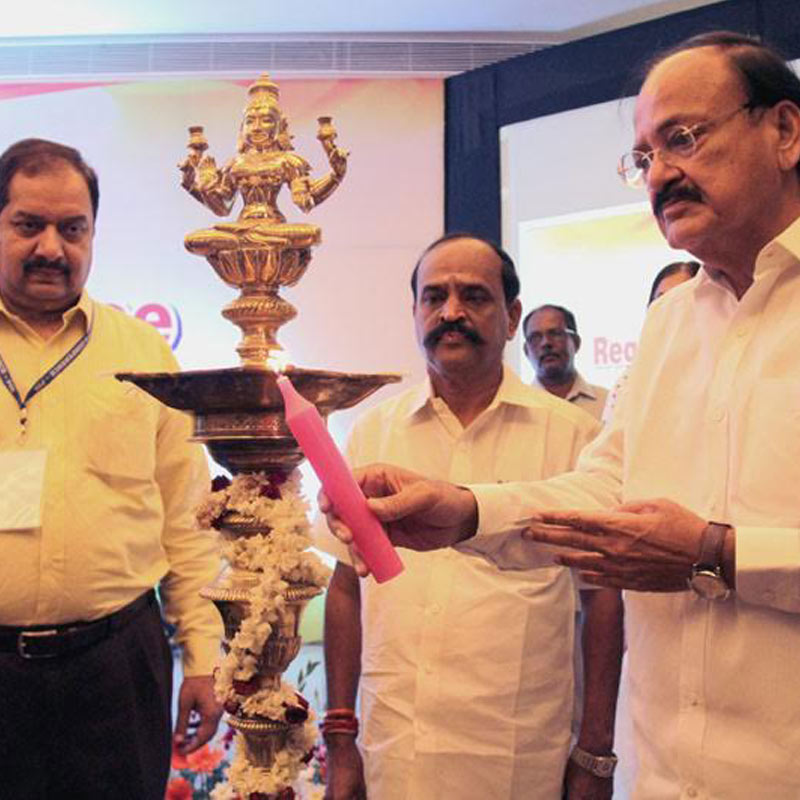
    Inaugurating a two day ‘Regional Editors Conference’ at Chennai today, Naidu said that there is a need to ensure balance between freedom of expression and the genuine need for reasonable restrictions to ensure that that there is no ‘divisive communication’ given the social, cultural and economic diversity in the country. About 100 media persons from the southern states and Lakshdweep are attending the conference.

    Self-regulation by media could be useful in this regard, he said. The growing compulsion of ‘instant communication’ should not lead media away from truthful reporting, the Minister stressed.

    He urged the media to effectively play out its role as a partner in the progress of the nation by empowering the citizens with required information that would give them a voice. Naidu noted that success of developmental programmes of central and state governments depend on mass mobilization of people in which the media has an important role to play. “Hence, the Government led by Prime Minister Narendra Modi has placed communication as a critical component in the Governance of the Nation”, he added.

    Noting that media in the country has been by and large progressive, Naidu reminded it of its first responsibility being towards the nation and the society. He noted that despite the emergence of new forms of media, print media has been reporting steady growth which is being driven by the growth of regional media. Naidu noted that regional media is uniquely placed in connecting the governments and the people given their focus on regional and local issues and their proximity to the people.

    He expressed concern over politicization of public discourse on issues that have a bearing on social cohesion and national unity and integrity. He said that “Human rights are meant for human being and not for terrorists. One should not identify those imprisoned by their caste or religion. Illegal detention is not correct. One can seek fast track adjudication but not on the basis of caste or religion. Media should guard itself while reporting on such demands and events”.

    Tamil Nadu Information & Publicity Minister Kadambur Raju referred to the developmental initiatives of the State Government, the efforts being made to create an enabling environment for effective functioning of the media and the positive role being played by the media.

    The two day Regional Editors conference organized by the Press Information Bureau is aimed at sharing with the senior journalists of the southern States and Union Territories, the perspectives of and performance under new initiatives of the Government of India in sectors pertaining to Urban Development, Information Technology, Coastal security, Commerce and Industry and Shipping and Highways Development.
  • Media told to exercise self-regulation and ensure balance

    Media told to exercise self-regulation and ensure balance

    NEW DELHI: Information & Broadcasting Minister M Venkaiah Naidu has stressed on the need for self-regulation and reasonable restrictions in the context of rapid expansion of different forms of media in the country and the attendant competition in reporting on various events to maintain public order and ensure integrity and sovereignty of the country.

    Inaugurating a two day ‘Regional Editors Conference’ at Chennai today, Naidu said that there is a need to ensure balance between freedom of expression and the genuine need for reasonable restrictions to ensure that that there is no ‘divisive communication’ given the social, cultural and economic diversity in the country. About 100 media persons from the southern states and Lakshdweep are attending the conference.

    Self-regulation by media could be useful in this regard, he said. The growing compulsion of ‘instant communication’ should not lead media away from truthful reporting, the Minister stressed.

    He urged the media to effectively play out its role as a partner in the progress of the nation by empowering the citizens with required information that would give them a voice. Naidu noted that success of developmental programmes of central and state governments depend on mass mobilization of people in which the media has an important role to play. “Hence, the Government led by Prime Minister Narendra Modi has placed communication as a critical component in the Governance of the Nation”, he added.

    Noting that media in the country has been by and large progressive, Naidu reminded it of its first responsibility being towards the nation and the society. He noted that despite the emergence of new forms of media, print media has been reporting steady growth which is being driven by the growth of regional media. Naidu noted that regional media is uniquely placed in connecting the governments and the people given their focus on regional and local issues and their proximity to the people.

    He expressed concern over politicization of public discourse on issues that have a bearing on social cohesion and national unity and integrity. He said that “Human rights are meant for human being and not for terrorists. One should not identify those imprisoned by their caste or religion. Illegal detention is not correct. One can seek fast track adjudication but not on the basis of caste or religion. Media should guard itself while reporting on such demands and events”.

    Tamil Nadu Information & Publicity Minister Kadambur Raju referred to the developmental initiatives of the State Government, the efforts being made to create an enabling environment for effective functioning of the media and the positive role being played by the media.

    The two day Regional Editors conference organized by the Press Information Bureau is aimed at sharing with the senior journalists of the southern States and Union Territories, the perspectives of and performance under new initiatives of the Government of India in sectors pertaining to Urban Development, Information Technology, Coastal security, Commerce and Industry and Shipping and Highways Development.
  • DAS Phase IV: IBF asked to up campaign in addition to MIB ads

    DAS Phase IV: IBF asked to up campaign in addition to MIB ads

    NEW DELHI: Digitisation of Indian TV homes, thought to be the panacea for many ills afflicting the broadcasting and cable eco-system, may have slowed down in recent times, but the government is earnest in adhering to deadlines and has sought active involvement of industry bodies like the IBF and other stakeholders in pushing digitisation in laggard States through aggressive consumer education.

    At a meeting of the Task Force on Digital Addressable System (DAS) here yesterday, Ministry of Information and Broadcasting (MIB) conveyed to all concerned that deadlines and goals posts would not be moved, even while it requested the Indian broadcasting Foundation (IBF) to be more pro-active in educating consumers and stakeholders about digitisation.

    Reports submitted by the various States on the progress with regard to the implementation of DAS in Phase IV showed that Rajasthan, Bihar and Jharkhand were the three most backward states as far as digitisation go.

    The DAS Task Force meeting, held under the chairmanship of new MIB Additional Secretary Jayashree Mukherjee, was told by representative from Uttar Pradesh that cable operators in some districts had complained that digital signals were not available. MIB sought details so that the issue could be examined and resolved.

    Representatives of most other States present at the meeting reported satisfactory progress and claimed they were on track.

    The meeting, which was also addressed by MIB Advisor (DAS) Yogendra Pal and Joint Secretary (Broadcasting) Sanjay Murthy, was apprised by representatives of broadcasters that they had stepped up publicity to create awareness about DAS in the Phase IV areas.

    Phase IV areas, needing approximately 75 million set-top boxes (STBs) as per industry estimates, mostly comprise rural India’s smaller hamlets and towns where selling the idea of digitisation and getting a STB at home itself is considered a challenging task by LCOs, MSOs and other stakeholders.

    Keeping this in mind, IBF was asked by the MIB to shoot off more publicity campaigns in addition to those given by the Ministry so that outreach initiatives could be stepped up further to reach the targeted segments.
    Joint-secretary Murthy apprised those present at the meeting that court cases related to DAS were coming up for hearing before the Delhi High Court early September 2016 and expressed the hope that the court would give a positive decision on the matter quickly.

    Meanwhile, advisor Pal asked MSOs to ensure that inter-connect agreements are signed with the broadcasters as MIB and the Telecom Regulatory Authority of India (TRAI) had reiterated. The Telecom Disputes Settlement and Appellate Tribunal (TDSAT) too had held that no signals could be supplied until proper inter-connect agreements were in place.

    The MSOs were asked to approach TRAI if they were facing any difficulty in arriving at agreements with broadcasters and LCOs.
    Mukherjee and Pal reiterated that there was no question of putting off the deadline of 31 December 2015 for Phase III as far as the government was concerned.

    The government reiterated that digitization of cable TV systems in the entire country would be — and should be — completed by 31 December 2016.

  • DAS Phase IV: IBF asked to up campaign in addition to MIB ads

    DAS Phase IV: IBF asked to up campaign in addition to MIB ads

    NEW DELHI: Digitisation of Indian TV homes, thought to be the panacea for many ills afflicting the broadcasting and cable eco-system, may have slowed down in recent times, but the government is earnest in adhering to deadlines and has sought active involvement of industry bodies like the IBF and other stakeholders in pushing digitisation in laggard States through aggressive consumer education.

    At a meeting of the Task Force on Digital Addressable System (DAS) here yesterday, Ministry of Information and Broadcasting (MIB) conveyed to all concerned that deadlines and goals posts would not be moved, even while it requested the Indian broadcasting Foundation (IBF) to be more pro-active in educating consumers and stakeholders about digitisation.

    Reports submitted by the various States on the progress with regard to the implementation of DAS in Phase IV showed that Rajasthan, Bihar and Jharkhand were the three most backward states as far as digitisation go.

    The DAS Task Force meeting, held under the chairmanship of new MIB Additional Secretary Jayashree Mukherjee, was told by representative from Uttar Pradesh that cable operators in some districts had complained that digital signals were not available. MIB sought details so that the issue could be examined and resolved.

    Representatives of most other States present at the meeting reported satisfactory progress and claimed they were on track.

    The meeting, which was also addressed by MIB Advisor (DAS) Yogendra Pal and Joint Secretary (Broadcasting) Sanjay Murthy, was apprised by representatives of broadcasters that they had stepped up publicity to create awareness about DAS in the Phase IV areas.

    Phase IV areas, needing approximately 75 million set-top boxes (STBs) as per industry estimates, mostly comprise rural India’s smaller hamlets and towns where selling the idea of digitisation and getting a STB at home itself is considered a challenging task by LCOs, MSOs and other stakeholders.

    Keeping this in mind, IBF was asked by the MIB to shoot off more publicity campaigns in addition to those given by the Ministry so that outreach initiatives could be stepped up further to reach the targeted segments.
    Joint-secretary Murthy apprised those present at the meeting that court cases related to DAS were coming up for hearing before the Delhi High Court early September 2016 and expressed the hope that the court would give a positive decision on the matter quickly.

    Meanwhile, advisor Pal asked MSOs to ensure that inter-connect agreements are signed with the broadcasters as MIB and the Telecom Regulatory Authority of India (TRAI) had reiterated. The Telecom Disputes Settlement and Appellate Tribunal (TDSAT) too had held that no signals could be supplied until proper inter-connect agreements were in place.

    The MSOs were asked to approach TRAI if they were facing any difficulty in arriving at agreements with broadcasters and LCOs.
    Mukherjee and Pal reiterated that there was no question of putting off the deadline of 31 December 2015 for Phase III as far as the government was concerned.

    The government reiterated that digitization of cable TV systems in the entire country would be — and should be — completed by 31 December 2016.

  • K. Sanjay Murthy new MIB jt secy broadcasting

    K. Sanjay Murthy new MIB jt secy broadcasting

    NEW DELHI: There’s change at the top at India’s ministry of information & broadcasting (MIB) in Shastri Bhawan. Joint secretary (films) K. Sanjay Murthy – who was holding additional charge of the broadcasting section along with another joint secretary Mihir Kumar Singh – was officially given complete charge of broadcasting on 29 August. He has taken over the work that was being handled by R. Jaya.

    As joint secretary films and he had made his mark with the initiatives he had taken which had benefited the Indian film community.

    Additionally, director (films) Anshu Sinha has been promoted as joint secretary (films). Earlier reports were that she would be replacing R. Jaya in the broadcasting section.

    Finally, Jayashree Mukherjee – from the Maharashtra IAS cadre – who was appointed as additional secretary mid-July has moved into her Shastri Bhawan office 20 days ago. A mild spoken lady, she replaced special secretary JS Mathur who was promoted as secretary Panchayati Raj.

    Both Mukherjee and Murthy have been given charge during challenging times. The countdown for the fourth phase of DAS has begun with the sunset date being 31 December 2016. Additionally, even phase III is stuck in the analogue mode courtesy a flurry of cases which have been filed in various courts.

  • K. Sanjay Murthy new MIB jt secy broadcasting

    K. Sanjay Murthy new MIB jt secy broadcasting

    NEW DELHI: There’s change at the top at India’s ministry of information & broadcasting (MIB) in Shastri Bhawan. Joint secretary (films) K. Sanjay Murthy – who was holding additional charge of the broadcasting section along with another joint secretary Mihir Kumar Singh – was officially given complete charge of broadcasting on 29 August. He has taken over the work that was being handled by R. Jaya.

    As joint secretary films and he had made his mark with the initiatives he had taken which had benefited the Indian film community.

    Additionally, director (films) Anshu Sinha has been promoted as joint secretary (films). Earlier reports were that she would be replacing R. Jaya in the broadcasting section.

    Finally, Jayashree Mukherjee – from the Maharashtra IAS cadre – who was appointed as additional secretary mid-July has moved into her Shastri Bhawan office 20 days ago. A mild spoken lady, she replaced special secretary JS Mathur who was promoted as secretary Panchayati Raj.

    Both Mukherjee and Murthy have been given charge during challenging times. The countdown for the fourth phase of DAS has begun with the sunset date being 31 December 2016. Additionally, even phase III is stuck in the analogue mode courtesy a flurry of cases which have been filed in various courts.

  • IIS review aimed at strengthening cadre

    IIS review aimed at strengthening cadre

    NEW DELHI: The Government has decided to undertake a cadre restructuring of the Indian Information Service (IIS) Group ‘A’ with an aim of better functioning of media and communication arms of government.

    This decision was taken at a meeting of the Union Cabinet chaired by the Prime Minister Narendra Modi today.

    The restructuring will involve addition of two posts at apex level, five at Higher Administrative Grade and 19 posts at Senior Administrative Grade level with matching reduction at other levels.

    The restructuring will address the problem of existing stagnation in the IIS Cadre and will improve the career prospects of IIS officers.

    The announcement after the cabinet meeting said the Cadre review exercise will result in better functioning of media and communication arms of the government.

    The Cadre review comes in the backdrop of ongoing efforts to expand the outreach of pro-people policies of the government and the need to disseminate the information of such measures which have grown manifold in the recent years.

  • IIS review aimed at strengthening cadre

    IIS review aimed at strengthening cadre

    NEW DELHI: The Government has decided to undertake a cadre restructuring of the Indian Information Service (IIS) Group ‘A’ with an aim of better functioning of media and communication arms of government.

    This decision was taken at a meeting of the Union Cabinet chaired by the Prime Minister Narendra Modi today.

    The restructuring will involve addition of two posts at apex level, five at Higher Administrative Grade and 19 posts at Senior Administrative Grade level with matching reduction at other levels.

    The restructuring will address the problem of existing stagnation in the IIS Cadre and will improve the career prospects of IIS officers.

    The announcement after the cabinet meeting said the Cadre review exercise will result in better functioning of media and communication arms of the government.

    The Cadre review comes in the backdrop of ongoing efforts to expand the outreach of pro-people policies of the government and the need to disseminate the information of such measures which have grown manifold in the recent years.

  • Tikona Digital permitted to bring in over Rs 250 crore as foreign direct investment

    Tikona Digital permitted to bring in over Rs 250 crore as foreign direct investment

    NEW DELHI: The Finance Ministry has cleared a proposal of M/s Tikona Digital Networks Pvt Ltd for the issuance of CCDs thereby increasing foreign equity to 76.73%.

    This will involve Foreign Direct Investment of Rs 267 crore, according to the approval by the Foreign Investments Promotion Board in its 238th meeting.

    The Ministry approved the proposal by Haymarket SAC Publishing (India) Private Limited for the take over the publication of the specialty magazine “Print Week” from Haymarket Media (India) Private Limited, its sister concern as it does not involve any foreign direct investment.

    The Ministry deferred decision on a proposal by Quintillion Business Media Private Limited seeking approval for the issuance of equity shares to BLOOMBERG L.P. The investee company is proposed to be engaged inter alia in the uplinking and broadcasting of a business news television channel and operating related digital content platform in India.

    It also deferred a proposal by The Financial Times (India) Private Limited for transfer of 99.99% of The Financial Times (India) Private Limited to Falstaff Singapore Pte Ltd, currently held by Pearson, Singapore, for an aggregate consideration of SGD 1; transfer of one share of The Financial Times (India) Private Limited to Falstaff Singapore Pte Ltd, currently held by Pearson, Amsterdam; and transfer of entire shareholding of Falstaff Singapore Pte Ltd to Nikkei Inc, currently held by Pearson, Amsterdam.

    The Ministry deferred a proposal by M/s Idea Cellular Infrastructure Services Limited (ICISL) to take on record the increase of foreign investment in ICISL beyond 50% and allow foreign investment in ICISL up to 67.5%.

    The Ministry noted that ICISL is a wholly owned subsidiary of IDEA which has become a foreign owned company with more that 50% foreign investment. Accordingly, ICISL is also deemed to have foreign investment in excess of 50% as a mirror image of its parent company.

    A proposal by M/s BT Global Communications (Mauritius) Limited to acquire remaining 26% equity and preference share capital of M/s BT Telecom India Private Limited (Investee Company) from M/s Jubilant Stock Holding Private Limited, which will result in increasing its shareholding in the investee company from 74% to 100% was also deferred.

  • Tikona Digital permitted to bring in over Rs 250 crore as foreign direct investment

    Tikona Digital permitted to bring in over Rs 250 crore as foreign direct investment

    NEW DELHI: The Finance Ministry has cleared a proposal of M/s Tikona Digital Networks Pvt Ltd for the issuance of CCDs thereby increasing foreign equity to 76.73%.

    This will involve Foreign Direct Investment of Rs 267 crore, according to the approval by the Foreign Investments Promotion Board in its 238th meeting.

    The Ministry approved the proposal by Haymarket SAC Publishing (India) Private Limited for the take over the publication of the specialty magazine “Print Week” from Haymarket Media (India) Private Limited, its sister concern as it does not involve any foreign direct investment.

    The Ministry deferred decision on a proposal by Quintillion Business Media Private Limited seeking approval for the issuance of equity shares to BLOOMBERG L.P. The investee company is proposed to be engaged inter alia in the uplinking and broadcasting of a business news television channel and operating related digital content platform in India.

    It also deferred a proposal by The Financial Times (India) Private Limited for transfer of 99.99% of The Financial Times (India) Private Limited to Falstaff Singapore Pte Ltd, currently held by Pearson, Singapore, for an aggregate consideration of SGD 1; transfer of one share of The Financial Times (India) Private Limited to Falstaff Singapore Pte Ltd, currently held by Pearson, Amsterdam; and transfer of entire shareholding of Falstaff Singapore Pte Ltd to Nikkei Inc, currently held by Pearson, Amsterdam.

    The Ministry deferred a proposal by M/s Idea Cellular Infrastructure Services Limited (ICISL) to take on record the increase of foreign investment in ICISL beyond 50% and allow foreign investment in ICISL up to 67.5%.

    The Ministry noted that ICISL is a wholly owned subsidiary of IDEA which has become a foreign owned company with more that 50% foreign investment. Accordingly, ICISL is also deemed to have foreign investment in excess of 50% as a mirror image of its parent company.

    A proposal by M/s BT Global Communications (Mauritius) Limited to acquire remaining 26% equity and preference share capital of M/s BT Telecom India Private Limited (Investee Company) from M/s Jubilant Stock Holding Private Limited, which will result in increasing its shareholding in the investee company from 74% to 100% was also deferred.