Category: I&B Ministry

  • Agriculture news on private TV channels recommended

    Agriculture news on private TV channels recommended

    NEW DELHI: Private television channels should devote some of their time for news on development of agriculture and farmers, Information and Broadcasting Minister M Venkaiah Naidu has said.

    He pointed out that Doordarshan’s Kisan channel was providing credible information to farmers and updating their knowledge about agriculture. He said that it would be useful if private TV channels reduced some of their time from news to focus on agriculture.

    Naidu was in Hyderabad over the weekend to give away anniversary awards of Rytu Nestam journal for progressive farmers.

    Local journalists who had contributed to development of agriculture were also honoured for their contribution.

  • Agriculture news on private TV channels recommended

    Agriculture news on private TV channels recommended

    NEW DELHI: Private television channels should devote some of their time for news on development of agriculture and farmers, Information and Broadcasting Minister M Venkaiah Naidu has said.

    He pointed out that Doordarshan’s Kisan channel was providing credible information to farmers and updating their knowledge about agriculture. He said that it would be useful if private TV channels reduced some of their time from news to focus on agriculture.

    Naidu was in Hyderabad over the weekend to give away anniversary awards of Rytu Nestam journal for progressive farmers.

    Local journalists who had contributed to development of agriculture were also honoured for their contribution.

  • Giving information effectively a major challenge: Naidu

    Giving information effectively a major challenge: Naidu

    NEW DELHI: Information & Broadcasting Minister M Venkaiah Naidu has said information is “ammunition to fight social evils such as corruption, poverty, illiteracy and terrorism”.

    To ensure last mile reach and keep pace with the changing communication paradigm, the government communication needs to incorporate innovative and out of the box ideas. Innovative ideas such as Prime Minister Narendra Modi’s Mann ki Baat and the MoU signed with Amar Chitra Katha for comic books on Swachh Bharat Abhiyaan influenced the masses at large.

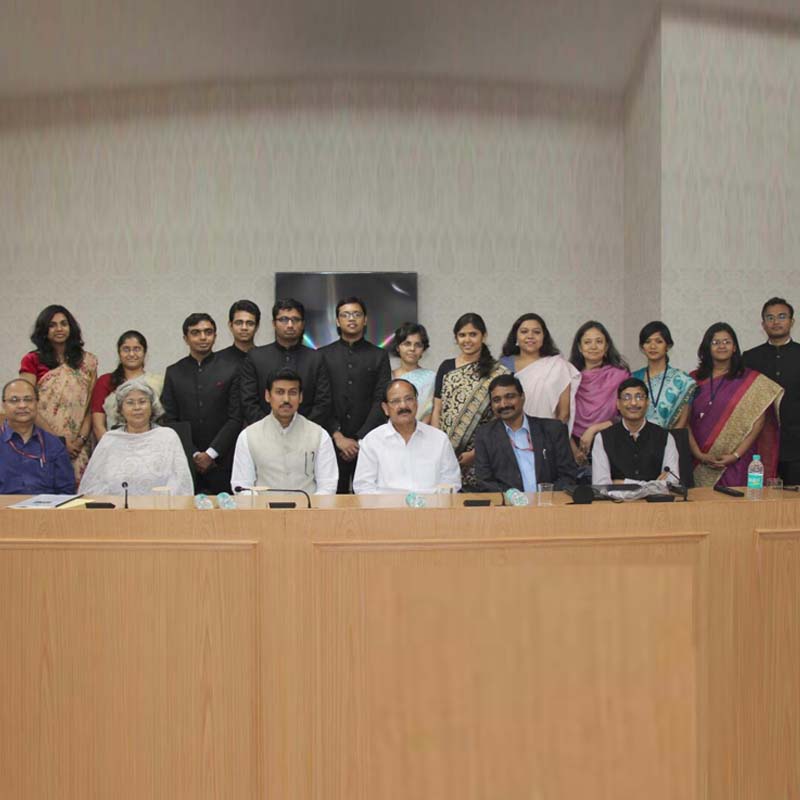
    Naidu was addressing the Indian Information Service Officer Trainees of 2015 batch currently undergoing at training at Indian Institute of Mass Communications (IIMC) here, who had called on President Pranab Mukherjee yesterday. Minister of State for I and B Rajyavardhan Rathore and senior officers of the Ministry were also present on the occasion.

    Naidu said to effectively design communication strategy for various government programmes and flagship schemes was a major challenge for government communication managers. He added that communicating success stories about developmental programs like Swachh Bharat Abhiyaan (Clean India campaign) would inspire and motivate citizens and would engage them as stakeholders in the governance process.

    The Minister emphasized on the need for India Information Service (IIS) officers to learn and adapt to the new technologies, tools and techniques to enhance reach of the government; especially in the age of social media.

    “The social media perspective has changed the way we communicate and govern today, which provided challenges and opportunities for the officers to enhance government outreach,” Naidu said.

    In his interaction, the Minister emphasized on the need to be progressive in thought and take pride in the role and responsibility assigned to each officer. He specifically mentioned the initiative taken by the Ministry to institutionalize capacity building through appropriate training programs at different career levels. Naidu also assured the officer-trainees that the quality aspect associated with capacity building issues in the training programs would be improved to meet the communication challenges.

    Rathore advised the officer trainees that there was a need to continuously learn and add value to their skills as well as the organization where they would be working.

    IIS Officer Trainees also shared their experiences of the past nine months of training with the two Ministers.

  • Giving information effectively a major challenge: Naidu

    Giving information effectively a major challenge: Naidu

    NEW DELHI: Information & Broadcasting Minister M Venkaiah Naidu has said information is “ammunition to fight social evils such as corruption, poverty, illiteracy and terrorism”.

    To ensure last mile reach and keep pace with the changing communication paradigm, the government communication needs to incorporate innovative and out of the box ideas. Innovative ideas such as Prime Minister Narendra Modi’s Mann ki Baat and the MoU signed with Amar Chitra Katha for comic books on Swachh Bharat Abhiyaan influenced the masses at large.

    Naidu was addressing the Indian Information Service Officer Trainees of 2015 batch currently undergoing at training at Indian Institute of Mass Communications (IIMC) here, who had called on President Pranab Mukherjee yesterday. Minister of State for I and B Rajyavardhan Rathore and senior officers of the Ministry were also present on the occasion.

    Naidu said to effectively design communication strategy for various government programmes and flagship schemes was a major challenge for government communication managers. He added that communicating success stories about developmental programs like Swachh Bharat Abhiyaan (Clean India campaign) would inspire and motivate citizens and would engage them as stakeholders in the governance process.

    The Minister emphasized on the need for India Information Service (IIS) officers to learn and adapt to the new technologies, tools and techniques to enhance reach of the government; especially in the age of social media.

    “The social media perspective has changed the way we communicate and govern today, which provided challenges and opportunities for the officers to enhance government outreach,” Naidu said.

    In his interaction, the Minister emphasized on the need to be progressive in thought and take pride in the role and responsibility assigned to each officer. He specifically mentioned the initiative taken by the Ministry to institutionalize capacity building through appropriate training programs at different career levels. Naidu also assured the officer-trainees that the quality aspect associated with capacity building issues in the training programs would be improved to meet the communication challenges.

    Rathore advised the officer trainees that there was a need to continuously learn and add value to their skills as well as the organization where they would be working.

    IIS Officer Trainees also shared their experiences of the past nine months of training with the two Ministers.

  • India stresses need for Indo-African ICT cooperation

    India stresses need for Indo-African ICT cooperation

    NEW DELHI: Sharing expertise and growing businesses. India has a vast experience in setting up of ICT infrastructure and the experience can be leveraged by the government as well as private sectors in African nations, Communications Minister Manoj Sinha said.

    The minister was inaugurating the 2nd edition of the Indo-Africa ICT Expo at KICC, Nairobi, from 1 to 3 September, with the help of India’s Telecommunication Equipment and Services Export promotion Council (TEPC) in conjunction with NASSCOM, and ICT Authority of Kenya last weekend.

    He said: “To explore synergies on the ground, I have with me about 100 ICT companies from India participating in this event that will facilitate growth of business opportunities in our nations.” This event is supported by India and Kenya. Kenya ICT Minister Joe Mucheru was also present on the occasion.

    The event, aimed at enhancing cooperation between African countries and India in the ICT sector, also saw attendance of various senior government officials from neighbouring countries such as South Sudan ICT & Postal Services Deputy Minister Akol Paul Kordit with a big delegation, Uganda ICT Principal Secretary Jimmy Pat Saamanya, and Malawi ICT and Civic Education Secretary Justin Adack K Saidi. Business leaders from India, Kenya, Tanzania, Uganda, the UK, Israel, South Sudan, Rwanda, Mauritius and Commonwealth Telecom Organization were also present.

    Sinha stressed that India had conditions similar to those in the African nations. The country also had special ties with East African countries. Together, India saw many opportunities for cooperation and transfer of expertise in the areas of setting up ICT infrastructure, solutions and application development, skill development and innovation that could be leveraged by the governments as well as the private sector in the continent. India was keen to find ways to increase business between India and Africa in ICT sector, he said.

    Kenya minister Mucheru called upon the local businesses to tap into the huge reservoir of knowledge their Indian counterparts had and develop technology-based solutions for Kenyan, African and the global market. He also noted that there were numerous opportunities for partnerships between both, public and private, sectors of Kenya and India. He said India and Africa continued to witness exponential growth in the telecommunication and information technology segments. It is thus essential to evaluate the areas where the two regions could cooperate so as to further enhance lives of the people through technology.

    The second edition of the expo-cum-conference saw over ICT companies participating from India showcasing their latest products and solutions to explore synergies on the ground.

    A key highlight of the event on 1 September 2016 was the ICT Ministers Round Table Meeting on ‘Digital Dreams of the Developing Nations’, wherein ICT Ministers/Secretaries leading high-level government and business delegations from India, Kenya, South Sudan, Uganda and Malawi participated. Government-to-Government bilateral talks were also held between the Indian Government officials and government delegations from Kenya, Uganda, Malawi and South Sudan.

    A NASSCOM statement said, “Africa is turning into one of the fastest growing regions in the world, offering huge domestic market potential and growing economically at more than 5% per year. This event only reiterates the fact that India and Africa are well on their way to collaborate and become the next global leaders in technology. Africa is turning into one of the fastest growing regions in the world, offering huge domestic market potential and growing economically at more than 5% per year. During the last two years, the focus has been on the SME sector engagement and a number of the participating delegate companies have achieved their biggest success in Africa.”

    The sessions at the conference were aligned with theme “Digital Dreams of Nation”. The event was attended by over 2500 visitors and over 300 conference delegates with a world-class speaker panel. The expo was designed to bring together thought leaders across the entire ICT value chain to discuss solutions to regulatory and business issues.

    The event also had more than 400 Business-to-Business meetings between Indian and African countries. Over 10 MoUs worth Rs. 40 crore business were signed. In addition, there was a demand for setting up of training centre and technology transfer.

    TEPC is also organizing Buyer-Seller business meets in New Delhi where potential buyers from across the globe are invited to meet the telecom equipment and services suppliers of India to develop long-term business relations. The event for 2016 has been planned from 3 to 5 October 2016 in New Delhi and Bangalore. Sinha invited business delegations from participating countries to join the event in India.

  • India stresses need for Indo-African ICT cooperation

    India stresses need for Indo-African ICT cooperation

    NEW DELHI: Sharing expertise and growing businesses. India has a vast experience in setting up of ICT infrastructure and the experience can be leveraged by the government as well as private sectors in African nations, Communications Minister Manoj Sinha said.

    The minister was inaugurating the 2nd edition of the Indo-Africa ICT Expo at KICC, Nairobi, from 1 to 3 September, with the help of India’s Telecommunication Equipment and Services Export promotion Council (TEPC) in conjunction with NASSCOM, and ICT Authority of Kenya last weekend.

    He said: “To explore synergies on the ground, I have with me about 100 ICT companies from India participating in this event that will facilitate growth of business opportunities in our nations.” This event is supported by India and Kenya. Kenya ICT Minister Joe Mucheru was also present on the occasion.

    The event, aimed at enhancing cooperation between African countries and India in the ICT sector, also saw attendance of various senior government officials from neighbouring countries such as South Sudan ICT & Postal Services Deputy Minister Akol Paul Kordit with a big delegation, Uganda ICT Principal Secretary Jimmy Pat Saamanya, and Malawi ICT and Civic Education Secretary Justin Adack K Saidi. Business leaders from India, Kenya, Tanzania, Uganda, the UK, Israel, South Sudan, Rwanda, Mauritius and Commonwealth Telecom Organization were also present.

    Sinha stressed that India had conditions similar to those in the African nations. The country also had special ties with East African countries. Together, India saw many opportunities for cooperation and transfer of expertise in the areas of setting up ICT infrastructure, solutions and application development, skill development and innovation that could be leveraged by the governments as well as the private sector in the continent. India was keen to find ways to increase business between India and Africa in ICT sector, he said.

    Kenya minister Mucheru called upon the local businesses to tap into the huge reservoir of knowledge their Indian counterparts had and develop technology-based solutions for Kenyan, African and the global market. He also noted that there were numerous opportunities for partnerships between both, public and private, sectors of Kenya and India. He said India and Africa continued to witness exponential growth in the telecommunication and information technology segments. It is thus essential to evaluate the areas where the two regions could cooperate so as to further enhance lives of the people through technology.

    The second edition of the expo-cum-conference saw over ICT companies participating from India showcasing their latest products and solutions to explore synergies on the ground.

    A key highlight of the event on 1 September 2016 was the ICT Ministers Round Table Meeting on ‘Digital Dreams of the Developing Nations’, wherein ICT Ministers/Secretaries leading high-level government and business delegations from India, Kenya, South Sudan, Uganda and Malawi participated. Government-to-Government bilateral talks were also held between the Indian Government officials and government delegations from Kenya, Uganda, Malawi and South Sudan.

    A NASSCOM statement said, “Africa is turning into one of the fastest growing regions in the world, offering huge domestic market potential and growing economically at more than 5% per year. This event only reiterates the fact that India and Africa are well on their way to collaborate and become the next global leaders in technology. Africa is turning into one of the fastest growing regions in the world, offering huge domestic market potential and growing economically at more than 5% per year. During the last two years, the focus has been on the SME sector engagement and a number of the participating delegate companies have achieved their biggest success in Africa.”

    The sessions at the conference were aligned with theme “Digital Dreams of Nation”. The event was attended by over 2500 visitors and over 300 conference delegates with a world-class speaker panel. The expo was designed to bring together thought leaders across the entire ICT value chain to discuss solutions to regulatory and business issues.

    The event also had more than 400 Business-to-Business meetings between Indian and African countries. Over 10 MoUs worth Rs. 40 crore business were signed. In addition, there was a demand for setting up of training centre and technology transfer.

    TEPC is also organizing Buyer-Seller business meets in New Delhi where potential buyers from across the globe are invited to meet the telecom equipment and services suppliers of India to develop long-term business relations. The event for 2016 has been planned from 3 to 5 October 2016 in New Delhi and Bangalore. Sinha invited business delegations from participating countries to join the event in India.

  • Skill of officers depends on effective communication of information: Mukherjee

    Skill of officers depends on effective communication of information: Mukherjee

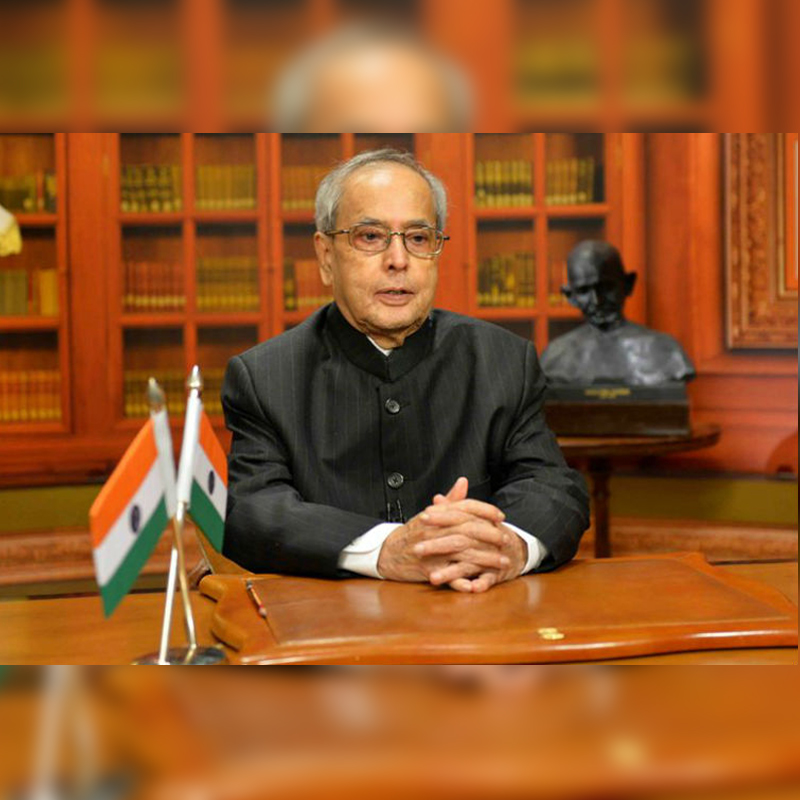
    NEW DELHI: President Pranab Mukherjee today advised Indian Information Service officers that “the skill of the officers would depend on how effectively they are able to communicate information.”

    He said the IIS provides an opportunity to its officers to communicate proper information in the correct perspective with various stakeholders.

    “Knowledge is power and the basis of knowledge is information”, he added.

    Mukherjee was speaking to a group of probationers of IIS (2015 Batch), Indian Trade Service (2015 Batch) and Indian P&T Accounts and Finance Service (2015 Batch) who called on him at Rashtrapati Bhavan today.

    Speaking on the occasion, the President congratulated the probationers on their success in the civil services exam which is regarded as one of the toughest competitive exams in the world. He said that the civil service has a long history and different services were created at different points of time to meet various exigencies.

    He told probationers that their decision to join the civil services will provide them ample opportunity to serve the country and bear responsibilities even at a young age. He wished the probationers all success in their future assignments.

  • Skill of officers depends on effective communication of information: Mukherjee

    Skill of officers depends on effective communication of information: Mukherjee

    NEW DELHI: President Pranab Mukherjee today advised Indian Information Service officers that “the skill of the officers would depend on how effectively they are able to communicate information.”

    He said the IIS provides an opportunity to its officers to communicate proper information in the correct perspective with various stakeholders.

    “Knowledge is power and the basis of knowledge is information”, he added.

    Mukherjee was speaking to a group of probationers of IIS (2015 Batch), Indian Trade Service (2015 Batch) and Indian P&T Accounts and Finance Service (2015 Batch) who called on him at Rashtrapati Bhavan today.

    Speaking on the occasion, the President congratulated the probationers on their success in the civil services exam which is regarded as one of the toughest competitive exams in the world. He said that the civil service has a long history and different services were created at different points of time to meet various exigencies.

    He told probationers that their decision to join the civil services will provide them ample opportunity to serve the country and bear responsibilities even at a young age. He wished the probationers all success in their future assignments.

  • Leveraging culture for greater understanding among BRICS nations

    Leveraging culture for greater understanding among BRICS nations

    NEW DELHI: The BRICS (Brazil, Russia, India, China and South Africa) should leverage the culture, filming techniques and the market of the member nations to increase greater understanding and foster people-to-people exchange.

    This was the common view of BRICS delegates at a press meet just before the BRICS Film Festival in the capital.

    Those present at the press conference included Mr Hugo Lorenzetti Neto (Brazil), Mr Kirill Razligov (Russia), Mr C. Senthil Rajan (India who is Director of Film Festivals), Mr Zhou Jiandong and Ms Monica Newton (South Africa).

    The discussions focused on the similarities and differences in the cinema of the five BRICS countries, while focussing on the exchange of cultural diversities and techniques used by the cinema of these nations.

    ‘Building Responsive, Inclusive & Collective Solutions’ (BRICS) is the aim of the merger of the five coutries, aimed at enhancing bilateral and friendly relations. In the BRICS Summit 2015 held in Russia, Prime Minister Narendra Modi introduced the BRICS Film Festival, an addition to the yearly summits that would connect masses through the exchange of culture and art.

    ”Films made in a country connect to at least one of the other nations. The movies for the festival have been specially selected to showcase culture, art and history of the countries they are made in.” said Neto.

    Razligov said: “Discussions made at the BRICS Film Festival will help us better understand the complexities and art of film making by the member nations. We all need to work in cooperation and create films together to bring people closer.”

    Speaking on the occasion, Rajan said, “The BRICS Film Festival will begin a new journey to witness the growth of the rich cinema of the five countries. This step will be leveraged as a bridge to take cinema making to a new level through the exchange of techniques, art and ideas. Furthermore, the festival will serve as an opportunity for the people to interact and learn the culture of the participating nations.”

    Highlighting the role of cinema in creating friendly relations, Jiandong said, “Indian films from the period of 1970 to 1980 were quite famous in China and today we have movies like Xuan Zang, where the actors of China and India have worked together to create a masterpiece. Cinema plays a key role in creating harmonious relations as the films speak universal language to the world.”

    “The BRICS Film Festival is the first of its kind, which will bring the masses together. This festival is an amazing canvas to exchange the art work of the five countries that has never been done before. For a young country like South Africa, the sphere of innovation and development in cinema is large, where we are learning from the member nations.” added Ms. Newton.

    The cultural diversity of the nations will also be portrayed through the Craft Fair organized at the festival, where the member countries will set up their stalls with souvenirs and products for sale. At this five-day bioscope of culture, art, films and food, one can explore exclusive cuisines from all the BRICS nations at the Food Court, arranged in the festival venue.

    Starting tomorrow, the film festival will have special meets with the cast and crew from the five nations, movie screenings and Film Panchayats, panel discussions with renowned personalities on the topics ranging from Cinema and Nation building, Women in BRICS Cinema, BRICS coproduction , Opportunities and Challenges, etc.

    Twenty films – four each from Brazil, Russia, India, China and South Africa – are to feature in the first government level BRICS Film Festival toi be held in here early next month.
    Malayalam movie Veeram will be the opening film for the festival being held from 2 to 6 September at Siri Fort Auditorium.

    They jury is headed by eminent Kannada filmmaker T S Nagabharana. Other members are producer and curator Francis Vogner do Reis from Brazil; Kirill Razlogov of Russia who has served as a special adviser for 11 years on film history and international affairs to the President of Goskino of the USS; Hou Keming of China who is a professor of the direction department of Beijing Film Academy and chairperson of the China Children’s Film Association and the president of China International Children’s Film Festival; and Ms. Xoliswa Sithole of South Africa who is founder and director, of Nayanaya Pictures and the founding member of Filmmakers against Racism.
  • Leveraging culture for greater understanding among BRICS nations

    Leveraging culture for greater understanding among BRICS nations

    NEW DELHI: The BRICS (Brazil, Russia, India, China and South Africa) should leverage the culture, filming techniques and the market of the member nations to increase greater understanding and foster people-to-people exchange.

    This was the common view of BRICS delegates at a press meet just before the BRICS Film Festival in the capital.

    Those present at the press conference included Mr Hugo Lorenzetti Neto (Brazil), Mr Kirill Razligov (Russia), Mr C. Senthil Rajan (India who is Director of Film Festivals), Mr Zhou Jiandong and Ms Monica Newton (South Africa).

    The discussions focused on the similarities and differences in the cinema of the five BRICS countries, while focussing on the exchange of cultural diversities and techniques used by the cinema of these nations.

    ‘Building Responsive, Inclusive & Collective Solutions’ (BRICS) is the aim of the merger of the five coutries, aimed at enhancing bilateral and friendly relations. In the BRICS Summit 2015 held in Russia, Prime Minister Narendra Modi introduced the BRICS Film Festival, an addition to the yearly summits that would connect masses through the exchange of culture and art.

    ”Films made in a country connect to at least one of the other nations. The movies for the festival have been specially selected to showcase culture, art and history of the countries they are made in.” said Neto.

    Razligov said: “Discussions made at the BRICS Film Festival will help us better understand the complexities and art of film making by the member nations. We all need to work in cooperation and create films together to bring people closer.”

    Speaking on the occasion, Rajan said, “The BRICS Film Festival will begin a new journey to witness the growth of the rich cinema of the five countries. This step will be leveraged as a bridge to take cinema making to a new level through the exchange of techniques, art and ideas. Furthermore, the festival will serve as an opportunity for the people to interact and learn the culture of the participating nations.”

    Highlighting the role of cinema in creating friendly relations, Jiandong said, “Indian films from the period of 1970 to 1980 were quite famous in China and today we have movies like Xuan Zang, where the actors of China and India have worked together to create a masterpiece. Cinema plays a key role in creating harmonious relations as the films speak universal language to the world.”

    “The BRICS Film Festival is the first of its kind, which will bring the masses together. This festival is an amazing canvas to exchange the art work of the five countries that has never been done before. For a young country like South Africa, the sphere of innovation and development in cinema is large, where we are learning from the member nations.” added Ms. Newton.

    The cultural diversity of the nations will also be portrayed through the Craft Fair organized at the festival, where the member countries will set up their stalls with souvenirs and products for sale. At this five-day bioscope of culture, art, films and food, one can explore exclusive cuisines from all the BRICS nations at the Food Court, arranged in the festival venue.

    Starting tomorrow, the film festival will have special meets with the cast and crew from the five nations, movie screenings and Film Panchayats, panel discussions with renowned personalities on the topics ranging from Cinema and Nation building, Women in BRICS Cinema, BRICS coproduction , Opportunities and Challenges, etc.

    Twenty films – four each from Brazil, Russia, India, China and South Africa – are to feature in the first government level BRICS Film Festival toi be held in here early next month.
    Malayalam movie Veeram will be the opening film for the festival being held from 2 to 6 September at Siri Fort Auditorium.

    They jury is headed by eminent Kannada filmmaker T S Nagabharana. Other members are producer and curator Francis Vogner do Reis from Brazil; Kirill Razlogov of Russia who has served as a special adviser for 11 years on film history and international affairs to the President of Goskino of the USS; Hou Keming of China who is a professor of the direction department of Beijing Film Academy and chairperson of the China Children’s Film Association and the president of China International Children’s Film Festival; and Ms. Xoliswa Sithole of South Africa who is founder and director, of Nayanaya Pictures and the founding member of Filmmakers against Racism.