Category: I&B Ministry

  • Prasar Bharati lacks content & marketing; open to tie-ups: MIB Minister

    Prasar Bharati lacks content & marketing; open to tie-ups: MIB Minister

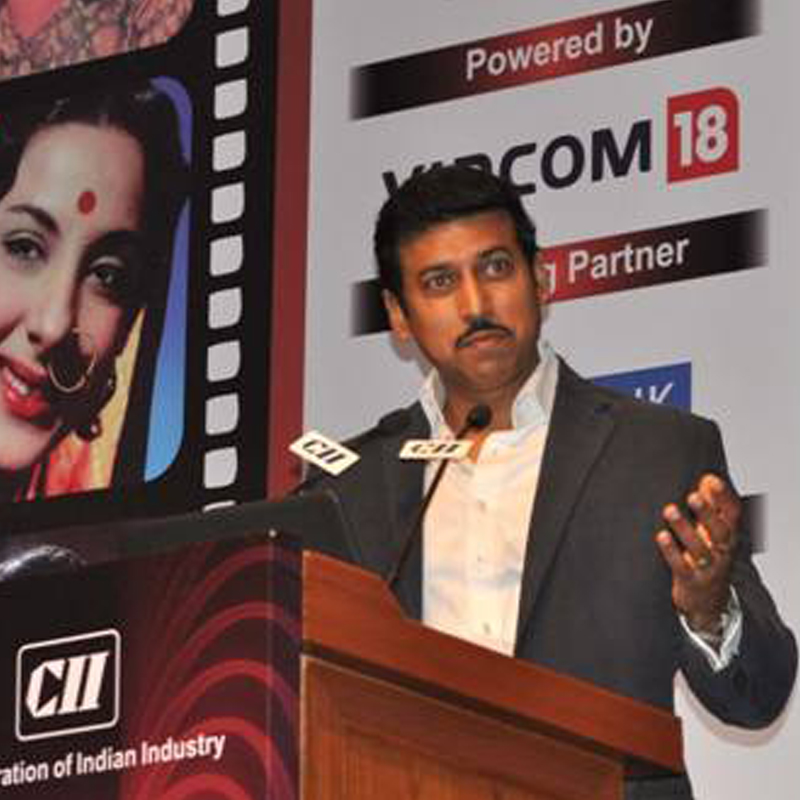
    NEW DELHI: Conceding that Prasar Bharati is lagging in both content and marketing, Minister of State for Information & Broadcasting (MIB) Rajyavardhan Rathore on Wednesday said there was a need to bring in outside experts for improving these aspects.

    At the same time, not willing to throw out the baby with the bath-water, the Minister clarified that for India’s pubcaster it wasn’t an easy task as it had to telecast in 23 languages. He said that Prasar Bharati was open to partnering with other broadcasters.

    Speaking at the CII Big Picture Summit 2016 here, Rathore admitted that with technological changes and innovations, a content platform is undergoing constant change with respect to creation, access and distribution. As a consequence, revenue and business models were being fragmented along with changes in market distribution and talent pool identification, he added.

    Pointing out that a series of measures have been undertaken to facilitate the growth and innovation within the media and entertainment (M&E) sector, the Minister said those initiatives included streamlining of processes and procedures for broadcasting sector in the context of licensing TV channels and measures to promote the branding of India’s soft power at international films festivals.

    Referring to the animation sector, the Minister said the government would be fast tracking the setting up of the National Centre for Excellence in partnership with the industry in an effort to optimise the returns in the sector.

    Later answering questions from participants, he regretted that news on online channels was going overseas unregulated and MIB would be taking up the issue with the Ministry of Information Technology. However, he said streaming of a film could not be done without a certification by the Central Board of Film Certification.

    On a question about spectrum and its scarcity, Rathore said as the whole process involved different ministries the logistics got delayed, but also pointed out that the IT Ministry had recently obtained a large chunk of spectrum from the Ministry of Defence for use in the telecoms and broadcast sectors.

    Asked about the cumbersome and time consuming process to get security clearances for television channels and multi-system operators, Rathore explained that delays were caused as several government organisations, apart from MIB, were involved in giving clearances. Still, a total of 881 TV channels had been licensed, including 349 news channels, he added, hinting that such procedural delays hadn’t slowed down the hunger for licences.

  • Prasar Bharati lacks content & marketing; open to tie-ups: MIB Minister

    Prasar Bharati lacks content & marketing; open to tie-ups: MIB Minister

    NEW DELHI: Conceding that Prasar Bharati is lagging in both content and marketing, Minister of State for Information & Broadcasting (MIB) Rajyavardhan Rathore on Wednesday said there was a need to bring in outside experts for improving these aspects.

    At the same time, not willing to throw out the baby with the bath-water, the Minister clarified that for India’s pubcaster it wasn’t an easy task as it had to telecast in 23 languages. He said that Prasar Bharati was open to partnering with other broadcasters.

    Speaking at the CII Big Picture Summit 2016 here, Rathore admitted that with technological changes and innovations, a content platform is undergoing constant change with respect to creation, access and distribution. As a consequence, revenue and business models were being fragmented along with changes in market distribution and talent pool identification, he added.

    Pointing out that a series of measures have been undertaken to facilitate the growth and innovation within the media and entertainment (M&E) sector, the Minister said those initiatives included streamlining of processes and procedures for broadcasting sector in the context of licensing TV channels and measures to promote the branding of India’s soft power at international films festivals.

    Referring to the animation sector, the Minister said the government would be fast tracking the setting up of the National Centre for Excellence in partnership with the industry in an effort to optimise the returns in the sector.

    Later answering questions from participants, he regretted that news on online channels was going overseas unregulated and MIB would be taking up the issue with the Ministry of Information Technology. However, he said streaming of a film could not be done without a certification by the Central Board of Film Certification.

    On a question about spectrum and its scarcity, Rathore said as the whole process involved different ministries the logistics got delayed, but also pointed out that the IT Ministry had recently obtained a large chunk of spectrum from the Ministry of Defence for use in the telecoms and broadcast sectors.

    Asked about the cumbersome and time consuming process to get security clearances for television channels and multi-system operators, Rathore explained that delays were caused as several government organisations, apart from MIB, were involved in giving clearances. Still, a total of 881 TV channels had been licensed, including 349 news channels, he added, hinting that such procedural delays hadn’t slowed down the hunger for licences.

  • MIB favours self-regulation, TRAI says some regulation mandatory

    MIB favours self-regulation, TRAI says some regulation mandatory

    NEW DELHI: Even as he favoured the idea of self-regulation in the media, Minister for Information and Broadcasting (MIB) M Venkaiah Naidu stressed that “regulation should not become strangulation” and added the government wants to be a facilitator for creating a good business environment for the media and entertainment (M&E) sector.

    Delivering the keynote address at the inaugural session of 5th edition of CII-organised `Big Picture Summit’ at New Delhi here yesterday Naidu said that digital and mobile tools have been leading to paradigm shifts in the M&E sector and the growth of varied platforms such as 4G, broadband, mobile technologies and digital media has enabled the sector to move towards “convergence across platforms and content”.

    According to the Minister, 500 million mobile phones were expected in India by 2020 and music streaming had grown from 49 per cent to 61 per cent in just one year with video on demand gaining popularity as number of internet connections had grown to 81 million of which 41 million used local languages. “The entertainment industry was today capable of creating five billion jobs a year,” he said.

    Referring to the broadcast segment, the MIB Minister said Indian television was very vibrant and exciting, which is exemplified in the over 800 TV channels licensed by the government.

    Dwelling on some initiatives taken by the government to boost the M&E sector, Naidu said that foreign direct investment norms had been liberalized further earlier in the year with an aim to help the industry grow. Similarly, the Minister said, the radio category too has shown impressive growth and the third Phase of auctions of Radio FM licenses was expected to bring in $390 million.

    While he was impressed with the growth achieved by cinema — India produced more films than any other country in the world — Naidu took note of a big problem of less number of screens in the country and that Indian cinema had a share of less than one per cent in world cinema.

    Expressing his concerns on the growth of the media, the Minister highlighted that there were some problems that had been inherited by this government and that those would take some time to be resolved as he plans to hold separate meetings with all stakeholders.

    TRAI Says Regulatory Framework Necessary For Big M&E Sector

    While MIB made a case for self-regulation, Telecom Regulatory Authority of India Chairman R S Sharma said some regulatory framework was necessary for such a large media sector, but regulations should be non-discriminatory, transparent, ensure quality and empower the consumer.

    Speaking at the inaugural session, along with the Minister and industry representatives, Sharma said India was a very cost-effective market where the average mobile recharge was just Rs 10. As connectivity had to be cost-effective and price-sensitive, cable television can be used to provide broadband connectivity as well.

    Holding forth on audience measurement, Sharma said there was still scope for better audience measurement systems as it was important to let the consumer decide what he wanted.
    As TRAI has a recommendatory role in the broadcast sector, except the carriage part where its recommendations can be implemented by it, Sharma also highlighted that several set of recommendations by the regulator on a variety of issues were pending at the Ministry concerned.

    Viacom18 Group CEO Sudhanshu Vats’ On Disruption & Competition

    Amongst the pantheon of Indian gods and goddesses, the Trinity of  Brahma, Vishnu and Shiv hold a special place as they ensure the world, as we know it, goes through a cycle of creation, preservation and destruction to continue growing and surviving. Is this also true for a business sector? Yes!

    Dwelling on the theme of the two-day media conference, ‘Embracing Disruption to Stay Competitive’, Sudhanshu Vats, Chairman of National Committee on Media & Entertainment, CII and Group CEO, Viacom18, said if the cycle, as highlighted in the Indian Trinity or to some extent in economist Schumpeter’s theory of creative destruction, is not followed by businesses (including those in the M&E sector), it’d be disrupted

    “Our systems discourage destruction. In our minds we have this notion that the word ‘destruction’ itself is wrong. But if you look back, our belief system has always emphasised on the need to destroy. If we don’t destroy, then we will be disrupted,” Vats said setting the tone for the Big Picture Summit and emphasizing the need for a well-balanced mix of all three — creators, preservers and destroyers.

    Vats went on to give some examples of the Big Picture Summit’s theme of disruption or reinvention to stay relevant and competitive, which are as follows:

    –    It’s a theme that explains how the sport of cricket reinvented itself 8 years ago to create a completely new avatar (called the IPL) that is arguably it’s most lucrative and successful one till date.

    –    It’s a theme that explains how a new Hindi GEC called Colors launched in 2008 and became number 1 in just 9 months of launch.

    –    It’s a theme that probably explains how a government owned distribution platform known as DD FreeDish revolutionized the world of Indian television so much so that it is a topic of conversation in the boardroom of every M&E organization.

    –    It’s a theme that explains how a show idea rejected by MTV, led to the creation of one of India’s most iconic YouTube channels: The Viral Fever.

    –    It’s also a theme that explains why a telco called AT&T is expected to close a deal to acquire a media conglomerate called Time Warner in what is amongst this year’s biggest acquisitions.  “Of course, I’d like to see this as ‘convergence in action’,” explained Vats.

    Dwelling on some industry vital stats — based on knowledge partner Boston Consulting Group’s yearly report for the event — Vats said the M&E industry’s size had been pegged at approximately Rs. 13, 000,00 million, almost one per cent of the Indian GDP with a direct employment base of half a million.

    “If we look at indirect employment, the number will multiply several times over. If we look at employment in sectors in which we have a multiplier effect, say telecom, tourism, sports and so on, and we are looking at a much larger base. If we have to, say, double in size (and this is not impossible)… then there are three fundamental truths that we need to prepare for. Bear in mind, that none of these can be leveraged if we fear ‘destruction’. Each of these truths has significant implications for us,” Vats elucidated.

    Vats also dwelt on several issues ranging from the need to develop direct-to-consumer offerings, importance of listening to suggestions and ideas, benefits of discovering new talents and embracing technology and data as a friend and not foe, apart from several other issues, including the need to put aside squabbles amongst stakeholders in the M&E sector.

    However, not the one to every shy away from making a factual statement, even though it may sound contentious, Vats aptly said the M&E sector was amongst the biggest stars of the PM Modi’s  `Make in India’ programme. “In the last two years, India has seen 35 new smart-phone factories, with a production capacity of 18 million devices per month and employment to 37,000 Indians. While the focus here – at least in the popular context- is on telecom handset manufacturing, think what is the use of the smart-phone with a 5-inch screen if you don’t have video content? I have no qualms in stating that our industry will play the biggest role in the 4G revolution that this country is about to witness,” he concluded.
     

  • MIB favours self-regulation, TRAI says some regulation mandatory

    MIB favours self-regulation, TRAI says some regulation mandatory

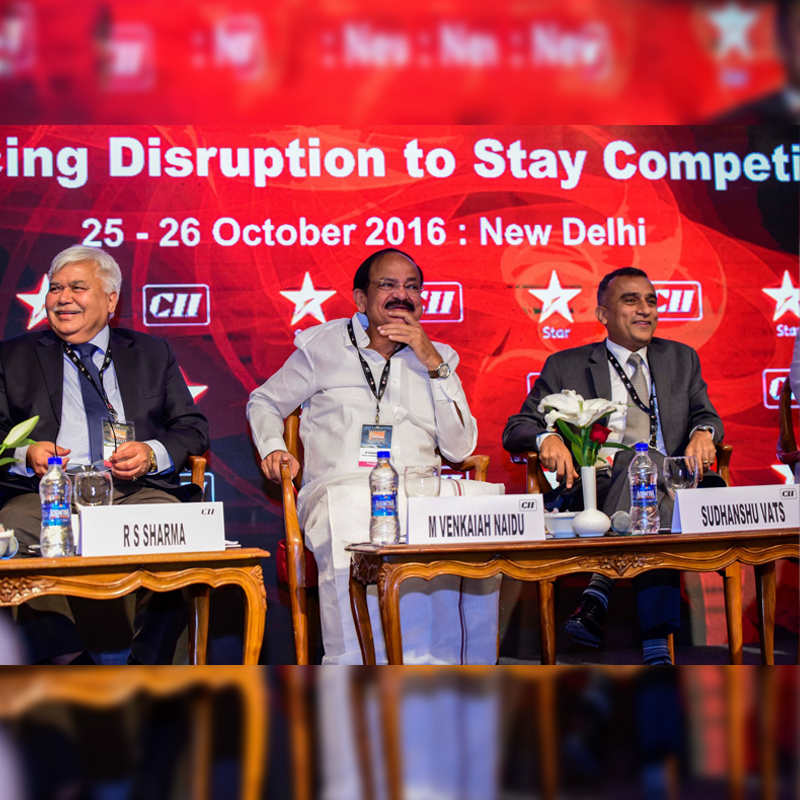
    NEW DELHI: Even as he favoured the idea of self-regulation in the media, Minister for Information and Broadcasting (MIB) M Venkaiah Naidu stressed that “regulation should not become strangulation” and added the government wants to be a facilitator for creating a good business environment for the media and entertainment (M&E) sector.

    Delivering the keynote address at the inaugural session of 5th edition of CII-organised `Big Picture Summit’ at New Delhi here yesterday Naidu said that digital and mobile tools have been leading to paradigm shifts in the M&E sector and the growth of varied platforms such as 4G, broadband, mobile technologies and digital media has enabled the sector to move towards “convergence across platforms and content”.

    According to the Minister, 500 million mobile phones were expected in India by 2020 and music streaming had grown from 49 per cent to 61 per cent in just one year with video on demand gaining popularity as number of internet connections had grown to 81 million of which 41 million used local languages. “The entertainment industry was today capable of creating five billion jobs a year,” he said.

    Referring to the broadcast segment, the MIB Minister said Indian television was very vibrant and exciting, which is exemplified in the over 800 TV channels licensed by the government.

    Dwelling on some initiatives taken by the government to boost the M&E sector, Naidu said that foreign direct investment norms had been liberalized further earlier in the year with an aim to help the industry grow. Similarly, the Minister said, the radio category too has shown impressive growth and the third Phase of auctions of Radio FM licenses was expected to bring in $390 million.

    While he was impressed with the growth achieved by cinema — India produced more films than any other country in the world — Naidu took note of a big problem of less number of screens in the country and that Indian cinema had a share of less than one per cent in world cinema.

    Expressing his concerns on the growth of the media, the Minister highlighted that there were some problems that had been inherited by this government and that those would take some time to be resolved as he plans to hold separate meetings with all stakeholders.

    TRAI Says Regulatory Framework Necessary For Big M&E Sector

    While MIB made a case for self-regulation, Telecom Regulatory Authority of India Chairman R S Sharma said some regulatory framework was necessary for such a large media sector, but regulations should be non-discriminatory, transparent, ensure quality and empower the consumer.

    Speaking at the inaugural session, along with the Minister and industry representatives, Sharma said India was a very cost-effective market where the average mobile recharge was just Rs 10. As connectivity had to be cost-effective and price-sensitive, cable television can be used to provide broadband connectivity as well.

    Holding forth on audience measurement, Sharma said there was still scope for better audience measurement systems as it was important to let the consumer decide what he wanted.
    As TRAI has a recommendatory role in the broadcast sector, except the carriage part where its recommendations can be implemented by it, Sharma also highlighted that several set of recommendations by the regulator on a variety of issues were pending at the Ministry concerned.

    Viacom18 Group CEO Sudhanshu Vats’ On Disruption & Competition

    Amongst the pantheon of Indian gods and goddesses, the Trinity of  Brahma, Vishnu and Shiv hold a special place as they ensure the world, as we know it, goes through a cycle of creation, preservation and destruction to continue growing and surviving. Is this also true for a business sector? Yes!

    Dwelling on the theme of the two-day media conference, ‘Embracing Disruption to Stay Competitive’, Sudhanshu Vats, Chairman of National Committee on Media & Entertainment, CII and Group CEO, Viacom18, said if the cycle, as highlighted in the Indian Trinity or to some extent in economist Schumpeter’s theory of creative destruction, is not followed by businesses (including those in the M&E sector), it’d be disrupted

    “Our systems discourage destruction. In our minds we have this notion that the word ‘destruction’ itself is wrong. But if you look back, our belief system has always emphasised on the need to destroy. If we don’t destroy, then we will be disrupted,” Vats said setting the tone for the Big Picture Summit and emphasizing the need for a well-balanced mix of all three — creators, preservers and destroyers.

    Vats went on to give some examples of the Big Picture Summit’s theme of disruption or reinvention to stay relevant and competitive, which are as follows:

    –    It’s a theme that explains how the sport of cricket reinvented itself 8 years ago to create a completely new avatar (called the IPL) that is arguably it’s most lucrative and successful one till date.

    –    It’s a theme that explains how a new Hindi GEC called Colors launched in 2008 and became number 1 in just 9 months of launch.

    –    It’s a theme that probably explains how a government owned distribution platform known as DD FreeDish revolutionized the world of Indian television so much so that it is a topic of conversation in the boardroom of every M&E organization.

    –    It’s a theme that explains how a show idea rejected by MTV, led to the creation of one of India’s most iconic YouTube channels: The Viral Fever.

    –    It’s also a theme that explains why a telco called AT&T is expected to close a deal to acquire a media conglomerate called Time Warner in what is amongst this year’s biggest acquisitions.  “Of course, I’d like to see this as ‘convergence in action’,” explained Vats.

    Dwelling on some industry vital stats — based on knowledge partner Boston Consulting Group’s yearly report for the event — Vats said the M&E industry’s size had been pegged at approximately Rs. 13, 000,00 million, almost one per cent of the Indian GDP with a direct employment base of half a million.

    “If we look at indirect employment, the number will multiply several times over. If we look at employment in sectors in which we have a multiplier effect, say telecom, tourism, sports and so on, and we are looking at a much larger base. If we have to, say, double in size (and this is not impossible)… then there are three fundamental truths that we need to prepare for. Bear in mind, that none of these can be leveraged if we fear ‘destruction’. Each of these truths has significant implications for us,” Vats elucidated.

    Vats also dwelt on several issues ranging from the need to develop direct-to-consumer offerings, importance of listening to suggestions and ideas, benefits of discovering new talents and embracing technology and data as a friend and not foe, apart from several other issues, including the need to put aside squabbles amongst stakeholders in the M&E sector.

    However, not the one to every shy away from making a factual statement, even though it may sound contentious, Vats aptly said the M&E sector was amongst the biggest stars of the PM Modi’s  `Make in India’ programme. “In the last two years, India has seen 35 new smart-phone factories, with a production capacity of 18 million devices per month and employment to 37,000 Indians. While the focus here – at least in the popular context- is on telecom handset manufacturing, think what is the use of the smart-phone with a 5-inch screen if you don’t have video content? I have no qualms in stating that our industry will play the biggest role in the 4G revolution that this country is about to witness,” he concluded.

     

  • FM Phase III e-auction tomorrow

    FM Phase III e-auction tomorrow

    NEW DELHI: The e-auctions for the second batch of Radio FM Phase III has been put off by a day to 26 October 2016.

    According to the Information and Broadcasting Ministry, this has been done as “it is informed that some of the prospective bidder(s) are facing technical difficulties for participating in auction”.

    A note on the website put up late in the evening said the auction had therefore been postponed by One day and will now start on 26 October 2016 from 9.30 am onwards. Late last week, the Government had released the earnest money deposit (EMD) by the pre-qualified bidders and the initial eligibility points (IEP) of each of these.

    According to a list put up on the website of the Ministry, Entertainment Network (India) Limited of the Times Group tops the list with an earnest money deposit of over Rs 375 million (Rs 37.5 crore) thus gaining 15,000 eligibility points.

    This is followed by Ushodaya Enterprises Private Limited with around Rs 133.3 million (around Rs 13.33 crore) as EMD,getting 5331 IEP and Kal Radio Limited with EMD of jRs 133 million (Rs 13.3 crore) and 5320 IEP.

    Alll the eleven bidders have put in an EMD of less than Rs 130 million (Rs 13 crore).

    The Ministry said any assistance in this regard is available on contact helpdesk +91-124- 430 2039 or support@c1eauctions.com.

    For the second batch, the Simultaneous Multiple Round Ascending e-auction process will be carried out for allotting the FM channels, conducted over the Internet. Bidders will be able to access the Electronic Auction System to be used for participation in the Auctions using web browsing software: Internet Explorer 11.x, or Mozilla 34.x. The EAS is a designated computer resource for the receiving of electronic records under the provisions of Section 13(2) of the Information Technology Act 2000, as amended from time to time.

    Also read:

    http://www.indiantelevision.com/regulators/ib-ministry/fm-p-iii-auction-emd-bidders-initial-eligibility-declared-161024

    http://www.radioandmusic.com/biz/regulators/ib-ministry/161021-second-batch-auction-fm-phase-iii-starts-25


  • FM Phase III e-auction tomorrow

    FM Phase III e-auction tomorrow

    NEW DELHI: The e-auctions for the second batch of Radio FM Phase III has been put off by a day to 26 October 2016.

    According to the Information and Broadcasting Ministry, this has been done as “it is informed that some of the prospective bidder(s) are facing technical difficulties for participating in auction”.

    A note on the website put up late in the evening said the auction had therefore been postponed by One day and will now start on 26 October 2016 from 9.30 am onwards. Late last week, the Government had released the earnest money deposit (EMD) by the pre-qualified bidders and the initial eligibility points (IEP) of each of these.

    According to a list put up on the website of the Ministry, Entertainment Network (India) Limited of the Times Group tops the list with an earnest money deposit of over Rs 375 million (Rs 37.5 crore) thus gaining 15,000 eligibility points.

    This is followed by Ushodaya Enterprises Private Limited with around Rs 133.3 million (around Rs 13.33 crore) as EMD,getting 5331 IEP and Kal Radio Limited with EMD of jRs 133 million (Rs 13.3 crore) and 5320 IEP.

    Alll the eleven bidders have put in an EMD of less than Rs 130 million (Rs 13 crore).

    The Ministry said any assistance in this regard is available on contact helpdesk +91-124- 430 2039 or support@c1eauctions.com.

    For the second batch, the Simultaneous Multiple Round Ascending e-auction process will be carried out for allotting the FM channels, conducted over the Internet. Bidders will be able to access the Electronic Auction System to be used for participation in the Auctions using web browsing software: Internet Explorer 11.x, or Mozilla 34.x. The EAS is a designated computer resource for the receiving of electronic records under the provisions of Section 13(2) of the Information Technology Act 2000, as amended from time to time.

    Also read:

    http://www.indiantelevision.com/regulators/ib-ministry/fm-p-iii-auction-emd-bidders-initial-eligibility-declared-161024

    http://www.radioandmusic.com/biz/regulators/ib-ministry/161021-second-batch-auction-fm-phase-iii-starts-25


  • FM P-III auction: EMD, bidders initial eligibility declared

    FM P-III auction: EMD, bidders initial eligibility declared

    NEW DELHI: Even as the day of the e-auction of the second batch of FM Phase III on 25 October 2016 approaches, the Government has released the earnest money deposit (EMD) by the pre-qualified bidders and the initial eligibility points (IEP) of each of these.

    According to a list put up on the website of the Information and Broadcasting Ministry, Entertainment Network (India) Limited of the Times Group tops the list with an EMD of over Rs 375 million (Rs 37.5 crore) thus gaining 15,000 eligibility points. This is followed by Ushodaya Enterprises Private Limited with around Rs 133.3 million (around Rs 13.33 crore) as EMD,getting 5331 IEP and Kal Radio Limited with EMD of Rs 133 million (Rs 13.3 crore) and 5320 IEP.

    All the 11 bidders have put in an EMD of less than Rs 130 million (Rs 13 crore). The list of pre-qualified bidders for e-Auction of the second batch of private FM Radio Phase-III channels:

    No. Name of Applicant EMD
    Initial Eligibility Points

    1 Abhijit Realtors& Infraventures Private Limited Rs
    2,58,75,000 1035

    2 Dharmik InfomediaPrivate Limited Rs
    7,75,000 31

    3 EntertainmentNetwork (India) Limited Rs
    37,50,00,000 15000

    4 Hotel Polo TowersPrivate Limited Rs
    1,25,000 5

    5 JCL Infra Limited
    Rs19,50,000 78

    6 Kal Radio Limited
    Rs 13,30,00,000 5320

    7 Malar PublicationsPrivate Limited Rs
    5,26,50,075 2106

    8 Purvy BroadcastsPrivate Limited Rs
    10,32,500 41

    9 Rockstar EIPrivate Limited Rs
    1,25,000 5

    10 Sambhaav MediaLimited Rs
    6,88,50,000 2754

    11 South Asia FMLimited Rs
    4,40,00,000 1760

    12 The Malayala Manorama Company Limited Rs 1,75,50,025
    702

    13 The Mathrubhumi Printing & Publishing Co Ltd Rs 1,76,00,000
    704

    14 Ushodaya Enterprises Private Limited Rs
    13,32,98,950 5331

    As stipulated in the notice inviting applications of 20 June 2016, bidders are required to submit their bid for at least one city in the first clock round. Any bidder failing to do so in the first clock round will forfeit its EMD in its entirety. The ministry said any assistance in this regard is available on contact helpdesk +91-124- 430 2039 or support@c1eauctions.com.

    The second batch of FM Radio Phase-III channels comprises 266 channels in 92 cities. The channels include 227 channels in 69 fresh cities and 39 channels in 23 existing cities which had remained unsold as there were no bids. As in the first stage, the e-auctions will be conducted by C1 India Private Ltd. A pre-bid conference was held on 11 July 2016, followed by training and then a mock auction earlier this month.

    The first payment of 25 per cent of the successful bid amount will be made within five calendar days, and the remaining within 15 calendar days of the close of the auction and notification of successful bidders by the Government.

  • FM P-III auction: EMD, bidders initial eligibility declared

    FM P-III auction: EMD, bidders initial eligibility declared

    NEW DELHI: Even as the day of the e-auction of the second batch of FM Phase III on 25 October 2016 approaches, the Government has released the earnest money deposit (EMD) by the pre-qualified bidders and the initial eligibility points (IEP) of each of these.

    According to a list put up on the website of the Information and Broadcasting Ministry, Entertainment Network (India) Limited of the Times Group tops the list with an EMD of over Rs 375 million (Rs 37.5 crore) thus gaining 15,000 eligibility points. This is followed by Ushodaya Enterprises Private Limited with around Rs 133.3 million (around Rs 13.33 crore) as EMD,getting 5331 IEP and Kal Radio Limited with EMD of Rs 133 million (Rs 13.3 crore) and 5320 IEP.

    All the 11 bidders have put in an EMD of less than Rs 130 million (Rs 13 crore). The list of pre-qualified bidders for e-Auction of the second batch of private FM Radio Phase-III channels:

    No. Name of Applicant EMD
    Initial Eligibility Points

    1 Abhijit Realtors& Infraventures Private Limited Rs
    2,58,75,000 1035

    2 Dharmik InfomediaPrivate Limited Rs
    7,75,000 31

    3 EntertainmentNetwork (India) Limited Rs
    37,50,00,000 15000

    4 Hotel Polo TowersPrivate Limited Rs
    1,25,000 5

    5 JCL Infra Limited
    Rs19,50,000 78

    6 Kal Radio Limited
    Rs 13,30,00,000 5320

    7 Malar PublicationsPrivate Limited Rs
    5,26,50,075 2106

    8 Purvy BroadcastsPrivate Limited Rs
    10,32,500 41

    9 Rockstar EIPrivate Limited Rs
    1,25,000 5

    10 Sambhaav MediaLimited Rs
    6,88,50,000 2754

    11 South Asia FMLimited Rs
    4,40,00,000 1760

    12 The Malayala Manorama Company Limited Rs 1,75,50,025
    702

    13 The Mathrubhumi Printing & Publishing Co Ltd Rs 1,76,00,000
    704

    14 Ushodaya Enterprises Private Limited Rs
    13,32,98,950 5331

    As stipulated in the notice inviting applications of 20 June 2016, bidders are required to submit their bid for at least one city in the first clock round. Any bidder failing to do so in the first clock round will forfeit its EMD in its entirety. The ministry said any assistance in this regard is available on contact helpdesk +91-124- 430 2039 or support@c1eauctions.com.

    The second batch of FM Radio Phase-III channels comprises 266 channels in 92 cities. The channels include 227 channels in 69 fresh cities and 39 channels in 23 existing cities which had remained unsold as there were no bids. As in the first stage, the e-auctions will be conducted by C1 India Private Ltd. A pre-bid conference was held on 11 July 2016, followed by training and then a mock auction earlier this month.

    The first payment of 25 per cent of the successful bid amount will be made within five calendar days, and the remaining within 15 calendar days of the close of the auction and notification of successful bidders by the Government.

  • FM P-III second batch auction from 25 Oct; 14 in fray

    FM P-III second batch auction from 25 Oct; 14 in fray

    NEW DELHI: The e-auction of the second batch of FM Phase III will commence on 25 October 2016 from 09.30am.

    The Information and Broadcasting Ministry announced that as stipulated in the Notice Inviting Applications of 20 June 2016, bidders are required to submit their bid for at least one city in the first Clock Round. Any bidder failing to do so in the first Clock Round will forfeit its EMD in its entirety.

    The Ministry said any assistance in this regard is available on contact helpdesk +91-124- 430 2039 or support@c1eauctions.com. The second batch of FM Radio Phase-III channels comprises 266 channels in 92 cities. The channels include 227 channels in 69 fresh cities and 39 channels in 23 existing cities which had remained unsold as there were no bids.

    As in the first stage, the e-auctions will be conducted by C1 India Private Ltd. A Pre Bid conference was held on 11 July 2016, following by training and then a mock auction earlier this month.

    After the pre-qualification of bidders, the shortlist is:

    | 1 | Abhijit Realtors & lnfraventures (P) Ltd. |
    | 2 | Dharmik lnfomedia Private Ltd. |
    | 3 | Entertainment Network (I) Ltd. |
    | 4 | Hotel Polo Towers (P) Ltd. |
    | 5 | JCL Infra Limited |
    | 6 | Kal Radio Limited |
    | 7 | Malar Publication (P) Ltd. |
    | 8 | Purvy Broadcasts (P) Ltd. |
    | 9 | Rockstar El Private Limited |
    | 10 | Sambhaav Media Ltd. |
    | 11 | South Asia FM Limited |
    | 12 | The Malayala Manorama Co. Ltd. |
    | 13 | The Mathrubhumi Printing & Publishing Co. Ltd. |
    | 14 | Ushodaya Enterprises Private Limited |

    The first payment of 25 per cent of the successful bid amount will be made within five calendar days, and the remaining within 15 calendar days of the close of the auction and notification of successful bidders by the Government. The e-auction of the first batch of private FM radio phase-III comprising 135 channels in 69 Phase-II existing cities commenced on 27 July and was completed on 9 September after 125 rounds of bidding. Out of these, no bid was received in 13 cities having 26 channels, and partial bids were received in 9 cities with 12 channels remaining unsold, which Information and Broadcasting Minister Arun Jaitley justified on the ground of “the demand – supply based market economics and bidder’s strategy”. However, he told the Parliament on 4 December 2015 that the Ministry had received the full payment of Rs.1055.9 crore notified on 16 September by 1 October.

    Against the cumulative reserve price of Rs.550.18 crore for 135 channels, the government received aggregate provisional commitment of Rs.1156.9 crore for 97 channels in 56 cities. Out of 97 channels, 53 channels in 35 cities were sold at a premium over reserve price whereas 44 channels in 21 cities were sold at reserve price. The Ministry had decided to conduct e-auction of FM Radio Channels in batches under the extant FM Phase-III Policy.

  • FM P-III second batch auction from 25 Oct; 14 in fray

    FM P-III second batch auction from 25 Oct; 14 in fray

    NEW DELHI: The e-auction of the second batch of FM Phase III will commence on 25 October 2016 from 09.30am.

    The Information and Broadcasting Ministry announced that as stipulated in the Notice Inviting Applications of 20 June 2016, bidders are required to submit their bid for at least one city in the first Clock Round. Any bidder failing to do so in the first Clock Round will forfeit its EMD in its entirety.

    The Ministry said any assistance in this regard is available on contact helpdesk +91-124- 430 2039 or support@c1eauctions.com. The second batch of FM Radio Phase-III channels comprises 266 channels in 92 cities. The channels include 227 channels in 69 fresh cities and 39 channels in 23 existing cities which had remained unsold as there were no bids.

    As in the first stage, the e-auctions will be conducted by C1 India Private Ltd. A Pre Bid conference was held on 11 July 2016, following by training and then a mock auction earlier this month.

    After the pre-qualification of bidders, the shortlist is:

    | 1 | Abhijit Realtors & lnfraventures (P) Ltd. |
    | 2 | Dharmik lnfomedia Private Ltd. |
    | 3 | Entertainment Network (I) Ltd. |
    | 4 | Hotel Polo Towers (P) Ltd. |
    | 5 | JCL Infra Limited |
    | 6 | Kal Radio Limited |
    | 7 | Malar Publication (P) Ltd. |
    | 8 | Purvy Broadcasts (P) Ltd. |
    | 9 | Rockstar El Private Limited |
    | 10 | Sambhaav Media Ltd. |
    | 11 | South Asia FM Limited |
    | 12 | The Malayala Manorama Co. Ltd. |
    | 13 | The Mathrubhumi Printing & Publishing Co. Ltd. |
    | 14 | Ushodaya Enterprises Private Limited |

    The first payment of 25 per cent of the successful bid amount will be made within five calendar days, and the remaining within 15 calendar days of the close of the auction and notification of successful bidders by the Government. The e-auction of the first batch of private FM radio phase-III comprising 135 channels in 69 Phase-II existing cities commenced on 27 July and was completed on 9 September after 125 rounds of bidding. Out of these, no bid was received in 13 cities having 26 channels, and partial bids were received in 9 cities with 12 channels remaining unsold, which Information and Broadcasting Minister Arun Jaitley justified on the ground of “the demand – supply based market economics and bidder’s strategy”. However, he told the Parliament on 4 December 2015 that the Ministry had received the full payment of Rs.1055.9 crore notified on 16 September by 1 October.

    Against the cumulative reserve price of Rs.550.18 crore for 135 channels, the government received aggregate provisional commitment of Rs.1156.9 crore for 97 channels in 56 cities. Out of 97 channels, 53 channels in 35 cities were sold at a premium over reserve price whereas 44 channels in 21 cities were sold at reserve price. The Ministry had decided to conduct e-auction of FM Radio Channels in batches under the extant FM Phase-III Policy.