Category: I&B Ministry

  • Mass Comm courses in regional languages significant: Naidu

    Mass Comm courses in regional languages significant: Naidu

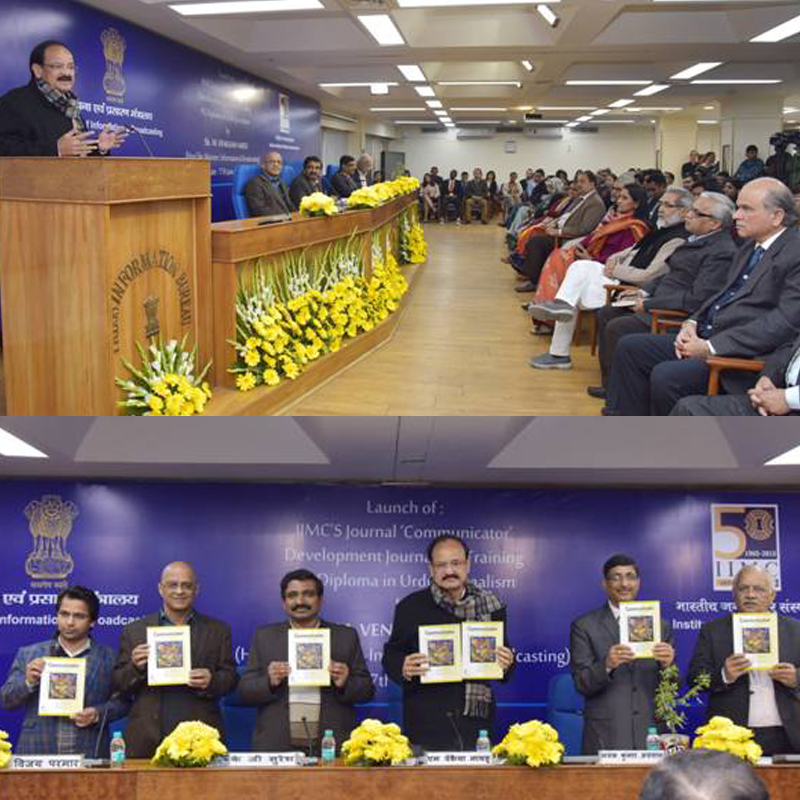
    NEW DELHI: Information and Broadcasting Minister M Venkaiah Naidu has stressed the vast need of skilled personnel in the media and entertainment sector in the country as the sector was expanding rapidly.

    The Minister referred to the prominent role being played by the Government’s Skill India Initiative for upgrading skills under multiple disciplines. He added that the vision of this Government was to bring Transformational changes in all sectors.

    Speaking about the changing paradigm in communication, the Minister said Social Media has broken the boundaries of time and space in communication. It is a pre-requisite for budding journalists to be social media savvy and to have a watchful eye about the public perception on issues of local and international importance.

    He advised students aspiring to become journalists in future to ensure that news and views are not mixed and be objective. Every budding young journalist should have an open mind to acquire maximum knowledge to present the perspective in an objective manner. He urged students to keep abreast with the latest developments, new technology and new modes of communication and should inculcate a habit of reading to remain relevant and effective.

    He also called upon the Indian Institute of Mass Communications to strive for journalism courses in all Indian languages to cater to the communication needs of the citizens all across the country.

    The Minister was speaking after inaugurating the First PG Diploma course in Urdu Journalism, the 67th Diploma course in Development Journalism, and the launch of the IIMC Journal “Communicator” at Shastri Bhawan.

    Emphasizing on the training methodology, Naidu said it was important in the current scenario to include Case studies and practical exposure as a part of curriculum for learning, practising and applying new concepts. He also stressed the need for imparting an outlook that is rooted in strong ethical values among budding journalists and communicators.

    Naidu said Urdu journalism was an important and integral part of media and communication landscape of our country which had played an important role in the Freedom Struggle.

    Inaugurating the 67th Development Journalism course, the Minister said India is today regaining the lost glory of being the Knowledge hub of the world. The Development Journalism course provided a great opportunity for understanding and appreciating each other’s culture, and developing bonds of friendship.

    He added that journalist scholars from various Developing Countries were unofficial Ambassadors of India who shall provide a link of brotherhood among different cultures through their writings. The 67th batch of Development Journalism course at IIMC has 23 scholars (12 females and 11 males) from 19 different countries.

  • Mass Comm courses in regional languages significant: Naidu

    Mass Comm courses in regional languages significant: Naidu

    NEW DELHI: Information and Broadcasting Minister M Venkaiah Naidu has stressed the vast need of skilled personnel in the media and entertainment sector in the country as the sector was expanding rapidly.

    The Minister referred to the prominent role being played by the Government’s Skill India Initiative for upgrading skills under multiple disciplines. He added that the vision of this Government was to bring Transformational changes in all sectors.

    Speaking about the changing paradigm in communication, the Minister said Social Media has broken the boundaries of time and space in communication. It is a pre-requisite for budding journalists to be social media savvy and to have a watchful eye about the public perception on issues of local and international importance.

    He advised students aspiring to become journalists in future to ensure that news and views are not mixed and be objective. Every budding young journalist should have an open mind to acquire maximum knowledge to present the perspective in an objective manner. He urged students to keep abreast with the latest developments, new technology and new modes of communication and should inculcate a habit of reading to remain relevant and effective.

    He also called upon the Indian Institute of Mass Communications to strive for journalism courses in all Indian languages to cater to the communication needs of the citizens all across the country.

    The Minister was speaking after inaugurating the First PG Diploma course in Urdu Journalism, the 67th Diploma course in Development Journalism, and the launch of the IIMC Journal “Communicator” at Shastri Bhawan.

    Emphasizing on the training methodology, Naidu said it was important in the current scenario to include Case studies and practical exposure as a part of curriculum for learning, practising and applying new concepts. He also stressed the need for imparting an outlook that is rooted in strong ethical values among budding journalists and communicators.

    Naidu said Urdu journalism was an important and integral part of media and communication landscape of our country which had played an important role in the Freedom Struggle.

    Inaugurating the 67th Development Journalism course, the Minister said India is today regaining the lost glory of being the Knowledge hub of the world. The Development Journalism course provided a great opportunity for understanding and appreciating each other’s culture, and developing bonds of friendship.

    He added that journalist scholars from various Developing Countries were unofficial Ambassadors of India who shall provide a link of brotherhood among different cultures through their writings. The 67th batch of Development Journalism course at IIMC has 23 scholars (12 females and 11 males) from 19 different countries.
  • ‘Risk’ in FM stations airing news, apprehends Prasar head

    ‘Risk’ in FM stations airing news, apprehends Prasar head

    MUMBAI: Prasar Bharati chairman A Surya Prakash has said permitting private FM stations to air news might have security implications and that the government needed to keep that in mind if it were to give them the nod.

    From the democracy perspective, the idea of permitting them looked ‘very simple’ and ‘must be done’, but, owing to the internal security concerns and diversity of India, which had thousands of kilometres of borders, the initiative had a ‘lot of implications,’ he said, PTI reported from Hyderabad.

    As some months ago, the government auctioned frequency bandwidth, new FM channels were going to come. And, thus, he said that one needed to seriously ponder over whether to allow FM channels to air news.

    While it was correct that private TV channels had been allowed to telecast news, radio, he said, had a ‘different audience and different kind of reach.

    Also Read:   

    TV Today not selling 3 FM stations to ENIL; seeks MIB nod for migration

    Big FM, India Today deals: Zee Media seeks shareholder nod for loans

    Highlight women’s rights, broadcasters told


  • ‘Risk’ in FM stations airing news, apprehends Prasar head

    ‘Risk’ in FM stations airing news, apprehends Prasar head

    MUMBAI: Prasar Bharati chairman A Surya Prakash has said permitting private FM stations to air news might have security implications and that the government needed to keep that in mind if it were to give them the nod.

    From the democracy perspective, the idea of permitting them looked ‘very simple’ and ‘must be done’, but, owing to the internal security concerns and diversity of India, which had thousands of kilometres of borders, the initiative had a ‘lot of implications,’ he said, PTI reported from Hyderabad.

    As some months ago, the government auctioned frequency bandwidth, new FM channels were going to come. And, thus, he said that one needed to seriously ponder over whether to allow FM channels to air news.

    While it was correct that private TV channels had been allowed to telecast news, radio, he said, had a ‘different audience and different kind of reach.

    Also Read:   

    TV Today not selling 3 FM stations to ENIL; seeks MIB nod for migration

    Big FM, India Today deals: Zee Media seeks shareholder nod for loans

    Highlight women’s rights, broadcasters told


  • Int’l TV Fest: A-Pac Broadcasting Union’s two India teams to participate

    Int’l TV Fest: A-Pac Broadcasting Union’s two India teams to participate

    NEW DELHI: The ‘Aamad’ group and ‘Sadhya’ group from India will compete in the grand finale of the first edition of the Asia-Pacific Broadcasting Union (ABU) International Television Dance Festival (AIDF) in the city of the ‘Char Minar’ Hyderabad on 15 January 2017.

    Public service broadcaster Prasar Bharati is hosting the first edition of this mega event at Shilpakala Vedika in the hi-tech part of Hyderabad.

    AIDF will showcase traditional and contemporary dance performances by artistes of more than ten counties across the Asia- pacific region. The Dance Festival is conceptualised to bring the cultural diversities from across the world into limelight, by breaking cultural barriers. It will unveil the sacred occasions when people dance, and the joys that varied communities across the Asia Pacific region feel as they dance.

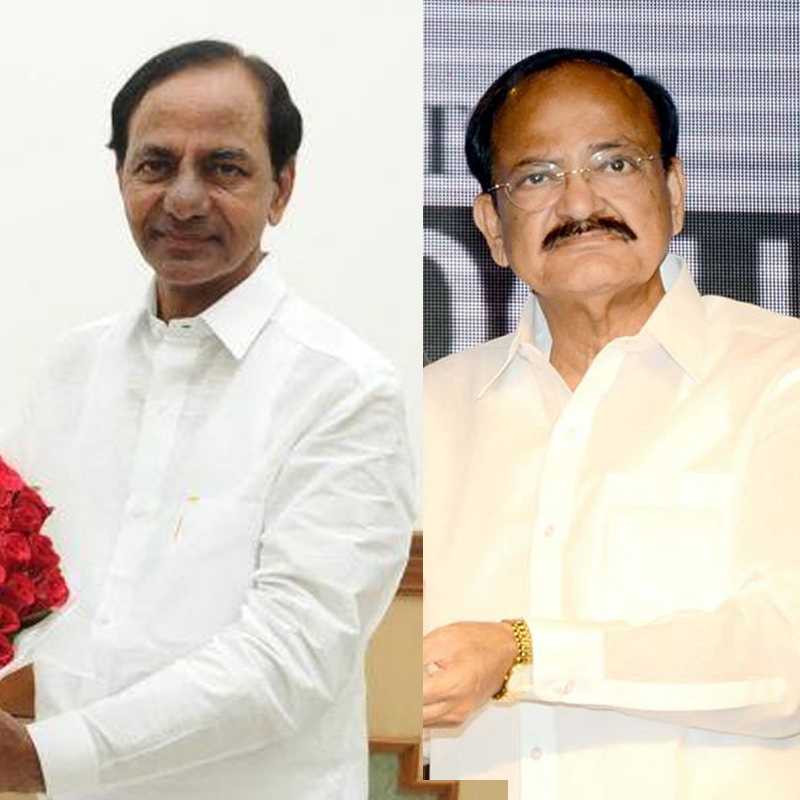
    Information and broadcasting minister M Venkaiah Naidu will inaugurate the AIDF festival. Telengana chief minister K Chandrashekar Rao will be the Guest of Honour. Telengana Culture and Tourism Minister Azmeera Chandulal and Prasar Bharati Chairman A Surya Prakash will also be present in the presence of other top officials of the I&B Ministry, Prasar Bharati and Telangana Government.

    Countries that have so far confirmed participation are Maldives, Afghanistan, Sri Lanka, Uzbekistan, The Philippines, Vietnam, Cambodia, Fiji and Indonesia.

    Two declared finalists from each country; one in ‘contemporary’ dance form and the other in ‘traditional’ dance form, will participate in the grand finale. All participating dance groups are between the age group of 18 to 25 years.

    Prasar Bharati had started the selection process in June last year to select the teams that will represent India in the grand finale. In order to select the final entries, artistes were invited and they were asked to submit DVDs of their work in traditional or contemporary dance, for shortlisting purpose. These submissions were made online and offline as well.

    A total of 453 entries were received, out of which 389 were made on-line and 64 were by post. Eventually, 210 videos were selected by the first Screening Committee.

    After the final screening, 29 entries were chosen from the two categories.
    The Festival is planned to be telecast live on DD India, DD Bharati, DD Urdu, DD Saptagiri and DD Yadagiri from 5:30 p:m onwards on 15 January 2017.

    The pubcaster has created a dedicated website aidf.prasarbharati.org and is available on social media at facebook.com/DanceFestABU and twitter.com/DanceFestABU.

  • Int’l TV Fest: A-Pac Broadcasting Union’s two India teams to participate

    Int’l TV Fest: A-Pac Broadcasting Union’s two India teams to participate

    NEW DELHI: The ‘Aamad’ group and ‘Sadhya’ group from India will compete in the grand finale of the first edition of the Asia-Pacific Broadcasting Union (ABU) International Television Dance Festival (AIDF) in the city of the ‘Char Minar’ Hyderabad on 15 January 2017.

    Public service broadcaster Prasar Bharati is hosting the first edition of this mega event at Shilpakala Vedika in the hi-tech part of Hyderabad.

    AIDF will showcase traditional and contemporary dance performances by artistes of more than ten counties across the Asia- pacific region. The Dance Festival is conceptualised to bring the cultural diversities from across the world into limelight, by breaking cultural barriers. It will unveil the sacred occasions when people dance, and the joys that varied communities across the Asia Pacific region feel as they dance.

    Information and broadcasting minister M Venkaiah Naidu will inaugurate the AIDF festival. Telengana chief minister K Chandrashekar Rao will be the Guest of Honour. Telengana Culture and Tourism Minister Azmeera Chandulal and Prasar Bharati Chairman A Surya Prakash will also be present in the presence of other top officials of the I&B Ministry, Prasar Bharati and Telangana Government.

    Countries that have so far confirmed participation are Maldives, Afghanistan, Sri Lanka, Uzbekistan, The Philippines, Vietnam, Cambodia, Fiji and Indonesia.

    Two declared finalists from each country; one in ‘contemporary’ dance form and the other in ‘traditional’ dance form, will participate in the grand finale. All participating dance groups are between the age group of 18 to 25 years.

    Prasar Bharati had started the selection process in June last year to select the teams that will represent India in the grand finale. In order to select the final entries, artistes were invited and they were asked to submit DVDs of their work in traditional or contemporary dance, for shortlisting purpose. These submissions were made online and offline as well.

    A total of 453 entries were received, out of which 389 were made on-line and 64 were by post. Eventually, 210 videos were selected by the first Screening Committee.

    After the final screening, 29 entries were chosen from the two categories.
    The Festival is planned to be telecast live on DD India, DD Bharati, DD Urdu, DD Saptagiri and DD Yadagiri from 5:30 p:m onwards on 15 January 2017.

    The pubcaster has created a dedicated website aidf.prasarbharati.org and is available on social media at facebook.com/DanceFestABU and twitter.com/DanceFestABU.

  • Schedules fixed for broadcasts in five poll-bound states

    Schedules fixed for broadcasts in five poll-bound states

    NEW DELHI: All India Radio and Doordarshan, which provide a platform for political parties to make poll broadcasts before every election, will also organise a maximum of two panel discussions and/or debates on the Kendras/Stations for the forthcoming elections to the state assemblies in Goa, Punjab, Manipur, Uttarakhand & Uttar Pradesh.

    Each eligible party can nominate one representative to such a programme, but the Election Commission of India will approve the names of coordinators for such panel discussions and debates in consultation with the Prasar Bharati Corporation.

    The Commission has, as in previous years, worked out a schedule for the time to be given for poll broadcasts to different parties. The facilities of use of broadcast time and telecast time will be available only to National Parties and Recognized State Parties in the states where the polls are scheduled.

    The facilities will be available from the Regional Kendra of the All India Radio and Doordarshan and in the headquarters in the relevant states and relayed by other stations within the respective States.

    A base time of 45 minutes will be given to each National Party uniformly on the Regional Kendra of Doordarshan network and All India Radio network in the respective states.

    The additional time to be allotted to the parties has been decided on the basis of the poll performance of the parties in the last assembly election from the respective above mentioned States/UTs.

    In a single session of broadcast, no party will be allocated more than 15 minutes.
    The period of broadcast and telecast will be between the last date of filing the nominations and will end two days before the date of poll in the respective states.

    However, there will be no telecast or broadcast during the 48 hours preceding the close of polls as per specific provisions of the Representation of People Act, 1951. Prasar Bharati in consultation with the Commission will decide the actual date and time for broadcast and telecast. This will be subject to the broad technical constraints governing the actual time of transmission available with the Doordarshan and All India Radio.

    The guidelines prescribed by the Commission for telecast and broadcast will be strictly followed. The telecasts/broadcasts on Doordarshan/AIR will not permit criticism of other countries; attack on religions or communities; anything obscene or defamatory; incitement of violence; anything amounting to contempt of court; aspersion against the integrity of the President and Judiciary; anything affecting the unity, socereignty and integrity of the Nation; or any criticism by name of any person.

    The parties will be required to submit transcripts and recording in advance. The parties can get this recorded at their own cost in studios, which meet the technical standards prescribed by Prasar Bharati or at the Doordarshan/All India Radio Kendras. They can, as an alternative, have these recorded in the studios of Doordarshan and All India Radio by advance requests. In such cases, the recordings may be done at the State Capital and at timings indicated by Doordarshan/All India Radio in advance.

    Time Vouchers will be available in the denomination of 5 minutes with one voucher having time allotment from one to four minutes and the parties will be free to combine them suitably. The allotment of time to different political parties is given in a statement enclosed herewith.

    Introduced for the Lok Sabha elections in 1998, the scheme of free broadcasts was extended by the Commission to the State Assemblies held after 1998 and General Elections to the Lok Sabha in 1999, 2004 and 2009.

    With the amendments to the Representation of People Act 1951 through “Election and Other Related Laws (Amendment) Act, 2003” and the rules notified thereunder, equitable time sharing for campaigning by recognized political parties on electronic media now has statutory basis.

    In exercise of the powers conferred by clause (a) of the Explanation below section 39A of the Representation of People Act, 1951, the Central Government has notified all such broadcasting media which are owned or controlled or financed wholly or substantially by funds provided to them by the Central Government as the electronic media for the purposes of that section. Therefore, the Commission has decided to extend the said scheme of equitable time sharing on electronic media through Prasar Bharati Corporation to the ensuing General Election to the five State Legislative Assemblies.

    http://www.indiantelevision.com/sites/drupal7.indiantelevision.co.in/files/styles/large/public/air1.jpg?itok=fIWl61t7

    http://www.indiantelevision.com/sites/drupal7.indiantelevision.co.in/files/styles/large/public/air2_0.jpg?itok=xkznzoWo

    http://www.indiantelevision.com/sites/drupal7.indiantelevision.co.in/files/styles/large/public/air3.jpg?itok=G-wYK1BF

    http://www.indiantelevision.com/sites/drupal7.indiantelevision.co.in/files/styles/large/public/air4.jpg?itok=wB0-DAKu

    http://www.indiantelevision.com/sites/drupal7.indiantelevision.co.in/files/styles/large/public/air5.jpg?itok=UxUc30Ox

  • Schedules fixed for broadcasts in five poll-bound states

    Schedules fixed for broadcasts in five poll-bound states

    NEW DELHI: All India Radio and Doordarshan, which provide a platform for political parties to make poll broadcasts before every election, will also organise a maximum of two panel discussions and/or debates on the Kendras/Stations for the forthcoming elections to the state assemblies in Goa, Punjab, Manipur, Uttarakhand & Uttar Pradesh.

    Each eligible party can nominate one representative to such a programme, but the Election Commission of India will approve the names of coordinators for such panel discussions and debates in consultation with the Prasar Bharati Corporation.

    The Commission has, as in previous years, worked out a schedule for the time to be given for poll broadcasts to different parties. The facilities of use of broadcast time and telecast time will be available only to National Parties and Recognized State Parties in the states where the polls are scheduled.

    The facilities will be available from the Regional Kendra of the All India Radio and Doordarshan and in the headquarters in the relevant states and relayed by other stations within the respective States.

    A base time of 45 minutes will be given to each National Party uniformly on the Regional Kendra of Doordarshan network and All India Radio network in the respective states.

    The additional time to be allotted to the parties has been decided on the basis of the poll performance of the parties in the last assembly election from the respective above mentioned States/UTs.

    In a single session of broadcast, no party will be allocated more than 15 minutes.
    The period of broadcast and telecast will be between the last date of filing the nominations and will end two days before the date of poll in the respective states.

    However, there will be no telecast or broadcast during the 48 hours preceding the close of polls as per specific provisions of the Representation of People Act, 1951. Prasar Bharati in consultation with the Commission will decide the actual date and time for broadcast and telecast. This will be subject to the broad technical constraints governing the actual time of transmission available with the Doordarshan and All India Radio.

    The guidelines prescribed by the Commission for telecast and broadcast will be strictly followed. The telecasts/broadcasts on Doordarshan/AIR will not permit criticism of other countries; attack on religions or communities; anything obscene or defamatory; incitement of violence; anything amounting to contempt of court; aspersion against the integrity of the President and Judiciary; anything affecting the unity, socereignty and integrity of the Nation; or any criticism by name of any person.

    The parties will be required to submit transcripts and recording in advance. The parties can get this recorded at their own cost in studios, which meet the technical standards prescribed by Prasar Bharati or at the Doordarshan/All India Radio Kendras. They can, as an alternative, have these recorded in the studios of Doordarshan and All India Radio by advance requests. In such cases, the recordings may be done at the State Capital and at timings indicated by Doordarshan/All India Radio in advance.

    Time Vouchers will be available in the denomination of 5 minutes with one voucher having time allotment from one to four minutes and the parties will be free to combine them suitably. The allotment of time to different political parties is given in a statement enclosed herewith.

    Introduced for the Lok Sabha elections in 1998, the scheme of free broadcasts was extended by the Commission to the State Assemblies held after 1998 and General Elections to the Lok Sabha in 1999, 2004 and 2009.

    With the amendments to the Representation of People Act 1951 through “Election and Other Related Laws (Amendment) Act, 2003” and the rules notified thereunder, equitable time sharing for campaigning by recognized political parties on electronic media now has statutory basis.

    In exercise of the powers conferred by clause (a) of the Explanation below section 39A of the Representation of People Act, 1951, the Central Government has notified all such broadcasting media which are owned or controlled or financed wholly or substantially by funds provided to them by the Central Government as the electronic media for the purposes of that section. Therefore, the Commission has decided to extend the said scheme of equitable time sharing on electronic media through Prasar Bharati Corporation to the ensuing General Election to the five State Legislative Assemblies.

    http://www.indiantelevision.com/sites/drupal7.indiantelevision.co.in/files/styles/large/public/air1.jpg?itok=fIWl61t7

    http://www.indiantelevision.com/sites/drupal7.indiantelevision.co.in/files/styles/large/public/air2_0.jpg?itok=xkznzoWo

    http://www.indiantelevision.com/sites/drupal7.indiantelevision.co.in/files/styles/large/public/air3.jpg?itok=G-wYK1BF

    http://www.indiantelevision.com/sites/drupal7.indiantelevision.co.in/files/styles/large/public/air4.jpg?itok=wB0-DAKu

    http://www.indiantelevision.com/sites/drupal7.indiantelevision.co.in/files/styles/large/public/air5.jpg?itok=UxUc30Ox

  • Highlight women’s rights, broadcasters told

    Highlight women’s rights, broadcasters told

    NEW DELHI: In the wake of rampant cases of molestations of women, even in public places like in Bengaluru recently on New Year’s Eve, the government has issued a directive to TV broadcasters and FM radio stations to highlight the importance of treating women with respect and equality.

    The Ministry of Information and Broadcasting (MIB) on Wednesday sent out an advisory to FM radio and television broadcasters, which have signed the licence conditions and other government regulations, to air programmes on TV and radio to convey the message that women need to be “treated with respect and equality”.

    Both TV and radio broadcasters, the MIB said as per stipulations, need to broadcast public interest announcements for maximum of one hour per day suitable/proportional time slots interspersed during that day to highlight the women’s issue.

    For FM radio broadcasters, MIB advised two jingles of 60 seconds and 57 seconds duration should be aired. The private FM Radio stations were advised to broadcast the jingles at least twice a day during peak hours.

  • Highlight women’s rights, broadcasters told

    Highlight women’s rights, broadcasters told

    NEW DELHI: In the wake of rampant cases of molestations of women, even in public places like in Bengaluru recently on New Year’s Eve, the government has issued a directive to TV broadcasters and FM radio stations to highlight the importance of treating women with respect and equality.

    The Ministry of Information and Broadcasting (MIB) on Wednesday sent out an advisory to FM radio and television broadcasters, which have signed the licence conditions and other government regulations, to air programmes on TV and radio to convey the message that women need to be “treated with respect and equality”.

    Both TV and radio broadcasters, the MIB said as per stipulations, need to broadcast public interest announcements for maximum of one hour per day suitable/proportional time slots interspersed during that day to highlight the women’s issue.

    For FM radio broadcasters, MIB advised two jingles of 60 seconds and 57 seconds duration should be aired. The private FM Radio stations were advised to broadcast the jingles at least twice a day during peak hours.