Category: I&B Ministry

  • MIB issued licence to ZMCL; Leader, Turner and Zee ME among five cancelled last month, nine allowed as per court orders

    MIB issued licence to ZMCL; Leader, Turner and Zee ME among five cancelled last month, nine allowed as per court orders

    MUMBAI: In all, the number of private satellite TV channels having valid permission in India as of 30 September, 2017, are 877. Of these, the number of permitted news and current affairs channels is 388, according to data provided by the ministry of information and broadcasting (MIB).

    In fact, the total number of permissions granted to private satellite TV channels so far is 1098, of which 221 permissions have been cancelled so far.

    Last month, MIB issued one and cancelled five licences. The solitary permission granted was to Zee Media Corporation Ltd (ZMCL), to launch Zee Uttar Pradesh Uttarakhand.

    The channels licences of which were revoked are — Leader Television and Entertainment’s Leader TV, L And C Media’s SS Entertainment, Turner International India’s TCM Turner Classic Movies, Vyjayanthi Televentures’ Mayabazar and Zee Cinema Middle East.

    Of the 877 channels, nine have been cancelled by the MIB but are running following orders from the courts of law. These are —

    1. Punjab Today

    2. STV    Jammu-Kashmir News
    (Earlier STV – Marathi News)

    3. STV Haryana News

    4. STV    UP    News (STV-Rajasthan)
    (Earlier STV    Bihar-Jharkhand News)

    5. Mahuaa Media Private News
    Uplinking    03-03-2016*

    6. Mahuaa News
    Mahuaa Media Private Limited
    News
    Uplinking    03-03-2016*

    7. First    India    (earlier, Mahuaa Khobor)
    Mahuaa Media Private Limited
    News
    Uplinking    03-03-2016*

    8. Mahua  Music  (Mahuaa  News  Line)
    (Uttar Pradesh /Uttrakhand)
    [earlier Mahuaa Bangla]    
    Mahua Media Private Limited
    Non-news
    Uplinking    03-03-2016*

    9. Mahuaa Movies
    Mahuaa Media Private Limited
    Non-news     
    Uplinking    03-03-2016*

    The total number of TV channels permitted for uplinking from India, and downlinking into India is 778, of which 368 are new channels, and the remainder is the number of non-news channels.

    The number of TV channels permitted for uplinking from India but not permitted to downlink in India is 16, of which five are news channels. And, the number of TV channels permitted to only downlink into India (uplinked from aboard) is 83, of which 15 are news channels.

    click here to view list

  • MIB reverts to earlier norms of seeking nod from ISRO on uplink/downlink of TV channels

    MIB reverts to earlier norms of seeking nod from ISRO on uplink/downlink of TV channels

    NEW DELHI: At a time when one arm of the government is said to be exploring review of usage norms for satellite frequencies for users of satellite services, Ministry of Information and Broadcasting has cancelled an earlier order — which simplified clearances for uplinking and downlinking of TV channels on permitted teleports and satellites — and reverted to an older tradition of also getting an okay from Department of Space (DOS), which could make the process lengthy.

    In a recent official communiqué, MIB stated DOS observed that by not referring TV channels’ applications relating to uplink/downlink to it, certain “key aspects” provided by the applicant were “not getting examined” and which could “create interference issues and difficulties in coordination with Indian satellites” at a later stage.

    Pointing out that a policy decision taken earlier by it has been reviewed

    in the light of DOS observations, MIB added, “It has been decided to revert to the erstwhile practice of referring all applications, seeking uplinking permission/change of teleport and/or satellite in respect of TV channels, to DOS for its no-objection with reference to proposed satellite’s coordination with Indian satellites.”

    A prior nod from DOS for uplink/downlink of TV channels on teleports and satellites, already permitted by MIB, was considered “duplication” of the clearance process and, thus, done away with by MIB in February 2017 as part of PM Modi-led government’s bid to ease norms of doing business in India. DOS, managed directly by the Prime Minister’s Office, oversees activities of Indian Space and Research Organisation (ISRO), an organization responsible for Indian satellites.

    MIB, while withdrawing its early-2017 order, said its decision comes into effect immediately.

    Interestingly, according to government sources, Wireless, Planning and Co-ordination (WPC) division, under Ministry of Telecoms, is exploring a review of clearance norms for users of satellite services in India and also optimizing value of satellite frequencies.

    At present, for a customer of satellite services, whether on Indian or foreign satellite, getting clearance for satellite capacity is a lengthy and time consuming process involving green signal from multiple government organizations, including DOS/ISRO and WPC.

    Telecoms and broadcast regulator TRAI has suggested a couple of times, in lengthy set of recommendations, that with an explosion in communications services, it was time India ought to explore an Open Sky Policy relating to satellite services; especially in KU-band category.

    ALSO READ:

    ISRO stresses on indigenization; TRAI for Open Sky policy

    Prasar Bharati, Dish TV, Star, Zee and BES bat for KU-band open-sky policy

    Will foreigners buy into easing of FDI in cable TV, DTH?

  • Prasar launches music auditions online application, FreeDish slot auction suspended

    Prasar launches music auditions online application, FreeDish slot auction suspended

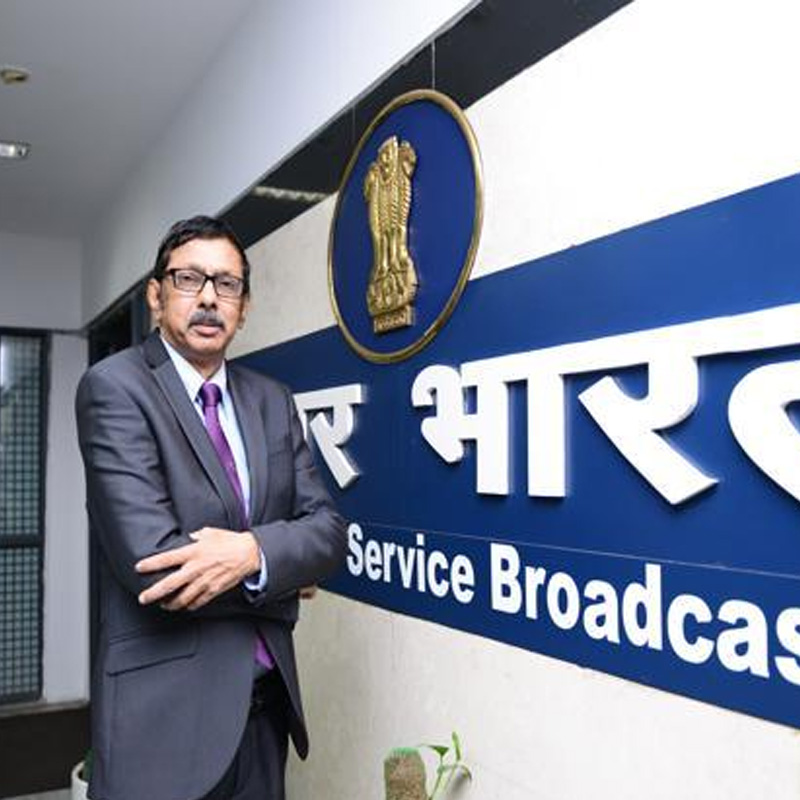
    MUMBAI: Prasar Bharati chairman A Surya Prakash has launched an online application system for music auditions across all genres for the All India Radio (AIR).

    The aspirants who wanted to apply and get themselves graded would now have a better experience in terms of accessibility and availability, the release added. The AIR conducts auditions in different genres of music, including classical, light, folk, tribal and western, and award suitable grades to them.

    Meanwhile, the information and broadcasting ministry has reportedly suspended auction of slots on FreeDish, and would review the channel slot auction process of the air DTH platform. The ministry has asked the pubcaster to suspend e-auctioning of slots on FreeDish until further notice, sources told Mint.

    Doordarshan holds e-auction once in a couple of months to award channel slots on FreeDish to private broadcasters. The platform carries 80 channels, including private channels such as Sony Pal, Star Utsav, Zee Anmol, Rishtey and news channels — ABP News, Aaj Tak, and News 24.

  • MAELS 2017: Free traditional media from regulations, don’t impose these on OTT services

    MAELS 2017: Free traditional media from regulations, don’t impose these on OTT services

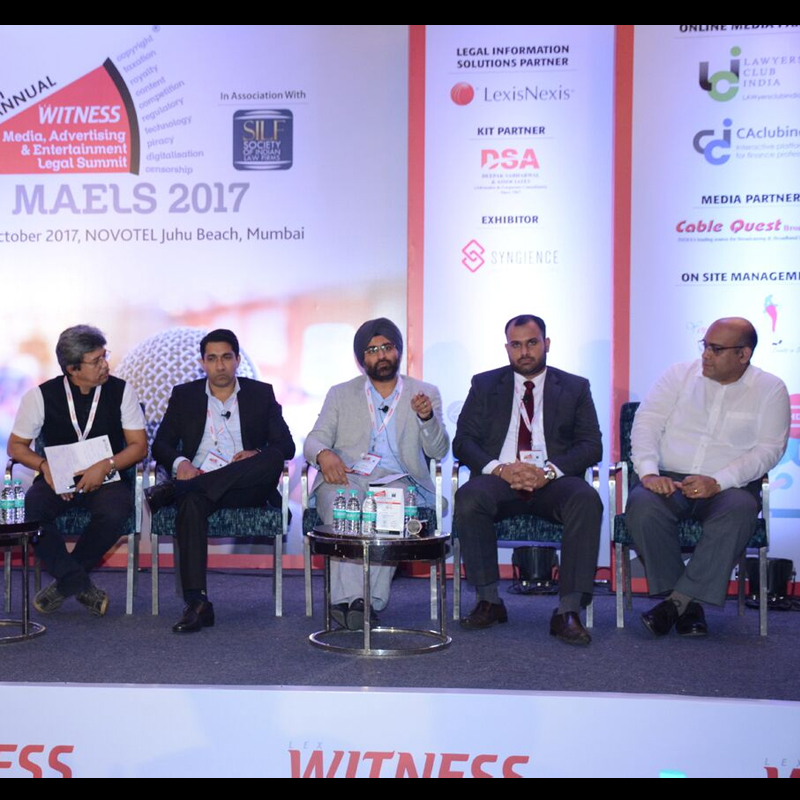
    MUMBAI: Traditional linear television needs to be free from the chains of regulations, and OTT entertainment platforms need to be left clear from any fresh legislation. That was the conclusion of the second panel at the sixth annual Media, Advertising and Entertainment legal summit 2017 which focused on whether the fresh emerging digital communication and entertainment should be allowed to function unfettered.

    The panel discussion on “The New Digital India Wave – An Untamed Beast” moderated by Castle Media CEO Vynsley Fernandes featured Indiantelevision.com founder, CEO and editor-in-chief Anil Wanvari, Alpha Partners associate partner Kunal Arora, Viacom 18 senior vice-president head business and legal affairs Anil Lale, Dhir & Dhir Associates’ partner KPS Kohli and Sony Pictures Entertainment head legal Ayan Roy Chowdhury.

    Wanvari began the discussion by giving a lay of the OTT landscape, emphasising that streaming services, social media platforms, and communication tools such as Snapchat, Skype, Whatsapp, Hike and Messenger, among other, are here to stay and they have seen very rapid uptake.

    “The next six months to a year are really going to see their adoption accelerating even further, courtesy dropping bandwidth prices – which are going to be shaved even further because of competition amongst the telcos,” said Wanvari. “This is going to lead to video consumption becoming more affordable for the masses and the explosion in data consumption will be like we never even imagined.”

    Wanvari pointed out that many of the OTT services have been promoted by broadcasters the services of which are already governed by the Programme Code, the Copyright Act, the Cable TV Regulations Act, and they adhere to strict standards and practices to ensure that they don’t go afoul of the law.

    “Broadcasters rely on self-regulation, and if there is a violation, the Broadcast Complaints Council ensures that the violator is brought in line,” added Lale.

    Arora stated that, as of now, there are no specific regulations governing OTT services – especially the communications services, though a consultation paper was floated by the Telecommunications Regulatory Authority of India (TRAI) in 2015.

    “One concern that I hear from the industry for the non-communication space that content can’t be regulated absolutely, while, for the communication-based OTT, it becomes quite essential to govern the content. For non-communication space, regulation is important from the pricing perspective. Just to keep things moving in the same direction, regulation should be drafted to make sure that the growth of the OTT sector doesn’t hamper or restrict the growth of the traditional sector, ” he added. “Also, with the amount of content flowing over the internet and on OTT services, monitoring and policing each one’s content could be very challenging for any government.”

    Fernandes interjected here saying that technology can intervene here, especially in cases of national security. “In the valley, the government could ask all traditional media to shut down during the time of crisis,” he said. “But, can digital media be controlled so as the servers are located outside India and don’t fall under the country’s jurisdiction?” he questioned.

    To this, Wanvari stated that the controls lie with the authorities as an order from either the TRAI or the home ministry or telecom ministry to the telecom and internet service providers can result in the complete shutdown of the internet in a geographical area which is under threat and totally defuse it.

    “There is this argument of a lack of a level-playing field between traditional media and digital media. There are two kinds of players,” said Arora. “Those which are international, and those which are promoted by indigenous players or groups. You see the more edgy content on the international OTT players, whereas the Indian ones are relatively adhering to the programming and content regulations as mandated for TV.”

    Kohli said, “For digital media there is no regulation. Their content is far more attractive to at least the younger generation because there is a little more skin and possibly abusive language. The traditional media is bound by rules and regulations, and hence it is controlled.”

    Lale mentioned that television has very few controls at the subscriber end, and the Indian families, as a whole, have to watch a little mature content, hence broadcasters have to be more careful. “On digital, because the content is available on your phone or laptop, the content is under your control. If you look at the AVoD service, you will not find content which is more mature – exactly as on TV – but, while on SVoD, you will get content like Games of Thrones. Hence, the payment also comes in this matter. GoT is the example that how regulations should be separated for digital and linear TV,” he said.

    Chowdhury said, “In India, whether we are paying to the service provider or we are paying to the government, in the form of direct-indirect taxes, levy or premiums, we pay for everything. So, there is no reason for the consumer to not shift from non-paying audience to paying audience. Also, the access cost is very less, so it is happening.”

    The panel was totally in agreement that there are enough regulations in place right from the Indian Penal Code, the Copyright Act, to haul up violators, if any, even on the piracy front. “The basic issue of piracy is enforcement. We don’t need a separate regulatory body for OTT services. We have self-regulation,” said Kohli. The government has the EMMC and IPC and various acts to stop the piracy on the web. But, the issue is who’s going to execute, whether you go to the police and enforce it, or is there any technical way of enforcement.”

    Roy Chowdhary proferred that, “Basically, enforcement should come from technology but telecom providers don’t want any controls as more data that is consumed the more they earn. But, if they are not open to cracking down on it, we can turn to blockchain which has an answer to it, which to a large extent curtails piracy.”

  • Copyright infringement or inspiration — it’s still a war

    Copyright infringement or inspiration — it’s still a war

    MUMBAI: Whenever a good movie crosses over into India, the first thought that pops up in one’s mind is — Whether it is copied or is it inspired?

    The war between infringement and inspiration is not only reaching the courts of law but spicing up discussions too. Well, copying in a unique way is inspiration, but copy an original idea or a format or a script is absolute infringement, say legal experts.

    The Sixth Annual Media, Advertising and Entertainment Legal Summit 2017’s session on ‘The converged mediascape and a creative India – It’s copyright cries’ had a spicy kickstart with the panelists — Government of India joint secretary – department of justice, ministry of law and justice, Raghavender GR, Luthra & Luthra Law office partner Deepak THM, Dhir & Dhir Associates partner Siva K Gopinatham, Law Chambers of J Sai Deepak founder J Sai Deepak and Ogilvy and Mather VP and head – legal Kanan Rele.

    The panel was moderated by Raymond director – legal Zameer Nathani.

    Discussing the key topic ‘Infringement of copyright – copyright or mere inspiration,’ Deepak THM said, “It may not be an infringement of cinematograph film but there can be an infringement of script. To compare, certain tests needs to be applied. Substantial similarity test copyright infringement, copyright to characters and copyright to script are some tests to be done before claiming infringement.”

    He added: “India’s one of the biggest blockbuster scripts, Bombay, is based on the play Cohens and Kellys. In the play, the Jewish girl and Irish boy fall in love and secretly marry. ‘Bombay’ is the film on the wrath of communal riots when a Hindu boy gets married to a Muslim girl. But, the movie was not infringed, some portions of the play were inspired and seen in the script, but the script’s elements along with the concept was depicted in a unique pattern.”

    Gopinatham added that copying in a unique way was inspiration, but “in an original way” was absolute infringement.

    Nathani put some light on copyright and royalty. He said, “The idea of introducing royalty cost was to understand the mathematics that if an additional figure is included in the production cost, then how to bear it, and who should bear it. Fundamentally, the exploiter is supposed to bear the royalty fee. For example, a movie was sold to Star (channel). So, every time, a song from the movie is broadcast on Star, the revenue generated from the advertisers will take out a portion for the lyricist. The portion will be decided by copyright society which is not yet decided.”

    Seeing the present era, Nathani added that Facebook is engaging top 10 newspaper agencies to authenticate the news for article infringement and to stop fake news.

    Raghavender spoke about 2012 amendment which was in line with WCT and WPP. He said, “WIPO Copyright Treaty (WCT), introduced in 1996, is a special agreement under the Berne Convention that deals with the protection of works and the rights of their authors in the digital environment. But, there is divergence in convergence because the Digital Millennium Copyright Act 1998 is slightly different from the way we have done it because of the copy control provisions that are there and access control techniques used. Flexibilities, however, are included in WPP and WCT provision.”

    He added: “The concept of flexibility expanded the tricks to protect the interest of the technological, administrative, financial, socio-cultural conditions of the developing countries under Article 6 and 66 Paragraph 1.”

    Kanan, talking about the misery faced by her company owing to the Copyright Amendment Act, said, “I am from the advertising industry, and we are facing two issues due to this amendment. Our employees directly work for us but they are also entitled to royalty. But, there is no society-firm from where these royalties can be collected. The second issue we faced is that Section 18 gives protection to authors that they are not supposed to waive the rights to receive royalty. So, if an author wants to collect money for example an X amount as his lifetime royalty, he has no right under the Copyright Amendment Act to receive that.”

    On consolidated royalty, Raghavender added, “There is a continuous exploitation based on revenue of author-writers in terms of consolidated royalty. And also, s/he is needed to be a member of IPRS as far as royalty rights are concerned.”

    Raghvender briefly explained the reasons of delay in statutory licensing for broadcasting. He said, “Section 31D under the Copyright Amendment Act was introduced for the radio industry, which was later extended to television broadcasters. The purpose of having the statutory licensing provision was to entitling the radio broadcasters to play sound recordings seamlessly, without going through the extortion of negotiations for broadcast by paying a prefixed consideration for such usage.”

    “Earlier, a radio broadcaster had to take three voluntary licenses before exploiting a song either for promotion or for commercial purpose. But, after the denial by the radios for paying high copyright amount demanded by the owner, voluntary licence was denied as per the Berne Convention provisions and statutory license were made. Under statutory licence, the rates of royalty for radio broadcasters shall be different from television broadcasting, and the government shall decide the rate which will be later fixed by the Copyright Board separately for radio broadcasting and television broadcasting. It is restricted to television and radio, and does not apply on webcasting.”

    Kanan shared the key takeaway from the Delhi High Court case of Suneet Varma Design vs Jas Kirat Singh Narula. It was a 2006 case of copyright infringement on Yashraj’s film “Bunty Aur Babli,” using a creation from the designer Suneet’s 2003 collection to dress up an actress in the film — Rani Mukerji. Narula said that he had not designed but purchased the same from a retail shop named Baby Bell in a shopping mall in Mumbai. Based on the provisions of Section 51-52 of the Indian Copyright Act, 1957, the case was dismissed.

    Kanan said, “There are certain guidelines that filmmakers, photographers, etc. need to be given certain liberties as far as creative expression is concerned. Because, it is very difficult to take approval for each and every product or material that is used in the artistic representation of the film.”

    On India’s position at WIPO Broadcasting Treaties, Raghavender said, “At present, the planning committee at WIPO is discussing the numbers, and it has been a point of discussion since the last 15 years. Since then, the WCT and WPP provisions came, the understanding among the stakeholders has increased to 191 in rival states, raised last week by WIPO panel and the reason behind the difference is technology.”

    He added: “In 2005, WIPO rushed with their final round with consensus of rival states on diplomatic content. On one clause of transferring the rights, with the lack of consensus, it took 11 years to revive.”

    “India has denied having implicit webcasting treaty,” he said.

    “In the 20th association, the knowledge data market value, the international norms will be done in the standing committee on copyrights and royalty rights where countries give proposals which become an agenda, and discuss whether there should be a treaty or not. On the basis of all the proposals, a final document is prepared. In the committee, textual negotiations are also discussed. The inclusion of comma and column in language took two days to finalise whether India opposed the proposal, but later, it was sorted out.”

    J. Sai Deepak said: “The Copyright Board should be merged with the Intellectual Property Appellate Board (IPAB), which is a good step, but unfortunately the existing provisions of Copyright Board (Section 11) does not support this, it needs amendments.” IPAB seeks to amend the Copyright Act so as to transfer the functions of the Copyright Board to IPAB, which as of now deals only with matters relating to trademarks, patents and geographical indications.”

    ALSO READ:

    Copyright Board may become part of Intellectual Property Appellate Board

    Star-Vijay Copyright case hearing next week, TRAI to file counter

    Star – TRAI copyright case: In dramatic turn, Madras HC judges withdraw
  • Smriti Irani favours facilitating constructive communication in digital world

    Smriti Irani favours facilitating constructive communication in digital world

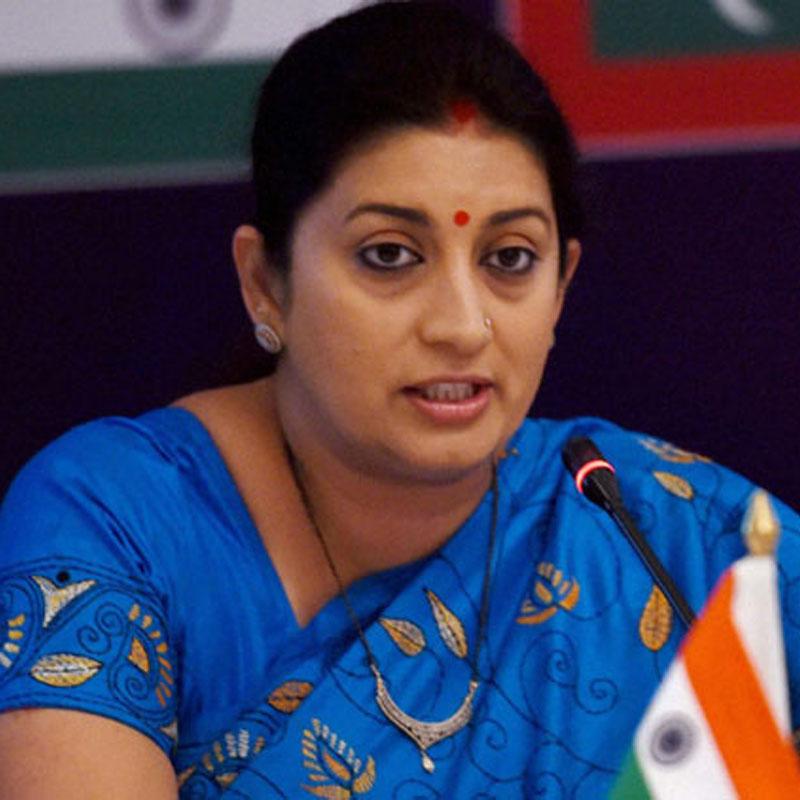
    MUMBAI: Union information and broadcasting minister Smriti Irani has said that the role of the central government was to facilitate constructive communication in the digital world. She was speaking at an interactive session organised by the Observer Research Foundation in New Delhi.

    “I think the biggest challenge and opportunities in managing (digital content) is (to know and understand) the intent behind that creativity,” she said when asked how she managed, as a minister, the artificial distinction in content or creativity in a digital world where jurisdiction and borders had no place, PTI reported. If the intent of creativity or communication was to “create disharmony,” she said then there would be concerns regarding it.

    If the intent was to empower, she said, then it was not the job of the government to intervene.

    About a low budget films performing well, she said that a creative person would “never pursue a balance sheet which says only profit” but would pursue telling a great story. She also said that the best way to discourage bad content was to avoid watching such things. In a creative democracy, in a country like India, we could not ask people to stop making a certain type of content.

  • OTT players claim voluntary compliance as TRAI petitioned on anti-tobacco norms breach

    OTT players claim voluntary compliance as TRAI petitioned on anti-tobacco norms breach

    MUMBAI / NEW DELHI: Even though the Indian government has asked the broadcast carriage and telecoms regulator TRAI to rein in OTT platforms for alleged flouting of norms relating to tobacco and alcohol advisories in programmes, a majority of digital players claim to be voluntarily adhering to government directives meant primarily for TV shows despite absence of regulations for the sector.

    “As we belong to the traditional medium of television, it comes from within to carry Indian government-advised disclaimer (relating to scenes in TV shows and films involving tobacco and alcohol consumption),” Alt Balaji CMO Manav Sethi told Indiantelevision.com, adding, it is “not mandatory” for OTT platforms to do so, though.

    According to Arre co-founder and CEO Ajay Chacko, “OTT platforms are regulated under the Information Technology Act, but carrying a disclaimer relating to tobacco and alcohol consumption in shows depends upon the online content creators. We certainly carry a disclaimer highlighting the negative effects of alcohol and tobacco on health in our shows as done in films.”

    In a controversial and much-debated move, which some critics dubbed as killing creative freedom, the ministry of health and family welfare, some years ago, had come out with a directive stating that all films and TV shows had to carry a disclaimer regarding the negative effects of tobacco and alcohol consumption during scenes where artistes were shown doing the same.

    But why a hue and cry now relating to shows on OTT platforms?

    The ministry of health, according to a report in Millennium Post yesterday, has written to TRAI to ensure that OTT players such as Amazon Prime, Netflix, Hotstar, Reliance Jio and Voot adhere to the ministry’s directive relating to anti-tobacco and alcohol norms. The ministry felt that OTT and digital platforms were not running health-related disclaimers as done by movies and traditional TV shows. 

    But, why lobby with TRAI, which doesn’t regulate or govern content-related issues? In the opinion of the ministry of health, as enunciated by the newspaper report, internet-based services fell within the purview of the Telecoms Ministry and Telecom Regulatory Authority of India and the issue was flagged with TRAI since anti-alcohol and anti-tobacco agencies were finding it difficult to enforce the rule on errant OTT players.

    Though a source in Voot said it voluntarily runs during shows a health warning ticker — like “Smoking is injurious to health” — as part of “best practices”, the health ministry’s letter to TRAI highlights the conundrum of content regulation relating to OTT platforms.

    Indian films and TV programmes started carrying disclaimers on the negative effects of alcohol and tobacco consumption to adhere to the health ministry directive, indirectly enforced by the ministry of information and broadcasting (MIB), but at present there are no regulations relating to OTT platforms in India.

    TRAI has been debating the issue of OTT regulations, as part of net neutrality, with the stakeholders for over a year now but is still in the process of finalising its recommendations, which are expected to be unveiled some time soon.

    However, it is pertinent to point out that TRAI’s jurisdiction doesn’t extend to content regulation and is limited to content distribution and distribution platforms. As there’s no official content regulator like the Ofcom or the FCC, Indian TV channels broadly follow industry-formulated self-regulation norms, guided by pointers enumerated in the Cable TV Networks Regulation Act that’s enforced by MIB.

    ALSO READ :

    TRAI’s final recommendations on net neutrality likely by September

    Net neutrality: TRAI recommendations likely to keep Indian context in mind

    Surrogate liquor advertising: Time for change?


  • Indian radio services set for global expansion

    Indian radio services set for global expansion

    MUMBAI: All-India Radio (AIR) is all set to expand global services for its Indian audience, which will cover Japan, Germany and Canada.

    The AIR is planning to launch the services for several countries, including some in the Commonwealth of Independent States (CIS), with an aim to support the government’s outreach programmes and diplomatic efforts to the Indian diaspora, PTI reported AIR’s external services division director Amlanjyoti Mazumdar as saying.

    The ESD aims to keep the listeners in touch with the ethos of India, also highlighting business opportunities. Maldives and South Africa are also among the countries AIR plans to reach to, it added.

    At present, the ESD covers around 150 countries with programmes in 27 languages, of which 14 target neighbouring countries in Southeast Asia.

    Mazumdar said that Pakistan had increased its presence in African countries through its new radio services, and India could not work in “silos”.

    Meanwhile, Arunachal Pradesh deputy chief minister Chowna Mein said that the state would give every possible support for the improvement of AIR services in the state, the Arunachal Times reported.

    Mein, who launched the extended Arun FM Transmission at AIR Itanagar on Sunday, said that Arun FM (103.1 MHZ) will be an effective medium for dissemination of information on government activities, programmes and policies. He said that he would urge the central government to establish radio stations with FM transmission in all the districts.

    Arun FM is a part of an initiative started by AIR DIG to improve the quality of broadcast. Arun FM will air its own programmes from AIR Itanagar for seven hours, which will be extended to at least 13 hours of broadcast on its own 10 KW transmitter very soon, which will give aerial coverage of at least 40km radius.

  • Media’s best practices and innovations to be shared between India and Ethiopia

    Media’s best practices and innovations to be shared between India and Ethiopia

    NEW DELHI: India and Ethiopia would be signing an agreement on “Cooperation in the field of information, communication and media.”

    The union cabinet chaired by the prime minister Narendra Modi has said that the agreement will harness the growing power of information, communication and media for information dissemination and enhancing outreach between the two countries for inclusive development.

    It will also enhance people-to-people contact through exchange programmes. It would also provide an opportunity for both the nations to share best practices and new innovations in the field of information, communication and media.

    The agreement will encourage cooperation between mass media tools such as radio, print media, TV, social media etc. to provide more opportunities to the people of both the nations and create public accountability.

    The agreement, through an institutional framework, will facilitate exchange of delegations, personnel between the two nations, providing them opportunities to learn from each other’s best practices, bringing in equity and inclusiveness.

  • DoT-regd Net providers can set up towers on defence land

    DoT-regd Net providers can set up towers on defence land

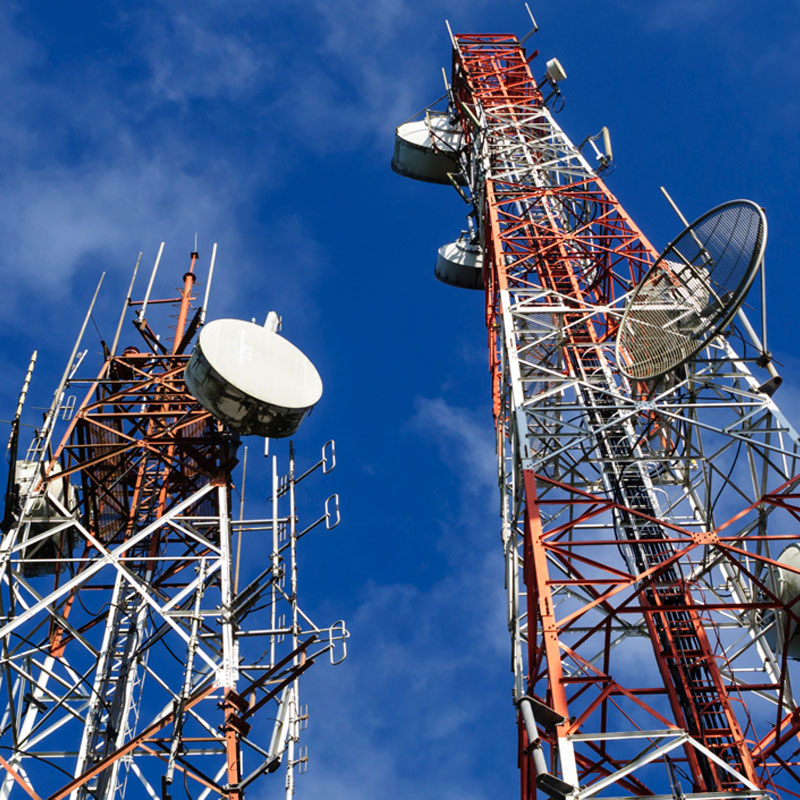
    NEW DELHI: The government has decided to allow allotment of defence land on lease and grant of permission in defence areas and cantonments to access service licensees and companies registered with department of telecommunications as internet provider for setting up shared communication towers and allied infrastructure.

    The union cabinet chaired by the prime minister Narendra Modi has approved a proposal for revision of policy of the ministry of defence for providing defence land to communication operators for construction of shared communication towers and allied infrastructure.

    The decision is based on experience in implementing the policy and guidelines issued by DoT for issue of clearance for installation of mobile towers. 

    This will improve the quality of communication services in the cantonments and military stations.