Category: I&B Ministry

  • M&E items get GST relief from 15 November 2017

    M&E items get GST relief from 15 November 2017

    NEW DELHI: In a major relief to the media and entertainment (M&E) sector, the goods and services tax (GST) has been slashed on a large number of items including electrical apparatus for radio and television broadcasting from 28 per cent to 18 per cent.

    Although the government has failed to address the primary issue of entertainment tax which is a great dampener in view of the losses due to video piracy, the reliefs announced are a winner. The change in taxation is effective from midnight of 15 November 2017.

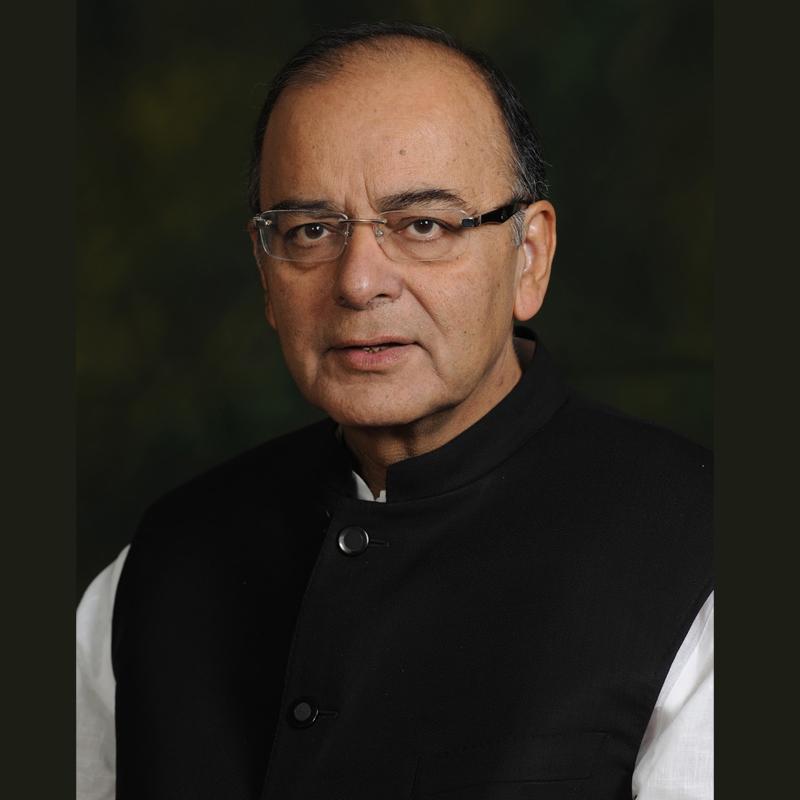
    In its last meeting held in Guwahati in Assam, the GST council under the chairmanship of finance minister Arun Jaitley agreed to cut the GST on several items in the M&E sector.

    Goods on which the council had recommended reduction of GST rate from 28 per cent to 18 per cent in the M&E sector are:

    1. Electrical apparatus for radio and television broadcasting

    2. Sound recording or reproducing apparatus

    3. All musical instruments and their parts

    4. Cinematographic cameras and projectors, and image projector.

    The cable TV sector may also get some relief as the relaxation also covers:

    5. Wire, cables, insulated conductors, electrical insulators, electrical plugs, switches, sockets, fuses, relays, electrical connectors

    6. Electrical boards, panels, consoles, cabinets etc for electric control or distribution

    Apart from this, the council announced exemption from IGST/GST in temporary import of professional equipment by accredited press persons visiting India to cover certain events, broadcasting equipment, sports items, testing equipment, under ATA carnet system. These goods are to be re-exported after the specified use is over.

    The council also said that in order to obviate dispute and litigation, it is proposed that irrespective of whether permanent transfer of Intellectual Property (IP) is a supply of goods or service:

    (i) permanent transfer of IP other than Information Technology software attracts GST at the rate of 12 per cent.

    (ii) permanent transfer of IP in respect of Information Technology software attracts GST at the rate of 18 per cent.

  • MIB, TRAI allay industry fears on sat capacity leasing & content regulations

    MIB, TRAI allay industry fears on sat capacity leasing & content regulations

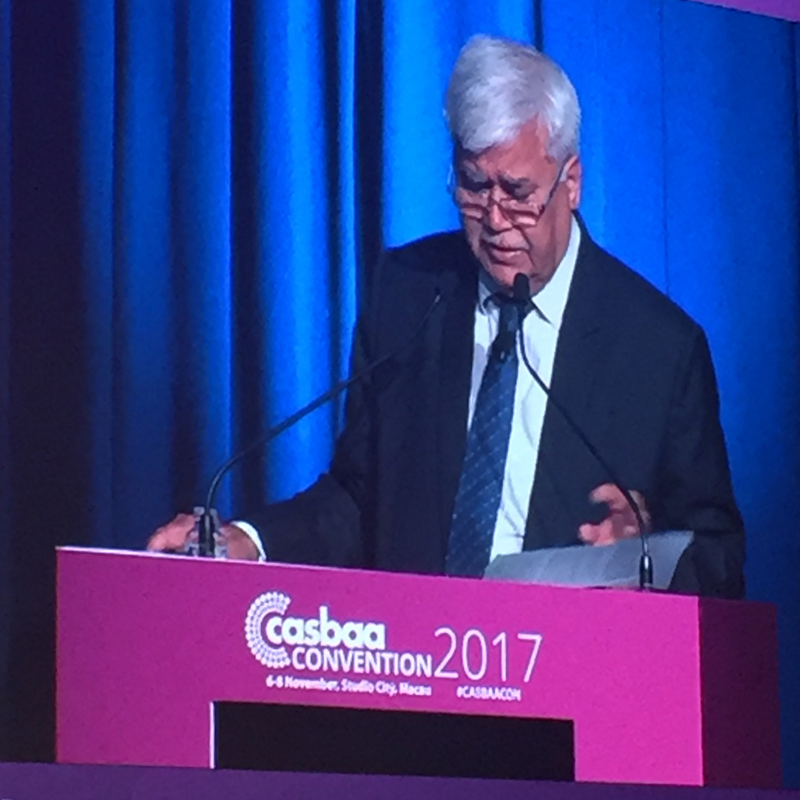
    MACAU: Indian government officials on Tuesday used an international platform of CASBAA Convention 2017 here to allay some of the industry fears on regulatory challenges involving satellite capacity leasing on foreign satellites and possible content regulations, while stating the country strives to be vibrant, living up to PM Modi’s stated policy of ease of doing business.

    “The improvement in India’s ease of doing business global ranking to 100 is not just eyewash. It represents real changes,” Ministry of Information and Broadcasting (MIB) secretary NK Sinha said here, adding that though general talks with the department of space and Indian space agency ISRO were continuing to ease policy restrictions for Indian customers to lease capacity on foreign satellites, a meeting on some specific issues were yet to take place.

    “Prime Minister Narendra Modi’s mantra is perform, reform, transform,” Sinha said stressing on the message that efforts were on to remove bottlenecks to doing business in India’s thriving broadcast and cable sectors and that technology was critical for both communications and content.

    Telecom Regulatory Authority of India (TRAI) chairman RS Sharma chipped in to state the regulatory body had recommended to the government to adopt an open sky policy. “These (ISRO issues) are not issues of principle, but of operation,” he added.

    “The issue also affects broadband provision. To ensure affordable broadband in rural areas, India will need to use satellites to provide this (service),” Sharma elaborated, adding that TRAI was presently studying stakeholders’ comments on its consultation paper on ease of doing business in the broadcast sector “to resolve the matters raised” by the industry.

    The two top Indian regulatory officials involved in matters of broadcast and media were responding to a question from the audience on whether they were aware that it was increasingly becoming challenging for Indian customers (like broadcasters, Vsat and teleport operators, for example) to lease capacity on foreign satellites in the wake of a maze of clearances and paperwork sought by ISRO.

    It must be clarified here that though TRAI has been repeatedly suggesting an open sky policy related to satellite capacities (both C and KU bands), the nodal ministry governing ISRO was yet to take an official stand on the regulatory body’s recommendations.

    public://CASBAA-RS_Sharma.jpg

    In what would — or could — bring smiles on the faces of many in the Indian broadcast and content business, the top MIB official also batted for self-regulation as a way forward, hinting that irresponsible behavior from stakeholders, however, would not be tolerated.

    “Happy with (present) self /co-regulation. Future will be self-regulation. The volume of content is going to explode exponentially. It will not be possible to pre-check each bit of data (but) citizens must be responsive and responsible,” Sinha said responding to another audience query on whether the government proposed to bring in a content regulatory body.

    At present, both the News Broadcasters Association and Indian Broadcasting Foundation have frameworks for self-regulation governing their member-companies. However, there are many out of the 800+ licensed TV channels that are not members of these industry organisations.

    He further pointed out that there needs to be a mechanism to ensure self-regulation comes back on track if it “strays”, though “pre-certification” didn’t look to be the future.

    Earlier speaking at a session themed `View From India’ on Tuesday, both Sinha and Sharma gave a snapshot of the Indian broadcast and media industry to a primarily international and Indian audience at the ongoing three-day CASBAA Convention 2017 here. They highlighted that India thrives as the second largest TV market with  183 million TVHH, 900 TV channels, 310 FM radio stations, 60,000 LCOs, 1,500 MSOs, 360 broadcasters, expanding reach of Doordarshan’s FTA DTH service, multiple DTH platforms, one HITS and several IPTV platforms, apart from OTT services.

    The chief of TRAI, which regulates the carriage and tariff segments of the broadcast sector and delivery platforms, in his address said the industry had grown at the rate of 15 per cent CAGR for the last five years and is projected to grow a shade less at 14 per cent for the next five years.

    While skirting a direct reference to TRAI’s new tariff regime for the broadcast and cable sectors being legally challenged by some industry players and presently being debated in Indian courts, Sharma mentioned the regulatory body had announced a framework that was “fair, transparent and non-discriminatory”.

    “Centralised distribution audits will ensure all broadcasters get audit information. This will reduce the burden on distributors and broadcasters,” he highlighted as an example of its regulatory fairness vis-a-vis multiple audits of customers being presently done draining human and financial resources of stakeholders.

    Dwelling on the ambitious multi-million Indian rupee national fibre optic network project or Bharat Net, Sharma said it was now a public-private venture not only for broadband, but also for delivering TV services. “Come, analyse and invest in the Indian broadcast sector,” he exhorted the global investment and media community.

    ALSO READ:

    MIB reverts to earlier norms of seeking nod from ISRO on uplink/downlink of TV channels

    MIB secy Sinha, Viacom18 CEO Vats to speak at CASBAA convention in Nov

  • Prasar Bharati gears up to mark 20th anniversary

    Prasar Bharati gears up to mark 20th anniversary

    NEW DELHI: Celebrating its 20-year anniversary, Prasar Bharati is conducting jingle and short film competitions for current and former employees. People have to send their nominations by 10 November.

    This year is also important as Prasar Bharati has for the first time shifted to its own premises, adjoining Doordarshan in Copernicus Marg in New Delhi. Until now, it had been a tenant in the PTI Building on Sansad Marg (Parliament Street), just opposite Parliament House Annexe.

    A statutory autonomous body established under the Prasar Bharati Act 1990, it came into existence on 23 November 1997.

    Prasar Bharati had been conceived as a trust known as Akash Bharati in the report prepared by a committee headed by the late renowned mediaperson B G Verghese in 1978 focused on autonomy for broadcasting in India.

    After Prasar Bharati came into formation, both All India Radio and Doordarshan came under its ambit. These public service broadcasters had till then functioned as media units under the Ministry of I&B.

  • SC tells DD to air show warning about Blue Whale

    SC tells DD to air show warning about Blue Whale

    NEW DELHI: Amidst reports of suicides reportedly caused by the Blue Whale online game, public broadcaster Doordarshan has been asked by the Supreme Court to conceive and air a cautionary and educational programme on its dangers.

    DD was given a week’s time to prepare the programme that should be of at least ten minutes and should be telecast at prime time.

    A bench headed by chief justice Dipak Misra with justices DY Chandrachud and AM Khanwilkar said, “Anything that threatens life should be condemned.” The case by a 73-year old Chennai advocate N S Ponnaiah has been posted for further hearing on 15 November 2017.

    “Suffice to say that the Blue Whale game is dangerous to life. What endangers life has to be condemned and not allowed,” Misra observed.

    The court asked DD to script the programme in consultation with the Ministries of Home Affairs, Women and Child Welfare Department, Human Resource and Development and Information Broadcasting, and Information Technology.

    The court also directed the government to see to it that private channels also telecast the programme.

    “The idea behind the programme is to make parents and children aware of the dangers of online games like Blue Whale. The message of the programme should be that children should not be trapped by the game. There are children who are lonely and frustrated. Definitely visuals will have more impact,” Chief Justice Misra said.

    According to additional solicitor general PS Narasimha, a committee constituted by the Ministry of Information Technology found that around 28 cases have been traced to have links with Blue Whale game. A probe was on and a complete picture of the extent and means of the game would be ascertained in the next three weeks.

    The Centre was determined to “stop the game”, which has the potentiality to destroy life. The government had communicated to many agencies and online platforms to check and inform on the availability and use of the game.

    The commission has told school authorities to thoroughly verify the background of teachers and non-teaching staff before hiring them.

    The Blue Whale challenge is a game created by Russian national Philipp Budeikin, 22, in which a set of instructions tell the players to harm themselves and eventually commit suicide. Budeikin is now in jail.

  • Smriti Irani: Need to reduce gap between regional & national news & democratize viewership

    Smriti Irani: Need to reduce gap between regional & national news & democratize viewership

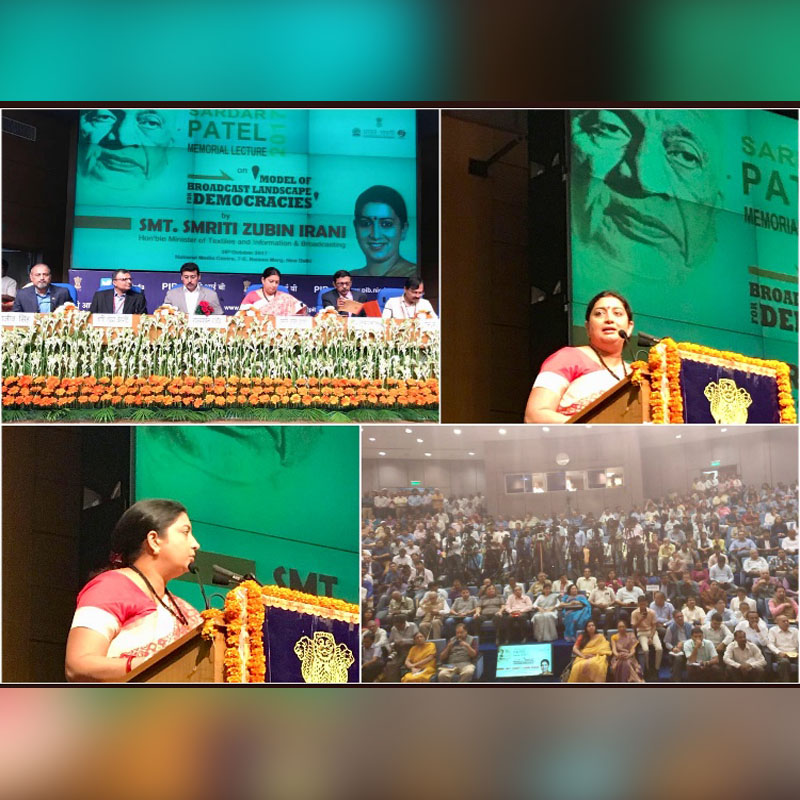
    NEW DELHI: Stressing on the need for a model structure of broadcasting, which can strengthen the Indian democracy, Minister for Information and Broadcasting Smriti Irani yesterday exhorted the media to reduce the gap between regional and national news, thus democratizing viewership, and the need for meeting objectives of public good and entertainment.

    “If we want the broadcasting landscape to be strong, the first and the foremost requirement is to give as much importance to the regional content as the national content…(and) reduce the gap between the regional news and  national content,” Irani said yesterday while delivering the Sardar Patel Memorial Lecture 2017 themed ‘Model of Broadcast: Landscape for Democracies’.
     
    Describing the broadcast news landscape as a “spectator sport”, the minister said the rush for audience ratings has reduced everything to “headlines competing with hashtags” in the wake of social media explosion taking place in the country that has provided a new pathway for information dissemination.

    Coming down heavily on a certain section of the media for being driven by TRPs, forsaking codes, ethics and conduct rules, unlike another section, Irani said, ”There is a need to democratize the (audience) measurement system in the country.”

    According to the feisty minister, who also holds the portfolio for Textiles Ministry, a model structure of broadcasting should focus on “democratized viewership” based on an accurate measurement system that reflects the strength of regional languages, varied tastes of viewers/consumers and bridges the divide on issues related to agenda setting, creative content and revenue between the mainstream and regional platforms.

    Stressing the importance of the sector keeping abreast with trends in the social media, which she described as a “disruptive” force, Irani said though the broadcasting sector is based on business propositions and technological upgradation, the ‘Mann ki Baat’ programme of Prime Minister Narendra Modi aired on AIR was an ideal example of how a technology platform blended his message with citizen understanding and awareness of the issues highlighted in each episode.

    Highlighting the difference in the way pubcasters — Doordarshan and All India Radio — functioned vis-a-vis a large section of the private sector media, Irani added: ”If you look at the broadcasting sector, the overriding focus of the public broadcaster has been on serving the public good. In today’s times, however, when news has become a spectator sport, there is a need to bridge the gap between serving the public good and providing entertainment.”

    The annual lecture held at the National Media Centre in the Capital, started by All India Radio way back in the 1950s, was attended by Minister of State for MIB Rajyavardhan Rathore, pubcaster Prasar Bharati chairman A. Surya Prakash and Prasar Bharati CEO Shashi S. Vempati, apart from other senior government officials.

    Even as Irani lauded the public broadcaster’s endeavour to focus on public good, she said it was the “duty of the public broadcaster to speak fairly and freely, as it is doing now”. She also called upon the pubcaster to weave stories on the lives of ordinary people, which could have an impact both within India and abroad.

    The minister said it would be the endeavour of MIB to promote the concept of “design thinkers” for content generation in the digital space in the light of growing use of technology by the young generation in areas of internet, mobile content and animation & gaming. This would also incorporate the elements of the New India vision envisaged by the Prime Minister by 2022.

    Highlighting the fulcrum strength of her ministry, Irani said that the Information Service officers’ profile would be strengthened in the future by giving them skill sets along with an integrated administrative exposure so as to enable them to serve policy and programmes of the people through the medium of information. This would be along the lines of Sardar Patel’s vision of creating a steel frame to serve the people through the channel of information dissemination, she added.

    The first Patel memorial lecture was delivered by C. Rajagopalachari, while the other distinguished speakers in the series have included stalwarts like Dr. Zakir Hussain, Dr. A.P.J. Abdul Kalam and Morarji Desai.

    Also Read: Smriti Irani tweets industry body advisory urging restraint by TV news channels

    MIB minister Smriti Irani orders review of DD prime time auction process

    Smriti Irani gets additional charge as MIB minister

    BARC India to TRAI and MIB: Tweak legislation to make data tamper-proof

  • Govt launches interactive IPR website

    Govt launches interactive IPR website

    NEW DELHI: A website has been launched by the government to effectively implement the National Intellectual Property Rights (IPR) Policy.

    The official website for the Cell for IPR Promotion and Management (CIPAM) of the Department of Industrial Policy and Promotion (DIPP) was launched by Minister for Commerce and Industry Suresh Prabhu here today. Secretary DIPP Ramesh Abhishek was also present.

    The website is interactive providing regular updates on all upcoming events including awareness and sensitization programs being conducted, as also information on all Intellectual Property Rights. It would make available resource material on IPRs specially curated for various levels: schools, universities, industry and enforcement agencies.

    One can read the latest news and updates, specially curated feed on all latest happenings in the world of IP, insightful and educational blogs by CIPAM and IP experts.

    The website provides regular updates on the latest IP trends – statistics on applications filed, examined, grants and disposal for various IPRs. It would provide information on the various initiatives being taken by the Government to strengthen the IPR regime in the country.

    The website can be reached on www.cipam.gov.in or follow CIPAM on Twitter at @CIPAM_India for updates.

  • Rural India gets e-commerce & TV ready via optic fibre network

    Rural India gets e-commerce & TV ready via optic fibre network

    NEW DELHI: The BharatNet project, which aims to deploy high-speed optical fibre cables across rural areas of the country, has now reached 83,000 gram panchayats, according to Department of Telecommunications Secretary Aruna Sundararajan.

    Speaking at ‘i-Bharat 2017’ on the theme ICT Elucidations for Unserved and Unsolved, organised by FICCI in association with the Ministry of Electronics and Information Technology, Sundararajan said that by December this year the first phase of BharatNet will be complete. This would provide 100,000 gram panchayats with broadband connectivity by laying underground optic fibre cable lines.

    The DoT is aggressively monitoring the prestigious BharatNet initiative that aims to provide Internet connectivity to 2,50,000 gram panchayats or village blocks by March 2019.

    The entire project, when complete, is expected to give a fillip to e-commerce services, including e-governance, education and television services to far flung areas of the country.

    The DoT Secretary said fibre-isation was a national imperative and the government, industry and chambers of commerce needed to work in coalition to achieve the objective of doubling the telecom footprint in the country by 2020.

    Quoting from internet guru Mary Meeker’s 2017 report released in May this year, she said there are over 355 million monthly active internet users in India, while nearly 109 million smartphones were shipped in 2016. Nearly 46 per cent of internet users in India consume content in local languages. In the first quarter of 2017, 27 million smartphones were shipped. Most Indians used the internet on their mobile phones (80 per cent usage was on mobile as compared to the global average of 50 per cent). The most used browser in India was UC Browser, followed by Chrome and Opera. WhatsApp, Facebook Messenger, Shareit, Truecaller and Facebook are the most used apps in India.

    She said these figures threw up challenges in the policy domain, particularly in terms of security; data privacy and protection, data regulation and data monetisation.

    Hewlett-Packard Enterprise MD Som Satsangi said that with the impending large-scale migration of people from the rural areas to the proposed smart cities, the challenge before the industry would be to meet their rising expectations and services on demand. The industry must be ready to provide low-cost, affordable solutions to the aspirational people at the bottom of the pyramid.

    Indian Express Group executive director Anant Goenka said India would soon overtake China as the consumer base for telecom and IT and therefore, if the objective was to shape digital India, there was a need to look beyond the current trends. The Aadhaar database must be leveraged while tackling privacy issues.

    FICCI ICT & Digital Economy Committee Chairman Virat Bhatia said following the government initiatives, the internet landscape of India is about to experience a tectonic-shift. The next millions of users that will come on the internet by 2020 will utilise ICT as a socio-economic tool of development. To fulfil the dream of ‘New India’, “we all have to work towards good governance and streamlining the marginalised section of the society and transforming India into an empowered and inclusive knowledge-based society,” he said.

    FICCI secretary general Sanjaya Baru emphasised the need to have pre-policy consultations between the government and industry rather than resort to post-policy alterations which leads to needless confusion. FICCI, he said, would initiate closed-door consultations for industry so that its representatives can have a free and frank discussion with policy makers in the government.

  • Fever FM revenue up but HT Media revenue shrinks

    Fever FM revenue up but HT Media revenue shrinks

    BENGALURU: Indian media group HT Media Limited (HT Media) reported a drop in consolidated revenues and increase in consolidated profits for the quarter ended 30 September 2017 (Q2-18, current quarter) as compared to the corresponding year ago quarter (y-o-y). The company reported 11.2 percent y-o-y drop in consolidated total income at Rs 6,041.3 million in Q2-18 as compared to Rs 6,802.3 million. Net profit after tax, however, more than doubled (up 2.14 times) y-o-y to Rs 662.2 million in the current quarter as compared to Rs 309.3 million.

    HT Media has four segments-Printing and Publishing of Newspapers & Periodicals (Printing); Radio Broadcast & Entertainment (Radio); Digital; and Multimedia Content Management (Multimedia). The y-o-y drop in revenue was mainly due to drop in revenues of the company’s printing segment.

    The company reported an 18.4 percent increase in revenue for its radio segment that operates radio stations under the brand Fever FM for the current quarter. HT Media’s radio segment reported an operating profit of Rs 26.2 million as compared to an operating loss of Rs 3.3 million in Q2-17. HT Media, in its investor presentation for the current quarter, informed that its radio business continued robust growth and increase in profit margins. It says further there was revenue growth in core stations, while new stations continued to perform adding to top line in a profitable manner and that synergies in costs had brought in margin expansion.

    Printing segment revenue declined 5.9 percent y-o-y in Q2-18 to Rs 4,948.9 million from Rs 5,259.5 million in Q2-17. Printing segment operating profit more than doubled (2.25 times) to Rs 1,048.8 million in Q2-18 as compared to Rs 467.2 million in Q2-17. HT Media’s digital segment revenue declined 9.5 percent to Rs 337 million from Rs 372.5 million. Digital segment reported an operating loss of Rs 116.2 million in the current quarter as compared to an operating loss of Rs 128.6 million in Q2-17.

    HT Media’s Multimedia segment reported operating revenue of Rs 444.6 million and an operating profit of Rs 8.5 million. The Multimedia segment had revenue of Rs 473.4 million in Q1-18 and an operating profit of Rs 2.9 million.

    HT Media chairperson and editorial director Shobhana Bhartia said, “Advertising revenue growth continues to be a challenge in our coreprint business, with this quarter witnessing high level of uncertainty across industries on account of GST implementation. Our radio business continues to do well. New radio stations are generating revenue and the entire radio business witnessed an increase in operating profits. While advertising revenue in print has been soft, operating profits continue to grow steadily on the back of strong cost management and aided by favourable currency and commodity rates.”

    “GST is expected to stabilise soon which should lead to a better macroeconomic environment and result in higher advertising spends. With growth coming back to core business, we hope to deliver better results to our shareholders,” added Bhartia.

  • DRM best system as it utilises existing tech, uses less spectrum: Pal

    DRM best system as it utilises existing tech, uses less spectrum: Pal

    NEW DELHI: Even as the Telecom Regulatory Authority of India has scheduled an open house discussion on digital radio broadcasting based on a paper issued by it on 10 July this year, the Digital Radio Mondiale has strongly urged the government to encourage the efforts of digitising the All-India Radio medium wave and short wave transmissions using the DRM standard.

    In its response to the consultation paper, the Indian wing of DRM Consortium has said the government should also facilitate full utilisation and announcement of a roadmap for the complete switchover of radio broadcasting, including the private FM and Community Radio Stations, to digital radio in India.

    DRM Consortium – India head Yogendra Pal, in his detailed response, said that the existing analogue transmission equipment (both AM and FM) can be upgraded to DRM operation, reducing initial setup cost (depending on hardware manufacturer/model)

    He said when upgrading an analogue transmitter to full-digital operation, the same or even more coverage than with analogue before can be achieved, while significantly reducing transmission power, enabling green and cost-optimised broadcast networks for the future

    DRM allows for a flexible trade-off between transmission power, coverage requirements and content capacity, to always enable the most economic operation for any given coverage scenario

    The Consortium “strongly feels that there is an urgent need to frame a roadmap for digital radio broadcasting in all bands. This includes the FM band and private FM broadcasters too.

    There is no doubt that FM analogue radio is a very good standard. It provides stereo audio broadcasting, it is a robust and well established. There are millions of FM receivers and there is demand for the expansion of private FM broadcasting and community radio stations.

    Referring to the usage of FM spectrum, he said available FM spectrum is not sufficient to meet the full demand by Indian broadcasters and the public. FM Band is from 88MHz to 108 MHz that is, 20 MHz bandwidth. One single FM channel needs 200 kHz bandwidth. So, theoretically, there can be a maximum 100 FM channels in the full FM band.  But, unfortunately, neither is a full band available for broadcasting nor can two adjacent channels be broadcast without some guard band. The same FM frequency can be repeated only after about 400 to 600 km, or with a frequency separation of several hundred kHz. Although FM broadcasting is popular, the possibilities for extending the FM coverage in its band of 88-108 MHz remain limited.

    In addition to stereo audio content, analogue FM enables the broadcast of a very low bit data channel. Analogue FM, an early 20th century technology, is a successful standard but, in truth, it has reached its spectrum, coverage and improvement limits. It might be a good solution for here and now but not a strategic choice for the future, with increasing expectations of the public regarding audio quality, service diversity, and added-value services tying radio in with modern media consumption. This, in time, has to be and will be accompanied and, eventually, replaced by the digital, compressed, enhanced features of digital radio. Using only 50 per cent spectrum, digital (DRM) in VHF band is able to offer multiple services on a single frequency, 5.1 surround sound quality and a number of value added services along with significant transmission power savings.

    “So keeping in tune with the vision of the new government, it is time to plan digital broadcasting in VHF (FM) band also using the already adopted DRM standard and thus benefitting from the following salient features:

    1.    Equally supporting all terrestrial radio broadcasting bands, including MW, SW and VHF bands (with the FM band II included alongside band I and band III). The audio quality offered by DRM is equally excellent on all the transmission bands: MW, SW or VHF

    2.    Robust signal unaffected by noise, fading or other forms and interference in all bands

    3.    Clear and powerful sound quality with facility for stereo and 5.1 surround

    4.    More audio content and choice: Up to three audio programmes and one data channel on one frequency

    5.    Extra multimedia content: Digital radio listeners can get multimedia content including audio, text, images and in future even small-scale video, such as:

    a.    Text messages in multiple languages

    b.    Journaline – advanced text based information service supporting all classes of receivers, providing anytime-news for quick look-up on the receiver’s screen; interactivity and geo-awareness allowing targeted advertising

    c.    Electronic Programme Guide (EPG), showing what’s up now and next; search for programmes and schedule recordings

    d.    Slideshow Programme accompanying images and animation

    e.    Traffic information

    Due to the inherent advantages of digital broadcasting, broadcasters the world over are adopting high quality digital delivery systems with TV leading the way. Mandatory digitisation of cable TV networks in India is the example. Digitisation of the terrestrial radio broadcasting is also inevitable. In fact the Planning Commission in 2006 had given timelines for the switch-off of analogue radio and terrestrial TV transmissions in India as well. AIR and DD started taking action in this direction.

    AIR has chosen the ITU endorsed DRM standard, with all technical specifications published and freely accessible to the Indian industry for the digitisation of its terrestrial radio networks. But the task of migrating AIR’s terrestrial broadcast services today is still incomplete. Therefore, it is essential that the full potential of DRM digital radio in MW & SW is soon utilised by configuring the best possible audio quality, finalizing the service selection for each location, and adding value-added services such as Journaline text and EWF (DRM’s Emergency Warning Functionality), and a roadmap is provided for the complete switchover of radio broadcasting, including private FM and community radio Stations, to DRM digital in India. This task, demanded to be carried out immediately by the by the ministry of information and broadcasting (MIB) will require a department-spanning stringent management that also reaches out to the public and the Indian receiver and automotive industry.

    DRM is the newest and most technologically advanced global digital radio standard. It is internationally standardized by ITU and ETSI for digitising terrestrial radio broadcasts in all frequency bands (both AM and FM bands). It is capable of fully serving India’s needs, with all its diverse coverage demands, at low energy costs and with rich and freely accessible features set. DRM is the digital radio standard in direct succession to its analogue predecessor technologies AM and FM. It matches existing ITU-conforming channelization and frequency regulations, and maintains full ownership on the technology, its deployment, product development and roll-out in the hands of the government and industry.

    In January 2017, then MIB minister M Venkaiah Naidu had lauded the national public broadcaster All India Radio (AIR) under Prasar Bharati for having successfully completed phase 1 of the national digital radio roll-out. AIR has completed the installation of the nationwide network of 37 powerful medium and short wave transmitters operating in simulcast  and/or pure DRM mode, resulting from a significant national investment.

    Phase II inaugurated by him is aimed at finalizing the selection of programmes per region, the implementation of all DRM features and the improvement of the content quality provided by those transmitters, and will ultimately result in the official launch of DRM digital radio services by AIR to listeners.

    Though DRM has not officially been launched yet as a service to the public, given that phase 2 of the national roll-out of DRM digital radio by AIR has just started a few months ago, the industry is already showing their commitment and support to be in the market with products once AIR’s DRM services will officially launch.

    Probably the most important factor for establishing modern radio listening habits is the support for AIR’s digital radio roll-out demonstrated by the automotive industry. Mahindra & Mahindra demonstrated their line-fit DRM receiver in car models launched not long ago. Also Maruti Suzuki has launched cars with DRM line-fit receivers. In early 2017, Hyundai joined by announcing two new car models with native DRM support. By late summer 2017 this has grown to a total of five models ranging from entry-level products to high-end cars – all radio sets with DRM functionality included, at no extra cost. Many major automotive brands have scheduled the launch of DRM capable car receivers for India in the next two years, almost all of them based on chipsets developed and produced in India.

    Today India is in a leading position worldwide by rolling out digital radio on a national level using the DRM standard, with great cooperation and product export opportunities into countries all over Asia-Pacific and beyond. Currently countries such as Pakistan (for both local coverage in the FM band and large-area coverage in the AM bands), Indonesia, South and Southern Africa, and many more are in the process of adopting and/or rolling out DRM for national coverage. In addition, a huge portion of the world’s population is already covered by DRM transmissions on international shortwave.

    In the past, several digital radio standards have been thoroughly tested and reviewed by Indian authorities, and DRM was tested, identified and confirmed to be the best suited option for India’s radio digitization needs (incl. the detailed “Report of the Expert Committee on Prasar Bharati” under Dr Sam Pitroda). DRM is the most advanced standard to-date, incorporating the experiences and lessons learned from previous approaches. It utilizes the latest audio codec “MPEG xHE-AAC”, which ensures the highest possible audio quality even for very robust transmission signals.

    From a cost and business perspective, DRM transmission equipment and receivers are easy to calculate and cheap to produce by manufacturers: Firstly, given that DRM is an open standard, no ‘licence’ (or ‘permission to use proprietary technology’) is required.

    All aspects of the DRM technology are published and freely accessible, and no single company or entity owns the DRM technology. There is no use-fee or revenue sharing approaches for the DRM technology – neither for broadcasters nor for listeners.

    DRM can carry up to four services per transmission as a flexible mixture of data and (up to three) audio services

    DRM ensures clear sound with the latest MPEG audio codec technology xHE-AAC, enabling multiple stereo programmes in FM quality on a single MW transmission, stereo services over SW, and multiple stereo or even 5.1 surround services in the FM band

    Thanks to the Journaline advanced text application, DRM makes the broadcast’s rich textual information treasure with news, sports updates and much more, in the past only available on the broadcaster’s web page, available to all listeners right on the radio sets as part of the radio service – free to air, without the need to pay for Internet access, and simultaneously in a multitude of languages with every DRM transmission

    DRM allows the broadcaster to transmit multiple audio and data services in a single transmission, without any extra cost or the need to sign licence contracts

    DRM allows the broadcaster to transmit special or even B2B data applications such as traffic services, without extra cost or the need to sign licence contracts

    The ITU approved DRM standard provides identical functionality on all broadcast bands from large-area coverage in the AM bands to local/regional coverage in the FM band, ensuring optimized and low-cost receiver design

    DRM is the only digital radio ITU standard to also cover national and international shortwave transmissions

    DRM in VHF bands uses less spectrum than current stereo FM broadcasts, whilst additionally deriving the potential benefits of increased robustness, reduced transmission power, increased coverage or additional services: While analogue FM transmissions carry a single audio service within a bandwidth of at least 200 kHz, a DRM digital radio signal carries up to three audio services along with value-added services in better-than-FM quality within only 96 kHz bandwidth for the on-air signal.

    It helps in automatically switch for disaster & emergency warnings in case of impending disasters. In large areas, automatically presenting the audio message, while providing detailed information on the screen in all relevant languages simultaneously. Great potential to become the surest and widest means of alerting the population to emergencies.

    DRM supports multi- and single-frequency network operation (MFN/SFN). SFN operation allows multiple transmitters to cover a common area on a single frequency, which allows for new and more efficient network designs by extending coverage areas with additional synchronized transmitters as required, and solving typical network problems such as signal outages due to shadowing by using small-power gap-filler transmitters. In contrast, analogue FM services required additional individual FM frequencies for each additional transmitter in the network, as otherwise the signal in the overlapping coverage areas would be destroyed.

    DRM supports the automatic hand-over to other frequencies and even other networks (AFS – Automatic Frequency Checking & Switching) once the receiver leaves the coverage area of the currently tuned transmission, and thus keeps the selected service tuned as long as possible while on the move without the needs for any user interaction.

    DRM is fully compliant with the frequency allocations of the current FM and its analogue transmissions. And using DRM’s simulcast operation mode, it guarantees for a smooth transition from analogue FM services to future DRM-only operation by initially inserting the new digital services in the existing FM band without affecting the already existing analogue transmissions.

    The extension of the licence (which should be free, or at nominal cost) would be dependent on the broadcaster getting digital services on the air (within a specified period of i.e. 1or 2 years). This is realistic as the digital signal in DRM is only 100 kHz wide and can be contained within the 800 kHz FM allocation, or it can be placed independently wherever there is a gap in the spectrum (and not necessarily next to the FM frequency).

    DRM suggested a smooth and non-disruptive migration from analogue-only FM to future digital-only DRM transmissions in the FM band over a period of time, and with full protection for the FM licences issued to broadcasters as part of Phase-III and previously. During this transition period DRM’s simulcasting capabilities and flexibility in terms of using gaps in the FM spectrum while peacefully co-existing with analogue FM services (and, thereby, greatly extending the overall capacity of the FM band) are key success factors.

    DRM has recommended the following ‘very flexible’ approach:

    1. Complete the allocation of Phase III of private FM auctions (for 15 years permission as per the existing policy) as early as possible. And as an incentive for going digital, allocate an additional frequency (absolutely free for, say, five years) to each of the successful bidders in VHF band for DRM services with the condition to implement the DRM digital services within a definite period of, say, one or two years. Failing this initial setup term or failing to continuously operate the additional digital transmission at any time during the proposed five-year period, the allocation of the additional frequency for DRM digital should be deemed to be cancelled and available for separate auctioning to third parties.
    2. Allocate an additional frequency (absolutely free for, say, five years) to each of the existing FM broadcasters in VHF band for DRM services on the condition to implement the DRM digital services within, say, one or two years period. Failing this initial setup term or failing to continuously operate the additional digital transmission at any time during the special licence grant (of, say, five years), the allocation of the additional frequency for DRM digital should be deemed to be cancelled and available for separate auctioning to third parties.
    3. Irrespective of whether or not the licencee chooses to use the free additional digital-only, licenced to obtain permission to migrate their main analogue FM frequency to DRM on the existing terms and conditions.
    4. Announce that no analogue radio transmissions (including analogue FM licence extensions) would be allowed after 15 years or at the end of the current FM licence terms, respectively, and develop a policy to renew the licences of the existing private FM players, as and when these expire, for the maximum period of 15 years from now keeping in view the time for analogue transmissions proposed to be allowed to the successful bidders of Phase III.
    5. Within the period of five years, develop and announce plans for the allocation of frequencies for DRM digital transmissions in the VHF band for AIR, private FM and Community Radio Stations. Also keep the requirements in view for the All India Highway Advisory Service in DRM digital proposed to be started by the National Highway Authority of India (NHAI).
    6. AIR should also develop and announce its plan for DRM digital implementation in VHF bands, as well as the remaining analogue MW & SW transmitters, as per the above proposed 15-years switchover period from now.
    7. Develop and announce policy for DRM digital implementation for Community Radio stations also along similar lines.
  • MIB takes note of banned Zakir Naik content on Kashmir TV channels

    MIB takes note of banned Zakir Naik content on Kashmir TV channels

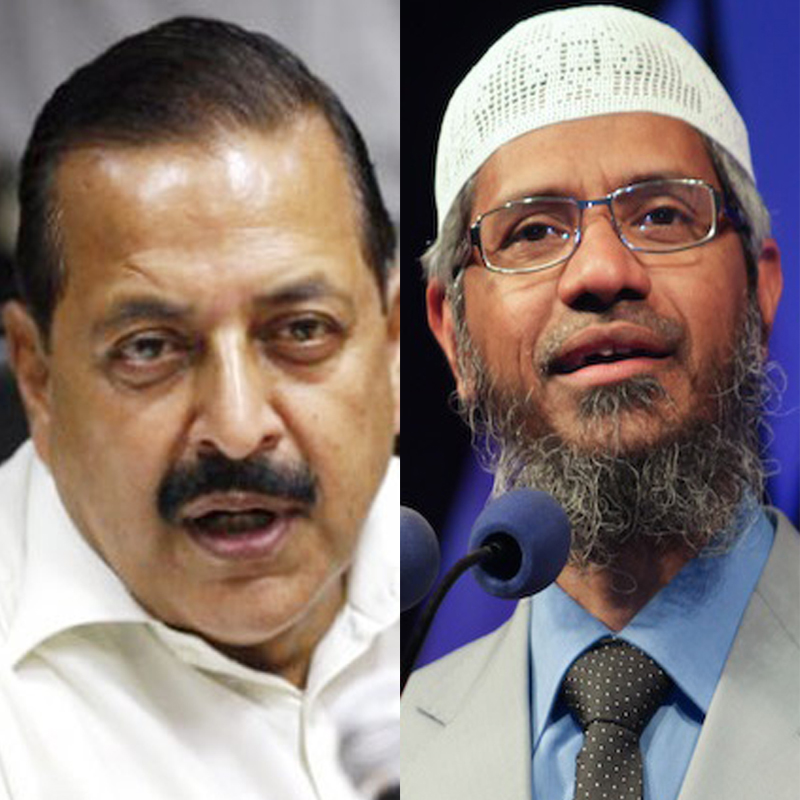
    MUMBAI: Despite a ban on Peace TV, the hate preacher Zakir Naik’s speeches reportedly continued to be telecast on channels in Jammu and Kashmir, and the ministry of information and broadcasting (MIB) has taken note of a news report in this regard. Naik was, earlier this year, declared a proclaimed offender and the National Investigation Agency (NIA) undertook a process to attach his assets.

    The ministry, the Times of India reported, is expected to write to Jammu and Kashmir chief secretary to take suitable action in the case. Also, the MIB may, reportedly, issue show-cause notices to cable operators in the state, who are broadcasting the controversial speeches.

    Minister of state in the Prime Minister’s Office Jitendra Singh said that they would convey to the related government departments and tell them to verify the development and a stand accordingly.

    NIA chargesheet against Naik has revealed that his organisation had connections with terror groups. He has been accused of spreading hatred through his provocative speeches, funding terrorists and laundering billions of rupees over the years. The NIA also claimed that Naik had engaged in “anti-India activities”. It was not just his hate speeches, but NIA also accused his organisation of providing “financial and tactical” aid to terror suspects.

    ALSO READ

    Report illegal TV channels, Govt alerted

    Peace TV Saga: 24 TV channels identified unfit for telecast in 2015 by India

    Indian govt warns against re-transmission of Peace TV illegally