Category: I&B Ministry

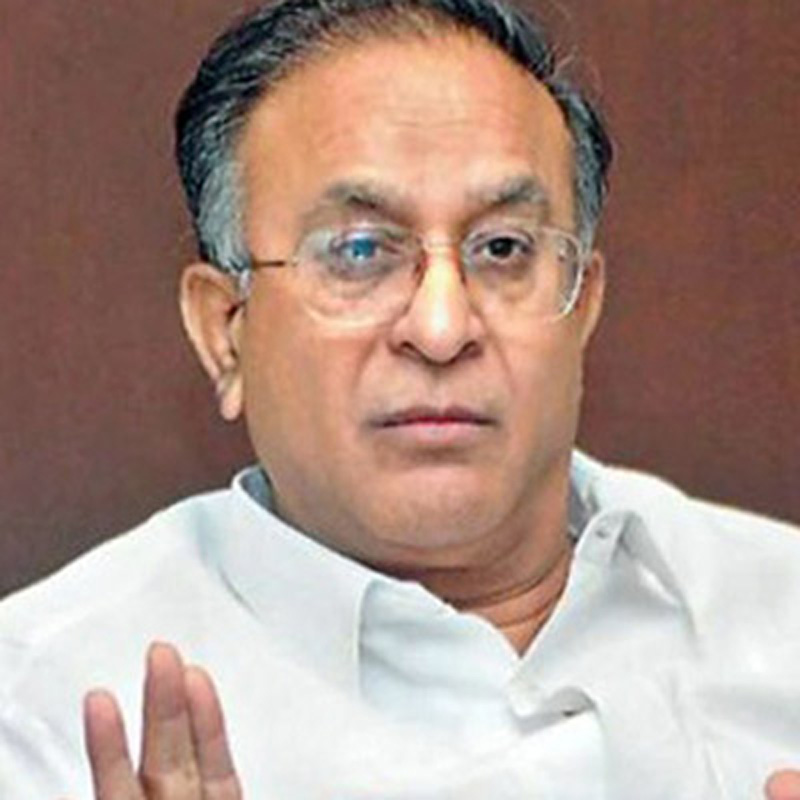
  • Jaipal Reddy calls for doing away with MIB

    Jaipal Reddy calls for doing away with MIB

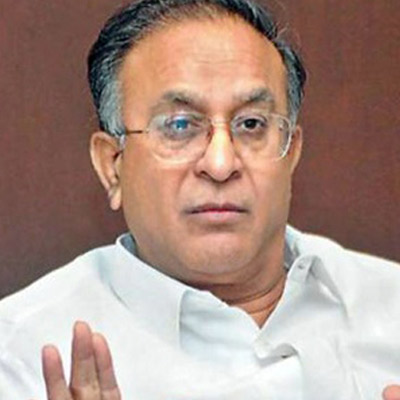
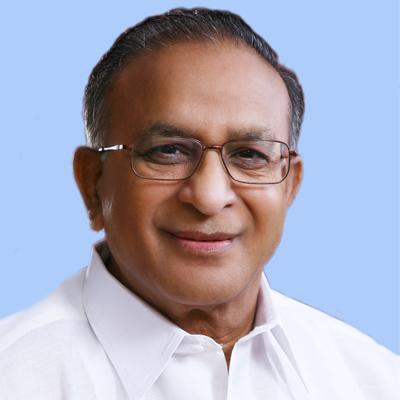
    MUMBAI: Junk the ministry of information and broadcasting (MIB). That’s the call that once MIB minister Jaipal Reddy – who held the portfolio during the Congress I regime in the previous decade – is giving these days. Writing a column in The Hindu last week, he said “It is important to note that no advanced democracy, be it in western Europe or in North America, has a ministry called I&B. Those democracies instead have independent commissions. In the US, for example, the Federal Communications Commission has been effective in regulating the functions of television companies for more than a half a century.”

    Reddy points out in the column that “Sardar Vallabhbhai Patel briefly handled the home ministry after India attained independence, and he also handled the MIB. He used the MIB portfolio to reach out to the people with urgent messages during the country’s formative and most difficult period.”

    He highlights that the “the political demand for conferring autonomy of DD gained volume only in the 1970s, because of which the BG Verghese Committee went into the question and submitted its recommendations. But it assumed the shape of a specific statute only in 1990 when leaders from all parties, including Rajiv Gandhi as the opposition leader, reached a consensus. It fell on me as the I&B minister in 1997 to notify the Act — the Prasar Bharati (Broadcasting Corporation of India) Act, 1990. At that time, I made a public statement that the time had come for abolishing the I&B Ministry.”

    According to Reddy, Prasar Bharati can truly enjoy independence when it is given financial independence. Says he in the column: “The BBC enjoys financial autonomy as the citizens pay fees compulsorily and directly to it. As a consequence of this freedom, the BBC sometimes takes on the British Prime Minister as well, not to speak of the government.”

    So why garbage the ministry? Reddy has his reasoning. Says he: If a minister is there for the portfolio, he/she cannot sit idle; they poke their nose into the functioning of such institutions by way of self-employment. Hence, the urgency to abolish this portfolio.”

    There’s nothing really new about his yelling about this from the rooftops – he’s done it in the past too – as he mentions in his column. He was instrumental in the drafting of the Broadcasting Regulatory Authority of India Bill in 1998. Nothing came of it then. Will someone in the Modi government listen to him this time?

  • MIB’s Rathore signals liberalised regime for online media

    MIB’s Rathore signals liberalised regime for online media

    MUMBAI: Hardly 24 hours into his job and minister of state (independent charge) in the Information and Broadcasting ministry (MIB) Rajyavardhan Singh Rathore is saying things that could make him the industry’s and more specifically the independent media crowd’s darling.

    Speaking to reporters in New Delhi, Rathore emphasised that media has to opt for self-regulation and the government has no plans to regulate news portals and media websites.

    He said most publications and TV channels are already self-regulating at various levels, first at the reporting journalist’s level and then at the editor’s desk. He added that this was a model that the government was more than happy to continue with and support wholeheartedly.

    He clarified that media had misunderstood reports that it was setting up a committee to frame rules to regulate news portals and media news websites.

    The prime minister is very clear that the media in our country is one of the very important pillars of democracy and they have to self-regulate, Rathore highlighted.

    He said Prasar Bharati will be strengthened and high priority would be given to better and informative programmes.

    He also pointed that “it is about a collective responsibility that media becomes the voice of the people, whether it is Prasar Bharati or private network or channel. We will work in this direction.”

    Just yesterday, the baton was handed over from senior minister Smriti Irani to junior Rathore. He now has independent charge while she heads over to textiles. He has been in the ministry for the last four years as state minister and has finally got full command.

    Also Read :

    Smriti Irani moved out of MIB as Rajyavardhan Singh Rathore gets independent charge

    MIB moves to regulate online media: various organisations join issue

    Online media professionals write to Smriti Irani expressing regulation concerns

  • Prasar Bharati Board approves finalising FreeDish policy

    Prasar Bharati Board approves finalising FreeDish policy

    MUMBAI: The Prasar Bharati board, at a meeting held on Monday, decided to finalise the FreeDish policy. According to an Asian Age report, the public service broadcaster gave its approval to Doordarshan which operates the entity. The finalised version will be submitted to Ministry of Information and Broadcasting (MIB).

    According to the referred report, the policy is likely to consider MIB’s direction to stop all e-auction of channels. However, in last meeting the decision was delayed with a fear that the directive could “wreck the finances of Prasar Bharati”.

    Meanwhile, PTI reported that the broadcaster was earlier asked by the MIB to review the continuation of FreeDish. It felt that the programme benefited only private channels and brought recurring liability to the government. FreeDish boasts a reach of 22 million subscribers.

    The matter had reached the Telecom Disputes Settlement Appellate Tribunal last year when channels reacted to its decision to suspend auctions after which an interim order allowed channels to continue at a pro rata basis till it decides on a new policy. The halting of auctions was done soon after Smriti Irani took charge as MIB minister. FreeDish was also looking at MPEG4 technology to carry more channels. Currently, it holds 80 channels.

    Also Read:

    DD Free Dish looks at  advertising for monetisation 

    10 FreeDish slots may fall vacant by Oct-end as renewals hang fire

  • Smriti Irani moved out of MIB as Rajyavardhan Singh Rathore gets independent charge

    Smriti Irani moved out of MIB as Rajyavardhan Singh Rathore gets independent charge

    MUMBAI: There’s change at the top at the ministry of information and broadcasting (MIB).  Smriti Irani has been moved out of her post as mininster and kept solely in charge of the textiles ministry. Replacing her is Rajyavardhan Singh Rathore – her minister of state – who has now been given independent charge of the MIB.

    That things were afoot in the ministry was sounded out earlier this week.  Irani cancelled her trip to Cannes where a strong Indian delegation is attending the film festival. Earlier it was announced that she would be leading an eight member panel to the famed French Riviera cinema confab.

    Rathore – a former sportsman and army man – has been a permanent fixture in the ministry for the past four years as a state minister. He has patiently waited on the sidelines over that period and has finally earned his stripes getting independent charge of the MIB as the government gears up for the coming national elections in 2019.

    Irani had, a couple of days ago, delivered the Sardar Patel Memorial Lecture 2017 themed ‘Model of Broadcast: Landscape for Democracies’ during the course of which she had called the broadcast news landscape as a “spectator sport” in which the rush for audience ratings has reduced everything to “headlines competing with hashtags” in the wake of social media explosion taking place in the country that has provided a new pathway for information dissemination.

    The media has been speculating about the reasons for her departure. Among them: the recent National Film Awards run in with president’s office about his presenting the citations to winners; and her views on fake news and journalists, and wanting to bring in curbs on online media. Sources close to the government rubbish these allegations as canards, stating that Irani has been a loyal party person and she steps into – and out of any – role that the high command asks her get into.

    The Narendra Modi led government also announced other changes last evening. Finance minister Arun Jaitley- who has been ailing and was successfully operated for his kidney ailment on Monday – has been replaced by railway minister Piyush Goyal, who has been given its additional charge. That is until Jaitley gets back into action.


    Also read:

    Smriti Irani gets additional charge as MIB minister

    MIB minister Smriti Irani orders review of DD prime time auction process

    MIB moves to regulate online media: various organisations join issue   

    Online media professionals write to Smriti Irani expressing regulation concerns


  • Time to have rules ensuring no one player dominates media: Smriti Irani

    Time to have rules ensuring no one player dominates media: Smriti Irani

    NEW DELHI: Minister for Information & Broadcasting Smriti Zubin Irani yesterday said that the time has come to put laws, ethics and rules into place that will help in balancing the media industry so that no one dominant player can rule the roost. She, however, did not elaborate what those parameters should or could be.

    Speaking at the 15th Asia Media Summit (AMS) 2018 yesterday, she, however, hinted at her version of what good content could be, throwing oblique references to the growing digital-spurred edgy content in Indian media, including television.

    Pointing out that India will have around 969 million internet users by 2021 and that the media industry looks upon the digital world “not only as a challenge but also as an opportunity”, Irani asked, “How do we attract, retain and develop talent, which frees good content from the trappings of revenue needs and brings about a balance in media institutions?” 

    She hoped that the media event would deliberate on ways to “delve and deliberate on Asia values”, and the need for good stories to be told.

    Dwelling on the need for regulations to ensure level playing field for all, the minister referred to an address made by media baron Vineet Jain, group MD of Times Group, before her at the media conference to drive home a point that present laws may be inadequate to deal with the changing landscape of the Indian media.

    Jain, during his address to the delegates at AMS 2018, had said, “But for Indian media to realise its full potential, regulatory reforms are needed across the board – to make it easier to do business, remove anomalies in the system, and above all, ensure a fair marketplace that benefits the consumer.”

    Carrying forward, Irani said the India media is getting more consumer-centric because of the opportunities (and challenges) that the digital ecosystem is offering stakeholders, apart from the overall evolution of the industry.

    Giving a perspective of the expanding Indian media industry, Irani said India was one of the fastest growing advertising market that is expected to touch $10.59 billion by the end of 2018, while the mobile spend was estimated to grow to $1.55 billion in the current year. “We have a vibrant media industry, which has a direct established impact of Rs 1.35 lakh crore and indirect and induced benefits of Rs 4.5 lakh crore, with close to 4 million people associated with it,” she added.

    The three-day 15th Asia Media Summit is being hosted by the Ministry of Information and Broadcasting jointly with the Indian Institute of Mass Communication (IIMC), and Broadcast Engineering Consultants India Limited (BECIL) in New Delhi. The theme of this year’s summit is ‘Telling Our Stories – Asia and More’, which would encourage regional and bilateral dialogue and cooperation to respond to challenges to the broadcasting sector in the region.

    The minster expressed hope that the event will throw up new ideas so that pathways to strengthen media institutions for a better mankind could be explored.

    Addressing the inaugural session, Minister of Information from Bangladesh Hasanul Haq Inu outlined six complex challenges the world faces today: poverty, gender disparity, terrorism, ICT revolution, climate change and uneven globalisation. Expressing concern at cybercrimes, he stressed upon the need to fight a war against cyber-criminals to keep the media safe and expanding.

    This is the first time that the Asia Media Summit is being held in India. Over 220 foreign delegates representing 39 countries (SAARC, ASEAN, East Asia, Africa, Oceania, Europe, Syria, Uzbekistan, USA, China) and senior officials of the government and members of Indian media industry are participating in the event.

    Also Read:

    MIB moves to regulate online media: various organisations join issue   

    Online media professionals write to Smriti Irani expressing regulation concerns

    TRAI seeks to regulate online streaming platforms

  • MIB reminds TV channels, teleport ops about timely online payments

    MIB reminds TV channels, teleport ops about timely online payments

    NEW DELHI: In an apparent bid to make broadcasters/TV channels and teleport operators to follow its diktat on online payments for renewals and renewal fees, the Ministry of Information and Broadcasting (MIB) issued two notices recently cautioning stakeholders that any breach could result in adverse consequences.

    “Non-payment or delayed payments of prescribed annual permission fee tantamount to violation of uplinking/downlinking guidelines and attract action regarding continuation/revocation of permission under the relevant clauses of uplinking and downlinking guidelines 2011,” one of the MIB notices stated, adding it has been observed that a number of broadcasters and teleport operators had not been paying the requisite permission fee.

    Directing broadcasters and teleport operators to deposit outstanding dues within 15 days from the issue of the notice, MIB said, cracking the whip, that any failure to do so will attract action under the existing policy guidelines.

    “It must also be ensured that the time schedule for payment of required fee, as prescribed in the uplinking and downlinking guidelines 2011, is strictly adhered to. It may also be ensured before making any request to MIB that there are no outstanding against the channel/teleport operators on the date of application,” the notice said.

    In another notice, MIB reminded stakeholders about the submission of online applications for change of name or logo or any other issue, apart from foreign remittance proposals.

    “It is reiterated that the instructions given in the notice regarding online submission of applications may be strictly adhered to,” the second notice from the government said.

    These notices come close on the heels of the Indian Broadcasting Foundation, the apex industry body for TV channels in India, petitioning the Prime Minister’s Office on the steep hike by MIB in processing fees and other administrative costs.

    MIB, in the past, has maintained that the facility of online payments to the government by stakeholders was introduced to reduce paperwork and make life easy for all.

    Also Read:

    MIB mandates broadcasters to make applications via Broadcast Seva

    MIB seeks all new MSO applications online 

    New portal to help ease of broadcast business

  • MIB moves to regulate online media: various organisations join issue

    MIB moves to regulate online media: various organisations join issue

    NEW DELHI: Even as a debate on the need to regulate online news media gains momentum, various organisations have moved the Ministry of Information and Broadcasting (MIB) hoping to be made a part of the committee that will look into various aspects of proposed regulations—a panel that surprisingly doesn’t include, at present, any representation from the sector that is being sought to be brought under checks.

    According to media industry sources, Broadband India Forum (BIF), chambers of commerce FICCI and Confederation of Indian Industries (CII), Internet and Mobile Association of India and Hong Kong-based Asian media advocacy group CASBAA are amongst some of the organisations that have sought representation on the government panel to add value to the policy-making process. The MIB secretary is the convener of the nine-member panel at present.

    In an order issued in the first week of April this year, MIB had announced constitution of a committee for framing regulations for online media, news portals and online content, which would look not only look into the areas mentioned but also at digital broadcasting, entertainment and other media aggregators. The government justification has been that considering the print and electronic medium were governed by various government-mandated rules and also self-regulatory policies, online media (both news and entertainment) ought also to be brought under a similar regulatory framework.

    Though it’s not spelt out in so many words, industry observers feel that despite broadcast carriage regulator TRAI keeping away from it for the time being, video OTT and social media platforms could be brought under the proposed regulatory framework.

    The panel, despite some representation from overall media industry (Indian Broadcasting Foundation, News Broadcasters Association of India and Press Council of India), looks dominated by the government at the moment with members including secretaries from the Ministry of Electronics & IT, Ministry of Home Affairs and the Ministry of Law and Ministry of Commerce, apart from the CEO of another government organisation called MyGov.com. What raises some hope is that the convener can add representatives from any other organisation as deemed fit.

    Meanwhile, the Press Trust of India on Monday reported that the Congress attacked the Modi government over its proposal to install a chip in television set-top boxes to ascertain viewership data, dubbing the move a serious breach of privacy and the “next stage of surveillance.”

    Congress communications in-charge Randeep Surjewala alleged that I&B minister Smriti Irani wanted to now know about shows people watched within the four walls of their bedrooms. In a Twitter post, Surjewala referred to the Modi government as “surveillance sarkar” (surveillance government), raising questions over the right to privacy.

    “In a serious breach of privacy, Smriti Iraniji wants to know what show you watch on your TV, within the four walls of your bedroom, without your permission! Why? ‘Ab ki baar Surveillance sarkar’. The right to privacy broken into pieces,” PTI quoted the Surjewala tweets as stating.

    Within its lengthy views on the DTH sector, the MIB had proposed installing a chip in new set-top boxes that would provide data about channels watched and the duration of the viewing. A senior official of the ministry, according to the PTI report, said that the move was aimed at getting “more authentic” viewership figures for every channel that would “help advertisers and the DAVP (government’s media buying agency) to spend their advertising expenditure wisely.”

    ALSO READ:

    MIB forms committee to draft online media norms

    MIB proposes installation of chip in DTH boxes: Report

  • MIB proposes installation of chip in DTH boxes: Report

    MIB proposes installation of chip in DTH boxes: Report

    MUMBAI: In order to make the measurement process of viewership better, the Ministry of Information and Broadcasting (MIB) has proposed of an in-built chip in set-top boxes (STBs). According to a report by The Asian Age, the ministry has sought that all direct-to-home (DTH) operators should install a chip in all new set-top boxes to record data about channels watched and their duration.

    The MIB has made this recommendation to the regulatory body Telecom Regulatory Authority of India (TRAI). The proposal was squeezed into the voluminious DTH sector recommendations and the TRAI has asked for a separate and detailed proposal in regard to the matter.

    “Regarding asking DTH operators to instal a chip in new STBs, it is stated that this is a new issue and cannot be part of the reference. If the MIB desires the TRAI’s recommendation on this issue, it may send a separate reference to TRAI as per the provisions of TRAI Act 1997,” TRAI said in a communication to the ministry.

    If the step is taken, it would ensure a wider and better measurement system of viewership preferences across the country. Other than that, the move may also lead to the end of the Broadcast Audience Research Council’s (BARC) monopoly in the measurement system.

    The proposal of allowing the renewal of licences to only DTH operators that have no dues pending to government has been approved by the TRAI.

    Also read:

    TRAI bats for issuing DTH licences for 20 years

    BARC begins new subscription service PreView


  • No specific instance of paid news on private TV channels yet: MIB

    No specific instance of paid news on private TV channels yet: MIB

    MUMBAI: The Ministry of Information and Broadcasting (MIB) has not yet had to face the menace of paid news on news channels. In a reply to the Lok Sabha or Lower House of Parliament, junior minister of MIB Rajyavardhan Singh Rathore informed that no specific instance of paid news in electronic media (private satellite TV channels) has been brought to the notice of the ministry.

    He further added that instances of paid news during election time were directly dealt by the Election Commission of India under the Representation of the People Act, 1951. The existing provisions contained in the Programme and Advertising Codes (PAC) and the existing mechanism are considered adequate to regulate content on TV channels.

    The minister was speaking in response to questions raised regarding paid news on 24X7 news channels and the ministry’s action on the same. Rathore also stated that the existing rules under the Cable TV Network Rules of 1994 were good enough to ensure channels didn’t cross their lines and the act does not allow for pre-censorship, only penalty after telecast. “Action is taken against TV channels whenever violation of the PAC is established,” he said.

    The PAC contains a wide range of parameters to regulate programmes and advertisements on such TV channels including the content likely to pose menace of news sensationalism and breaking news culture. Rathore named a few rules:

    Rule 6(c) provides that no programme should be carried in the cable service which contains attack on religions or communities or visuals or words contemptuous of religious groups or which promote communal attitudes;

    Rule 6(d) provides that no programme should be carried in the cable service which contains anything obscene, defamatory, deliberate, false and suggestive innuendos and half-truths;

    Rule 6(e) provides that no programme should be carried in the cable service which is likely to encourage or incite violence or contains anything against maintenance of law and order or which promote anti-national attitudes;

    Also Read :

    MIB says fewer TV channels violating ad, prog norms

    Govt warned 55 violators of programme & ad codes in 3 yrs, says Rathore

    Prog & Advt Code violation: 30 channels faced action in 2015 & 2016

  • MIB says ISRO upping capacity to facilitate migration from foreign satellites

    MIB says ISRO upping capacity to facilitate migration from foreign satellites

    NEW DELHI: The Indian government has admitted that inadequate capacity on Indian satellites has compelled domestic direct to home (DTH) operators to use a large number of transponders on foreign satellites and that India’s space agency Indian Space Research Organisation (ISRO) is gearing up to meet growing demands owing to proliferation of HD TV channels.

    “Presently DTH services are being supported by 42 transponders on indigenous satellites (INSAT/GSAT) and about 69 transponders on foreign satellites. There is a registered demand of additional about 64 transponders for immediate future,” junior minister at Ministry of Information and Broadcasting (MIB) Rajyavardhan Rathore informed fellow parliamentarians in Lok Sabha or the Lower House of Parliament recently.

    Without stating it in so many words though, Rathore said that as ISRO increases its satellite capacity to be able to meet the demands of Indian DTH operators, a migration from foreign satellites would become a reality — a move that MIB and Department of Space are slowly implementing to nudge users of satellite services, especially TV channels, to move away from non-Indian birds.

    “It is expected that over a period of next three years adequate capacity would be added through Indian satellites to facilitate migration of foreign capacity to Indian [satellite] capacity,” the minister said, adding, according to Telecom Regulatory Authority of India (TRAI) data, there has been a significant growth in the number of high definition (HD) satellite TV channels. The number has grown from three in 2010 to 83 in 2017.

    Dwelling on TRAI’s recommendations on sharing of infrastructure on a voluntary basis, Rathore clarified that till date MIB has not received any proposal from DTH operators for sharing of satellite transponders and earth station facilities with another such player or distribution platforms. “Enabling sharing of infrastructure may address the issue of demand-supply mismatch and reduce capital and operating expenditure of the service provider to an appreciable extent,” he added.

    Meanwhile, addressing another set of queries raised by parliamentarians relating to DTH, the minister said a total number of 1922 complaints/grievances against private DTH service providers were received through monitoring systems of the government and TRAI over the last three years on various issues ranging from technical/financial/policy matters to delay or improper installation, malfunctioning of STBs, issues of interoperability, disruption of signals during bad weather, improper billing, channel packaging, FTA channels, etc. As many as 1811 complaints were addressed by MIB till date.

    As soon as complaints are received, they are brought to the attention of the DTH operator concerned and later a follow-up action too is undertaken to evaluate compliance and whether the problems were resolved or not, the minister explained.

    According to the minister, sector regulator TRAI had issued last year a set of tariff guidelines to boost healthy competition among DTH service providers and bring down the subscription prices for consumers. The guidelines were legally contested by some stakeholders and are awaiting judicial advice, he added.

    ALSO READ:

    MIB admits no DTH infra sharing permission sought

    MIB, DoS nudge TV channel to use Indian satellites

    MIB to collect data on satellite capacity needs, digital chatter

    MIB, TRAI allay industry fears on sat capacity leasing & content regulations