Category: I&B Ministry

  • New DTH policy bonanza for operators likely by year-end

    New DTH policy bonanza for operators likely by year-end

    NEW DELHI: If all goes well, India’s DTH operators may have something to cheer about in the new year. The Ministry of Information and Broadcasting (MIB) wants an updated and tweaked policy to go for cabinet approval by the year end.

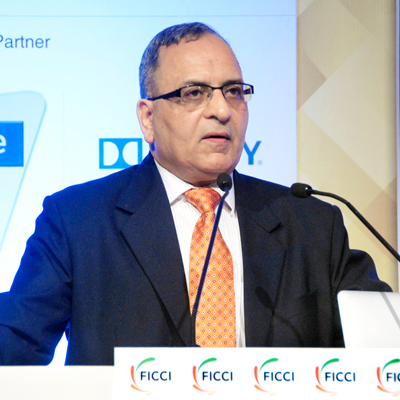
    Speaking to the media on the sidelines of CII Big Picture Summit 2018 here today, MIB Secretary Amit Khare said the new DTH policy is almost ready and the goal is to “send it for Cabinet approval” by December-end.

    Explaining the rationale behind the timing, the senior government official said the interim or temporary licenses, being presently handed to some of the biggest DTH operators, will expire this year-end and that makes it necessary to close the issue as soon as possible.

    Though he refused to divulge details of the decades old DTH policy that’s being updated keeping the present scenario in mind, including fast changing technology and a slowing economy, Khare did admit that some sops would be handed to the DTH operators.

    However, he refused to commit on the fact whether those sops would include financial rationalization too like slashing of the annual revenue sharing with the government that is calculated at the rate of 10 per cent.

    In the past, the DTH industry has demanded, among other things, cut in annual revenue share percentage to 6-8 per cent and other financial adjustments (like removal of content acquisition cost and an adjusted gross revenue) while calculating gross revenues.

    For example, Jawahar Goel, managing director of India’s biggest DTH operator (in terms of subscribers) Dish TV had written to policy-makers in October highlighting once again the industry’s woes and pleading for rationalization of costs and taxes.

    Even as India’s DTH industry has witnessed some consolidation, growth has been sluggish and ARPUs continue to be low with newer technologies throwing up additional avenues for content distribution forcing most legacy distributors to change tactics and business plans.

    Meanwhile, Khare did hint that the licensing period of DTH operators could be increased from the present 10 years. Operators like Dish TV, Tata Sky and Sun Digital, for example, are being handed by MIB interim licenses for a short period of time.

    Incidentally, telecoms and broadcast regulator TRAI in one of its recommendations had suggested increasing the DTH license period to 20 years from the present 10 years, apart from other sops like lower revenue sharing percentage and a one-time entry fee of Rs 100 million.

  • MIB secy Amit Khare advocates self-regulation in media

    MIB secy Amit Khare advocates self-regulation in media

    MUMBAI: Making a strong case for self-regulation, Ministry of Information & Broadcasting Secretary Amit Khare today said it was a better regulatory approach for India’s media and entertainment sector.

    With the advancement as well as convergence of technologies, the government would like to have more of content self-regulation by the sector, rather than the state acting as a monitor, Khare said allaying fears that the present government would strongly push for mandated rules and regulations related to content.

    Peer pressure will serve to make self-regulation effective and ethically driven, the senior government official said while taking part in a panel discussion here on co-creation of a favourable regulatory framework for new and emerging media that had been organised by a media house. 

    Khare observed that the media and entertainment industry in India is one of the fastest growing industries and the sector sector plays an important role in job creation and providing employment to more than 1 million people. Further, for every rupee spent in the sector, there is a multiplier effect of around 2.9, he added highlighting the importance of the sector.

    Pointing out that media regulations historically have been developed more from the point of view of the medium or platform of distribution and not from the point of view of content itself, Khare said the situation has led to legacy players in print and electronic media coming under the ambit of ambit of regulation, leaving unregulated some newer media forms such as OTT services.

    Stating that the government has an open mind on regulation, the MIB official divulged that debates are on within the government whether there is a need to regulate unregulated platforms (like OTT) or whether to reduce overall regulations in the traditional sectors too. “How much regulation is required and how is it to be done, is another matter that needs to be addressed,” he added.

    According to him, FDI policies are being liberalised to make India a more investor-friendly market, but monopolies should be avoided. 

    Khare’s fellow panelists included Alok Srivastava, MD – IoT, Southeast Asia & India, CISCO, Gowree Gokhale, Senior Partner, Nishith Desai Associates law firm and Vivek Krishnani, MD, Sony Pictures Entertainment India.

  • MIB extends feedback deadline date on mandatory sports feed sharing norms

    MIB extends feedback deadline date on mandatory sports feed sharing norms

    MUMBAI: Ministry of Information and Broadcasting (MIB) has extended the deadline to give feedback on the draft sports broadcasting signals (Mandatory Sharing with Prasar Bharti) (Amendment) Bill, 2018 till 31 December 2018. In an earlier notification dated 17 October, it said that feedback must be given within a month to enable telecast of “Sporting events of national importance’ on mandatory channels of Doordarshan via cable/DTH/ IPTV operators.

    As per provisions of the Sports Act, the live feed received by Prasar Bharati from the content rights owners or holders is only for the purpose of re-transmission of the said signals on Doordarshan’s own terrestrial and DTH network (DD FreeDish) and not for
    cable operators or other distribution networks. The ad sales is also done by private companies after taking the pubcaster into confidence with the additional ad revenue shared between the rights holding TV channel and DD.

    Viewers, who do not have DD FreeDish [pubcaster Doordarshan’s FTA DTH platform] or Doordarshan’s terrestrial network, are either unable to watch these sporting events of national importance or are compelled to watch these sporting events on highly priced sports channels.

    Additonally, private DTH platforms and MSOs/LCOs were barred from showing DD's non-terrestrial channels that re-transmitted the shared feeds, after the August 2017 Supreme Court ruling, for the duration of that particular event and it was stressed upon also by Prasar Bharati fearing adverse reaction from the apex court.

    The extension notice reads: “Reference this Ministry's earlier notice dated 17.1 0.201 8 seeking feedback / comments on Draft Sports Broadcasting Signals (Mandatory Sharing with Prasar Bharati) (Amendment) Bill, 2018, it is informed that the deadline for receiving feedback/comments from General Public/Stakeholders on the said draft Bill, 2018 to enable telecast of 'Sporting events of National importance'on mandatory channels of Doordarshan via Cable /DTH /IPTV Operators has been extended by this Ministry till 31 .12.2018.”

  • MIB gives permission to two new channels – Khalsa and Nireekshana TV

    MIB gives permission to two new channels – Khalsa and Nireekshana TV

    MUMBAI: The Ministry of Information and Broadcasting (MIB) after being lenient for couple of months in awarding channel licenses, is back to being strict. In the month of October, two new channels received licenses while none saw their licenses cancelled as on 31 October 2018.

    The two channels are Khalsa channel and Nireekshana TV. Nexgen Telelinks got the permission for uplinking and downlinking Khalsa channel (non-news) in Hindi and all Indian scheduled languages on 9 October 2018. Shopping Zone India TV got the permission for uplinking and downlinking Nireekshana TV (non-news) in Tamil, Malayalam, Kannada, Telugu and scheduled Indian languages on 18 October 2018.  

    On the other hand, Jain TV, PBN (earlier Samachar 24X7) and Dheeran TV channels, which were present in the list of permitted private satellite TV channels in the list up to 30 September 2018, were not in the new list till 31 October 2018.

    The 14 licenses which were cancelled earlier by MIB due to security denial by Ministry of Home Affairs (MHA) are still now under stay order from the court.

    After cancelling permission to 252 channels, the number of private satellite TV channels having valid permission in India stands at 866 as on 31 October 2018. 483 channels are non-news channels and the remaining 383 are news channels.

    Of the 868 permitted private satellite channels, TV channels permitted for uplinking from India and also to downlink into India are 766 among which 362 are news channels and 404 are non-news channels. 11 non-news channels and five news channels are permitted for uplinking from India but not downlink into the country. 84 TV channels are uplinked from abroad which only have downlinking permission in India. This category includes 15 news and 69 non-news channels.

  • MIB proposes to change mandatory sports feed sharing norms

    MIB proposes to change mandatory sports feed sharing norms

     NEW DELHI: In what could have far reaching effects on the financial viability of sports TV channels or streaming platforms, which acquire exlcusive rights for sporting events for the India region spending billions of dollars, the government proposes to amend rules relating to mandatory sharing of feeds of sports of national importance with not only the pubcaster, but with other distribution platforms. Reason for proposed changes: people with less purchasing power should not lose out on the sporting excitement.

    “…viewers, who do not have DD FreeDish [pubcaster Doordarshan’s FTA DTH platform] or Doordarshan’s terrestrial network, are either unable to watch these sporting events of national importance or are compelled to watch these sporting events on highly priced sports channels and, thus, the very objective with which the Parliament had enacted the Sports Act has been defeated,” Ministry of Information and Broadcasting (MIB) said in a notice issued on 17 October 2018, adding that public comments were invited within a month on the changes proposed in the relevant regulation relating to sharing by rights holding private TV channels of broadcasting feed with the pubcaster.

    As per provisions of the Sports Act, the live feed received by Prasar Bharati from the content rights owners or holders is only for the purpose of re-transmission of the said signals on Doordarshan’s own terrestrial and DTH network (DD FreeDish) and not for
    cable operators or other distribution networks. The ad sales is also done by private companies after taking the pubcaster into confidence with the additional ad revenue shared between the rights holding TV channel and DD.

    Though the sports rule was legislated in 2007, the shared signals on DD were sometimes donloaded by distribution platforms from satellite-delivered channels and re-transmitted not only in India but also in some neighbouring countries. Seeing this trend, Star India, which was investing heavily in sports, had moved the courts and in August 2017 got a favourable ruling from the Supreme Court that ruled the shared feed of sporting events of national importance, as mandated by the government, can only be re-transmitted on DD terrestrial network and DD FreeDish to avoid piracy and possible loss of revenue for the rights holder.

    Additonally, private DTH platforms and MSOs/LCOs were barred from showing DD's non-terrestrial channels that re-transmitted the shared feeds after the August 2017 Supreme Court ruling for the duration of the that particular event and it was stressed on also by Prasar Bharati fearing adverse reaction from the apex court.

    Within few  days of the SC ruling favouring the rights holding TV channel or broadcaster and few days before the lucrative IPL cricket rights bids were opened last year, Jawahar Goel, chairman and MD of Dish TV, India's first DTH platform started by the Zee group, raised an alarm on Star's emerging cricket monopoly.
    In a hard-hitting letter, addressed to various Indian government organisations, including MIB, regulator TRAI and the anti-monopoly authority, Goel had alleged that combined with the financial muscle and near-monpoly over cricket for India region, Star's acquistions will impact "every stakeholder in the broadcasting industry, starting from the distributors of  TV channels". Star India finally outplayed other bidders for the IPL rights for the next five years in 2017 by coughing up a whopping $2.4 billion.

    In the light of recent developments in the distribution segment of the Indian broadcast system, MIB's latest move gains importance. So, what's the proposed amendment being sought to be inserted in the 

    Sports Broadcasting Signals (Mandatory Sharing with Prasar Bharti) (Amendment) Bill, 2018?

    The relevant portion of the amendment being proposed for which stakeholders' comments have been invited reads: “No content rights owner or holder and no television or radio broadcasting service provider shall carry a live television broadcast on any cable and/or Direct-to-Home network and/or IPTV and/or terrestrial network or radio commentary broadcast in India of sporting events of national importance, unless it simultaneously shares the live broadcasting signal, without its advertisements, with the Prasar Bharati to enable them to re-transmit the same on its own terrestrial network and Direct-to-Home network and on other television distribution platforms/networks where is it mandatory to broadcast mandatory channels notified by the Union Government under Section 8 of the Cable Television Networks (Regulation) Act, 1995 in such manner and on such terms and conditions as may be specified.”

    At present, Star India and Sony Pictures Networks India — the latter has a partnership with ESPN that got a divorce from Star for sports channels in 2012 — are two networks that own and manage sports channels in India. However, in recent times digital players like Facebook, Reliance Jio, Amazon and Alibaba-controlled Indian digital wallet company PayTM have shown interest and bid for cricket properties in India. Facebook also won the India rights for La Liga football that was streamed free on the digital platform, while being sub-licensed to Sony for normal TV broadcast.

    However, an industry observor pointed out that apart from the fact that the pubcaster's DD FreeDish platform could get further hit financially if the proposed changes are legislated, it was also highlighted  that what could have further spurred the government into action is that after TRAI's new tariff regime kicked in last month, most broadcast companies and TV channel managers converted FTA TV channels into pay channels  depleting further the basic FTA bouquet aimed at people with low purchasing power.

    It would be interesting to watch how this proposed change plays out with stakeholders.

  • MIB orders CVR Health to go off air for code violation

    MIB orders CVR Health to go off air for code violation

    MUMBAI: A health channel named CVR Health had telecast a show named ‘healthy nights’ in 2016 that was considered unsuitable for the television audience for which it was asked to go off air for three days with effect from 8-11 September 2018.

    In a bid to attract audiences, the channel aired various films songs abundant with scenes that objectified women as well as movie clips that contained lovemaking scenes that were highly obscene and found unsuitable for telecast.

    A Show Cause Notice (SCN) dated 30 March 2017 was issued to the channel for telecasting the objectionable content on 29 December 2016 and 30 December 2016 in the 11.25 pm time slot.

    In response to the Ministry’s SCN, CVR Health channel commented that the reason the show was aired in the 11.25 pm time slot was that majority of children are sleeping. The program ‘healthy night’ was meant only for adult audiences.

    Furthermore, it stated that the channel wasn’t aware that telecasting a programme for adults in a late night time slot would amount to a violation of provisions of Cable Television Network Rules. The channel said its act was unintentional and was carried away by the view of leading newspapers that said that several men and women in Mumbai want to view adult content.

    It went on to say that the decision to air was taken considering Article 19A of the Indian Constitution that gives freedom of expression.

    IMC concluded that the channel had committed a clear violation of the prescribed programme code as its content bordered on pornography and indecency and hence, it needed to be given exemplary punishment for this lapse.

  • Parliamentary IT report cites high charge by Antrix as hurdle to satellite connectivity

    Parliamentary IT report cites high charge by Antrix as hurdle to satellite connectivity

    MUMBAI: Despite the Department of Telecommunications (DoT) citing high cost of satellite-delivered bandwidth to reach remote areas for providing broadband services, parliament’s committee on IT has observed that prohibitive cost should not come in the way of availing of the services as adequate funds are available, including those from Universal Service Obligation Fund (USOF).

    Earlier also DoT special secretary N Sivasailam blamed the turf war between the ministry and Indian Space and Research Organisation (ISRO) for delays in taking connectivity to far-flung areas.

    While in phase I of BharatNet project, satellite connectivity was taken up only in one gram panchayat (GP), but in phase II, more than 6407 GPs are planned to be connected. 4938 GPs are in North Eastern Region, 885 GPs in Jammu & Kashmir and 584 GPs are in the rest of the country. 1407 GPs were supposed to be provided with broadband connectivity through satellite by June 2018 by BSNL and the rest were to be completed by December 2018 through a bidding process. BSNL was expected to have completed connectivity to 1407 GPs by now.

    Shortage of satellite bandwidth and huge operational cost charged by “Antrix” are cited as the impediments associated with connectivity through satellite. The high operational cost is due to ISRO’s monopoly and the DoT has informed the committee that with the availability of more bandwidth in two to three years, sufficient capacity shall be available.

    “The capital cost of satellite is very little. But the recurring cost is prohibitive. We provide satellite connectivity on a very small bandwidth to Andaman and Nicobar and it costs us something like Rs 300 crore for that small population to be able to pay for bandwidth. It is typically because of the monopoly of ISRO. In India, satellite communication is 300 times more expensive than in the US. So, satellite is prohibitive. We are going for it only in areas where it is not technically feasible to do any other thing,” DoT secretary stated.

    Areas like Jammu and Kashmir, Uttarakhand, Himachal Pradesh and the North Eastern states have had basic challenges halting the project’s timely implementation. “The committee recommends that sincere efforts be made to achieve the target of providing connectivity through satellite to all the identified 6407 GPs covering above states,” the recommendation adds.

    When the committee questioned the DoT on the issue of availability of sufficient bandwidth, the representative of the department stated, “We want higher bandwidth for which the USOF and the Bharatnet can make the payment. But the bandwidth is not available. They are going to put two satellites in the orbit this year. With that more bandwidth would be available. But right now, there is a crunch of bandwidth with ISRO in these difficult areas, particularly in Jammu and Kashmir and North-East. So, the issue with the ISRO is availability of bandwidth and the cost is very high. It is higher if we compare it with the international rates.”

    Since heavy investment is involved, the committee even questioned if providing connectivity through satellite will be sustainable in the long run. To this the department stated that with the availability of more bandwidth in two to three years of time especially through High Throughput satellites in Ka-Ku band and Ka-ka band from DOS/ISRO sufficient capacity shall be available. ISRO is planning to launch series of satellites in near future to make available the enhanced satellite bandwidth.

    BharatNet project can enhance the lives of thousands giving them access to information available online and enhanced communication with the privileged part of the country. The ISRO and DoT issue needs to be resolved on priority basis to put an end to the delayed implementation.

  • MIB gives permission to four new channels

    MIB gives permission to four new channels

    MUMBAI: For nearly a year, the Ministry of Information and Broadcasting (MIB) has been stingy in handing out licences to channels. But in July, four new channels got permissions and none were cancelled.

    Sony Marathi, the non-news channel, got the permission on 16 July for downlinking. Times Network’s news channels, Times Now and ET Now, got permission for both uplink and downlink on 18 July under English/Hindi and all remaining Indian scheduled languages.

    Vision Corporations has got permission for launching a new channel Indian Fashion TV on 12 July, which will have content on fashion films, reality shows related to fashion and lifestyle and TV serials. Sources told Indiantelevision.com that the channel will launch in a month’s time.

    The 14 licenses which were cancelled earlier by MIB due to security denial by Ministry of Home Affairs are still now under stay order from the court.

    After cancelling permission to 239 channels, the number of private satellite TV channels having valid permission in India stands at 868 as on 31 July 2018. While 484 channels are non-news channels, the rest i.e., 384 are news channels.

    Of the 868 permitted private satellite channels, TV channels permitted for uplink from India and also to downlink into India remains the same at 766 among which 364 are news channels and 402 are non-news channels. 11 non-news channels and five news channels are permitted for uplink from India but not downlink into the country. 86 TV channels are uplinked from abroad which only have downlinking permission in India. This category includes 15 news and 71 non-news channels.

  • Does govt propose to regulate kids’ channels? MIB says ‘no’

    Does govt propose to regulate kids’ channels? MIB says ‘no’

    NEW DELHI: Do watching cartoons have lasting effects on the children? Has the government made any assessment regarding the impact of cartoon channels on kids? Does the government propose to regulate/limit the telecast of cartoon programmes by private channels and Doordarshan in accordance with the examination schedule of children?

    Well, these were some of queries raised by an Indian parliamentarian in the Lok Sabha or Lower House yesterday. The government, while admitting kids’ programming could affect children, however, clarified there were no proposal at present to regulate such shows or limiting their broadcast schedules.

    Pointing out research does indicate that watching cartoon has both “negative and positive effects” on children, Minister of Information and Broadcasting Rajyavardhan Rathore said the government is not aware of any study or research that conclusively proves watching cartoons or any such other programme has “lasting effect on children”.

    Rathore further said, “Presently there is no such policy [to regulate or limit the telecast of cartoon programmes by private channels and Doordarshan].”

    According to Rathore, the government grants permission to TV channels under two categories of news & current affairs and non-news & current affairs and there was no separate categorisation (like cartoon channels) for granting of permission by the government to start a TV channel.

    “Non-news and current affairs channels are permitted to air programmes of any nature, including cartoon[s], provided the content of the programme adheres to [the] programme code stipulated under the Cable Television Networks (Regulation) Act, 1995,” the Minister added.

    Replying to another question on whether the Government proposes to introduce a legislation to regulate web media and news portals for their mandatory registration, Rathore said presently there was “no such proposal” in this regard.

    “The government is committed to freedom of speech and expression and privacy of its citizens as enshrined in the Constitution of India. Government does not regulate content appearing on web media. Law enforcement agencies take action on posting of malicious content on specific case to case basis,” the Minister told his fellow parliamentarian.

    The MIB, meanwhile, recently told the Supreme Court that it was withdrawing a proposal to set up a social media hub, which was criticized by the civil society and online activists on the ground that the government was trying to prepare a surveillance center to track live the digital footprints of its citizens.

  • Meity says no proposal presently to tap WhatsApp messages

    Meity says no proposal presently to tap WhatsApp messages

    NEW DELHI: Though the Indian government continues to explore avenues to track digital footprints of the citizens and regulations for online media, it said on Wednesday it did not plan at present to tap people’s WhatsApp messages.

    “No sir,” was the reply given by junior Minister SS Ahluwalia at the Ministry of Electronics and Information and Technology (Meity) when asked specifically whether the government planned to snoop into WhatsApp messages of individuals.

    However, Ahluwalia clarified that though the government respects an individual’s human rights, as enshrined in declarations of the United Nations, it has the powers to intercept or monitor digital information under various circumstances, including security reasons.

    “Section 69 of the Information Technology Act, 2000 empowers government to  issue direction for interception or monitoring or decryption of information generated, transmitted, received, stored or hosted in any computer resource in the interest of (i) sovereignty and integrity of India (ii) defence of India (iii) security of the State (iv) friendly relations with foreign States (v) public order (vi) for preventing incitement to the commission of any cognizable offence relating to above, or (vii) for investigation of any offence,” the Minister stated in Parliament to a query on whether any proposed move to tap WhatsApp messages would violate global conventions set by organisations such as the UN.

    To another query from a fellow parliamentarian, Ahluwalia said the Ministry doesn’t have any proposal at present to create a platform

    where a citizen can identify fake news or hoaxes, which are rampant these days in the country.

    The Minister, though, listed various government initiatives to make citizens aware of fake news on digital and social media. He said government agencies have been highlighting the importance of “following ethics” while using the internet and issuing general advisories against sharing rumours and fake news.

    “Government has also asked WhatsApp to convey various steps taken by them to deal with fake news and also to share learning material to

    educate the same,” the Minister stated.

    Still, his senior at Meity who also happens to be the Law Minister, Ravi Shankar Prasad is on record favouring evolving a policy to control the spread of fake news in India.

    Last month, Department of Telecoms, on a request from Meity, had written to all telecom and internet service providers , along with other industry organisations, requesting suggestions on ways that can help the government block under special circumstances social media content on platforms like the Facebook, WhatsApp and Instagram. The proposal has been criticised by many, including a chamber of commerce, Assocham.