Category: I&B Ministry

  • Hack the ad spend: AAAI challenges marketers to optimise budgets smarter

    Hack the ad spend: AAAI challenges marketers to optimise budgets smarter

    MUMBAI: The advertising world is no stranger to budgets vanishing into thin air. Enter the AAAI Ad Spend Optimizer Hackathon—an electrifying initiative under the Waves Create India Challenge, where number crunchers, data wizards, and marketing maestros are set to redefine ad spend efficiency. Hosted by the Ministry of Information and Broadcasting (MIB) in collaboration with the Advertising Agencies Association of India (AAAI), the hackathon promises to shake up the world of advertising analytics.

    With 35 eager teams—one even joining from overseas—this hackathon is gaining serious traction. Slated to be a part of the much-anticipated World Audio Visual & Entertainment Summit (Waves), the event is set to unfold from 1–4 May 2025 at Mumbai’s Jio World Convention Centre & Jio World Gardens. With four core pillars—broadcasting & infotainment, AVGC-XR, digital media & innovation, and films—Waves aims to be the melting pot for India’s growing media and entertainment industry.

    The hackathon falls under the broadcasting & infotainment segment, drawing participation from young professionals in advertising, marketing, and tech. Their mission? To use predictive analytics, machine learning, and statistical modelling to optimise ad spend and supercharge marketing ROI.

    This is no cakewalk. The challenge is open to professionals with at least a year of experience in advertising, marketing, or data science. Solo players or teams of up to three can compete, bringing together expertise in data science, machine learning, statistics, and software.

    Their task? To devise an ad spend strategy for TrimMaster, a leading male grooming brand with its flagship PrecisionTrim trimmer. Despite its popularity, the brand is struggling to push its awareness to the next level. Currently, TrimMaster’s unaided awareness score sits at 52. The goal? A solid 75. With a budget of Rs 2 crore, participants must craft a strategy that not only maximises visibility but also delivers measurable impact.

    TrimMaster

    TrimMaster’s marketing team faces an uphill battle, including:

    . Effective budget allocation: Deciphering the best mix of social, search, display, and video ads while accurately measuring impact.

    .   Measuring brand lift: Developing better metrics to gauge how digital ads truly influence brand perception.

    .   Maximising ROI: Ensuring every rupee spent results in substantial brand awareness and sales growth.

    .   Cross-channel synergy: Understanding how different platforms interact and influence each other.

    Winners won’t just bask in glory. The top three teams will present their strategies at Waves, with travel expenses covered. On top of that, the champions will get a chance to attend major advertising festivals and conferences in India, fully sponsored by AAAI. Oh, and let’s not forget the bragging rights.

    AAAI

    The AAAI Ad Spend Optimizer Hackathon is not just another competition. It’s a unique opportunity for professionals to challenge the norms, innovate ad spend strategies, and help brands like TrimMaster break through the noise. With artificial intelligence and data analytics at their fingertips, participants have the tools to redefine advertising in India and beyond.

    Think you’ve got what it takes? Get ready to crunch numbers, outsmart competitors, and craft the future of ad optimisation.
     

  • I&B ministry mulls new legal framework to regulate digital content

    I&B ministry mulls new legal framework to regulate digital content

    MUMBAI:The ministry of information and broadcasting is examining existing laws and contemplating a new legal framework to regulate “harmful” content on digital platforms amidst rising concerns over obscenity and violence, officials said.

    In its response to the parliamentary standing committee on communications and information technology, headed by BJP member of parliament Nishikant Dubey, the ministry acknowledged growing societal concern that constitutional freedom of expression was being misused to showcase objectionable content on digital platforms.

    The ministry’s scrutiny comes in the wake of recent controversies, including inflammatory comments by social media influencer Ranveer Allahbadia. Though he later apologised and received protection from arrest from the supreme court, the incident sparked widespread condemnation and criminal cases.

    Unlike traditional print and electronic media, which operate under specific regulations, new media services such as over-the-top (OTT) platforms and YouTube currently lack a dedicated regulatory framework. This regulatory gap has intensified calls for legislative reform.

    The ministry recently issued an advisory to online curated content publishers, emphasising strict adherence to the code of ethics prescribed under the Information Technology Rules, 2021. The advisory particularly stressed age-based content classification and implementation of access control mechanisms for adult-rated content.

    “This ministry has received references from honourable members of parliament, representations from statutory organisations, and public grievances regarding the alleged spread of obscene, pornographic and vulgar content,” the ministry stated in its communication to OTT platforms.

    The move follows expressions of concern from various quarters, including high courts, the supreme court, and statutory bodies such as the national commission for women. While some worry about potential censorship, recent controversies have strengthened demands for more robust content regulation.

    The ministry has committed to submitting a detailed proposal following thorough deliberations on the matter. The initiative aims to balance freedom of expression with responsible content creation in the digital space.

  • OTT platforms receive stringent warning over content compliance

    OTT platforms receive stringent warning over content compliance

    MUMBAI: India’s ministry of  information and broadcasting has issued a comprehensive advisory to over-the-top (OTT) streaming platforms following mounting complaints about inappropriate content from members of parliament, statutory organisations and public grievances.

    The ministry has underscored that streaming platforms must rigorously comply with the Code of Ethics delineated in the Information Technology Rules of 2021. These regulations mandate precise age-appropriate content classification and robust access controls to prevent children from accessing adult-rated material.

    In a significant development, self-regulatory bodies overseeing these platforms have been explicitly instructed to take proactive measures against violations. The advisory drew attention to several stringent laws, including the Indecent Representation of Women Act, the newly enacted Bhartiya Nyay Sanhita 2023, the Protection of Children from Sexual Offences (POCSO) Act, and the Information Technology Act, which collectively make the publication of obscene or pornographic content a punishable offence.

    The directive particularly emphasised the implementation of a more rigorous age-based content classification system and reminded platforms of the three-tier grievance redressal mechanism established under the IT Rules. This mechanism has been designed to address and resolve complaints related to content violations effectively.

    The ministry’s intervention comes at a time when there is increasing public discourse about the alleged proliferation of objectionable content across streaming platforms and social media. The move signals a tightening of regulatory oversight in India’s rapidly expanding digital entertainment sector.

    The advisory serves as a stark reminder to OTT platforms that they must exercise heightened discretion and due diligence while publishing content, ensuring it aligns with both legal requirements and ethical standards prescribed under Indian law.

  • Government updates list of mandatory must-carry cable TV channels

    Government updates list of mandatory must-carry cable TV channels

    MUMBAI: The ministry of information and broadcasting has issued a revised notification mandating changes to the list of channels that cable operators, including multi-system operators (MSOs) and local cable operators (LCOs), must carry under the Cable Television Networks (Regulation) Act, 1995. 

    In the latest directive, six existing mandatory channels have been updated, including:
    * DD Assam (Regional Entertainment)
    * DD Odia (Regional Entertainment)
    * Sansad TV-1 HD and Sansad TV-2 HD (Lok Sabha & Rajya Sabha News)

    Additionally, four new channels have been made mandatory:
    * DD National HD (Hindi Entertainment)
    * DD News HD (Hindi News)
    * DD Sports HD (Sports)
    * DD India HD (English News)

    The ministry emphasised strict compliance with the updated requirements, warning that violations would invite punitive action under the Act, associated Rules, and registration terms. Cable operators have been instructed to ensure proper categorisation and transmission of the channels within their network offerings. It issued the advisory to cable ops and MSOs on 30 January 2025.

  • MIB to initiate online registration process for LCOs — Economic Times report

    MIB to initiate online registration process for LCOs — Economic Times report

    MUMBAI: Is cable TV about to get even more organised and given the respect that is due to it? 

    If a report appearing in The Economic Times on on 16 January  is to be believed it looks like it is. The newspaper reported that the ministry of information & broadcasting (MIB) is set to launch a centralised online registration system for local cable operators (LCOs), extending registration validity from one year to five. This initiative aims to enhance the ease of business in the cable TV sector.

    Sources indicated to The Economic Times  that the MIB plans to amend the Cable Television Networks (CTN) Rules, 1994 and the regulations act  making registration through the Broadcast Seva portal mandatory for LCOs. This is something that every broadcaster has to do. 

     Once implemented, the MIB will serve as the primary registering authority for LCOs, replacing the current requirement to register at local head post offices. As of January 2022, there were 81,706 LCOs operating nationwide.

    A government official, speaking on condition of anonymity to The Economic Times  noted, “The ministry is likely to notify the new online registration system this week. It has been a long-standing demand of the industry.”

    The current offline registration process hinders the MIB from maintaining a centralised database, limiting its ability to address violations effectively. LCOs currently pay a one-time processing fee of Rs 500 for registration or renewal.

    Under Rule 5 of the CTN Rules, LCOs are responsible for providing last-mile connectivity by retransmitting signals from multi-system operators (MSOs) to subscribers through their own infrastructure. 

    The All India Digital Cable Federation (AIDCF), which represents national MSOs, informed the parliamentary committee on communications & information technology that around 300,000 employees have lost their jobs over the past four years, with another 300,000 at risk, attributed to a significant decline in the cable TV subscriber base.

    According to a FICCI-EY report, the number of cable TV subscribers has dropped from 72 million in 2020 to 62 million in 2023. Yhe latest report which comes out later in 2025 is likely to reveal that this number has dropped by an additional five million in the least. 

    Traditional linear pay TV has been under tremendous pressure with the arrival of streaming services, cheap data plans being provided by telecom players, ISPs, MSOs and even the LCOs,  and the flooding of cheap connected TV sets in the country. India is also a mobile first country where a  majority  of the youth is consuming content on their handsets. 

    Recognising this, and to acquire customers quickly, global streaming service have been offering their streaming services at very low  subscription rates to Indian customers. There has been an explosion in the amount  of consumption of video on YouTube too which in many cases has become the secondary entertainment medium, after DD FreeDish, the free direct to home service provided by pubcaster Doordarshan. 

    Additionally, many of the second generation family members of the local cable TV operators have simply not followed in their fathers profession and have chosen other fields or they have transitioned to providing broadband internet service that has higher  average revenue per customer and hence is more profitable. Video delivery has become a secondary business which is being continued as it is without any goal to expand individual cable TV networks. 

  • FTII gets new auditorium; I&B minister Ashwini Vaishnaw inaugurates it

    FTII gets new auditorium; I&B minister Ashwini Vaishnaw inaugurates it

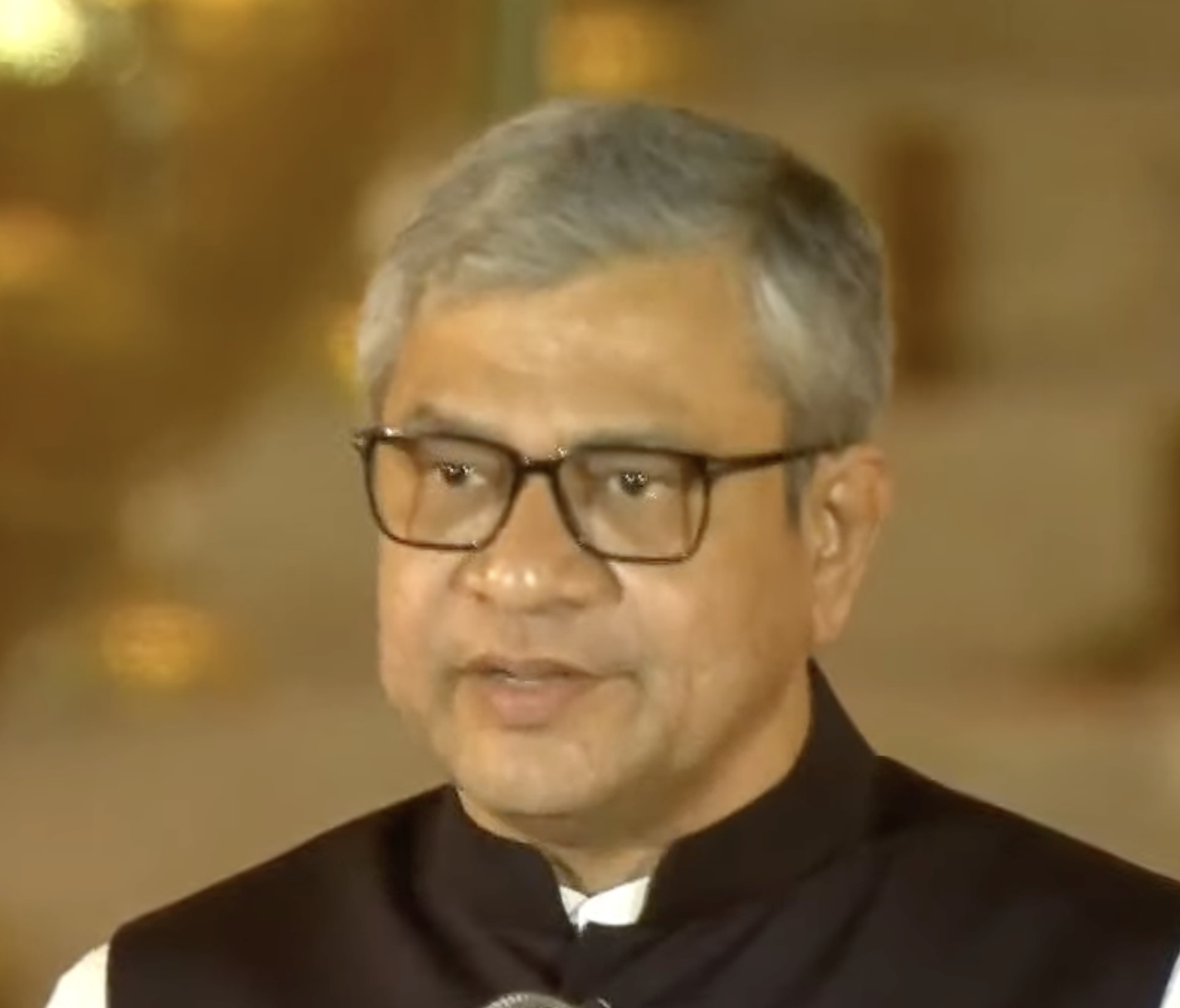
    MUMBAI:  At last some attention is being paid to the venerable Film & Television Institute of India. A new auditorium  in its complex was ribbon cut by I&B, railways, and electronics and information technology minister Ashwini Vaishnaw on 11 January.

    This marked Vaishnaw’s first visit to the esteemed institution, which operates under the ministry of information and broadcasting. The minister was joined by students as he cut the ribbon and lit the ceremonial lamp, symbolising the beginning of a new chapter for FTII.

    In an open forum with students and faculty following the inauguration, Vaishnaw articulated his vision for FTII’s future, aiming to elevate the institute on the global stage.

    “Our legacy and heritage provide a firm foundation to embark on the journey of further excellence,” he stated, emphasising the importance of advancing the institution’s educational offerings.

    The minister addressed various questions from faculty and students, particularly regarding the proposed deemed university status for FTII. He also shared his vision for cinema education in India, focusing on strengthening career prospects for students and fostering greater industry linkages.

    Citing the success of Gati Shakti Vishvavidyalaya, which has rapidly become a key talent provider for global players, Vaishnaw underlined the importance of such industry partnerships.

    The newly inaugurated auditorium, with a seating capacity of 586, is equipped with state-of-the-art features, including a cinema projector, a PA system for stage performances, and a cutting-edge Dolby Atmos surround sound system.

    One of its most innovative features is a horizontally movable screen, measuring 50 feet in width and 20 feet in height. This screen can be easily adjusted with a remote control, transforming the auditorium into a full-fledged cinema theatre. This pioneering feature, which sets a new standard for flexibility in auditorium design, is believed to be the first of its kind, and FTII has already filed for a patent for the technology.

    During his visit, Vaishnaw also toured various facilities at the institute and interacted with faculty members.

    Reflecting on the creative economy, he remarked, “With the talent and ecosystem of FTII, we can become a bigger player in the global entertainment industry.”

  • India’s digital shield: New rules to safeguard your online world

    India’s digital shield: New rules to safeguard your online world

    MUMBAI: In the digital universe, where every swipe and click creates a footprint, who’s watching over your safety?

    There’s no “digital police” patrolling the internet highways, and yet, the need for a saviour has never been greater.

    Enter India’s Draft Digital Personal Data Protection Rules, 2025—a bold, pioneering move to protect your online identity.

    With a sharp focus on safeguarding personal data and fostering trust, these rules operationalise the Digital Personal Data Protection Act, 2023 (DPDP Act). Crafted meticulously, the framework aims to balance innovation with privacy, creating a secure environment for individuals and businesses alike in an increasingly digital economy.

    Picture a world where your data is your own, guarded against misuse, while businesses thrive in a regulated, transparent ecosystem. That’s the vision India has laid out, setting a global benchmark for digital safety and governance.

    Stay tuned as we delve into the intricacies of this landmark regulation and explore how it could redefine your experience in the digital realm.

    The draft rules place citizens at the core of the data protection framework. They empower individuals with rights such as informed consent, data erasure, and appointing digital nominees. Mechanisms are also in place to address grievances efficiently. Special provisions protect children’s online safety, granting parents and guardians more control.

    “Citizens can manage their data seamlessly while businesses continue to thrive under a balanced framework,” states the document.

    India’s framework seeks to balance innovation and regulation, creating a flexible model that is less restrictive compared to global counterparts. It minimises compliance burdens on small businesses and startups, ensuring smooth transition periods for organisations of all sizes. Stakeholders have praised this unique approach as a template for global data governance.

    Emphasising a “digital by design” philosophy, the rules incorporate advanced grievance redressal mechanisms and fully digital workflows. The Data Protection Board will function as a digital office, handling complaints and adjudications without requiring physical presence.

    This approach aims to enhance trust, transparency, and efficiency in data protection governance.

    The draft rules cater to startups and MSMEs with graded responsibilities while assigning significant obligations to larger data fiduciaries. The Data Protection Board ensures fairness by balancing penalties with the nature and gravity of defaults.

    The introduction of annual data protection impact assessments and audits for larger fiduciaries underscores the government’s focus on accountability.

    The draft rules draw inspiration from global best practices and extensive stakeholder inputs. The Ministry of Electronics and Information Technology invites public feedback until February 18, 2025, via the MyGov platform.

    To enhance awareness, a comprehensive campaign will educate citizens about their rights and responsibilities, fostering a culture of data responsibility.

    These rules solidify India’s leadership in shaping equitable digital policies, ensuring innovation-driven and inclusive growth.

    Important Links

       Draft Digital Personal Data Protection Rules, 2025

       Feedback Submission Portal

       Digital Personal Data Protection Act, 2023

  • I&B special secretary Neerja Sekhar promoted as DG of  National Productivity Council

    I&B special secretary Neerja Sekhar promoted as DG of National Productivity Council

    MUMBAI: Special secretary in the ministry of information and broadcasting (MIB) Neerja Sekhar has finally got the rank of secretary in the  Indian government. Excepting she has been moved to the National Productivity Council (NPC) as director general with the secretary rank, according to whispersinthecorridors.

    The NPC falls under the department for promotion of industry and internal trade which in turn comes under the ministry of commerce.

    Sekhar, from the 1993 IAS batch of the Haryana cadre, had been appointed additional secretary at the MIB in November 2020, replacing Atul Kumar Tiwari.

    The current MIB secretary is Sanjay Jaju  (from the 1992 IAS batch) who took over the role on 5 February 2024. 

  • Central Bureau of Communication issues advisory for pvt TV channels

    Central Bureau of Communication issues advisory for pvt TV channels

    MUMBAI: The  days are being counted down for TV channels looking to get some revenue through the  Indian government’s ads and spots on television. 

    According to the central bureau of communication (CBC)  wing of the ministry of information and broadcasting 552 channels had been empaneled with it three years ago  and as per its policy renewal guidelines the earlier empanelment is valid only till 31 December 2024.

    Last week, the CBC  once again sent out an advisory reminding private TV channels which had not re-registered themselves  to do so before the last date.

    Only TV channels empaneled with it will qualify to receive government advertising and its social development or messaging spots

    government of india spots

    .

    The CBC also clarified that 15 channels which had empaneled with it as of 1 January 2024 need not reapply for empanelment but they would need to update their documents.

    The last date for renewal of empanelment was actually 17 December but the CBC had given another extension to the private TV channels.
     

  • MIB  & the business of TV channel licensing in 2024

    MIB & the business of TV channel licensing in 2024

    MUMBAI: The Indian government has rejected more than half the number of licence applications it has approved  in 2024. This was revealed by the information & broadcasting minister of state L. Murugan in the Rajya Sabha on 20 December 2024.  This was in response to a question posed in the upper house of parliament. 

    According to him,the  I&B ministry rejected 13 applications for channel licences in 2024, the highest number in the past five years. It has approved 22 applications for licences and renewed 34 of them in 2024. 

    The number of channel licence applications approved in 2024 was twice the number that were given the green light in 2023. .

    2024 is also the year when the MIB cancelled the least number of TV channels in the past five years. The figure for 2024 is only one, while in 2021 it cancelled 24 TV licences.

    Since, 2020 the government has rejected 34 applications for channel licences, of which 13 are accounted for by the rejections in 2024. 110 new channel licence applications have been approved since 2020, while 269 channel licence renewal applications were approved.  

    The list of channel licence applications approved, renewed, rejected and cancelled. as given by L. Murugan in the Rajya Sabha is in the table below:: 
     

    Status of tV channel licence applications