Category: I&B Ministry

  • I&B ministry’s print media advertisement policy 2020: BOC to empanel publications suitable for issuing ads

    I&B ministry’s print media advertisement policy 2020: BOC to empanel publications suitable for issuing ads

    NEW DELHI: The information and broadcasting ministry issued the print media advertisement policy 2020, effective from 1 August 2020. The objective of the policy guidelines is to maintain a list of approved publications for release of advertisements by empanelling acceptable publications. The bureau of communication and outreach (BOC) will empanel publications which are found suitable for the issue of advertisements of the government of India.

    Publications have been divided into three categories: small publications (circulation up to 25,000 copies per publishing day), medium publications (circulation between 25,001 and 75,000 copies per publishing day) and big publications (circulation of above 75,000 copies per publishing day).

    The policy further explains the procedure of empanelment of publication. It states that there shall be a panel advisory committee (PAC) for considering applications of publications: The composition of the committee will be additional director general (MR & C), BOC- chairman; additional director general (media & communication) in the press information bureau (PIB) – member; press registrar/additional press registrar- member; director/deputy secretary/under secretary in the ministry of information and broadcasting dealing with print media – member; additional director general/director, BOC, in charge of print media policy as convener/member secretary and one representative each from the big, medium and small category of newspapers nominated by the ministry of information and broadcasting–non-official member. The tenure of the non-official member of the PAC would be two years from the date of their nomination by the government.

    The guideline discusses the advertising rates too. It says that the rate structure for advertisements against advertisements released by BOC will be worked out as per recommendations of the rate structure committee. The rates will be related to certified circulation of a publication. It further states that the payment against advertisements released by BOC will be worked out as per rate for advertisements in print media issued by the ministry of information and broadcasting dated 8 January 2019 or any subsequent order in this regard. The rates for advertisements by Maharatna and Navratna public sector undertakings (PSUs) will be 1.5 times the normal BOC rates. For advertisements of other PSUs, normal BOC rates will apply. And lastly, it says that the rates will be valid for three years from the date of revision.

    In the rate contract section, the draft further reads that all empanelled publications will enter into rate contract with BOC on the basis of rate offered and other terms and conditions, as laid down from time to time, to ensure proper and timely publication of BOC advertisements. The rate contract will be valid for a period of two years.

    It specifies if the publication is found to have deliberately submitted false information regarding circulation or If the publication is found to have discontinued its publication, changed its periodicity or its title or have become irregular in publication or changed its address of publication without due intimation and more then it can be suspended from empanelment by Pr. DG/DG, BOC with immediate effect for a period up to twelve months.

  • I&B ministry urges home ministry to reopen movie theatres from August

    I&B ministry urges home ministry to reopen movie theatres from August

    MUMBAI: Due to the Covid2019 pandemic, cinema halls across India were shut from March. While several businesses started operational work in Unlock phases 1.0 and 2.0, movie theatres are still waiting for the government's nod.

    Now, as India is approaching  Unlock 3.0, the information and broadcasting ministry (I&B) has passed a recommendation to the home ministry to allow movie theatres across the country to reopen from August.   

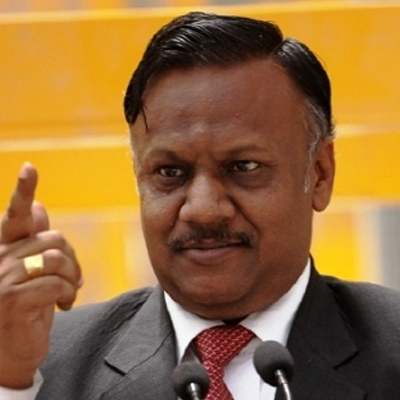
    I&B secretary Amit Khare highlighted this issue at a closed-door meeting with the CII media committee on 25 July. However, he also said that the final decision will be taken up by his counterpart in the ministry of home affairs Ajay Bhalla.  

    Khare, during the interaction, recommended that the cinema halls all over India may be allowed to reopen as early as 1 August  or at the latest around 31 August.

    In the meeting he also suggested an alternative formula to practice social distancing norms and other SOPs. As per his recommendations, in theatres the  seats of first and second row to be kept vacant. Theatres will have alternate seats in the first row and follow the same procedure throughout.

    Khare said that his ministry's recommendation takes into consideration the two metre social distancing norm, but tweaks it gently to two yards instead.

    Movie theatre owners present in the meeting showed objection to this idea and pointed out this idea is unwise and running theatres at 25 per cent capacity is worse than keeping cinema halls shut.

    The attendees at the meeting included media CEOs like NP Singh of Sony, Sam Balsara (Madison), Megha Tata, (Discovery), Gaurav Gandhi (Amazon Prime), Manish Maheshwari (Twitter), S Sivakumar (Bennett Coleman and Co Ltd), and K Madhavan, (Star & Disney) who is also the chairman of CII media committee.

  • Delhi govt slapped with CCRGA notice over political messaging

    Delhi govt slapped with CCRGA notice over political messaging

    NEW DELHI: A Supreme Court-mandated committee on content regulation in government advertising (CCRGA)  issued a notice to the government in Delhi (AAP) over an advertisement which had appeared last week. The committee had taken sou-moto cognisance of concerns raised on social media that its purpose was only "political messaging." Several questions has been raised on the necessity of issuing the advertisement in Mumbai newspapers. 

    The one-page advertisement was published by the department of education and directorate of information & publicity, government of NCT of Delhi.

    It was heavily criticised on social media with many claiming that it was just political messaging and there was no point in spending huge sums of money to publish the ad in other states.

    "Historic! Delhi government schools class 12 results — 98 per cent," said the Delhi government advertisement, which was published in several newspapers on 16 July.

    CCRGA demanded a reply to various issues, like cost to the exchequer, within 60 days upon receiving the notice.

    "The committee had taken suo-motu cognisance of the points raised in the social media on the Delhi government advertisement — questions had been raised on the necessity of the Delhi government to issue advertisements in Mumbai newspapers and had pointed that the purpose of the ad was only for political messaging," a statement issued by the ministry of information and broadcasting said.

    "The one-page advertisement was published by the department of education and directorate of information and publicity, government of NCT of Delhi," the statement said.

    The committee is allowed to address complaints from the general public on violation of the supreme court guidelines and make suitable recommendations, the statement said.

    The committee can also take suo-motu cognisance of any violation or deviation of the supreme court guidelines and recommend corrective actions, it added.

    Presently the CCRGA is chaired by Om Prakash Rawat, former chief election commissioner of India, and its members are Ramesh Narayan of Asian Federation of Advertising Associations and Past President, IAA and Ashok Kumar Tandon, Member, Prasar Bharati board.

  • I&B ministry looks at decriminalising minor offences under Cable TV act

    I&B ministry looks at decriminalising minor offences under Cable TV act

    KOLKATA: The ministry of information and broadcasting (MIB) is looking at decriminalising minor offences under the Cable Television Networks (Regulation) Act, 1995. As part of the ongoing exercise to reform governance, MIB has taken a decision to delete the entire provision of Section 16, Section 17 and Section 18 under the act. It has also sought comments of the general public and all the concerned stakeholders by 24 July.

    Section 16 under chapter IV of the act lays down jail term up to five years for contravention of provisions of the act which includes proper registration of a cable TV network, transmission of programmes through addressable systems, use of standard equipment, not interfering with any telecommunication system. The act also includes programme code and advertising code. Hence, deletion of section 16 will bring an end to unnecessary jail terms, legal challenges for operators. 

    Under the proposed amendment, the punishment will limit to seizing the equipment of the operator if the fault is at the level of cable operators. Any contravention of program code and advertising code will lead to cancellation of channel permission, forcible run of apology scroll. Treatment of Violations under Section 5 (Programme Code) and Section 6

    (Advertisement Code) under Section 16 shall now be shifted to under Section 11 as its sub-Section (1).

    The ministry is proposing deletion of Section 17 and Section 18 completely.  It comes under the broad exercise of the current central government which has planned to undertake a wide-ranging review of existing laws and decriminalize many” minor” offences. Earlier in June, the finance ministry on Wednesday proposed to decriminalise minor offences. 

  • Govt-appointed committee recommends new regulator for non-personal data; ‘data business’ classification

    Govt-appointed committee recommends new regulator for non-personal data; ‘data business’ classification

    KOLKATA: Regulators across the world have kept their eyes on people's data. The Indian government is also outlining the route to control the flow of data. An expert committee appointed by the government has recommended a new regulatory authority for non-personal data along with creating a new “data business” classification. The committee is chaired by Infosys co-founder Kris Gopalakrishnan and includes industry, government and academic experts.

    What is non-personal data?

    Non-personal data is without any personally identifiable information. The committee has further broken down that into data that never related to an identified or identifiable natural person and data which were initially personal data, but were later made anonymous as non-personal data. The committee has defined three categories of non-personal data – public non-personal data , community non-personal data and private non-personal data.  

    The committee has also defined a new concept of ‘sensitivity of non-personal data’, as even non-personal data could be sensitive from the following perspectives – 

    1) It relates to national security or strategic interests

     2) It is business sensitive or confidential information

    3) It is anonymised data, that bears a risk of re-identification 

    The report has stated that the non-personal data authority will ensure that data is shared for sovereign, social welfare, economic welfare and regulatory and competition purposes and thus spurring innovation in the country  

    The authority will also play an enforcing role ensuring all stakeholders follow the rules and regulations laid, provide data appropriately when data requests are made, undertaking exante evaluations of the risk of re-identification of anonymised personal data and so on.

    As per the committee, the regulatory authority will need specialised knowledge (of data governance, technology, latest research and innovation in the space of non-personal data, etc.) and will have to keep pace with the rapidly evolving technological landscape. “Unlike the DPA which is focussed on prevention of personal harm, this authority will focus on unlocking value in non personal data for India,” it states.

    The laws, regulations and rules of the Indian state apply to all the data collected in/from India or by Indian entities. It has suggested to create a new category of the business called ‘data business’ that ’collects, process, store, or otherwise manages data and meets certain data threshold criteria as organisations are deriving new or additional economic value from data. It has also added that is a horizontal classification and not an independent industry sector. Many existing businesses in various sectors, collecting data beyond a threshold level, will get categorised as a data business. 

    “Just like the economic rights to natural resources arising from a community are considered to primarily belong to it, the value of social resources of community non-personal data should primarily accrue to it (instead of the default whereby data custodians take up the entire value of such data),” the report adds.

    It has also suggested to create a data-sharing framework such that community data is available for social/public/economic value creation. However, it has also added that adequate measures would have to be developed in order to ensure that any data-sharing framework does not dilute the protections afforded by the Personal Data Protection Bill, 2019. Data sharing may be requested for sovereign purpose , core public interest purpose, economic purpose.

    “It is reported that Google and Facebook together control about 60 per cent of the internet advertising market in the USA. It is also estimated that Amazon had a 37 per cent share of the online ecommerce market in the USA in 2019. This is reflected in the very large market capitalisation of these corporations,” the report mentions while talking about data imbalance. It has cited the example of social media, search, mapbased services, online retail, ride-hailing platforms, digital healthcare, credit rating as data-based businesses.

  • 26% FDI cap should apply to news aggregators too: I&B secy Amit Khare

    26% FDI cap should apply to news aggregators too: I&B secy Amit Khare

    NEW DELHI: News aggregators could be seeing some trouble in paradise. The ministry of information & broadcasting secretary Amit Khare, in a discussion at FICCI Frames 2020, said that FDI (foreign direct investment) rules should be applicable to print media as well as news aggregators.

    “I would not like to announce it here; that is not my role. But there is very serious thinking that a level playing field should be there between digital platforms and print media. But the announcement will come after the decision is finally taken by the government,” Khare shared during the discussion.

    “26 per cent FDI cap should be applicable to the aggregators as well as print media,” he stated.

    Khare was responding to a query that questioned why regulations applied to newspapers were not applicable to news aggregators who pick up their content to sell news.

    Popular apps including DailyHunt and Inshorts are among the biggest players in the Indian news aggregator space. DailyHunt has more than 100 million downloads on Google Play Store while Inshorts has over 10 million.

  • I&B ministry to announce SOPs for M&E industry

    I&B ministry to announce SOPs for M&E industry

    NEW DELHI: Information and broadcasting minister Prakash Javadekar today announced that the government will soon come up with new bring standard operating procedures for shooting in a post-pandemic world and will provide incentives for production across TV, film, animation, gaming and co-production. The completed details will be announced soon, the minister said at the FICCI FRAMES first virtual conference for the media and entertainment industry.

    Javadekar also said that the government will help the M&E industry in every phase and will play the role of partners. He mentioned that the government has to harness the soft power of India for the progress of the country.

    He added that the ministry recently provided facilities to foreign filmmakers to shoot in India through a single-window clearance has helped around 80 producers. He mentioned that India is a cost-effective option for many. Netflix biggie Extraction and Christopher Nolan’s upcoming film Tenet were shot in India.

    Javadekar, in his address, said, "The importance of the media and entertainment sector cannot be stressed enough. The content we produce through TV,  films or digital originals, is consumed by 150 countries. The sector generates millions of jobs and significant revenues. Despite the impact of Covid2019, it is growing at a good pace. Our share in the global market is small but can grow phenomenally. Given India's cost advantage of 40-60 per cent for producing the same quality of content as advanced countries, we can achieve stupendous results if we work together. There is a need for more entrepreneurs, founders and leaders in the media and entertainment sector to steer the industry forward with more innovations, origination and ownership. The government of India stands shoulder to shoulder with the industry in achieving all this."

    Follow Tellychakkar for the consumer facing news & entertainment

  • Prasar Bharati gets 4 new board members

    Prasar Bharati gets 4 new board members

    NEW DELHI: Prasar Bharati, in the process to fill nine vacant positions in its 13-member board, has announced the name of four new part-time members: music composer Salim Merchant, BJP spokesperson Shaina NC, Dainik Jagran editor-in-chief Sanjay Gupta and media professional Alok Agrawal. 

    Another addition to the new board is senior journalist Ashok Tandon who was also the media advisor to former prime minister Atal Bihari Vajpayee. His tenure got over the last year and he is the only former member of the board to join the new team. 

    Sources close to the development also shared that a discussion on the appointent of the chairman also took part in Monday’s meeting. The post has been vacant since A Surya Prakash retired in February last year. 

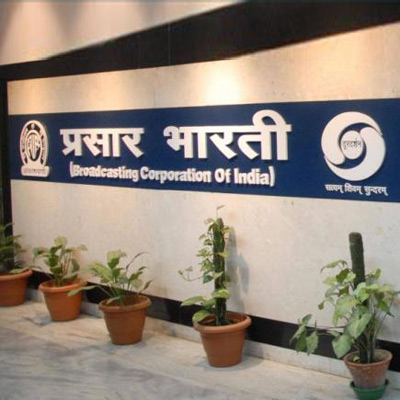
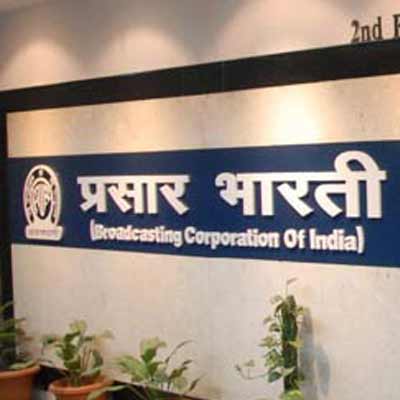
    Prasar Bharati, a statutory autonomous body under the ministry of information & broadcasting, was set up to oversee the functioning of Doordarshan and All India Radio. The board decides all matters related to general administration of the broadcaster, and is headed by the chairman who is picked by a committee headed by the vice president of India and comprising I&B secretary and Press Council of India chairman.

  • I&B ministry grants registration to 10 MSOs in May, June

    I&B ministry grants registration to 10 MSOs in May, June

    KOLKATA: The ministry of information and broadcasting (MIB) has published a document listing all the registered multi-system operators (MSO) in the country. As per the document, there are 1664 registered MSOs in India as on 25 June 2020.

    Six and four MSOs were granted registration in the month of May 2020 and June 2020 respectively. A total of 48 MSOs have been granted registration in 2020 until now. There are two provisionally registered MSOs now.

    All the granted registrations are valid for a period of 10 years. The name of the companies that were added in the registration list in the two month includes Siddhi Vinayak Cable Bhainsdehi ,  Baroda Cable Network,  E-Star Digital Cable TV Network,  Bangalore Broadband Network Pvt Ltd, Meet Cable Vision, Lightfiber Telenetworks Pvt Ltd,  Modern Network Digital Pvt Ltd,  Kamdhenu Digital Network, RK Digital Cable Network and  Smart India Digital Services.

    The ministry has cancelled three applications in May and June 2020. 

  • Prasar Bharati reviewing contract with Press Trust of India

    Prasar Bharati reviewing contract with Press Trust of India

    NEW DELHI: Public broadcaster Prasar Bharati is said to be reconsidering its equation with news agency Press Trust of India (PTI) and is learnt to have sent a letter to the news agency over its reporting.

    PTI, one of the country’s largest and oldest news agencies, has come under fire for an interview, which was published earlier this week, with Chinese ambassador Sun Weidong. In the interview, Weidong blamed India for the ongoing border crisis in Ladakh and the violent face-off in Galwan Valley that killed 20 Indian soldiers. 

    The interview, the pubcaster said, was disseminated widely by PTI to its domestic subscribers and prominently shared with foreign entities.

    Prasar Bharati stated that it is reviewing the need to continue their relationship in the wake of recent news reports that it alleged were "detrimental to India’s national interest and may have undermined the country’s territorial integrity."

    It added that PTI "has conducted itself in a manner contrary to the values that the public broadcaster has been mandated to uphold." Because of this, the pubcaster is reconsidering being a patron of PTI. The news agency is substantially supported by the public broadcaster through huge annual fees towards subscriptions which is around Rs 9 crore. It has repeatedly refused to review the terms and condition of the contract since 2016-2017. 

    This seems to not have been the first time as Prasar Bharati claims that it has been time and again alerting PTI on "editorial lapses resulting in dissemination of wrong news harming public interest."

    Prasar Bharati will convey its decision soon.